








Across cinema, television, and filmed theatre, Hamlet has become a proving ground for directors, actors, and entire national film industries—partly because the story is instantly recognisable (a family power grab, a son’s grief, a suspicious death), and partly because the play’s ambiguity invites radically different interpretations without “breaking” the core tragedy.
This research article ranks 13 notable Hamlet-based films from classic screen adaptations to modern reimaginings, then breaks down the most searched-for versions (1948, 1990, 1996, 2000, 2009, 2018), highlights lesser-known entries (including 1961 and 2003), explains major international approaches, and concludes with a 2026 viewing guide and frequently asked questions.
Foundations: why Hamlet dominates the screen
How many movie adaptations of Hamlet are there and why is it so popular?
There is no single “official” count, because databases differ on what qualifies (feature film vs TV movie vs recorded stage production vs loose inspiration). Even with conservative definitions, there have been more than fifty screen adaptations, remakes, or major reworkings over the last century-plus of film history.
Popularity is driven by a combination of (1) a universally portable premise (succession, betrayal, grief, revenge), (2) iconic set pieces that filmmakers can re-stage (the ghost, the play-within-a-play, “To be, or not to be”), and (3) a central role that rewards almost any performance style—from psychologically internal to explosively physical—while still remaining recognisably “Hamlet.”
Just as importantly for screen culture, Hamlet can be shortened, modernised, translated, or relocated while retaining its dramatic engine: a protagonist stalled between moral certainty (“my father was murdered”) and existential doubt (“what if I’m wrong, and what if vengeance corrupts me?”). That adaptability is why the play supports both faithful “text-first” films and genre-coded reinventions (corporate noir, political thriller, animated family epic).
What makes a great Hamlet adaptation on film? Key themes and differences
The strongest adaptations tend to be the ones that make disciplined choices about three pressures that every screen Hamlet faces: (a) the length of Shakespeare’s text, (b) the story’s dependence on interior thought (soliloquies), and (c) the “surveillance” structure of the plot—almost everyone is watching, testing, or spying on someone else.
On film, “greatness” usually comes down to how convincingly those pressures are translated into cinematic language. Cutting the text can increase pace and accessibility (sometimes at the expense of philosophical density), while full-text approaches can preserve the play’s moral architecture (sometimes at the expense of momentum). Modern settings can clarify power dynamics for contemporary viewers (CEO “kings,” corporate courts, CCTV ghosts), but also risk feeling like surface “updating” if the adaptation doesn’t integrate the new world into the story’s ethics.
A useful way to evaluate any screen version is to measure how it treats five recurring themes: grief and mourning, corruption in power, performance and deception, the morality of revenge, and the boundary between real madness and strategic “madness.” The best films do not merely display these themes—they make them active forces that reshape character behaviour and visual style.

Ranking the 13 best Hamlet-based films
Best Hamlet movie adaptations ranked by critics and audiences
Ranking criteria prioritises (1) critical consensus and audience response (especially where Rotten Tomatoes provides both Tomatometer and Popcornmeter, or where Metacritic provides a stable metascore), (2) durability and influence as a screen Hamlet, and (3) clarity of adaptation intent (faithful staging vs purposeful reinvention). Scores and availability can change as new reviews are added or distribution shifts.
- Hamlet (1948) — A landmark English-language screen Hamlet with major awards recognition; Rotten Tomatoes lists 96% (critics) and 80% (audience/Popcornmeter) on at least one major digital listing, supporting its long-standing reputation as an elite “classic” entry point.
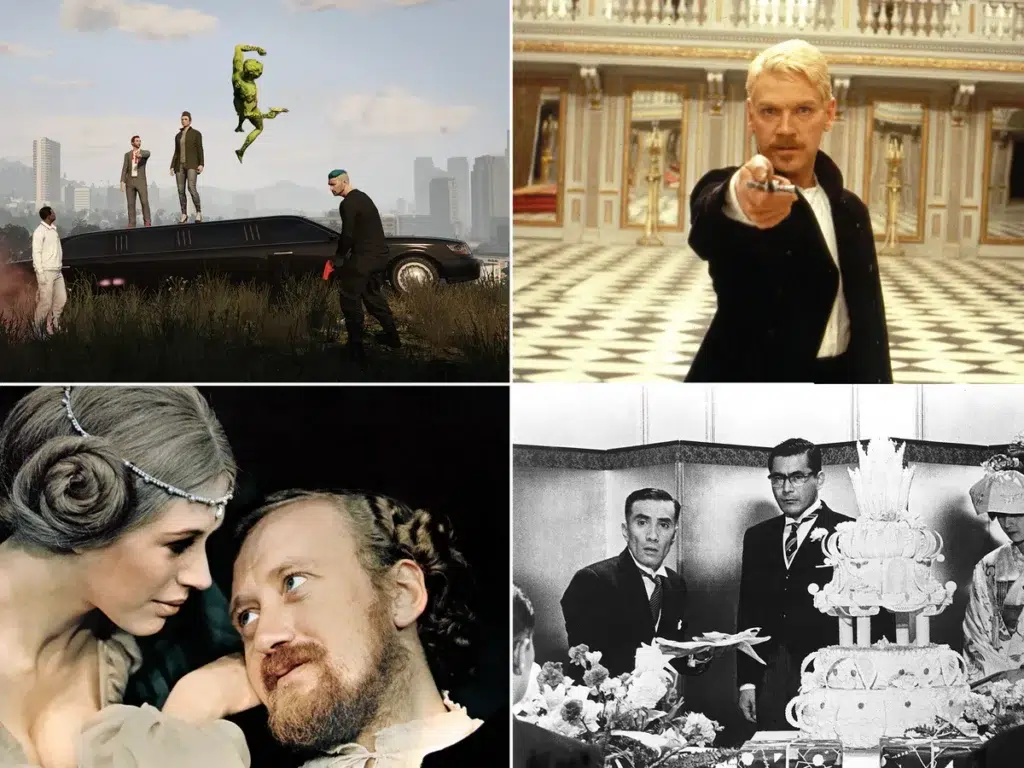
- Hamlet (1964) — A towering international adaptation; Rotten Tomatoes lists 100% (critics) and 92% (audience) for the Soviet version, underlining its status as a globally admired, visually driven Hamlet.
- Hamlet (1996) — A rare near-full-text cinematic Hamlet that critics rate highly (Rotten Tomatoes lists 95% critics and 89% audience), and which is widely cited for its ambition and textual scope.
- Hamlet (2009) — A modern-dress, stage-to-screen hybrid with exceptionally strong review signals on Rotten Tomatoes (100% critics, 91% audience), though based on a smaller critical sample than many theatrical releases.
- Haider (2014) — A major contemporary reworking that relocates the tragedy into the political reality of Kashmir; Rotten Tomatoes lists 88% critics and 86% audience, reflecting broad critical and viewer buy-in.
- Hamlet (1990) — A mainstream, briskly paced adaptation; Rotten Tomatoes lists 76% (critics) and 59% (audience), capturing its role as an accessible “gateway” Hamlet even if it’s less philosophically exhaustive.
- Hamlet (2000) — A modern New York “Denmark Corporation” Hamlet; Rotten Tomatoes lists 59% critics and 46% audience, while Metacritic lists a 70 metascore—evidence of a divisive but academically useful reinvention.
- The Lion King (1994) — Not a line-by-line adaptation, but a culturally dominant Hamlet-shaped narrative; Rotten Tomatoes editorial material lists it at 92% and highlights it as a top-tier Disney classic, while scholarship and institutional commentary continue to debate the exact Shakespeare lineage.
- Rosencrantz and Guildenstern Are Dead (1990) — A meta-Hamlet that reframes the tragedy through two minor characters; Rotten Tomatoes lists 60% critics and 87% audience, signalling niche appeal that strengthens for viewers already familiar with the source play.
- The Banquet (2006) — A Chinese wuxia-inflected reworking identified as a Hamlet adaptation; Rotten Tomatoes lists 42% critics and 60% audience, reflecting striking production values paired with polarised reception.
- Hamlet (1969) — A pared-down, theatrical-feeling version; SparkNotes notes its historical reputation as a critical and commercial failure, while Metacritic lists a strong 82 metascore—evidence of how radically assessments can differ across eras and platforms.
- Hamlet (2018) — A filmed modern production with intense performance energy; BBC broadcast documentation and major press reviews strongly support its stage-to-screen impact, even when streaming availability is inconsistent.
- Hamlet (2026) — A newly released modern adaptation set in London’s South Asian elite; Rotten Tomatoes currently lists 73% critics with Popcornmeter still forming (fewer than 50 verified ratings), making its long-term ranking inherently provisional compared with older, fully “settled” classics.

Signature screen Hamlets: classic-to-modern deep dives
Hamlet (1948): Why it won Best Picture at the Oscars
Academy Awards recognition matters here because this film didn’t merely become a respected Shakespeare screen version—it became a prestige cinema event validated by the industry’s top awards. Official awards records confirm it won Best Picture, with additional Oscar recognition attached to the production.
The film’s Best Picture success is best understood as a convergence of three factors. First, it demonstrated—at a time when “filmed theatre” could be dismissed as inert—that Shakespeare could be shaped into expressive, atmospheric cinema with a strong authorial point of view. Rotten Tomatoes’ Best Picture ranking commentary explicitly frames it as proof that Shakespeare could be successfully adapted to the big screen and as a path-opener for later cinematic interpretations.
Second, its adaptation strategy is sharply focused: rather than attempting to preserve every political dimension of the play, it concentrates on the protagonist’s psychological turmoil (a choice also noted in educational adaptation summaries), making the film feel like a coherent cinematic thesis rather than a “complete record” of the stage text.
Third, its durable reputation is not just academic. Aggregate audience-and-critic signals remain high on modern platforms (for example, one major digital listing presents it at 96% critics and 80% audience), suggesting that the film continues to play effectively for contemporary viewers despite changes in acting style, pacing norms, and cinematography.
Hamlet (1996) full text adaptation explained and reviewed
The defining feature of this version is scope: educational adaptation analysis describes it as using Shakespeare’s full text, pushing the running time to nearly four hours, an approach almost unique among widely distributed screen Hamlets.
Its method is “text-first, cinema-second” in the best sense: rather than treating film as a device for cutting the play down, it uses cinematic grammar—camera movement, staging, and flashback structure—to clarify relationships and motivations that can be hard to track in purely theatrical space. The same adaptation summary explicitly notes that the film adds flashbacks not present in the original play, signalling a strategy of visual supplementation rather than textual replacement.
From a critics-and-audiences standpoint, the film sits in the high-consensus zone for Shakespeare cinema: Rotten Tomatoes lists 95% critics and 89% audience, supporting the claim that its ambition did not alienate general viewers as much as long runtimes sometimes do.
This version is especially valuable for viewers who want to understand Hamlet as a philosophical structure—how doubt becomes delay, how delay becomes collateral damage, and how “performance” (acting, deception, surveillance) becomes a political weapon. It functions almost like a cinematic reference edition of the play.

Hamlet (1990) starring Mel Gibson: a mainstream take on Shakespeare
This adaptation is deliberately designed for a broader audience: it heavily cuts the text and foregrounds story propulsion, a strategy directly emphasised in major educational summaries of its approach.
What makes it distinct among “accessible” Hamlets is the casting logic: the goal is not to turn Hamlet into an action hero, but to highlight the tension between a culturally “masculine” star persona and a character defined by hesitation and thought. That interpretive aim is explicitly noted in adaptation commentary describing why this actor was chosen and how the film frames Hamlet’s inability to behave like an action protagonist.
On modern aggregate measures, Rotten Tomatoes positions it as moderately well received—76% critics and 59% audience—with a consensus that acknowledges lost complexity while crediting the star-director pairing for unexpected success.
In practice, this is one of the strongest “first Hamlets” for viewers intimidated by Shakespearean length: it keeps the emotional skeleton (mourning, suspicion, revenge pressure, catastrophic misunderstandings) while reducing the demands of sustained four-hour concentration.
Hamlet (2000) modern New York City setting explained
This film relocates the court into corporate modernity: on Rotten Tomatoes, the synopsis explicitly frames the story around a young filmmaker struggling with the weight of a production company called “Denmark Corp” in New York City after his father’s death.
Educational adaptation coverage similarly describes the film as a modern-day relocation where Claudius becomes the CEO of the Denmark Corporation and Hamlet becomes a video artist/film student—an explicit attempt to translate kingship, succession, and surveillance into media-and-capital power.
Reception data clarifies why the film is often taught even by people who don’t love it: Rotten Tomatoes lists 59% critics and 46% audience, while Metacritic lists a 70 metascore, marking it as neither a disaster nor a universally embraced classic, but a serious, debatable reinvention that generates genuine interpretive arguments.
As a film-language solution, technology replaces some of the play’s theatrical mechanisms: cameras, screens, and hotel/corporate spaces create a world where being watched is normal, aligning with how modern productions often emphasise Hamlet as a tragedy of surveillance.
Hamlet (2009) starring David Tennant: TV adaptation breakdown
This version sits at the intersection of stage and television film: broadcast documentation describes it as a re-staging for television of a major 2008 stage production, with the lead actor reprising the role, aired on 26 December 2009 on BBC Two.
The Royal Shakespeare Company describes the stage production (which anchors the screen version) in modern-dress terms, including a contemporary-costumed Hamlet and a world structured by observation—an interpretive choice that translates unusually well to the camera.
On Rotten Tomatoes, this version currently posts extremely strong aggregate signals—100% critics and 91% audience—with a synopsis that makes its cinematic identity clear: it’s a screen adaptation prompted by a ghostly visitation and aimed at revenge, but structured in a way that retains the sharpness of performance.
For viewers who want Shakespeare’s language with a modern emotional register, this is often the sweet spot: shorter than full-text epics, more cinematic than a static theatre recording, and performance-driven in a way that foregrounds Hamlet’s rapid oscillation between comedy, fury, and despair.

Hamlet (2018) starring Andrew Scott: modern stage-to-screen version
Official broadcast listings identify this version as an “as-live” recording from a major theatre venue of a modern production directed for the screen and transmitted on 31 March 2018 (again on BBC Two), with a long runtime consistent with a substantial stage-to-TV presentation.
Critical commentary on its television impact argues that the production “worked beautifully on TV,” explicitly treating it as evidence that theatre aesthetics can survive (and sometimes benefit from) the shift into broadcast form.
Reviews of the underlying stage production (which the filmed version preserves) frame the performance as modern-dress, idea-rich, and intensely communicative, with particular emphasis on the production’s heightened awareness of surveillance structures (screens, CCTV, being watched), reinforcing how contemporary Hamlets often translate the play’s spying into a visual system.
In practical 2026 terms, availability is a known problem: major streaming aggregators can list it as unavailable in key regions at various moments, making physical media, library access, and limited-time platform windows unusually important for anyone trying to watch it legally and reliably.
Beyond the canon: hidden and international Hamlets
Lesser-known Hamlet films you may have missed (1961, 2003 and more)
Hamlet (1961) is a West German version associated with director Franz Peter Wirth and star Maximilian Schell, described as initially broadcast on 1 January 1961 on television before later theatrical circulation (some databases list the production year as 1960, reflecting production vs broadcast dating conventions).
This entry matters historically because it demonstrates the depth of postwar European television Shakespeare infrastructure—Hamlet as a national-culture “serious drama” property, even when later redistributors and niche pop-culture artefacts (like TV riffing culture) shape how the film is remembered and accessed.
**Hamlet (2003) is a British adaptation directed by Michael Mundell and starring William Houston, documented in major film databases and positioned as a relatively “straight” screen version compared with overt modernisations—making it especially relevant for viewers seeking lesser-known but recognisably classical staging on screen.
Other “you may have missed it” examples worth tracking for international-film mapping—because they show Hamlet as a global template rather than an English-only inheritance—include **Hamile (1964), a Ghanaian adaptation performed in English and screened internationally.

International Hamlet adaptations: Russian, German, and global versions explained
The Soviet/Russian tradition’s foundational screen text is the Kozintsev film: scholarship and reference entries emphasise that it is built on a modern Russian translation by Boris Pasternak and shaped into an abridged feature with a strong visual thesis about power and confinement.
A frequently cited element of its international reputation is the music: cultural-programming notes highlight Dmitri Shostakovich’s film score as one of his most highly regarded, and explicitly connect the music to the moral pressure facing artists under Soviet systems—one reason the film has remained a significant object of study.
The German Hamlet lineage (represented here by Wirth’s version) illustrates the strength of television as an adaptation engine. Rather than aiming at cinematic spectacle, such productions often use camera proximity to deliver psychological intensity, effectively converting soliloquy-heavy drama into close-up performance. That tradition remains essential for understanding why UK and European broadcasters later invested heavily in filmed Shakespeare for mass audiences.
Beyond Europe, Chinese Hamlet adaptations in 2006 demonstrate “cultural translation” rather than language translation alone. Scholarly and review sources document two near-simultaneous Chinese reworks that relocate the revenge-and-corruption structure into distinct historical-imperial settings, with The Banquet explicitly described as a Hamlet adaptation in international film criticism.
In South Asia, Hamlet becomes a vehicle for modern political trauma and family complicity. The Kashmir-set Haider (already ranked above) is explicitly framed (even in mainstream aggregator synopsis language) around both personal betrayal and a wider conflict environment, showing how the play’s family tragedy can be fused to national history without losing narrative coherence.
From inspiration to reinvention: retellings, viewing order, and the 2026 release
Modern retellings inspired by Hamlet like The Lion King and why they matter
The Hamlet “DNA” in The Lion King is not synonymous with being a direct adaptation—an important distinction for accurate viewing expectations. A documented director interview notes that the filmmakers observed the Hamlet similarity after the story structure had already been developed, framing Shakespeare less as a blueprint and more as a discovered parallel or unconscious channel.
This is why institutional Shakespeare commentary often complicates the popular “Hamlet with lions” summary: analysis from the Folger Shakespeare Library argues that the film also echoes other Shakespeare plays (for example, Henry IV via the prince’s maturation arc), positioning the movie as part of a larger Shakespearean echo chamber rather than a one-play translation.
Retellings matter because they prove what direct line-by-line adaptations cannot: that the ethical machine of Hamlet—succession crisis, grief, withheld truth, revenge pressure—can survive drastic tonal change (including a family-friendly ending) and still be legible as Hamlet-shaped narrative. That survival is itself evidence of the play’s structural power and cultural portability.
For a darker, adult example of Hamlet-as-inspiration, commentary on **The Bad Sleep Well (1960) notes that it takes a major hinge from the play and transforms it into a wedding-banquet cinematic set piece—demonstrating how adaptation can preserve function (exposure, performance, social theatre) while replacing form.
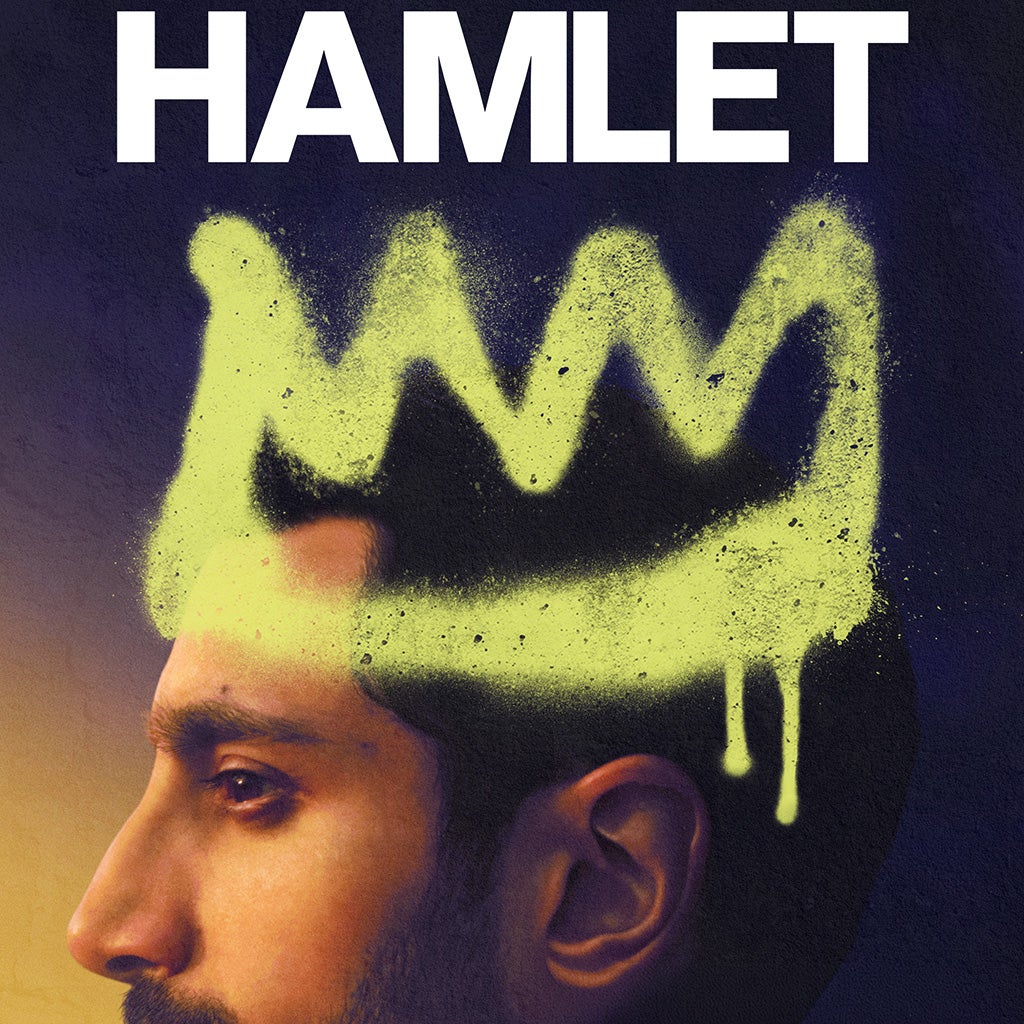
New 2026 Hamlet movie with Riz Ahmed: everything we know so far
This film is a contemporary, culturally specific reimagining set in London’s South Asian elite: Rotten Tomatoes’ synopsis describes a return from the father’s funeral, the shock of an uncle marrying the widowed mother, and a ghost-driven collapse into vengeance that reveals “rot” inside a family empire.
Production funding and positioning are unusually well documented in official UK film-industry sources: British Film Institute materials list the director, screenwriter, key producers, key cast, financing partners, and major festival exposure (including Toronto and Telluride) as part of the film’s funded-production profile.
Release dates and distribution are clear on major trade and review sources. Trade reporting states a North American theatrical date of 10 April 2026, and major UK criticism reviews the film as released in the UK on 6 February 2026, reinforcing that this is a 2026 “new Hamlet” in release terms even if festival premieres occurred earlier.
Critical reception to date is mixed-to-positive in aggregate form: Rotten Tomatoes currently lists 73% based on dozens of critic reviews and a critics’ consensus describing a gritty, streamlined reimagining powered by the lead performance; individual high-profile reviews range from strongly supportive to sharply critical, illustrating that this is a debated interpretation rather than a consensus classic (at least so far).
In interviews around the release, the lead actor frames the project as a “making it accessible” effort—linking Hamlet’s alienation themes to outsider identity and modern multicultural experience—and describes delivering the famous soliloquy in a car on a motorway as a symbolic staging choice rather than a museum-style recital.

Faithful vs modern Hamlet adaptations: which version should you watch first?
For viewers who want Hamlet as close as possible to the source play’s architecture, the strongest first choices are the near-full-text film and the high-fidelity classical adaptation. The 1996 version is explicitly described as using the full text and running nearly four hours, while the 1948 film is repeatedly treated in awards and educational materials as one of the most successful “classic” translations of the play to cinema.
For viewers who want modern context and faster comprehension, the best “modernised but still Hamlet” entry points are the corporate New York version and the modern-dress stage-to-screen versions, because they translate monarchy into institutions contemporary audiences already understand (corporations, media systems, surveillance culture) without discarding Shakespearean language entirely.
For viewers who want Hamlet as cultural translation rather than textual translation, the strongest first steps are the politically grounded Kashmir rework and the Chinese imperial reimaginings, because they demonstrate how the tragedy functions as a template for power, grief, and betrayal across radically different historical systems.
A practical sequencing that minimises confusion is: (1) one direct classical version (1948 or 1996), (2) one modernisation (2000 or 2026), (3) one international rework (Haider or The Banquet), then (4) a meta-variant (Rosencrantz & Guildenstern) once the base story is fully internalised.
Streaming, FAQs, and references
Where to watch the best Hamlet movies online in 2026
Streaming and rental availability changes frequently by territory, so the most accurate approach is to consult region-specific aggregators (for example, JustWatch) and then confirm on the platform itself. This is especially important for theatre-to-TV Hamlets, which can disappear for long windows due to rights and broadcast licensing.
As of 13 April 2026, Rotten Tomatoes lists the new 2026 Vertical-distributed Hamlet as available “In Theaters” with digital options (rent/buy) indicated via Fandango at Home in the US market listing.
For the 2000 modern corporate Hamlet, JustWatch’s US listing reports availability on Peacock (with additional options such as Amazon Video purchase/rental also listed), illustrating the kind of platform mix typical for older studio-era catalogue titles.
For filmed-stage and broadcast Hamlets, availability is often patchy. JustWatch’s UK listing for the 2018 Andrew Scott version reports no current streaming offer at the moment of listing capture, while JustWatch’s UK listing for the 2009 David Tennant version indicates purchase availability through Amazon Video.
Some titles exist on major global platforms but are restricted by country. Netflix’s own title page for the 2009 Tennant Hamlet explicitly warns that the title “isn’t available to watch” in the viewer’s country, signalling that catalogue presence does not equal universal availability.

Frequently Asked Questions (FAQs)
1: How many movie adaptations of Hamlet are there?
There are more than fifty film/television adaptations and major screen reworkings, depending on inclusion rules.
2: Which Hamlet film is the most faithful to Shakespeare’s full text?
The 1996 adaptation is explicitly described as using Shakespeare’s full text, with a runtime of nearly four hours.
3: Which Hamlet adaptation won Best Picture?
The 1948 film won Best Picture at the Academy Awards, confirmed by official awards records and major educational summaries.
4: Which Hamlet is set in modern New York City?
The 2000 film is explicitly described as a modern New York City retelling involving “Denmark Corp” and a contemporary corporate court.
5: Is The Lion King actually based on Hamlet?
It is widely understood as Hamlet-influenced, but key creator commentary frames the Hamlet parallels as discovered after story development, and institutional Shakespeare commentary argues the film also echoes other Shakespeare works—so it is best categorised as inspired-by rather than direct adaptation.
6: What is the best Hamlet movie for beginners?
For many beginners, the 1990 version is a common entry point because it is a heavily cut, mainstream-oriented adaptation designed to be more immediately watchable than longer versions.
7: What makes the 2009 David Tennant Hamlet unusual compared with film versions?
It is documented as a television re-staging of a major stage production, broadcast on BBC Two, while still being shaped for screen rather than simply presenting a fixed proscenium view.
8: What is the 2018 Andrew Scott Hamlet, technically?
It is documented as a broadcast of an as-live recording from a theatre production, directed for the screen and transmitted on BBC Two—essentially a theatre-to-TV hybrid.
9: What is the new 2026 Riz Ahmed Hamlet about?
It is described as a bold modern adaptation set in London’s South Asian elite, beginning with a funeral return, a remarriage shock, and a ghost-triggered vengeance spiral within a family empire.
10: Why do some international Hamlets feel so different while still being recognisably Hamlet?
Because major international adaptations often translate the play’s power structures into local historical systems (Soviet state culture, Chinese imperial courts, Kashmiri political conflict), preserving function while replacing setting and cultural codes.
conclusion
Across its most successful screen forms, Hamlet remains unusually adaptable: it can function as prestige literary cinema (1948), text-complete epic reference (1996), modern corporate alienation story (2000), television-theatre hybrid (2009, 2018), or culturally specific contemporary drama (2026) while still retaining its core engine of grief, suspicion, performance, and moral corrosion.
The 13-film ranking demonstrates a consistent pattern: versions with clear adaptation intent and strong cinematic equivalents for interior thought (whether through soliloquy staging, visual surveillance systems, or disciplined cutting) tend to hold up best across both critics and audiences, while looser retellings matter most as proof of global cultural inheritance rather than as substitutes for direct Shakespeare on screen.
sources and citation
- Rotten Tomatoes – Hamlet (1996) https://www.rottentomatoes.com/m/1075422-hamlet
- Rotten Tomatoes – Hamlet (1948) https://www.rottentomatoes.com/m/1009123-hamlet
- Rotten Tomatoes – Hamlet (1969) https://www.rottentomatoes.com/m/1009124-hamlet
- Rotten Tomatoes – Hamlet (1990) https://www.rottentomatoes.com/m/1109679-hamlet
- Rotten Tomatoes – Hamlet (2025 / Riz Ahmed) https://www.rottentomatoes.com/m/hamlet_2025
- Rotten Tomatoes – Haider https://www.rottentomatoes.com/m/haider
- Rotten Tomatoes – The Banquet https://www.rottentomatoes.com/m/legend_of_the_black_scorpion
- Rotten Tomatoes – Rosencrantz & Guildenstern Are Dead https://www.rottentomatoes.com/m/rosencrantz_and_guildenstern_are_dead
- Oscars.org – The 21st Academy Awards (1949) https://www.oscars.org/oscars/ceremonies/1949
- Oscars.org – 21st Academy Awards memorable moments https://www.oscars.org/oscars/ceremonies/1949/memorable-moments
- SparkNotes – Hamlet movie adaptations https://www.sparknotes.com/shakespeare/hamlet/movie-adaptations/
- Cambridge Core – search results for Hamlet adaptation scholarship https://www.cambridge.org/core/search?q=Hamlet+adaptation
- Springer – search results for Hamlet adaptation scholarship https://link.springer.com/search?query=Hamlet+adaptation
- SAGE Journals – search results for Hamlet adaptation scholarship https://journals.sagepub.com/action/doSearch?AllField=Hamlet+adaptation
- Coolidge Corner Theatre – Shostakovich in Soviet Cinema: Hamlet https://coolidge.org/films/shostakovich-soviet-cinema-hamlet
- BFI – Hamlet (Riz Ahmed / Aneil Karia) https://www.bfi.org.uk/bfi-funded-productions/hamlet TIFF – Hamlet
- https://www.tiff.net/events/hamlet
- Deadline – Hamlet trailer / 2026 coverage https://deadline.com/2026/02/hamlet-trailer-riz-ahmed-modern-shakespeare-adaptation-1236735343/
- Deadline – Hamlet release-date coverage https://deadline.com/2026/01/riz-ahmed-hamlet-movie-release-date-vertical-1236685185/
- The Guardian – Hamlet review https://www.theguardian.com/film/2026/feb/05/hamlet-review-riz-ahmed-timothy-spall-art-malik-aneil-karia
- San Francisco Chronicle – Hamlet review https://www.sfchronicle.com/entertainment/movies-tv/article/hamlet-riz-ahmed-review-22183617.php
- People – Riz Ahmed Hamlet interview https://people.com/riz-ahmed-felt-outsider-growing-up-like-modern-hamlet-exclusive-11944987
- Learning on Screen – Hamlet (2009 TV presentation, David Tennant) https://learningonscreen.ac.uk/shakespeare/search/index.php/title/av72449
- Learning on Screen – Hamlet (2018 TV presentation, Andrew Scott) https://learningonscreen.ac.uk/shakespeare/search/index.php/title/av77852
- JustWatch – Hamlet (general page) https://www.justwatch.com/us/movie/hamlet
- JustWatch – Hamlet (1996, UK) https://www.justwatch.com/uk/movie/hamlet-1996
- JustWatch – Hamlet (2000) https://www.justwatch.com/us/movie/hamlet-2000-0
- JustWatch – Hamlet (2025) https://www.justwatch.com/us/movie/hamlet-2025
- Netflix – browse/search for Hamlet availability https://www.netflix.com/search?q=Hamlet
- BFI London Film Festival – Hamlet programme page https://whatson.bfi.org.uk/lff/Online/default.asp?BOparam%3A%3AWScontent%3A%3AloadArticle%3A%3Apermalink=hamlet-lff25
Recommended
- Markiplier. His Iron Lung Movie: Release Date, Plot, Cast, Trailer, and Where to Watch
- A Quiet Place: Part III Cast Update: Jack O’Connell Joins as Emily Blunt and Cillian Murphy Return
- Your Guide to Making 3D Models for 3D Printing
- How to Animate a Camera in Blender
- Animating 2D Illustrations in Blender: A Comprehensive Guide for Vocaloid and J-Pop Themed Characters
- The Legend of Vox Machina Season 4 Release Date Announced: June 3, 2026 Premiere on Prime Video
- How do I export a camera from Blender to another software?
- PlayStation 3 Just Got An Update: PS3 System Software 4.93 Patch Notes, Download, and What Changed
- Star Trek: Starfleet Academy Season 1 Review (2026) — Cast, Story, Ending, and Where It Fits in the Star Trek Timeline
- The Future of 3D Modeling: Insights on AI Advancements