



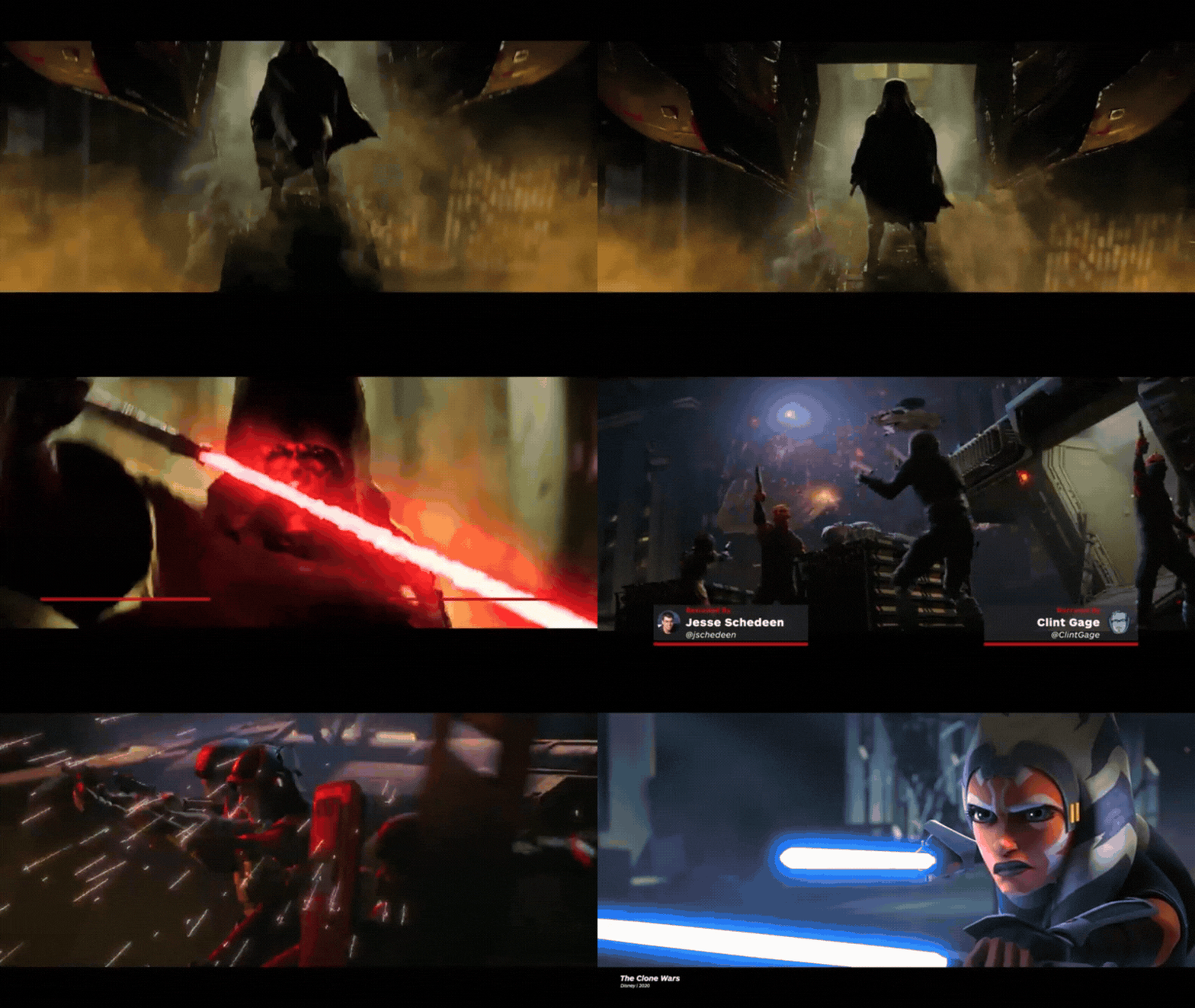



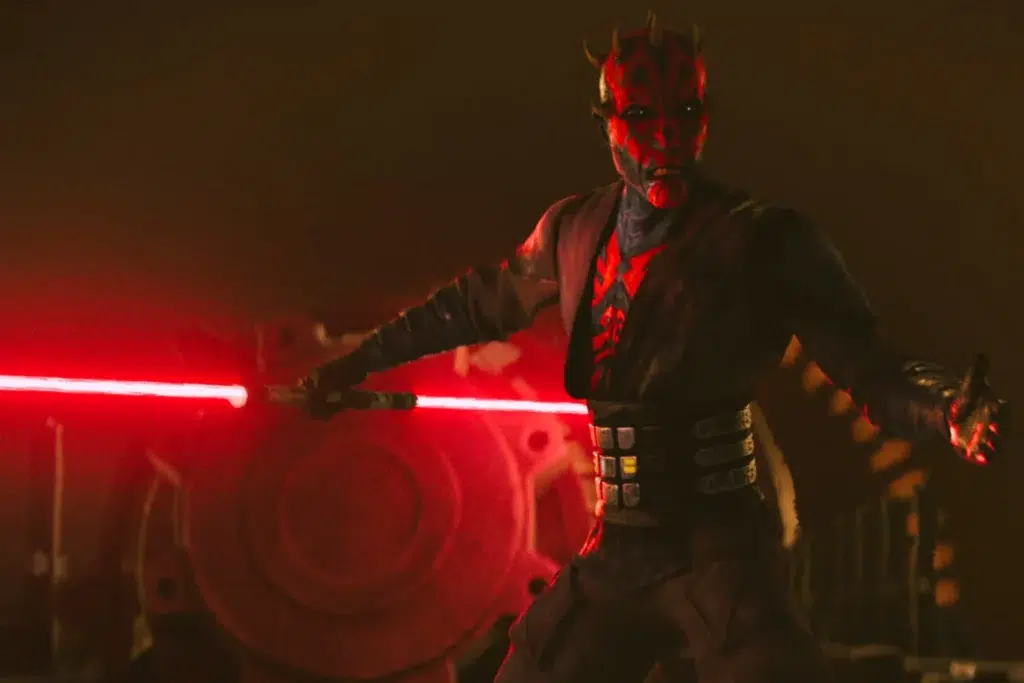
In a franchise where the lightsaber hum is among cinema’s most recognisable sound signatures, the newest creative swing is unusually intimate: folding a performer’s raw human vocalisations into the weapon itself. A behind-the-scenes featurette for Star Wars: Maul – Shadow Lord highlights that the series’ sound team embedded vocal elements from Sam Witwer (the long-time voice of Maul) into the lightsaber mix, aligning the weapon’s “voice” with the character’s psychology and rage.
The context matters. Maul – Shadow Lord is positioned as a pulpy, noir-leaning animated crime story set in the early Imperial era, and multiple reviews have described it as one of Lucasfilm Animation’s darkest tonal offerings—an aesthetic choice reinforced not only by imagery and story structure, but by how the soundscape is designed to feel gritty, aggressive, and personal.
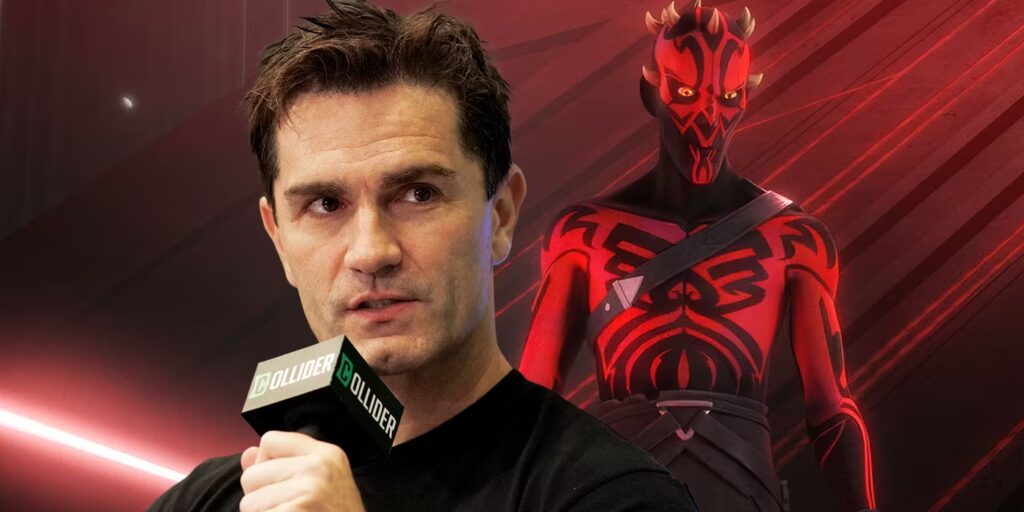
Lucasfilm Confirms Sam Witwer’s Screams Are Embedded in Darth Maul’s Lightsaber
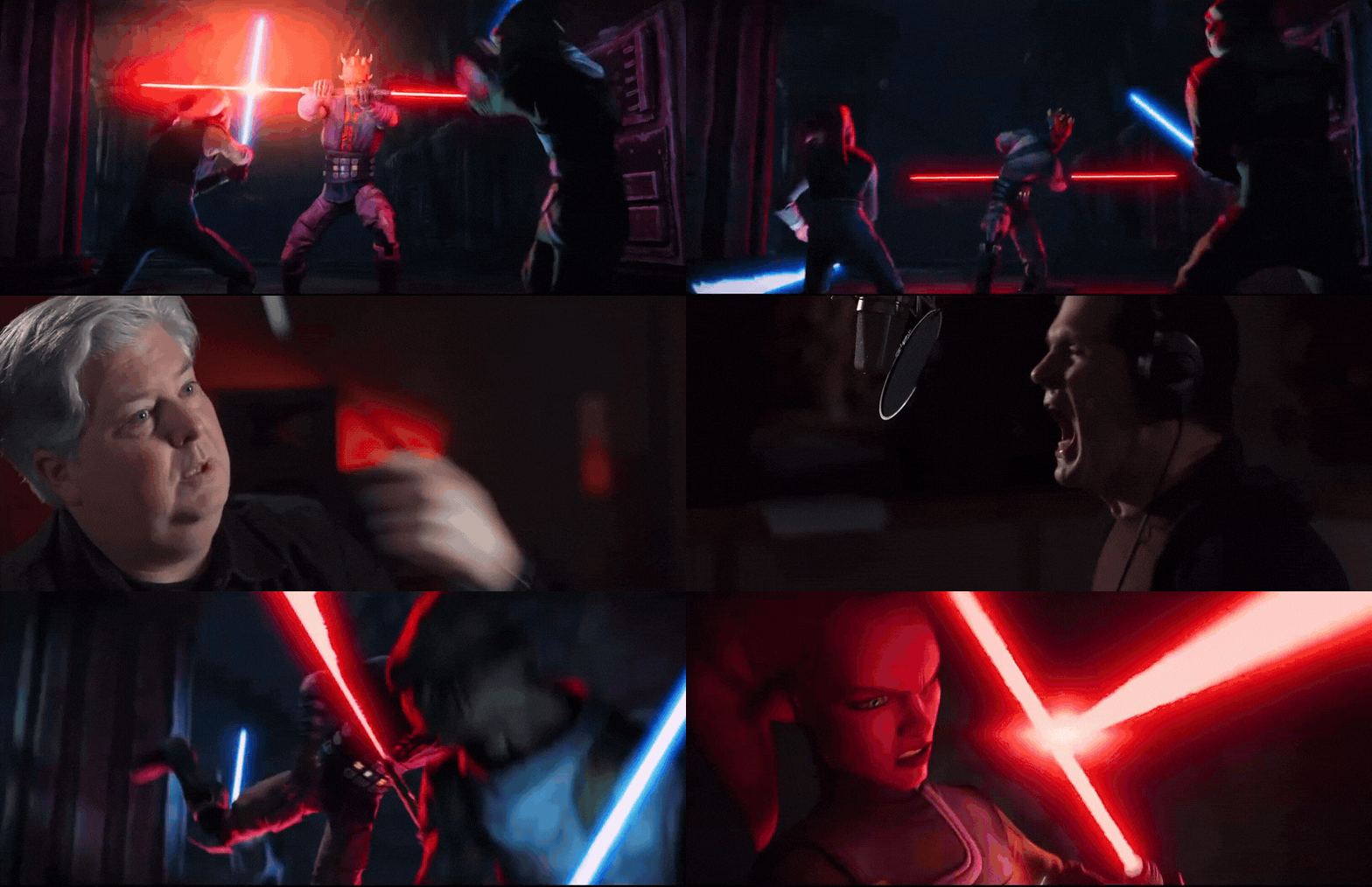
A widely circulated behind-the-scenes clip for Maul – Shadow Lord includes a clear statement from sound editor David W. Collins: the lightsaber audio contains “the sound of Sam screaming built into the saber.”
While the featurette itself is presented as official series promo material (marketed as a behind-the-scenes look), the load-bearing factual point is Collins’ explanation of the technique: Witwer’s screams were recorded and then layered into the lightsaber sound design, effectively making the weapon carry a trace of its wielder’s human anguish.
How Maul – Shadow Lord Created a More Aggressive Lightsaber Sound
The Star Wars lightsaber has historically blended a steady electrical “hum” with motion-driven pitch shifts, making it feel like a physical object in the space around it. Classic accounts describe the original sound as a hybrid: projector-motor hum plus TV interference, then performed through movement to create the familiar “swing” effect.
Maul – Shadow Lord extends that tradition—treating the lightsaber as a designed “character”—but pushes it toward abrasion and emotional texture by inserting actual human vocal energy into the spectral profile of the sound.
From an audio-design standpoint (inference), embedding screams can make a sound feel more violent and alive because the human voice carries complex, irregular harmonics that read as “organic” threat, even when masked beneath mechanical layers. The creative point is explicit: the sound team is not merely making the blade louder; they are making it more psychologically expressive of Maul.

Why Sam Witwer’s Voice Was Used Beyond Dialogue in Shadow Lord
The primary “beyond dialogue” use is literal: the sound team recorded Witwer’s screams and inserted them into the lightsaber effect.
A second, separately documented “beyond dialogue” contribution is performance reference for animation. StarWars.com reports that Witwer provided live animation reference sessions at Lucasfilm headquarters—using physical acting choices to help artists capture nuance—underscoring that the series treats Maul’s performance as more than a voice track.
This combination (voice acting + physical reference + being folded into sound design) reflects a broader Lucasfilm Animation approach: leaning into performance specificity to heighten character subjectivity, especially in a show marketed as intimate and psychologically driven rather than galaxy-spanning.
Behind the Scenes: The Sound Design of Darth Maul’s Lightsaber Explained
The behind-the-scenes narrative emphasises an unusually direct pipeline from actor performance to sound effect design. David W. Collins describes the integration of Witwer’s screams into the saber, turning the weapon’s sound into a kind of emotional extension of Maul rather than a neutral sci‑fi “tool.”
This concept sits in a long Star Wars lineage where sound design is treated as storytelling, not decoration. Accounts of Ben Burtt’s original lightsaber work frame the sound as something discovered, performed, and then “acted” through motion—an approach that prioritises tactile realism and emotional readability.
In that tradition, Maul – Shadow Lord’s key twist is not abandoning the classic identity of a lightsaber, but contaminating it—by design—with something recognisably human and distressed.
What Makes Darth Maul’s Lightsaber Sound Different in Shadow Lord
The differentiator is not simply “a new mix.” The featurette claim is specific: the saber includes layers of Witwer screaming inside the sound.
That matters because the lightsaber is typically a shared sonic language across characters: recognisable, consistent, and only lightly personalised in pitch or texture. By embedding screams, the show makes Maul’s saber feel less like a standardised weapon and more like a character signature—closer to a horror-leaning sound motif than a heroic sci‑fi effect.
The result aligns with how critics and official features describe the series overall: darker, grittier, and more psychologically pointed in both tone and presentation.

Who Is Sam Witwer and Why He Defines Darth Maul’s Voice
Sam Witwer has voiced Maul across multiple major Star Wars projects for well over a decade, beginning with Maul’s animated resurgence and continuing through later appearances; StarWars.com describes him as having portrayed Maul for “over a decade.”
Within official Star Wars editorial framing, his performance is treated as central to modern Maul: helping turn a once-minimal-dialogue film villain into a character with interiority, contradictions, grief, and a distinct verbal rhythm.
The significance for Shadow Lord is that Witwer is not only returning as the voice, but (per behind-the-scenes reporting) is also being used as raw sonic material—his vocal distress literally becoming part of Maul’s weapon.
How Maul – Shadow Lord Pushes Star Wars Audio Design to New Extremes
“New extremes” here is best understood as integration, not novelty for its own sake. The show’s behind-the-scenes hook is that a core icon—Lightsaber Sound™—has been personalised in a way that blurs the line between performance and effect.
That push also matches the series’ broader production posture. Official behind-the-scenes writing describes the show as “pulpy noir,” with creators building story bibles and deeply tracking Maul’s vendettas, suggesting a deliberate commitment to psychological and tonal specificity.
Critically, at least one review has framed the series as Lucasfilm Animation’s “darkest and most focused” animated Star Wars project to date—language that implies the sound design choice is part of a larger, cohesive tonal brief rather than a standalone gimmick.
Why Lucasfilm Added Human Screams to a Lightsaber Sound Effect
The most defensible explanation is narrative alignment: Maul is written and presented as a character driven by trauma, rage, and obsession, and the series aims to keep that emotional reality constantly present—even when the character is silent.
StarWars.com’s Maul-focused coverage stresses that Maul’s post‑Clone Wars period is defined by loss (including the deaths of close figures in his life) and that his emotional default becomes anger and revenge.
Embedding screams into the saber is a sound-design shorthand for that condition: the weapon becomes a sonic manifestation of pain and fury, reinforcing that Maul’s violence is not clean, elegant heroism—it is personal, damaged, and unstable.
The Role of Sound Designer David W. Collins in Shadow Lord
David W. Collins is credited not only in promotional behind-the-scenes material as the person describing the scream-layering technique, but also formally as a key audio creative on the series. Skywalker Sound’s project listing credits him as Supervising Sound Editor / Sound Designer / Re‑Recording Mixer for Star Wars: Maul – Shadow Lord.
Additional programme listings and credits aggregations reinforce that role attribution for specific episodes and departments.
Separately—and unusually for a lead sound creative—StarWars.com’s cast materials also identify Collins as a performer in the show: he voices the droid Spybot, linking the audio department directly into the voice cast and underscoring a production culture where sound personnel can be on-mic talent as well as behind-the-scenes craft.
How Darth Maul’s Rage Influenced the Series’ Audio and Visual Style
Official behind-the-scenes reporting ties the series’ visual identity directly to tone: Welcome to Janix describes a “pulpy noir vibe” that “permeates everything from script to screen,” and explicitly frames the setting as psychologically loaded.
Reviews similarly point to a “grungier” visual approach with painterly flourishes, and some critics have compared the series’ maturity of tone to more grounded, adult-leaning corners of modern Star Wars.
The audio choice—baking screams into the saber—slots into the same design philosophy: Maul’s emotional state is not treated as background characterisation. It becomes part of the show’s sensory fabric, from colour and shadow to the signature sound of his weapon.
What Maul – Shadow Lord Reveals About Darth Maul’s Psychology
Official StarWars.com coverage frames this era of Maul as a time of reassessment rather than straightforward conquest. In the series’ promotional interview coverage, Witwer describes Maul as being in a period of confusion and recalibration because the galaxy has changed and his recent losses are still emotionally close.
StarWars.com also presents the series as offering unusually direct access to Maul’s interior life, calling this iteration “the most psychologically satisfying version” of Maul the team has done.
In that reading, the lightsaber sound design functions like a psychological “tell”: rather than hiding Maul’s pain behind a cool villain aesthetic, the series makes distress audible—even when the blade is simply ignited.

When Star Wars: Maul – Shadow Lord Takes Place in the Timeline
StarWars.com’s Maul timeline materials place Shadow Lord in the early days of the Empire, after the chaos at the end of The Clone Wars and before Maul’s later fate in Rebels.
Other mainstream release coverage describes the show as set roughly a year after the events of The Clone Wars, reinforcing that it occupies the early Imperial period when Maul is an outcast navigating a galaxy reshaped by the Empire’s rise.
The series also introduces Janix as a key location: a Mid Rim world largely beneath Imperial notice, with a metropolis built into an ancient crater—an environment conducive to underworld politics, law enforcement tension, and Maul’s attempts to rebuild influence.
How Shadow Lord Connects to The Clone Wars and Rebels
StarWars.com’s Maul history explicitly links the show to Maul’s broader arc: his original defeat, his return in The Clone Wars, his underworld ascent, and his eventual appearances and endgame in Rebels.
In that chronology, Shadow Lord effectively fills the “how did he get from here to there?” gap: it is positioned after Maul’s post‑Clone Wars escape and during the period when he continues to exert influence in the criminal underworld (with the show framed as exploring the early Imperial era in more depth).
This connective tissue is also reflected in the series’ setting and premise: crime syndicates, uneasy truces, and local law enforcement trying to keep Imperial scrutiny away—conflicts that naturally bridge Maul’s Clone Wars‑era power plays with the more desperate, manipulative Maul seen later.
Release Date, Episode Count, and Streaming Details for Shadow Lord
The series premiered on Disney+ on April 6, 2026, launching with a two-episode premiere.
Season 1 is reported as a 10‑episode run, with episodes released in pairs each Monday, and the final two episodes scheduled for May 4 (Star Wars Day).
For regions aligned with West Africa Time and British Summer Time, the commonly reported drop time of 12 a.m. PT corresponds to 8:00 a.m. in those time zones, and mainstream schedule coverage has explicitly flagged the UK timing as 8:00 a.m. BST for at least the April 13 drop.
Fan Reactions to Darth Maul’s New Lightsaber Sound in Shadow Lord
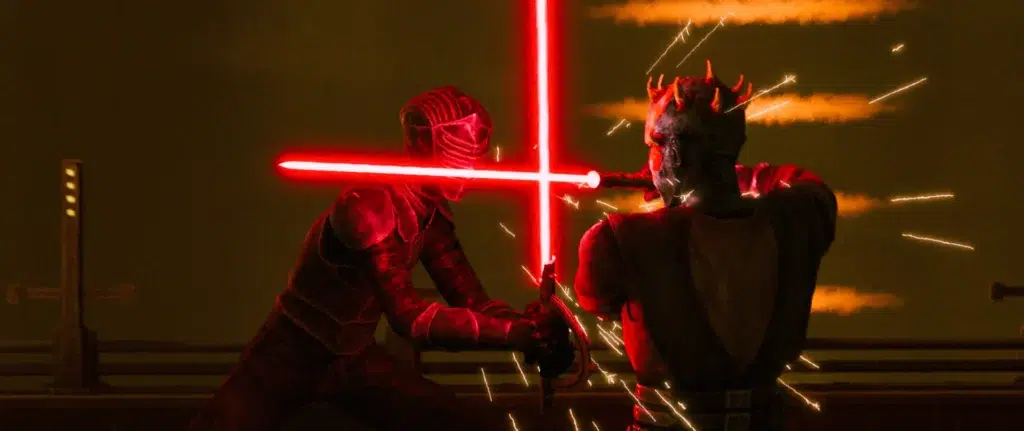
Early response framing has centred on two overlapping themes: the show’s visual ambition and the unsettling novelty of the lightsaber’s “screaming” texture. Coverage of the featurette notes that the revelation changed how viewers listen to Maul’s saber, because the weapon now carries an audible trace of human suffering rather than a purely technological hum.
More broadly, multiple outlets report strong audience enthusiasm around the series’ craft—particularly animation quality and atmosphere—sometimes arguing that the format enables more flexible, imaginative storytelling than live-action for Star Wars.
On the critics-and-fandom aggregation side, major review platforms have also framed the season as an especially strong entry at launch, with Rotten Tomatoes listing a 100% season score at the time it was captured in recently published coverage and platform pages.
Frequently Asked Questions (FAQs)
- Is it true that Sam Witwer’s screams are inside Darth Maul’s lightsaber sound in Shadow Lord?
Yes. A behind-the-scenes featurette includes sound editor David W. Collins explaining that Witwer’s screaming was built into the lightsaber sound. - Who is responsible for the lightsaber sound design detail?
The on-camera explanation is attributed to David W. Collins in featurette coverage, and Skywalker Sound’s project listing credits him as Supervising Sound Editor / Sound Designer / Re‑Recording Mixer on the series. - What is the purpose of adding human screams to a lightsaber?
The stated result is an “unsettling” and more ferocious saber texture, matching a series repeatedly framed as darker and more psychologically driven than many prior animated entries. - Does Shadow Lord change the classic Star Wars lightsaber sound?
It does not replace the iconic identity of a lightsaber, but it adds a unique character-specific layer: Witwer’s scream recordings embedded into Maul’s saber sound. - When does Star Wars: Maul – Shadow Lord take place?
Official StarWars.com background places it in the early days of the Empire, between Maul’s major Clone Wars arcs and his later fate in Rebels; other coverage describes it as roughly a year after The Clone Wars. - How many episodes are in Season 1, and how are they released?
Season 1 is reported as 10 episodes, released two at a time each Monday, starting April 6, 2026, with the final pair on May 4. - Is Season 2 confirmed?
Yes. StarWars.com announced that Season 2 is in the works, credited as being announced by Dave Filoni. - What is Janix, and why is it important?
Janix is introduced as a new Mid Rim setting for the series, with a crater-metropolis and limited Imperial oversight—ideal for noir crime storytelling and underworld conflict. - How does Shadow Lord connect to The Clone Wars and Rebels?
StarWars.com’s Maul history positions Shadow Lord as a bridge story—expanding the early Imperial period after Maul’s Clone Wars escape and before his later endgame in Rebels. - Why is the show being called “the darkest” Star Wars animated series?
At least one prominent review explicitly describes it as Lucasfilm Animation’s darkest and most focused animated Star Wars show yet, citing its mature, grittier tone and intense storytelling.
conclusion
Embedding Sam Witwer’s screams into Darth Maul’s lightsaber is not a superficial Easter egg; it is a deliberate sonic characterisation choice presented in behind-the-scenes coverage as part of the show’s craft identity.
In the broader context of Maul – Shadow Lord—a series framed by its creators and reviewers as pulpy noir, psychologically charged, and unusually dark—the weapon’s altered sound becomes a storytelling device: Maul’s terror, rage, and pain are not just shown or spoken; they are heard whenever the blade lives.
sources and citation
- StarWars.com — “Who is Maul?”
- https://www.starwars.com/news/who-is-maul
- StarWars.com — “Maul’s Story Continues in Star Wars: Maul – Shadow Lord Season 2 – Announce” https://www.starwars.com/news/star-wars-maul-shadow-lord-season-2
- StarWars.com — “Welcome to Janix: Building Lucasfilm Animation’s New World for Star Wars: Maul – Shadow Lord” https://www.starwars.com/news/star-wars-maul-shadow-lord-making-of-janix
- StarWars.com — “Inside Maul’s Mind with Star Wars: Maul – Shadow Lord Star Sam Witwer” https://www.starwars.com/news/star-wars-maul-shadow-lord-sam-witwer
- StarWars.com — “Inside the Making of Star Wars: Maul – Shadow Lord” https://www.starwars.com/news/star-wars-maul-shadow-lord-trivia
- StarWars.com Databank — “Janix Civil Defense” https://www.starwars.com/databank/janix-civil-defense
- Skywalker Sound — Project credit listing for “Star Wars: Maul – Shadow Lord” https://www.skysound.com/projects/star-wars-maul-shadow-lord/
- GamesRadar+ — featurette coverage quoting David W. Collins on screams embedded in the saber https://www.gamesradar.com/entertainment/star-wars-tv-shows/maul-shadow-lord-bts-video-reveals-cool-detail-that-makes-sure-youll-never-hear-his-lightsaber-the-same-way-again/
- Parade — release schedule and episode count overview https://parade.com/tv/star-wars-maul-shadow-lord-release-schedule-episodes-dates-time
- Tom’s Guide — episode drop pattern and timings https://www.tomsguide.com/entertainment/disney-plus/star-wars-maul-shadow-lord-episode-release-schedule-heres-when-new-episodes-stream-on-disney
- Space.com — review calling it Lucasfilm Animation’s darkest and most focused animated Star Wars show https://www.space.com/entertainment/space-movies-shows/star-wars-maul-shadow-lord-is-lucasfilms-darkest-and-most-focused-animated-show-yet-review
- Vanity Fair — background on Ben Burtt and the original lightsaber sound construction / Doppler method https://www.vanityfair.com/hollywood/2017/12/ben-burtt-star-wars-sound
- FilmSound.org — Ben Burtt interview excerpt on projector + TV interference as the lightsaber base tone https://filmsound.org/starwars/burtt-interview.htm
- The Guardian — interview coverage referencing the projector/TV-buzz construction of the lightsaber hum https://www.theguardian.com/film/article/2024/aug/15/star-wars-ben-burtt-sound-design-raiders-of-the-lost-ark-alien
Recommended
- Saving and Switching Blender Camera Angles with The View Keeper
- How to Use Decals and Stickers in Substance Painter: A Complete Guide for 3D Artists
- Switch 2 and PS5 Versions of Mewgenics Teased by Developers: Release Date, Gameplay, and Console Plans Explained
- All Shared Watch Rewards and Event Details in ARC Raiders (Feb 10–24, 2026) — Merits, Reward Track, and Fastest XP Farms
- Top 20 Ugliest Video Game Characters: A Celebration of Unconventional Design
- Blender 3D: How to Make a Character from Scratch – The Ultimate Step-by-Step Guide
- Camera View Preservation in Blender: Why Use The View Keeper?
- Steam Machine (2026): Release Date, Price, Specs, and SteamOS Explained
- Nova Roma – Official Early Access Launch Trailer Reveals Roman City Builder Gameplay, Features, and Early Access Details
- Top 10 Cyberpunk 2077 Mods to Transform Your Night City Experience