









In This Article (7 sections)
How Framestore Created Odin the CG German Shepherd for Heart of the Beast
Framestore has released a visual effects breakdown revealing how its artists created Odin, the digital German Shepherd featured in David Ayer’s survival thriller Heart of the Beast. The breakdown explores the combination of real animal performances, digital animation, facial replacements and advanced creature simulation used throughout the film. It also reveals how the studio developed a pack of digital wolves, constructed an imposing grizzly bear and recreated a New Zealand river canyon for a dangerous crossing sequence. The work demonstrates how practical filming and computer graphics can be combined to create convincing animal performances without sacrificing the physical details that make real creatures recognizable.
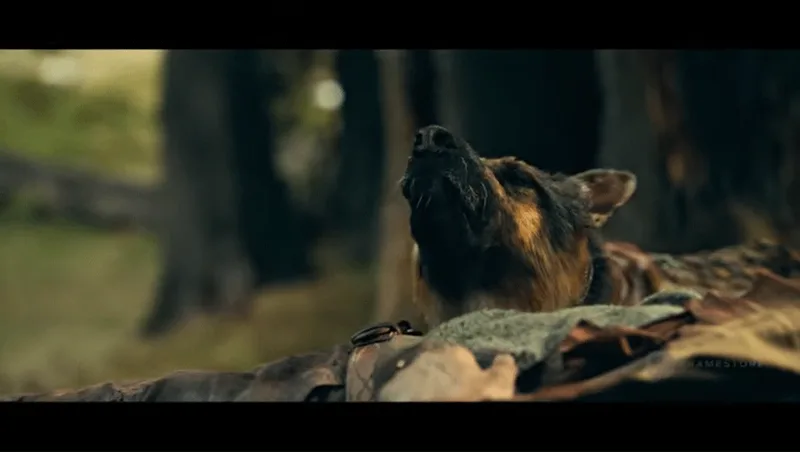
In Heart of the Beast, Brad Pitt plays James Belmont, a Special Forces veteran stranded in the Alaskan wilderness following a plane crash. His companion is Odin, a combat trained German Shepherd whose actions and reactions play an important role in the survival story. The film required audiences to recognize Odin as the same animal throughout scenes involving affection, aggression, movement and physical danger. This created a significant continuity challenge because the character was portrayed using multiple real dogs, partial digital alterations and complete computer generated replacements. Framestore needed to ensure that differences between those techniques did not interrupt the audience’s connection to the character.
The official video, titled Heart of the Beast VFX Breakdown | Framestore, was released on YouTube, while the studio’s production case study provides additional explanations and images documenting the work. CG Channel, VFXwire and The Art of VFX covered the breakdown in November 2026. The reel shows the progression from practical photography and basic digital models to completed visual effects. Among its most revealing comparisons are shots placing the real German Shepherd alongside his digital double, exposing the animated skeleton and muscle layers, and showing how untextured creatures and environmental models become finished cinematic images.
Uber was the primary German Shepherd who portrayed Odin, supported by three other trained dogs that were his offspring. Production VFX supervisor François Dumoulin explained that the animals were selected and trained for different sequences, allowing filmmakers to capture performances suited to individual scenes. Their family resemblance helped preserve visual consistency, although differences in movement and appearance sometimes required digital adjustments. Uber performed much of the role, providing the principal reference for the character’s proportions, behavior and relationship with Pitt.
Framestore developed Odin’s digital double using photographs, scans and extensive footage of Uber’s natural movement. Artists studied his anatomy, markings, coat, ear positions, head movements and reactions to his trainer. The digital model needed to reproduce these characteristics across a wide range of poses, from quiet closeups to physically demanding action. Grooming techniques were used to recreate the German Shepherd’s coat, ensuring the digital fur behaved convincingly under different lighting conditions and viewing angles. A believable still image was only the starting point because the animal also needed to move with the same recognizable weight, timing and personality as the real performer.
The production used photogrammetry to capture detailed information about all four German Shepherds, with particular attention given to Uber. This process reconstructs three dimensional shapes from overlapping photographs, helping artists establish accurate body proportions and surface details. Fur made the process more complicated because the visible coat does not always reveal the shape of the body beneath it. Framestore therefore collected supplementary photography to understand Uber’s appearance from multiple angles and under different lighting conditions. The team also filmed the dog for an entire day against a blue screen, using several cameras to record behaviors such as walking, running, barking and sitting.
Those recordings provided essential animation reference. A photograph can show what an animal looks like in a particular position, but convincing animation requires understanding how its body moves between positions. When a German Shepherd rises from sitting, for example, the movement involves changes in balance, weight distribution and the order in which its paws support the body. Artists needed to reproduce these details when creating movements that could not be safely filmed. To validate their digital model, Framestore replaced Uber with the CG version during a short section of reference footage, allowing the team to compare the digital animation directly against the original performance.
The filmmakers used different levels of digital intervention depending on the requirements of each shot:
- Live animal performances: Real dogs provided the majority of Odin’s natural body language and interactions.
- Subtle digital adjustments: Artists made small changes to details such as facial expressions, tail movement and other visual inconsistencies.
- Partial CG replacements: Specific body parts, including the muzzle and lower jaw, were replaced while preserving surrounding live footage.
- Digital prosthetic additions: Odin’s artificial leg could be added through visual effects when the practical version restricted movement.
- Fully computer generated Odin: Complete digital performances were used for scenes requiring actions that could not be achieved safely or convincingly with real animals.
One example of partial replacement occurs when Odin encounters Watkins, played by J.K. Simmons. Ayer wanted the dog to growl and snarl more aggressively than the filmed performance allowed. Rather than replacing Odin entirely, Framestore retained the real dog’s eyes, ears, head movement and overall body position while digitally replacing the muzzle and lower jaw. The new facial elements were tracked to the original footage, allowing the expression to remain aligned as the dog moved. Artists also had to match the fur direction, lighting and timing of the surrounding face so the replacement did not appear disconnected from the photographed animal.
Odin’s prosthetic leg required similar flexibility. Weta Workshop created a practical prosthetic for filming, but Dumoulin explained that wearing it sometimes restricted the dogs during running or movement across slippery surfaces. In those situations, the animal could perform without the physical attachment, and Framestore added the prosthetic digitally afterward. This preserved the authentic stride and balance of the live performance while maintaining the character’s appearance. The same attention to behavior guided Odin’s emotional animation, with artists studying how subtle changes in ear position, posture and timing could communicate affection, fear, alertness or aggression without making him resemble a different dog.
Framestore reported that close to 100 shots used a fully digital Odin, while CG Channel described the figure as approximately 110. Both numbers are estimates, and the available production accounts do not provide a complete shot inventory explaining the difference. Framestore also indicated that approximately 70% of Odin’s appearances involved live animal performances with relatively subtle digital adjustments. Dumoulin separately estimated that the digital double appeared in roughly 80% of Odin’s shots during the wolf attack. These figures describe different aspects of production and should not be treated as interchangeable measurements.

How Framestore Built the Wolf Pack and Grizzly Bear Using Advanced Creature Simulation
The wolf attack sequence required Framestore to combine practical filmmaking with extensive digital creature animation. The production initially used huskies and animatronics before relying on computer generated animals for the more dangerous action. Weta Workshop developed the practical lead wolf as a full scale animatronic covered in fur, while hand puppets provided physical contact points for simulated bites. Stunt performers wearing gray suits represented animal positions and movements during rehearsals and filming. These practical elements helped Brad Pitt and the camera crew understand where the creatures would be and how the action should unfold before the final digital wolves were added.
According to Dumoulin, the main production unit spent approximately five days filming the sequence with Pitt, followed by another five days involving the second unit and a stunt double. Different practical stand ins served different purposes. A puppet could provide a physical location for a bite, while a stunt performer could establish the timing of a struggle or indicate the direction of an approaching animal. Framestore’s postvisualization team subsequently placed preliminary digital creatures into the footage, allowing the filmmakers to evaluate the sequence before the finished animation and rendering were completed.
Framestore created eight distinct digital wolves for the attack. Each animal needed an identifiable appearance while remaining believable as part of the same pack. This was particularly important because the sequence takes place at night and includes rapid movements, brief shots and changing camera angles. Small differences between animals can disappear under dark lighting or motion blur, so the team developed stronger visual distinctions in their faces and coats. The wolves also needed coordinated movement that made them appear to react to James, Odin and one another within the same physical space.
Japanese theatrical masks influenced the wolves’ visual design. Framestore used references from Noh theater, while Dumoulin also discussed Kabuki masks as an inspiration. Early versions of the wolves appeared too neutral for the aggressive sequence, leading artists to introduce contrasting facial markings associated with different expressions and personalities. Dark and light areas around the eyes and muzzle helped distinguish individual animals even when much of their bodies disappeared into shadow. The team also scanned real wolf pelts to provide a natural starting point for fur patterns, combining realistic reference with more expressive visual design.
The simulation of animal anatomy was another major challenge. Framestore used its proprietary Fat Solver, part of the Framestore Anatomy Toolkit, to simulate the interaction of muscles, fat and skin. Instead of treating each layer as entirely independent, the system calculates how connected soft tissues respond to movement and changes in weight. This helps create the subtle compression, stretching and secondary movement visible when a large animal accelerates, turns or stops. The underlying skeleton determines the pose, while the simulation adds the physical response of the body surrounding it.
The technique was particularly important for wolves performing rapid changes of direction. Their shoulders, flanks and skin needed to react convincingly as they moved through the fight. When an animal shifts its weight, some soft tissue continues moving briefly after the main body changes direction. Those small delays help communicate mass and momentum. Framestore’s simulation supported the animators’ chosen movements by giving the creatures consistent physical responses rather than relying entirely on manually adjusted surface animation.
Fur interaction introduced another layer of complexity. Odin wore a tactical costume that included a vest, scarf and collar, creating multiple surfaces against which the wolves’ thick coats could collide. During close contact, fur needed to compress against padded material, move around straps and separate naturally as the animals pulled apart. Without accurate collision handling, individual strands could pass through the costume or appear to float above it. The nighttime lighting made these interactions especially sensitive because small breaks in the silhouette could reveal where the digital animals and clothing failed to connect.
The production also featured a large digital grizzly bear. Artist Ben Wootten contributed to the creature’s concept development before Framestore built the finished asset. Dumoulin explained that the bear was intentionally designed to appear larger than a typical grizzly, with scars and signs of exhaustion contributing to its threatening appearance. The team studied a similar animal at a zoo near Montreal, gathering reference for its proportions and behavior. During filming, a lightweight practical proxy helped establish the bear’s position, scale and relationship to Pitt, giving the actor a reference for his eyeline and allowing the camera crew to frame the action.
Framestore built the grizzly from its skeletal structure outward, developing the muscles, connective tissue, skin and fur required for convincing movement. The Fat Solver helped reproduce the response of its substantial body mass as it moved across uneven terrain or changed elevation. When the bear reared or shifted its weight, its legs and torso needed to support the pose while the softer tissue around its shoulders and flanks reacted naturally. These smaller anatomical details helped make the intentionally enlarged creature feel physically believable.
The wolf pack and grizzly demonstrate how realistic digital animals depend on more than detailed models and fur. Their credibility comes from the relationship between anatomy, movement, weight, lighting and interactions with the surrounding environment. Framestore combined practical references, distinctive creature designs and advanced tissue simulation to create animals capable of performing dangerous actions while retaining recognizable physical behavior.

How Framestore Recreated the River Canyon and Combined Practical Sets With Digital Environments
One of the most technically demanding environmental sequences in Heart of the Beast involves James and Odin crossing a fallen tree above a rushing river. Although the story takes place in Alaska, the filmmakers identified a suitable canyon in New Zealand. The location offered the visual characteristics needed for the scene, but its terrain made it impractical to bring a full production unit there for the crossing. Framestore and the production team therefore developed a combination of location scanning, practical set construction, drone photography and digital environmental reconstruction.
The process began with LiDAR scanning and drone capture of the selected canyon. LiDAR uses laser measurements to record the shape and position of physical surfaces, producing spatial information that can support detailed three dimensional reconstruction. The scan documented the gorge, surrounding rock formations and terrain, giving Framestore a reliable reference for recreating the environment digitally. Drone imagery provided additional photographic information about the location’s appearance, vegetation and lighting.
The captured data also informed the practical set built on a blue screen backlot in Auckland. Rather than constructing the entire canyon, the art department created a partial tree bridge that could safely support the actors and provide physical contact during filming. The survey information helped align this structure with the digital environment that would later surround it. The production also used 3D printing to reproduce rocks based on the scanned location, allowing practical surfaces to match the geometry of the digital extension more closely.
Camera alignment was essential because the practical footage and location photography had to appear as though they were captured in the same environment. Dumoulin explained that a Total Station was used to record camera positions relative to the bridge. These measurements were transferred into the digital reconstruction, helping the VFX team match the perspective of the backlot footage. A smaller crew later returned to the real canyon with a heavy lift drone to capture views corresponding to the planned camera angles. This allowed the artists to incorporate authentic location imagery without requiring the main cast and production equipment to operate in the difficult terrain.
Framestore combined several elements to construct the finished sequence:
- Practical tree bridge: Provided a physical surface for the actors and established their interaction with the crossing.
- LiDAR survey data: Defined the canyon’s geometry and helped align practical and digital components.
- Drone photography: Captured real location imagery and views corresponding to the filmed camera positions.
- Digital rocks and terrain: Extended the practical environment to recreate the surrounding gorge.
- Vegetation and foliage: Added depth and natural detail to the canyon using digital assets.
- Real water footage: Preserved the detailed movement and visual complexity of the rushing river.
- Projected location imagery: Helped integrate authentic photographic detail into reconstructed geometry.
The use of real water photography was particularly important because rapids contain complex reflections, foam patterns and constantly changing surface movement. Reproducing every detail through simulation would have introduced additional work, while carefully matched footage could preserve the irregular characteristics of actual flowing water. Framestore combined photographed water with digital terrain and vegetation to create the impression of a continuous environment beneath the bridge.
The team also used Universal Scene Description, commonly called USD, to manage repeated environmental assets. Instancing allowed vegetation and other elements to be reused efficiently throughout the canyon without requiring every object to be handled as an entirely separate asset. This approach helped the artists populate the environment with sufficient detail while keeping the production manageable. The combination of procedural asset management, surveyed geometry and photographic references supported a consistent result across the sequence’s different camera angles.
The canyon reconstruction also demonstrates why practical and digital techniques are often most effective when used together. The physical bridge gave actors a real surface to balance on and provided natural contact during their performances. The digital environment allowed the filmmakers to place that action above a dramatic river canyon without exposing the cast and crew to the hazards of the actual location. Location photography and measured camera positions helped preserve visual accuracy, while digital extensions supplied the scale and surrounding detail required by the story.
The official Framestore breakdown reveals how these different approaches contributed to the finished film. Odin’s digital double relied on detailed animal reference and performance matching, the wolves and grizzly required advanced anatomical simulation, and the canyon depended on precise environmental capture and compositing. Across all three areas, the studio used practical photography as a foundation while extending what could be achieved through digital animation and effects.
The work on Heart of the Beast illustrates how modern visual effects can support storytelling without replacing every practical element. Real German Shepherds provided much of Odin’s personality, while digital replacements enabled demanding action and subtle performance adjustments. Practical puppets and stand ins helped establish the wolf attack, while advanced simulation gave the finished animals convincing physical behavior. The river sequence similarly combined a safe physical set with a digitally reconstructed environment. Together, these techniques allowed the filmmakers to create dangerous and visually complex scenes while maintaining consistency between live performances and computer generated imagery.

Frequently Asked Questions (FAQs)
- Where can I watch the official Heart of the Beast VFX breakdown?
Framestore published the official breakdown on YouTube under the title Heart of the Beast VFX Breakdown | Framestore. The video shows how practical footage, digital creatures and environmental effects were combined to create finished shots. Framestore’s production case study also provides additional information and comparison images explaining the techniques used for Odin, the wolves, grizzly bear and river canyon. - What is the real name of the dog who played Odin?
Uber was the primary German Shepherd who portrayed Odin in Heart of the Beast. Three of Uber’s offspring also participated in filming after being trained for particular sequences. Their family resemblance helped the production maintain a consistent appearance, while digital adjustments were occasionally used to address small differences between the dogs. Uber provided the main reference for Odin’s digital double. - Was Odin CGI in every scene?
No. Odin was portrayed primarily through live performances by real German Shepherds. Framestore used different visual effects techniques depending on the shot, including subtle adjustments to filmed footage, partial replacements of facial features and complete digital performances. For example, the dog’s muzzle could be replaced to create a stronger snarl while preserving the original eyes and body movement. Fully digital Odin shots were mainly used when the action required greater control or could not be safely filmed. - How many shots featured a fully digital Odin?
Framestore reported that close to 100 shots used a completely computer generated Odin, while CG Channel described the figure as approximately 110. These numbers are estimates rather than a fully reconciled shot count. They refer to complete digital replacements and do not include every smaller facial adjustment or digital addition made to live animal footage. The wolf attack relied particularly heavily on the digital version. - Did real wolves fight Odin in Heart of the Beast?
No real wolves were used for the dangerous fighting action. The production used huskies and practical animatronics during the opening of the sequence, while puppets and stunt performers provided references for interactions during filming. Framestore subsequently created digital wolves and a CG version of Odin for the violent encounter. This approach allowed the filmmakers to stage the action while controlling the animals’ movements digitally. - Who made the practical lead wolf and Odin’s prosthetic leg?
Weta Workshop created the full scale, fur covered animatronic used to represent the lead wolf and the practical prosthetic leg worn by Odin during filming. The leg helped establish the character’s appearance, but it sometimes restricted the real dog’s movement, particularly during running or on slippery surfaces. In those cases, Framestore digitally added the prosthetic after filming so the live animal could perform more naturally. - How many digital wolves did Framestore build?
Framestore created eight individual digital wolves for the attack sequence. Each had distinctive features intended to make it recognizable during rapid editing and dark nighttime scenes. The team used real wolf references alongside visual inspiration from Japanese theatrical masks to develop contrasting facial markings. Their animation also needed to show coordinated pack behavior and convincing physical interaction with Odin and the surrounding environment. - Did the digital wolves and grizzly use the same tissue simulation tool?
Yes. Framestore used its proprietary Fat Solver, part of the Framestore Anatomy Toolkit, to simulate the interaction of muscles, fat and skin for both the wolves and the grizzly bear. The system helped reproduce secondary movement as the animals changed direction, transferred weight or moved across uneven ground. It was particularly useful for conveying the grizzly’s substantial body mass and the wolves’ rapid physical movements. - Were the rapids under the tree bridge CGI?
The river sequence used real water photography rather than relying entirely on computer generated rapids. Framestore combined the filmed water with a practical tree bridge and digitally reconstructed sections of the canyon, including rocks, terrain and vegetation. LiDAR scans and carefully matched camera positions helped integrate the different elements. This approach preserved the complex appearance of actual rushing water while giving the filmmakers control over the surrounding environment. - Was the river canyon in Alaska or New Zealand?
Although Heart of the Beast is set in the Alaskan wilderness, the canyon used as the visual reference for the tree bridge sequence was located in New Zealand. The filmmakers captured the location using LiDAR and drone photography, then constructed a partial bridge set on a backlot in Auckland. Framestore combined the practical footage with digital extensions and real location imagery to create the final scene.

Conclusion
Framestore’s Heart of the Beast VFX breakdown demonstrates how closely Odin’s digital performance was modeled on the real German Shepherd who portrayed him. Uber provided the character’s recognizable appearance, natural movements and convincing interactions with Brad Pitt. Through detailed scans, photography and recorded performances, Framestore recreated those characteristics for shots requiring subtle facial adjustments or complete digital replacements. The closeup involving Watkins and the wolf attack illustrate the different approaches, with one retaining most of the original filmed performance while the other relies extensively on computer generated animals to create dangerous action.
The same attention to physical realism shaped the film’s wolves, grizzly bear and river canyon. Real animal references informed creature design, while Framestore’s Fat Solver reproduced the movement of muscles, fat and skin to give the digital animals convincing weight and motion. For the tree bridge sequence, LiDAR scanning connected a New Zealand canyon with a practical set, photographed water and digital environmental extensions. Together, these techniques allowed director David Ayer to create complex scenes while preserving the visual consistency needed to make Odin, the surrounding wildlife and the environment feel like parts of the same world.
Sources and Citations
- Framestore, “Heart of the Beast”: Framestore’s official production case study explains the creation of Odin’s digital double, including the use of Uber and three related German Shepherds, photogrammetry, facial replacements, grooming, CG prosthetic work, and close to 100 fully digital Odin shots. It also details the eight CG wolves, the grizzly bear, Framestore’s proprietary Fat Solver for muscles, fat, and skin, and the LiDAR/drone-based reconstruction of the New Zealand river canyon. Framestore
Framestore: Heart of the Beast VFX Case Study - Framestore, “Heart of the Beast VFX Breakdown”: The official breakdown reel accompanies the case study and shows comparisons between practical photography, untextured digital creatures, anatomical layers, environment builds, and finished shots involving Odin, the wolf pack, the grizzly bear, and the canyon sequence. Framestore
Watch the Heart of the Beast VFX Breakdown on Framestore’s page - The Art of VFX, October 29, 2026, François Dumoulin interview: Production VFX supervisor François Dumoulin explains Framestore’s role as the principal creature vendor, covering Odin, the wolves, grizzly bear, and moose family. He also discusses Brad Pitt’s practical stunt work, real river photography, rebuilding environments around water-tank footage, and the film’s blend of practical and digital methods. The Art of VFX
The Art of VFX: François Dumoulin Interview - CG Channel, November 13, 2026: Reports that about 70% of Odin’s screen appearances use live-action dogs, while roughly 110 shots feature a completely CG Odin. It also confirms the creation of eight digital wolves, the grizzly bear and moose, and Framestore’s use of the Fat Solver to calculate connected muscle, fat, and skin behavior. cgchannel.com
CG Channel: See How Framestore Created Odin for Heart of the Beast - VFXwire, November 13, 2026: Covers Framestore’s new breakdown reel and says close to 100 shots use a fully CG Odin. The report also highlights the digital wolf pack, grizzly bear, and reconstructed river canyon. VFXwire
VFXwire: Framestore Builds Digital Odin, a Wolf Pack and River Canyon - TVBEurope, September 28, 2026, “Beyond the Wild”: Explains how director David Ayer and VFX supervisor François Dumoulin combined practical stunts, New Zealand location photography, digital animals, scanned environments, and CG extensions. It confirms that principal photography took place in New Zealand while the story is set in Alaska. TVBEurope
TVBEurope: Beyond the Wild - Paramount Pictures, “Heart of the Beast”: Paramount’s official film page identifies Brad Pitt as Special Forces veteran James Belmont, Odin as his loyal combat dog, David Ayer as director, and the Alaskan wilderness survival premise following a plane crash. Paramount
Paramount Pictures: Heart of the Beast - Paramount/Skydance, September 23, 2026: Provides additional official production context on the relationship between James and Odin. Brad Pitt specifically identifies Uber as the dog who plays Odin and discusses spending time with him before filming to establish trust. Skydance
Paramount/Skydance: Brad Pitt, J.K. Simmons and David Ayer on Heart of the Beast - Associated Press, September 22, 2026, “Movie Review: In Heart of the Beast, Brad Pitt and a dog try to survive in the wild”: AP independently confirms that four German Shepherds from the same family portrayed Odin, with the majority of the performance provided by a dog named Uber, supplemented by CGI. The review also confirms Brad Pitt’s role as James Belmont and the film’s Alaskan survival premise. AP News
Associated Press: Heart of the Beast Review - The Art of VFX, September 10, 2026: Provides broader production credits, identifying Framestore alongside Rodeo FX, BOT VFX, Soho VFX, Crafty Apes, and Opsis, with François Dumoulin as Production VFX Supervisor. The Art of VFX
The Art of VFX: Heart of the Beast VFX Overview
Recommendations
- Paramount Closes $111B to Warner Bros. Deal: WB Games Uncertain
- Final Fantasy X/X-2 HD Remaster Switch 2 Release Guide and New Features
- Blender DLSS (2026 Guide): Enable DLSS Ray Reconstruction for Faster Cycles Viewport Denoising
- Steam Controller Hidden Easter Egg Explained: Why It Screams When Dropped and What It Means
- ANBERNIC RG DDS: 3DS-Inspired Handheld Starts at $299.99
- Anthropic’s $660M Charity Match Bill Could Reach Billions After IPO
- Ghostly Whiskers Faces Haunted Paws Copycat Allegations on Nintendo eShop
- Chaos releases V-Ray 7.4 for Houdini
- Marvel Rivals “Daredevil’s Shadowed Start” Costume Trailer Explained: Release Date, Event Details, Skin Rewards, and Everything We Know
- Horror Romance Visual Novel This Game Is Not Real Gets Rejected By Steam For “Not Meeting Platform Criteria”



































































































