






In This Article (7 sections)
Hope Review, Plot, Cast and Na Hong jin’s Direction
Hope arrives as an ambitious Korean genre film combining survival horror, psychological dread, science fiction, and brutal action within a dark cinematic experience. Directed by Na Hong jin, the movie attracted attention through its international cast, mysterious production, and the filmmaker’s reputation for emotionally exhausting thrillers. Rather than relying entirely on creature spectacle, the film attempts to balance large scale horror with grounded human drama, making the emotional relationships between its characters as important as the physical danger surrounding them.
At its core, Hope follows characters trapped in an escalating nightmare after a mysterious incident brings terror to an isolated area connected to scientific research and unexplained disappearances. Communication begins to fail, trust deteriorates, and the characters gradually discover that the threat is considerably more dangerous than they initially understood. The film deliberately withholds information, allowing viewers to experience uncertainty alongside the characters instead of immediately explaining the nature of the crisis.
The story explores isolation, guilt, trauma, morality, fear, and survival as its characters confront both external threats and their own emotional struggles. What begins as a relatively contained mystery gradually develops into something much larger in scale and consequence. Instead of reducing the conflict to heroes fighting monsters, the narrative concentrates on desperation and the psychological effects of extreme fear. Characters become increasingly unstable as the situation deteriorates, while difficult decisions test whether empathy and morality can survive under catastrophic circumstances.
Na Hong jin’s direction emphasizes atmosphere and uncertainty rather than constant jump scares. Long takes, dark environments, silence, environmental dread, and sudden bursts of violence gradually increase anxiety. Religious imagery, existential themes, and ambiguous symbolism appear throughout the story, encouraging interpretation rather than providing simple explanations. Harsh lighting, claustrophobic framing, environmental decay, and isolated landscapes reinforce the sense of vulnerability.
The cast is another major strength. Alicia Vikander provides an emotionally grounded presence within the increasingly chaotic story, balancing vulnerability and determination. Michael Fassbender brings intensity to a character dealing with internal conflict while attempting to maintain control as circumstances worsen. The Korean supporting cast contributes substantially to the film’s realism, particularly during surreal and emotionally chaotic sequences. The restrained performances help prevent the horror from becoming exaggerated, making the characters’ reactions to danger feel more believable.
The film’s lengthy runtime allows these relationships and mysteries to develop gradually. The opening establishes characters and atmosphere before revealing the full scale of the horror, while the middle moves between investigation, emotional conflict, and sudden violence. Viewers who enjoy slow burn horror may appreciate how the gradual escalation strengthens the final act, although audiences expecting constant action could find portions of the film deliberately slow.
Overall, Hope works best when its performances, atmosphere, mystery, and emotional storytelling reinforce one another. Its bleak tone, extended pacing, and narrative ambiguity may divide audiences, but those same qualities give the film its identity as an unsettling genre experience rather than a conventional creature thriller.

Hope Horror, Creature Design, Themes and Ending
Although Hope contains substantial action, it leans more heavily toward psychological and atmospheric horror. The film creates fear through uncertainty, disturbing imagery, sound, isolation, and emotional pressure rather than depending primarily on jump scares. Action becomes more prominent as the story progresses, but even the largest confrontations emphasize desperation rather than heroic spectacle.
Combat and survival sequences are deliberately chaotic. Characters appear vulnerable and frequently overwhelmed, making violence feel dangerous instead of empowering. Darkness and fragmented visual information create additional confusion, while environmental sounds make it difficult for characters and viewers to determine where threats are located.
Creature design is one of the film’s strongest technical elements. The monsters avoid relying exclusively on familiar horror archetypes, instead combining alien qualities with disturbing organic forms. Practical effects provide physical texture, while unpredictable movement makes the creatures appear animalistic yet strangely intelligent. Their presence creates psychological fear alongside the immediate threat of violence.
The film’s major themes include:
- Isolation and the breakdown of communication
- Fear and its effect on human behavior
- Guilt and unresolved emotional trauma
- Morality under extreme pressure
- Survival and the potential loss of empathy
- Humanity’s fear of the unknown
- Religious uncertainty and existential dread
- The struggle to preserve hope during catastrophe
Isolation becomes increasingly important as communication fails and relationships deteriorate. Fear changes how characters behave, sometimes producing irrational decisions, conflict, or emotional collapse. Personal guilt and trauma become harder to suppress as external danger increases, creating situations where surviving physically does not necessarily mean remaining emotionally intact.
The title becomes particularly meaningful because the story repeatedly tests whether optimism can survive when circumstances provide little reason for it. Some characters respond through ruthlessness while others attempt to preserve compassion. The film continually questions whether survival is meaningful if people lose the qualities that make them human.
The ending follows the same philosophy. Without providing a simple victory or defeat, the final act forces characters into difficult choices involving fear, sacrifice, and survival. Certain details remain deliberately unresolved, encouraging audiences to interpret symbolism and character motivations after the film ends. The finale provides some of the movie’s strongest imagery while maintaining the bleak emotional tone established throughout the story.
The conclusion also leaves enough unanswered questions to support additional stories without making the film entirely dependent on a sequel. Hope functions as a largely self contained narrative, but its wider world and unresolved mysteries create possibilities for future expansion. Any continuation would likely depend on audience demand, critical reception, and commercial performance.

Hope Technical Highlights, Critical Reception and Theatrical Experience
Early festival reactions emphasized Hope’s ambition, atmosphere, performances, technical craftsmanship, creature design, and emotional intensity. Critics frequently highlighted the oppressive sense of dread and the way the film combines horror spectacle with character focused storytelling. Responses to the pacing and ambiguity have been more divided, with some viewers appreciating the deliberate structure while others may find the runtime and refusal to provide direct explanations more challenging.
Sound design is among the film’s most important technical achievements. Silence is used extensively, forcing viewers to concentrate on subtle environmental sounds and character reactions before violent moments interrupt the tension. When music appears, haunting orchestral elements and unsettling textures deepen the emotional atmosphere without overwhelming individual scenes.
Creature audio avoids relying entirely on familiar monster sounds, while wind, distant movement, metallic echoes, and distorted communications make environments feel threatening even when nothing is clearly visible. During action sequences, layered effects create confusion and panic that reflect what the characters are experiencing.
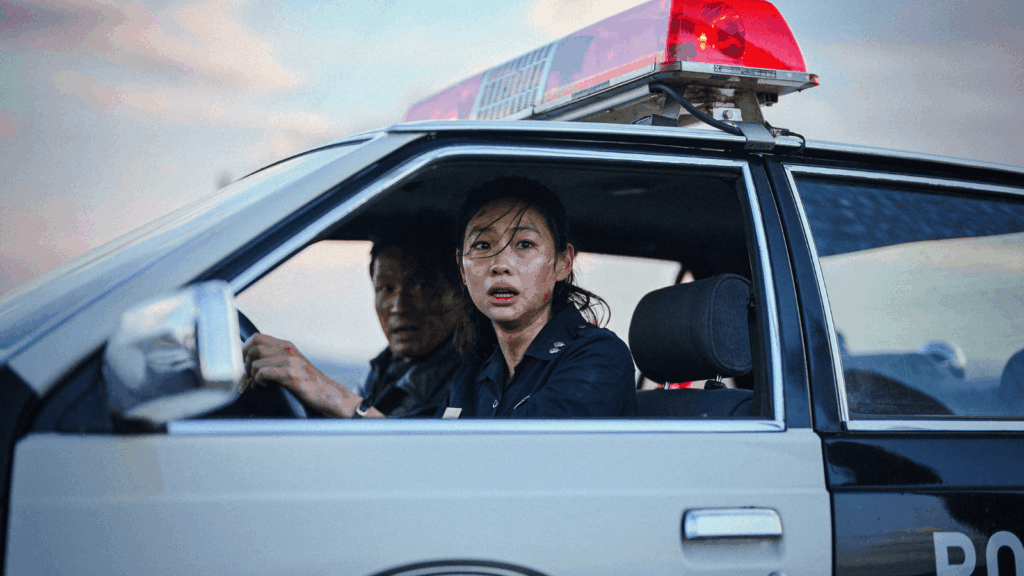
The visual presentation is similarly important. Moonlit environments, deteriorating locations, darkness, confined spaces, and larger horror sequences create a contrast between striking cinematography and disturbing subject matter. Practical effects and physical environments strengthen the sense that characters are interacting with tangible threats rather than purely digital creations.
Several of the strongest scenes combine these technical qualities with restrained performances. Sequences involving severely limited visibility use sound and careful camerawork to generate tension, while major confrontations place emotional conflict alongside physical survival. Vikander’s quieter scenes provide some of the film’s most emotionally difficult moments, while Fassbender becomes particularly effective when psychological pressure and moral conflict intensify.
These qualities also make Hope particularly suited to theatrical viewing. A large screen strengthens the environmental scale and creature sequences, while a powerful cinema sound system emphasizes the silence, distant noises, music, and sudden violence that are essential to the film’s horror. The communal tension of watching disturbing sequences with an audience can further intensify the experience.
Streaming may still suit viewers who prefer experiencing a slow burn film at their own pace, particularly given the lengthy runtime. However, audiences interested in Na Hong jin’s filmmaking, atmospheric horror, creature design, and immersive sound are likely to gain more from the theatrical presentation.
The film’s international rollout reflects its position as a significant Korean genre production with global appeal. Festival screenings generated early attention before wider theatrical distribution, while the presence of Alicia Vikander and Michael Fassbender strengthens its recognition outside Korea. Release timing varies between territories as theatrical and streaming arrangements are finalized.
Taken together, the performances, sound design, practical effects, cinematography, psychological horror, and deliberately ambiguous storytelling give Hope a distinctive identity. Its slower pacing and bleak atmosphere may not appeal equally to every viewer, but the film is designed for audiences willing to engage with horror as emotional and psychological pressure rather than simply a sequence of scares and action scenes.
Frequently Asked Questions (FAQs)
- What genre is Hope?
Hope is primarily a psychological science fiction horror film that also incorporates survival, action, and thriller elements. Rather than relying entirely on monster encounters or large action sequences, the movie uses isolation, uncertainty, disturbing imagery, and emotional pressure to create much of its horror. - Is Hope based on a true story?
No, Hope is a fictional story combining science fiction, psychological horror, and survival themes. Its narrative follows characters facing a mysterious and increasingly dangerous crisis while exploring how fear, trauma, guilt, and isolation influence human behavior under extreme circumstances. - Who directed Hope?
The film was directed by Na Hong jin, a filmmaker known for intense Korean thrillers and horror stories built around dread, violence, moral uncertainty, and psychological pressure. His approach to Hope similarly emphasizes atmosphere and emotional discomfort rather than depending primarily on conventional jump scares. - Is Hope connected to any previous movie?
No, Hope is presented as an original standalone story rather than a sequel or direct continuation of another film. Its world contains broader mysteries and unanswered questions, but viewers do not need to watch another movie beforehand to understand the central story. - Is Hope extremely violent?
The film contains graphic violence, disturbing imagery, creature attacks, and emotionally intense situations. Its violence is generally presented as frightening and desperate rather than heroic, with characters frequently appearing vulnerable and overwhelmed when confrontations occur. - Does Hope focus more on horror or action?
The movie leans more heavily toward psychological and atmospheric horror, particularly during its slower opening and middle sections. Action becomes more prominent as the crisis escalates, but even the larger sequences remain focused on fear, desperation, survival, and the emotional consequences experienced by the characters. - Are Alicia Vikander and Michael Fassbender the main characters?
Alicia Vikander and Michael Fassbender are among the film’s central performers and play major roles within the story. Vikander provides some of its strongest emotionally grounded moments, while Fassbender’s performance increasingly emphasizes psychological pressure, internal conflict, and attempts to maintain control as circumstances deteriorate. - Is Hope appropriate for younger viewers?
Because of its graphic violence, disturbing imagery, psychological horror, and emotionally intense subject matter, Hope is intended more for mature audiences. Its bleak atmosphere and themes involving trauma, fear, death, and human behavior under extreme pressure may also be unsuitable for younger viewers. - Does Hope have sequel potential?
Yes, the film leaves enough mysteries and wider world implications unresolved to support additional stories. However, the central narrative still functions as a largely standalone experience, meaning a future sequel or related story could expand the world without being necessary to complete the main film. - Is Hope worth watching?
Hope is particularly suited to viewers who enjoy intelligent horror, psychological thrillers, slow burn tension, atmospheric filmmaking, and emotionally demanding stories. Its performances, creature design, sound, cinematography, and escalating dread are major strengths, although its deliberate pacing and ambiguity may be less appealing to viewers looking primarily for fast action.
Conclusion
Hope delivers a uniquely intense blend of horror, science fiction, psychological tension, and emotional storytelling that stands apart from most mainstream genre releases. Na Hong-jin once again proves his ability to create overwhelming cinematic dread while maintaining strong emotional depth and thematic complexity. The film succeeds through atmosphere, sound design, creature effects, and committed performances from Alicia Vikander, Michael Fassbender, and the supporting cast.
Although the deliberate pacing and ambiguity may not appeal to every viewer, Hope rewards patience with unforgettable imagery, emotionally devastating moments, and terrifying suspense. It is a film that prioritizes immersion and psychological impact over simplistic thrills. For audiences searching for ambitious horror cinema with artistic vision and emotional weight, Hope stands as one of the most compelling genre releases in recent years.
Sources and Citations
- Korea JoongAng Daily, March 30, 2023 : Reports the production announcement for Hope, confirming its director, principal cast and premise, with comments from Na Hong-jin’s official press release. koreajoongangdaily.com
- Festival de Cannes, official Hope film page : Provides the film’s official competition listing, synopsis, production credits, cast and 160 minute festival runtime, alongside premiere footage and promotional materials. Festival de Cannes
- Associated Press, May 18, 2026 : Covers the Cannes premiere, contrasting early critical reactions and the film’s ambitious scale, with interviews discussing its themes, lengthy production and potential sequel. apnews.com
- Deadline, June 2026 theatrical release announcement : Reports Neon’s announcement of September 9, 2026, as the North American theatrical release date for Hope. deadline.com
- Los Angeles Times, May 17, 2026 : Interviews Na Hong-jin about development, casting, genre influences and themes of unintended tragedy. Los Angeles Times
- TheWrap, May 18, 2026 cast and director interview coverage : Features Cannes press conference comments from Alicia Vikander, Michael Fassbender and Na Hong-jin about joining the production, collaborating across languages, demanding action sequences and sequel plans. thewrap.com
- RogerEbert.com, Hope review : Presents Robert Daniels’s assessment of the film’s action, genre conventions, creature imagery and treatment of its international cast, based on its Cannes screening. rogerebert.com
- Screen Daily, May 29, 2026 : Reports international distribution agreements covering more than 200 territories and Plus M Entertainment’s statement that overseas presales had recovered nearly half the production budget. Screen
- Korean Film Council, 2026 industry outlook : Discusses Hope within the South Korean film industry, identifying Plus M Entertainment as financier and distributor and covering its reported production scale, international cast and extended postproduction. koreanfilm.or.kr
- The Irish Times, May 19, 2026 Cannes review : Examines the opening action sequences, audience enthusiasm, practical effects, digital creatures and pacing concerns associated with the 160 minute festival version. The Irish Times
Recommended
- Starfield Comes to PS5 with PS5 Pro Enhancements and New DLC: April 7 Release Date, Free Lanes Update, and Terran Armada Explained
- Switch 2 Just Got One Of The Most Nostalgic Pokemon Spin-Offs – Pokémon Pokopia Explained, Gameplay, Release Date, and Why Fans Love It
- New Avatar Fighting Game Gives Sokka a “Wife Guy” Speed Boost – Everything to Know About Avatar Legends: The Fighting Game
- Elden Ring Tarnished Edition Preorders Go Live for Switch 2, Smyths Offers the Best Price yet on the $80 Game Bundle
- VFX Breakdown: ILM’s Oscar-Nominated Work On Jurassic World Rebirth
- Devil May Cry 5 Best Sales Year Since Launch Proves Its Staying Power
- Goblin Company Guide: Co-Op Mining, Survival, and Giant Crystal Hunts
- Fixing and Customizing Metahuman Creator Hair: Exporting, Glitches, Binding Errors, and Wind Settings in UE5
- Pitchify Launches New Service to Connect Developers and Publishers: How Pitch Direct Works



































































































