







In This Article (8 sections)
Why Liquid Swords Closed and What Its Bankruptcy Means for Samson
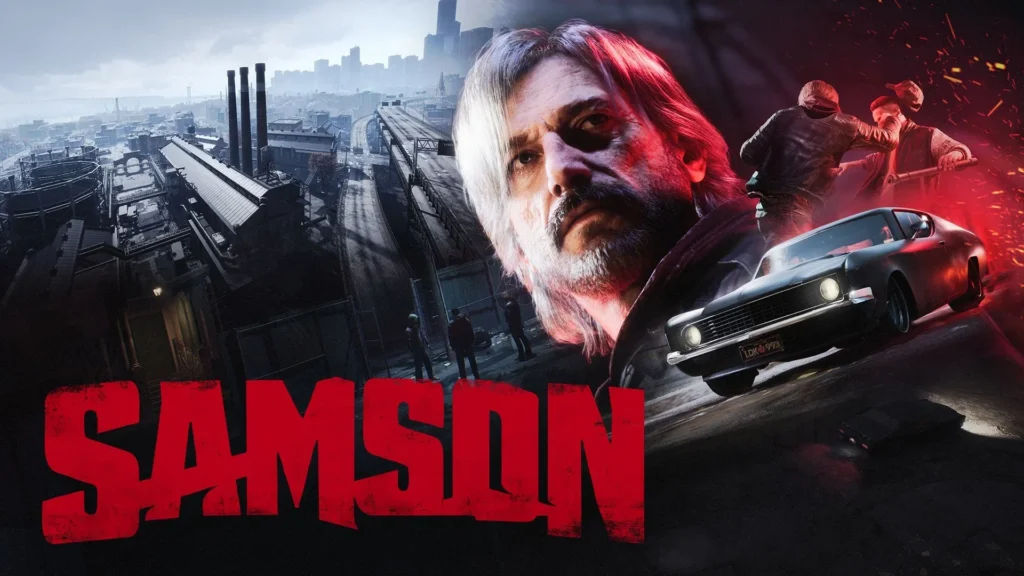
Liquid Swords’ closure followed a longer period of financial and production difficulty rather than a single launch-day failure. The studio was established in 2020, and its own spring 2023 update described a workforce approaching 80 employees, a target of 100, and movement into pre-production ahead of planned full production in 2024. By 2025, however, the company had cut approximately half of its workforce, while Christofer Sundberg later explained that the reduced team and budget required substantial changes to Samson: A Tyndalston Story, which had originally been conceived as a larger action role-playing game.
Samson launched on PC on April 8, 2026, followed by PlayStation 5 and Xbox Series X|S on September 21, while reporting identified October 12 as the date of the bankruptcy order and October 19 as the date Sundberg publicly confirmed the closure. Employees reportedly went unpaid for at least two months before the bankruptcy proceedings, affecting approximately 30 remaining staff, making the human consequences of the company’s collapse distinct from Sundberg’s plans for any future venture.
Sundberg said Samson performed substantially better on consoles than on PC, but he also made clear that the stronger console result was not enough to save Liquid Swords. His public statement did not provide a unit-sales breakdown, a console-to-PC ratio, or separate PlayStation and Xbox figures, so the evidence supports only a relative conclusion about performance rather than a precise financial comparison.
Stronger console sales also do not establish profitability because revenue must be considered alongside development costs, existing obligations, platform expenses, and the timing of cash receipts. The different release dates further complicate comparisons, since the PC version had been available for months before the console editions launched. There is therefore no sound basis for claiming that releasing on consoles earlier would have prevented the bankruptcy.
Reporting on Sundberg’s comments attributes the outcome to difficult market conditions and poor business decisions, including mistakes he acknowledged himself. Earlier coverage provides additional context, including trouble securing a publisher and Sundberg’s statement that one prospective publisher rejected the project five times.
Financial constraints also led to the removal or postponement of substantial features, including player gun combat and heavier role-playing systems, showing how financing and game design became connected during production. Those details do not prove that restoring one removed system would have made Samson successful or that a particular publishing agreement would have rescued the studio. The broader lesson is that expanding staffing and production commitments around uncertain future funding can leave a developer with expensive decisions later, especially when significant work has already been completed.
Samson’s future is now tied to separate ownership and support questions arising from the bankruptcy. Liquid Swords’ assets, including Samson, were reported to be available for sale through bankruptcy administrator Cirio Law, with preliminary bids due by October 21, but that deadline does not establish that a buyer has been selected.
Sundberg said continued support was under discussion, yet he did not announce a funded patch schedule, new development contractor, or completed transfer of the game’s rights. A future support plan would need to establish who controls the assets, who will perform additional work, how that work will be financed, and what type of fixes or improvements are planned. It is equally premature to assume that Sundberg’s proposed new company will automatically inherit Samson simply because he founded Liquid Swords and remains closely associated with the game.
Christofer Sundberg’s Smaller Studio Strategy and Cost-Control Plans
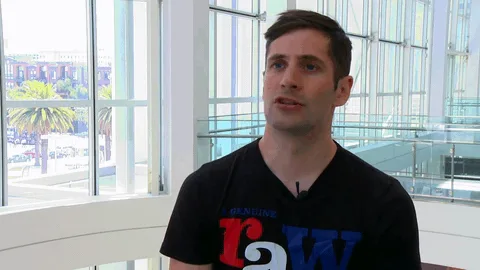
Sundberg intends to return with another game studio built around a smaller, experienced team and more restrained operating expenses. His stated goal is to create a business capable of completing a project without depending on every sales forecast or production assumption working perfectly. The important idea is financial resilience, since a game can appear affordable at the beginning while leaving very little room for delays, revisions, technical problems, or weaker-than-expected sales. A studio whose budget assumes an uninterrupted schedule and immediate commercial success can turn a routine production setback into a funding crisis. Sundberg’s proposal therefore emphasizes having enough flexibility to make mistakes and correct them without placing the entire company at immediate risk.
A smaller studio is not automatically the same thing as a smaller or safer project. A compact team can still create an expensive production if it commits to too many interconnected systems, too much content, or a development schedule that exceeds its capacity. The eventual scope of Sundberg’s first new game will consequently reveal more about the model than the eventual headcount alone. A resilient production would need to define which features are essential, how much unfinished work can safely exist at one time, and what happens if a milestone takes significantly longer than expected. Those are practical implications of his proposed approach rather than confirmed details of the new company’s production plan.
The emphasis on experienced developers is intended to support that smaller structure, although Sundberg has not announced a specific team size or recruitment roster. A compact group places more responsibility on individuals because decisions concerning design, engineering, art, production, testing, and scheduling cannot remain unresolved across large layers of management.
Experience can help identify dependencies and risks early, but it does not guarantee that a project will remain realistic or that every necessary discipline will be covered internally. Liquid Swords itself previously emphasized collaboration, quality, focused development, and avoiding crunch, showing that some of these principles are not entirely new in Sundberg’s thinking. The more important test will be whether the next studio can preserve those intentions when deadlines, funding pressures, and feature requests begin accumulating.
Running costs also extend beyond salaries, so a smaller employee count does not automatically create a low-cost studio. Software, equipment, infrastructure, external services, administration, outsourced production, and other commitments can continue even when the game’s direction changes.
A cautious model would need enough financial room to absorb testing discoveries, delays, or a decision to rebuild part of the project rather than spending almost every available resource simply reaching the planned release date. That could involve a narrower initial scope, fewer simultaneous commitments, or slower expansion, although Sundberg has not announced any of those as formal policies. The eventual measure of the strategy will be whether the new business can respond to setbacks without immediately requiring emergency financing or an unusually successful launch.

How Sundberg Wants to Use AI Without Replacing Developers
Artificial intelligence is part of Sundberg’s proposed production model, but he has described it as a selective tool rather than a substitute for entire development roles. He specifically identified prototyping, repetitive production work, and testing as areas where AI could potentially help, while also warning that AI itself can be expensive. No particular model, provider, workflow, or measurable productivity result has been announced for the proposed studio. The current information therefore establishes an intention to experiment rather than evidence that AI has already reduced costs or accelerated development. Sundberg also emphasized the need for experienced developers who can judge when a tool is useful and when continued use creates more problems than it solves.
Prototyping is one area where that approach could be relevant because an early experiment only needs to answer a specific development question rather than serve as finished production work. A team might want to determine whether a movement system feels responsive, whether a mission structure creates interesting choices, or whether an interaction deserves further investment. Producing a prototype quickly has value only if it helps the developers answer that question and decide what to do next. A temporary implementation may still need to be discarded or rebuilt if it is unsuitable for a final game. Nothing in Sundberg’s announcement establishes that AI-generated art, dialogue, music, voices, or other assets will appear in a commercial release.
The same need for measurement applies to repetitive tasks and testing. A tool that produces an initial result quickly may not actually save time if developers must spend longer correcting, verifying, or integrating its output. Testing also involves more than finding unusual behavior because someone still needs to decide whether an issue is a genuine defect, an intended interaction, a low-priority problem, or something that cannot be reproduced. A credible assessment would therefore count the full workflow, including preparing instructions, reviewing results, correcting mistakes, and incorporating accepted work into production. Until such evidence exists, claims that AI will produce fewer bugs or substantially faster development remain expectations rather than demonstrated outcomes.
Sundberg’s rejection of role replacement also separates his staffing philosophy from his interest in new tools. A studio can deliberately choose a smaller project and hire a correspondingly compact team without assuming that software can replace every discipline the larger studio once employed. However, that stated intent is not yet a detailed employment policy because there are no confirmed job descriptions, hiring commitments, training plans, or explanations of how responsibilities will change during development.
Transparency about specific uses would make the approach easier for developers and players to evaluate than describing the future company simply as AI-assisted. The strongest evidence will eventually come from who the studio hires, how much authority those people retain, what work the tools actually perform, and whether the resulting production remains sustainable.

What is Confirmed About Sundberg’s Next Studio and What Remains Unknown
The reviewed announcement establishes Sundberg’s intention to form another studio, but it does not provide a company name, confirmed staff list, publisher, funding agreement, first game, supported platforms, or release date. There is also no playable project attached to the announcement. That places the news at a much earlier stage than a conventional studio launch accompanied by a production reveal. Sundberg has described the kind of business he wants to build and some of the lessons he intends to apply after Liquid Swords, but those intentions still need to become concrete commitments. Treating the proposal as though an operating studio and established game schedule already exist would overstate the current evidence.
Sundberg’s career naturally encourages speculation about action games, vehicles, open-world design, and a possible continuation of ideas associated with Samson or Just Cause. None of those possibilities is confirmed by the announcement. His previous projects demonstrate experience in those areas, but they do not determine what the first game from a new company will be. The same is true of the AI discussion, which does not reveal the engine, visual style, distribution model, commercial structure, or genre of the eventual project. Each of those details requires its own announcement rather than inference from Sundberg’s past work.
The next meaningful developments would therefore be concrete business and production milestones. A studio name would establish the company’s public identity, while named collaborators would provide a clearer picture of the team and the expertise it contains. Financing information or a publisher agreement would show how the business expects to sustain production, and an actual project reveal would establish scope, genre, platform plans, and development priorities. Those facts would make it possible to evaluate whether the smaller, lower-cost approach is being implemented in practice rather than remaining an intention. Until then, attaching a release window or detailed project description would turn unknowns into invented information.
Sundberg’s plan is most significant as a response to the lessons he says he has drawn from Liquid Swords’ collapse. He wants a company that can survive mistakes, operate with lower ongoing costs, use experienced developers efficiently, and experiment with AI where it provides a measurable benefit. That vision addresses several of the pressures that affected his previous studio, but it cannot retroactively resolve Liquid Swords’ bankruptcy, the unpaid employees, or uncertainty around Samson’s future support and ownership.
A promising proposal deserves attention without being treated as a completed recovery. The real test will begin when Sundberg establishes the company, secures financing, defines a realistic first project, and demonstrates that the new production model can remain sustainable when development becomes difficult.

Frequently Asked Questions (FAQs)
- Is Christofer Sundberg planning another game studio?
Yes. Reporting describes Sundberg’s intention to establish another game studio following the closure of Liquid Swords. His proposed model would use a smaller, experienced team, lower operating costs, and selective use of AI for areas such as prototyping, repetitive work, and testing. However, the announcement does not establish that the new company has already launched, hired a complete team, or begun production on a confirmed game. It is best understood as a statement of intent and production philosophy rather than a formal studio and game reveal. - When did Liquid Swords enter bankruptcy?
Reports identify October 12, 2026, as the date of the bankruptcy order involving Liquid Swords. Sundberg publicly confirmed the studio’s closure later, on October 19, which is why those two dates should not be treated as interchangeable. The bankruptcy order represents the legal development, while the later statement represents the founder’s public acknowledgment of what had happened. Keeping the chronology clear also shows that the closure followed earlier funding problems, staff reductions, and financial pressure rather than appearing without warning. Samson’s console release on September 21 also occurred only weeks before the bankruptcy order. - Did Samson perform better on consoles than on PC?
Yes, according to Sundberg’s public comments, Samson performed substantially better on consoles than it had on PC. However, he did not provide unit sales, platform-by-platform revenue, or a percentage showing how much stronger the console result was. The PlayStation 5 and Xbox Series X|S versions also launched months after the PC version, which makes simple comparisons between total sales periods misleading. The available statement therefore supports only the conclusion that console performance was stronger in relative terms. It does not allow a reliable calculation of how much better either console version performed individually. - Does better console performance mean Samson became profitable?
No. A stronger result on consoles only shows that those versions performed better than the PC release according to Sundberg’s account. Profitability would require information about total revenue, development expenditure, marketing, platform costs, outstanding obligations, and other expenses connected with the project and company. A game can generate improved sales while its developer still lacks enough money to meet existing commitments. Liquid Swords’ closure despite stronger console performance demonstrates why relative sales improvement and overall financial recovery are different questions. - What would make a smaller studio financially safer?
A smaller headcount alone would not make a studio financially secure. The more important factors would include keeping project scope realistic, maintaining enough funding to survive delays, controlling recurring expenses, and avoiding production plans that depend on highly optimistic sales assumptions. Sundberg’s proposed approach emphasizes leaving enough room to recover from mistakes without placing the entire business at risk. A compact team could still become financially vulnerable if it attempts a game whose systems, content, outsourcing, or schedule exceed the resources available. The real measure of safety would therefore be whether the project and business commitments remain aligned with the money and people actually available. - Will the new studio use AI to replace developers?
Sundberg has said that replacing development roles is not the objective of his proposed use of AI. He has instead discussed possible uses in prototyping, repetitive production work, and testing, while also noting that AI tools can themselves be expensive. His comments suggest that experienced developers would still be needed to judge whether those tools are useful and when they should stop being used. However, this remains a statement of intent rather than a detailed employment policy. No confirmed hiring plan, staffing structure, or description of how individual roles may change has been published. - Are AI-generated graphics or voices confirmed for the first game?
No. Nothing in the reviewed announcement confirms that AI-generated artwork, dialogue, voices, music, or other final assets will appear in a commercial game from Sundberg’s proposed studio. His comments concern AI as a possible development aid, particularly for prototyping, repetitive work, and testing. Internal experimentation is different from shipping generated content in a finished product. The first game itself has not even been publicly identified, so there is no basis for making detailed claims about its production pipeline or final assets. - Will Samson receive more updates?
Sundberg said continued support for Samson was being discussed after Liquid Swords’ closure. That indicates interest in keeping the game supported, but it does not amount to a confirmed update schedule or guarantee that additional patches will be released. Continued development would require someone with the legal authority, funding, and personnel necessary to perform and distribute the work. The bankruptcy and asset-sale process also create uncertainty over who may ultimately control the game. Players should therefore wait for a concrete announcement identifying the responsible party and the specific support being planned. - Has a buyer for Samson been confirmed?
Not in the reviewed reporting. Liquid Swords’ assets, including Samson, were reported to be available through a bankruptcy sale process managed by Cirio Law, with preliminary bids due by October 21. A bidding deadline only marks a stage in that process and does not prove that a transaction has been completed. It also does not establish that any eventual buyer would continue development, publish patches, or expand the game. Confirmation would require an announcement identifying the buyer and the terms or consequences of the completed transaction. - What is the new studio’s name and first release date?
Neither a studio name nor a first release date has been announced in the reviewed material. Sundberg has also not revealed the first game, supported platforms, publisher, confirmed team, or production schedule. His comments currently describe the type of company he wants to create and some of the lessons he intends to apply after Liquid Swords. Any specific studio identity, game title, platform lineup, or launch window would therefore go beyond the available evidence. The next meaningful information would be a formal company announcement, named collaborators, confirmed financing, or an actual project reveal.

Conclusion
Sundberg’s proposed return to game development raises a practical question: can his next venture keep its creative ambitions within commitments the business can realistically sustain? The answer will depend on decisions about project scope, funding, staffing, recurring costs, and production planning long before launch sales provide any verdict. A smaller studio may create more flexibility, but that advantage will only matter if its first project remains aligned with the resources actually available and leaves enough room to absorb delays, revisions, or weaker-than-expected commercial performance.
AI forms one part of that proposed model, yet its usefulness cannot be established simply by announcing plans to use it for prototyping, repetitive tasks, or testing. The meaningful evidence will be whether specific tools help experienced developers complete worthwhile work more efficiently after the time and cost of supervision, verification, and correction are included.
Samson’s future should also remain separate from Sundberg’s next business venture. Continued support for the game requires concrete ownership, funding, staffing, and development arrangements, none of which are automatically created by the founder planning another studio. Likewise, a new company would not resolve the consequences of Liquid Swords’ bankruptcy or establish that Samson will transfer to Sundberg’s next operation. For now, the confirmed story is one of plans emerging from a documented studio closure rather than a completed comeback. A formal company launch, named team, secured financing, funded first project, and concrete Samson support agreement would each represent meaningful additional developments, and none should be treated as settled until they are actually announced.
Sources and Citations
- PC Gamer, Andy Chalk, October 20, 2026: Reports on Christofer Sundberg’s plans for a smaller new studio, lower operating costs, experienced developers, and selective use of AI for prototyping, repetitive tasks, and testing. PC Gamer
PC Gamer: Founder of bankrupt Samson studio mulls how to use AI for his next attempt - PC Gamer, Rick Lane, October 18, 2026: Covers Liquid Swords’ bankruptcy, reports that around 30 employees had gone unpaid for at least two months, and details the bankruptcy administrator’s effort to sell the studio and its assets. PC Gamer
PC Gamer: Liquid Swords has gone bankrupt following staff claims of unpaid wages - PC Gamer, Jeremy Peel, April 2, 2026: Pre release interview explaining how funding and staffing difficulties forced Liquid Swords to reduce Samson from a larger action RPG, including the removal or postponement of major systems. It also discusses the studio’s publisher difficulties. PC Gamer
PC Gamer: Samson had to be pared back mid development - Pure Xbox, Fraser Gilbert, October 19, 2026: Reproduces Sundberg’s public closure statement, including his claim that Samson performed substantially better on consoles than on PC and that continued support was being discussed. Pure Xbox
Pure Xbox: Samson Developer Issues Statement As Studio Is Forced To Close - WN Hub, October 21, 2026: Summarizes Sundberg’s proposed new venture, including plans for a small experienced team, reduced ongoing expenses, more conservative financial assumptions, and selective AI use. WN Hub
WN Hub: Liquid Swords founder plans a new studio and AI use - Liquid Swords, “The Liquid Swords Update: Spring 2023”: Contemporary studio update documenting Liquid Swords approaching 80 employees, its goal of reaching 100 staff, and its growth before Samson’s later production and financing difficulties. liquidswords.com
Liquid Swords: The Liquid Swords Update Spring 2023 - Liquid Swords, “A Visit from Future Games”: Describes Sundberg’s original philosophy for Liquid Swords, including small teams, collaboration, transparency, quality, and a stated preference for focusing on games rather than business metrics. liquidswords.com
Liquid Swords: A Visit from Future Games - iXBT Games, October 17, 2026: Reports on Liquid Swords’ bankruptcy, unpaid employees, the approximately 30 workers affected, and the administrator’s attempt to find a buyer for the company. iXBT.games
iXBT Games: Liquid Swords went bankrupt and employees were left without salaries - iXBT Games, September 21, 2026: Confirms Samson’s September 21 console release on PlayStation 5 and Xbox Series X|S and provides additional context on the earlier April 8 PC launch. iXBT.games
iXBT Games: Samson console release and performance details - iXBT Games, October 20, 2026: Covers Sundberg’s confirmation that Liquid Swords was closing and repeats his statement that Samson performed significantly better on consoles but not well enough to save the company. iXBT.games
iXBT Games: Samson creators confirm Liquid Swords closure
Recommendations
- Subnautica 2 Early Access Roadmap: Co-Op Updates, Sprinting, and More
- Virtua Fighter 6 Leak Explained
- Best Gaming Headsets for 2026: Top Wireless, Wired, PC, PS5, and Xbox Picks
- Take-Two CEO Comments on Roblox and GTA Explained
- All characters and color variations in Mario Tennis Fever: Full roster, unlocks, and alternate colors
- Assassin’s Creed Black Flag Remake
- How to Make a 3D VTuber Avatar: The Complete Guide for Beginners and Content Creators
- Farm to Table Grow Your Own Food & Make Fine Dishes in Cozy Restaurant Simulator: Complete Gameplay Guide
- Don’t Fret Hits All the Right Notes for a Frightening Survival-Horror Experience
- Assassin’s Creed Black Flag Resynced Post-Game Support Teased Ahead of GTA 6



































































































