








In This Article (7 sections)
Stranger Than Heaven Story: Makoto Daito’s Search for Belonging and Cultural Identity
Stranger Than Heaven places the search for belonging at the centre of a crime drama spanning five decades. Through protagonist Makoto Daito, RGG Studio explores what happens when someone crosses an ocean hoping to find acceptance, only to discover that ancestry does not guarantee a welcome. Director Mikinobu Abe and lead actor Yu Shirota bring personal connections to that premise, drawing on experiences of cultural displacement that helped them understand the emotional foundations of Makoto’s journey. The resulting game combines historical settings, physical confrontation, musical expression, and relationships shaped by changing circumstances. With its release scheduled for January 15, 2027, available interviews and previews provide a clearer picture of its ambitions, although the complete narrative remains to be evaluated.
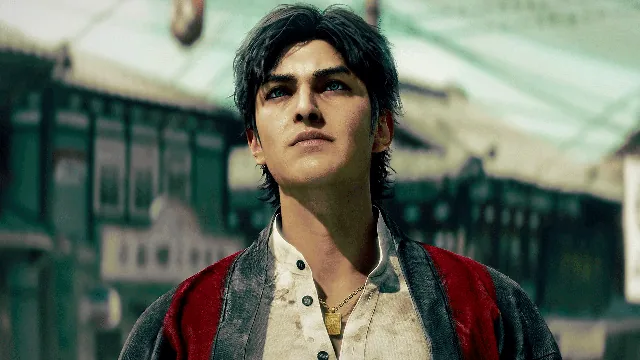
Stranger Than Heaven is an upcoming action adventure developed by RGG Studio and published by Sega. Its story begins in 1915 with Makoto Daito, a teenager whose father is American and whose mother is Japanese. Following his parents’ deaths and experiences of persecution, he boards a ship from San Francisco, hoping to begin a better life in Japan. Sega presents that departure as the beginning of his struggle to find somewhere he can belong.
The premise establishes a conflict more personal than whether Makoto can become powerful. He must discover what kind of life he wants when the societies connected to his heritage do not automatically accept him. His involvement in the criminal underworld and opportunities in entertainment offer different ways to pursue recognition, security, and influence. Finding work, gaining allies, and protecting himself may resolve immediate problems, but whether those achievements provide a lasting sense of home is a separate question that gives the story its emotional foundation.
Mikinobu Abe serves as the game’s director within a leadership team that includes chief director Ryosuke Horii, producer Hiroyuki Sakamoto, and RGG Studio head Masayoshi Yokoyama, who serves as executive producer and executive director. Yu Shirota portrays Makoto Daito, bringing experience across television, film, theatre, singing, and directing. His stage credits include Elisabeth, Pippin, and Nine, making his background particularly relevant to a protagonist whose life develops through both dramatic conflict and musical performance. Abe establishes the world and circumstances surrounding Makoto, while Shirota gives the character a voice and emotional presence. The effectiveness of the identity theme depends partly on whether audiences can recognize uncertainty, guardedness, excitement, and growing confidence through performance rather than dialogue alone.
Abe explained to TheSixthAxis that living abroad and subsequently returning to Japan helped him understand the desire to find somewhere comfortable and accepting. He connected that experience with Makoto’s need to establish a home without suggesting that the protagonist’s circumstances directly reproduce his own. In an interview with Game Informer, Abe also explained that the narrative developed from a question about why someone would establish a criminal organisation. Introducing a protagonist of mixed Japanese and American heritage gave that question a stronger personal motivation.
This approach allows belonging to become something Makoto attempts to construct when society does not freely offer it. A criminal organisation can provide loyalty, protection, status, and a defined position among other people, but those benefits may come with coercion, obligations, and violence. Understanding why someone seeks security through organised crime does not automatically justify the decisions that follow.
Makoto’s Japanese and American background affects how people interpret him. Sega’s October story material states that he faces discrimination after arriving in Japan, despite travelling there in search of a better life. His arrival does not resolve the rejection he experienced in America, reinforcing the distinction between cultural heritage and social acceptance. Language also plays an important role in expressing that experience.
In an interview with UnGeek, the development team explained its decision to use a shared performance track incorporating the characters’ languages, with subtitles supporting localisation. The performers’ ability to deliver the required dialogue was part of the creative approach. This allows identity to emerge through everyday interactions, where understanding words does not necessarily mean understanding social expectations, and speaking confidently does not guarantee acceptance.
The premise distinguishes cultural familiarity from belonging. Makoto can learn how people behave, improve his communication, and establish himself while still encountering prejudice. His bicultural identity is not presented as a problem that automatically disappears once he becomes fluent or successful. Instead, the central question concerns how he develops an understanding of himself while navigating expectations that change throughout his life.
Makoto’s journey introduces several influential characters, including fellow stowaway Yu Shinjo, played by Dean Fujioka, and Orpheus, portrayed by Snoop Dogg. Sega describes Shinjo as a man of Japanese and British heritage, while Orpheus becomes an important guide who recognizes Makoto’s musical ability. Shinjo shares aspects of Makoto’s circumstances, although similar experiences do not necessarily produce identical personalities or ambitions. Orpheus represents another type of relationship involving mentorship, opportunity, and differences in power. Makoto may feel understood by one companion, indebted to another, and threatened by someone who nevertheless offers employment. These conflicting relationships can make his development more convincing than a story built entirely around straightforward friendships or rivalries.
Shirota’s portrayal must account for changes in age, language, and social confidence. In Game Informer’s interview, he described Makoto initially thinking and speaking to himself in English, with Japanese becoming more prominent over time. Abe also discussed attention to body language, interpersonal distance, facial animation, and regional speech differences.
These details suggest an approach in which cultural adaptation develops gradually through speech, movement, and behaviour. A story covering fifty years also presents a considerable acting challenge because ageing cannot be communicated through vocal changes alone. Confidence, impatience, restraint, and vulnerability can influence how someone speaks and interacts with others. The strongest dramatic possibility is that players will recognize aspects of the younger Makoto within his older personality, even after his circumstances and responsibilities have changed substantially.
Shirota told Game Informer that experiencing outsiderhood in Spain and later encountering similar treatment after moving to Japan made Makoto’s circumstances emotionally familiar. Abe separately told TechRadar that he hopes the character’s experiences resonate with people who have faced discrimination while allowing those approaching the game primarily for entertainment to become absorbed in its human story. These personal experiences are creative influences rather than evidence that Makoto directly represents either man’s biography. His circumstances belong to a fictional historical narrative, but the emotional observations behind his portrayal may help communicate the discomfort of being judged before speaking or discovering that a supposedly familiar place does not offer the expected acceptance.
Sega’s Kokura material identifies two important sources of early support. Heigo Yashima takes Makoto into his organisation, while Tae Matsumoto welcomes him when circumstances bring him to her workplace. These encounters occur in a city where Makoto also experiences hostility and exclusion, making acceptance a practical concern involving employment, companionship, protection, and opportunities. However, belonging to a group may introduce new forms of dependence.
Support from powerful individuals can create obligations, while affection and loyalty may become entangled with dangerous relationships. This gives the crime drama an important emotional conflict: Makoto may find acceptance through organisations that also restrict his independence. His journey can therefore explore whether belonging allows disagreement, whether acceptance depends on usefulness, and whether someone can leave a community without losing everything.

Stranger Than Heaven Gameplay: Five Historical Eras, Combat, Music, and RGG Studio’s Vision
Stranger Than Heaven follows Makoto Daito through five selected periods spanning fifty years, beginning in 1915 and ending in 1965. Rather than depicting every intervening year, the game focuses on significant stages of his life, with changing locations, relationships, and ambitions providing continuity between chapters. Producer Hiroyuki Sakamoto told Inven Global that these settings were selected around emotionally significant points in the narrative, with Makoto’s changing goals carrying him eastward.
The confirmed historical settings are:
- 1915, Kokura, Fukuoka: Introduces Makoto’s arrival in Japan and an industrial environment where he faces discrimination while searching for stability.
- 1929, Kure, Hiroshima: Develops the setting around shipbuilding and criminal organisations as Makoto’s circumstances change.
- 1943, Minami, Osaka: Expands the entertainment setting and explores another stage of Makoto’s personal and professional development.
- 1951, Atami, Shizuoka: Continues the narrative into a later period of his life, introducing another environment shaped by changing circumstances.
- 1965, Shinjuku, Tokyo: Represents the final confirmed historical setting within the fifty year journey.
The timeline allows earlier decisions to acquire different meanings as Makoto grows older. An alliance formed for survival may become a lasting obligation, while an ambition that once offered freedom may eventually create new responsibilities. This structure also places demands on narrative pacing. Time jumps must provide enough context to make changes understandable without explaining every mystery, while relationships need sufficient development to preserve the emotional connection between Makoto’s younger and older selves.
Music is a substantial component of Stranger Than Heaven’s gameplay. According to the official PlayStation description, Makoto gathers sounds from his surroundings, uses them to create tracks, recruits performers, and organizes productions. Players can make decisions involving setlists, bands, casts, lighting, and staging, giving entertainment management a more active role than a background activity.
The advertised musical activities include:
- Sound collection: Gathering inspiration from environmental sounds encountered during exploration.
- Music creation: Using collected sounds and musical ideas to develop tracks.
- Performer recruitment: Finding musicians and entertainers who can contribute to productions.
- Show organization: Making decisions about performers, setlists, lighting, and staging.
- Musical performance: Presenting entertainment productions that connect Makoto with other people.
The musical emphasis extends to the main theme, performed by Snoop Dogg, Satoshi Fujihara, Ado, and Tori Kelly, all of whom are involved in the game’s cast. Abe has described music as a way for Makoto to communicate across barriers created by prejudice and language, establishing a connection between entertainment and the protagonist’s search for acceptance. Exploration therefore gains a purpose beyond finding enemies or completing objectives. Streets become sources of creative inspiration, while listening to the environment allows players to notice ordinary activity that might otherwise serve as background atmosphere.
Organizing performances requires cooperation, talent recognition, and communication, offering Makoto a form of social participation distinct from establishing influence through force. Music and organised crime consequently provide contrasting ways for him to seek recognition. One involves authority and physical confrontation, while the other creates opportunities for collaboration and expression. The complete game must still demonstrate how deeply these activities connect to the narrative, but their inclusion gives the identity theme an interactive foundation.
Combat introduces a different approach to familiar RGG Studio action. Xbox Wire’s hands on report describes a system where shoulder buttons and triggers control light and heavy attacks associated with Makoto’s left and right sides. This creates a different rhythm from conventional fighting systems that rely primarily on face buttons, placing greater emphasis on positioning, defence, timing, and recognizing opportunities to attack. Sakamoto told Inven Global that the team wanted an unrefined physical quality appropriate to Makoto’s circumstances. He also connected the unfamiliarity of the combat system with the player’s process of understanding the protagonist’s situation.
This suggests an attempt to make adaptation part of gameplay, as players gradually learn to fight effectively while Makoto learns to survive in unfamiliar surroundings. The physical nature of combat may also influence how violence is presented within the story. Deliberate attacks and difficult confrontations can make fighting feel more consequential than effortless displays of strength. However, the effectiveness of this approach depends on readable enemy behaviour, responsive controls, and encounters that reward understanding rather than repetition.
Historical presentation is another major part of the project. Sega describes the world as an imagined version of Japan, with environments modelled on real cities and historical periods. This gives RGG Studio creative flexibility rather than requiring an exact reconstruction of Japanese history. The development team has nevertheless described substantial artistic research. In UnGeek’s interview, the creators discussed period painting, older film equipment, vintage lenses, and approaches to lighting and colour. These influences helped shape the visual atmosphere of different periods, allowing environmental details to communicate changes in society and Makoto’s circumstances.
A street’s lighting, the arrangement of an entertainment venue, or the appearance of an interior can establish a different historical atmosphere before characters explain what has changed. However, convincing period design should not be confused with comprehensive historical representation. Stranger Than Heaven follows one fictional character through selected experiences rather than attempting to document every aspect of Japanese society across fifty years. Its historical ambition is best assessed through how effectively research, artistic choices, and character development support Makoto’s individual journey.
The game also maintains connections to RGG Studio’s Like a Dragon franchise, although its creators emphasize that it has a distinct identity. In an AUTOMATON interview, Masayoshi Yokoyama connected Makoto’s journey with the founding of the Tojo Clan while explaining that the project should be understood as its own title. Familiar organisations and locations provide continuity without making Stranger Than Heaven interchangeable with earlier games. Abe similarly told TechRadar that the team reconsidered elements such as the map, interface, narrative presentation, and cutscenes according to this project’s requirements.
Players familiar with RGG Studio’s crime dramas may recognize certain themes and references, but Stranger Than Heaven introduces a different protagonist, a longer historical timeline, and substantial musical activities. The relevant comparison is therefore how effectively these systems support Makoto’s personal development rather than whether every feature resembles an earlier Like a Dragon title.
Early previews suggest that the game has established a recognizable identity, although questions remain about its complete execution. RPGFan’s October 21 preview covered almost three hours across five playable sections involving the first three eras. The demonstration included early story material and later exploration, but substories were disabled in the Kure and Minami portions. RPGFan responded enthusiastically to the selected material, while TheSixthAxis offered a more qualified assessment of combat, appreciating the distinct fighting approach but noting that slower, deliberate encounters and repetition might not appeal equally to every player.
These responses indicate promising elements while identifying areas where personal expectations may influence enjoyment. Selected sections can demonstrate movement, combat, presentation, and immediate character interactions, but they cannot fully establish whether the narrative maintains its quality throughout the campaign. Questions remain about how frequently meaningful changes occur, whether entertainment activities remain engaging, and how effectively relationships develop across later periods.
The game’s ambition rests on connecting historical change with personal development. Combat, music, exploration, and crime drama need to support the same emotional journey rather than functioning as disconnected attractions. Whether those systems remain satisfying over the entire campaign will be central to assessing the finished experience.

Stranger Than Heaven Release Date, Platforms, Preview Reception, and Final Expectations
As of October 22, 2026, Stranger Than Heaven is scheduled for release on January 15, 2027. Sega’s official announcement confirms PlayStation 5, Xbox Series X|S, and PC, including Steam and Xbox on PC. Xbox Cloud availability is also included in the announced plans, while Xbox has confirmed day one Game Pass availability and Xbox Play Anywhere support.
The confirmed release and platform information includes:
- Game title: Stranger Than Heaven.
- Developer: RGG Studio.
- Publisher: Sega.
- Release date: January 15, 2027.
- PlayStation platform: PlayStation 5.
- Xbox platforms: Xbox Series X|S.
- PC platforms: Steam and Xbox on PC.
- Cloud availability: Xbox Cloud.
- Game Pass: Available from launch.
- Xbox Play Anywhere: Supported for participating Xbox digital versions.
- PlayStation features: Offline single player gameplay, PS5 Pro enhancement, and DualSense vibration and trigger support.
The announced release date replaces the earlier winter launch window, providing a more specific schedule for players following the project. Xbox Play Anywhere applies to the participating Xbox digital version and allows play across supported Xbox console and Windows PC environments. The PlayStation Store also identifies the game as a single player PS5 release with offline play enabled.
The available previews provide encouraging indications about its presentation, character development, and unusual combination of mechanics, but they do not establish the quality of the complete campaign. RPGFan’s positive response to selected sections highlights the appeal of the game’s early material, while TheSixthAxis raises concerns about whether deliberate combat and repetition will remain satisfying for every player.
Stranger Than Heaven’s greatest narrative ambition lies in exploring how belonging changes throughout a person’s life. Makoto begins as a teenager seeking acceptance in his mother’s homeland, but his circumstances place him among criminal organisations, influential individuals, and entertainment opportunities that may offer competing definitions of success. The five historical settings provide room for those relationships to evolve, allowing earlier decisions to influence later responsibilities and personal conflicts.
The experiences described by Abe and Shirota add another dimension to the project. Their familiarity with cultural displacement helps explain the attention given to language, behaviour, and the difference between ancestry and acceptance. Those influences provide a foundation for Makoto’s characterization without making his fictional journey a direct recreation of their lives.
The entertainment systems also have the potential to strengthen the central themes. Music offers a form of expression that can cross social and linguistic barriers, while producing performances requires collaboration and recognition of other people’s abilities. These activities contrast with the authority and danger associated with organised crime, providing different ways for Makoto to pursue influence and connection.
Combat introduces a more physical expression of struggle, with its unusual control arrangement requiring players to adapt to a different fighting rhythm. Historical exploration adds context to those experiences, placing personal decisions within changing environments inspired by several decades of Japanese life.
The most important question is whether these elements consistently reinforce one another. A compelling identity story depends on more than an interesting premise, just as unusual combat and detailed historical environments require sustained execution. The game must make Makoto’s development believable while ensuring that its activities remain engaging throughout the journey.
For players familiar with Like a Dragon, Stranger Than Heaven offers recognizable crime drama elements alongside a distinct protagonist and broader historical perspective. For newcomers, the central appeal rests on Makoto’s personal story, the changing settings, and the combination of combat and musical expression.
Ultimately, Stranger Than Heaven presents an ambitious crime drama about identity, survival, and the search for acceptance. Its strongest potential lies in connecting one character’s personal development with fifty years of changing relationships and environments. The documented interviews, gameplay systems, and early previews establish a promising foundation, but the emotional payoff and consistency of the complete adventure will depend on the finished game.
Frequently Asked Questions (FAQs)
- What kind of game is Stranger Than Heaven?
Stranger Than Heaven is a single player action adventure developed by RGG Studio and published by Sega. It combines crime drama, historical exploration, physical combat, music creation, and entertainment management. Players follow Makoto Daito through five historical periods spanning fifty years, exploring different stages of his life. The experience brings together personal conflicts, fights, and creative pursuits, with music and performance forming substantial parts of his journey. - Who plays Makoto Daito?
Yu Shirota portrays Makoto Daito. His professional background includes acting, singing, musical theatre, and directing, making his experience relevant to both the dramatic and musical elements of the role. Because Makoto’s story spans fifty years, the portrayal also involves significant changes in the character’s personality and outlook. Shirota’s performance therefore needs to express both immediate emotional conflicts and the broader changes that come with different stages of Makoto’s life. - Is Makoto Daito based directly on Yu Shirota?
No. Makoto Daito is a fictional character, although Shirota has explained that his own experiences helped him understand the role. Feeling like an outsider in both Spain and Japan gave him a personal connection to Makoto’s struggles with identity and acceptance. These similarities inform his interpretation of the character, but Makoto’s background and experiences should not be understood as a retelling of Shirota’s life. - Why does Makoto travel to Japan?
Makoto travels to Japan after losing his parents and experiencing persecution in America. With an American father and a Japanese mother, he hopes to find acceptance and a sense of belonging in his mother’s homeland. However, he encounters further discrimination after arriving. His move therefore does not resolve the difficulties surrounding his identity, and finding a place where he feels accepted remains an important part of his personal struggle. - Which periods does the story cover?
The story takes place across five historical settings: Kokura in 1915, Kure in 1929, Minami in 1943, Atami in 1951, and Shinjuku in 1965. Together, these settings span fifty years and represent significant stages of Makoto’s life. Moving between different locations and decades allows the narrative to explore changes in his circumstances and personality alongside the changing historical surroundings in which his story unfolds. - Does the game have a connection to Like a Dragon?
Yes. Developer interviews confirm connections to the fictional world associated with Like a Dragon, including the Tojo Clan. These links give players familiar with that series recognizable elements within Stranger Than Heaven’s setting. However, the game is presented as a distinct experience with its own protagonist and storyline. Makoto Daito’s journey across five historical periods remains its central focus, even where connections to the wider fictional world appear. - What makes the combat different?
The combat system assigns attacks to Makoto’s left and right sides, with shoulder buttons and triggers controlling the corresponding light and heavy attacks. This makes choosing an attacking side and level of force part of the fighting system. Timing, positioning, defence, and counterattacks are also emphasized, so players need to consider when to strike, how to respond to an opponent, and when a defensive approach creates an opportunity to attack. - Is music an optional background feature?
Music plays a substantial role in the gameplay and extends beyond the soundtrack. Makoto can collect environmental sounds, use them to create compositions, recruit performers, and organize productions. Decisions involving setlists, lighting, and staging connect music creation with entertainment management. These activities give players a role in both developing musical material and shaping how it is performed, making music an active part of the experience. - Do the previews establish how good the complete game will be?
No. Early previews provide impressions of selected gameplay sections, helping readers understand particular mechanics and the presentation of those portions. They cannot establish whether the complete experience maintains the same quality across all five historical periods. Questions about the overall pacing, development of Makoto’s character, and consistency of the story require a broader view of the finished game than limited preview sessions can provide. - When will the game release, and where can it be played?
Stranger Than Heaven is scheduled for release on January 15, 2027, for PlayStation 5, Xbox Series X|S, and PC. Xbox has also confirmed Game Pass availability from launch, meaning eligible subscribers will be able to access the game when it releases. Xbox Play Anywhere support is also confirmed, supporting play across compatible Xbox console and Windows PC versions within that program.

Conclusion
Stranger Than Heaven explores a personal question through its crime narrative: how does someone build a life when the places connected to his identity do not readily accept him? Abe’s direction and Shirota’s performance approach bring this theme to life through changes in language, relationships, confidence, and creative opportunities, showing how Makoto gradually develops his sense of identity.
The game’s strongest potential lies in connecting combat, music, work, and personal relationships to Makoto’s struggle for acceptance. However, the complete release must demonstrate that these elements sustain a compelling narrative across five decades. For now, interviews and previews establish an ambitious story about belonging, personal growth, and the relationships that shape an entire life.
Sources and Citations
- Sega, Official Announcements : Covers the story, cast, musical contributors, release date, supported platforms, and Makoto Daito’s early experiences in Kokura. ryu-ga-gotoku.com
Citations: Story, Cast, Theme Song, and Gameplay Reveal; January 15, 2027 Release Announcement; Follow Makoto Daito’s Beginnings in the Kokura Story Trailer. - Game Informer, October 21, 2026 : Interviews with director Mikinobu Abe and actor Yu Shirota examine cultural identity, narrative development, multilingual performance, and portraying Makoto across different ages. Game Informer
Citation: One Man’s Story of Biculturalism, Music, Fitting In, and Fighting, Told Over 50 Years. - TechRadar, October 21, 2026 : Developer interviews discuss discrimination, belonging, music’s emotional importance, and RGG Studio’s efforts to establish the game’s distinct identity. techradar.com
Citations: Mikinobu Abe on Makoto’s Life, Discrimination, and Music; How RGG Approached Stranger Than Heaven as a New Experience. - Inven Global, AUTOMATON, and UnGeek : Developer interviews cover combat design, historical interpretation, Like a Dragon connections, the combined Japanese and English voice track, and visual inspiration. Inven Global
Citations: Inven Global: Why the Step Up in Brutality?; AUTOMATON: Historical Accuracy and the Fifty-Year Story; AUTOMATON: Combat Conventions and Like a Dragon Connections; UnGeek: One Dub, Music, and Visual Design. - RPGFan and TheSixthAxis, October 21, 2026 : Hands-on previews assess combat, exploration, storytelling, music, and presentation through selected sections of the game’s opening eras. RPGFan
Citations: RPGFan: Stranger Than Heaven Hands-On Experience, A Place to Call Home!; TheSixthAxis: A Sprawling Crime Drama of Fighting and Showbiz. - Xbox Wire, Xbox, and PlayStation Store : Official coverage and product listings document combat mechanics, characters, platform availability, editions, and supported platform features. XBOX Wire
Citations: Xbox Wire: RGG Studio’s New Combat System; Xbox Wire: Characters Shaping Makoto Daito’s Journey; Xbox Product Listing; PlayStation Store Product Listing. - Kyodo Tokyo, Production Press Release : Provides Yu Shirota’s professional biography, including his musical theatre roles, directing experience, awards, screen work, and singing career. tokyoshowsg.com
Citation: Yu Shirota to Headline Kyodo Tokyo’s Song & Dance Spectacular in Singapore.
Recommended
- Milki Delivery: Release Date, Gameplay, Demo, Story, and Everything We Know
- Nacon Subsidiaries Enter Insolvency Proceedings: Spiders, Kylotonn, Cyanide, and Nacon Tech Explained
- Pokémon Champions Mobile Release Date: What’s Included and How Crossplay Works
- God of War Laufey Cast Guide: Official Meet the Cast Trailer Breakdown and Every Character Revealed
- Avowed Gets New Game+ And A Photo Mode Alongside PS5 Launch: Everything New in the Anniversary Update 2.0
- Devil May Cry’s Dante – Complete Character Guide and Breakdown
- Tomodachi Life: Living the Dream Demo Is Available on Switch – How to Download, Rewards, Save Transfer, and Release Date
- Why Spyro: a Realm Beyond is Not the True Fourth Entry in the Series
- Marathon Surpasses Crimson Desert in U.S. Revenue for March, According to New Analytics Data
- Games Workshop Just Brought Back an Iconic Warhammer 40,000 Character With a Flashy New Trailer — Commissar Yarrick Returns to Armageddon
- Subnautica 2: Top 15 Things The Game Doesn’t Tell You
- The NEW IRON FIST SKIN Is AMAZING | Marvel Rivals — Lin Shao: The Knockout (Release Date, Price, How to Get It)
- Blender 3D: How to Make a Character from Scratch – The Ultimate Step-by-Step Guide
- Canceled Star Wars FPS Is Playable Again – Why “First Assault” Feels Amazing and Sad at the Same Time



































































































