





In This Article (7 sections)
One Piece: Grand Gourmet Review: Sanji’s Floating Restaurant, Gameplay, and Cooking Systems
One Piece: Grand Gourmet turns the Straw Hat Pirates’ appetite for adventure into a restaurant management game, placing Sanji’s cooking and the franchise’s enormous cast at the centre of the experience. Instead of making combat the main attraction, it asks players to build a floating dining destination, develop meals, gather ingredients, and persuade familiar faces to become regular customers. The premise suits One Piece particularly well because food, friendship, travel, and eccentric personalities already belong to the series’ identity. The more difficult question is whether those ingredients produce satisfying management decisions or simply an appealing progression of characters and unlocks.
Based on official information and published reviews, the answer depends heavily on expectations. Grand Gourmet appears strongest as a relaxed collection and customization game. Its appeal becomes less certain for players seeking demanding economic systems, difficult operational decisions, or substantial consequences for mistakes. The distinction between enjoyable progression and meaningful strategic depth is therefore central to evaluating its restaurant management experience.
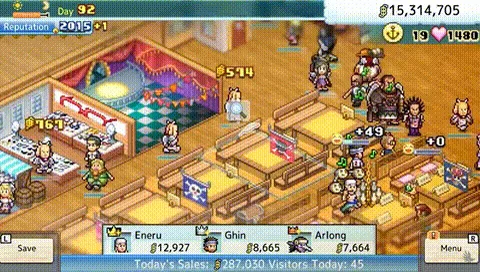
One Piece: Grand Gourmet is a single player management simulation developed by Kairosoft and published by Bandai Namco Entertainment. Players work alongside the Straw Hat Crew to establish Baratie Number Two, a floating restaurant that can grow from a modest operation into a much larger attraction. The official presentation emphasizes collecting ingredients, creating dishes, decorating the restaurant, and welcoming characters from across One Piece.
The story provides a reason for this culinary expedition. An imitation Baratie has damaged the original restaurant’s reputation through overpriced food and poor service. Luffy and Sanji respond by opening another restaurant, with the player joining as a rookie employee helping to restore its good name. This changes what success means in a One Piece game. Progress is expressed through a busier dining room, a broader menu, and a growing network of visitors rather than victories in combat.
The setup also separates narrative familiarity from mechanical accessibility. Knowing the characters makes their appearances more enjoyable, but understanding the basic premise requires little background knowledge. A struggling restaurant needs improvements, customers need reasons to return, and the player supplies both. The central attraction is easy to understand, although the amount of strategic variety beneath that accessible surface remains an important consideration.
Accessible summaries of IGN’s One Piece: Grand Gourmet review describe a clear divide between charming franchise representation and limited management depth. SmartCDKeys’ account highlights criticism of decoration systems that reward filling space with objects, meal selection that becomes straightforward, and automation that reduces the need for careful planning. These are secondhand accounts of IGN’s assessment, as the original review could not be independently inspected for this article. BYTERMINAL’s separately attributed summary identifies similar concerns, including weak financial pressure and recipe discovery that can involve unclear requirements. Its displayed editorial summary score should not be mistaken for a verified IGN score.
The broader criticism concerns the relationship between available options and meaningful consequences. A game can offer numerous decorations, dishes, and characters while still asking relatively little of the player’s judgment. If several approaches produce comparable results, the satisfaction comes primarily from unlocking and arranging content. Players who enjoy that process may find it absorbing, while those who prefer solving increasingly difficult problems may consider it repetitive. However, this is not a universal critical verdict. Other publications have responded more positively to the same accessible structure, suggesting that expectations play an important role in determining how enjoyable the game feels.
The player’s role is managerial rather than directly culinary. Final Weapon describes Sanji handling the kitchen while assigned staff carry food to customers. Players concentrate on building tables, attracting visitors, responding to requests, and developing the restaurant. This distinction matters for anyone expecting a game about manually preparing individual orders. Grand Gourmet involves cooking, but its appeal primarily rests on organizing an establishment and watching its systems operate.
The basic gameplay rhythm involves preparation followed by observation. Players make changes, allow the restaurant to function, and respond to the next opportunity. This creates room to appreciate the activity on screen instead of constantly reacting to an urgent queue. A crowded dining room becomes evidence of progress rather than an immediate threat, making the restaurant feel welcoming even as its popularity increases.
However, indirect control needs meaningful decisions to remain engaging. If selecting the next improvement is consistently obvious, watching the restaurant can become more important than managing it. Grand Gourmet’s central tension begins here: its relaxed operation supports the fantasy of spending time with the Straw Hats, but that same accessibility can reduce the satisfaction of overcoming difficult managerial challenges.
Restaurant development extends beyond placing additional tables. Gamers Heroes reports that players enlarge and adjust the ship as its popularity increases, with floor types helping establish themed areas. Placing a themed floor also generates surrounding structural elements, simplifying construction. Players therefore do not need to design every wall and entrance separately before seeing a new section take shape.
This approach makes expansion accessible while leaving more attention for recipes, customer relationships, and expeditions. The more interesting question is whether additional space introduces competing priorities or simply provides more room for arrangements that have already proved successful. The first approach creates a management puzzle, while the second emphasizes collection and customization.
Neither form of progression is automatically superior. Players interested in building a personalized One Piece attraction may appreciate uncomplicated growth, while those expecting spatial planning to remain a significant challenge may prefer more restrictions and consequential decisions. The ship’s visible transformation remains part of the reward, even when construction is relatively forgiving.
Cooking and menu development introduce another layer of progression. GameSpew identifies four categories used to create complete meal sets:
- Main dishes: The primary food selections that form the foundation of a meal.
- Side dishes: Additional dishes that accompany the main selection.
- Desserts: Sweet options included in the completed meal.
- Drinks: Beverages that complete the menu combination.
Discovering ingredients is only part of unlocking food. According to GameSpew, characters also need appropriate inspiration before certain dishes become available. The official gameplay guide adds a presentation component, allowing players to combine recipes and ingredients with Sanji before using plating and decorative elements to create personalized meal sets. Devil Fruit users can also assist in the kitchen.
These systems connect cooking to discovery and self expression. Finding a new ingredient can suggest another dish, while completing a meal becomes a small visual project. However, their management value depends on whether different combinations produce genuinely different outcomes. Menu selection becomes strategically interesting when several plausible choices offer distinct advantages. If the strongest combination is easy to identify, experimentation becomes more personal than practical.
Choosing a meal because it solves a management problem is different from choosing one because it looks appealing or references a favourite character. Both motivations can contribute to enjoyment, but visual variety does not automatically create complicated menu management. Grand Gourmet’s cooking systems are therefore better understood as a combination of progression, customization, and potentially limited optimization rather than a demanding culinary simulation.
Reuniting the Straw Hat Crew is another important part of restaurant progression. Siliconera explains that finding missing crew members can involve obtaining and displaying Wanted signs before receiving information from particular customers. Recruitment therefore connects the dining room to the wider search for the crew, making the restaurant a meeting place where information travels alongside food.
Recruitment also provides practical benefits because crew members contribute abilities associated with their identities. Reported examples include:
- Nami: Provides shopping advantages that support restaurant development.
- Usopp: Contributes to decoration work and customization.
- Zoro: Supports training activities.
- Franky: Assists with remodeling and restaurant expansion.
These abilities give familiar characters useful responsibilities rather than making them simple additions to a collection. For fans, recruitment can feel rewarding because a character’s arrival matters through both personal attachment and their contribution to the restaurant. For newcomers, those functional roles provide an understandable reason to appreciate the characters without requiring extensive knowledge of their histories.
Recruitment is consequently one of the clearest examples of Grand Gourmet integrating the One Piece license into its management structure. Although these abilities do not necessarily create difficult strategic decisions, they give the Straw Hats recognizable purposes within the restaurant’s daily operation.

One Piece: Grand Gourmet Characters, Exploration, Restaurant Customization, and Management Depth
Bandai Namco advertises more than 400 One Piece characters appearing as customers and staff, alongside special events and interactions. That enormous roster is central to Grand Gourmet’s identity rather than a minor collectible feature. The publisher’s September gameplay announcement explains that fulfilling customer requests helps establish a loyal visitor base, while some characters may open specialty shops within the restaurant.
The customer system therefore offers two kinds of rewards. Players receive the immediate satisfaction of recognizing a familiar character, followed by practical benefits associated with developing the relationship. This structure is particularly appropriate for an ensemble franchise because characters who rarely share peaceful settings can become part of the same social environment. The restaurant effectively becomes a playful reunion where familiar personalities interact outside their usual adventures.
However, the number of available characters should not be confused with the number of distinct management problems. Hundreds of recognizable visitors can provide considerable entertainment even if many follow similar interaction structures. For an established fan, recognizing another character may be sufficient motivation to continue attracting customers. For newcomers, the appeal depends more heavily on the requests, unlocks, and activities associated with those visitors.
Exploration extends progression beyond the floating restaurant. TheSixthAxis reports that dispatched characters can return with resources, information about potential visitors, and requests connected to new facilities. Expeditions therefore support several aspects of restaurant development simultaneously. Siliconera also notes that particular exploration objectives can depend on associated characters or accompanying crew members, connecting certain discoveries to relationships within the source material.
This system gives the restaurant a reason to keep looking outward rather than depending entirely on accumulated money. Expansion can be influenced by opportunities discovered elsewhere, including ingredients, characters, and information that introduce new possibilities. Exploration also creates anticipation because a returning expedition may provide something that immediately suggests another task.
The potential weakness is repetition. If dispatching a crew becomes routine and the most effective choice requires little thought, exploration may function primarily as a method of distributing rewards. Its strongest contribution is the relationship between discovery and development, particularly when an expedition introduces a new opportunity rather than simply increasing the quantity of an existing resource.
Customization is another major component of Grand Gourmet. Official information promises more than 200 furniture, building, and decorative items, including themed options inspired by Whole Cake Island and Egghead. Players can use these designs to represent different parts of the One Piece world within their restaurant.
GameSpew reports that decorations placed near tables can influence comfort and theme, while certain visitors look for particular seating conditions. The game also includes facilities such as shops, pools, and aquariums, allowing the floating restaurant to develop attractions beyond its dining areas. These features make customization more substantial than simply changing colours or rearranging furniture.
The relationship between appearance and efficiency is particularly important. Ideally, players should have reasons to create spaces that are visually coherent and operationally useful. However, when numerical bonuses favour placing many objects together, those goals can conflict. A crowded arrangement may perform well mechanically while looking less appealing than a carefully designed room.
This tension matters because decoration occupies such a prominent position in the experience. Players who value appearance may prefer to establish their own design standards rather than pursue every available efficiency bonus. The freedom to create an attractive ship remains worthwhile, even when the game does not consistently reward restraint or thoughtful layouts.
The broader question concerns the depth of the management systems. Meaningful management usually requires decisions with consequences, giving players reasons to prioritize one improvement, postpone another, and adapt when earlier choices create problems. DayOne’s review describes Grand Gourmet as busy and entertaining but relatively linear, with limited concern about financial failure or the direction of development. It argues that the frequency of activities can exceed the amount of thought required to complete them.
A screen filled with notifications does not necessarily indicate a demanding simulation. Players may spend considerable time claiming rewards, placing new items, responding to customers, and acknowledging events without facing much uncertainty about what to do next. These activities can sustain momentum while offering limited strategic tension.
Conversely, a quieter management game can be demanding when a small number of decisions have significant consequences. Grand Gourmet’s reported accessibility should therefore be evaluated according to the experience it creates rather than treated as an automatic weakness.
Low pressure makes experimentation comfortable and reduces the frustration associated with mistakes. Players can concentrate on building an appealing restaurant without constantly worrying about financial collapse or severe operational setbacks. However, the same predictability can make successful growth feel inevitable, weakening the satisfaction of earning progress through careful planning.
The concern is not simply that Grand Gourmet is easy. It is that its numerous systems may provide fewer meaningful alternatives than their quantity initially suggests. Restaurant construction, menu development, customer relationships, recruitment, and exploration create many activities, but the existence of those activities does not guarantee equally substantial management decisions.
Automation contributes to this distinction. GameSpew describes a restaurant where staff handle cooking and serving while the player concentrates on menus, decoration, gifts, and expeditions. Accounts summarizing IGN’s review also report that automatic meal selection can produce effective results, reducing the practical importance of manual optimization.
Automation is not inherently a weakness because it can remove repetitive labour and leave players free to concentrate on larger decisions. Strong automated management systems give players responsibility for setting priorities, establishing rules, and organizing the structures that determine outcomes. The problem arises when those higher level decisions are too limited to sustain meaningful involvement.
Grand Gourmet appears to operate between these possibilities. Its variety of activities ensures that players regularly have something to do, but involvement should not be confused with difficulty. Selecting improvements, collecting rewards, and responding to notifications can occupy considerable time without necessarily requiring complicated planning.
There is also a distinction between forgiving gameplay and an unobtrusive interface. Switchaboo describes increasingly frequent interaction windows and updates as potentially overwhelming. A game can therefore be relaxed in terms of consequences while still requiring constant attention. Automation does not automatically mean that players can leave the restaurant running without interruption.
The visual presentation provides a different reason to remain engaged. Final Weapon praises character specific animation details, including smoke surrounding Smoker and sand accompanying Crocodile. These touches preserve recognizable characteristics within the game’s small sprites and help familiar personalities retain their identities.
Switchaboo similarly highlights interactions that reflect existing relationships between characters, identifying conversations as an important part of the restaurant’s appeal. This attention matters because effective fan service requires more than including familiar names. Movement, behaviour, and relationships make characters feel present rather than functioning solely as collectible appearances.
A recognizable character can produce an immediate moment of excitement, but an appropriate animation or conversation gives players another reason to observe them. In a game where customers regularly visit the same establishment, these small details help create the impression of a lively social environment.
However, the presentation is not equally strong in every area. Cubed3 criticizes the limited music selection, absence of voice acting, and English language errors. These shortcomings create a contrast between the lively pixel art and its accompanying audio and written dialogue. Detailed sprites cannot entirely compensate for repetitive music or awkward text.
Grand Gourmet’s presentation is therefore best understood as a miniature visual celebration of One Piece. Players who enjoy observing characters, recognizing references, and discovering small interactions are likely to appreciate it most. Those expecting the audiovisual richness of an anime production may find the absence of voiced performances and broader musical variety disappointing.
The game’s structure also becomes clearer when compared with Kairosoft’s established management titles. Siliconera places Grand Gourmet alongside restaurant games such as Cafeteria Nipponica and The Sushi Spinnery, describing its foundation as familiar while praising the integration of One Piece.
That comparison provides a more useful reference point than judging Grand Gourmet against every restaurant simulator. Kairosoft’s established approach emphasizes accessible systems, visible growth, and recurring rewards. For existing players, the question is how much the One Piece setting changes the experience. Recognizable characters, themed responsibilities, and franchise references can make familiar systems feel more personal without radically transforming their operation.
For newcomers to Kairosoft, the One Piece license may provide the motivation to explore this style of management game for the first time. Familiarity can be comforting because established systems reduce the effort required to understand progression, but it can also make the gameplay predictable.
Grand Gourmet should therefore be approached as a themed interpretation of Kairosoft’s management formula rather than a reinvention of the genre. Its strongest attraction is the combination of restaurant development, character collection, and affection for the franchise. Its weaker proposition is the expectation that a major entertainment license necessarily produces more complicated simulation systems.

One Piece: Grand Gourmet Release Date, Platforms, Price, Reviews, and Final Verdict
Bandai Namco lists One Piece: Grand Gourmet for Nintendo Switch, Nintendo Switch 2, PC through Steam, iOS through the App Store, and Android through Google Play. The publisher’s official announcement gives October 23, 2026, as the release date.
A storefront distinction is worth preserving. At the time checked, Steam displayed October 22, 2026, with a US price of $19.99. The publisher’s announced release date and Steam’s displayed date should therefore be reported separately rather than assumed to apply identically across every platform and region.
The main release and availability details are:
- Developer: Kairosoft.
- Publisher: Bandai Namco Entertainment.
- Genre: Single player restaurant management simulation.
- Official announced release date: October 23, 2026.
- Steam displayed release date: October 22, 2026.
- Steam US price: $19.99 at the time checked.
- Nintendo platforms: Nintendo Switch and Nintendo Switch 2.
- PC platform: Steam.
- Mobile platforms: iOS through the App Store and Android through Google Play.
The verified Steam price should not automatically be applied to every mobile or console storefront because regional pricing, currencies, and platform listings can differ. Players comparing versions should also consider interface comfort and performance alongside availability.
TheSixthAxis reports awkward controller navigation in certain areas, while Cubed3 describes slowdown during busy scenes on its reviewed Nintendo Switch 2 version. These observations concern particular reviews rather than establishing that every platform performs identically.
Interface comfort can matter as much as visual presentation in a restaurant management game. Repeated menu actions accumulate over long sessions, making clear navigation and responsive selection important. Even relatively small inconveniences can become more noticeable when players frequently move between construction, customer requests, menus, and customization.
Published reviews present a more balanced picture than the criticism of limited management depth might initially suggest. Pocket Tactics awarded Grand Gourmet 8/10 and argued that its restaurant systems could entertain newcomers as well as established One Piece fans. TheSixthAxis gave it 7/10 while appreciating its relaxed development and variety of activities.
These responses demonstrate that limited pressure is not necessarily a failure. The value of forgiving systems depends on what players want from the experience. Someone looking for an enjoyable progression loop may welcome the ability to expand without severe punishment, while someone expecting demanding financial management may view that same accessibility as a weakness.
For committed One Piece fans, the restaurant offers a setting where recognition, character relationships, and affection for the franchise can provide motivation beyond mechanical rewards. Meeting another familiar character, unlocking themed decorations, or recruiting a favourite crew member may be satisfying even when the surrounding management decisions are relatively straightforward.
The large character roster strengthens that attraction. More than 400 advertised characters give players numerous opportunities to recognize familiar faces, while special interactions and customer requests provide additional reasons to continue developing the restaurant. The setting also allows characters from different parts of the franchise to share a peaceful environment, reinforcing the restaurant’s role as a gathering place.
For newcomers, the underlying progression system must carry more of the experience. The basic objective is understandable without extensive knowledge of One Piece, and the restaurant structure provides familiar management activities. However, players without an emotional connection to the characters may be less motivated by their appearances alone.
Grand Gourmet’s accessibility may help compensate for that difference. Construction is approachable, staff handle much of the restaurant’s daily operation, and progression encourages steady expansion. These qualities make it easier to enjoy the game without already understanding the franchise’s enormous cast.
For dedicated management enthusiasts, the strongest reservation concerns meaningful decision making. Anyone primarily looking for demanding finances, competing operational priorities, difficult spatial planning, or substantial consequences for mistakes should approach with more caution.
The game’s numerous activities can create a sense of constant progress, but frequent rewards and unlocks do not necessarily provide the strategic complexity some players expect. Automation can further reduce the need for optimization, while straightforward construction and forgiving economic systems make it easier to achieve successful growth.
Nevertheless, those same qualities may be strengths for players who prefer a comfortable simulation. Being able to experiment with layouts, discover meals, collect characters, and develop a floating restaurant without severe setbacks allows the experience to emphasize creativity and familiarity rather than pressure.
The visual presentation also helps sustain that appeal. Character specific sprites, recognizable animations, and conversations celebrating existing relationships make the restaurant feel connected to the wider One Piece universe. Although the absence of voice acting, limited music, and reported interface issues prevent the presentation from being equally successful in every area, the attention given to character identity remains one of its more distinctive qualities.
Ultimately, One Piece: Grand Gourmet appears most worthwhile as a light, character focused management experience built around steady progression, customization, exploration, and collecting familiar faces. It combines Kairosoft’s established restaurant formula with a franchise whose themes naturally complement cooking and hospitality.
Its main limitation is that the breadth of available activities may exceed the depth of the decisions behind them. Players who enjoy unlocking content and developing a personalized One Piece attraction may find the experience consistently rewarding, while those seeking a difficult strategic simulation may struggle to find enough meaningful resistance.
The most reasonable conclusion is therefore conditional. Grand Gourmet offers an appealing restaurant adventure for fans of relaxed management and One Piece characters, but its case is considerably less convincing for players whose main priority is deep economic systems, demanding optimization, or challenging operational decisions.

Frequently Asked Questions (FAQs)
- What kind of game is One Piece: Grand Gourmet?
One Piece: Grand Gourmet is a single player restaurant management simulation developed around building and operating a floating restaurant with the Straw Hat Pirates. Players expand the establishment, create meal sets, gather ingredients, recruit characters, and develop relationships with customers. Rather than directly handling every cooking or serving action, the player focuses on managing the restaurant’s growth, facilities, and available activities. The experience emphasizes steady progression, customization, and character collection over demanding financial management. - Who developed and published One Piece: Grand Gourmet?
One Piece: Grand Gourmet was developed by Kairosoft and published by Bandai Namco Entertainment. Kairosoft is known for accessible management simulations, including restaurant games such as Cafeteria Nipponica and The Sushi Spinnery. Grand Gourmet follows a similar approach while incorporating recognizable One Piece characters, locations, meals, and relationships. Bandai Namco Entertainment handles the game’s publication, bringing the established management formula together with the One Piece franchise. - Does the player control Sanji directly while cooking?
No. Published reviews describe a largely indirect cooking system in which Sanji manages the kitchen while the player concentrates on developing dishes, assembling meal sets, and organizing the restaurant. Staff members also handle food delivery to customers. Players can discover ingredients, unlock recipes, and customize food presentations, but the game does not revolve around manually chopping ingredients, controlling individual cooking processes, or completing orders under strict time limits. Cooking contributes to restaurant progression rather than functioning as a separate action challenge. - How many One Piece characters appear?
Bandai Namco advertises more than 400 One Piece characters appearing as customers and staff. These characters contribute to the restaurant through visits, requests, interactions, and different responsibilities. Some familiar faces can become regular customers, while others provide abilities that support restaurant development. However, the advertised roster does not mean every character receives an equally substantial role, unique storyline, or extensive interaction system. Much of the appeal comes from recognizing characters and discovering how they participate in the restaurant. - Are restaurant decorations only cosmetic?
No. Published reviews describe decorations as having practical effects on table comfort, restaurant themes, and certain visitor requirements. Some customers prefer particular seating conditions, making the surrounding layout relevant to their satisfaction. Players can also construct themed areas and facilities such as shops, pools, and aquariums. However, decorations do not always require complicated strategic decisions. Some arrangements may be more efficient than others, while players can still prioritize visual appearance and create a restaurant that reflects their personal preferences. - Is One Piece: Grand Gourmet difficult?
Reviews generally describe Grand Gourmet as a forgiving management game with relatively limited financial pressure and few severe consequences for mistakes. Players have numerous activities to complete, including expanding the restaurant, preparing menus, recruiting characters, and responding to customer requests, but these tasks do not necessarily create difficult strategic problems. Automation also handles some routine restaurant operations. Although frequent notifications and menu interactions can make the experience busy, its main challenge is maintaining progression rather than overcoming demanding economic or operational obstacles. - Do newcomers need to know One Piece?
No. The basic restaurant management premise is understandable without extensive knowledge of One Piece. Players can learn to expand the restaurant, collect ingredients, create meals, and satisfy customers through the game’s systems. Pocket Tactics also describes the experience as accessible beyond the existing fan base. However, familiarity with One Piece adds another layer of enjoyment because players can recognize characters, understand their relationships, and appreciate references to the wider franchise. Newcomers are more likely to judge the experience primarily by its management and customization systems. - Does the game have voice acting?
No. Cubed3’s review reports that One Piece: Grand Gourmet does not feature voice acting and also criticizes its limited soundtrack. Character personalities are instead communicated through pixel art, animations, and written interactions. Familiar characters retain recognizable visual details, and conversations reference relationships from the franchise. However, players should not expect the voiced performances associated with the anime. The presentation relies more heavily on visual charm and dialogue than on extensive audio production. - What is the release date and price?
Bandai Namco officially announced October 23, 2026, as the release date for One Piece: Grand Gourmet. However, the Steam storefront displayed October 22, 2026, when checked, so the listed date differs between those sources. Steam also showed a US price of $19.99. The game is listed for Nintendo Switch, Nintendo Switch 2, PC, iOS, and Android. Pricing and availability may vary between platforms and regions, meaning the Steam price should not automatically be treated as the confirmed price for every version. - What is the main criticism of Grand Gourmet?
The main criticism is that Grand Gourmet offers numerous activities without always providing equally meaningful management decisions. Players can expand the restaurant, collect characters, unlock recipes, and arrange decorations, but reviews suggest that automation, forgiving finances, and straightforward progression reduce the need for careful planning. Some systems may become repetitive because effective choices are relatively easy to identify. Although this limits its appeal as a demanding strategic simulation, the relaxed structure can still satisfy players who primarily enjoy customization, character interactions, and steady progression.

Conclusion
One Piece: Grand Gourmet successfully adapts the franchise through restaurant management rather than combat. Its floating restaurant gives Sanji a central role while bringing together familiar characters in a welcoming setting. The strongest appeal lies in combining restaurant expansion with character interactions, making progression more rewarding for One Piece fans.
However, the variety of dishes, decorations, and customers does not necessarily translate into deep management systems. Automation and forgiving progression make the experience accessible but reduce the importance of strategic decisions.
For fans seeking a relaxed experience with familiar characters, Grand Gourmet offers plenty of charm. Players expecting a demanding restaurant simulation may find its management systems less satisfying. Its greatest strengths remain customization, steady progression, and the One Piece world.
Sources and Citations
- Bandai Namco Entertainment, official game page and June 9, 2026 announcement : Confirms Kairosoft as developer and introduces the floating restaurant premise, cooking, customization, and character interactions. The announcement gives an October 23, 2026 launch for Nintendo Switch, Switch 2, PC via Steam, iOS, and Android. Official Site
ONE PIECE: Grand Gourmet Official Game Page · Official Announcement and Release Details - Steam, official PC listing : Lists the PC release date as October 22, 2026, and identifies Kairosoft as developer and Bandai Namco Entertainment as publisher. It also provides regional pricing, supported languages, Steam achievements, cloud saves, and minimum and recommended system requirements. store.steampowered.com
ONE PIECE: Grand Gourmet on Steam - Bandai Namco Entertainment, September 15, 2026 : Explains the Baratie Number Two story and the main gameplay activities, including cooking with Sanji, creating menus, arranging furniture, and fulfilling customer requests. It also describes how food and décor preferences encourage repeat visits and interactions between familiar characters. Bandai Namco Europe
ONE PIECE: Grand Gourmet Gameplay Guide: A Day at Baratie Number Two - Games Press, September 15, 2026 : Hosts Bandai Namco’s official gameplay press release, covering the impostor restaurant storyline, ingredient collection, meal presentation, and customization. It describes more than 200 furnishings and over 400 characters, alongside customer requests and specialty shops that help the restaurant grow. Games Press
Discover the Core Gameplay Mechanics of ONE PIECE: Grand Gourmet - Siliconera, October 21, 2026 : Jenni Lada’s Nintendo Switch 2 review examines recipe discovery, customer requests, progression, and the integration of familiar characters. It praises the pixel art and franchise details while reporting slowdowns and reduced responsiveness as the restaurant fills with customers. Siliconera
Review: One Piece: Grand Gourmet Is a Classic Kairosoft Sim - GameSpew, October 21, 2026 : Kim Snaith’s Nintendo Switch 2 review evaluates automated cooking and service, menu creation, decorating, and expeditions. It highlights accessible gameplay and appealing pixel animation while explaining that the passive management and occasionally unclear progression may frustrate some players. Chaotic but entertaining – GameSpew
One Piece: Grand Gourmet Review: Chaotic but Entertaining - Final Weapon, October 21, 2026 : Noah Hunter’s Nintendo Switch 2 review discusses franchise references, character animations, crew responsibilities, customer requests, and restaurant customization. It praises the simulation’s appeal while identifying repetitive cooking, awkward interface elements, occasional stutters, limited music, and the absence of voice acting. A Feast Fit for the Pirate
One Piece: Grand Gourmet Review: A Feast Fit for the Pirate - Gamers Heroes, PC review : Johnny Hurricane examines restaurant expansion, menu selection, entertainment facilities, customer loyalty, and expeditions. His review also describes excessive notifications and screen clutter, a single simulation speed, a fixed camera, and restrictions on how objects can be placed and rotated. gamersheroes.com
One Piece: Grand Gourmet Review - TheSixthAxis, October 21, 2026 : Miguel Moran’s Nintendo Switch 2 review assesses restaurant customization, customer recruitment, resource gathering, and relaxed progression. It praises the variety of activities and characters while identifying awkward controls, uneven audio and visual polish, and a hurried narrative introduction. TheSixthAxis
ONE PIECE: Grand Gourmet Review - Pocket Tactics, updated October 21, 2026 : Kayleigh Partleton’s Nintendo Switch 2 review covers the characters, restaurant premise, menus, exploration, and crew abilities. It praises the amount of content and argues that the game can appeal to restaurant simulation players as well as established One Piece fans. bon appétit
One Piece: Grand Gourmet Review: Bon Appétit - Cubed3, October 21, 2026 : Julián Fernandez Loyarte’s Nintendo Switch 2 review examines the connected management systems, crew responsibilities, customer preferences, and restaurant strategy. It argues that familiarity with One Piece improves the experience while noting intermittent lag, translation problems, and a limited selection of music. Cubed3
One Piece: Grand Gourmet Review for Nintendo Switch 2 - Switchaboo, October 22, 2026 : Nathan Rudge’s Nintendo Switch 2 review praises the character interactions, recognizable pixel art, and detailed food illustrations. It also describes translation errors, unclear mechanics, and increasingly frequent notifications that can make the restaurant’s later stages repetitive and overwhelming. Switch 2 Review
One Piece: Grand Gourmet: Switch 2 Review - DayOne, October 21, 2026 : Genghis Husameddin’s Nintendo Switch 2 review assesses the pixel art, franchise references, restaurant customization, and rapid progression. It praises the casual appeal while criticizing limited opportunities for experimentation, little pressure to avoid financial failure, and a pace that can become difficult to follow. DayOne
ONE PIECE: Grand Gourmet Review - SmartCDKeys and BYTERMINAL, October 21, 2026 : These secondary summaries attribute their discussion of fan service, shallow management, recipe discovery, and sparse audio to IGN’s review. BYTERMINAL explicitly states that it did not conduct the original testing; its displayed 6.8 editorial summary score belongs to BYTERMINAL. SmartCDKeys
SmartCDKeys: One Piece: Grand Gourmet Serves Fan Service, Thin Management · BYTERMINAL: One Piece: Grand Gourmet Review: A Charming Yet Shallow Fan Service Simulation
Recommended
- Fortnite Leak: Lois Griffin, Peggy Hill & Linda Belcher Skins Rumored Crossover
- Fortnite’s Original Save the World Mode Will Be Free to Play on April 16, 2026
- Corsair Cove Challenges Players to Build a Pirate Empire and Defeat the Crown
- Nvidia TacitVLA Delivers Up to 3.4x Lower Robot Reasoning Latency
- The Next Assassin’s Creed Sure Isn’t What We Expected: “Heredis” Brings an Assassin’s Creed Live Show to Montreal and Paris
- Hell Let Loose: Vietnam: Console Release, 50v50 Battles, Maps, and Everything You Need to Know
- Cat Mail Co. Beginner Guide: 9 Essential Tips for Your First Shifts
- Subnautica 2: Top 15 Things The Game Doesn’t Tell You
- BAAI’s AgentSWE Benchmark: Top Agent Scores Just 19.1/100
- AdonisFX 2.0 Full Support For Houdini: Features, Setup, Pricing, and Maya Pipeline Benefits
- Train Sim World 5 Leaves Xbox Game Pass September 15, 2026
- Until Dawn 2: Official Reveal Trailer and everything we know
- Uri Tupka and the Gods Is the New Mike Mignola Sequel Graphic Novel Expanding Lands Unknown



































































































