







In This Article (7 sections)
Why Marie Moreau Was Never Meant to Kill Homelander and What Eric Kripke Said About Her Powers
Marie Moreau’s role in Gen V is fundamentally different from Homelander’s position in The Boys. Although her blood manipulation abilities make her one of the most potentially dangerous young superheroes in the franchise, her character is primarily concerned with personal growth, emotional control, and moral responsibility. Rather than positioning Marie as the person destined to eliminate Homelander, the narrative develops her as a young supe learning to understand the consequences of possessing extraordinary abilities. This distinction helps explain why expectations that she would become Homelander’s eventual killer do not align with the character development described in the source material.
Homelander represents the extreme consequences of power without accountability. His character embodies institutional corruption, psychological domination, and the dangers of allowing a powerful individual to operate without meaningful restrictions. Marie, by contrast, represents a developing moral identity. She possesses abilities capable of causing severe harm but has not fully established the judgment, discipline, or confidence needed to use them consistently. Their narrative connection is therefore primarily thematic, with each character representing a different relationship between power and responsibility.
Showrunner Eric Kripke’s approach to the wider franchise places considerable importance on character development rather than resolving major conflicts through sudden demonstrations of superior strength. Within this framework, Marie serves as a younger character whose experiences allow the story to examine how institutions shape superheroes and how individuals develop their own ethical boundaries. Her importance extends beyond whether she can defeat a powerful opponent because her journey explores what happens when someone raised within a compromised system begins questioning its expectations.
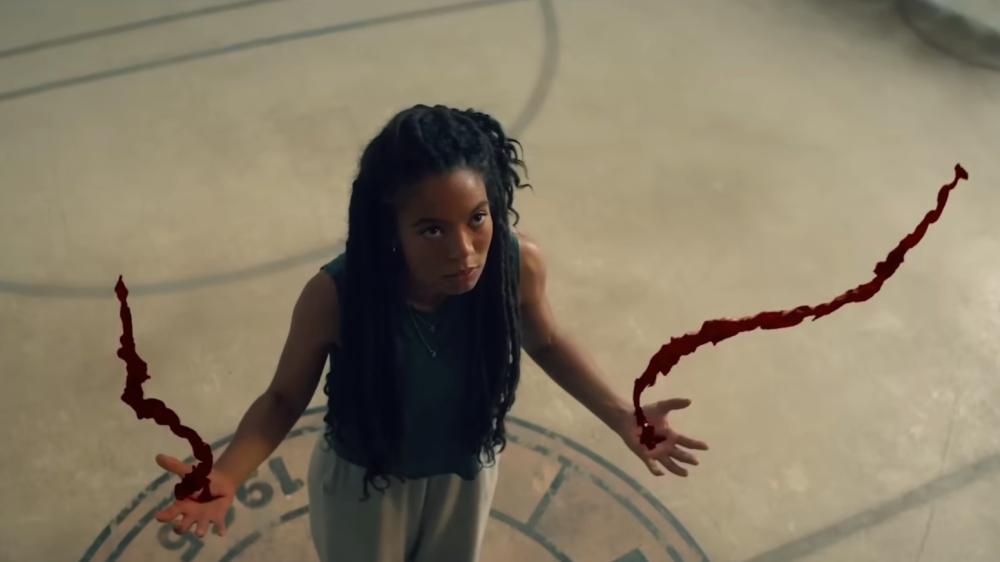
Marie possesses the ability to manipulate blood, a power that can produce both precise and destructive effects. Her abilities are visually disturbing because they involve direct control over a substance essential to human life. However, possessing a potentially lethal ability does not automatically make her capable of defeating every opponent. The source material emphasizes that Marie’s control remains connected to her emotional condition, making her unpredictable when she experiences fear, uncertainty, or intense psychological pressure.
Her development in Gen V is therefore centered on learning how to stabilize and refine her powers. The challenge is not simply discovering how much damage she can cause but understanding when and how those abilities should be used. This distinction creates opportunities for the series to examine the relationship between technical control and ethical judgment. Marie must learn to recognize the consequences of her actions while developing the confidence required to make difficult decisions.
Homelander presents a particularly dangerous opponent because his influence extends beyond physical strength. He uses intimidation, manipulation, and psychological pressure to dominate others, often destabilizing opponents before a confrontation becomes physical. Marie’s emotional vulnerability and limited experience make her especially susceptible to these tactics. Even if her powers could theoretically threaten a highly durable supe, using them effectively against Homelander would require control and tactical awareness that her character is still developing.
Several limitations contribute to the imbalance between Marie and Homelander:
- Emotional instability: Marie’s powers can become difficult to manage when she is frightened, overwhelmed, or placed under intense pressure.
- Limited combat experience: She has not demonstrated the same level of experience confronting exceptionally powerful opponents.
- Developing tactical awareness: Her understanding of how to use her abilities strategically remains incomplete.
- Psychological vulnerability: Homelander’s ability to intimidate and manipulate opponents could interfere with her concentration.
- Moral hesitation: Marie is still establishing the ethical boundaries that determine when she believes using lethal force is justified.
These limitations do not mean Marie lacks extraordinary potential. Instead, they reinforce the difference between possessing dangerous abilities and knowing how to use them effectively. Her progression depends on developing precision, confidence, and judgment rather than simply increasing the destructive potential of her blood manipulation.
Gen V also uses Marie’s experiences to examine the institutions responsible for developing young superheroes. The franchise presents systems associated with Vought as deeply compromised, frequently prioritizing influence, profitability, and control over individual welfare. Marie’s experiences within this environment force her to confront the relationship between personal identity and institutional expectations. Learning to resist manipulation becomes just as important as mastering her abilities.
This institutional conflict gives Marie a role that extends beyond fighting powerful enemies. She represents the possibility that younger superheroes might develop different values from those who established the existing system. Her character can question whether the structures governing superheroes should continue operating as they do or whether meaningful change is possible.
Fans who expected Marie to defeat Homelander often focused on the unusual nature of her powers. Blood manipulation appears capable of bypassing some conventional forms of physical defense, encouraging speculation about whether she could threaten opponents who are otherwise difficult to injure. Her status as a central protagonist in Gen V also contributed to the belief that she might eventually become important to the main series’ central conflict.
However, these expectations involve assumptions about how her abilities would function against Homelander and what role the writers intend her to play. The available narrative framework emphasizes personal development and moral choices rather than presenting a confirmed path toward defeating him. Her potential importance to the franchise does not necessarily depend on becoming stronger than its most prominent antagonist.
Audience reactions to this direction reflect different expectations. Some viewers favor gradual character development that allows Marie to become more capable through experience, while others would prefer a major crossover confrontation with Homelander. Another interpretation views Marie as a possible successor figure who could help shape the superhero world after the established conflict reaches its conclusion. These perspectives demonstrate that her role can remain significant even without making her responsible for Homelander’s defeat.
Ultimately, Marie Moreau and Homelander represent opposing responses to extraordinary power. Homelander uses his abilities to establish dominance, while Marie is still learning how to exercise restraint and make responsible decisions. This contrast provides a foundation for her continued development and explains why her character can contribute to the larger themes of The Boys without becoming the immediate solution to its central conflict.

Gen V Season 3 Plans, Marie Moreau’s Possible Training Arc, and Homelander’s Ending
The future of Marie Moreau’s story has generated discussion about how Gen V could continue developing its characters and connect more directly with The Boys. One concept associated with a possible third season involves a mentorship storyline sometimes described as a “Training with Yoda” arc. This comparison refers to the familiar narrative structure in which a young character receives guidance from an experienced mentor before gaining greater control over exceptional abilities.
For Marie, such a storyline would focus on improving the precision of her blood manipulation and developing the emotional discipline necessary to use those abilities responsibly. Her existing powers already provide considerable destructive potential, so additional training would not necessarily require making her stronger in a conventional sense. Instead, the emphasis could shift toward controlled execution, tactical judgment, and understanding the consequences of different choices.
A mentor could also help Marie recognize how psychological pressure affects her decisions. Because emotional instability can interfere with her abilities, learning to remain focused during threatening situations would be especially valuable. Training could provide a structured opportunity for her to confront fear, examine the limits of her powers, and develop confidence without relying exclusively on instinct.
The proposed mentorship direction includes several possible areas of development:
- Precision control: Learning to manipulate blood more accurately while reducing unintended harm.
- Emotional regulation: Developing the ability to remain focused during dangerous or stressful situations.
- Ethical decision making: Understanding when using potentially lethal abilities is appropriate and what consequences may follow.
- Psychological resilience: Learning to resist intimidation and manipulation from powerful opponents.
- Tactical awareness: Improving her ability to assess threats and respond strategically rather than impulsively.
- Leadership development: Becoming capable of guiding other young superheroes who face similar institutional pressures.
These ideas reflect a possible direction for Marie rather than establishing that every element has been confirmed for production. The available discussion describes future development concepts, while the final direction of Gen V remains dependent on creative and production decisions.
A third season could also explore Marie’s relationship with the larger superhero community. Her experiences have already placed her within a world where institutions manipulate young supes and where the distinction between heroism and exploitation is frequently unclear. Further development could examine how she responds when personal loyalties conflict with the expectations imposed by powerful organizations.
Another possible direction involves expanding the role of superhero governance. The Boys repeatedly examines the consequences of concentrating extraordinary power within organizations that lack accountability. Marie’s perspective offers a way to explore these issues through someone still developing her understanding of the system. Rather than approaching corruption from the position of an established hero or villain, she experiences its effects while trying to determine what kind of person she wants to become.
Potential future storylines could therefore involve more extensive institutional conflicts, difficult decisions concerning life and death, and increasing cooperation with characters from the main series. These developments would allow Marie to become more involved in the wider franchise without requiring her to resolve its central antagonist storyline.
Homelander’s eventual ending remains closely connected to the main narrative of The Boys. His character embodies many of the franchise’s most important themes, including corporate manipulation, manufactured heroism, political influence, and the consequences of unchecked power. Resolving his story carries significance beyond determining which character can physically defeat him.
If Marie were introduced primarily to eliminate Homelander, the resolution could weaken the thematic importance of the conflict developed throughout the main series. The central struggle concerns not only Homelander as an individual but also the institutions and relationships that enabled him to become so powerful. A satisfying conclusion would therefore need to address the broader consequences of his actions rather than treating his defeat as a simple contest of abilities.
Keeping the central resolution within The Boys also preserves narrative continuity. The main series has spent considerable time establishing Homelander’s relationships, motivations, and influence. Transferring the responsibility for ending his story to a character whose primary development occurs in a separate production could reduce the importance of those established conflicts.
This does not prevent Marie from participating in crossover events or influencing the wider narrative. Her abilities, experiences, and developing ethical outlook could make her important to events surrounding Homelander without making her the person who delivers the final blow. The distinction allows the franchise to connect its stories while preserving the different purposes served by individual characters.
Discussions surrounding the future of Gen V have also raised questions about which planned storylines might remain unrealized. Eric Kripke’s broader approach to franchise development recognizes that proposed character arcs and crossover opportunities can change depending on production priorities, narrative timing, and decisions about the future of individual series.
The material associated with possible future plans includes greater integration between Gen V and The Boys, expanded examination of superhero institutions, and continued development of Marie’s powers and personal identity. These concepts provide several directions for the character but should not be treated as guarantees that a third season will include every proposed element.
Marie could also remain relevant through another production if Gen V does not continue in its existing form. Her character has enough narrative flexibility to appear in an ensemble crossover, a direct continuation, or an independent story centered on her experiences. Her unusual powers and unresolved personal development provide opportunities for further storytelling beyond the immediate concerns of her original series.
A continuation could examine what happens after Marie gains greater control over her abilities. Increased competence would create new responsibilities because she would have fewer reasons to attribute mistakes entirely to inexperience. The more capable she becomes, the more important her decisions would be in determining whether her power protects others or contributes to the same destructive patterns she has witnessed.
This direction would preserve the distinction between Marie and Homelander. Both possess extraordinary abilities, but their development follows different moral trajectories. Homelander’s story concerns the consequences of power exercised without accountability, while Marie’s potential future concerns learning to accept responsibility before her abilities become a source of comparable harm.
The possible “Training with Yoda” storyline is therefore significant because it emphasizes character maturity rather than a sudden increase in strength. If developed, it could establish Marie as a more capable and independent hero while allowing the main series to resolve Homelander’s conflict through its own established narrative.

Marie Moreau’s Future in The Boys Universe, Potential Spinoffs, and Fan Expectations
Marie Moreau remains an important character within the expanding universe of The Boys because she represents a generation of superheroes whose identities are still developing. Unlike established figures who have already embraced particular approaches to power, Marie continues to question how her abilities should influence her relationships, responsibilities, and decisions. This uncertainty creates opportunities for character development that differ substantially from the conflicts surrounding Homelander.
Her importance is closely connected to the franchise’s criticism of institutions that exploit superheroes. The world of The Boys frequently presents extraordinary abilities as commercial assets and sources of political influence rather than responsibilities requiring accountability. Marie’s experience allows the story to examine these structures through a character who has not fully accepted their values. Her struggle to maintain an independent moral identity provides a contrast to superheroes whose behavior has been shaped by institutional power.
This generational perspective helps prevent the fictional universe from depending exclusively on its established protagonists and antagonists. Characters such as Homelander represent entrenched conflicts, while younger supes introduce the possibility of different relationships between power and society. Marie’s story can explore whether those who inherit a compromised system are destined to repeat its failures or capable of challenging them.
Her blood manipulation abilities also make her distinctive within the franchise. The power is unusual enough to create visually striking confrontations, but its significance extends beyond combat. Because controlling blood can have severe consequences, Marie must continually confront questions about restraint and responsibility. Her abilities make ethical judgment particularly important, reinforcing the connection between personal growth and the responsible use of power.
The contrast with Homelander is central to understanding her thematic importance. Homelander represents an individual whose extraordinary abilities have enabled domination and intimidation, supported by institutions willing to excuse or exploit his behavior. Marie represents someone who possesses dangerous capabilities but remains uncertain about how to use them. Her development suggests that the same broad category of power can produce very different outcomes depending on experience, personal choices, and the influence of surrounding institutions.
The franchise can continue developing this contrast without requiring the characters to fight directly. Marie may become increasingly capable while Homelander’s story reaches its conclusion through events involving the main cast. Her role could then become more significant in examining what happens to the superhero world after its existing power structures are challenged.
Several potential directions could support her continued presence:
- A direct continuation: Marie’s story could continue through another season or sequel examining her growing control and responsibilities.
- An ensemble crossover: She could interact with established characters from The Boys while contributing to wider conflicts.
- An independent character story: A separate production could focus on her abilities, relationships, and moral development.
- Institutional reform: Marie could become involved in efforts to challenge or change the systems governing superheroes.
- Leadership within the younger generation: Her experiences could position her as someone capable of helping other supes navigate similar pressures.
- Further exploration of power: New conflicts could test whether increased mastery leads to greater responsibility or creates additional moral dilemmas.
These possibilities reflect narrative opportunities rather than confirmed production announcements. The available material establishes Marie’s importance within the franchise but leaves the precise form of her future appearances uncertain.
Fan discussions about her role generally reflect three competing expectations. Some viewers prefer gradual character development and believe Marie should become more capable through experience rather than immediately confronting the franchise’s strongest antagonist. Others are interested in a major crossover that places her directly against Homelander. A third perspective views her as a potential successor figure who could become important after the main series resolves its existing conflicts.
Each interpretation highlights a different aspect of the character. The desire for a confrontation emphasizes the destructive potential of blood manipulation, while support for slower development focuses on Marie’s emotional journey. Expectations that she could become a successor figure reflect interest in how The Boys might continue exploring superhero society after the departure or defeat of major established characters.
The source material places greater emphasis on her development than on making her an immediate replacement for existing protagonists. Her experiences involve learning how to exercise control, recognizing institutional manipulation, and determining the moral boundaries she is willing to maintain. These challenges provide enough material for continued storytelling without requiring her to become the strongest supe in the franchise.
Marie also offers opportunities to examine leadership from a different perspective. Many established characters in The Boys use authority through fear, deception, or institutional influence. A younger character learning to cooperate with others and recognize the consequences of her decisions could provide an alternative model of influence. Her development might therefore involve becoming someone other supes trust rather than someone they fear.
Her potential participation in future crossovers would also create opportunities to test her beliefs. Encountering more experienced superheroes could expose her to conflicting interpretations of responsibility, justice, and survival. Such interactions could strengthen her moral judgment or force her to reconsider assumptions formed during her time in Gen V.
A future story centered on Marie could also explore how difficult it is to remain ethical within institutions that reward destructive behavior. Her growing abilities might make her valuable to organizations seeking control, increasing the pressure to compromise her principles. This would continue the franchise’s interest in the relationship between individual choices and systems that encourage corruption.
The future of The Boys universe is therefore not limited to determining Homelander’s fate. The broader setting contains unresolved questions about how superheroes are governed, how institutions maintain authority, and whether younger generations can create different relationships between power and accountability. Marie is well positioned to contribute to those questions because her character has not yet completed its moral development.
Ultimately, Marie Moreau’s significance comes from her potential to evolve rather than from an expectation that she must kill Homelander. Her unusual powers create opportunities for dramatic conflict, but her personal struggle with control, identity, and responsibility provides the foundation for continued storytelling. Whether she returns through Gen V, another spinoff, or a broader crossover, her most meaningful contribution may be demonstrating how a powerful superhero can develop a different relationship with authority and morality from the figures who came before her.

Frequently Asked Questions (FAQs)
- Why was Marie Moreau never meant to kill Homelander?
Marie’s character development in Gen V emphasizes learning to control her blood manipulation abilities, understanding moral responsibility, and developing her identity within a corrupt superhero system. Homelander’s central conflict belongs to the main narrative of The Boys, where his actions and influence have been established over multiple storylines. Making Marie responsible for eliminating him could weaken both her developmental journey and the main series’ established conflict. - Is Marie stronger than Homelander?
Homelander remains one of the most powerful and dangerous superheroes in The Boys universe, with extensive combat experience and exceptional physical abilities. Marie possesses unusual blood manipulation powers that could theoretically create serious threats, but she has not demonstrated consistent control or the tactical experience needed to establish superiority over him. Her potential should therefore not be confused with confirmed combat capability. - What is Marie’s power?
Marie Moreau can manipulate blood, allowing her to control its movement and use it in potentially precise or destructive ways. Her abilities are especially dangerous because blood is essential to human life. However, she is still developing the emotional discipline and technical control required to use those powers reliably, making her progression an important part of Gen V. - Will Marie appear in The Boys main series?
Marie exists within the same fictional universe as the characters in The Boys, making crossover appearances possible. Her story could connect with larger conflicts involving Vought, superhero institutions, and established characters. However, the material does not confirm a specific future appearance or establish exactly how she would participate in the main series. - Is Gen V connected to The Boys?
Yes. Gen V is a direct spinoff of The Boys and explores younger superheroes developing their abilities within institutions connected to the franchise’s wider system of power and corruption. The two series share a fictional universe, allowing their characters and storylines to influence one another while maintaining distinct narrative focuses. - Could Marie become a main hero in the future?
Yes. Marie’s developing powers, moral awareness, and experiences with institutional manipulation provide a foundation for becoming a more important heroic figure. Greater emotional control, tactical knowledge, and leadership experience could allow her to assume responsibilities beyond those she currently handles. Her eventual position would depend on future storytelling and production decisions. - Why do fans think Marie could beat Homelander?
Fans frequently point to the unusual nature of Marie’s blood manipulation abilities, which appear capable of causing harm in ways that differ from ordinary physical attacks. Her importance as a central protagonist also encourages speculation that she might eventually challenge established villains. However, theoretical power interactions do not establish that she could defeat Homelander, particularly given her limited experience and developing control. - What is Eric Kripke’s role?
Eric Kripke is the creator and showrunner associated with The Boys and plays an important creative role in shaping the franchise’s broader narrative direction. His responsibilities involve guiding storytelling priorities, character development, and the relationships between major conflicts. His approach emphasizes the importance of maintaining coherent character arcs rather than resolving established storylines through sudden demonstrations of power. - Will Gen V season 3 happen?
The future of a third season depends on production decisions and the overall direction of The Boys franchise. The material discusses possible development concepts, including additional training for Marie, greater integration with the main series, and further exploration of superhero institutions. However, these proposed ideas do not establish that a third season has been confirmed or that every planned storyline will be produced. - What is Marie’s future in the franchise?
Marie is positioned as a character with opportunities for continued development within The Boys universe. Her future could involve greater mastery of her abilities, leadership among younger superheroes, or participation in crossover stories addressing institutional corruption. Whether these developments occur through Gen V, another spinoff, or the main series remains uncertain, but her moral complexity and unusual powers provide several possible directions.
Conclusion
Marie Moreau’s narrative direction within Gen V and The Boys emphasizes character development rather than immediately resolving the franchise’s central conflict. Despite fan theories suggesting that her blood manipulation abilities could allow her to defeat Homelander, her story focuses on emotional maturity, responsible use of power, and the challenges of developing a moral identity within a corrupt superhero system. Rather than serving as a direct solution to Homelander’s storyline, Marie represents a contrasting path that explores how extraordinary abilities can be shaped by personal choices and ethical responsibility.
Under Eric Kripke’s creative direction, The Boys franchise continues to emphasize complex storytelling, gradual character development, and thematic consistency. Marie’s future remains uncertain, with potential opportunities for further growth, greater mastery of her abilities, and involvement in broader conflicts surrounding superhero institutions. Whether her story continues through Gen V, another spinoff, or crossover appearances, her significance extends beyond defeating powerful enemies. Her journey offers an opportunity to explore accountability, institutional corruption, and the possibility of meaningful change within the superhero world.
Sources and Citations
- Variety, May 2026: Eric Kripke explains The Boys finale, confirms that Butcher was always intended to kill Homelander, and discusses how the canceled Gen V Season 3 would have continued Marie Moreau’s story. He says the finale was deliberately passing the heroic torch from Annie to Marie and that he still wants to continue Marie’s story elsewhere. Variety Australia
The Boys Finale: Eric Kripke on Homelander, Marie and Gen V Season 3 - Entertainment Weekly, April 2026: Kripke discusses the future of The Boys universe, including Gen V, future spinoffs, and his approach to keeping different stories within the franchise distinct while maintaining the same thematic identity. EW.com
State of the VCU: Eric Kripke on The Boys Ending and Future Spinoffs - Entertainment Weekly, April 2026: Following the cancellation of Gen V, Kripke says the creative team had more story planned, particularly around Marie learning to control her increasingly powerful abilities. He also confirms that potential future projects could incorporate members of the Gen V cast. EW.com
Canceled Gen V Season 3 Story Could Continue in Another Spinoff - Eric Kripke interview with Nerdist, October 22, 2025: Kripke discusses the Gen V Season 2 finale, Marie Moreau’s increasingly formidable powers, possible Season 3 plans, and how the series connects directly with the final season of The Boys. Nerdist
Eric Kripke on Gen V Finale, Season 3 Plans and The Boys Cameos - Eric Kripke interview with Radio Times, 2025: Kripke confirms that the writers had additional Gen V stories to tell and a Season 3 pitch, while explaining that the continuation depended on viewership and Amazon’s decision. He also reiterates that the central The Boys story concerns the collision between Butcher and Homelander rather than transferring that conflict to Gen V. Radio Times
Eric Kripke Discusses Gen V Season 3 Plans - TVLine, May 16, 2026: Kripke explains that Marie and the other Gen V characters were intentionally left with unresolved stories following their crossover into The Boys. He specifically points to Marie needing to learn how to control her considerable power and says the producers want opportunities to continue those characters elsewhere. TVLine
Eric Kripke on Gen V Cancellation and Marie’s Future - Prime Video, official Gen V listing: Amazon’s official page establishes Gen V as part of The Boys universe and identifies Marie Moreau, played by Jaz Sinclair, among its central characters. The official description emphasizes young supes testing their moral boundaries within Godolkin University and Vought’s superhero system. Prime Video
Gen V Official Prime Video Page - Prime Video, official Gen V Season 2 listing: The official Season 2 synopsis says Marie returns to Godolkin after months of trauma as Homelander’s influence reshapes America and the university, while a new program connected to Marie becomes central to the story. Prime Video
Gen V Season 2 Official Prime Video Page - Amazon, September 17, 2025: Amazon’s official Gen V Season 2 guide describes the series as an expansion of the The Boys universe and provides official production and release information for the second season. Amazon News
Amazon Official Gen V Season 2 Guide - Amazon interview with the Gen V cast, December 20, 2023: Amazon’s official cast interview discusses Marie Moreau and the younger superheroes as characters deciding what kind of heroes they want to become. Jaz Sinclair specifically describes Marie as someone who wants to believe in a good world, supporting the article’s emphasis on Marie’s moral development rather than positioning her solely as a weapon against Homelander. Amazon News
Amazon Interview With Jaz Sinclair and the Gen V Cast
Recommendations
- Subnautica 2 Early Access Roadmap: Co-Op Updates, Sprinting, and More
- Virtua Fighter 6 Leak Explained
- Best Gaming Headsets for 2026: Top Wireless, Wired, PC, PS5, and Xbox Picks
- Take-Two CEO Comments on Roblox and GTA Explained
- All characters and color variations in Mario Tennis Fever: Full roster, unlocks, and alternate colors
- Assassin’s Creed Black Flag Remake
- How to Make a 3D VTuber Avatar: The Complete Guide for Beginners and Content Creators
- Farm to Table Grow Your Own Food & Make Fine Dishes in Cozy Restaurant Simulator: Complete Gameplay Guide
- Don’t Fret Hits All the Right Notes for a Frightening Survival-Horror Experience
- Assassin’s Creed Black Flag Resynced Post-Game Support Teased Ahead of GTA 6



































































































