








In This Article (7 sections)
Marvel Rivals Full Character Roster, Roles, Heroes, and Villains
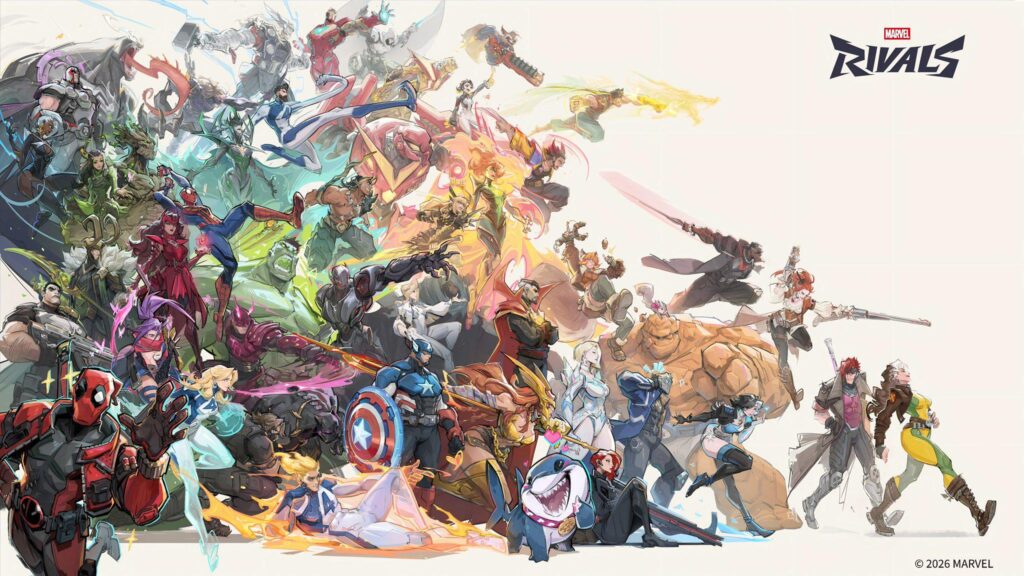
Marvel Rivals brings together superheroes, villains, antiheroes, mutants, cosmic characters, and supernatural figures from across the Marvel universe in team based battles. Developed by NetEase Games in collaboration with Marvel Games, the roster continues to grow through seasonal updates and new character releases. Characters are drawn from franchises such as the Avengers, X Men, Guardians of the Galaxy, Spider Man universe, Fantastic Four, Midnight Sons, and other corners of Marvel history.
The roster is divided into three main roles: Vanguard, Duelist, and Strategist. Each role determines how a character contributes during a match. Vanguards create space, absorb damage, and protect teammates. Duelists focus primarily on eliminating opponents and applying offensive pressure. Strategists support their teams through healing, buffs, defensive abilities, control effects, and other utility.
Major Vanguard characters include Captain America, Hulk, Thor, Groot, Doctor Strange, Magneto, The Thing, Venom, and Peni Parker. Their abilities generally favor durability and battlefield control. Hulk relies on close range strength and disruption, while Captain America uses his shield for offense and defense. Thor combines durability with lightning attacks, Groot controls areas with plant structures, Doctor Strange uses magical barriers and portals, Magneto manipulates magnetic energy, Venom dives aggressively into enemy formations, The Thing relies on raw durability, and Peni Parker uses her SP//dr suit and technology to control important areas.
Duelists make up much of the game’s damage focused roster. Characters include Spider Man, Iron Man, Black Panther, Wolverine, Star Lord, Psylocke, Scarlet Witch, The Punisher, Winter Soldier, Hawkeye, Moon Knight, and Black Widow. Spider Man specializes in extreme mobility through web movement, while Iron Man attacks from the air with ranged technology. Black Panther and Wolverine favor aggressive close range combat, Star Lord uses blasters and mobility, Hawkeye rewards ranged precision, Black Widow combines accuracy with speed, and The Punisher provides sustained weapon damage.
Strategists include Luna Snow, Mantis, Rocket Raccoon, Adam Warlock, Invisible Woman, and Cloak and Dagger. Luna Snow combines healing with ice based attacks, Mantis supports allies through healing and energy abilities, Rocket uses gadgets and technology, Adam Warlock provides cosmic support, Invisible Woman protects teammates with force fields, and Cloak and Dagger combine offensive and defensive abilities through their partnership. These characters may not always secure the most eliminations, but their healing, protection, and utility can determine the outcome of entire team fights.
The roster includes recognizable superheroes such as Captain America, Iron Man, Thor, Hulk, Black Widow, Hawkeye, Scarlet Witch, Spider Man, Peni Parker, Wolverine, Storm, Psylocke, Star Lord, Rocket Raccoon, Groot, Mantis, Adam Warlock, The Thing, and Invisible Woman. Marvel Rivals also allows villains and morally complicated characters to fight alongside heroes. Characters such as Magneto, Venom, Loki, Hela, Doctor Doom, Ultron, and Thanos expand the roster beyond traditional heroic teams and create combinations that would rarely happen outside crossover stories.
Every character is adapted to the competitive structure of Marvel Rivals rather than simply reproducing comic book power levels. A character who is nearly unstoppable in Marvel stories still needs abilities, weaknesses, cooldowns, and counters that work within a multiplayer match. This balance allows heroes and villains with dramatically different fictional power levels to participate in the same team based environment.
Marvel Rivals Character Abilities, Team Roles, and Best Choices for Players
Every Marvel Rivals character has a distinct combat identity based on their Marvel powers but adjusted for competitive multiplayer. Characters typically use a primary attack alongside additional abilities, passive effects, an Ultimate ability, and possible Team Up abilities. Understanding these systems is important because success depends on more than selecting a famous Marvel character. Players must understand positioning, timing, role responsibilities, and how abilities interact with the rest of the team.
Combat styles vary considerably across the roster. Iron Man and Hawkeye favor ranged engagement, while Hulk and Wolverine perform best in close combat. Spider Man, Star Lord, Black Panther, and other mobile characters rely on movement to enter fights, eliminate vulnerable targets, and escape before opponents can retaliate. Defensive characters such as Captain America and Doctor Strange can protect teammates using shields or barriers, while Strategists keep allies alive or create opportunities through healing and utility.
Mobility is particularly important in Marvel Rivals because many characters can move through environments in ways that traditional shooter characters cannot. Spider Man’s web movement allows rapid repositioning, Iron Man can fight from the air, Star Lord has mobility tools for escaping danger or pursuing targets, and Black Panther uses speed to pressure opponents. These movement systems make map knowledge and positioning just as important as aim.
Team Up abilities are one of the game’s defining mechanics. Certain Marvel characters gain special interactions when placed together, reflecting relationships from comics and other Marvel stories. These combinations encourage players to experiment with team compositions rather than judging each character entirely in isolation. A hero that seems less powerful individually may become significantly more useful when paired with the right teammate.
For beginners, characters with clear mechanics and forgiving abilities can make learning the game easier. Captain America offers durability and straightforward defensive play, while Hulk can survive mistakes through his large health pool and direct melee style. Iron Man can appeal to players who prefer ranged combat and aerial mobility, Scarlet Witch provides strong abilities without requiring constant precision, Rocket Raccoon offers an accessible introduction to support play, and The Punisher feels familiar to players with experience in traditional shooters.
Popular characters often include Spider Man, Iron Man, Wolverine, Scarlet Witch, Hulk, Magneto, and Doctor Strange because they combine recognizable Marvel identities with distinctive gameplay. Spider Man attracts players through mobility and iconic status, while Iron Man offers ranged firepower and flight. Wolverine appeals to aggressive melee players, Hulk emphasizes raw strength, and Magneto and Doctor Strange offer more strategic defensive styles.
Popularity should not be confused with competitive strength. Balance updates can change which characters perform best, and effectiveness depends heavily on player skill, map design, team composition, and the current game balance. A popular character may struggle against certain opponents, while a less frequently selected Strategist or Vanguard may provide exactly what a team needs to win.
Learning multiple roles is therefore valuable. A player who understands only Duelists may struggle when the team needs protection or healing. Understanding Vanguards, Duelists, and Strategists also makes it easier to recognize enemy strategies and adapt during matches.
New Marvel Rivals Characters, Latest Reveals, and Future Roster Expansion
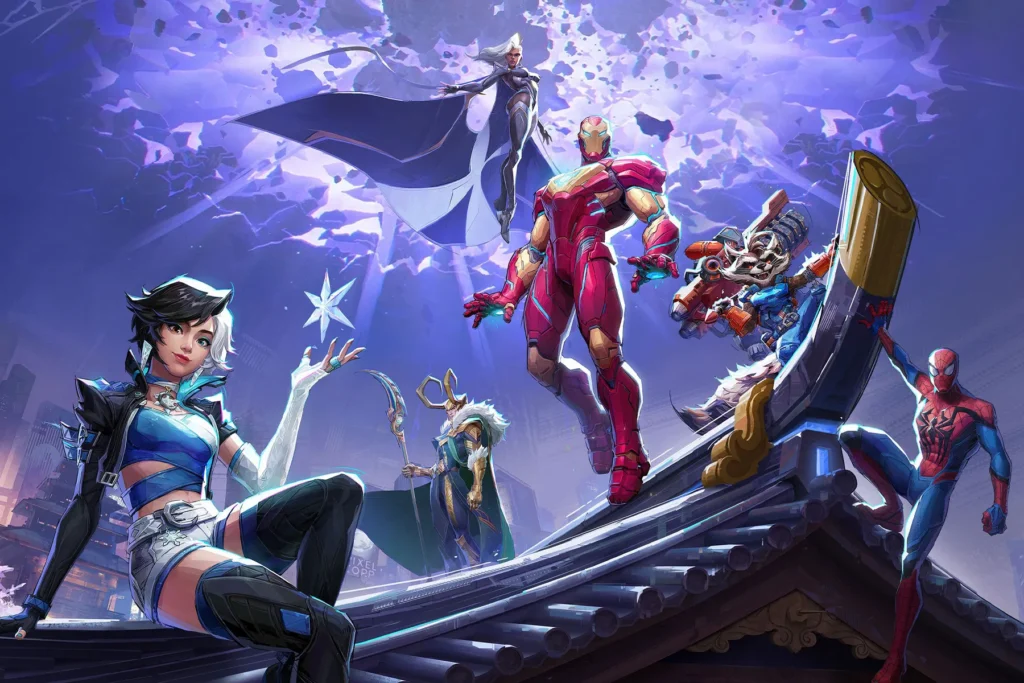
The Marvel Rivals roster continues to expand through new seasons and character updates. New additions are important because every fighter can introduce new mechanics, Team Up possibilities, strategies, counters, and shifts in the game’s competitive balance. A newly released Vanguard can change how teams defend objectives, while a Duelist may introduce a new offensive style and a Strategist can reshape healing or support strategies.
Recent and future character reveals continue to draw from different parts of Marvel history rather than focusing only on the Avengers. The developers have room to expand through additional X Men, Spider Man characters, cosmic heroes, villains, supernatural figures, and members of other Marvel teams. Fantastic Four representation can also continue growing beyond The Thing and Invisible Woman.
Character reveals typically introduce a complete gameplay identity rather than simply adding another recognizable name. New fighters can arrive with:
- Unique attacks and abilities
- Passive skills
- Ultimate abilities
- Team Up mechanics
- New movement systems
- Different strengths and weaknesses
Rumors and leaks frequently circulate around upcoming characters, but community discussion should not be treated as confirmation. Fans often predict future additions using comic popularity, existing Marvel relationships, previous games, missing roles, or characters referenced elsewhere in Marvel Rivals. Common requests include more mutants, additional Spider Man related characters, Avengers members, classic villains, cosmic characters, and further Fantastic Four additions.
Marvel’s enormous character library gives NetEase substantial room for long term expansion. The roster can continue adding famous characters while also introducing less obvious choices that create fresh gameplay. This variety is important because Marvel Rivals benefits when new characters change strategies rather than simply repeating existing combat styles.
The long term character roadmap is therefore likely to remain one of the game’s most important sources of new content. Future updates can add heroes, villains, Team Up abilities, balance adjustments, seasonal mechanics, and new tactical combinations. Keeping the roster fresh also encourages players to return, experiment with different characters, and rethink team compositions after each major update.
A growing roster creates challenges as well. Every new addition must be balanced against the existing cast, and characters must remain distinct enough to justify their inclusion. Too much overlap could make fighters feel interchangeable, while excessive power could disrupt competitive balance. The strongest additions will be characters whose Marvel identity naturally supports gameplay that is not already represented.
Marvel Rivals is therefore positioned to keep evolving through character releases for a long time. Its biggest advantage is the size and diversity of Marvel’s universe, giving the developers access to heroes, villains, mutants, cosmic beings, supernatural figures, and unusual characters that can continually expand the game’s strategic possibilities.
Frequently Asked Questions (FAQs)
- How many characters are in Marvel Rivals?
Marvel Rivals features a large and constantly growing roster of superheroes, villains, and antiheroes from across the Marvel universe. The total continues to increase through seasonal updates and new character releases, giving players more options across the Vanguard, Duelist, and Strategist roles. - Are Marvel Rivals characters based on Marvel comics?
Yes. Marvel Rivals characters are based on heroes and villains from Marvel comics, but their powers are adapted for competitive multiplayer gameplay. Abilities that may be extremely powerful in the comics are adjusted so characters can remain useful and balanced within team based matches. - What are the three Marvel Rivals character roles?
The three main roles are Vanguard, Duelist, and Strategist. Vanguards focus on durability, protection, and creating space, Duelists specialize in dealing damage and securing eliminations, while Strategists support teammates through healing, buffs, defensive abilities, and other forms of utility. - Who is the strongest Marvel Rivals character?
There is no single character who is permanently the strongest because effectiveness changes with balance updates, team compositions, maps, and player skill. Some characters may dominate in particular situations while struggling against specific counters, so understanding how to use a character effectively is usually more important than simply choosing whoever is considered powerful. - Is Spider-Man good in Marvel Rivals?
Yes. Spider-Man can be extremely effective because his web based movement gives him exceptional mobility and allows him to quickly enter and escape fights. However, his fast playstyle requires strong movement, positioning, and target selection, so experienced players are generally able to get more value from him. - Are villains playable in Marvel Rivals?
Yes. Marvel Rivals includes several villains, antiheroes, and morally complicated characters alongside traditional superheroes. Characters such as Magneto, Venom, Loki, Hela, Doctor Doom, Ultron, and others allow teams to combine heroes and villains in ways that would normally be unusual in Marvel stories. - Will Marvel Rivals add more characters?
Yes. The roster is expected to continue expanding through future seasons and content updates. Marvel has an enormous library of Avengers, X Men, Spider Man characters, cosmic heroes, supernatural figures, and villains that can be adapted into new playable characters with their own abilities and Team Up mechanics. - Which Marvel Rivals character is best for beginners?
Characters such as Captain America, Hulk, Iron Man, Rocket Raccoon, and The Punisher can be useful starting choices because their basic gameplay roles are relatively easy to understand. Beginners should still experiment with different characters so they can learn how Vanguards, Duelists, and Strategists contribute to a team. - Does Marvel Rivals have team-up abilities?
Yes. Team Up abilities are one of Marvel Rivals’ distinctive mechanics and allow certain character combinations to gain special interactions or additional abilities. These partnerships are inspired by relationships within the Marvel universe and encourage players to think about team composition rather than selecting characters only for their individual strength. - Can Marvel Rivals characters be changed after release?
Yes. Developers can adjust characters through balance patches after they are released. Damage values, cooldowns, health, abilities, and other mechanics can be changed when necessary to address characters that are too strong, too weak, or creating problems for competitive balance.

Conclusion
Marvel Rivals has created a unique superhero gaming experience by bringing together some of Marvel’s greatest heroes and villains in a team based competitive environment.
The Marvel Rivals Characters: Every Superhero And Supervillain Revealed So Far roster continues to grow, offering players a wide range of playstyles across Vanguard, Duelist, and Strategist roles.
From iconic heroes like Spider-Man, Iron Man, Hulk, and Captain America to powerful villains like Magneto and other major threats, the game provides a massive collection of Marvel characters.
As future updates introduce new fighters, abilities, and team combinations, Marvel Rivals is positioned to keep expanding its universe and remain one of the most exciting superhero multiplayer games.
Understanding every character’s abilities, strengths, and role is the key to mastering the game and building effective teams.
Sources and Citation
- Marvel Rivals Official Website
Marvel Rivals - Marvel Games Official Website
Marvel Games - NetEase Games Official Website
NetEase Games - Marvel Rivals Character Information
Marvel Rivals Wiki — Fandom - Marvel Official Character Database
Marvel Characters
Recommendations
- Ace Combat 8: Wings of Theve Gameplay Breakdown After the 9-Minute Walkthrough
- Marathon is Currently “Not Near Breaking Even” Almost 3 Months After Launch: Player Counts, Revenue Struggles, and Future Outlook Explained
- Call of Duty Black Ops 1 and 2 Are Coming to New Platforms
- Onimusha: Way of the Sword Official Demo Trailer Breakdown, Gameplay Details, Release Date & Everything We Know
- Gallipoli Release Date Confirmed for August 20, 2026: Gameplay, Platforms and WW1 Setting
- Fatal Fury: City of the Wolves Adds Kenshiro this Month
- MSI Claw 8 EX AI Plus Price Explained: Why The Handheld Costs $1,800
- Killer Bean Game Explained: First & Third Person Roguelike Shooter, Gameplay Features, Release Date, and Everything You Need to Know
- DigDigDrill Guide: Best Drills, Enchantments, Blueprint Crafting, and Fast Progression to Floor 999
- Suicide Squad Devs Explain the Game’s Struggles and the Problem With Spreadsheet-Driven Development



































































































