






In This Article (9 sections)
Deadpool References in Marvel Tōkon: Fighting Souls Explained
Deadpool References You Probably Missed In Marvel Tokon: Fighting Souls became one of the most searchable topics around the game because Deadpool’s reveal was not built like a standard character announcement. Instead of simply showing Wade Wilson as a sword-and-gun mercenary, the trailer turned him into a concentrated showcase of anime gestures, fighting game move parodies, Marvel meme culture, obscure PlayStation history, and voice-cast nostalgia. Marvel Tōkon: Fighting Souls uses Deadpool as a living reference engine, which fits both his comic identity and the game’s broader design philosophy.
Marvel Tōkon: Fighting Souls is a 4v4 tag-team fighter from PlayStation Studios, Arc System Works, and Marvel Games. The game is officially listed for PS5 and PC with an August 6, 2026 release date. Marvel’s official game page describes it as a tag fighter with reimagined Marvel characters and stages, while PlayStation’s game page emphasizes team synergy, anime-inspired visuals, dynamic stages, and a 20-character launch roster.
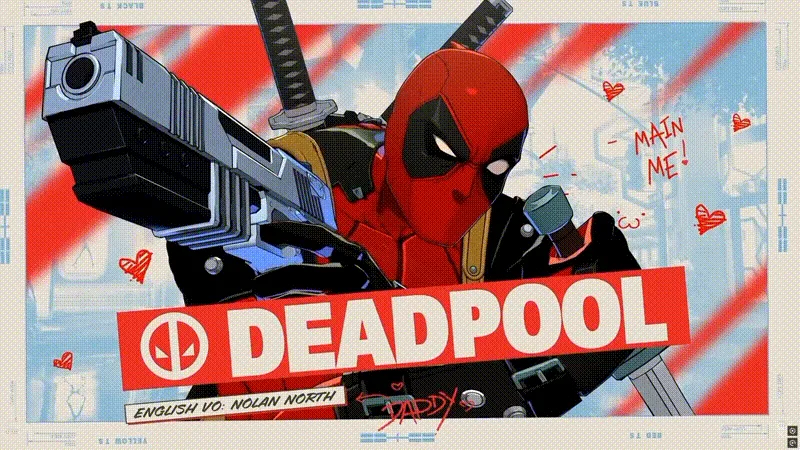
Deadpool was revealed as part of the Samurai Outriders team alongside Ghost Rider, Blade, and Loki. The PlayStation Blog announcement, written by Arc System Works producer Takeshi Yamanaka, confirmed that the Samurai Outriders were the fifth and final team revealed at EVO 2026, and that Deadpool is voiced by Nolan North. That context matters because the trailer’s jokes are not random decoration. They are tied directly to Deadpool’s official gameplay concept.
The most important explanation comes from PlayStation Blog’s description of Deadpool. In this version, Deadpool has somehow obtained a game strategy guide from beyond the fourth wall, giving him access to unique attacks from “fighting games of legend.” That official framing explains why the trailer appears to show references to Naruto, Guilty Gear, Mortal Kombat, Tekken, Dragon Ball FighterZ, Marvel vs. Capcom, PlayStation All-Stars Battle Royale, and broader Marvel meme culture.
This is not just fan speculation layered over a fast trailer. GameSpot’s breakdown of Deadpool’s reveal identifies several specific references, including the Naruto run, the Jack-O pose from Guilty Gear Strive, Johnny Cage-style offense from Mortal Kombat, Scorpion-style spear movement, a “Toasty!” gag, Yoshimitsu-style self-stabbing, Doctor Doom’s Marvel vs. Capcom aerial stomp, Vegeta-like projectile spam from Dragon Ball FighterZ, Moon Knight’s “random bullshit” meme, Mr. Polygon Man, Sol Badguy, May’s Mr. Dolphin, Jam’s Ryuujin Kick, and a Sailor Moon-style pose from Lady Deadpool.
The result is a rare case where a character’s Easter eggs are not merely cosmetic. Deadpool’s references appear to be the language of his moveset. His meta-humor, healing factor, reckless self-damage, and fourth-wall awareness all become gameplay ideas. PlayStation’s character description also says Deadpool fights with guns, grenades, and swords while using risky techniques that involve taking damage himself, which connects his healing factor to visual comedy such as the Yoshimitsu-style self-harm reference.
The Deadpool Easter eggs in Marvel Tōkon: Fighting Souls can be grouped into several categories. The anime references include the Naruto run and the Sailor Moon-style pose. The Arc System Works self-references include Guilty Gear and Dragon Ball FighterZ. The broader fighting game nods include Mortal Kombat, Tekken, and Marvel vs. Capcom. The Marvel and internet culture layer is represented by the Moon Knight “random bullshit go” meme, while PlayStation history appears through Mr. Polygon Man.
The Naruto run is the easiest reference to recognize visually. It turns a simple movement animation into a joke about anime speed, stealth, and exaggerated forward momentum. In a fighting game context, the gesture also works as a shorthand for Deadpool’s unserious relationship with danger. He is not simply moving quickly. He is moving in the most meme-readable way possible. GameSpot specifically identifies the Naruto run as one of the trailer’s first recognizable Deadpool references.
The Guilty Gear references run deeper because Marvel Tōkon: Fighting Souls is developed by Arc System Works, the studio behind Guilty Gear Strive. The trailer shows Deadpool using the Jack-O pose, a Sol Badguy-like burning uppercut, and a May-style Mr. Dolphin forward charge. GameSpot identifies all three as Guilty Gear-related nods. These references are not only audience bait. They also function as developer signatures, allowing Arc System Works to wink at its own competitive history while adapting a Marvel character.
The Mortal Kombat references are more direct and violent, which makes them especially fitting for Deadpool. The trailer appears to include a Johnny Cage-style low blow, a Scorpion-style “get over here” spear sequence, and a “Toasty!” callout. GameSpot names all three references in its breakdown, while Game Informer also notes that Deadpool’s moveset includes a Mortal Kombat “Toasty!” reference.
The Tekken Yoshimitsu reference is built around self-inflicted damage. Yoshimitsu has long been associated with sacrificial, strange, and theatrical sword techniques, and GameSpot identifies Deadpool’s self-stabbing moment as a Yoshimitsu-inspired Hara-Kiri attack. In Deadpool’s case, the reference works especially well because his healing factor turns a dangerous attack into slapstick.
The Dragon Ball FighterZ reference is also important because Arc System Works developed Dragon Ball FighterZ. GameSpot describes one of Deadpool’s barrages as resembling Vegeta’s Consecutive Energy Blast from Dragon Ball FighterZ. This makes the gag doubly layered. It references a specific anime fighting game move while also pointing back to Arc System Works’ earlier licensed-fighter success.
The Marvel vs. Capcom reference is one of the most important for genre history. GameSpot identifies a Doctor Doom-style aerial stomp from the Marvel vs. Capcom 3 era, and Game Informer says Deadpool looks “as wacky as he did in Marvel vs. Capcom 3.” That matters because Marvel fighting games have a long association with Capcom’s tag-fighter lineage. Marvel Tōkon: Fighting Souls is not a Marvel vs. Capcom sequel, but Deadpool’s moveset clearly understands that Marvel fighting game fans will bring those expectations into the arena.
The Mr. Polygon Man reference is probably the most obscure. During Deadpool’s “random bullshit” style attack, GameSpot notes that one of the objects thrown is the original PlayStation mascot and PlayStation All-Stars Battle Royale final boss, Mr. Polygon Man. Games.GG also highlights the Polygon Man moment as a surprise Easter egg tied to PlayStation history.

Why Deadpool’s Trailer is Packed with Fighting Game, Anime, and Marvel References
The Marvel Tōkon Deadpool trailer references are easy to miss because the trailer moves quickly and often stacks multiple jokes into a single sequence. Deadpool does not perform one reference, pause, and wait for the viewer to recognize it. His animations behave like a montage of fighting game literacy. A casual viewer may only see exaggerated attacks, while a fighting game fan may identify entire genre family trees in a few seconds.
One of the most important missed details is the official reason Deadpool can do all of this. PlayStation Blog says he has a game strategy guide from beyond the fourth wall, which gives him access to attacks from legendary fighting games. That line transforms the trailer from a collection of parodies into a coherent character mechanic. Deadpool is not copying moves because the developers ran out of ideas. He is using stolen knowledge as a combat style.
Another important detail is how many references connect specifically to Arc System Works. Guilty Gear Strive, Dragon Ball FighterZ, and the anime-style intensity of the trailer all point back to the developer’s visual and mechanical history. Marvel’s official page says the game is made by PlayStation Studios, Arc System Works, and Marvel Games, while Steam lists Arc System Works as developer and PlayStation Publishing as publisher.
The trailer also uses Deadpool to bridge Marvel’s older fighting game audience with a new Arc System Works audience. The Marvel vs. Capcom-style Doctor Doom stomp is a direct nod to a legacy that many Marvel fighting game fans still treat as foundational. The Dragon Ball FighterZ-like barrage speaks to anime-fighter players. The Mortal Kombat and Tekken references bring in wider fighting game recognition. The Moon Knight meme pulls in Marvel internet culture. The Mr. Polygon Man cameo rewards PlayStation historians.
The trailer’s structure also reflects Deadpool’s identity as a fourth-wall breaker. PlayStation’s character write-up describes him as reckless, healing-factor-enabled, and armed with guns, grenades, swords, and risky techniques. The references are not separate from that identity. They express it. Deadpool breaks the fourth wall by crossing not only the boundary between character and audience, but also the boundary between franchises, genres, studios, and memes.
Deadpool’s fighting game references matter because Marvel Tōkon: Fighting Souls enters a genre with unusually deep memory. Fighting game audiences remember animations, input motions, victory poses, taunts, supers, cancels, assist calls, combo routes, and announcer jokes. A reference does not need to be named outright to be recognized. A posture, camera angle, projectile rhythm, or hit reaction can be enough.
Deadpool is uniquely equipped to carry that kind of design. A more serious Marvel character might make the same references feel forced. Captain America suddenly doing a Jack-O pose would likely break tone. Wolverine using a Moon Knight meme attack might feel like a gag layered over the character rather than a natural extension of him. Deadpool, however, is already defined by self-awareness, parody, audience address, and genre disruption.
The official PlayStation character description supports this interpretation. Deadpool’s moveset is described as an outrageous arsenal of crowd-pleasing moves made possible by his fourth-wall-breaking strategy guide. That phrase is important because it frames crowd reaction as part of the design. Deadpool’s references are built for the audience to notice them, clip them, debate them, and search for them.
His references also help Marvel Tōkon: Fighting Souls establish its own identity. The game is a new Marvel fighter, but it is not trying to ignore the genre’s past. It openly positions itself within a history that includes Marvel vs. Capcom, Guilty Gear, Dragon Ball FighterZ, Mortal Kombat, Tekken, and PlayStation All-Stars. Steam describes the game as a 4v4 tag-team fighter with 20 Marvel characters at launch, dynamic Marvel Universe stages, team compositions, combos, synergies, and strategies. Deadpool’s trailer compresses that philosophy into one character.
The Deadpool Naruto run reference in Marvel Tōkon is one of the most recognizable anime Easter eggs in the trailer. GameSpot directly identifies Deadpool’s movement as the Naruto run. The reference works because it is visually immediate. The forward-leaning posture, arms swept back, and exaggerated momentum are familiar even to viewers who have only encountered Naruto through memes.
In a fighting game, movement is identity. A character’s dash, run, jump, and air mobility tell players what kind of fighter they are before any special move appears. By giving Deadpool an anime meme run, Marvel Tōkon immediately tells the audience that his movement vocabulary is unserious, performative, and self-aware. He is not trying to look disciplined. He is trying to look like someone who knows the audience will pause the trailer and post the frame.
The Naruto run also fits the broader anime presentation of Marvel Tōkon: Fighting Souls. PlayStation describes the game as having an anime-inspired art style, adaptive soundtracks, dynamic Marvel-themed stages, and fast-paced battles built around team synergy. In that context, Deadpool’s Naruto run does not feel out of place. It feels like the most extreme version of what the game already is: Marvel filtered through anime-fighter exaggeration.
The joke is also consistent with Deadpool’s personality. Wade Wilson is not above using a meme as a practical tactic. If the Naruto run makes him look faster, stranger, or more annoying, he would do it. If it gets a reaction from the opponent, he would do it twice.
The Guilty Gear references in Marvel Tōkon: Fighting Souls are some of the most important Easter eggs because they point directly back to Arc System Works. GameSpot identifies the Jack-O pose from Guilty Gear Strive, a Sol Badguy-like burning uppercut, and May’s Mr. Dolphin attack as Deadpool trailer references.
The Jack-O pose is the most meme-forward of the Guilty Gear references. It became widely recognized outside strict fighting game circles because of its exaggerated body language and social media spread. In Deadpool’s hands, it becomes a perfect fourth-wall gag. It is not only a Guilty Gear reference. It is a reference to how fighting game animations become internet culture.
The Sol Badguy-style burning uppercut operates differently. It references a core fighting game archetype: the fiery, aggressive, high-impact uppercut associated with a main-character brawler. Sol is one of Arc System Works’ defining characters, so Deadpool borrowing that energy feels like the developer signing the move in its own handwriting.
May’s Mr. Dolphin reference is more playful. It points toward Guilty Gear’s sillier side, where absurd attacks can still be competitively meaningful. Deadpool using a Dolphin-like forward charge fits his chaotic combat style because it turns a recognizable special move into slapstick offense.
These Guilty Gear references also serve a marketing purpose. Marvel Tōkon: Fighting Souls is not simply a Marvel product. It is a Marvel fighter by Arc System Works. For players who care about the studio’s lineage, Deadpool’s Guilty Gear callbacks act as proof that the developers are not hiding their style. They are integrating it directly into Marvel’s roster.

Mortal Kombat, Tekken, Dragon Ball FighterZ, and Marvel Vs. Capcom References in Deadpool’s Moveset
Deadpool’s Mortal Kombat references in Marvel Tōkon show how far the trailer reaches beyond anime fighters. GameSpot identifies a Johnny Cage-style low blow, a Scorpion-style spear attack, and a “Toasty!” reference in Deadpool’s reveal. Game Informer also reports that Deadpool’s moveset includes a Mortal Kombat “Toasty!” reference.
The Johnny Cage-style attack is especially fitting because it draws from Mortal Kombat’s long tradition of violent slapstick. Johnny Cage’s persona combines martial arts, arrogance, movie-star comedy, and disrespectful offense. Deadpool shares several of those traits, especially the tendency to turn combat into performance.
The Scorpion-style spear reference carries even more cultural weight. “Get over here” is one of the most famous ideas in fighting game history, and a chain or spear-style pull is instantly readable to players. Deadpool using that kind of move makes sense mechanically because it can function as a way to drag opponents into close-range pressure. It also makes sense comedically because Deadpool is exactly the kind of character who would steal a famous move and act like it was his own.
The “Toasty!” gag functions as a sound-and-culture reference rather than only an animation reference. Mortal Kombat’s humor has always had a strange relationship with violence, secrets, and sudden absurdity. Deadpool thrives in that same tonal space. His Mortal Kombat references are not just random nods. They align him with the part of fighting game culture that treats brutality and comedy as compatible.
The Deadpool Tekken Yoshimitsu reference appears to involve a self-stabbing or Hara-Kiri-style attack that GameSpot identifies as Yoshimitsu-inspired. The reference is smart because Yoshimitsu is one of fighting game history’s most unusual sword users, and Deadpool is Marvel’s most obvious candidate for turning self-harm into a joke about regeneration.
The reason this reference works so well is that Deadpool’s healing factor changes the meaning of a sacrificial move. For most characters, stabbing oneself would be a desperate risk, a dramatic ritual, or a strange mechanical gimmick. For Deadpool, it becomes both offense and punchline. He can hurt himself, regenerate, and keep talking.
PlayStation’s character description says Deadpool’s combat style reflects his reckless nature and healing factor, and that he uses high-risk techniques involving taking damage himself. That official description makes the Yoshimitsu-style reference feel especially intentional. It is not only an Easter egg for Tekken fans. It is a mechanical expression of Deadpool’s durability.
There is also a tonal match between Yoshimitsu and Deadpool. Yoshimitsu is strange, theatrical, weapon-focused, and often difficult to categorize. Deadpool is also strange, theatrical, weapon-focused, and difficult to categorize. The reference is funny because it treats Deadpool as someone who has browsed fighting game history and selected the move that best matches his worst instincts.
The Deadpool Dragon Ball FighterZ reference appears in a projectile barrage that GameSpot describes as resembling Vegeta’s Consecutive Energy Blast from Dragon Ball FighterZ. This is one of the more layered references because Dragon Ball FighterZ was also developed by Arc System Works, which means the gag points both outward to Dragon Ball and inward to the developer’s own catalog.
The visual rhythm of a rapid energy barrage is a recognizable Dragon Ball idea. In anime terms, it suggests overwhelming force through volume. In fighting game terms, it can suggest pressure, screen control, chip threat, or a chaotic super animation. Deadpool adapting that kind of barrage turns him into a fake anime powerhouse, which is funny precisely because he is not a ki warrior.
This reference also connects to the Moon Knight “random bullshit” gag because both involve throwing or firing too much at once. The humor comes from excess. Deadpool does not solve the situation elegantly. He floods the screen with attacks, references, objects, and jokes until the opponent is buried in noise.
For fans, this is one of the most important Deadpool references in Marvel Tōkon because it reaches Dragon Ball FighterZ players, Arc System Works fans, and Marvel audiences at the same time. It shows that Marvel Tōkon is not only borrowing from one fighting game tradition. It is positioned at the intersection of superhero tag fighters and anime spectacle fighters.
The Deadpool Marvel vs. Capcom reference is essential because Marvel fighting game history is inseparable from Capcom’s legacy. GameSpot identifies a Doctor Doom aerial stomp reference from the Marvel vs. Capcom 3 era in Deadpool’s trailer. Game Informer also compares Deadpool’s energy in Marvel Tōkon to how wacky he appeared in Marvel vs. Capcom 3.
The Doctor Doom foot dive reference is not a casual pick. In Marvel vs. Capcom culture, Doctor Doom’s aerial stomp became one of the most recognizable and memeable moves associated with high-level play, pressure, and repetition. Deadpool borrowing that kind of move immediately speaks to long-time Marvel fighting game fans.
This reference also helps Marvel Tōkon acknowledge the question many players will bring to the game: how does this compare to Marvel vs. Capcom? The answer appears to be that Marvel Tōkon is not trying to erase that history. Instead, it recognizes that history and folds parts of it into a new Arc System Works framework.
Steam’s description of Marvel Tōkon emphasizes team composition, combos, synergies, strategies, local play, online lobbies, and Episode Mode. Those features place the game in the broader tag-fighter conversation. Deadpool’s Doctor Doom-style reference gives that conversation a wink. It suggests the developers know exactly which audience is watching and what that audience remembers.

Moon Knight, Mr. Polygon Man, Lady Deadpool, and Nolan North Easter Eggs
The Deadpool Moon Knight “random bullshit” reference is one of the trailer’s clearest links to Marvel meme culture. The phrase “random bullshit go” is widely associated with a Moon Knight meme, and GameSpot notes that Deadpool drops an infamous Moon Knight quip about resorting to random attacks during his trailer sequence. Know Your Meme identifies “Random Bullshit Go!!!!” as a made-up catchphrase attached to an edited Moon Knight panel based on West Coast Avengers material, rather than a line originally printed that way in the comic.
That distinction matters. The reference is not simply a Moon Knight comic citation. It is a reference to Marvel meme culture. Deadpool is not only pulling from official fighting game history. He is pulling from the way fans remix Marvel online. That is exactly what makes the moment feel authentic to Deadpool. He is a character who would know the meme version before caring about the canonical version.
The phrase also matches the move concept. In the trailer, Deadpool appears to unleash a barrage of nonsense, objects, and references. The attack’s logic is not precision. It is overload. That makes “random bullshit go” a concise description of both the Moon Knight meme and Deadpool’s combat philosophy in Marvel Tōkon.
The Mr. Polygon Man reference in the Marvel Tōkon Deadpool trailer is the deepest cut in the showcase. GameSpot identifies Mr. Polygon Man as one of the random objects appearing in Deadpool’s attack and describes him as both the original PlayStation mascot and the final boss of PlayStation All-Stars Battle Royale. Games.GG also highlights the Polygon Man cameo as a surprise Easter egg, noting that the detail appears during Deadpool’s “random bullshit” attack.
The reference is obscure because Polygon Man belongs to early PlayStation marketing history. He was a strange, angular, purple head associated with the original PlayStation’s North American branding before being shelved. His later appearance as the final boss of PlayStation All-Stars Battle Royale turned him into a cult reference for PlayStation fans.
This cameo is especially appropriate because Marvel Tōkon: Fighting Souls is a PlayStation-published game. Steam lists PlayStation Publishing LLC as publisher, and the official Marvel page identifies PlayStation Studios as one of the partners behind the game. Deadpool throwing or summoning Polygon Man is therefore not just a random retro gag. It is a publisher-specific Easter egg.
The Mr. Polygon Man reference also deepens the “fighting games of legend” concept. PlayStation All-Stars Battle Royale was itself a platform fighting game built around PlayStation crossover history. By bringing Polygon Man into Deadpool’s attack, Marvel Tōkon connects Marvel, PlayStation, and fighting game nostalgia in one brief visual joke.
Lady Deadpool references in Marvel Tōkon: Fighting Souls appear during Deadpool’s ultimate sequence. GameSpot reports that Lady Deadpool uses Jam’s Ryuujin Kick during Deadpool’s ultimate, that the attack also looks inspired by a Persona-style team attack, and that she strikes a Sailor Moon-style pose afterward.
This sequence matters because it suggests Deadpool’s references are not limited to Wade himself. The trailer expands the gag into the Deadpool family and uses Lady Deadpool as another vessel for anime and fighting game references. That makes the ultimate feel less like a single super move and more like a meta-crossover event.
Jam’s Ryuujin Kick is another Guilty Gear-linked reference, which again points back to Arc System Works. The possible Persona-style team attack framing adds another layer because Persona fighting games also occupy the anime fighting game ecosystem associated with Arc System Works’ design language and audience overlap. The Sailor Moon-style pose broadens the reference from fighting games into magical-girl anime iconography.
Lady Deadpool’s presence also works from a Marvel perspective. Deadpool is not one person in fan culture. He is a franchise of variants, alternate versions, jokes, and multiversal exaggerations. Bringing in Lady Deadpool gives the ultimate a more chaotic, celebratory feeling. It also fits Marvel Tōkon’s team-based structure, where character identity is constantly expressed through assists, team dynamics, and layered attacks.
Nolan North’s Deadpool voice return in Marvel Tōkon is one of the trailer’s most important continuity details. The PlayStation Blog officially confirms Deadpool is voiced by Nolan North in Marvel Tōkon: Fighting Souls. Game Informer also notes that North reprises the role after voicing Deadpool in the character’s 2013 game.
This casting matters because North’s Deadpool performance is strongly associated with the character’s video game identity. Deadpool has been voiced by different performers in different media, but North’s version has become one of the most recognizable for players. His return helps Marvel Tōkon connect to earlier Deadpool game appearances while still placing the character inside a new Arc System Works combat system.
The voice also strengthens the references. Deadpool’s jokes require timing, tone, and self-awareness. A visual parody can carry part of the gag, but a Deadpool trailer depends heavily on delivery. North’s return gives the game an established performance style for fourth-wall breaks, combat chatter, and meta-commentary. For fans wondering whether a familiar voice returned, the answer is yes: Nolan North is officially Deadpool in Marvel Tōkon: Fighting Souls.

Why Deadpool is the Perfect Character for Marvel Tōkon: Fighting Souls
Deadpool is perfect for Marvel Tōkon: Fighting Souls because the game’s structure gives him room to be more than a guest comedian. Marvel Tōkon is a 4v4 tag fighter, which means characters are defined by movement, assists, team identity, synergy, stage transitions, and spectacle. Deadpool’s personality thrives in exactly that kind of dense environment.
PlayStation describes Marvel Tōkon as a game where players build teams of four, experiment with compositions, discover combos and synergies, and fight through dynamic Marvel Universe stages. Steam similarly describes a 20-character launch roster, dynamic stages, interactive transitions, adjustable controls, local play, online lobbies, and Episode Mode. Deadpool’s chaotic design fits that structure because he can turn every system into a joke.
His official moveset concept also makes him mechanically distinct. PlayStation’s character page says Deadpool fights at any range, uses a Healing Gauge generated by enduring attacks, and can generate Healing Gauge through his Unique move, Meat Shield. That gives the character a gameplay identity tied to damage, recovery, and reckless risk. He is not just funny. His humor appears connected to resource management and combat decisions.
Deadpool also helps Marvel Tōkon communicate with multiple audiences at once. Comic readers understand the fourth-wall breaks. Fighting game veterans understand the move references. Anime fans recognize the Naruto and Sailor Moon gestures. PlayStation fans recognize Polygon Man. Marvel vs. Capcom players recognize the Doctor Doom nod. Arc System Works fans recognize Guilty Gear and Dragon Ball FighterZ echoes.
That range is why Deadpool’s trailer became such a useful promotional tool. It does not only reveal a character. It demonstrates what kind of game Marvel Tōkon wants to be: stylish, self-aware, referential, competitive, and comfortable with deep cuts.
The references are not accidental. PlayStation’s official explanation says Deadpool has a strategy guide from beyond the fourth wall, giving him access to attacks from legendary fighting games. That premise gives the trailer a clear internal logic. Deadpool is not merely parodying the genre. He is weaponizing the genre.
The Naruto run establishes the anime meme layer. The Guilty Gear references honor Arc System Works’ own history. The Mortal Kombat references add violent comedy. The Tekken Yoshimitsu reference turns Deadpool’s healing factor into slapstick risk. The Dragon Ball FighterZ reference connects Marvel Tōkon to another Arc System Works licensed fighter. The Marvel vs. Capcom nod acknowledges the legacy Marvel fighting game fans care about most. The Moon Knight meme pulls in Marvel internet culture. The Polygon Man cameo rewards PlayStation historians. Lady Deadpool expands the gag into a wider Deadpool-family spectacle. Nolan North’s return gives the entire package a familiar voice.
Deadpool is therefore not just another roster addition. He is a statement of intent. Marvel Tōkon: Fighting Souls wants to be a Marvel tag fighter that understands fighting game culture, anime spectacle, player nostalgia, and modern meme literacy. Deadpool is the ideal character to carry that message because he can cross every boundary without breaking character.

Frequently Asked Questions (FAQs)
- What are the biggest Deadpool references you probably missed in Marvel Tokon: Fighting Souls?
The biggest Deadpool references include the Naruto run, Guilty Gear’s Jack-O pose, Sol Badguy-style and May-style attacks, Mortal Kombat’s Johnny Cage and Scorpion references, a “Toasty!” gag, a Tekken Yoshimitsu-style self-stabbing attack, a Dragon Ball FighterZ-style Vegeta barrage, a Marvel vs. Capcom Doctor Doom-style aerial stomp, the Moon Knight “random bullshit go” meme, Mr. Polygon Man, and Lady Deadpool’s anime and fighting game references. GameSpot’s breakdown identifies most of these trailer details directly. - Why does Deadpool use moves from other fighting games in Marvel Tokon?
Deadpool uses moves from other fighting games because Marvel Tōkon’s official explanation is that he has obtained a game strategy guide from beyond the fourth wall. According to PlayStation Blog, that guide gives him access to unique attacks from legendary fighting games. This turns the references into part of his actual combat identity rather than simple visual jokes. - Is Deadpool voiced by Nolan North in Marvel Tokon: Fighting Souls?
Yes. PlayStation Blog confirms that Deadpool is voiced by Nolan North in Marvel Tōkon: Fighting Souls. Game Informer also notes that North reprises the role after voicing Deadpool in the 2013 Deadpool game, making his return an important connection to Deadpool’s earlier video game identity. - What is the Mr. Polygon Man reference in the Deadpool trailer?
The Mr. Polygon Man reference appears during Deadpool’s chaotic attack sequence. GameSpot identifies Mr. Polygon Man as one of the objects in the attack and describes him as the original PlayStation mascot and the final boss of PlayStation All-Stars Battle Royale. The cameo works as a deep PlayStation history Easter egg inside a PlayStation-published Marvel fighter. - What is the Moon Knight random bullshit reference in Marvel Tokon?
The Moon Knight reference is tied to the famous “random bullshit go” meme. GameSpot says Deadpool drops the Moon Knight quip while using a chaotic projectile-like attack. The phrase is widely treated as a meme attached to an edited Moon Knight panel rather than a direct original comic quote, which makes the joke more about Marvel internet culture than strict comic canon. - What Mortal Kombat references does Deadpool use in Marvel Tokon?
Deadpool’s Mortal Kombat references include a Johnny Cage-style low blow, a Scorpion-style spear attack, and a “Toasty!” gag. GameSpot identifies these references in the trailer, and Game Informer also mentions the “Toasty!” reference. They fit Deadpool because Mortal Kombat’s mix of violence, secrets, and absurd humor matches his tone. - What Guilty Gear references are in Deadpool’s Marvel Tokon trailer?
Deadpool’s Guilty Gear references include the Jack-O pose, a Sol Badguy-like burning uppercut, May’s Mr. Dolphin-style charge, and Lady Deadpool using Jam’s Ryuujin Kick during Deadpool’s ultimate. GameSpot identifies these references in its trailer breakdown. They are especially meaningful because Marvel Tōkon is developed by Arc System Works, the studio behind Guilty Gear. - Is Lady Deadpool in Marvel Tokon: Fighting Souls?
Lady Deadpool appears in Deadpool’s ultimate sequence in the trailer, according to GameSpot’s breakdown. She is shown using a Jam-style Ryuujin Kick and later striking a Sailor Moon-style pose. Her appearance expands Deadpool’s reference-heavy style beyond Wade himself and makes the ultimate feel like a larger Deadpool-family spectacle. - When does Marvel Tokon: Fighting Souls release?
Marvel’s official page lists Marvel Tōkon: Fighting Souls for release on August 6, 2026, on PS5 and PC. Steam also lists the release date as August 6, 2026. The game is described as a 4v4 tag-team fighter with a 20-character launch roster and dynamic Marvel Universe stages. - Why is Deadpool such a good fit for Marvel Tokon?
Deadpool is a strong fit because Marvel Tōkon is a high-speed 4v4 tag fighter built around team synergy, spectacle, anime-inspired visuals, and dynamic Marvel stages. Deadpool’s fourth-wall-breaking identity allows the developers to turn references, parody, self-damage, healing, and genre jokes into actual combat design.
Conclusion
Deadpool References You Probably Missed In Marvel Tokon: Fighting Souls is not just a catchy SEO phrase. It describes the central appeal of Deadpool’s reveal. The trailer is built like a reference puzzle, with every few seconds pointing toward another piece of fighting game, anime, Marvel, or PlayStation history.
The most important point is that the references are not accidental. PlayStation’s official explanation says Deadpool has a strategy guide from beyond the fourth wall, giving him access to attacks from legendary fighting games. That premise gives the trailer a clear internal logic. Deadpool is not merely parodying the genre. He is weaponizing the genre.
The Naruto run establishes the anime meme layer. The Guilty Gear references honor Arc System Works’ own history. The Mortal Kombat references add violent comedy. The Tekken Yoshimitsu reference turns Deadpool’s healing factor into slapstick risk. The Dragon Ball FighterZ reference connects Marvel Tōkon to another Arc System Works licensed fighter. The Marvel vs. Capcom nod acknowledges the legacy Marvel fighting game fans care about most. The Moon Knight meme pulls in Marvel internet culture. The Polygon Man cameo rewards PlayStation historians. Lady Deadpool expands the gag into a wider Deadpool-family spectacle. Nolan North’s return gives the entire package a familiar voice.
Deadpool is therefore not just another roster addition. He is a statement of intent. Marvel Tōkon: Fighting Souls wants to be a Marvel tag fighter that understands fighting game culture, anime spectacle, player nostalgia, and modern meme literacy. Deadpool is the ideal character to carry that message because he can cross every boundary without breaking character.
Sources and Citations
- PlayStation Blog announcement by Arc System Works producer Takeshi Yamanaka.
https://blog.playstation.com/2026/06/28/blade-loki-deadpool-announced-for-marvel-tokon-fighting-souls/ - Official Marvel game page for Marvel Tōkon: Fighting Souls.
https://www.marvel.com/games/marvel-tokon-fighting-souls - Official PlayStation game page for Marvel Tōkon: Fighting Souls.
https://www.playstation.com/games/marvel-tokon-fighting-souls/ - Steam store page for Marvel Tōkon: Fighting Souls.
https://store.steampowered.com/app/3300800/MARVEL_Tokon_Fighting_Souls/ - GameSpot coverage of the Deadpool trailer and references.
https://www.gamespot.com/articles/marvel-tokon-fighting-souls-deadpool-trailer-breakdown/ - Game Informer roster report.
https://gameinformer.com/2026/06/29/marvel-tokon-fighting-souls-adds-deadpool-blade-and-loki-to-complete-launch-roster - Games.GG coverage of the Polygon Man Easter egg and Samurai Outriders.
https://games.gg/news/fighting-games/marvel-tokon-fighting-souls-deadpool-trailer-polygon-man-easter-egg/ - Know Your Meme: Moon Knight “Random Bullshit Go!!!!”.
https://knowyourmeme.com/memes/random-bullshit-go
Recommendations
- Blender 5.2 Alpha Cloth Tearing Simulation: How the New Geometry Nodes Cloth Solver Works
- Mortal Kombat Actor on Street Fighter Rivalry: Lewis Tan Reacts to Andrew Schulz’s Game Awards Jab
- Fortnite Raising V-Buck Prices and Cutting Bonus Rewards “To Help Pay the Bills” — What the New Changes Mean for Players
- Delta Force X Rainbow Six Siege Official Crossover Trailer: Release Date, Operators, Skins, and Season 10 Details
- The View Keeper vs. Manual Camera Switching: Which is Better?
- War Machine Review (2026): Netflix’s Alan Ritchson vs Alien Killer Robot Sci-Fi Action Movie
- KeyShot releases KeyShot Studio 2026.1: new features, release notes, and system requirements
- Stranger than Heaven: Official Cities Overview Trailer Breakdown, All Cities Explained, Release Date, Story Details, and Everything We Know
- All God of War Games Ranked From Worst to Best
- New Mortal Kombat Video Game in Development, Ed Boon Confirms: What “Actively Pursuing” Means and What Comes Next for NetherRealm



































































































