










In This Article (27 sections)
Spider-Man Overview, Release Context, Game Plan, Strengths, and Weaknesses
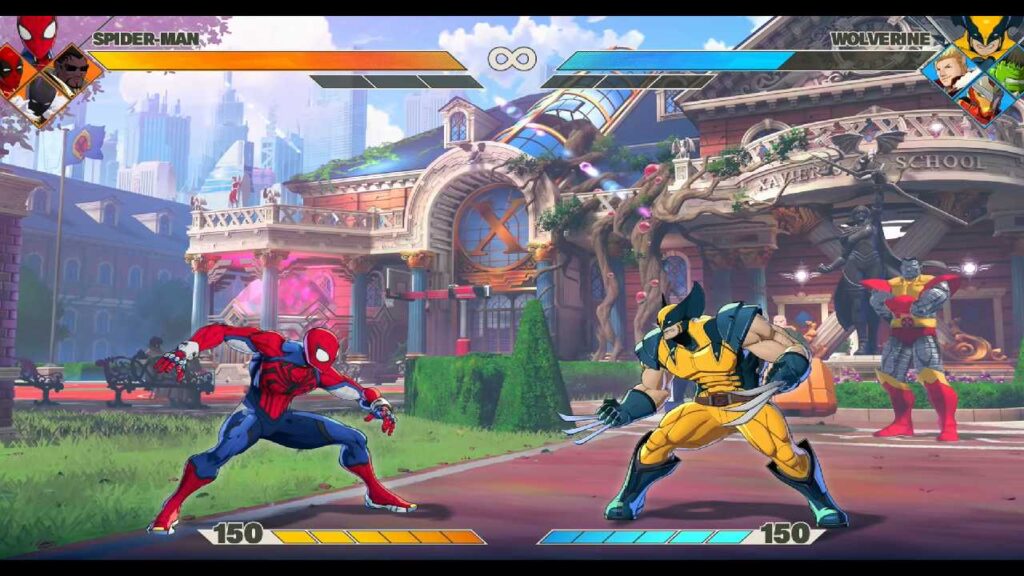
Spider-Man enters MARVEL Tōkon: Fighting Souls as a fast, mobile pressure character who combines web-powered movement, projectiles, traps, evasive defense, and close-range offense. The official Spider-Man character guide defines his core identity through speed, Web Zip mobility, and close-range pressure, while earlier official hands-on material presents him as a versatile fighter who can attack from multiple aerial and grounded angles. This guide explains how his tools fit together, how to practice his command list, and how to build practical strategies around Web Zip, Web Bomb, Spidey-Sense, Arachnid Assault, Web Warrior, and Radioactive Spider.
As of July 16, 2026, MARVEL Tōkon: Fighting Souls is scheduled to launch on August 6, 2026, for PlayStation 5 and PC. Spider-Man is also included among the 15 playable characters announced for the July 24 to 26 open beta. Because the commercial release and open-beta build are still ahead, final damage values, frame data, cancel windows, hit-stun behavior, and balance properties may differ from earlier demonstrations or community command references. The move functions and inputs discussed here are based on the latest official footage, official developer material, and current pre-launch command documentation, but the in-game launch command list and Training Mode should be treated as the final authority.
The most important lesson is that Spider-Man is not simply a rushdown character who should fly toward the opponent at every opportunity. His strongest offense begins when Web Shot, Web Bomb, assists, crouch movement, and aerial positioning make the opponent hesitate. Once that hesitation is established, Web Zip becomes much harder to predict. Spider-Man can then approach horizontally, rise diagonally, dive from above, hang in the air, convert a Web Zip hit into Zip Kick, or use the grounded route to threaten Web Slam and Web Snare. The result is a character whose effectiveness depends less on memorizing one long combo and more on controlling the opponent’s attention.
Establishing Hesitation and Core Game Plan
Spider-Man’s basic game plan is to create uncertainty before committing to close-range offense. Web Shot checks opponents who remain passive at a distance, Web Bomb occupies part of the stage and discourages straightforward movement, Web Zip lets Spider-Man attack from a chosen trajectory, and Web Hang alters the timing of his descent. Spidey-Sense gives him a defensive answer when an opponent tries to exploit predictable pressure. Together, these tools let Spider-Man alternate between movement, zoning, traps, counterplay, and rushdown instead of relying on only one approach.
In neutral, Spider-Man should gather information before taking a major risk. A grounded Web Shot can reveal whether the opponent prefers to jump, block, counter-projectile, or call an assist. A Web Bomb can reveal which escape route the opponent chooses when space becomes restricted. Once the opponent’s preferred response is known, Web Zip can target the space they are likely to enter rather than the position they currently occupy. This is especially important because Spider-Man’s mobility is powerful but not automatically safe. A predictable Web Zip can be intercepted, and a poorly timed Web Shot carries enough commitment for an opponent to jump over it and punish.
At close range, Spider-Man should vary the length and rhythm of his offense. Complete a normal chain when a hit is confirmed, but stop earlier when the opponent is waiting for a predictable special cancel. Mix grounded pressure with a short retreat, crouch movement, a delayed assist call, Web Bomb placement, or a new Web Zip trajectory. The goal is to make the defender decide whether Spider-Man will continue attacking, reposition, bait a reversal, or restart pressure from another angle.
Spider-Man’s unique crouch-walk is also strategically relevant. Official hands-on coverage notes that he can move while maintaining an unusually low stance, potentially allowing him to advance beneath attacks whose hitboxes do not reach that low. This should not be treated as universal projectile immunity because every interaction depends on the projectile’s actual hitbox. Instead, use crouch-walking as a controlled spacing tool and test specific matchup interactions in Training Mode.
Round Cycle and Key Strengths
A reliable Spider-Man round should follow a repeatable cycle. First, establish Web Shot, Web Bomb, or assist coverage. Second, observe the opponent’s movement. Third, use the appropriate Web Zip direction to reach the space their response exposes. Fourth, convert confirmed hits into Arachnid Assault, Zip Kick, Web Slam, or a meter-spending finisher. Finally, return to controlled pressure rather than repeating the same entry immediately. Spider-Man becomes much more dangerous when each approach appears to be one of several credible possibilities.
Spider-Man’s greatest strength is multidirectional mobility. Web Zip can carry him along several grounded and airborne paths, allowing him to attack from angles that conventional forward movement cannot reproduce. A player who learns to alter Web Zip direction and timing can threaten horizontal approaches, rising attacks, descending ambushes, and delayed aerial movement. This mobility also helps Spider-Man reposition around projectiles, assists, and traps rather than always confronting them directly.
His second major strength is versatility. Spider-Man has a projectile in Web Shot, a lingering trap in Web Bomb, an evasive counter tool in Spidey-Sense, an advancing attack in Arachnid Assault, airborne movement through Web Hang, and multiple Web Zip follow-ups. The developer specifically described him as easy to pick up while retaining defining Spider-Man traits. That combination makes him suitable for new players who want recognizable tools and experienced players who enjoy movement-based optimization.
Spider-Man also creates a demanding mental stack. When he begins Web Zip, the opponent must consider the trajectory, the possibility of Zip Kick, a grounded Web Slam route, an aerial reposition, and the presence of an assist or Web Bomb. Even when each option is individually defendable, presenting several options with different timing can force hesitation. That hesitation gives Spider-Man opportunities to land, reset his spacing, or begin grounded pressure.
His defensive versatility is another strength. Spidey-Sense is designed to evade attacks and throws, while airborne Arachnid Assault can challenge aerial offense. Web Hang may cause an anti-air to miss or be activated too early, and Spider-Man’s low crouch-walk can alter interactions with high-reaching attacks. None of these tools eliminates the need for blocking, but together they make his defensive movement less predictable than that of a purely grounded rushdown character.
Main Weaknesses and Pre-Launch Limits
Spider-Man’s weaknesses largely come from commitment and predictability. Web Shot has enough recovery to be punished by an anticipated jump-in. Web Bomb can be destroyed. Web Zip follows a chosen path, meaning an opponent who correctly anticipates the trajectory can prepare an anti-air, projectile, or assist call. Spidey-Sense also requires timing and can become punishable if used against an opponent who waits instead of attacking.
His pressure may also become less threatening when assists are unavailable. A solo Web Zip or delayed normal creates a clearer defensive decision than the same action protected by a projectile, anti-air, or lockdown assist. Spider-Man players therefore need awareness of assist availability rather than calling every partner at the first opportunity.
Another weakness is that his most visually impressive movement can encourage unnecessary risks. Repeated full-screen Web Zips may work against unfamiliar opponents, but stronger players will begin preemptively occupying the relevant lanes. Spider-Man should use mobility to exploit conditioned behavior, not as a replacement for neutral-game observation.
Finally, the current pre-launch environment limits definitive balance conclusions. Public footage demonstrates move functions, but official final damage tables, complete frame advantages, matchup charts, and tournament-tested team rankings are not yet established. Claims that Spider-Man is unquestionably top tier, weak, overpowered, or solved would therefore be premature before the open beta and August 6 launch build.

Command List and Core Tools: Web Zip, Web Shot, Web Bomb, Spidey-Sense, and Arachnid Assault
The following commands use common numpad notation. The number 6 means forward, 4 means backward, 2 means down, 8 means up, 3 means down-forward, and 1 means down-back. Therefore, 236 is a quarter-circle-forward motion, 214 is a quarter-circle-back motion, 623 is forward, down, then down-forward, and 632146 is a half-circle-back motion followed by forward. Reverse horizontal directions when Spider-Man changes sides. L, M, and H mean Light, Medium, and Heavy. U means Unique Ability, QS means Quick Skill, and M+H means pressing Medium and Heavy together.
Current quick-control references present Web Shot through neutral QS, Spidey-Sense through forward plus QS, Arachnid Assault through back plus QS, and Web Bomb through down plus QS. Alternate strength versions may be selected by combining the corresponding QS direction with Medium or Heavy under the applicable control layout. Web Warrior uses QS+U under quick controls, while Radioactive Spider uses forward plus QS+U. Because simple-input mappings have changed during development, players should confirm their selected control preset in the current in-game command list.
Web Zip Overview and Directional Mixups
Web Zip is Spider-Man’s defining Unique Ability. It can be performed from the ground or air and directed along different trajectories. When the movement connects, Spider-Man can transition into Zip Kick. A grounded Web Zip can also lead to Web Slam, while certain blocked or repeatedly chained Web Slam situations transition into Web Snare, which pulls the opponent toward Spider-Man instead of producing the normal slam.
Web Zip begins when Spider-Man fires a web and propels himself along the selected direction. Official demonstrations show grounded movement, rising diagonal paths, and downward aerial approaches. The direction is not merely cosmetic; it determines the lane Spider-Man occupies and changes which defensive response the opponent must choose. The ability should be understood as both movement and offense. If Spider-Man uses Web Zip only to travel, the opponent can focus on intercepting his destination. If he demonstrates Zip Kick, Web Slam, Web Snare, Web Hang, an assist call, or a delayed landing afterward, the opponent must account for several possible conclusions. Web Zip becomes strongest when the beginning of the movement does not reveal the entire plan.
The grounded and airborne starting points produce different tactical effects. Grounded Web Zip is useful for converting horizontal space into immediate pressure and for accessing Web Slam. Airborne Web Zip changes Spider-Man’s descent and can send him toward an opponent from a height that ordinary ground movement cannot reach. An upward diagonal Web Zip can also move him away from low attacks before redirecting the fight toward the air.
The additional directional control described in current command references lets Spider-Man alter movement type or trajectory before the motion fully develops. Players should practice this slowly rather than attempting every variation immediately. Begin by identifying a consistent horizontal path, one upward path, and one descending path. Once each can be performed without accidental inputs, alternate them from the same starting position so the opponent cannot identify the route merely from Spider-Man’s initial jump height.
Conditioning, Hit Confirms, and Web Zip Angles
Web Zip should usually be protected by prior conditioning. A Web Shot encourages the opponent to jump or block. Web Bomb encourages movement away from a specific area. An assist can occupy the lane through which the opponent would normally challenge. Spider-Man should then select the Web Zip angle that punishes the expected response. This sequence is more reliable than using an unsupported Web Zip and hoping the opponent fails to react.
Players should also separate Web Zip contact from Web Zip movement. When the move connects, immediately recognize whether the opponent was hit or blocked. On hit, Zip Kick or the appropriate combo conversion becomes available. On block, continuing automatically may expose a predictable gap or follow-up. Practicing hit confirmation prevents Spider-Man from committing to the same branch regardless of what happened.
The forward or horizontal Web Zip is the clearest approach option. It rapidly closes space and is most useful after a grounded projectile, assist call, or visible opponent commitment. Because its path is relatively direct, it should not become Spider-Man’s only entry. Opponents who expect it can place a long-reaching normal or assist in the lane before Spider-Man arrives. The upward diagonal variation is valuable against opponents who focus heavily on ground control.
It changes Spider-Man’s vertical position, prepares an aerial attack, and can cause low or horizontally focused attacks to miss. It is also an effective way to begin Web Hang mind games because the opponent must decide whether to anti-air immediately or wait for Spider-Man’s next aerial action. Official footage and hands-on reporting identify upward diagonal Web Zip as one of his principal aerial approach routes.
Descending, Retreating, and Web Hang Movement
The descending Web Zip is a strong response to opponents who expect Spider-Man to remain high in the air. From an airborne position, he can dive toward the ground and create a sudden change in timing. The route is especially effective when an assist or Web Bomb occupies the space the opponent would normally use to retreat.
Without coverage, however, a repeated descending angle can become an easy anti-air target. A backward or retreating Web Zip should be treated as a spacing reset rather than wasted movement. Spider-Man does not always need to turn mobility into an immediate attack. Moving away can cause a reversal, anti-air, or assist call to miss, after which Web Shot or a new approach can punish the opponent’s recovery.
Web Hang is another crucial movement variation. Instead of following the expected jump arc, Spider-Man suspends himself overhead. Official material specifically identifies this as a method of baiting anti-air attempts. The key is not to remain suspended for the same duration every time. A short hang, long hang, immediate aerial attack, Web Shot, or redirected movement should all appear plausible. Web Hang is performed in the air with the upward Unique input, and its best use is to make the opponent reveal an anti-air or defensive assist too early.
If the opponent attacks the space beneath Spider-Man immediately, he can delay his descent and punish the recovery. If the opponent waits, Spider-Man can use a shorter hang or transition into an aerial attack, Web Shot, Web Zip, or landing pressure. Web Hang becomes weaker when it is treated as a mandatory pause during every jump because a patient opponent can wait beneath Spider-Man, occupy his landing space, or use a delayed anti-air. The purpose of the move is timing variation. It should make Spider-Man’s landing uncertain, not trap him in the air without a plan.
Zip Kick, Web Slam, and Web Snare Follow-Ups
Zip Kick is the direct offensive follow-up to Web Zip. Current command references describe it as holding U during Web Zip, and it can be performed during grounded or aerial movement. Its main purpose is to convert successful Web Zip contact into an additional strike and continue Spider-Man’s momentum.
The most common Zip Kick mistake is committing to it before confirming contact. When Spider-Man automatically performs the follow-up every time, an opponent can focus on blocking or intercepting a fixed sequence. Instead, practice Web Zip against a training dummy set to random guard. Perform Zip Kick only when the initial interaction confirms a hit or when an assist has made continued pressure safe. On block, consider stopping, repositioning, or using team coverage rather than repeating the same follow-up.
Web Slam is tied to grounded Web Zip and uses the held back-plus-U follow-up in current notation. When the correct condition is met, Spider-Man draws the opponent in and slams them down. It gives the grounded Web Zip route a different visual and positional conclusion from Zip Kick. Official hands-on coverage also states that a blocked Web Slam, or one chained too repeatedly, can transition into Web Snare, pulling the opponent closer rather than producing the standard slam.
Web Snare is strategically important even when it does not deal the same kind of immediate payoff as a clean Web Slam. Pulling the opponent closer can preserve Spider-Man’s preferred range and make an assist, normal, throw, or delayed pressure reset more threatening. However, players should not assume the pull makes every follow-up safe. The precise advantage and counterplay must be tested against the current build’s defensive options.
Zip Kick, Web Slam, and Web Hang should serve different decisions. Zip Kick rewards confirmed Web Zip contact. Web Slam changes the grounded conversion and can lead to a pulling interaction. Web Hang delays aerial timing and baits premature defense. Cycling among these purposes is more effective than selecting one follow-up solely because it produces the most dramatic animation.
Web Shot Projectile Neutral and Multi-Web Versions
Web Shot is Spider-Man’s primary projectile and can be used from the ground or air. The official hands-on report states that Medium and Heavy versions fire multiple webs in succession. These versions improve projectile coverage but also increase commitment, so they should not be used automatically whenever Spider-Man is far away. The safest use of Web Shot is as a measured neutral check. Fire it when the opponent is outside immediate jump-in range, recovering from a committed action, dealing with an assist, or navigating around Web Bomb. A single projectile can establish the threat without locking Spider-Man into the longer commitment associated with repeated or stronger versions.
Medium and Heavy Web Shot should be used when the added coverage serves a specific purpose. Multiple webs may keep the opponent blocking longer, challenge movement through a lane, or support Spider-Man’s approach. They also create more time for the opponent to anticipate the pattern and move around it. Official coverage explicitly warns that the move’s long animation can be punished when the opponent predicts it and jumps.
Air Web Shot changes the timing and height of the projectile. It can check an opponent who is trying to pursue Spider-Man’s jump, cover his descent, or place an attack on screen before a later Web Zip. It should not be used at the same height on every jump because a prepared opponent can occupy the landing area while Spider-Man is still committed.
Web Shot works best when it creates a reaction that another tool can punish. If the opponent consistently jumps over it, prepare an anti-air, vertical assist, air Arachnid Assault, or rising Web Zip. If the opponent blocks patiently, place Web Bomb or approach behind an assist. If the opponent attacks the projectile, delay the next shot and use Web Zip during the recovery.
Web Bomb Placement and Knockdown Setups
Web Bomb uses 22L/M/H and can be placed from the ground or air. It creates a lingering explosive that interferes with movement and forces the opponent to account for another active object on the stage. Official material confirms that enemy attacks can destroy it, which makes Web Bomb a positioning tool rather than an indestructible barrier. It becomes significantly more effective when placed after a knockdown, behind assist coverage, or at a distance where the opponent cannot remove it without surrendering space.
The safest Web Bomb setup begins after knockdown. Once the opponent is unable to move immediately, Spider-Man can place the bomb and position himself so that attacking the trap creates another risk. If the opponent tries to destroy it, Spider-Man can approach, call an assist, or use Web Shot. If the opponent retreats, Spider-Man gains space. If the opponent blocks and remains near the bomb, its delayed presence strengthens his pressure.
Web Bomb also complements Web Zip because the bomb occupies one route while Spider-Man attacks from another. For example, a bomb near the opponent’s grounded escape path can make an upward or descending Web Zip harder to avoid. The objective is not to force the opponent directly into the explosion every time. It is to reduce the number of safe movement choices available when Spider-Man begins his approach.
Web Bomb Combo Extension, Air Placement, and Counterplay
The July 2026 character-guide footage appears to demonstrate Web Bomb within extended offensive sequences, and current discussion of that footage notes the possibility of continuing a combo after the bomb connects. Exact hit-stun and version requirements have not been published in the official textual sources cited here, so this should be tested rather than assumed. Begin with a simple ground chain into Web Bomb, observe whether the opponent remains in hit-stun, and test a normal, Web Zip, assist, or Arachnid Assault pickup.
Air Web Bomb can alter the stage while Spider-Man is descending or retreating. It is useful when a grounded placement would be too slow or obvious, but its location must support Spider-Man’s next action. A trap placed too far from both characters may remain active without influencing the fight.
Assists can protect Web Bomb in two ways: a projectile-oriented assist can occupy the opponent while the trap is being placed, and a vertical or anti-air assist can discourage the jump that would otherwise bypass it. A close-range or unique assist can help convert the explosion into a longer sequence. Because assist functions and character-specific properties have changed during development, test the exact assist selected in the launch build rather than relying on older beta assumptions.
Opponents can counter Web Bomb by destroying it, moving away before it becomes relevant, attacking Spider-Man during placement, or using an assist to clear space. Spider-Man should therefore avoid treating the bomb as protection by itself. The trap becomes powerful when Spider-Man is close enough to punish the opponent for dealing with it.
Spidey-Sense Mechanics and Strategic Use
Spidey-Sense is performed with 623L/M/H under traditional controls. It places Spider-Man in a specialized defensive state intended to evade incoming attacks and throws. Official developer commentary describes the move as avoiding both attacks and throws while automatically striking back, making it one of Spider-Man’s most distinctive defensive mechanics.
There is an important pre-launch version distinction. Official 2025 material described an automatic counterattack generally, while coverage of the July 2026 character-guide footage reports that the updated presentation emphasizes a direct counterattack against the opposing team’s leader and otherwise shows Spidey-Sense primarily as an evasion tool. Because the official text and newer footage coverage describe different levels of specificity, players should verify the current leader interaction, version properties, and retaliation condition in the open beta or launch command demonstration. The reliable strategic concept is that Spidey-Sense is an evasive response to attacks and throws; the exact automatic-counter condition may reflect build changes.
Spidey-Sense is strongest against a committed, predictable attack. Good examples include an opponent repeatedly pressing after the same blocked sequence, attempting an obvious throw, or using a fixed meaty timing after knockdown. It is less effective against an opponent who stops, delays a button, or uses an action that recovers before Spider-Man’s response becomes active. The move should not replace normal defense. Blocking provides information without automatically risking a specialized counter stance. Spidey-Sense is the higher-commitment answer used when a pattern has already been identified. Excessive use teaches the opponent to delay pressure and punish Spider-Man’s recovery.
A practical training exercise is to record three dummy sequences. The first should end in a strike, the second in a throw, and the third in a deliberate pause. Practice using Spidey-Sense against the first two while continuing to block against the pause. This develops recognition rather than guesswork. After a successful evasion or counter interaction, prioritize a stable conversion instead of attempting the longest possible route immediately. Begin with a grounded normal chain, Arachnid Assault, or assist-confirmed sequence. Once the timing is reliable, add Web Bomb, Web Warrior, or team extensions. A defensive read has limited value if the subsequent combo is inconsistent.
Arachnid Assault Ground and Air Applications
Arachnid Assault uses 214L/M/H and can also be performed in the air. On the ground, it functions as an advancing rush attack that can complete a confirmed sequence or help Spider-Man move through close-range space. In the air, it becomes a somersault attack with invulnerability specifically against aerial attacks, making it useful as an air-to-air challenge and combo finisher. That qualification is important: the official description does not establish universal invulnerability against every grounded strike, projectile, throw, or Ultimate Skill. Use it to contest airborne opponents or finish an air route rather than treating it as an all-purpose escape.

Movement, Pressure, Combos, Setups, and Meter Usage
The best practice method for Spider-Man’s movement is to record several sequences from an identical opening position. One sequence should use horizontal Web Zip into Zip Kick. Another should rise diagonally and transition into Web Hang. A third should jump first and use a descending Web Zip. A fourth should retreat and fire Web Shot. When each sequence begins similarly but ends differently, Spider-Man’s movement becomes much harder to defend by simple recognition.
Spider-Man’s official character guide emphasizes close-range pressure, but effective pressure does not mean attacking continuously without regard for risk. The strongest sequences alternate between confirmed offense, delayed timing, movement resets, assist protection, and defensive reads. Begin with reliable normal confirms. A Light attack is generally easier to use at close range than a slower, more committal option. When it hits, continue through Medium and Heavy before selecting a special ender. When it is blocked, vary whether the sequence ends early, continues into a safe option, or is covered by an assist. This prevents the opponent from identifying one fixed point at which Spider-Man always stops.
Staggered pressure is especially useful. Instead of pressing every normal at the fastest possible timing, introduce a small delay after a blocked attack. The delay may catch an opponent attempting to challenge, but it also creates a gap that can lose to a fast response. Use it only after establishing the threat of a complete chain. Web Bomb adds a second timing layer. When the trap is active, Spider-Man can pause briefly and let the opponent worry about the explosion, then restart pressure as their attention shifts. If they attack the bomb, punish the recovery. If they remain stationary, use grounded normals, a throw attempt, or an assist-covered movement reset.
Web Zip Pressure and Defensive Support
Web Zip pressure should be used to change angles, not merely to repeat forward movement. A short grounded sequence can be followed by a retreat, rising Web Zip, descending approach, or Web Hang. The opponent who prepares a horizontal challenge may lose to the rising route, while an early anti-air may miss because of Web Hang. Zip Kick and Web Slam should not be selected by habit. Zip Kick is the natural conversion after a confirmed Web Zip hit. Web Slam changes the grounded follow-up and may lead to Web Snare behavior when blocked or overused. An opponent who expects one branch can be forced to reconsider when Spider-Man changes the follow-up or does nothing.
Spidey-Sense supports pressure indirectly. After Spider-Man leaves an intentional gap or ends a sequence, an impatient opponent may immediately retaliate. A well-timed Spidey-Sense can evade that response and restore momentum. This is a read, not a guaranteed loop. If the opponent waits, Spider-Man may be exposed. Assist timing determines how sustainable the pressure becomes. Calling an assist before Spider-Man commits can protect Web Zip or Web Bomb placement. Calling one after a confirmed normal can extend the combo. Calling one after a blocked sequence can occupy the opponent while Spider-Man changes sides or resets spacing. Repeating the same assist timing makes both Spider-Man and the partner vulnerable to a prepared response.
The best close-range tactic is layered conditioning. First, show the complete normal chain. Then stop early. Next, use an assist to restart. After the opponent begins pressing during the gap, introduce a delayed normal or Spidey-Sense. Once they wait, use movement or a throw. Spider-Man’s pressure succeeds because the same starting position can produce several different decisions.
Arachnid Assault Combo Templates
Arachnid Assault is one of Spider-Man’s most useful combo tools. The simplest grounded route template is L > M > H > 214L Arachnid Assault. This should be treated as a training starting point rather than a guaranteed final-build universal combo. Character distance, starter scaling, pushback, wall position, and version-specific startup can affect which Arachnid Assault strength connects most consistently. Begin with the Light version, then test Medium and Heavy against different dummy sizes and distances.
A basic jump-in template is jumping M or H > L > M > H > 214L or 214M. The jumping normal begins the conversion, the grounded chain confirms that the opponent was hit, and Arachnid Assault supplies a stable ender. Avoid canceling into the special when the jump-in is blocked unless Training Mode confirms the chosen version and spacing are defensively acceptable. For an airborne conversion, practice air L > air M > air H > airborne 214L or 214M. The exact number of air normals will depend on launch height and the current combo system, but the core objective is consistent: finish an aerial sequence with airborne Arachnid Assault before the opponent falls outside its path.
An anti-air template begins by meeting an airborne opponent with the air version of Arachnid Assault, then using an assist or grounded pickup if the hit leaves enough time. The official material confirms its aerial-attack invulnerability, but it does not establish that every version always produces a full solo conversion.
Testing Arachnid Assault and Beginner Routes
Record several opposing jump attacks and test which version wins without trading. A meter route can begin with a stable grounded confirm, transition into Arachnid Assault, and finish with Web Warrior when the current build permits the required cancel or pickup. Do not assume that every strength automatically super-cancels under every condition. Confirm the route with the combo counter and recovery display in Training Mode before using it in a match.
The best Arachnid Assault combo is not necessarily the one with the most hits. A route that preserves Web Bomb positioning, assist availability, favorable screen placement, or enough meter for a later Ultimate may produce better overall value than a marginally stronger ender that leaves Spider-Man far away or resource-starved.
The following beginner routes are practical templates built from Spider-Man’s published move relationships and the game’s accessible Light-to-Medium-to-Heavy chain structure. They should be verified in the open beta or launch Training Mode because final pushback, damage scaling, assist rules, and cancel windows may change. MARVEL Tōkon: Fighting Souls supports traditional and simplified inputs, so the strategic route remains the same even when the control method differs.
- L > M > H > 214L Arachnid Assault: This teaches close-range hit confirmation, the standard attack progression, and a dependable special ender. Use Light Arachnid Assault first because lighter versions are commonly easier to stabilize, then compare the range and reward of Medium and Heavy in the current build.
- Jumping H > L > M > H > 214L: Begin the jumping Heavy late enough to connect before Spider-Man lands. If it hits, continue into the ground chain. If it is blocked, avoid automatically completing an unsafe route. The purpose is to connect aerial movement to a stable grounded confirm.
- Air L > air M > air H > airborne 214L: Depending on height, launcher properties, and combo limits, fewer air normals may be required. The important concept is to end an airborne sequence with Arachnid Assault while the opponent remains aligned with Spider-Man’s trajectory.
- Web Zip hit > hold U for Zip Kick: This directly links Spider-Man’s signature movement to reliable offense. Set the training dummy to random guard and perform Zip Kick only when Web Zip hits. That exercise is more valuable than executing the sequence repeatedly against a dummy that never blocks.
- Grounded Web Zip hit > back + hold U: Practice this separately from Zip Kick so the two held inputs are not confused. Then alternate between the routes from the same starting position. The objective is to select the appropriate follow-up intentionally.
- Knockdown > 22L Web Bomb > assist-covered Web Zip: This is not a guaranteed combo from every knockdown. It is an offensive sequence designed to teach trap placement and approach coverage. After placing the bomb, choose a Web Zip angle based on how the opponent attempts to avoid it. If they jump, use a rising route or vertical assist. If they remain grounded, approach horizontally or threaten grounded pressure.
- Web Shot > observe the response > appropriate Web Zip: This is a decision route rather than a fixed combo. Against a jump, prepare air Arachnid Assault or an anti-air assist. Against passive blocking, approach behind coverage. Against an attack intended to destroy the projectile, delay and punish the recovery.
- Confirmed ground chain > stable special or assist extension > 236M+H Web Warrior: The Super Skill should be activated only after the preceding sequence is confirmed and the current build’s cancel timing has been tested. Do not use Web Warrior merely because 50 gauge is available. Spend it when the damage will secure an important advantage, finish a round, or prevent the opponent from escaping a confirmed opening.
- Ground chain > 22L or 22M Web Bomb > normal, assist, or Web Zip pickup: The July character guide suggests Web Bomb may participate in longer sequences, but the exact strength, spacing, and continuation timing must be established in Training Mode. Start near the corner, where reduced pushback often makes experimental pickups easier, and then test midscreen.
- Confirmed heavy punish or assist lock > 632146M+H Radioactive Spider: Because Radioactive Spider costs 100 gauge, the starter must be reliable. Avoid attempting the Ultimate after a weak or uncertain interaction that the opponent can block. Record common punishable moves and practice entering the Ultimate command during their recovery.
Beginners should prioritize consistency over damage. A five-hit route that works from both sides and at several distances is more useful than a long sequence that fails whenever the opponent is slightly farther away. After the basic route is stable, add one element at a time: an assist, Web Bomb, a Web Zip branch, Web Warrior, or a more damaging ender.
Web Warrior Super Skill and Meter Management
Web Warrior is Spider-Man’s 50-gauge Super Skill. Its current traditional command is 236M+H, while the quick-control reference uses QS+U. The official character guide presents it as a rapid, web-assisted sequence of acrobatic strikes that ends with a strong finishing action. The best use of Web Warrior is as a confirmed combo finisher. Activate it after a grounded chain, assist extension, Arachnid Assault conversion, Web Bomb hit, or punish that has already placed the opponent in stable hit-stun. A confirmed Super protects Spider-Man from wasting half of a full gauge and turns a successful opening into dependable damage.
Web Warrior can also be valuable when its damage will end a round or push the opponent into a strategically favorable state. MARVEL Tōkon’s team systems make momentum and resource access important, so denying the opponent another opportunity to activate partners may be worth more than preserving meter for a theoretically stronger later route. Do not assume Web Warrior is an invincible reversal unless the current move data explicitly confirms that property. A cinematic Super can look defensive without necessarily becoming active quickly enough to punish every gap. Test startup, invulnerability, block recovery, and projectile interactions in Training Mode before using it raw.
Meter management should reflect the match. Spend 50 gauge when Web Warrior secures a meaningful result. Save for Radioactive Spider when the Ultimate’s damage or enhanced Web Zip effect will create greater value. The correct decision depends on remaining health, available assists, round state, and whether Spider-Man is likely to receive another clean hit.
Radioactive Spider Ultimate and Testing
Radioactive Spider is Spider-Man’s 100-gauge Ultimate Skill. Current command references list the traditional input as 632146M+H, with forward plus QS+U used under quick controls. It is the highest-cost move in Spider-Man’s published command list and should therefore be reserved for reliable confirms, major punishes, or situations where its additional benefits justify spending a full gauge.
The official character-guide footage showcases Radioactive Spider as a large cinematic sequence. Current analysis of that July 2026 footage also reports that activating the 100-gauge skill improves Spider-Man’s Web Zip afterward. The official textual sources available here do not specify the enhancement’s exact duration, damage modification, trajectory changes, or frame properties, so those details should be measured in the current build rather than inferred from animation alone.
This creates two possible reasons to use the Ultimate. The first is immediate damage. When Radioactive Spider will finish the opponent or create a decisive health advantage, use it as the conclusion of a confirmed route. The second is sustained momentum. If the enhanced Web Zip state remains active after the cinematic attack, an earlier activation may make Spider-Man’s subsequent movement and pressure more dangerous. The worst use is an unsupported raw attempt made only because the gauge is full. If the opponent blocks, avoids, or interrupts it, Spider-Man may lose the entire resource without gaining damage or the intended powered state. Protect the activation with a confirmed heavy hit, Web Bomb interaction, assist lock, or obvious punish.
Players should test five properties in Training Mode: the minimum confirm required for the Ultimate, its range, whether it works consistently from both screen positions, the duration of any post-activation Web Zip enhancement, and whether the enhanced movement changes combo routes. Those measurements are more important than memorizing the cinematic sequence.

Team Synergy, Assist Choices, and Recommended Spider-Man Team Concepts
A definitive competitive “best team” cannot be established before the launch build has been played extensively. The most responsible approach is to identify the roles that complement Spider-Man and then test which characters perform those roles most consistently. MARVEL Tōkon: Fighting Souls is designed around four-character team synergy, and official character-guide trailers include each fighter’s assist types as part of their mechanical overview.
Spider-Man benefits first from projectile coverage. A projectile-oriented assist can occupy the opponent while he places Web Bomb, begins Web Zip, or lands from Web Hang. It also forces the opponent to divide attention between the assist’s attack and Spider-Man’s trajectory. Star-Lord is an obvious character to test in this role because his official character guide emphasizes Element Gun pressure, projectiles, and the ability to remain dangerous at different ranges.
Vertical or anti-air coverage is equally valuable. Opponents will often try to jump over Web Shot, Web Bomb, and grounded pressure. An assist that controls the space above Spider-Man can punish that escape and make horizontal Web Zip approaches safer. Iron Man is a strong candidate because official hands-on material describes him as a fighter who keeps opponents at bay with anti-air and other punishing tools.
Additional Control and Setup Assist Candidates
Storm should be tested by players who want broad aerial and mid-to-long-range control. Her official guide emphasizes wind, lightning, aerial movement, and control from mid to long range. Those qualities can restrict the opponent’s movement while Spider-Man chooses a Web Zip angle. Storm may also complement Spider-Man teams that want to dominate the upper half of the stage rather than relying entirely on grounded traps.
Peni Parker is a natural setup partner. Marvel’s official description states that she uses a wide range of gadgets and unique tools to improvise strategies. A gadget-oriented teammate can add another trap or delayed threat to the screen, creating the type of layered situation in which Spider-Man’s rapid movement becomes hardest to track. The exact assist selected should be tested in the current build, but her overall toolkit makes her one of the most promising partners for Web Bomb and Web Zip pressure.
Captain America is a sensible choice for a beginner-friendly team. Official hands-on coverage describes him as a versatile all-rounder and a strong entry point for new players. He can give a Spider-Man team a more conventional neutral and defensive foundation, reducing the need to solve every matchup through high-speed movement.
Doctor Doom and Magneto are advanced control-oriented candidates. Doctor Doom has been described in official hands-on material as slow but powerful, with tricky ranged attacks. Magneto’s official gameplay description centers on turning battlefield objects into projectiles and using the resulting debris to strengthen his abilities. Either character may create screen-control situations that limit the opponent’s safe response to Web Zip, although their technical demands may make them less suitable for a first team.
Recommended Team Concepts and Assist Priorities
The most natural thematic composition is Spider-Man, Ms. Marvel, Star-Lord, and Peni Parker, the official Amazing Guardians lineup. This team is also available as a complete group in the announced open beta. Strategically, Star-Lord supplies projectile pressure, Peni contributes gadget-based control, Ms. Marvel offers speed and long-reaching offense, and Spider-Man converts the resulting hesitation into multidirectional approaches.
A control-and-conversion team can use Spider-Man, Iron Man, Storm, and Doctor Doom. Iron Man and Storm help cover aerial and mid-range space, Doctor Doom adds heavier ranged presence, and Spider-Man becomes the mobile character who exploits openings. This lineup should be treated as theorycraft rather than a final tier recommendation, but its roles address Spider-Man’s need for protected entries and anti-air coverage.
A balanced beginner team can use Spider-Man, Captain America, Iron Man, and Peni Parker. Captain America supplies straightforward fundamentals, Iron Man contributes ranged and anti-air control, Peni introduces setup play, and Spider-Man remains the main pressure character. This composition lets a new player learn one advanced movement specialist without making every team member equally technical.
When selecting assists, prioritize function over character popularity. Spider-Man usually wants one assist that covers horizontal space, one that discourages aerial escape, and one that improves pressure or combo conversion. The best partner is the one whose assist reaches the necessary space at the necessary time, recovers safely, and remains reliable after launch balance adjustments.
| Move | Current traditional input | Primary function |
|---|---|---|
| Web Zip | U with a directional input; usable in the air | Directional web movement and approach |
| Zip Kick | During Web Zip, hold neutral U, commonly written as Web Zip > 5[U] | Offensive Web Zip follow-up |
| Web Slam or Web Snare | During a grounded Web Zip, hold back and U, commonly written as Web Zip > 4[U] | Pulling slam or pressure-preserving snare |
| Web Hang | Up + U while airborne | Suspends Spider-Man in the air |
| Web Shot | 236L/M/H; usable in the air | Web projectile and zoning tool |
| Spidey-Sense | 623L/M/H | Evasion and counter-oriented defense |
| Arachnid Assault | 214L/M/H; usable in the air | Advancing attack, combo ender, and aerial challenge |
| Web Bomb | 22L/M/H; usable in the air | Lingering trap and movement control |
| Web Warrior | 236M+H | Super Skill costing 50 gauge |
| Radioactive Spider | 632146M+H | Ultimate Skill costing 100 gauge |

Frequently Asked Questions (FAQs)
- Is Spider-Man beginner-friendly in MARVEL Tōkon: Fighting Souls?
Yes. Spider-Man is beginner-friendly because his basic tools are easy to understand at a surface level. He has Web Shot for projectile control, Arachnid Assault for advancing offense, Web Bomb for trap placement, Spidey-Sense for evasive defense, and Web Zip for movement. New players can begin by learning simple Light-to-Medium-to-Heavy chains and using Arachnid Assault or Zip Kick as straightforward enders. His deeper difficulty comes later. To get the most out of Spider-Man, players need to learn how to change Web Zip angles, confirm whether Web Zip actually hit, protect approaches with assists, and avoid becoming predictable. In other words, he is easy to start with but still has enough movement and pressure depth for experienced players. - What is Spider-Man’s Web Zip input?
Web Zip uses the Unique Ability button with a directional input, and it can be performed from the ground or in the air. The direction chosen affects Spider-Man’s movement path, so the input is not just a command for one fixed move. Depending on the direction, Web Zip can help him move forward, rise into the air, approach from above, or reposition. Current command documentation also indicates that Spider-Man can make an additional directional choice before the movement fully develops, which may alter the specific movement variation. Because input references have changed during development, players should confirm the final version in the in-game command list when the beta or launch build is available. - Can Spider-Man use Web Zip in the air?
Yes. Official material confirms that Spider-Man can use Web Zip from both grounded and airborne positions. This is one of the main reasons his movement is so threatening. From the air, Web Zip can let him change his fall timing, move diagonally, travel across the screen, or dive toward the opponent from above. Air Web Zip is especially useful because it makes Spider-Man harder to anti-air on autopilot. If the opponent expects a normal jump arc, Spider-Man can change direction or timing with Web Zip. However, repeated air Web Zips from the same height or angle can still be predicted, so players should mix it with Web Hang, Air Web Shot, assists, and normal landings. - What is the best follow-up after Web Zip hits?
Zip Kick is the simplest and most direct follow-up after Web Zip connects. Current references describe it as holding U during Web Zip, and it gives Spider-Man an immediate offensive continuation. For beginners, this is the easiest follow-up to practice because it directly turns a successful Web Zip into extra damage or continued pressure. Grounded Web Zip can also transition into Web Slam with the appropriate held back-plus-U input. This gives Spider-Man a different route and can lead to Web Snare behavior in certain blocked or repeated Web Slam situations. The best follow-up depends on where Spider-Man and the opponent are on the screen, whether an assist is available, whether a combo can continue afterward, and whether the Web Zip was actually blocked. Players should avoid choosing a follow-up automatically before confirming what happened. - Can opponents destroy Web Bomb?
Yes. Official hands-on coverage states that Web Bomb can be destroyed by enemy attacks. This means it should not be treated as an indestructible shield or a guaranteed way to control space. If Spider-Man places it carelessly, the opponent may remove it before it affects their movement. Web Bomb works best when it is protected by timing or coverage. Placing it after a knockdown is safer because the opponent cannot immediately interrupt Spider-Man. It can also be supported with Web Shot, an assist, or Spider-Man standing close enough to punish the opponent for trying to destroy it. The goal is to make the opponent choose between dealing with the bomb and defending against Spider-Man. - Does Spidey-Sense avoid throws?
Official developer commentary says Spidey-Sense can evade both attacks and throws, making it one of Spider-Man’s most important defensive tools. This matters because it gives him an answer to opponents who try to beat his blocking with predictable strike or throw pressure. However, the exact counterattack behavior may depend on the current build. Earlier official material described Spider-Man automatically striking back after the evasion, while July 2026 guide coverage suggests that the updated presentation may emphasize a direct counterattack against the opposing team’s leader. The safest conclusion is that Spidey-Sense should be understood as an evasive response to attacks and throws, while the exact retaliation condition should be confirmed in the launch version. - Is Arachnid Assault invincible in the air?
The official description says the airborne version of Arachnid Assault has invulnerability against aerial attacks. That makes it useful when Spider-Man wants to challenge opponents in the air or finish an aerial route without being beaten by another airborne strike. That does not mean it should be treated as a universal escape option. The description does not confirm full invulnerability against grounded attacks, projectiles, throws, assists, Supers, or Ultimates. Players should use airborne Arachnid Assault mainly as an air-to-air tool and then test specific interactions in Training Mode, especially against characters with unusual anti-air or projectile coverage. - How much gauge does Web Warrior cost?
Web Warrior costs 50 gauge. Its current traditional command is 236M+H, while current quick-control references use QS+U. Since it only costs half of a full gauge, it can be a practical way to turn a confirmed opening into reliable damage. The best use of Web Warrior is at the end of a confirmed combo, such as after a grounded chain, Arachnid Assault route, assist extension, or Web Bomb interaction. It should not be used randomly just because Spider-Man has enough meter. Unless the final build confirms strong defensive properties, players should avoid treating it as a guaranteed reversal or panic button. - How much gauge does Radioactive Spider cost?
Radioactive Spider costs 100 gauge, meaning it spends a full gauge. Current traditional notation lists the command as 632146M+H, while the quick-control shortcut uses forward plus QS+U. Because it is Spider-Man’s highest-cost published move, it should be saved for reliable confirms, major punishes, or situations where it can close out a round. Current guide coverage also reports that Radioactive Spider enhances Web Zip after activation. That could make the move valuable not only for immediate damage but also for the pressure Spider-Man can create afterward. However, the exact duration, movement changes, damage impact, and combo routes tied to that enhancement should be tested in Training Mode once the current build is available. - Which assists are best for Spider-Man?
Spider-Man benefits most from assists that make his movement safer and his pressure harder to interrupt. He usually wants horizontal coverage to protect Web Zip approaches, anti-air or vertical coverage to stop opponents from jumping away, protection for Web Bomb placement, and combo assists that help him convert stray hits into stronger damage. Star-Lord is a promising projectile partner because he can help occupy space while Spider-Man moves. Iron Man and Storm can contribute anti-air, aerial, or mid-range control, making it harder for opponents to escape upward. Peni Parker offers gadget-based setup potential that fits well with Web Bomb and layered pressure, while Captain America provides a stable, beginner-friendly foundation. However, no final best-assist ranking can be established until the launch build receives broader testing and players understand the final assist properties.
Conclusion
Spider-Man’s MARVEL Tōkon: Fighting Souls gameplay is built around controlled unpredictability. Web Zip supplies the movement, but Web Shot, Web Bomb, assists, Web Hang, and crouch movement create the conditions that make each trajectory effective. Zip Kick converts direct contact, Web Slam changes grounded follow-ups, Arachnid Assault provides a dependable offensive route and specialized aerial challenge, while Spidey-Sense punishes predictable aggression.
The strongest Spider-Man players will not rely on constant movement for its own sake. They will use projectiles and traps to identify defensive habits, choose Web Zip directions that target those habits, confirm hits before committing to follow-ups, and preserve enough team coverage to keep pressure sustainable. Web Warrior offers an efficient 50-gauge finisher, while Radioactive Spider provides a full-gauge Ultimate and, according to current character-guide coverage, an additional Web Zip enhancement.
Because MARVEL Tōkon: Fighting Souls launches on August 6, 2026, exact frame data, damage, combo stability, and team rankings must still be validated in the open-beta and release builds. The strategic foundation of this MARVEL Tokon: Fighting Souls; Official Spider-Man Character Gameplay Guide remains consistent: control space first, disguise the Web Zip angle, confirm the hit, and turn Spider-Man’s mobility into deliberate offense rather than random movement.
Sources and Citations
- PlayStation.Blog’s September 26, 2025 hands-on report provides first-hand descriptions of Web Zip, Zip Kick, Web Slam, Web Snare, airborne web hanging, Web Shot, Arachnid Assault, Web Bomb, Spidey-Sense and crouch-walking. Its suggestion that crouch-walking might pass beneath certain projectiles is explicitly tentative, as the writer had not tested that interaction. (PlayStation.Blog)
Citation: PlayStation.Blog: MARVEL Tōkon: Fighting Souls hands-on report - PlayStation.Blog’s October 3, 2025 developer interview explains the intention to make Spider-Man approachable while preserving his defining characteristics. It also describes Spidey-Sense, in that development context, as allowing him to evade attacks and throws while automatically retaliating. This supports the design rationale, rather than establishing current frame-by-frame behaviour. (PlayStation.Blog)
Citation: PlayStation.Blog: MARVEL Tōkon: Fighting Souls Interview - The official MARVEL Tōkon channel’s July 13, 2026 Spider-Man Character Guide post provides the pre-launch video reference for his web-powered movement and follow-up attacks. The linked publication is on the game’s official Facebook channel, rather than an independently produced player guide. (Facebook)
Citation: MARVEL Tōkon: Fighting Souls: Official Spider-Man Character Guide - PlayStation.Blog’s July 16, 2026 open-beta briefing confirms the July 24 to 26 schedule in Pacific Time, the 15-character selection, Spider-Man’s inclusion, and the Amazing Guardians grouping of Spider-Man, Ms. Marvel, Star-Lord and Peni Parker. It also documents Start Up Battle, Training Mode, local Versus and the August 6 full-game launch date. (PlayStation.Blog)
Citation: PlayStation.Blog: Everything you need to know about MARVEL Tōkon: Fighting Souls Open Beta - PlayStation’s official product page supports the 4v4 team-fighter structure, team-composition emphasis, 20-character launch roster, PS5 and PC platforms, and August 6, 2026 release date. Its release-date FAQ notes August 7 for New Zealand, Australia, Japan and Korea. The page also provides official character profiles relevant to the article’s discussion of complementary fighting styles. (PlayStation)
Citation: PlayStation: MARVEL Tōkon: Fighting Souls official game page - Marvel’s official game page provides an additional first-party reference for the title, its promotional material, PS5 and PC availability, and the August 6, 2026 launch date in Pacific Time. It is useful for the article’s broader release and platform context, rather than detailed move inputs. (Marvel)
Citation: Marvel: MARVEL Tōkon: Fighting Souls Game, Characters and Release Date - Dustloop’s Spider-Man character reference documents move notation and technical information for his web attacks, Spidey-Sense, Arachnid Assault, Web Bomb, Web Warrior and Radioactive Spider. The currently indexed material includes post-launch information and warns that the wiki remains incomplete, so it should not be described as an exclusively pre-launch or official developer command sheet. (Dustloop Mail)
Citation: Dustloop Wiki: MTFS/Spider-Man - Tokon.gg’s Spider-Man command reference supports Web Zip’s directional behaviour and aerial use, held-U follow-ups, the backward-direction change into Web Slam, and Quick Skill mappings. Its tables list 50 Skill Gauge for Web Warrior and 100 for Radioactive Spider. This is a community reference, not an official frame-data publication. (Tokon.gg)
Citation: Tokon.gg: Spider-Man moves and command reference - Marvel’s March 23, 2026 Peni Parker announcement introduces her place in the Amazing Guardians and describes fighting through SP//dr with assorted gadgets and tools. This supports the factual foundation of the gadget-based team discussion; specific claims about competitive synergy with Spider-Man remain analysis rather than a tested conclusion established by the announcement. (Marvel)
Citation: Marvel: Peni Parker Joins MARVEL Tōkon: Fighting Souls With the Amazing Guardians - The July 15, 2026 official Star-Lord Character Guide trailer listing, available through Yahoo, describes his Element Gun, projectile pressure and close-range options. These are the relevant documented traits behind the article’s discussion of ranged support and complementary offensive coverage. (Yahoo Tech)
Citation: MARVEL Tokon: Fighting Souls: Official Star-Lord Character Guide Trailer - The official MARVEL Tōkon channel’s Storm Character Guide announcement highlights her wind and lightning tools, battlefield control, and mid-to-long-range aerial combat. It supports the description of her ranged and aerial capabilities, without independently proving that a particular Spider-Man team composition is optimal. (X)
Citation: MARVEL Tōkon: Fighting Souls: Official Storm Character Guide announcement - PlayStation.Blog’s August 11, 2025 hands-on preview describes Captain America as a versatile entry point, Iron Man as possessing anti-air and space-control tools, Doctor Doom as a hard-hitting ranged fighter, and Star-Lord as a technical character with firearm switching and juggle potential. These are first-hand impressions of the preview build, not current competitive rankings. (PlayStation.Blog)
Citation: PlayStation.Blog: MARVEL Tōkon: Fighting Souls, 30 minutes with the 4v4 tag-fighter - Jeu.Video’s July 14, 2026 analysis of the Spider-Man trailer is the matching secondary source for the opposing-leader condition attached to Spidey-Sense’s counterattack and the reported Web Zip improvement after Radioactive Spider activation. The article presents these as observations from the pre-launch guide, not official frame data or verification of the current playable build. (JEU.VIDEO)
Citation: Jeu.Video: Marvel Tokon trailer reveals how Spider-Man fights before the August 6 launch
Recommendations
- Echoes of Aincrad Crafting Guide: Recipes, Materials and Unlock Requirements
- Did Christopher Nolan’s Depiction of the Gods Pay Off in The Odyssey?
- Castlevania: Belmont’s Curse Runs at Only 30 FPS on Nintendo Switch
- EA Sports College Football 27 Preview: Defense Wins Championships
- Jurassic World Evolution 2 Complete Edition Comes to Nintendo Switch 2 on July 30, 2026
- Unity-Based Tool for JRPG Game Development: RetroGig’s Retro JRPG Template for SNES/PSX-Style RPG Systems
- Keanu Reeves & China Miéville BRZRKR: Light Draws Breath — Release Date, Story, Creative Team & Variant Covers
- CD Projekt Raises Profit Goals with Witcher 4, 5, and 6 Coming: 5 Billion PLN Target Explained
- Creepshow Official Announcement Trailer Reveals a New Anthology Horror Game Experience
- GTA 6 Leans Into Vice City’s Influencer Hustle Where Looks Matter



































































































