




In This Article (19 sections)
Retro JRPG Template by RetroGig for Unity (What it is and Who It’s For)
Retro JRPG Template by RetroGig is a Unity-based development framework created for developers who want to build classic Japanese role-playing games inspired by the Super Nintendo and original PlayStation eras. The framework provides interconnected gameplay systems that allow creators to develop retro RPG experiences without constructing every gameplay feature manually from the ground up.
The template is designed for indie developers, hobbyists, solo creators, and small studios interested in recreating the design philosophies found in legendary JRPG franchises. Many retro-inspired RPG projects require large amounts of development time because they depend on multiple interconnected systems such as combat mechanics, exploration systems, inventory structures, dialogue frameworks, and menu interfaces. RetroGig’s framework attempts to streamline that process by offering those systems within a unified Unity package.
The framework particularly appeals to developers interested in producing nostalgic RPG experiences that resemble titles released during the SNES and PS1 generations. Games from those eras often emphasized party-based storytelling, menu-driven combat, world exploration, and heavily narrative gameplay progression. Retro JRPG Template attempts to recreate those structural foundations inside modern Unity workflows.
Because the template is built directly within Unity, developers can also integrate the framework with Unity’s animation systems, rendering pipelines, asset workflows, scripting architecture, and third-party tools. This makes the framework suitable for both pixel-art RPGs and hybrid 2.5D productions that blend retro aesthetics with modern rendering techniques.
RetroGig positions the framework as a production-oriented solution rather than a simple demo kit. That distinction is important because many RPG frameworks only provide isolated systems, whereas Retro JRPG Template attempts to connect exploration, combat, dialogue, and progression into a cohesive gameplay pipeline.
Retro JRPG Template Unity Asset Store Features List (Battle System, UI, and Overworld Tools)
Retro JRPG Template includes a wide range of systems intended to accelerate JRPG production within Unity. One of the framework’s biggest strengths is the way its systems are interconnected to support the traditional gameplay loops found in retro Japanese RPGs.
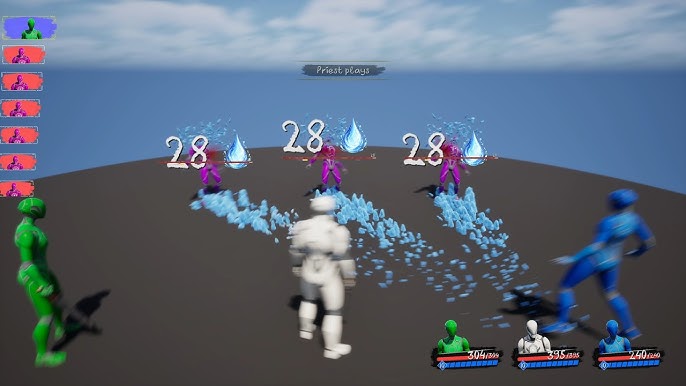
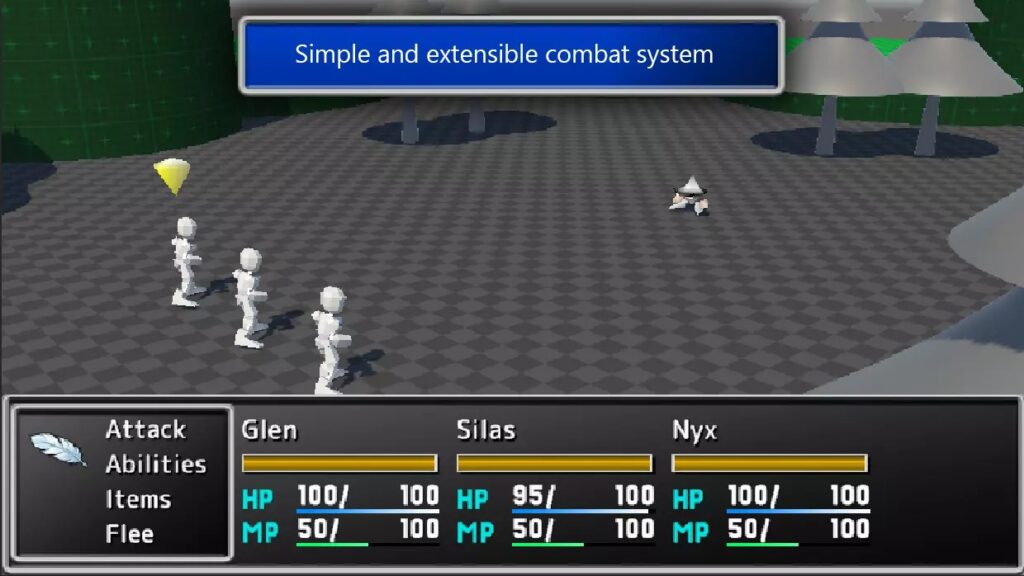
The battle system is one of the most significant features included within the framework. Developers can configure character formations, battlefield positioning, enemy encounters, attack sequences, and turn-based combat flow using built-in systems designed to replicate classic JRPG mechanics.
The user interface structure is heavily inspired by retro RPG menu design. The framework includes menu systems for inventory management, party management, equipment handling, battle commands, dialogue windows, and character progression screens. These interfaces are intended to recreate the clean readability and nostalgic presentation associated with classic RPG titles.
The overworld tools included in the framework help developers build exploration systems that connect towns, dungeons, interiors, and world maps together. Exploration forms the backbone of most retro JRPGs, and RetroGig includes sample level structures demonstrating how these gameplay systems can interact within a larger project.
Dialogue systems are also included as part of the framework. Developers can create NPC interactions, branching dialogue sequences, interactable objects, and narrative event triggers using the built-in conversation tools. Multiple-choice dialogue support helps developers create more interactive storytelling structures.
Localization support is another major feature because many indie RPG developers target global audiences. The framework includes systems intended to simplify multi-language implementation inside Unity projects.
The framework’s modularity allows developers to customize or replace specific systems depending on their production goals. This flexibility helps the template remain useful for both beginner and advanced Unity developers.
How to Build a SNES-Style JRPG in Unity Using Retro JRPG Template
Creating a SNES-style JRPG in Unity normally requires extensive development work because classic RPGs rely on multiple systems functioning together consistently. Retro JRPG Template simplifies this process by providing pre-built systems that replicate many of the gameplay structures found in 16-bit RPGs.
The development process usually begins with world and exploration setup. Developers can establish towns, overworld maps, dungeon layouts, and environmental navigation systems using Unity scene structures combined with the template’s exploration framework.
After establishing movement and exploration, developers can begin implementing interactions throughout the world. NPC conversations, treasure chests, event triggers, shops, save points, and environmental interactions are all core components of classic JRPG gameplay design.
The combat system forms another major development phase. Retro JRPG Template includes pre-configured turn-based battle mechanics that allow developers to define party compositions, enemy encounters, character statistics, attack logic, abilities, and progression systems.
SNES-era RPGs were heavily reliant on readable menu systems and efficient interface design. The template’s UI framework helps developers recreate those visual structures while maintaining modern Unity workflow flexibility.
Dialogue implementation also plays a central role in retro RPG development. Storytelling, character interaction, and quest progression are deeply connected to dialogue systems in most classic JRPGs. RetroGig’s framework includes systems for branching conversations and interactable narrative events.
Audio design is equally important for recreating the SNES atmosphere. Developers can combine the framework with retro-inspired soundtracks, pixel-art animation systems, and CRT-style visual effects to further capture the aesthetic identity of 16-bit RPG design.
Developers producing stylized RPG cinematics or anime-inspired promotional renders may also benefit from tools such as PixelHair by Yelzkizi when building stylized hair assets for characters used in supporting visual pipelines.
How to Make a PS1/PSX-Era JRPG in Unity with Fixed Camera and Pre-Rendered Backgrounds
The PS1 era introduced a distinct RPG visual identity built around pre-rendered environments, fixed camera angles, cinematic scene composition, and low-polygon character models. Retro JRPG Template supports many of the systems required to recreate that style within Unity.
Fixed camera systems are especially important when reproducing PS1-era RPG presentation. Developers can position cameras strategically throughout environments to emulate cinematic scene framing similar to classic PlayStation RPGs.
Pre-rendered backgrounds are commonly produced in external 3D software before being imported into Unity as static environment layers. Developers then place collision zones, navigation paths, and character movement systems over those rendered environments.
Retro JRPG Template helps support this workflow by allowing developers to structure gameplay around scene-based exploration and fixed-angle presentation systems.
The process usually involves building environments in 3D software, rendering high-quality background images, importing those renders into Unity, creating navigation boundaries, establishing interactable zones, and connecting scenes through transition systems.
The framework’s scene transition and door systems are especially useful for PS1-style development because many classic RPGs segmented environments into smaller scenes for technical and cinematic reasons.
Developers can further enhance the PS1 aesthetic through low-resolution rendering techniques, texture warping, retro shaders, dithered visual effects, and low-polygon character models.
For developers handling complex cinematic scene management or retro-inspired cutscene production, tools such as The View Keeper by Yelzkizi may also help organize camera workflows within supporting 3D production environments.
Retro JRPG Template Turn-Based Battle System Guide (Formations, Battlefield Setup, Montage Editor)
The turn-based battle system is one of the most important components included within Retro JRPG Template. The framework provides a combat structure designed around traditional JRPG mechanics where characters and enemies take turns performing actions according to predefined rules and statistics.
Formation systems allow developers to strategically position party members during combat encounters. Frontline characters may absorb damage more effectively while support units remain protected in rear positions.
The battlefield setup tools allow developers to configure enemy formations, combat arenas, character positioning, encounter structures, and camera presentation. These tools help streamline encounter design while maintaining flexibility for different battle scenarios.
The montage editor functionality assists developers with attack sequencing and combat presentation. Developers can organize animations, visual effects, hit reactions, skill cinematics, and timing structures within battle encounters.
The framework can also be expanded to support more advanced mechanics such as elemental weaknesses, combo attacks, limit breaks, summons, status effects, active-time systems, and cinematic special abilities.
Because combat systems form the core gameplay loop of many JRPGs, RetroGig’s framework attempts to provide enough flexibility for developers to create both traditional and experimental battle structures.

Unity JRPG Inventory and Equipment System (Retro JRPG Template UI Example)
Inventory and equipment systems are essential components of any role-playing game framework, and Retro JRPG Template includes pre-built systems designed around traditional JRPG menu structures.
The inventory framework allows developers to organize consumables, weapons, armor, quest items, crafting materials, and progression-related objects within categorized menu systems. The interface structure resembles the organized menu layouts commonly associated with retro RPG titles.
Equipment systems allow developers to define character progression through stat-modifying gear. Weapons, armor, accessories, and special equipment can influence health, magic, defense, speed, critical hit chance, and other gameplay variables.
Developers can also establish equipment restrictions based on class roles, story progression, character identity, or weapon specialization systems.
The UI framework is designed around classic RPG readability principles. Retro-inspired menu structures are especially important in JRPG design because players spend significant amounts of time navigating inventory and character progression screens.
Developers may also extend these systems further by implementing animated portraits, skill trees, crafting interfaces, advanced sorting systems, or dynamic equipment previews.
Party Management and Team Order Change System in Retro JRPG Template
Party management systems play a major role in classic JRPG gameplay because team composition often determines combat strategy and narrative progression.
Retro JRPG Template includes systems for active party selection, character swapping, reserve management, formation editing, and team order adjustments.
The team order system allows developers to connect positioning mechanics directly to gameplay strategy. Frontline characters may absorb damage while support-oriented units remain protected in the rear.
These systems help recreate the tactical decision-making found in many classic RPGs where party arrangement influenced survivability, combat efficiency, and skill synergy.
Party systems can also connect to narrative mechanics such as relationship events, affinity systems, dialogue variations, or character-specific story progression. This flexibility makes the framework suitable for both traditional linear RPGs and larger ensemble-based adventures.
Multiple-Choice Dialogue System in Unity (Points of Interest and Interactable Objects)
Narrative interaction forms a central component of JRPG design, and Retro JRPG Template includes systems intended to support dialogue-heavy storytelling structures.
Developers can create NPC conversations, branching dialogue paths, quest interactions, environmental storytelling sequences, and narrative triggers using the included conversation systems.
The framework also supports interactable world objects and points of interest throughout exploration environments. These interactions may include treasure chests, lore objects, save points, shops, doors, and scripted event locations.
Multiple-choice dialogue systems allow developers to implement player agency within narrative progression. Choices may affect quests, story outcomes, optional scenes, relationship systems, or gameplay progression paths.
The dialogue framework can also integrate with localization systems, making it easier for developers to support multilingual RPG releases.

Unity JRPG Door System for Seamless Cross-Scene Transitions (RetroGig Template)
Scene transitions are extremely important in JRPG development because players frequently move between towns, interiors, overworlds, and dungeon environments.
Retro JRPG Template includes a door transition system intended to streamline cross-scene movement inside Unity projects.
The framework handles scene loading, spawn positioning, camera synchronization, transition effects, and entry-point management. These systems help preserve immersion while maintaining structured exploration flow.
Classic JRPGs often relied on segmented scene structures due to hardware limitations and cinematic design choices. RetroGig’s framework recreates those structural workflows while integrating with modern Unity production methods.
Developers can expand the transition systems with fade effects, dynamic music changes, fast-travel structures, scripted narrative events, or modern scene streaming solutions.
Overworld Level Example in Retro JRPG Template (Classic JRPG Exploration Loop)
The included overworld example demonstrates how Retro JRPG Template structures traditional exploration loops associated with classic Japanese role-playing games.
Most retro JRPGs follow a gameplay cycle involving town exploration, story progression, world navigation, combat encounters, dungeon traversal, and character development.
RetroGig’s sample overworld helps developers understand how these systems connect together within a larger gameplay structure.
The example demonstrates exploration flow, environmental interaction, NPC placement, encounter pacing, scene connectivity, and progression design. Developers can use the sample as both a learning tool and a foundation for their own projects.
This is especially valuable for newer developers who understand isolated gameplay systems but struggle to integrate them cohesively within a full RPG structure.
Retro JRPG Template Localization Support (multi-Language Implementation in Unity)
Localization support is increasingly important in modern indie RPG development because retro-inspired JRPGs often attract global audiences.
Retro JRPG Template includes systems intended to simplify multilingual implementation within Unity workflows.
The localization framework typically manages dialogue translation, menu text replacement, subtitle handling, item descriptions, and region-specific formatting structures.
This becomes especially important for narrative-heavy RPGs because those games often contain large volumes of dialogue, quest descriptions, lore entries, ability explanations, and tutorial systems.
Efficient localization support improves scalability for developers planning international releases and helps reduce the complexity of maintaining large narrative databases.

Retro JRPG Template System Requirements and Unity Versions Supported
Retro JRPG Template is designed to function within modern Unity development environments, and compatibility depends on the Unity versions supported by the developer.
Developers should always verify compatibility details before beginning long-term production because Unity evolves rapidly across rendering pipelines, scripting systems, and package dependencies.
Most modern Unity frameworks support Windows and macOS development environments while offering export flexibility for multiple target platforms.
Developers should also review render pipeline compatibility, asset dependencies, operating system requirements, and supported Unity editor versions before integrating the framework into production pipelines.
Retro JRPG Template Latest Update 1.1.1 (Release Date, File Size, and Changelog Context)
Version 1.1.1 represents one of the more recent updates associated with Retro JRPG Template and reflects ongoing support from RetroGig.
Update changelogs for RPG frameworks often include bug fixes, interface improvements, optimization work, expanded documentation, compatibility adjustments, and workflow refinements.
File size increases may also indicate the addition of demo scenes, sample assets, localization data, or expanded tutorials.
Ongoing developer support is extremely important for production-oriented frameworks because long-term compatibility and maintenance significantly affect project stability.
Developers evaluating JRPG frameworks should monitor update frequency, documentation quality, community feedback, compatibility maintenance, and developer responsiveness before committing to large-scale production.
Retro JRPG Template Demo and Documentation (Where to Download and Learn the Framework)
Retro JRPG Template is typically distributed through the Unity ecosystem, where developers can access package downloads, documentation links, update notes, installation instructions, and demo content.
Documentation quality is especially important for JRPG frameworks because interconnected systems can become difficult to manage without clear guidance.
Strong documentation generally includes setup tutorials, combat configuration guides, scene workflow explanations, dialogue integration instructions, UI customization examples, localization implementation details, and save system tutorials.
Demo scenes are also valuable because they help developers understand intended workflows more quickly. Reviewing tutorials, documentation, gameplay footage, and community feedback can help determine whether the framework aligns with a project’s technical and creative goals.
RetroGig Retro JRPG Template Review and Alternatives (Best Unity JRPG Frameworks in 2026)
RetroGig’s Retro JRPG Template stands out because it attempts to provide a fully interconnected JRPG development structure rather than isolated gameplay modules.
Its biggest strengths include integrated combat systems, retro-inspired UI workflows, exploration frameworks, dialogue systems, localization support, and party management structures.
The framework is particularly appealing for developers focused on recreating nostalgic SNES and PS1-era RPG experiences without building every gameplay system manually.
However, developers should still evaluate whether the framework aligns with their programming experience, production scale, visual direction, and technical requirements.
Alternative Unity JRPG frameworks available in 2026 include ORK Framework, RPG Builder, Game Creator RPG modules, Pixel Crushers Dialogue System integrations, and various custom combat toolkits.
Each framework prioritizes different aspects of development. Some focus on modularity while others emphasize visual scripting, advanced combat systems, or cinematic presentation.
Retro JRPG Template is especially valuable for developers seeking a retro-focused RPG foundation built around traditional Japanese role-playing game structures.
Frequently Asked Questions (FAQs)
- What is Retro JRPG Template for Unity?
Retro JRPG Template is a Unity framework developed by RetroGig that helps developers create retro-inspired JRPGs using systems for combat, exploration, dialogue, inventory management, and party progression. - Can beginners use Retro JRPG Template?
Yes. The framework is designed to help beginners prototype RPG systems more efficiently while still offering advanced customization options for experienced developers. - Does Retro JRPG Template support turn-based combat?
Yes. The framework includes a turn-based combat system featuring formations, battlefield setup tools, and configurable combat workflows. - Can Retro JRPG Template recreate PS1-style RPGs?
Yes. Developers can combine the framework with fixed camera systems and pre-rendered backgrounds to replicate the visual presentation of PS1-era RPGs. - Does the framework support localization?
Yes. Retro JRPG Template includes support for multi-language implementation covering dialogue, menus, and UI systems. - Is Retro JRPG Template available through Unity-related distribution platforms?
Yes. The framework is associated with Unity ecosystem distribution channels where developers can access downloads, documentation, and updates. - What types of games can developers build with Retro JRPG Template?
Developers can build SNES-inspired RPGs, PS1-style cinematic RPGs, pixel-art adventures, turn-based fantasy games, and retro-inspired story-driven projects. - Does the framework include dialogue systems?
Yes. Retro JRPG Template includes dialogue systems with branching conversations, multiple-choice interactions, and interactable world objects. - Can developers customize the framework’s systems?
Yes. The framework is modular, allowing developers to modify, expand, or replace systems depending on project requirements. - Why are retro JRPG frameworks becoming more popular in 2026?
Retro-inspired RPGs continue attracting players because of nostalgia, timeless gameplay design, strong storytelling traditions, and the continued success of indie RPG development.
Conclusion
RetroGig’s Retro JRPG Template represents a modern Unity framework built specifically for developers interested in recreating the design philosophies of classic Japanese role-playing games. By combining turn-based combat systems, exploration workflows, dialogue frameworks, party management tools, localization support, and retro-inspired interface structures, the template attempts to simplify one of the most technically demanding genres in indie game development.
The framework’s focus on SNES and PS1-era RPG design makes it especially appealing to developers pursuing nostalgic gameplay experiences rooted in classic JRPG traditions. Its interconnected systems help reduce development complexity while still allowing creators to customize gameplay mechanics, visual presentation, and narrative structure according to their own project goals.
As retro-inspired RPG development continues growing throughout 2026, frameworks like Retro JRPG Template may become increasingly important for indie developers seeking production-ready foundations capable of accelerating RPG creation pipelines inside Unity.
Sources and Citations
- RetroGig Retro JRPG Template official Unity Asset Store listing
https://assetstore.unity.com/packages/templates/systems/retro-jrpg-template-319132 - Unity Engine official documentation
https://docs.unity.com/ - Classic JRPG design references from SNES and PlayStation-era RPG development workflows
https://gdcvault.com/play/1018097/RPG-Development-Inspiration-and - Unity localization workflow documentation
https://docs.unity3d.com/Packages/com.unity.localization@1.0/ - Retro RPG combat and UI design analysis from modern indie development pipelines
https://gamedesignskills.com/game-design/rpg/
Recommendations
- The Expanse: Osiris Reborn — Everything We Know So Far
- Amazon Luna Free Games for May 2026: Full Prime Gaming Lineup, Claim Dates, and Best Titles
- All characters and color variations in Mario Tennis Fever: Full roster, unlocks, and alternate colors
- It Looks Like We’re Finally Getting an Ocarina of Time Remake: Switch 2 Rumors, Release Window, and What We Know
- How Do I Create a First-Person Camera in Blender?
- A Six-Game Collection of Retro Rugrats Titles is Coming Next Month: Release Date, Platforms, and Full Game List
- War Machine Review (2026): Netflix’s Alan Ritchson vs Alien Killer Robot Sci-Fi Action Movie
- ULTIMATE WHITE FOX GUIDE MARVEL RIVALS: Abilities, Combos, Team Comps, and Season 7 Tips
- The Super Mario Galaxy Movie Digital Streaming Release: PVOD Date, Price, and Where to Watch Online
- Borderlands 4 First DLC Explained: Mad Ellie, C4SH, Release Date, and Why Gearbox Wants Players Back



































































































