








In This Article (7 sections)
Microsoft Denies Connection to FAA Nationwide Ground Stop Following November 2026 Microsoft 365 Outage
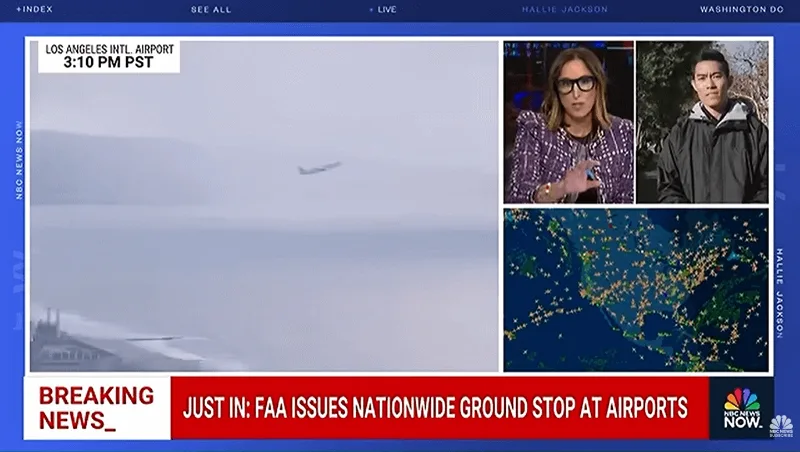
Microsoft has denied responsibility for the nationwide Federal Aviation Administration ground stop that disrupted flights across the United States on November 13, 2026. The company said it found no indication that the aviation emergency was connected to the widespread Microsoft 365 outage that began the previous day. Federal officials also treated the disruptions as separate incidents. While Microsoft’s investigation identified failures involving its cloud networking infrastructure, the FAA traced its immediate operational problems to instability within its own telecommunications network, which supports air traffic controller communications and radar information.
A Microsoft spokesperson told PEOPLE that the company had found no evidence connecting the nationwide ground stop to its recent service disruption. Homeland Security Secretary Markwayne Mullin similarly described the incidents as unrelated, while the Associated Press reported that federal authorities had identified no indication of a connection. The timing initially encouraged speculation because millions of Microsoft 365 users had experienced service problems shortly before the aviation disruption. However, the available technical findings identified different infrastructure failures, and neither investigation established that Microsoft’s problems caused the FAA’s emergency restrictions.
The incident timelines provide an important distinction. Microsoft’s preliminary investigation placed the beginning of its service disruption at 11:20 a.m. Eastern Time on November 12, with active customer impact ending at 11:10 a.m. on November 13. The FAA reported that the telecommunications problem responsible for its nationwide ground stop began at approximately 3:30 p.m. Eastern Time on November 13, more than four hours after Microsoft’s reported recovery. Aviation operations resumed at 8:15 p.m. Although the separation between these events does not independently prove that they were unrelated, the different technical explanations and statements from federal authorities support treating them as separate incidents.
The Microsoft 365 outage primarily affected Exchange Online, the cloud infrastructure responsible for hosting business email accounts. Many customers experienced difficulty accessing mailboxes through Outlook and other applications, while sending and receiving messages became unreliable or delayed. The Associated Press also reported problems involving Microsoft Teams, Copilot and other Microsoft 365 services. Microsoft’s preliminary report identified additional effects involving SharePoint, OneDrive, Defender and Purview, although some problems were limited to features dependent on Exchange Online. Consequently, customers could sometimes open a service while encountering failures when attempting specific operations connected to email or mailbox information.
Microsoft attributed the disruption to three contributing conditions. A software update introduced in July 2026 had created a defect in its networking gateways. During the November incident, a Teams failover redirected additional traffic toward infrastructure shared with Exchange Online. At the same time, approximately 14% of gateway capacity was already unavailable because of an unrelated issue. The additional workload exposed the previously dormant software defect, causing gateways to become unresponsive. As traffic shifted away from failing systems, the remaining gateways received even more requests, spreading the disruption. Microsoft reported that more than 80% of the affected gateway fleet became unresponsive at the worst point.
The company’s engineers eventually deployed a software correction after restarting affected gateways proved insufficient to maintain stability under accumulated traffic. Some services recovered sooner by using alternative infrastructure, while Exchange Online experienced more persistent problems. Microsoft’s preliminary report placed the total incident window at 23 hours and 50 minutes, although individual users experienced different durations depending on their region, connection method and affected services. The report also explained that Microsoft’s testing environment had used a different traffic mix and generally less powerful hardware than production, contributing to the defect remaining undetected for several months.
The distinction between Outlook and Exchange Online helps explain the widespread impact. Outlook is an application customers use to access messages, while Exchange Online provides the underlying hosted mailbox service. A failure affecting Exchange Online can therefore interrupt email access through several applications rather than only Outlook. Similarly, Teams and other services may experience problems when their infrastructure shares networking resources or relies on affected components. Microsoft’s findings focused on these internal cloud systems, not the telecommunications infrastructure used to coordinate aircraft movements.
The confusion surrounding the incidents was partly caused by the broad description of both as communications outages. For Microsoft customers, communications failures involved business email, collaboration applications and cloud services. For the FAA, the problem involved unreliable telecommunications infrastructure carrying radio communications and radar information between aviation facilities. These systems perform different functions and operate within different technical environments. By November 17, federal investigators were examining telecommunications equipment and router installation work in Arkansas as possible contributors to the aviation disruption, while Microsoft’s preliminary findings concerned its own gateway software and infrastructure capacity.
FAA Telecommunications Failure, El Dorado Router Installation and Investigation Into the Ground Stop
The FAA ordered a nationwide ground stop on November 13 after instability developed within the FAA Telecommunications Infrastructure network, known as FTI. According to the agency’s November 15 explanation, unusually heavy data traffic overwhelmed parts of the legacy telecommunications system, affecting radio communications and radar feeds used by air traffic controllers. The disruption reached numerous aviation facilities, creating uncertainty about whether essential services would remain reliable as additional aircraft entered the system. The FAA responded by restricting departures while controllers continued managing flights already airborne.
The agency reported that 17 of its 22 Air Route Traffic Control Centers experienced instability, along with several Terminal Radar Approach Control facilities. En route centers manage aircraft traveling across large regions, while approach control facilities coordinate traffic arriving at and departing from airports. Problems affecting both types of facilities can disrupt operations across the country, even when the underlying technical issue originates at a remote location. Some radio frequencies and radar feeds remained operational, allowing controllers to communicate with pilots and guide aircraft safely to their destinations. The FAA said approximately 3,500 aircraft landed safely during the disruption.
The FAA’s initial investigation identified two possible sources of the unusually heavy network traffic: a radar site in Amarillo, Texas, and a radio communications facility in El Dorado, Arkansas. Telecommunications provider L3Harris isolated both locations, after which the network stabilized. Investigators subsequently concentrated on work performed at the El Dorado site, where L3Harris had been installing a new Juniper router as part of a transition from older copper telecommunications lines to fiber infrastructure. The equipment was intended to replace older Cisco hardware, and federal officials said similar installations had previously been completed without comparable problems.
Transportation Secretary Sean Duffy explained that the Arkansas installation formed part of ongoing infrastructure replacement work rather than a direct component of the FAA’s broader air traffic modernization program. Reuters reported that the FAA had tested the Juniper routers and that 68 earlier installations had proceeded without the problems experienced in Arkansas. Investigators were therefore examining why this particular installation coincided with a major network overload and whether the problem resulted from equipment configuration, installation procedures, interactions with legacy systems or another technical condition.
Hewlett Packard Enterprise, which owns Juniper, said it believed the equipment had operated as configured. That statement did not resolve the investigation because equipment can operate according to its configuration while still interacting unexpectedly with other components. The FAA paused additional installations of the routers while further testing continued. Reuters reported that representatives from the FAA, Cisco and the FBI were present at an L3Harris testing facility in Florida, where investigators were examining the circumstances surrounding the disruption.
By November 17, Duffy said investigators had successfully recreated what happened at El Dorado but had not established the underlying root cause. Reproducing the failure helps investigators understand how the sequence unfolded, while identifying the root cause requires determining which technical or procedural conditions allowed the disruption to spread. Possible explanations could require different corrective measures, including configuration changes, modifications to installation procedures or improvements to legacy network resilience. The FAA’s initial findings established the network instability and recovery sequence, but the investigation had not yet determined why the incident occurred.
Federal officials also addressed speculation about a possible cyberattack. Mullin said on November 13 that investigators had found no evidence of malicious activity, and the FAA’s November 15 update similarly reported no indication of a cyberattack or outside interference. FAA Administrator Bryan Bedford also dismissed speculation that artificial intelligence had contributed to the incident. Microsoft’s investigation separately found no indication of malicious activity involving its service disruption. These assessments reflected the available evidence while investigators continued examining the technical circumstances.
The investigation highlighted the importance of telecommunications reliability in aviation operations. Radio systems allow controllers to issue instructions and receive pilot responses, while radar feeds provide information used to monitor aircraft movements. Instability affecting both can limit how safely the system accommodates additional traffic. The FAA’s decision to halt departures reduced pressure on controllers and allowed technical teams to restore network stability without adding more aircraft to affected airspace. Critical lifesaving, law enforcement and military operations continued during the restriction, supported by communications and radar resources that remained available.

FAA Ground Stop Duration, Flight Disruptions and Recovery Across US Airports
The nationwide aviation disruption began at approximately 3:30 p.m. Eastern Time on Friday, November 13, 2026, when the FAA detected technical problems affecting its telecommunications infrastructure. The Wall Street Journal reported that the formal nationwide ground stop order was issued at approximately 3:47 p.m. Air traffic resumed at 8:15 p.m. Eastern Time, giving the broader disruption a duration of about four hours and 45 minutes. Measured from the reported issuance of the ground stop order, the nationwide departure restriction lasted approximately four hours and 28 minutes. Both calculations describe different portions of the same incident.
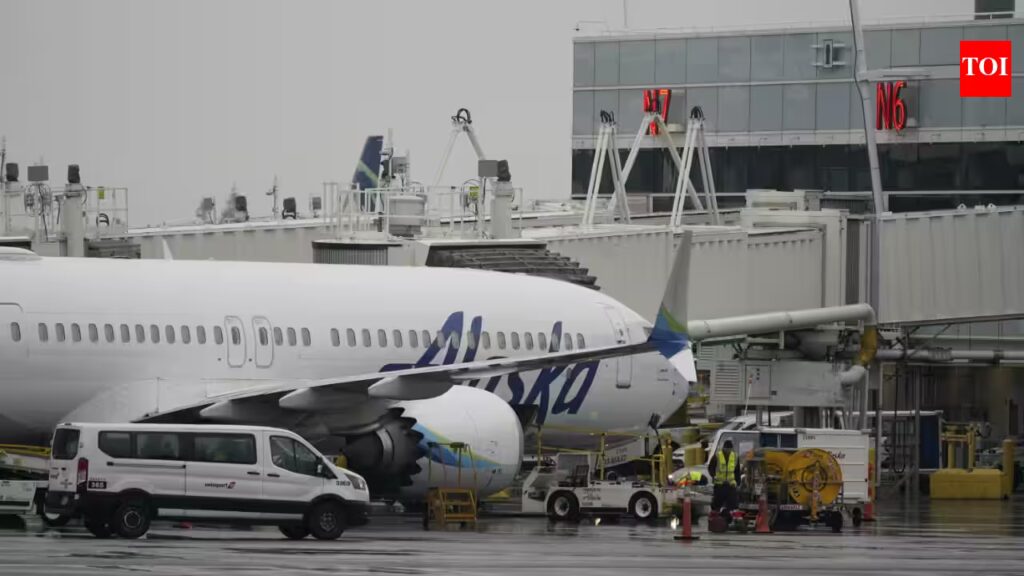
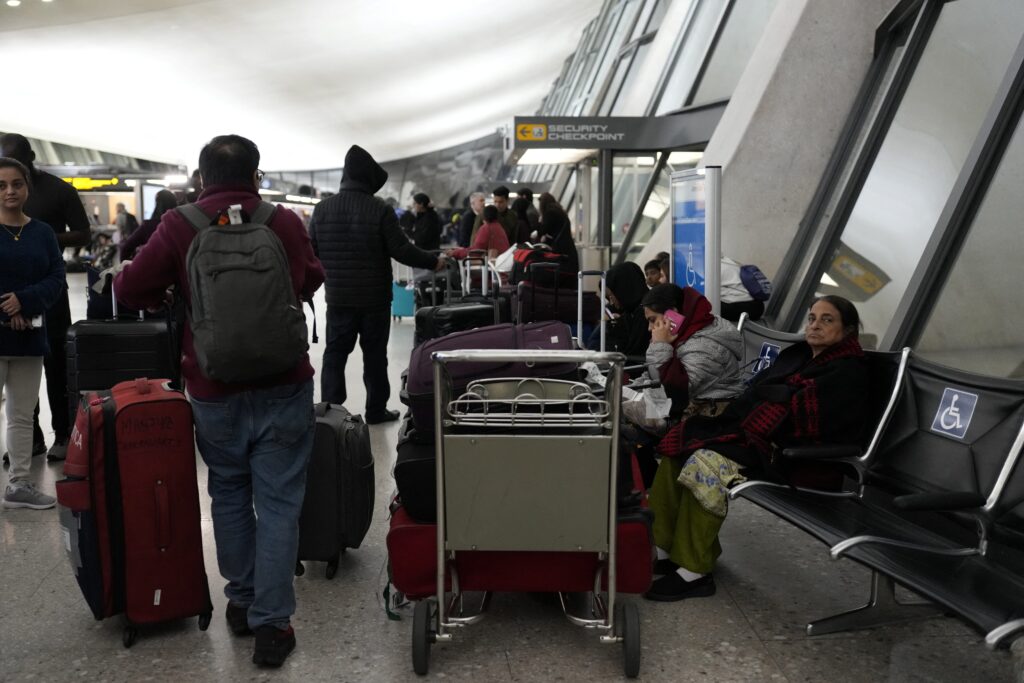
A ground stop prevents additional aircraft from departing while allowing controllers to concentrate on flights already in the air. During the November 13 disruption, the FAA relied on functioning radio frequencies, radar feeds and established procedures to maintain safe operations. Approximately 3,500 aircraft landed safely, although some flights returned to their departure airports or diverted elsewhere. Passengers waiting to depart experienced extended delays, while some travelers who had already landed remained aboard aircraft because airport gates were unavailable. These disruptions reflected the wider consequences of temporarily restricting departures across the national aviation system.
Aviation analytics firm Cirium recorded 827 diversion records for November 13 in a snapshot taken at 7:05 p.m. Eastern Time, before the nationwide restriction was lifted. The figure included 670 flights returning to their origin airports and 157 flights diverting to another destination. These numbers represented a preliminary operational snapshot rather than a final FAA count of flights affected specifically by the ground stop. Returning to an origin airport and landing at an alternative airport are both counted as diversions, while flights canceled before departure belong to a separate category.
The FAA also recorded approximately 12,462 flight cancellations on November 13, including 9,082 involving major airlines. However, the agency acknowledged that some cancellations resulted from causes unrelated to the ground stop. The cancellation total therefore should not be treated as a direct measurement of flights canceled exclusively because of the telecommunications failure. The broader disruption affected airline schedules, airport operations and passenger connections, with consequences extending beyond the period during which departures were formally restricted.
The FAA announced that air traffic had resumed at 8:15 p.m. Eastern Time, equivalent to 5:15 p.m. Pacific Time on November 13 and 1:15 a.m. UTC on November 14. Before lifting the restriction, officials monitored the telecommunications network to confirm that services remained stable following the isolation of the suspected problem sites. The decision allowed departures to restart progressively rather than immediately returning every airport and airline to its original schedule. The Department of Transportation reported that more than 8,000 flight operations resumed that night.
Restoring permission to depart did not eliminate the operational problems created during the interruption. Airlines had aircraft in unexpected locations, crew schedules had been disrupted and passengers required alternative connections. Airports also faced congestion involving aircraft waiting for available gates. These issues could continue affecting flights even after the telecommunications infrastructure was functioning normally. The Associated Press reported that delays and cancellations extended into the weekend, demonstrating how a relatively short nationwide restriction could create disruptions lasting considerably longer.
For passengers, the practical distinction was between the FAA reopening the airspace and airlines restoring individual services. A flight could remain delayed because its aircraft had diverted, its crew was unavailable or an earlier cancellation had disrupted the planned schedule. Some travelers needed rebooking, while others waited for revised departure times or available connections. Consequently, the nationwide reopening time provided an important indication of network recovery but did not guarantee that every scheduled flight would immediately operate.
The FAA’s investigation continued after aviation operations resumed. By November 17, officials had recreated the conditions associated with the El Dorado router installation but had not established the root cause. Additional router installations remained paused while technical testing continued. The findings available through November 18 identified the telecommunications infrastructure involved, the widespread network instability and the steps taken to restore service. They did not establish that the Juniper router itself was defective or that Microsoft’s earlier cloud outage caused the aviation disruption.
The November incidents illustrate how separate infrastructure failures can occur close together while producing very different consequences. Microsoft’s outage disrupted cloud applications, business communications and email services, while the FAA’s telecommunications problem required a nationwide restriction on aircraft departures. Federal officials found no evidence connecting the two events, and their investigations focused on different technical systems. The lasting questions surrounding the aviation incident concern why a remote infrastructure change created such widespread instability and what measures will prevent similar disruptions in the future.

Frequently Asked Questions (FAQs)
- Did Microsoft cause the FAA ground stop on November 13, 2026?
Microsoft said it found no indication that its November 12 Microsoft 365 outage was connected to the FAA ground stop on November 13. Federal officials also described the incidents as separate. The FAA attributed the aviation disruption to instability within its telecommunications network, which affected radar feeds and aircraft communications. Investigators subsequently focused on router installation work in Arkansas and its interaction with legacy equipment rather than Microsoft’s cloud services. - Was Microsoft 365 still experiencing the outage when the FAA reported trouble?
According to Microsoft’s preliminary report, active customer impact ended at 11:10 a.m. Eastern Time on November 13, 2026. The FAA reported that its telecommunications problem began at approximately 3:30 p.m. Eastern Time that afternoon. This places the aviation disruption more than four hours after Microsoft’s reported recovery. While timing alone cannot determine causation, the separate technical findings and statements from federal officials support treating the incidents as unrelated. - How long was Outlook affected by the Microsoft 365 incident?
Microsoft’s official incident window lasted 23 hours and 50 minutes, beginning at 11:20 a.m. Eastern Time on November 12 and ending at 11:10 a.m. the following day. Exchange Online experienced the most serious disruption, affecting Outlook mailbox access and email delivery. However, individual users experienced different levels and durations of disruption depending on their location, connection method and the infrastructure serving their accounts. - Were flights already in the air allowed to land during the FAA ground stop?
Yes. The FAA restricted new departures while allowing controllers to continue managing aircraft already airborne. The agency reported that approximately 3,500 aircraft landed safely during the disruption using operational radio frequencies, radar feeds and established procedures. Some aircraft returned to their departure airports or diverted to alternative destinations. The ground stop was intended to prevent additional traffic from entering an unstable system while existing flights were brought to safety. - Was El Dorado the only site the FAA initially examined?
No. The FAA initially identified two possible sources of excessive network traffic: a radio communications facility in El Dorado, Arkansas, and a radar site in Amarillo, Texas. Telecommunications provider L3Harris isolated both sites, after which the network stabilized. Investigators later concentrated on the router installation in El Dorado because of its apparent connection to the disruption. However, the underlying technical cause had not been established by November 17. - Did every FAA en route center experience instability?
No. The FAA reported that 17 of its 22 Air Route Traffic Control Centers experienced instability during the telecommunications disruption. Several Terminal Radar Approach Control facilities were also affected. En route centers manage aircraft traveling across large regions, while approach facilities handle traffic around airports. Although five en route centers were not included in the affected count, the widespread nature of the problem justified a nationwide restriction on departures. - Who was carrying out the work at the Arkansas site?
L3Harris, the FAA’s telecommunications network provider, was performing infrastructure work at the El Dorado facility. The project involved replacing older copper telecommunications connections with fiber infrastructure and installing a Juniper router in place of older Cisco equipment. Federal officials said dozens of similar installations had previously been completed without comparable problems. Investigators were examining why the Arkansas work coincided with widespread network instability. - Did the FAA ground stop halt emergency or military flights?
No. The FAA said critical lifesaving, law enforcement and military operations continued during the nationwide restriction. Controllers used radio frequencies and radar feeds that remained functional to maintain essential aviation services and guide aircraft already airborne. The ground stop primarily restricted additional departures to reduce pressure on the affected telecommunications infrastructure while technical teams worked to restore stability. - Why were flights still delayed after the ground stop ended?
Although the FAA allowed air traffic to resume at 8:15 p.m. Eastern Time on November 13, airlines still faced considerable operational disruption. Aircraft had diverted or remained at airports where they were not originally scheduled, crews had missed planned rotations and many passengers needed alternative connections. Airport gate congestion also delayed some arriving aircraft. Resolving these problems required additional time, which explains why cancellations and delays continued after the nationwide restriction ended. - Was the Arkansas router confirmed to be defective?
No. As of November 17, Transportation Secretary Sean Duffy said investigators had recreated the circumstances surrounding the El Dorado failure but had not determined the root cause. Hewlett Packard Enterprise, which owns Juniper, said it believed the router had operated as configured. Investigators were examining the installation, equipment configuration and interaction with older telecommunications systems. The FAA paused further router installations while testing continued, but no confirmed finding had established that the router itself was defective.
Conclusion
Microsoft maintains that its November 12 and 13 service outage was not responsible for the FAA nationwide ground stop, and the available investigations support treating the incidents separately. Microsoft traced its disruption to a software defect that emerged under specific network traffic and capacity conditions. Exchange Online experienced the most significant impact, causing widespread Outlook mailbox access problems and delayed email delivery. According to Microsoft’s preliminary report, active customer impact ended at 11:10 a.m. Eastern Time on November 13, 2026, more than four hours before the FAA reported the technical problems that led to its nationwide departure restriction.
The FAA’s disruption began later that afternoon when instability within its telecommunications infrastructure affected 17 of 22 Air Route Traffic Control Centers and several approach control facilities. Controllers continued guiding aircraft safely to their destinations while new departures were restricted, and air traffic resumed at 8:15 p.m. Eastern Time. Investigators subsequently recreated the conditions surrounding a router installation in El Dorado, Arkansas, but had not determined the underlying cause as of November 17. The remaining question concerns how the installation and surrounding network conditions produced an overload severe enough to disrupt aviation operations nationwide. Establishing that cause will be essential to determining which technical changes are needed to prevent a similar incident.
Sources and Citations
- Federal Aviation Administration, November 15, 2026 — “Nationwide Ground Stop: Questions and Answers”: The FAA’s official account says the problem began around 3:30 p.m. ET on November 13, when excessive traffic destabilized its legacy FTI telecommunications network. The agency says 17 of 22 Air Route Traffic Control Centers and several TRACON facilities experienced instability, about 3,500 aircraft landed safely, and air traffic resumed at 8:15 p.m. ET. The FAA also said it had no indication of a cyberattack or outside malicious actor. Federal Aviation Administration
FAA – Nationwide Ground Stop Q&A - U.S. Department of Transportation, November 13, 2026 — “Lifting of Nationwide Ground Stop”: Transportation Secretary Sean Duffy and Homeland Security Secretary Markwayne Mullin said the restriction followed intermittent telecommunications failures affecting air-traffic communications and radar stability. Duffy placed the onset of instability at approximately 3:36 p.m. ET. Department of Transportation
USDOT – Nationwide Ground Stop Update - U.S. Department of Transportation, November 14, 2026 — Restoration Update: Duffy said the disruption occurred during routine replacement work at a remote FAA telecommunications facility, where a router being installed as older copper connections were replaced with fiber began flooding the network with roughly 1,000 connection attempts every four to five seconds. The department said more than 8,000 flight operations resumed after the ground stop was lifted. Department of Transportation
USDOT – Restoration of Airspace Following Ground Stop - Reuters, November 17, 2026 — “Root Cause of US Aviation Shutdown Not Yet Determined, Duffy Says”: Reports that investigators recreated the El Dorado, Arkansas failure but had not yet identified the underlying root cause. The work involved L3Harris replacing copper infrastructure with fiber and installing a Juniper router. The FAA paused further Juniper deployments while testing continued with L3Harris, Cisco, and the FBI. Reuters
Reuters – Root Cause of FAA Shutdown Still Unresolved - Reuters, November 17, 2026 — “FAA Pauses Juniper Router Deployment After Grounding US Flights”: Confirms that the FAA suspended additional Juniper router installations pending further testing. Reuters reports that the El Dorado router apparently overloaded the government network, disrupting communications and radar feeds across 17 en route centers. Reuters
Reuters – FAA Pauses Juniper Router Deployments - BleepingComputer, Lawrence Abrams, November 16, 2026 — “Microsoft Says Months-Old Bug Caused Global Microsoft 365 Outage”: Summarizes Microsoft’s preliminary post-incident findings for EX1550543/MO1550821. Microsoft traced the outage to a software defect introduced in July, increased traffic after a Teams failover, and reduced gateway capacity. More than 80% of affected gateway servers became unresponsive, and the incident ran from 11:20 a.m. ET on November 12 to 11:10 a.m. ET on November 13. BleepingComputer
BleepingComputer – Microsoft 365 Outage Root Cause - Microsoft Q&A / Microsoft 365 Service Health references, November 2026: Microsoft’s incident identifiers were EX1550543 and MO1550821. Service notices said the disruption was technical, tied to network-capacity infrastructure, and not related to a cybersecurity threat or AI agents. Microsoft Learn
Microsoft Q&A – EX1550543 / MO1550821 - PEOPLE, November 13, 2026 — “No Indication as of Yet That Nationwide Ground Stop Is Caused by Cyber Attack”: Reports Microsoft’s statement that it had no indication its Microsoft 365 outage was related to the FAA disruption. Homeland Security Secretary Markwayne Mullin likewise said he saw no reason to connect the events and described the aviation issue as a telecommunications outage. People.com
PEOPLE – Microsoft and FAA Incidents Unrelated - Associated Press, November 13–14, 2026: AP reports that the nationwide ground stop lasted more than four hours and that officials attributed it to an overloaded aging telecommunications system rather than a cyberattack or Microsoft’s separate cloud outage. Follow-up reporting also describes continuing cancellations and delays after the FAA reopened the airspace. AP News
AP – What to Know After the Nationwide Ground Stop - The Washington Post, November 13, 2026 — Live Ground Stop Coverage: Reports Microsoft’s statement that it had no indication the FAA ground stop was connected to the Microsoft service disruption. The Post also cited Cirium data showing hundreds of diverted flights while the restriction was still active. The Washington Post
The Washington Post – FAA Ground Stop Live Coverage - Cirium data, November 13, 2026: A 7:05 p.m. ET snapshot counted 827 diverted-flight records, including 670 flights returning to their origin airports and 157 diverting elsewhere. Cirium cautioned that cancellation/no-fly totals could also include disruptions unrelated to the ground stop. World Airline News
- NBC Chicago, November 13, 2026: NBC’s coverage confirms the nationwide restriction followed communications problems affecting regional air-traffic control centers, quotes federal officials describing it as a telecommunications issue, and documents the expectation that delays and cancellations would persist after the stop was lifted. nbcchicago.com
NBC Chicago – FAA Nationwide Ground Stop - The Wall Street Journal, November 2026 — “Hear How the FAA’s Ground Stop Unfolded”: WSJ reconstructs the operational timeline, including radio and communications failures, traffic restrictions beginning at individual facilities, the nationwide departure halt, diversions caused partly by unavailable gates, and the eventual reopening of the system. The Wall Street Journal
The Wall Street Journal – How the FAA Ground Stop Unfolded - Reuters, November 15, 2026 — Air Travel Recovery: Reports that disruptions continued into a third day, with thousands of additional cancellations and delays even after the ground stop ended. Officials continued to say there was no evidence of sabotage or a cyberattack while investigators examined router-related problems at FAA facilities. Reuters
Reuters – Air Travel Disruptions Continue After FAA Ground Stop
Recommendations
- Subnautica 2 Early Access Roadmap: Co-Op Updates, Sprinting, and More
- Virtua Fighter 6 Leak Explained
- Best Gaming Headsets for 2026: Top Wireless, Wired, PC, PS5, and Xbox Picks
- Take-Two CEO Comments on Roblox and GTA Explained
- All characters and color variations in Mario Tennis Fever: Full roster, unlocks, and alternate colors
- Assassin’s Creed Black Flag Remake
- How to Make a 3D VTuber Avatar: The Complete Guide for Beginners and Content Creators
- Farm to Table Grow Your Own Food & Make Fine Dishes in Cozy Restaurant Simulator: Complete Gameplay Guide
- Don’t Fret Hits All the Right Notes for a Frightening Survival-Horror Experience
- Assassin’s Creed Black Flag Resynced Post-Game Support Teased Ahead of GTA 6



































































































