




In This Article (8 sections)
Minecraft Dungeons II Gamescom 2026 Coverage, Stream Details, and Demo Context
Minecraft Dungeons 2’s Gamescom appearance offered a closer look at how Mojang is expanding its dungeon-crawling formula beyond individual combat encounters. The sequel combines familiar equipment-driven action with a more connected adventure, and its release remains scheduled for September 29, 2026, with day-one Game Pass availability and versions for multiple console and PC platforms. The August 26 presentation was part of a broader sequence of announcements: the release date had already been made public in June, an August 20 trailer introduced the Sift dimension, and Mojang later provided additional systems explanations on August 31. Separating those earlier reveals from the Gamescom coverage makes it easier to understand what was actually learned during this period.
Minecraft Dungeons II appeared during the first day of Xbox’s Gamescom broadcast, alongside other games in the publisher’s showcase. Its presence was also connected to the game’s first public playable opportunity at the Xbox booth, but those were related rather than identical experiences. Watching the broadcast did not provide access to the playable exhibition build, and Xbox Wire’s accompanying report described a 30-minute hands-on demo rather than a 30-minute livestream segment. That distinction matters because the length of a journalist’s play session should not be mistaken for the duration of the broadcast presentation.
Xbox scheduled its Wednesday, August 26 broadcast to begin at 4 p.m. Central European Summer Time. That corresponded to 3 p.m. British Summer Time, 2 p.m. UTC, 10 a.m. Eastern Daylight Time, 7 a.m. Pacific Daylight Time, and 3 p.m. West Africa Time in Nigeria. Xbox’s second Gamescom broadcast followed on Thursday, August 27, at the same scheduled starting time. These times refer to the start of the overall Xbox show, not a separately scheduled Minecraft Dungeons II segment. A multi-game broadcast can move between trailers, interviews, and demonstrations, so the advertised start time should not be presented as the exact moment a particular game appeared.
Xbox distributed the broadcasts through its official YouTube and Twitch channels. Its announcement also identified American Sign Language and English audio-description versions, with selected material available in additional languages. For replay searches, the date and “Day 1” designation are more useful than the general phrase “Xbox Gamescom,” because they help distinguish the relevant program from the second broadcast and unrelated event coverage. The relevant official YouTube archive is titled “XBOX gamescom Broadcast | Day 1 (Gears of War, Fable, Minecraft Dungeons II, Forza Horizon 6).” Its August 26, 2026 date and explicit Minecraft Dungeons II title reference identify the correct Xbox broadcast.
Searching for that full title is preferable to relying on a broadly named reupload. A video labeled “Minecraft Dungeons 2 trailer” might instead contain the June release-date announcement, the August Sift trailer, an edited gameplay extract, or another creator’s discussion. Different video formats answer different questions: an uninterrupted presentation is useful for following explanations in context, a short gameplay extract is better for revisiting an animation or encounter, and a promotional trailer can establish atmosphere but is less suitable for judging how much time ordinary play spends in combat, travel, or menus. No precise Minecraft segment timestamp is established here; the verified reference is the official first-day broadcast rather than an unsupported minute-and-second marker.
The most useful way to interpret the Gamescom coverage is as an explanation of the sequel’s everyday gameplay loop. A spectacular attack or boss can communicate immediate excitement, but a role-playing game also needs compelling reasons to collect equipment, return to settlements, and reconsider a character’s setup. A short demonstration can show whether combat inputs, movement, and menu interactions appear understandable, but it cannot establish the quality of the entire campaign or the long-term balance of its equipment economy.
Those judgments require repeated play across different difficulties and stages of progression. The same caution applies to character strength: a prepared demonstration character may be designed to show several systems quickly and may not represent a new character, a typical mid-campaign setup, or an optimized endgame build.
The earlier June preview provides another useful comparison. That session involved descending through a cave and ended with a Twisted Warden encounter, so it should not be confused with the different boss discussed in the Gamescom report. The surrounding announcements also established a larger setting before Gamescom, with Mojang identifying the Sift as a new dimension reached through mysterious rifts. The Sift should therefore be treated as established context for the event rather than as an announcement first made during the August 26 stream. Overall, the Gamescom material is best understood as a systems preview: it helps explain the kinds of decisions players will make, while leaving campaign pacing, progression costs, and sustained replay value for assessment after release.

Brave Haven, Exploration, Fast Travel, and Combat Systems
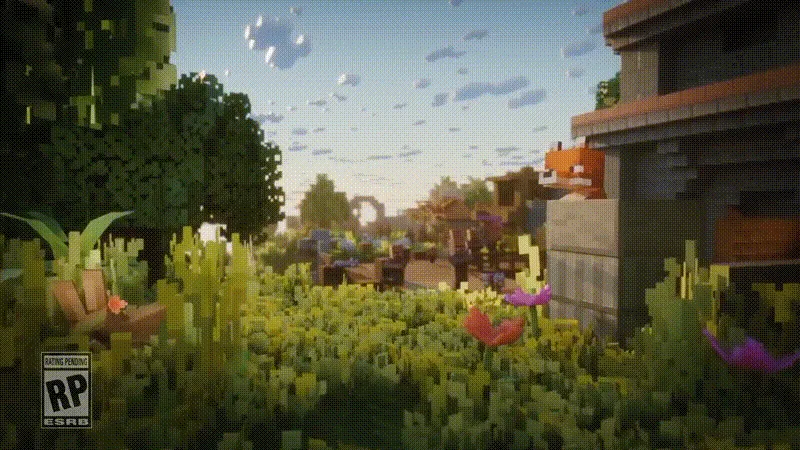
Brave Haven is the hub town containing the Blacksmith and Enchantsmith, and its role in the Gamescom demonstration places equipment preparation within a recognizable settlement. From a design perspective, a hub becomes meaningful when returning there involves a decision rather than a compulsory interruption. A player might want to preserve a favorite weapon, reconsider a defensive setup, or prepare a different approach before attempting a difficult encounter. For cooperative groups, the value of a settlement also depends on pacing: one player may enjoy comparing every available item, while another wants to resume fighting immediately. A useful preparation area should make essential decisions easy to complete without preventing more interested players from examining the details.
A sensible approach at launch would be to enter town with a specific problem to solve. Difficulty surviving close encounters suggests reviewing defensive choices, while trouble finishing enemies may justify reconsidering offensive combinations. That is more purposeful than changing equipment simply because several new items are available. Brave Haven’s broader importance is therefore not just its appearance; it represents the point where an adventure’s rewards can become the basis for the next set of choices.
Minecarts connect Brave Haven with stops near objectives, although enemies still obstruct the remaining journey. The demonstrated travel system therefore shortens a route without eliminating the approach to its destination. Mojang’s August 31 explanation clarified that the sequel contains interconnected regions, while some caves and ruins can have changing layouts. A connected world should not be mistaken for a promise that every interior remains identical between visits. Equally, “interconnected” does not automatically mean an unrestricted open-world sandbox. Creative director Måns Olson specifically told GamesRadar that Mojang was not describing the sequel as an open-world game, emphasizing its curated structure.
The practical distinction is between choosing a destination and deciding how much of the journey to experience. Fast travel can remove repetition when returning to familiar areas, while walking may suit players who are still investigating routes and nearby activities. A useful habit would be to check the objective’s position before selecting a travel stop. The nearest available stop and the objective itself are not necessarily interchangeable, and that distinction becomes especially important when coordinating a group that wants to arrive together rather than scatter along the route.
The Copper Monstrosity encounter follows a tower ascent. Its reported attacks include heavy punches, lightning zones preceded by ground sparks, and arena-spanning dashes. Those attack descriptions suggest that positioning deserves as much attention as damage output. A player evaluating this encounter should distinguish between immediate close-range danger, an area that will become unsafe shortly, and an attack that changes the boss’s position. As a general tactical approach, it makes sense to watch for warnings before committing to a prolonged action. Moving after an attack has already begun may leave less room to respond than recognizing its preparation, and the same principle applies when deciding whether a brief opening is safe enough for another attack.
However, the available Copper Monstrosity description is not a complete boss guide. It does not justify inventing phase thresholds, elemental weaknesses, guaranteed rewards, or a specific number of attacks required to win. Nor should the encounter be treated as proof of how every boss will behave. Its value as a demonstration lies in the different kinds of pressure it presents. A final assessment would need to examine how readable those pressures remain across character builds, difficulty settings, and cooperative groups.
Xbox Wire also described brief ability cooldowns and a combat rhythm that encourages aggression. That is a hands-on impression, not a published cooldown table or a guarantee that every ability has the same recovery time. The equipment structure gives that observation context: the June preview confirmed a melee weapon, a ranged weapon, and three Artifact slots, with Artifacts supplying active abilities. Mojang’s August 31 clarification also stated that ammunition replenishes automatically over time, although replenishing ammunition does not mean uninterrupted firing without a recovery constraint.
The useful tactical question is how these options complement one another. Spending every available ability immediately may create an impressive opening, but retaining an answer to an unexpected threat can sometimes be more valuable. Likewise, aggression should not be confused with ignoring incoming attacks. A character that remains active while moving out of danger may sustain pressure more effectively than one that repeatedly stops to recover from avoidable damage. Precise recommendations must wait for reliable timing and balance information. Until then, a good evaluation framework is to consider damage, safety, activation conditions, and the time before an ability becomes available again, rather than judging an ability only by the visual size of its effect.
Gear Upgrades, Enchantments, Builds, and New Features Compared with the Original
The Blacksmith charges to raise owned gear to the highest power currently accessible to the player and can also reroll built-in buffs. This is not a promise of immediate access to the game’s ultimate power ceiling. Two different questions should guide an equipment decision: whether an item is sufficiently powerful, and whether its effects suit the intended playstyle. A weapon can be comfortable to use yet fall behind numerically, while another may have attractive numbers but contribute little to the rest of a setup.
The important evaluation is not simply, “Does this number increase?” It is, “Does this change help solve the problem this character is facing?” A small improvement that reinforces a useful combination can be more relevant than a larger isolated increase. Rerolling also calls for a spending limit. Without knowing the complete range of possible outcomes and their probabilities, repeatedly pursuing a perfect result is a speculative use of resources. An adequate combination may be worth keeping while other weaknesses receive attention. That is a decision-making principle rather than a claim about the final game’s economy, since the published demonstration does not provide enough numerical information to calculate an optimal upgrade order or a universally efficient reroll strategy.
The Enchantsmith applies effects from found Enchant Books using currency dropped by Soul Corrupted enemies. Mojang later clarified that collected enchantments form a personal library and can themselves be improved. The distinction between an isolated bonus and a coherent build is important. A build is not merely a collection of individually strong effects; it is a combination in which several choices support the same action, situation, or tactical goal.
When considering an enchantment, useful questions include what activates it, how often that condition occurs, and whether it requires behavior that is safe during difficult encounters. A powerful effect with an awkward activation requirement may contribute less than a modest effect that remains consistently useful. For a hypothetical ranged character, improving damage is only one consideration. Maintaining distance, recovering from mistakes, and handling enemies that close the gap may be equally important.
This is a framework for evaluating options, not a claim that one pre-release setup has already become the best build. Experimentation will be more informative when changes are made deliberately, because replacing one component at a time makes it easier to understand why a character feels stronger or weaker than changing several unrelated effects simultaneously.
The sequel expands equipment customization with four armor slots and three talisman slots. Character identity remains equipment-driven rather than dependent on choosing a fixed class, and jumping adds another movement option beyond the original structure. These additions create a familiar design tradeoff: more equipment slots can allow finer control over a character, but they also increase the number of comparisons a player must make. The benefit depends partly on whether the interface helps players understand the combined result.
Gamescom coverage identified two relevant interface changes. Holding up on the D-pad opens a mini inventory, while pressing it opens the standard version. Local players can use mini inventories simultaneously. An Effects and Enchantments menu also collects gear effects into one view. The analytical significance is reduced interruption and clearer decision-making. A group should spend less time negotiating whose menu needs attention, while an individual can more easily examine what an entire setup is doing.
Mojang’s later explanation also confirmed main and side quests, matchmaking, and party codes. These details extend the comparison beyond combat alone. None of those changes automatically proves that the sequel is better than the original Minecraft Dungeons. They establish a broader set of possibilities. The eventual measure will be whether those possibilities remain understandable and worthwhile after the novelty of new systems wears off.

Minecraft Dungeons II Release Date, Platforms, Game Pass, and Editions
Minecraft Dungeons II is scheduled to release on September 29, 2026. Mojang’s official June 7 announcement had already specified that date, so Gamescom reinforced an existing launch plan rather than revealing the date for the first time. That chronology matters when reading event summaries. A trailer shown or discussed during a later event can repeat information announced months earlier. Repetition is useful for viewers encountering the game for the first time, but it should not be reported as a new announcement.
As of September 9, the official game information still lists September 29. The game remains a forthcoming release, and Gamescom coverage should be read as pre-release reporting rather than a review of the finished product. A release date also does not establish a universal unlock hour. Midnight availability, preload timing, physical delivery, and regional storefront behavior are separate questions. For planning purposes, players should distinguish between the day the game is scheduled to become available and the exact moment a particular purchase can be played. The former is confirmed here; a worldwide, platform-by-platform unlock schedule is not.
The official platform information confirms Xbox Series X|S, Windows PC, Steam, PlayStation 5, Nintendo Switch, and Nintendo Switch 2. Xbox One and PlayStation 4 are not included in the announced platform list. The presence of both Nintendo systems is worth stating explicitly: a Switch 2 listing should not be treated as shorthand for the original Switch version, and an announcement covering both does not by itself establish an upgrade entitlement between them.
Mojang’s August 31 systems article confirmed up to four players, online cross-play, couch co-op, and mixed co-op combining local and online participants. These are later official clarifications that help explain the multiplayer offering without attributing every detail specifically to the August 26 broadcast. Platform choice still involves separate considerations. Compatibility with friends, preferred controls, screen size, and ownership of the relevant version can matter more than a single visual comparison. Online console multiplayer also requires the applicable platform-specific subscription, according to the official store information. Performance should be evaluated independently, because a common launch date does not establish identical resolution, frame rate, loading behavior, or handheld presentation across different systems.
Xbox confirms day-one Game Pass availability and identifies the Standard Edition as included with the service. It also confirms Xbox Play Anywhere support. These are separate benefits: one concerns subscription access, while the other concerns qualifying digital ownership across supported Xbox and Windows devices. Under Microsoft’s Play Anywhere rules, an eligible digital purchase through the Xbox or Windows Store can be played on the supported console and PC versions without buying the game twice. Progress, achievements, and supported add-ons accompany the account across compatible devices.
That entitlement should not be extended to unrelated storefronts. A Steam purchase is not automatically an Xbox console purchase, and Play Anywhere does not supply PlayStation or Nintendo copies. Microsoft also specifies that the program applies to digital games rather than disc purchases. Cross-play answers a different question: whether people using different platforms can play together. Cross-buy concerns which versions a purchase includes. Cross-save concerns where progress can continue. Keeping those concepts separate avoids promising benefits that have not been established. Before purchasing an additional version, players should check the existing entitlement and the chosen storefront. Before subscribing, they should confirm that the selected Game Pass plan provides the required access.
The official preorder promotion includes two hero skins, the Twisted Cape, and the Twisted Chicken pet. Minecraft’s store identifies the skins as Alex and Steve and lists September 28, 2026, as the offer’s expiration date. These are preorder rewards, not the complete Deluxe Edition package. Xbox separately lists the Deluxe Edition as containing the Standard Edition, the Soul Cape, the Blub pet, four hero skins, and DLC 1 and DLC 2 when released. The future downloadable content should not be described as fully playable at launch merely because it is included in the purchase.
The distinction is between purchasing early and purchasing a larger edition. A preorder bonus concerns the timing and terms of the transaction, while Deluxe content concerns what the selected edition includes. For evaluating value, confirmed items should be separated from unknown future experiences. Cosmetics can be assessed according to personal preference, but an unnamed future expansion cannot yet be judged by its campaign length, quality, or replay value. There is also a separate Hero Cape promotion requiring players to use the same Microsoft account to play both Dungeons games; eligible Game Pass play counts. It should not be confused with either the Twisted Cape preorder reward or the Deluxe Edition’s Soul Cape.

Frequently Asked Questions (FAQs)
- Is Minecraft Dungeons 2 the same game as Minecraft Dungeons II?
Yes. Mojang explicitly identifies Minecraft Dungeons 2 and Minecraft Dungeons II as referring to the same sequel. Minecraft Dungeons II is the official title styling, while Minecraft Dungeons 2 is the more common shorthand used by players, search engines, and some coverage. Both names point to the follow-up to the original Minecraft Dungeons. - Was Minecraft Dungeons 2 part of the August 26 Xbox Gamescom broadcast?
Yes. Minecraft Dungeons II appears in the title of the official Xbox Gamescom Day 1 broadcast dated August 26, 2026. That first-day archive is the relevant replay to look for, not the August 27 program. It is also important to separate the broadcast appearance from the playable Gamescom booth demo, since watching the stream did not provide the same experience as the hands-on exhibition build. - Did Gamescom announce the September 29 release date for the first time?
No. Mojang had already announced the September 29, 2026 release date on June 7, 2026. Gamescom coverage repeated and reinforced that date as part of the game’s ongoing promotion, but it was not the first reveal of the launch schedule. This distinction matters because event coverage often restates previously confirmed details for viewers who may have missed earlier announcements. - Do players need to finish the original Minecraft Dungeons first?
No. The official FAQ says the first Minecraft Dungeons is not required before playing the sequel. New players should be able to start Minecraft Dungeons II without completing the original campaign. Playing the first game may still help with familiarity, especially with the equipment-driven combat and dungeon-crawling structure, but it is not presented as a prerequisite. - Is Minecraft Dungeons 2 a traditional Minecraft survival game?
No. Minecraft Dungeons 2 is not a traditional Minecraft survival-and-building game. It is a dungeon-crawling action role-playing adventure focused on fighting enemies, collecting gear, improving a hero, and progressing through combat-focused areas. Players should expect equipment, abilities, enemies, quests, and cooperative action rather than the main Minecraft loop of mining, crafting, base-building, and open-ended survival. - What is the Sift in Minecraft Dungeons 2?
The Sift is a new dimension reached through mysterious rifts. Mojang introduced it in the August 20 gameplay-trailer article, describing unfamiliar landscapes and threats beyond the Overworld. It is part of the sequel’s broader setting expansion, showing that Minecraft Dungeons II is not limited only to familiar Minecraft environments. - Can Minecraft Dungeons 2 be played alone?
Yes. Mojang describes Minecraft Dungeons II as playable solo or with others. Cooperative play supports a party of up to four players, but another player is not required to experience the adventure. This means solo players can still progress through the campaign, build their hero through equipment, and take on the game’s combat encounters without needing a co-op group. - Does Xbox Play Anywhere include a free PlayStation or Nintendo version?
No. Xbox Play Anywhere applies to qualifying digital Xbox and Windows purchases across supported Microsoft devices. It does not turn one purchase into ownership on every platform where the game is released. A Play Anywhere entitlement can cover supported Xbox console and Windows versions, but it does not automatically provide PlayStation, Nintendo Switch, Nintendo Switch 2, or Steam copies. - Does the Deluxe Edition include every future Minecraft Dungeons 2 expansion?
The announced Deluxe Edition package specifically includes DLC 1 and DLC 2 as they become available. That wording should not be treated as a promise that every future expansion, add-on, or separate purchase will be included forever. Until Mojang or Xbox announces additional content terms, the confirmed Deluxe Edition expansion entitlement is limited to the two listed DLC releases. - Are the preorder rewards the same as the Deluxe Edition rewards?
No. The preorder promotion and the Deluxe Edition are separate offers. The preorder rewards list Alex and Steve skins, the Twisted Cape, and the Twisted Chicken pet. The Deluxe Edition separately lists the Standard Edition, the Soul Cape, the Blub pet, four hero skins, and DLC 1 and DLC 2 when released. A preorder bonus is tied to buying early, while Deluxe Edition content is tied to purchasing that specific edition.

Conclusion
The Minecraft Dungeons 2 Gamescom coverage is most useful as a guide to the sequel’s direction, not as a verdict on its finished quality. It provides concrete systems to examine while leaving important questions about long-term balance, campaign pacing, and platform performance open.
The strongest way to evaluate the game after launch will be to connect those systems rather than judge them in isolation. Equipment choices should make combat more interesting, travel should support exploration without becoming repetitive, and cooperative conveniences should help groups spend more time adventuring together.
For now, the practical foundation is clear: September 29, 2026 remains the announced release date, and the official product information confirms day-one Game Pass access alongside the wider platform launch. Gamescom added context to that approaching release; it did not replace the need to assess the final game on its own merits.
Sources and Citations
- Xbox Wire — Joe Skrebels, “Minecraft Dungeons II: The New Features Being Shown at gamescom 2026,” August 26, 2026. Covers Brave Haven, the Blacksmith and Enchantsmith, minecart fast travel, the Copper Monstrosity boss, inventory changes and other Gamescom hands-on details.
- Xbox — “XBOX @ gamescom Broadcast 2026 | Day 1,” August 26, 2026. Official Day 1 broadcast replay featuring the Gamescom program.
- Xbox Wire — “XBOX @ gamescom 2026,” July 28, 2026. Official Gamescom announcement covering Xbox’s 25-game playable lineup, including Minecraft Dungeons II.
- Xbox Wire — Will Fulton, “Minecraft Dungeons II Blows the Doors of the ARPG Wide Open,” June 10, 2026. Earlier hands-on coverage covering the interconnected world, gear slots, boss encounter, co-op, Game Pass and Play Anywhere.
- Minecraft — Per Landin, “New gameplay systems in Minecraft Dungeons II,” August 31, 2026. Official post-Gamescom breakdown of the Sift, world structure, gear, quests, co-op and other systems.
- Minecraft — Per Landin, “Minecraft Dungeons II gameplay reveal & date announce,” June 7, 2026. Official reveal and September 29 release-date announcement.
- Minecraft — Cristina Anderca, “Minecraft Dungeons II Gameplay Trailer,” August 20, 2026. Official trailer introducing the Sift dimension ahead of Gamescom.
- Minecraft — Official game information / promotions. The official Minecraft site covers promotional rewards such as the Hero Cape, Twisted Cape, Hero skins, Deluxe Edition contents and preorder-related rewards.
- Xbox — Minecraft Dungeons II product page. Official product information confirms Xbox Series X|S, PC and handheld support, Game Pass availability, Play Anywhere, cross-platform co-op and other capabilities.
- Xbox — Minecraft Dungeons II Deluxe Edition. Official store listing covering the Deluxe Edition and included Hero Pack/Soul Pack content, as well as Play Anywhere and multiplayer capabilities.
Recommendations
- New Cyberpunk: Edgerunners 2 Trailer Teases a More Violent Story Than the First Anime
- Persona 5 Royal Temperance Confidant Guide: Sadayo Kawakami
- Halo: Campaign Evolved Patch Adds Film Grain Toggle and Major Jackal Fixes
- Stronghold 4 Surpasses 250,000 Wishlists Ahead of Release
- Plants vs Zombies 3 Soft Launch Returns Again as PvZ 3: Evolved Reappears After Years of Reworks
- My Voice Zoo: What it Is, How the Voice Recording Game Works, Platforms, Features, and Safety Tips
- Splatoon Raiders: Complete Guide to Outfits and Unlocks
- DEVICE 6 Complete Guide: Walkthrough, Puzzle Solutions, Ending Explained, and Where to Play
- Every Viltrumite in Invincible Explained: Complete Character Guide to the Viltrumite Empire
- Subnautica 2’S Massive Success Forces Krafton to Pay the $250 Million Bonus it Tried to Avoid



































































































