








In This Article (8 sections)
Monopoly: Star Wars Heroes Vs. Villains Overview, Release Window, and Platforms
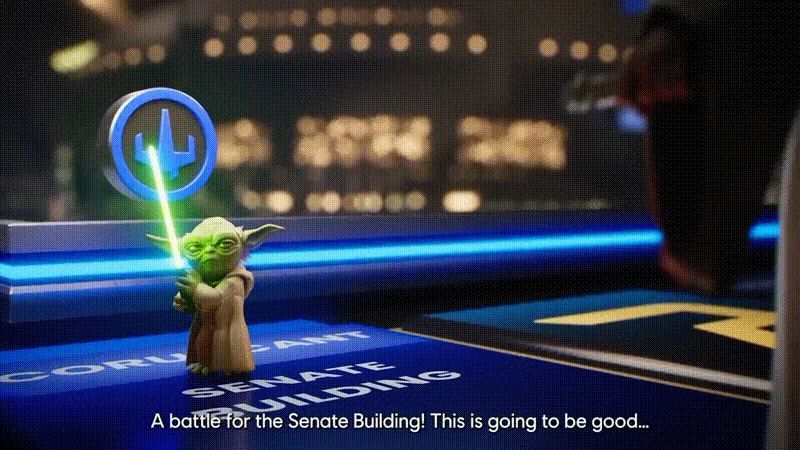
Monopoly: Star Wars Heroes vs. Villains reimagines the familiar property-trading board game as a faction-based contest set across the Star Wars galaxy. Instead of competing for ordinary streets and railroads, players attempt to control recognizable planets, space routes, faction strongholds, and other important locations. Each participant aligns with the Hero or Villain side and selects a character whose strengths can influence movement, resources, territory control, and the wider strategy of the team.
The game preserves the basic Monopoly cycle of rolling dice, moving around a board, acquiring valuable spaces, and building economic power. However, it expands that structure with character abilities, shared faction objectives, team coordination, and clearly defined match goals. These additions are intended to create a hybrid between a digital board game and a light competitive strategy experience, reducing the focus on slow individual wealth accumulation and giving every player a more active role in the conflict.
The current information places Monopoly: Star Wars Heroes vs. Villains within a broad 2026 release window, although a fixed worldwide launch date has not been announced. Its rollout may happen in phases, with digital storefront availability potentially beginning on PC before expanding to consoles. Testing periods could also be used to refine competitive balance, matchmaking, and character abilities before the full launch. Regional licensing approval, platform certification, and coordination with other Star Wars releases may influence the final schedule.
The planned platforms include PlayStation 5, Xbox Series X|S, Nintendo Switch 2, and PC. The core rules and multiplayer systems are expected to remain consistent across every version, while presentation and performance can be adjusted for each device. PlayStation 5 and Xbox Series X|S should benefit from faster loading, stable online features, and enhanced visual effects, while PC may offer greater interface flexibility and additional display settings. Nintendo Switch 2 gives the game a portable option suited to shorter sessions and local or online play away from a television.

Team-Based Gameplay, Character Roster, and Unique Powers
Gameplay begins with players rolling dice and travelling around a Star Wars-themed galactic board. The available spaces represent planets, space routes, and areas controlled by major factions. Landing on these locations can create opportunities to acquire territory, generate resources, complete alignment-specific objectives, or activate special events. Hero and Villain teams pursue different tactical goals while competing for control of the same board.
Unlike traditional Monopoly sessions that can continue until every rival is bankrupt, this version is designed around structured rounds and match-based victory conditions. A team may win by achieving galactic control, reducing the opposing faction below a required wealth threshold, or dominating strategically important sectors. These objectives create a clearer pace and encourage players to make decisions based on the immediate state of the match rather than waiting for opponents to run out of money.
Team-based multiplayer is central to the experience. Players share faction objectives and coordinate their actions instead of treating everyone else as an individual opponent. One teammate may concentrate on acquiring profitable regions and maintaining the faction’s economy, while another uses disruptive abilities to interfere with the opposing side. Effective communication becomes especially important when the team must decide whether to invest in a new location, protect an existing stronghold, or block an enemy from completing an objective.
The character roster draws from several periods of the Star Wars saga. The Hero side includes figures such as Luke Skywalker, Leia Organa, Han Solo, and members of the Jedi Order. Villain choices include Darth Vader, Emperor Palpatine, Kylo Ren, and commanders associated with the Sith or First Order. These characters are intended to affect gameplay rather than function only as cosmetic avatars.
Hero abilities generally emphasize resource efficiency, defensive protection, and support for teammates. A Hero may reduce certain financial penalties, increase income from controlled planets, or protect an allied territory from an enemy action. Villain abilities focus more heavily on sabotage, theft, aggressive expansion, temporary territory control, and dice manipulation. Powers are governed by cooldowns or resources earned during play, preventing constant use and making activation timing an important part of the strategy.

Galactic Board Design, Dynamic Events, and Cross-Platform Play
The traditional Monopoly board is replaced by a map inspired by the Star Wars galaxy. Individual spaces represent familiar planets, stations, strongholds, and hyperspace routes rather than streets or utilities. Locations such as Tatooine, Coruscant, Hoth, Endor, and Mustafar serve as strategically valuable points that may generate increased income, trigger special events, or provide faction-related advantages.
The board is divided into visible regions of influence, making it easier to understand which team controls each part of the galaxy. As Heroes or Villains gain control, the presentation can change to reflect the dominant faction. This visual feedback helps players track the balance of power without examining every location individually and reinforces the idea that the match represents a larger struggle for galactic control.
Dice remain essential, but each roll can have consequences beyond ordinary movement. A character’s current ability, location, faction status, or controlled territories may affect the result of landing on a space. Contextual events can introduce galactic crises, bonus resources, sudden market changes, or new opportunities to interfere with the opposing team. Random event cards provide further variation, ensuring that teams must adapt rather than repeat the same plan in every match.
These systems distinguish the game from traditional Monopoly. The classic version is primarily an individual economic competition built around property ownership, rent, and bankruptcy. Heroes vs. Villains adds shared objectives, asymmetric abilities, faction identity, dynamic events, and shorter match structures. The Star Wars setting is therefore connected to the rules and strategy instead of being limited to renamed properties and themed playing pieces.
Cross-platform multiplayer is expected to connect players on PlayStation 5, Xbox Series X|S, Nintendo Switch 2, and PC through shared matchmaking. Bringing the different platform communities together should improve matchmaking speed and help maintain a larger online population. Cross-platform progression is also planned, allowing players to retain rankings, unlocks, and other progress when moving between supported devices.

Competitive Modes, Customization, and Pre-Order Content
The primary multiplayer formats are expected to include 2v2 and 3v3 matches. The smaller 2v2 format gives each participant a clearly defined role and places greater importance on communication between partners. With fewer players controlling the board, every purchase, ability, and attempt to block the opposition can have a significant effect on the outcome.
The 3v3 format expands the strategic possibilities by allowing teams to divide responsibilities across more players and regions. One participant may concentrate on generating income, another may protect controlled sectors, and a third may use disruptive abilities against the opposing faction. Coordinating these roles becomes essential when several objectives or threats appear at the same time. Both 2v2 and 3v3 are expected to support casual and ranked variations, giving players a choice between relaxed sessions and competitive progression.
Pre-order rewards are expected to focus on customization rather than gameplay advantages. Possible bonuses include dice skins based on recognizable Star Wars designs, alternative board themes, character appearance variants, and exclusive victory animations. Some editions may also provide earlier access to selected characters, although the rewards are intended to avoid giving purchasers an unfair advantage during competitive matches.
Customization extends beyond pre-order incentives. Players are expected to unlock additional dice designs, visual effects, board appearances, and character cosmetics through progression. These options allow participants to personalize the presentation of their matches while keeping the underlying rules and abilities consistent.
Whether Monopoly: Star Wars Heroes vs. Villains is worth playing will depend largely on the type of experience a player expects. Star Wars fans and groups interested in team strategy may appreciate the recognizable characters, faction conflict, shorter sessions, and coordinated objectives. Traditional Monopoly players may enjoy the reduced downtime and faster pacing, although those seeking a direct recreation of the original board game could find the additional abilities and team systems more complex than expected.

Frequently Asked Questions (FAQs)
- What is Monopoly: Star Wars Heroes vs. Villains and how does it differ from traditional Monopoly?
Monopoly: Star Wars Heroes vs. Villains is a team-based strategy adaptation set across the Star Wars galaxy. It retains dice movement, territory acquisition, and resource management but adds Hero and Villain factions, unique character abilities, shared objectives, dynamic events, and match-based victory conditions instead of relying entirely on individual wealth and bankruptcy. - Will Monopoly Star Wars Heroes vs Villains have online multiplayer at launch?
Yes, the game is expected to launch with online multiplayer across its supported platforms. Both casual and ranked matchmaking are planned, allowing players to choose between lower-pressure team sessions and more competitive matches connected to rankings and progression. - Can you play solo in Monopoly Star Wars Heroes vs Villains?
Solo play is expected to be available through matches involving computer-controlled opponents and teammates. The main design emphasizes multiplayer cooperation, but AI matches should provide a way to learn the rules, test characters, and play without joining an online lobby. - Does each Star Wars character have different abilities in the game?
Yes, every playable character is intended to have abilities that influence movement, resources, territory control, or interactions with the opposing faction. Hero abilities generally favor defense and team support, while Villain abilities concentrate more on disruption, sabotage, and aggressive expansion. - How long does a typical match last in Monopoly Star Wars Heroes vs Villains?
A typical match is expected to last between 20 and 45 minutes, depending on the selected mode and the experience of the participants. Structured rounds and defined victory conditions are designed to keep sessions considerably shorter than many traditional Monopoly games. - Is the game beginner-friendly for players who have never played Monopoly before?
Yes, tutorials and simplified beginner options are expected to explain dice movement, territory control, resources, character powers, and team objectives. New players should be able to learn the basic systems gradually before entering more competitive casual or ranked matches. - Will there be updates or DLC after release?
Post-launch support is expected to introduce additional characters, cosmetic items, board regions, and seasonal events. The complete content schedule has not been detailed, but continued updates could expand both the Star Wars roster and the range of match scenarios available. - Can players customize their dice and boards?
Yes, customization is expected to include dice skins, alternative board themes, visual effects, and other cosmetic rewards. These options are intended to personalize the presentation without changing the competitive strength of a player or team. - Is cross-platform progression supported in Monopoly Star Wars Heroes vs Villains?
Cross-platform progression is expected to let players retain their rankings, unlocks, and customization rewards across supported devices. This would allow someone to move between console, PC, and portable play without beginning their progression again. - What makes Monopoly Star Wars Heroes vs Villains different from other digital board games?
Its main distinction is the combination of Star Wars characters and locations with team-based strategy, asymmetric powers, changing board conditions, and faction objectives. Instead of digitally recreating a conventional board game without major changes, it uses the Star Wars conflict to reshape how players cooperate, compete, and pursue victory.

Conclusion
Monopoly: Star Wars Heroes vs. Villains represents a significant evolution of the Monopoly formula, blending familiar board game mechanics with modern competitive multiplayer design and deep Star Wars integration. Its focus on team-based strategy, character-driven abilities, and dynamic board systems positions it as more than a simple adaptation, instead functioning as a hybrid strategy experience designed for 2026’s gaming landscape. By combining accessibility with layered tactical depth, it appeals to both casual players and competitive audiences seeking structured multiplayer engagement within a recognizable franchise framework.
Sources and Citations
- Ubisoft, “Monopoly: Star Wars Heroes vs. Villains Launches June 11.” March 17, 2026.
https://news.ubisoft.com/en-us/article/1uFp8SrpFW7INFtoq6ortW/monopoly-star-wars-heroes-vs-villains-launches-june-11 - Ubisoft, “New Monopoly.”
https://www.ubisoft.com/en-us/games/new-monopoly - Ubisoft, “Monopoly Family Fun Pack Available Now.” November 25, 2014.
https://news.ubisoft.com/en-us/article/54KtPAmDfnmpL3lnZGGFCZ/monopoly-family-fun-pack-available-now - Hasbro, “Hasbro and Ubisoft Introduce New Destination for Gaming, Hasbro Game Channel.”
https://newsroom.hasbro.com/news-releases/news-release-details/hasbro-and-ubisoftr-introduce-new-destination-gaming-hasbro-game - Hasbro, “Global Monopoly Celebration to Honor 75 Years of the World’s Favorite Family Game Brand.”
https://newsroom.hasbro.com/news-releases/news-release-details/global-monopoly-celebration-honor-75-years-worlds-favorite - Hasbro, “Monopoly GO! and Baldur’s Gate 3 Dominate the Digital Scene.” November 27, 2023.
https://newsroom.hasbro.com/news-releases/news-release-details/monopoly-go-and-baldurs-gate-3-dominate-digital-scene - StarWars.com, “Star Wars Databank.”
https://www.starwars.com/databank - BoardGameGeek, Board Game Database, Ratings, Reviews, Mechanics, and Player Count Information.
https://boardgamegeek.com/ - Game Developer, “Designing Multiplayer Team Based Mechanics Without Adding Frustration.”
https://www.gamedeveloper.com/design/designing-multiplayer-team-based-mechanics-without-adding-frustration - Ubisoft Help, “Game Modes in Monopoly.”
https://www.ubisoft.com/en-us/help/new-monopoly/gameplay/article/game-modes-in-monopoly/000109736 - Diego Perez Liebana, Alexander Dockhorn, Jorge Hurtado Grueso, and Dominik Jeurissen, “The Design of Stratega: A General Strategy Games Framework.” 2020.
https://arxiv.org/abs/2009.05643 - Daniel Hernandez, Charles Takashi Toyin Gbadamosi, James Goodman, and James Alfred Walker, “Metagame Autobalancing for Competitive Multiplayer Games.” 2020.
https://arxiv.org/abs/2006.04419
Recommended
- Marvel Confirms The Punisher: One Last Kill Special Presentation Release Date on Disney+
- Man Shot in Parking Lot in an Argument over Pokémon Cards at Indianapolis Kroger: What We Know so Far
- EA FY26 Record Performance Explained: How Battlefield 6 and Apex Legends Drove EA’s Strongest Financial Year Yet
- Fortnite: Save The World Finally Goes Free-To-Play in 2026, Includes Free Skin Rewards and Major Changes
- Netflix’s New Shark Horror Movie Thrash Starring Bridgerton’s Phoebe Dynevor Is Surprisingly Watchable Despite Mixed Reviews
- Dune: Awakening Console Announcement Story Trailer Explained, PS5 & Xbox Release Date, Single-Player Mode, and Full Book One Story Details”
- Mastering Camera Control in Blender: Add-Ons, Switching Systems, Rendering Workflows, and Scene Setup for Animation, Games, and Cinematics
- Broken Sword Movie Confirmed: What’s Officially Announced
- New Dune: Part 3 Trailer Breakdown, Everything Revealed About Denis Villeneuve’s Epic Finale
- Love Death and Robots on Netflix: Everything You Need to Know About the Groundbreaking Animated Anthology Series



































































































