





Graveyard Keeper free on Steam “free to keep” promotion explained
On Steam, a “Free to Keep” promotion is explicitly defined as a time-limited period during which players can permanently acquire a licence for a game for free (essentially a 100% discount), rather than a temporary play period.
Steam’s own documentation explains the mechanics: during a Free to Keep, a free package temporarily replaces the normal paid package on the base game’s store page; it uses the same AppID/depots, and it is automatically removed when the claim period ends.
For this specific campaign, the public announcement text for the franchise stated the giveaway ran until 13 April 2026 and that once claimed, the game remained owned.
As guidance, Steam also notes that “Free to Keep” can be effective in limited situations, including when a new game in the franchise is releasing and the goal is to bring new users into the franchise by giving away a previous title.
(Reference note: Steamworks documentation is maintained by Valve and is the primary source for how Steam promotions function.)
Steam “free weekend” vs “free to keep” differences for publishers
Steam distinguishes between “Free Weekends” and “Free to Keep” in both customer experience and publisher implications.
A Free Weekend is defined as a promotion that grants temporary access to the base game—typically over a long four-day weekend—and once the period ends, continued play requires purchasing the full version.
Operationally, Steam’s Free Weekend guidance includes timing norms (often Thursday-to-Monday on Pacific time), and it explicitly describes Free Weekends as commonly paired with curated discounts to help convert trial players.
A Free to Keep promotion, by contrast, is a time-limited giveaway that grants a permanent licence; Steam also states this format is comparable to a “time-limited giveaway or a 100% discount,” not a temporary licence.
Two publisher-side differences matter for conversion strategy and risk:
Steam states Free to Keep cannot “gate access or limit content” for free-licence claimants (the point is to give away the full game in standard format).
Steam also cautions that by default Free to Keep promotions are not promoted elsewhere on the store beyond the base game’s own store page, and wishlisters are not notified.
tinyBuild Graveyard Keeper $250,000 DLC revenue breakdown
The public topline figure comes from statements attributed to tinyBuild’s CEO: during the limited-time free giveaway, the company reported making “almost $250k” from selling DLCs for the original game on Steam alone (console numbers not included in that figure at the time of posting).
The campaign context also matters for interpreting the number:
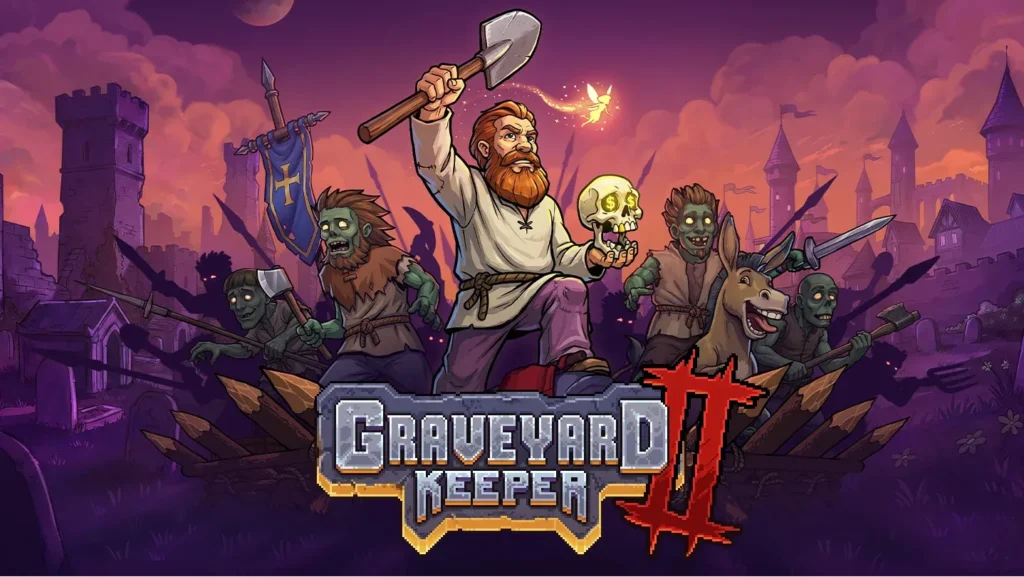
The giveaway was positioned alongside the Graveyard Keeper 2 reveal, and the official announcement text for the series framed the original game’s free period as a limited-time opportunity to claim and keep before the sequel’s later-2026 release window.
During the same sale window, Steam’s store page showed the base game discounted 80% (to $3.99 from $19.99), while multiple DLC items were discounted to $1.99 and non-game DLC (OST and artbook) to $1.19, with an “add all DLC” price displayed at $8.35.
A discounted “complete the set” style bundle (Last Journey Edition) including the base game, three major DLC expansions, soundtrack, and artbook was also listed at $10.48.
What can be said with confidence from public data is therefore the “shape” of the revenue: the reported figure was DLC-driven, the DLC pricing was aggressively discounted, and Steam offered multiple purchase options for newly acquired base-game owners (individual DLC, “add all DLC,” and bundle).
What cannot be claimed from public sources is an exact SKU-level unit breakdown (e.g., how many buyers purchased the $10.48 bundle versus individual $1.99 DLC items), because the publisher has not publicly released unit sales by SKU for the period.
A non-speculative way to “break down” the $250,000+ figure is scenario bounding using the publicly displayed price points (illustrative only, not asserting actual sales mix):
If all ~$250,000 were generated solely via the $10.48 complete bundle, that would imply on the order of ~24k bundle purchases ($250,000 ÷ $10.48 ≈ 23,900).
If all ~$250,000 were generated solely via a single $1.99 DLC (one DLC per buyer), that would imply on the order of ~126k DLC transactions ($250,000 ÷ $1.99 ≈ 125,600).
If purchases were commonly the “add all DLC” option shown at $8.35, that would imply on the order of ~30k “all DLC” purchases ($250,000 ÷ $8.35 ≈ 29,900).
Those scenarios demonstrate why deep discounting plus a “complete the experience” bundle can turn a large spike of free base-game claims into material DLC revenue—even when individual DLC items are priced at impulse-buy levels.
One more precision point: Steam’s own reporting framework distinguishes between gross revenue and net revenue (after applicable adjustments like refunds/chargebacks/taxes, and then revenue-share application). Because the public statements referenced “revenue” without disclosing accounting treatment, the safest interpretation is simply “revenue as reported by the publisher,” without assuming net receipts.
Alex Nichiporchik quote “makes sense when you have a lot of DLC”
The key quote tied to the campaign’s economic logic was attributed directly to the publisher’s CEO in coverage and reposts: “So it makes sense when you have a lot of DLC.”
This statement aligns with Steam’s own framing of DLC: paid DLC is positioned as a way to offer additional value to players willing to “invest deeper” in a product, while noting that DLC strategies carry customer-perception risks if mishandled.
Monetisation mechanics behind “free base game, paid DLC”
How giving a game away on Steam can make money from DLC
Steam supports multiple business models for pricing and monetising content, including paid games, DLC, and in-game purchases; in other words, revenue does not have to be tied exclusively to the base game’s purchase price.
Steam’s DLC documentation describes DLC as additional content that can be sold (or given free), and notes that once owned, DLC is treated as an “integral part of the game” and is updated/installed automatically.
That design matters during giveaways: if the base game is frictionless to acquire, then the first monetised decision can be shifted to “depth” purchases—story expansions, quality-of-life mechanics, soundtrack/artbook, or a complete bundle—once the player has experienced the game’s core loop.
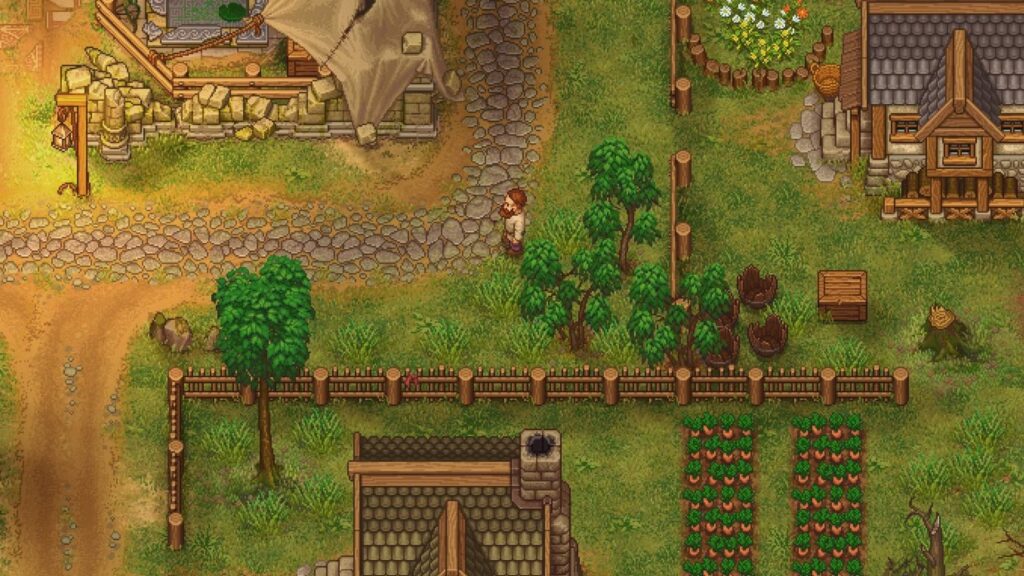
In the Graveyard Keeper case, the Steam store page presented a clear ladder:
Entry: claim the base game (free-to-keep during the campaign window), then optionally buy the base game later at $3.99 during the adjoining discount period.
Upsell: three major DLC items at $1.99 each and add-on media at $1.19 each, plus an “add all DLC” option and a complete bundle at $10.48.
This is a classic “free sampling → paid completion” pathway: the player’s perceived risk is reduced at the top of funnel, while the monetised products are positioned as low-cost add-ons relative to the normal $19.99 base-game price anchor displayed on the same page.
How to convert free players into DLC buyers on Steam
Steam’s own documentation highlights the discoverability surfaces that matter for DLC conversion: DLC can be recommended in the Steam store, it appears on the base game’s store page, and each game automatically has a DLC browse page showing all DLC available.
Conversion tactics that are directly supported by Steam’s platform features (and therefore do not rely on assumptions about external tooling) include:
Store-page sequencing and bundling: ensuring the base game’s store page clearly lists DLC, and offering a bundle that collects the “main” paid content as a single purchase option.
Deep discounting of DLC during the acquisition spike: discounting the upsell products while the newly installed player population is at its peak, and ensuring the DLC price points sit at “easy yes” levels (as in the $1.99 DLC pricing visible during the campaign’s discount window).
In-content upsell via the Steam overlay store: Steam’s DLC documentation describes an in-game pathway where games can display DLC in the Steam overlay and allow purchase without leaving the game, with Steam handling the transaction and automatically downloading the DLC upon purchase.
The strategic implication is that giveaways are most likely to monetise when:
The base game rapidly demonstrates why extra content is valuable (so the upsell is emotionally justified).
The paid content is immediately available, clearly described, and easy to add during the “first session” window when newly claimed players are most engaged.
What types of DLC sell best after a free Steam giveaway
Steam’s DLC documentation lists “expansions” among the canonical examples of paid add-on content, alongside other playable additions like maps/levels/characters and non-playable add-ons such as artbooks or wallpapers.
In the Graveyard Keeper Steam catalogue during the April 2026 discount window, the most prominent paid DLC items were three storyline expansions (priced at $1.99 during the sale) plus the OST and artbook (priced at $1.19).
From a conversion perspective, this mix is well-suited to post-giveaway monetisation because it offers:
High-perceived-value content expansions: “storyline DLC” positioned as additional gameplay content rather than purely cosmetic purchases.
Collector add-ons for superfans: soundtrack and artbook as optional purchases for players who value the game’s aesthetic and want to support it beyond gameplay.
A complete set bundle that packages everything as the “ultimate” edition, lowering decision complexity for buyers who simply want the full experience.
The generalisable lesson (within Steam’s own content taxonomy) is that DLC that extends the core loop (expansions, new systems, or substantial playable content) is structurally easier to sell to newly acquired players than DLC that requires an already deep emotional commitment—though the latter can still contribute meaningful revenue when bundled and discounted.

Indie game monetization after launch: DLC-first strategy on Steam
A DLC-first post-launch strategy on Steam is essentially a shift from “one-and-done launch revenue” to a catalogue approach, where the base game becomes a platform for additional purchasable content over time. Steam’s documentation explicitly supports selling both free and paid DLC, and it describes DLC as integrated into the game once owned.
However, Steam also flags two strategic “guardrails” that matter to long-term monetisation:
DLC can have non-monetary costs in customer perception; for example, Steam notes it may not be wise to launch with paid DLC on day one because customers may perceive content as removed from the base game to monetise separately.
For Free to Keep promotions specifically, Steam cautions that giveaways can damage long-term value perception and can signal low value to customers, and that the majority of claimants may never play the game.
A robust DLC-first strategy therefore tends to work best when paired with clear communication and strong product-market fit: DLC must read as additive (new content, new mechanics, or clear “more of what’s good”), and the base game must remain satisfying without the DLC so that the upsell does not provoke backlash.
Promotion design: pricing, timing, and implementation constraints
How to discount DLC during a Steam free-to-keep event
The Graveyard Keeper store configuration during the campaign window illustrates a practical, conversion-oriented discount layout:
Base game discounted 80% to $3.99 (after its free-to-keep claim period), maintaining a low post-event entry price.
Major DLC items discounted 80% to $1.99 (from $9.99) and media add-ons discounted to $1.19.
A complete bundle presented at $10.48, and an “add all DLC” option shown at $8.35.
Steam’s discounting documentation provides two key mechanics that interact with this setup:
Steam notes that any discount of 20% or greater automatically triggers email notifications to users who have the relevant product on their wishlist, and discounted titles can appear in “specials” sections based on tags/popularity and recommendations.
Steam also indicates that if products are included in bundles, bundle discounts can stack on top of individual discounts (which helps support a “best deal” bundle without breaking individual item pricing).
For a free-to-keep campaign, an important nuance is that Steam states wishlisters are not notified about the Free to Keep itself by default—so the discounting strategy should treat DLC discounts and post-event base-game discounts as the notification-capable levers, not the giveaway.
Best time to run a Steam giveaway for maximum DLC sales
Steam’s Free to Keep guidance explicitly recommends it mainly for limited circumstances, including ramping interest ahead of a new franchise release.
The Graveyard Keeper campaign followed this template: the franchise announcement text indicates the sequel was revealed and the original was made free to keep until 13 April 2026, framing the giveaway as lead-in marketing for the sequel.
From a tactical “calendar” standpoint, Steam’s Free Weekend documentation provides a useful analogue: it describes typical long-weekend scheduling (Thursday-to-Monday) and pairs the free access window with discounting to support conversion.
While Free to Keep is a different mechanic, the underlying conversion logic is the same: the best time is when (a) acquisition spikes, (b) newly acquired players immediately have something compelling to buy, and (c) external attention is already focused on the franchise (sequel reveal, major update, or event).

Steam free game promotion strategy for indie developers
Steam’s Free to Keep implementation constraints are non-trivial and shape feasibility:
It is not self-service; the Steam team must set up a special Free to Keep package, and Steam recommends contacting them with desired timing at least one month in advance.
The promotion must run at least 24 hours (to cover time zones) and Steam generally recommends keeping it under two weeks.
Steam also states that, by default, Free to Keep promotions are not broadly promoted on the store beyond the base game’s store page, and wishlisters are not notified—meaning external marketing and/or a separate discount strategy is critical for reach.
A strategy framework consistent with Steam’s documented constraints and the Graveyard Keeper execution is:
Use Free to Keep when there is an external “reason to care” (new franchise release, milestone, or major announcement) rather than expecting “free” to generate demand on its own.
Pair the giveaway with DLC merchandising that is visible where new owners will look: base game store page DLC list, DLC browse page, and an appropriately priced “complete” bundle.
Engineer the “first-session monetisation moment” by discounting the DLC catalogue during the same period that the new-owner spike is occurring (as reported in coverage of the case).
Sequel effects, player numbers, and measurement
Do Steam giveaways increase wishlists and sales for sequels
In this case, multiple reports attributed to tinyBuild leadership linked the giveaway to a significant increase in sequel wishlists, reaching roughly 450,000 wishlists shortly after announcement.
Steam’s own wishlist documentation explains why this can matter even beyond raw pre-launch interest: wishlists can support featured placement (particularly in pre-launch contexts) and Steam may send reminder emails/notifications when the game launches or goes on sale.
At the same time, Steam clarifies that wishlists are mostly not a factor in algorithmic visibility (with limited exceptions like “Popular Upcoming”), but they remain important for notifications on launch or discounts of 20%+.
The giveaway-to-wishlist mechanism is therefore most defensible as a funnel effect: more players acquire and play the first game (or at least engage with the franchise), and a share of that attention converts into a sequel wishlist that can later be activated by launch and discount notifications.
Graveyard Keeper 2 announcement effect on player numbers
The player-count impact in April 2026 is observable in external tracking data:
Graveyard Keeper reached an all-time peak of 46,305 concurrent players on 12 April 2026, during the free-to-keep period and immediately following the sequel announcement window.
For historical context, Steamcharts’ monthly table shows the launch month (August 2018) peak as 16,973, meaning the April 2026 peak was roughly 2.7× the August 2018 peak recorded there.
The official franchise announcement text explicitly paired the sequel announcement with a limited-time free claim window for the original, supporting the causal narrative that the “announcement + free-to-keep” combination drove a large influx of attention.
(Reference note: player-count figures cited above come from third-party trackers SteamDB and Steamcharts, which publish Steam concurrent-player time series.)

Measuring Steam giveaway success: revenue, wishlists, and retention
A measurement plan for Steam giveaways should align with what Steam documentation identifies as actionable and visible in partner tooling:
Revenue: Steam’s reporting guidance differentiates between gross revenues and net revenue (after applicable adjustments) and then applies revenue share for payout; for internal analysis, both topline and net should be evaluated because refunds/taxes/chargebacks can change the realised outcome.
Wishlists: Steam’s wishlist documentation explains that partners can track traffic from email notifications via Marketing & Visibility traffic breakdown, and can access a “detailed wishlist breakdown” in financial reporting to see email notifications sent during a period.
Retention and play: Steam’s Free to Keep documentation warns that most users who claim a free licence may never play, making engagement/retention measurement indispensable (e.g., daily active users and post-event play curves, not only claim counts).
Visibility drivers: Steam’s “Visibility on Steam” documentation emphasises that store page traffic and conversion rate are not themselves factors in visibility, while play behaviour and sales outcomes can indirectly drive surfacing; it also notes review-score thresholds that can reduce featuring if a game falls below 40% into “Mostly Negative.”
In practice, the most defensible KPI set for a giveaway intended to monetise DLC and seed a sequel is:
DLC revenue per day (and per active player) during the claim window, with a post-event decay curve.
Attach rate proxies: DLC transactions divided by estimated active players (since total claims are not reliably public).
Wishlist velocity for the sequel during the announcement window, with later conversion measurement at launch/discount triggers.
Risk analysis and limitations
Risks of giving your paid game away for free on Steam
Steam’s own Free to Keep guidance is unusually direct about trade-offs and risks:
It warns that the majority of customers who grab a free licence may never play, and that giving away licences removes those users from purchasing the game in future (a permanent cannibalisation risk).
It also notes that free-licence reviews do not count towards review score and that free-to-keep owners are not eligible for trading cards—details that can matter for community dynamics and perceived value.
Steam further cautions that Free to Keep promotions are not broadly promoted by default, and that giveaways may damage long-term product value perception by signalling low value.
Beyond the giveaway itself, Steam highlights a parallel risk on the DLC side: DLC strategies can impose “non-monetary costs of customer perception” and should be structured carefully to avoid the perception that content was removed from the base game to resell separately.
The Graveyard Keeper campaign mitigated several of these risks through conditions Steam itself suggests are favourable (franchise sequel timing and a robust DLC catalogue), but the risks remain material for titles without those structural advantages.
Frequently Asked Questions (FAQs)
- What does “Free to Keep” mean on Steam?
Steam defines “Free to Keep” as a time-limited promotion that allows players to permanently acquire a licence for a game for free (a giveaway/100% discount), rather than a temporary access period. - How is “Free to Keep” different from a Steam “Free Weekend”?
Steam defines a Free Weekend as temporary access—typically over a four-day weekend—after which continued play requires purchase; Free to Keep grants a permanent licence during a limited claim window. - Was the Graveyard Keeper giveaway designed to promote Graveyard Keeper 2?
The official announcement text paired the sequel announcement with a limited-time free-to-keep claim window for the original and explicitly encouraged wishlisting the sequel. - How much DLC revenue was publicly reported from the Steam giveaway period?
Coverage attributed to tinyBuild leadership reported making “almost $250k” from selling DLCs for the original game on Steam alone during the free campaign period. - Why does DLC matter so much in a free-to-keep strategy?
Steam’s DLC documentation frames DLC as a way to offer additional value to customers who want to invest deeper in a product; in the case study, the publisher explicitly stated the strategy “makes sense when you have a lot of DLC.” - Can Free to Keep players be limited to a trial version of the game?
Steam states Free to Keep cannot gate access or limit content; it is meant to give away the entire game in its standard format. - Do Free to Keep players receive Steam Trading Cards?
Steam states trading cards do not drop for customers who own a game through a Free to Keep package. - Do Free to Keep players’ reviews count towards the game’s review score?
Steam indicates free-to-keep owners can leave reviews, but those reviews are categorised as a free licence and do not factor into the game’s review score. - Does Steam notify wishlisters when a Free to Keep giveaway happens?
Steam states that customers who have wishlisted the game are not notified about Free to Keep promotions by default. - What metrics should be tracked to judge a giveaway’s success on Steam?
Steam documentation supports tracking wishlist-related activity via marketing/visibility traffic breakdowns and detailed wishlist reporting; Steam’s visibility guidance also clarifies which signals do and do not drive store visibility (e.g., wishlists mostly not visibility factors, traffic alone not a factor).
conclusion
The Graveyard Keeper Steam “Free to Keep” event in April 2026 is a rare, well-documented example of a giveaway functioning as a profit centre rather than purely a visibility play: public reporting attributed to tinyBuild leadership stated that DLC sales on Steam alone generated almost $250,000 during the free period.
What made the outcome structurally plausible—based on Steam’s own platform mechanics and the publicly visible store configuration—was the combination of (a) a franchise catalyst (the Graveyard Keeper 2 announcement), (b) a mature DLC catalogue with compelling “expansion-style” content, and (c) steep DLC discounting presented directly where newly acquired players would encounter it.
Steam’s documentation also makes clear that this approach is not universally appropriate: Free to Keep is not broadly promoted by default, many claimants may never play, and giveaways can harm long-term value perception—meaning the strategy is best treated as a targeted tool for specific catalogue and franchise conditions, not a generic growth hack.
sources and citation
The last three entries in your note were generic rather than titled, so I linked the strongest likely matches: PC Gamer for the reported revenue/campaign structure, SteamDB/Steam Charts for concurrent-player history, and the Steam/SteamDB bundle pages for bundle-price context.
- Steamworks Documentation: Free to Keep (100% Discount)
Steamworks Documentation: Free to Keep (100% Discount) - Steam store page: Graveyard Keeper
Graveyard Keeper on Steam - SteamDB patch notes text: “Announcing Graveyard Keeper 2”
SteamDB: Announcing Graveyard Keeper 2 - Press coverage capturing the publisher’s reported revenue and campaign structure
PC Gamer: Giving Graveyard Keeper away for free apparently earned its publisher “almost 250k” - Third-party concurrent-player time series used for peak context and historical baseline
SteamDB Charts: Graveyard Keeper - Additional third-party player-count reference
Steam Charts: Graveyard Keeper - Additional confirmation/price context for bundle pricing in USD and bundle listing surfaces
Steam: Graveyard Keeper Last Journey Edition - SteamDB bundle reference for pricing/bundle structure
SteamDB: Graveyard Keeper Last Journey Edition
Recommended
- How to Export Metahuman to Maya and Back: Complete Workflow for Unreal Engine and Autodesk Maya
- Michael Jackson Movie Reportedly Ends During Bad Tour After Child Abuse Allegations Were Cut and $15 Million Reshoots Changed the Third Act
- How To Create Hexagon Fans Blender: Step-by-Step Hexagon Fan Grill (Honeycomb Fan Cover) Tutorial
- Resurrection of the Insomnia Gaming Festival cancelled: Insomnia 74 (i74) called off, refunds, and what happens next
- Soft Warm Shadows in Unreal Engine Using Simple Math (UE5)
- Analyst: Premium Games Are Becoming a Hobby for Wealthy Individuals as AAA Prices Rise
- The Best Hair Grooming Tools for Unreal Engine
- Super Meat Boy 3D Release Date Trailer: Everything Revealed at Xbox Partner Preview Showcase 2026