






Tomodachi Life: Living the Dream really did have an unusually long road to launch, but the most accurate way to describe that road is as a concept-to-release timeline rather than nine straight years of unchanged full production. In Nintendo’s April 2026 Ask the Developer interview, director Ryutaro Takahashi said development started around 2017 after Miitomo had settled down, while the public reveal did not happen until the March 27 2025 Nintendo Direct and the finished game launched on April 16 2026.
That means the internal journey was roughly nine years long, even though the public wait from announcement to release was a little over a year. The same interview also makes clear that the game’s user-generated systems alone consumed six or seven years of iteration, which is the real reason the sequel took so long to arrive.
Tomodachi Life: Living the Dream development time explained
Tomodachi Life: Living the Dream development time explained starts with one key distinction: the “nine years” refers to the broad span from the project’s earliest conception to launch, not nine identical years of final-stage production. Takahashi said the team began around 2017 because he and producer Yoshio Sakamoto still felt attached to the earlier Tomodachi Life and wanted their Mii characters to experience more than the Nintendo 3DS game could offer. Nintendo then announced the sequel on March 27 2025, publicly framed it on March 28 2025 as the first brand-new entry in more than ten years, and finally released it on April 16 2026.
That timeline matters because it clarifies why “almost a decade” is fair but needs context. The game was not stuck in limbo for nine years with no progress; rather, the team spent years testing what a modern Tomodachi Life should be on more powerful hardware, how much freedom players should have, and how to preserve the strange charm of the series without turning Mii characters into ordinary high-fidelity avatars. Nintendo’s own interview is unusually explicit about this long gestation, saying the project was rebuilt from the ground up and repeatedly rebalanced until the team felt the final vision had clicked into place.
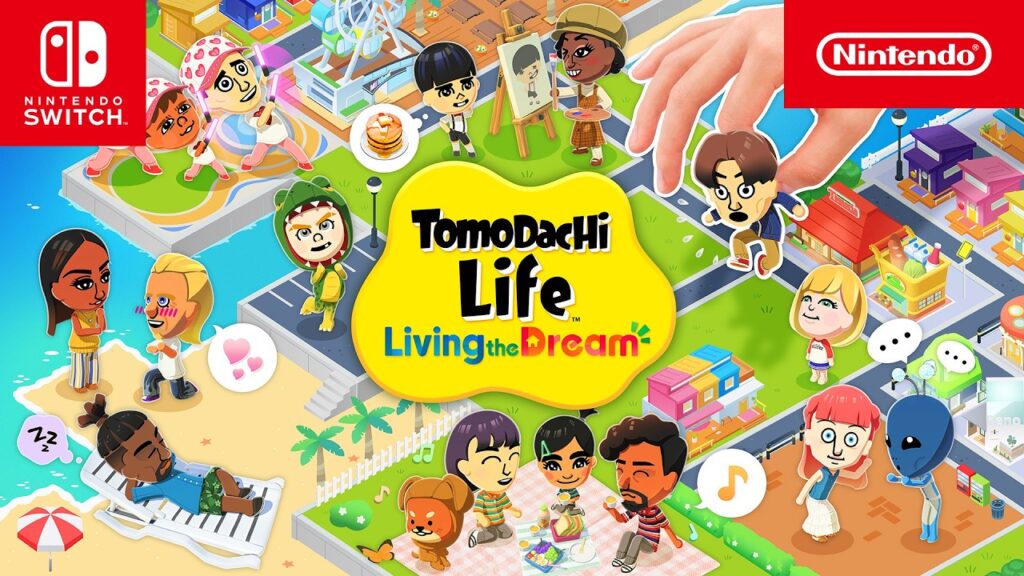
Why Tomodachi Life: Living the Dream took 9 years to make
Why Tomodachi Life: Living the Dream took 9 years to make comes down to philosophy as much as technology. Takahashi explained that simply adding more pre-authored content to the old formula would have become a “quest for quantity”; eventually players would still see everything and tire of it. So the team changed direction and built the sequel around user-generated content, with the goal of combining Nintendo-made systems and player-made creations into a structure that could keep producing fresh situations. That strategic shift turned the sequel into a systems-heavy project rather than a straightforward content expansion.
The technical side also became more ambitious. Nintendo said the higher processing power of the newer hardware let Mii characters move more freely around a larger island than the Nintendo 3DS version could support, which expanded their “sphere of influence” and made UGC more meaningful. But greater freedom also created instability. In the Chapter 2 interview, the team described characters pacing awkwardly, colliding with the same items, and producing combinations that were hard to manage. The developers had to write rules for those behaviours, preserve the ones that were odd but funny, and keep tuning until the game stopped feeling like chaos and started feeling like Tomodachi Life.
Nintendo also admits the UGC toolset became a time sink. The team originally thought those tools might take about a year and a half to complete, but Takahashi said they ended up spending six or seven years on them because the desire to let players enjoy the game simply by observing Mii characters kept generating new design problems and new feature requests. Even in the latter half of development, the team was still deciding what should happen after one Mii is dropped beside another, which shows how late some of the most important interaction design questions remained open.
A final reason for the long development was restraint. Nintendo did not want more powerful hardware to make Miis feel wrong. The team refreshed facial part design, adopted a cleaner toon-like look, implemented a new text-to-speech base, and refined movement and sound, but it deliberately avoided making Miis too realistic. That meant extra rounds of visual, animation, and audio iteration aimed at preserving “Mii-ness” rather than simply maximising fidelity.
Nintendo Ask the Developer Tomodachi Life: Living the Dream summary
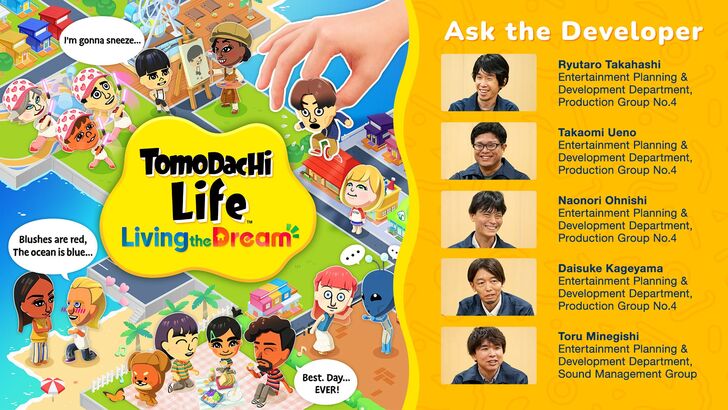
Nintendo Ask the Developer Tomodachi Life: Living the Dream summary is best understood as a three-part explanation of the sequel’s identity. Chapter 1 focuses on Mii characters as beings with their own will and personality; Chapter 2 explains the project’s expanded “make anything you want” toolset; Chapter 3 explains how an internal idea board, years of iteration, localisation choices, and late saves like Mii News turned the final product into a dense, personality-driven sequel. Taken together, the interview argues that the game’s long development was not drift or indecision for its own sake, but a prolonged effort to align character autonomy, player creativity, and the series’ specific brand of humour.
The interview also matters because it names the people shaping that direction: programming directors Takaomi Ueno and Naonori Ohnishi, art director Daisuke Kageyama, and sound director Toru Minegishi all describe different pressures on the game. Their comments line up on one core point: Tomodachi Life: Living the Dream is designed less like a conventional authored narrative and more like a sandbox for observation, surprise, and personal jokes, which is why the balance between freedom and coherence took so long to get right.

Tomodachi Life: Living the Dream development interview key quotes
Tomodachi Life: Living the Dream development interview key quotes reveal almost the entire story in miniature. The most important phrases are that development began “around 2017”, the concept became “the ultimate inside joke game”, UGC was meant to create “infinite ways to enjoy the game”, family playtest reactions were “overwhelmingly positive”, and the finished release contains “nine years’ worth of ideas”. Those short phrases explain the game’s start date, design goal, replay philosophy, testing outcome, and final marketing hook better than any fan theory could.
Tomodachi Life: Living the Dream user-generated content tools
Tomodachi Life: Living the Dream user-generated content tools are the clearest reason this sequel feels broader than a simple follow-up. Nintendo’s January 2026 Direct spotlight says players can use the Palette House Workshop to design pets, custom drinks, favourite TV shows, clothing items, house exteriors, ground tiles, and other original island objects. Chapter 2 of Ask the Developer adds that players can also create designs by typing words or pasting Mii faces into them, while templates exist for people who want the comedy of a customised island without having to draw everything manually.
That matters because UGC in this game is not just cosmetic decoration sitting in menus. Nintendo explicitly ties custom content to daily island life: the gifts you make or choose can be used by residents, the spaces you build shape the situations they appear in, and the island itself is described by the developers as the “biggest gift” you can give to your Miis. In other words, the tools are meant to feed back into behaviour, jokes, observation, and replayability rather than existing as a detached creation suite.
Tomodachi Life: Living the Dream character creator and Mii customization
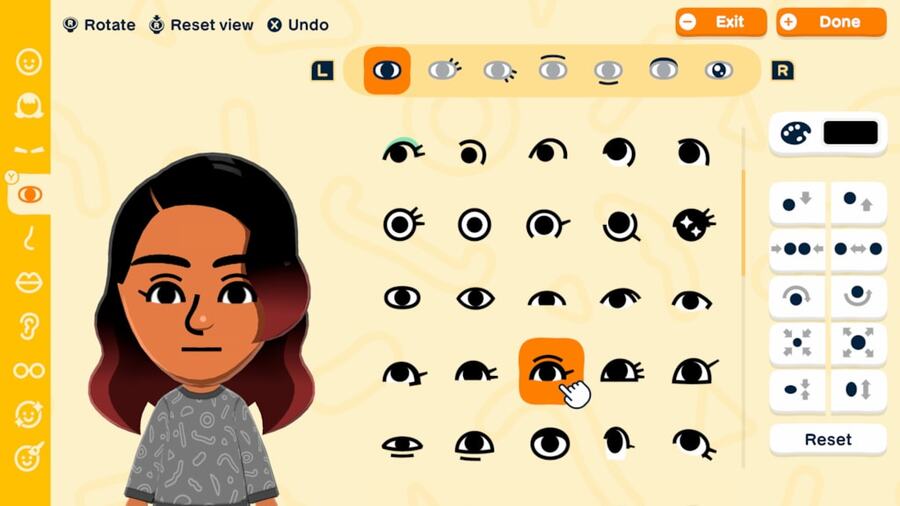
Tomodachi Life: Living the Dream character creator and Mii customization are much more flexible than the older formula. Nintendo says there are two creation routes: “Get Help”, which generates a Mii by asking a series of questions, and “From Scratch”, which lets players manually choose face types, hairstyles, eyes, and other parts. The Ask the Developer interview adds that eyelashes, eyelid creases, and the mouth can now be adjusted to different angles, hair can use sub-colours for two-toned looks, and the broader palette makes it easier to build more accurate likenesses or push characters into exaggerated or stylised designs.
The sequel pushes that freedom further into identity and expression. Nintendo says players can change a resident’s height, body type, voice, energy, and other personality markers, while the interview says players have more freedom over gender, dating preferences, and even the style of outfit worn for events like weddings. The same official material also emphasises non-human possibilities, noting that improved colour choices, face paint, and flexible feature combinations make animals, aliens, and other deliberately unrealistic Miis easier to create than before.
Tomodachi Life: Living the Dream “ultimate inside-joke game” meaning
Tomodachi Life: Living the Dream “ultimate inside-joke game” meaning is not just that the game is funny. Nintendo’s developers use that phrase to describe a structured kind of humour built around people who already know each other, or at least know the references behind the Miis, items, phrases, and situations being created. The comedy is therefore partly authored by Nintendo and partly authored by the player, because a Mii based on a friend, relative, celebrity, or office co-worker behaves differently in your imagination than a generic NPC ever could.
Chapter 2 shows how that idea works in practice. The team describes Miis unexpectedly repeating player-provided topics in group conversations, and it shows an internal “Development HQ Island” built around the studio’s office jokes, complete with custom security cards, payslips, and even pets based on familiar characters. The result is a game where the funniest moments often come from recognition and surprise rather than pre-written punchlines, which is exactly why Nintendo keeps calling it an inside-joke simulator.
Tomodachi Life: Living the Dream island customization features
Tomodachi Life: Living the Dream island customization features go well beyond rearranging a few buildings. Nintendo’s January 2026 feature rundown says players can change the island’s look with trees, plants, benches, vending machines, playground rides, and other landscape items, move shops and houses around, and expand areas of land. The same Direct spotlight also says players can draw house exteriors and ground tiles, which makes the island feel more like a full editable space than a fixed backdrop.
Ask the Developer gives a more concrete example of that flexibility. Takahashi showed an internally made “Development HQ Island” that used Island Builder to recreate the development team’s office, and he explained that what looked like desks in the environment were actually individual Mii homes. That example is important because it proves island customisation is not limited to postcard-like scenery; the toolset is strong enough to turn the island into a themed stage for jokes, routines, and new resident combinations.

Tomodachi Life: Living the Dream new interactions and relationship systems
Tomodachi Life: Living the Dream new interactions and relationship systems are built around a careful compromise: the player can nudge events, but should not fully script them. One of the most important new mechanics is the ability to pick up Miis and drop them near each other. Nintendo says this system began as a debug function because the island is larger and characters can spread out more freely, but the team realised the mechanic could become part of the game itself. They then rejected earlier prototypes that let players explicitly steer conversations, because too much direct control made Miis lose the sense of autonomy that defines Tomodachi Life.
Nintendo’s January 2026 Direct summary shows the practical effect of that design choice. Residents can be dropped together and may then discuss favourite foods, bond over unexpected topics, or start interacting independently once they know each other. Up to eight residents can also live as roommates, with different reactions emerging from shared homes. The relationship diagram remains important too, because it can reveal mismatched feelings and create its own layer of comedy when one Mii thinks a romance is blooming while the other thinks the pairing is hopeless.
The game also expands how conversations and memory work. In Chapter 2, Ohnishi and Takahashi explain that information players tell a Mii can resurface later in group chatter, while Chapter 1 says the team deliberately avoided over-organising interactions so that weird, slightly illogical, and sometimes unsettling combinations could still happen. That is why the new relationship system feels more like a dynamic social toybox than a traditional romance-management sim.
Tomodachi Life: Living the Dream playtesting details and feedback
Tomodachi Life: Living the Dream playtesting details and feedback are unusually revealing because Nintendo describes real household-style testing rather than a generic quality assurance pass. Once the systems had finally come together, Takahashi said the team primarily used family members of the developers as playtesters and asked them to spend about a week creating Miis and experimenting with UGC. That format matched the game’s intended rhythm, because Tomodachi Life is designed to be visited over time rather than exhausted in a single sitting.
The feedback shaped design priorities in meaningful ways. Nintendo says different playtesters gravitated to different parts of the experience: one child barely cared about romance but enjoyed making Miis and watching friendships, while another became deeply invested in a parent’s love life. The team took that as proof that the sequel needed multiple valid playstyles, which is why it kept ready-made templates, relaxed play options, and even the ability to leave island-building largely to the Miis themselves.
Tomodachi Life: Living the Dream “nine years’ worth of ideas” explained
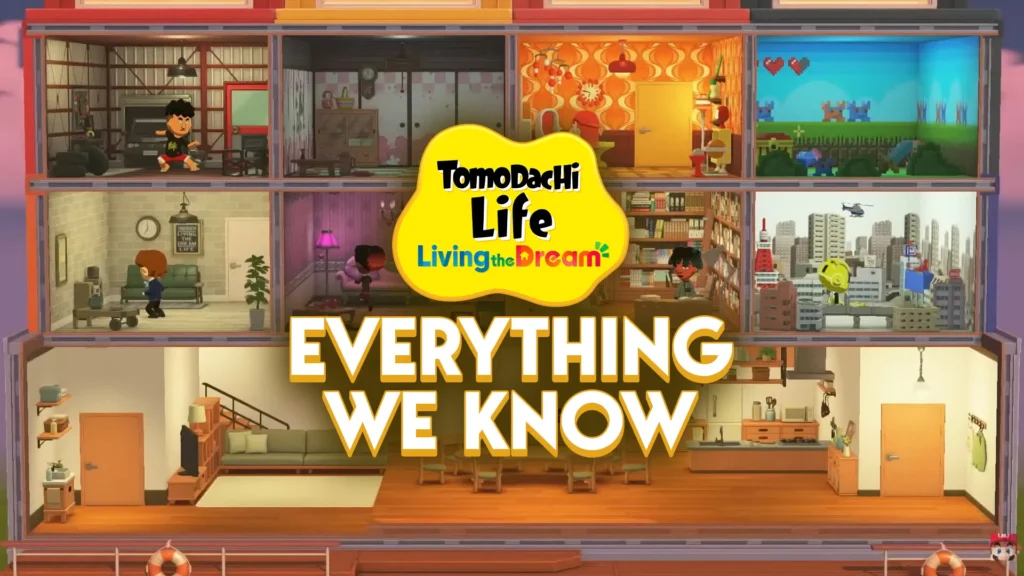
Tomodachi Life: Living the Dream “nine years’ worth of ideas” explained is more than a slogan. In Chapter 3, Kageyama says the team used an idea board where anyone could post concepts, and those ideas could then be picked up by people in completely different roles. Nintendo presents that cross-discipline workflow as one of the defining features of the project, especially because it kept operating into later development rather than disappearing after pre-production.
The examples Nintendo gives show what that phrase really means. One younger designer fought to keep Mii News when the team nearly cut it for time; “little quirks” were added so Miis could express things the old 16 personality types could not; region-sensitive food and currency were used to make the world feel more familiar in each territory; and even small comic effects went through repeated sound and visual retakes so they felt silly without becoming too realistic. So when Takahashi says the game contains nine years of ideas, he means the final product is a compressed archive of debated, rescued, refined, and localised concepts gathered over a very long development arc.
Tomodachi Life: Living the Dream Nintendo Direct announcement March 2025
Tomodachi Life: Living the Dream Nintendo Direct announcement March 2025 happened during the March 27 2025 Nintendo Direct, where Nintendo listed the game among the presentation’s major announcements. The next day, Nintendo published a follow-up news post that described it as the first brand-new Tomodachi Life entry in more than ten years and confirmed a 2026 release window. That public messaging is important because it shows how late the announcement came relative to the internal start date around 2017.
Nintendo tightened the release window later in the year. On September 19 2025, the company published a new update and trailer confirming Spring 2026, which marked the transition from a broad announcement phase into a more concrete launch campaign. That progression from March 2025 reveal to September 2025 seasonal window to January 2026 exact date is the clearest public version of how Nintendo rolled the game out.

Tomodachi Life: Living the Dream release date April 16 2026
Tomodachi Life: Living the Dream release date April 16 2026 is official and consistent across Nintendo’s own materials. The Nintendo store listing gives April 16 2026 as the release date, and the January 29 2026 Direct spotlight repeats that the game would launch on Nintendo Switch on April 16. Nintendo also released the Welcome Version demo on April 1 2026, which placed the final stretch of the marketing cycle squarely in early April.
That date is important for the nine-year discussion because it gives the far end of the full timeline. Once April 16 2026 arrived, the project’s reported 2017 start date translated into an approximately nine-year concept-to-launch span, even though the public announcement was only about thirteen months earlier.
Tomodachi Life: Living the Dream ROM leak explained (spoiler-free)
Tomodachi Life: Living the Dream ROM leak explained (spoiler-free) can be summarised without repeating or amplifying any piracy details. On April 12 2026, Nintendo Everything reported that a pre-release copy of the game had leaked online and suggested that an early retail sale was the likely source. On April 13 2026, Nintendo Life published a spoiler warning that echoed those reports and said the leak appeared to have surfaced three days before the official launch.
For ordinary players, the practical meaning was simple: avoid clips, screenshots, and social posts if you wanted to keep the game’s surprise interactions fresh for launch day. Nintendo Everything noted that the title is not especially story-heavy, so the risk was less about narrative spoilers and more about losing the delight of discovering bizarre moments for yourself. The leak did not change the official April 16 release date, and the safest, cleanest way to experience the game remained the official launch version.
Tomodachi Life: Living the Dream development timeline from concept to launch
Tomodachi Life: Living the Dream development timeline from concept to launch looks like this:
- Around 2017: Takahashi says development began after Miitomo had settled down, with a new sequel discussion driven by his and Sakamoto’s attachment to the earlier game.
- Early development: Nintendo verified two big pillars first: freer Mii movement on more capable hardware and a UGC-led structure that could sustain more inside jokes and player expression.
- Middle years: The team rebuilt the project from the ground up, repeatedly rebalanced autonomous character behaviour, and watched the UGC toolset expand from a projected 18-month task into a six-to-seven-year effort.
- Latter half of development: Picking up and dropping Miis became a central interaction after earlier, more prescriptive prototypes were discarded for giving players too much control.
- March 27 2025: Nintendo publicly announced the game in a Nintendo Direct, followed by an official news recap on March 28 confirming a 2026 release window.
- September 19 2025: Nintendo narrowed the window to Spring 2026 with a new trailer and update.
- January 29 2026: A dedicated Direct spotlight confirmed the April 16 release date and detailed major features including Island Builder, little quirks, drops between Miis, and expanded creation tools.
- April 1 2026: The Welcome Version demo launched on Nintendo eShop.
- April 14 2026: Nintendo published the Ask the Developer interview chapters explaining the game’s unusually long development and feature philosophy.
- April 16 2026: The full game launched officially.
Frequently Asked Questions (FAQs)
- Was Tomodachi Life: Living the Dream really in development for nine years?
Broadly, yes. Nintendo’s director said development started around 2017, and the game launched on April 16 2026, which makes the concept-to-release span roughly nine years. - Why does Nintendo describe the development as so long if the game was only announced in 2025?
Because the internal project began years before the public reveal. Nintendo announced it in the March 27 2025 Direct, but the developers say serious work and planning had already been happening since around 2017. - What was the single biggest reason the sequel took so long?
The clearest answer is the shift to UGC-heavy systems. Nintendo originally thought the UGC tools might take about a year and a half, but the team later said they spent six or seven years building and refining them. - Did Nintendo rebuild the game or just expand the 3DS version?
Nintendo says it rebuilt the game from the ground up. The interview repeatedly frames the sequel as an all-new version of Tomodachi Life rather than a simple extension of the old 3DS structure. - What are the biggest new customisation upgrades?
The official feature breakdown highlights more facial parts, robust face paint, little quirks, favourite phrases, island editing, player-created items, and workshop tools for things like pets, drinks, clothing, and house exteriors. - How has Mii creation changed in this sequel?
Players can still build Miis manually, but there is also a guided question-based method. Nintendo also says facial angles, eyelashes, hair sub-colours, face paint, gender options, dating preferences, and other identity settings are more flexible than before. - What does Nintendo mean by calling it the “ultimate inside-joke game”?
It means the humour is meant to come from player-made characters, shared references, and unexpected social moments rather than from scripted gags alone. The official interview links that phrase directly to UGC and the ability to create whatever you want with people you know in mind. - How did Nintendo test whether all of that freedom actually worked?
The developers ran week-long playtests mainly with their own families, asking them to create Miis and experiment with different UGC approaches. The team said those sessions showed that players enjoyed the game in very different ways, which encouraged the final “play it your way” structure. - When was the final release date confirmed?
Nintendo confirmed the April 16 2026 date in the January 29 2026 Direct spotlight, after earlier public windows of “2026” and then “Spring 2026”. - Did the ROM leak affect the official launch?
No official Nintendo release-date change followed the leak reporting. Third-party outlets reported that a pre-release copy circulated online shortly before launch, but Nintendo’s official date remained April 16 2026.
Conclusion
Tomodachi Life: Living the Dream was not delayed by one single disaster or trapped in a mystery development cycle; it spent years becoming a very specific kind of sequel. Nintendo’s own interviews show a project that began around 2017, rebuilt itself around UGC, struggled for years to balance player freedom with Mii autonomy, and only emerged publicly in 2025 once that shape was finally stable. That is why the “9-year timeline” is real, and also why it needs nuance: the long wait was the product of ambition, iteration, and unusually careful restraint, not just elapsed calendar time.
Sources and citation
- Ask the Developer Vol. 21: Tomodachi Life: Living the Dream — Part 1
- https://www.nintendo.com/us/whatsnew/ask-the-developer-vol-21-tomodachi-life-living-the-dream-part-1/
- Ask the Developer Vol. 21: Tomodachi Life: Living the Dream — Part 2
- https://www.nintendo.com/us/whatsnew/ask-the-developer-vol-21-tomodachi-life-living-the-dream-part-2/
- Ask the Developer Vol. 21: Tomodachi Life: Living the Dream — Part 3
- https://www.nintendo.com/us/whatsnew/ask-the-developer-vol-21-tomodachi-life-living-the-dream-part-3/
- Nintendo Direct 3.27.2025
- https://www.nintendo.com/us/nintendo-direct/3-27-2025/
- Tomodachi Life: Living the Dream launches on Nintendo Switch in 2026 (March 28, 2025 announcement article)
- https://www.nintendo.com/ph/news/article/2OucCbmOdEuK9yVIy8gopz/
- Tomodachi Life: Living the Dream launches on Nintendo Switch in Spring 2026 (September 19, 2025 update)
- https://www.nintendo.com/ph/news/article/5D9dRNjk05fxDHKEVIijGR/
- Tomodachi Life: Living the Dream Direct 1.29.26
- https://www.nintendo.com/us/nintendo-direct/1-29-2026/
- Tomodachi Life: Living the Dream for Nintendo Switch (Nintendo store listing)
- https://www.nintendo.com/us/store/products/tomodachi-life-living-the-dream-switch/
- A free demo for Tomodachi Life: Living the Dream is out now! (April 1, 2026 demo announcement)
- https://www.nintendo.com/my/news/article/3eaL65rmInOIHVhzsyaykw/
- Nintendo Everything — Tomodachi Life: Living the Dream ROM leaked online (April 12, 2026)
- https://nintendoeverything.com/tomodachi-life-living-the-dream-rom-leaked-online/
- Nintendo Life — PSA: Tomodachi Life: Living The Dream Has Apparently Leaked Online (April 13, 2026)
- https://www.nintendolife.com/news/2026/04/psa-tomodachi-life-living-the-dream-has-apparently-leaked-online
Recommended
- Mastering Customization of PixelHair Assets for Any 3D Character in Blender
- Lucid Blocks Surreal Minecraft-Style Game About Exploring Liminal Spaces: Release Date, Gameplay, and Apotheosis Crafting
- Witch Hat Atelier (Anime Series) Guide: Release Date, Where to Watch, Episode Schedule, Cast, and Story Overview
- How do I align the camera to a specific axis in Blender?
- Genki Covert Dock 3 Solves the Switch 2’s Clutter Problem in One Plug
- Why Does Hair Look Bad in Video Games? Exploring the Challenges of Realistic Hair Rendering
- How do I create a camera shake effect in Blender?
- What is the clipping range in Blender cameras?
- Devil May Cry Anime: Original Series and Netflix Adaptation Guide
- Overwatch Hero 51 Revealed: Sierra Is the New DPS (And It’s Not Frankie)