







In This Article (8 sections)
Monster Fantasy Premise, Release Details, and Kickstarter Plans
Monster Fantasy Combines the Thrill of Monster Hunter with the Cosy Chill of Animal Crossing by bringing two very different gaming fantasies into one shared world: the excitement of tracking dangerous creatures and the comfort of building a peaceful village life. Announced by Chengdu-based independent studio Jotoyo, Monster Fantasy is an upcoming PC action RPG featuring cosy life-simulation activities, creature taming, village construction, online co-op, and an open fantasy setting called the Kingdom of Eldoras.
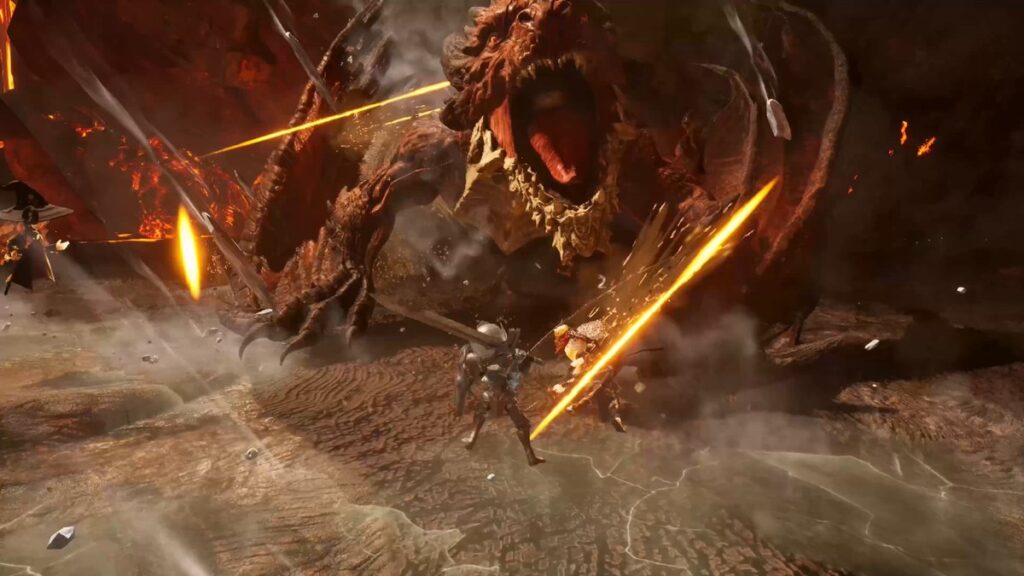
Players assume the role of an amnesiac hero exploring Eldoras alongside human and monster companions. The game allows players to follow a traditional adventurer’s path by hunting giant monsters for materials and rewards, but combat is not the only focus. Players can also fish, mine, chop wood, cook meals, gather resources, craft equipment, develop relationships, and build a home and village.
The frequent comparisons with Monster Hunter and Animal Crossing come from the way these two sides are treated as major parts of the same experience. The Monster Hunter influence is visible in the giant creature encounters, class-based combat, resource rewards, open-field battles, and emphasis on studying monster behavior. The Animal Crossing comparison comes from village management, friendship systems, home customization, fishing, crafting, gathering, and the slower routine of living in a place shaped by the player.
Jotoyo is not presenting these cosy systems as minor diversions attached to a combat-heavy game. Instead, Monster Fantasy appears to divide its experience into two connected paths: action RPG progression and life-simulation progression. Players can devote more time to hunting and equipment or focus heavily on farming, crafting, relationships, and village development. Both play styles are intended to remain meaningful throughout the campaign.
This distinction could make the game more welcoming to players who enjoy the fantasy of hunting monsters but find conventional hunting games demanding. NPC companions, tamed creatures, mounts, village activities, and alternative forms of progression could provide ways to advance without continuously fighting difficult enemies. Action-focused players, meanwhile, still have more than 50 giant monsters, multiple classes, weather systems, behavior-driven encounters, and equipment progression to explore.
The game also adopts a lighter visual identity than many traditional hunting RPGs. Human characters use a colorful, chibi-inspired style, while the monsters and environments retain the scale and visual detail expected from a fantasy action game. This helps distinguish Monster Fantasy from its major inspirations and reinforces the idea that it is intended for audiences with different skill levels and gaming preferences.
Jotoyo founder Allan Xai has described the studio’s ambition as breaking down the barrier between action games and cosy games. The intention is to create a world where experienced players, casual audiences, friends, and family members can each find an activity that suits them. One player may prefer difficult hunts, while another focuses on fishing, decorating, crafting, or caring for the settlement.
Monster Fantasy does not currently have a confirmed full release date. Its Steam page lists the date as “To be announced,” so any specific launch year or window should be treated as unconfirmed unless Jotoyo announces it directly. The only confirmed launch platform at present is PC through Steam, where Jotoyo is listed as both the developer and publisher.
The Steam page categorizes the game under Action, Adventure, Casual, Indie, RPG, and Simulation. Its user-defined tags further describe its broad design, including:
- Hunting
- Creature Collector
- Life Sim
- Online Co-op
- Action-Adventure
- Character Customization
- Dragons
- Multiplayer
- Action RPG
- Relaxing
- Fantasy
- Combat
- Co-op
Steam also lists single-player, online co-op, LAN co-op, and Family Sharing. The inclusion of both online and LAN cooperative play suggests that friends may be able to share monster hunts, exploration, resource collection, and some village activities. Multiplayer could become one of the game’s strongest features if Jotoyo successfully balances group combat with relaxed settlement play.
The language list indicates that Jotoyo is targeting a global audience. The Steam page currently lists interface and subtitle support for English, Simplified Chinese, Japanese, French, German, Spanish from Spain, Thai, Traditional Chinese, Brazilian Portuguese, and Korean. English and Simplified Chinese are also shown with full audio support.
Before the full game arrives, Jotoyo plans to launch a Kickstarter campaign on July 15, 2026. The crowdfunding campaign is an important part of the project because Monster Fantasy is ambitious for a relatively small independent studio. Its announced systems include a large open world, more than 50 monsters, creature raising, four combat classes, online co-op, village development, farming, fishing, crafting, around 100 villagers, and AI-assisted character interactions.
Kickstarter can help Jotoyo measure demand, secure additional funding, build a community, and explain how the game will progress toward release. The campaign will likely provide more detailed gameplay footage, development goals, possible reward tiers, and information about the studio’s production roadmap.
Public demo information should be treated carefully. Preview reporting suggested that hands-on access or a playtest was expected around the Kickstarter period in July, but early previewers had not yet played the game at the time of their coverage. Players should therefore wait for official announcements from Jotoyo, Steam, or the Kickstarter campaign before assuming the demo’s timing, availability, content, or duration.
The clearest current summary is that Monster Fantasy has a Steam page available for wishlisting, a Kickstarter campaign scheduled for July 15, 2026, and possible playtest activity expected around that period. Its full release date remains unannounced.

Monster Hunting, Combat Classes, Creature Taming, and Open-World Exploration
For Monster Hunter fans, Monster Fantasy will initially feel familiar because it emphasizes large creatures, battlefield awareness, equipment, class identity, resource rewards, and the importance of studying enemy behavior. More than 50 giant monsters are planned, with each creature designed around its own behaviors and traits. Players who understand those characteristics should be able to approach encounters more effectively.
The hunting design appears to reward observation instead of allowing every monster to be defeated through one repeated strategy. Different creatures may react to the environment, time of day, weather, player positioning, or particular combat styles. Learning when a monster becomes vulnerable and how it moves through its habitat could be as important as improving equipment.
However, Monster Fantasy does not appear to be as narrowly structured around hunting as Capcom’s series. Combat is one progression path among several rather than the complete identity of the game. Players who want to become dedicated hunters can focus on giant monsters and equipment, while players interested in a quieter experience can spend more time gathering, building, cooking, farming, and developing the village.
The class system gives players four primary combat styles. Steam-based information describes the available classes as Warrior, Mage, Archer, and Martial Artist. Some preview coverage instead refers to the fourth class as Swordsman, so the final terminology should be confirmed by Jotoyo before release. Regardless of the name, the announced lineup is intended to provide distinct approaches to movement, defense, ranged combat, and magical abilities.
The Warrior is presented as a heavier melee class capable of switching between offense and defense. Precise guarding and equipment-based durability appear central to the role, making it suitable for players who prefer deliberate close-range combat and greater survivability.
The Archer provides a ranged option focused on precision and attacking from a safer distance. It may be particularly useful against mobile monsters or enemies with dangerous close-range attacks, although its final movement, ammunition, and targeting systems have not yet been fully demonstrated.
The agile sword-focused class emphasizes dodging and faster melee action. It appears intended for players who prefer avoiding damage through movement rather than absorbing attacks behind heavier protection.
The Mage may be the most distinctive class. Preview information describes a system in which players combine elements to create and cast customized spells. This could give the Mage more experimentation than a standard ranged caster and help Monster Fantasy develop a fantasy identity beyond its comparisons with other hunting games.
Skills are reportedly attached to individual weapons, and one character may eventually be able to learn skills across every class. Players may therefore begin by specializing in one combat style before gradually gaining enough equipment and experience to explore the complete class system. This flexibility supports the wider philosophy that players should be able to change their preferred activities rather than becoming permanently locked into an early choice.
The monster system extends beyond hunting. Creatures can reportedly be defeated, tamed, raised, and used as companions. Some monsters begin in younger forms and develop new abilities as they grow. Others can become rideable mounts or participate directly in cooperative combat.
Reported creature examples include:
- Nine-Tailed Fox
- Fire Dragon
- Griffin
- Squirrel-Bear
These examples suggest a roster built from recognizable fantasy creatures alongside more unusual hybrids. The final number of tamable monsters, their growth requirements, and the difference between huntable enemies and permanent companions have not yet been fully explained.
Taming changes the player’s relationship with Eldoras. Monsters are not only bosses or sources of crafting materials. They can become pets, allies, transportation, and long-term members of the player’s growing community. Raising a monster from a younger form could give players a stronger emotional attachment than simply capturing a completed creature and placing it in storage.
Rideable monsters could also transform exploration. A mount may help the player cross the open world more quickly, reach difficult terrain, or approach dangerous regions with additional support. If different species provide distinct movement abilities, creature progression may gradually change how players interact with Eldoras.
This system invites comparisons with Pokémon, but Monster Fantasy is not presented as a turn-based creature battler. The player character fights directly through real-time action combat, classes, weapons, dodging, guarding, and magic. Tamed monsters support that broader RPG structure as companions, pets, mounts, or combat allies rather than replacing the player character as the primary fighter.
The creature-bonding system may also connect to village life. A tamed monster could accompany players during exploration, live around the settlement, assist in combat, or become part of the game’s quieter routines. The strength of this system will depend on how much interaction, visual growth, utility, and individual personality Jotoyo gives each companion.
Human companions are another major part of the announced design. Approximately 100 unique villagers are planned, each with personal interests, strengths, and characteristics. Players can reportedly befriend villagers, invite preferred characters to live in their settlement, assign them work, and recruit suitable individuals as combat companions.
Not every villager will be designed for battle. Some may contribute through gathering, crafting, farming, trading, or other settlement roles. This allows companionship to extend across several systems, including monster pets, mounts, village residents, AI-controlled party members, and real co-op players.
The Kingdom of Eldoras contains a range of open-world biomes. Announced environments include valleys, rainforests, frozen plains, volcanoes, lush forests, arid deserts, and snowy mountaintops. These regions should provide different monsters, gathering materials, hazards, and visual identities rather than existing only as changes in scenery.
The environment must support several forms of play simultaneously. Hunters need enough space for giant creature encounters. Cosy players need resources for fishing, mining, farming, gathering, and crafting. Creature collectors need habitats containing different species. Co-op groups need areas large enough to make exploration and shared battles worthwhile.
A dynamic day-and-night cycle and changing weather conditions are expected to influence monster behavior. Creatures may appear, travel, rest, or fight differently according to environmental conditions. If these systems are substantial rather than cosmetic, players may need to choose the right time and weather for a hunt instead of entering every encounter immediately.
Studying the world could therefore become an important part of progression. A player may observe where a creature lives during daylight, learn how it responds to storms, or discover that it becomes easier to approach under specific conditions. That would reinforce the hunting fantasy without requiring Monster Fantasy to copy the exact structure of Monster Hunter.
The most important differences between the two games are the breadth of activities and the relationship with monsters. Monster Hunter is built around a specialized cycle of finding creatures, defeating them, collecting materials, creating equipment, and attempting harder hunts. Monster Fantasy incorporates that excitement but surrounds it with village life, taming, NPC relationships, farming, fishing, decoration, and other progression systems.
Its class system also appears broader and more accessible than Monster Hunter’s highly specialized weapon mastery. Players may eventually learn skills from every class, while NPCs and monster companions can provide additional support. This makes Monster Fantasy better understood as a softer and more flexible action RPG rather than a direct replacement for Capcom’s series.

Village Building, Farming, Villager Relationships, and Cosy Co-Op Activities
The cosy side of Monster Fantasy includes village building, home construction, farming, fishing, cooking, mining, chopping wood, potion brewing, crafting, decoration, resource gathering, and relationships with villagers. These systems are intended to provide a meaningful alternative to combat rather than brief activities included only to break up monster encounters.
Players can reportedly name and manage their own village, construct homes, shape the settlement, invite residents, and assign villagers to different roles. This gives the player a persistent home that changes according to their decisions and provides an emotional center for the wider adventure.
Village development is one of the clearest reasons for the Animal Crossing comparison. The appeal is not only completing tasks but creating a place that feels personal. A settlement filled with chosen villagers, tamed monsters, decorations, work areas, and custom structures can become a visible record of the player’s progress.
Around 100 villagers are planned, providing a large pool of characters to meet and recruit. Their interests, personalities, strengths, and possible roles should influence which characters players invite into the community. Some may be useful workers, while others can accompany the hero during dangerous journeys.
Relationships could become one of the most important cosy systems if villagers respond meaningfully to player choices and the changing settlement. Jotoyo has also discussed AI-assisted villager conversations, suggesting that some characters may offer more flexible interactions than conventional repeated dialogue menus. The final system will need clear moderation, consistent writing, localization, and boundaries if it is to feel like part of the world rather than a disconnected technology demonstration.
Fishing, farming, cooking, mining, and woodcutting provide slower routines between hunts. These activities can make Eldoras useful outside combat by turning lakes, forests, caves, fields, and other locations into sources of food and materials. They also give players reasons to return to familiar areas even when no major enemy is present.
Crafting may become the strongest bridge between the cosy and action systems. Resources gathered through farming, fishing, mining, and exploration can be used to produce equipment, meals, tools, and potions. These items can then support monster hunts or village development.
Combat can feed back into the settlement through rare materials, tameable creatures, rewards, and equipment. A defeated monster might provide components for a weapon, ingredients for a recipe, or an opportunity to gain a companion. This circular relationship is more interesting than presenting the two genres as entirely separate modes.
A typical play session could include several different rhythms. A player might begin by gathering ingredients and preparing equipment, leave the village to fight a monster, return with new materials, cook a meal, improve a building, speak with residents, and finish the day by fishing or decorating. Allowing players to choose which part receives the most attention may help prevent either side of the game from becoming exhausting.
The cosy systems also differentiate Monster Fantasy from Animal Crossing. Nintendo’s series centers almost entirely on peaceful daily routines, collection, decoration, seasonal activities, and villager relationships. Monster Fantasy places those ideas inside a larger action RPG containing dangerous biomes, giant enemies, classes, weapons, and active exploration.
It is better described as a fantasy RPG containing a substantial village-life path than as a direct Animal Crossing alternative. Players should expect the emotional comfort of building a home and community, but the larger world still contains hazards, combat, monster progression, and narrative objectives.
The game may also be less dependent on real-world calendar pacing than Animal Crossing. Current information suggests a continuous fantasy adventure rather than a social simulation tied closely to real-world dates and daily waiting. The cosy appeal appears to come from freedom, routine, relationships, and customization instead of strict calendar progression.
Online and LAN co-op could make the combination particularly appealing to groups with different preferences. One player may focus on difficult combat while another enjoys gathering materials or developing the settlement. If both contributions matter, friends who normally choose very different games could share the same world without being forced into identical roles.
A combat-focused player could gather rare monster materials while another prepares food, produces equipment, or organizes the village. Players could then join for major hunts or separate to pursue individual goals. The success of this structure will depend on how progression, ownership, rewards, and village permissions work during multiplayer sessions.
Jotoyo has described the project as a bridge between experienced and casual players. Core action fans can pursue monsters, equipment, and class mastery, while players seeking a warmer experience can spend more time building, gathering, raising creatures, and forming relationships.
This freedom is central to the game’s identity. Its appeal does not come only from copying recognizable elements from Monster Hunter, Animal Crossing, Pokémon, or Stardew Valley. It comes from attempting to connect those influences so each activity strengthens the same world.
Cosy players may be drawn to:
- Village construction and management
- Home customization and decoration
- Farming and resource collection
- Fishing and cooking
- Potion brewing and crafting
- Villager friendships
- Tamed monster companions
- Low-pressure daily routines
Action RPG players may be drawn to:
- More than 50 giant monsters
- Four combat classes
- Weapon-based skill progression
- Real-time battles
- Open-world biomes
- Weather and day-night mechanics
- Human and monster companions
- Cooperative hunting
The game’s greatest opportunity is allowing both audiences to contribute meaningfully. If farming, crafting, village development, and monster combat all support one another, Monster Fantasy could become a shared experience rather than a collection of unrelated features.
Developer Jotoyo, Major Development Risks, and Why Monster Fantasy is Worth Watching
Monster Fantasy is being developed and self-published by Jotoyo, an independent studio based in Chengdu, China. The team has been described as containing roughly 20 developers with decades of combined industry experience. That makes the project’s announced scope particularly ambitious.
Interest in the game began growing before its wider international reveal. Early pre-alpha combat footage reportedly received more than one million views on Bilibili, showing that the concept had already attracted attention within China before the Steam page and global coverage expanded its audience.
Self-publishing gives Jotoyo greater control over the game’s creative direction, but it also places more responsibility on the studio. Marketing, localization, community management, crowdfunding, production planning, and release preparation must all be handled without the complete infrastructure of a large publisher.
The July 15 Kickstarter campaign will therefore be an important test. It should provide a clearer view of the game’s current condition, the studio’s financial goals, development schedule, possible stretch goals, and plans for demos or playtests. It may also reveal how Jotoyo intends to prioritize its many announced systems.
The broad concept is one of the strongest reasons to follow the game. Players can immediately understand the appeal of combining giant monster combat with a calm village routine. However, creating a coherent experience from so many influences is significantly harder than presenting them in trailers or feature lists.
Major questions remain about the final execution:
- Does combat feel responsive and satisfying?
- Do the four classes have enough mechanical depth?
- Are the 50-plus monsters meaningfully different?
- Do weather and time genuinely alter behavior?
- How much control do players have over village construction?
- Are farming, fishing, cooking, and crafting deep enough to remain interesting?
- How much can players interact with tamed monsters?
- Are rideable creatures useful beyond faster travel?
- How does co-op handle shared settlements and individual progression?
- Can the AI-powered villager dialogue remain safe, consistent, and well written?
- How will a small studio support such a large online game after launch?
Limited preview footage reportedly left some observers uncertain about the combat. Early coverage praised the ambition but suggested that the action still looked relatively average and emphasized that proper judgment would require hands-on play. That caution is reasonable because the success of an action RPG depends heavily on responsiveness, animation, hit feedback, enemy behavior, camera control, and movement.
The project also risks spreading its resources too widely. Hunting, creature collecting, settlement construction, farming, crafting, AI conversations, online co-op, LAN play, class progression, and dynamic open-world systems are individually demanding features. Trying to develop all of them simultaneously could result in several systems feeling underdeveloped.
The Kickstarter campaign should help players evaluate whether Jotoyo has a realistic development plan. Backers should examine the available gameplay, team size, delivery schedule, funding goals, and distinction between features already functioning and features that remain conceptual. Ambition can be exciting, but crowdfunding support should be based on the project’s demonstrated condition rather than comparisons alone.
Despite these risks, Monster Fantasy remains worth following because its central design goal addresses a real gap. Many players enjoy the idea of hunting giant monsters but also want a quieter world where they can build, collect, decorate, and develop relationships. Others love cosy games but want a larger sense of danger, adventure, and progression outside the village.
The game may also allow friends with different tastes to play together. A dedicated action player could concentrate on hunts, while a more relaxed player focuses on resources, settlement work, or creatures. If the systems are balanced properly, neither person would need to abandon their preferred style for the group to progress.
Monster Fantasy should not be judged solely as a substitute for any one of its inspirations. It is unlikely to match the specialized hunting depth of Monster Hunter, the decades of creature design behind Pokémon, or the carefully established social rhythm of Animal Crossing. Its potential comes from offering a different combination rather than outperforming each influence individually.
Players interested in the project should wishlist it on Steam and examine the July 15 Kickstarter campaign when its full information becomes available. The campaign and any accompanying playtest should provide a better understanding of combat quality, village depth, cooperative structure, creature interaction, and the studio’s roadmap.
The strongest possibility is that Monster Fantasy gives players genuine freedom to decide what kind of fantasy life they want. One person can become a dedicated hunter, another can raise monsters, another can manage a village, and another can move between all of those activities. If Jotoyo can make the systems support rather than compete with one another, the game could become one of the most distinctive cosy action RPG projects currently in development.
Frequently Asked Questions (FAQs)
- What is Monster Fantasy?
Monster Fantasy is an upcoming action RPG with cozy life-simulation elements developed and published by Jotoyo. Players explore the Kingdom of Eldoras as an amnesiac hero, fight giant monsters, travel with companions, and gradually uncover more about the fantasy world. Outside combat, they can tame creatures, build a village, form relationships with residents, and participate in activities such as fishing, cooking, gathering, crafting, mining, and farming. - Why are people comparing Monster Fantasy to Monster Hunter?
People are comparing Monster Fantasy to Monster Hunter because it features large-scale monster battles, class-based real-time combat, equipment progression, and rewards gained from defeating powerful creatures. More than 50 giant monsters are planned, with each having its own behaviors and traits for players to study. However, hunting is only one part of Monster Fantasy, as the game also includes taming, village management, and relaxed life-simulation activities. - Why are people comparing Monster Fantasy to Animal Crossing?
The Animal Crossing comparison comes from the game’s emphasis on creating a comfortable home and developing a personalized community. Players can construct and manage a village, invite residents to live there, decorate their surroundings, build relationships, and enjoy quieter activities such as fishing, cooking, and gathering. Unlike Animal Crossing, however, Monster Fantasy places these cozy systems inside a larger action RPG containing combat, dangerous regions, and giant monsters. - What platforms is Monster Fantasy coming to?
Monster Fantasy is currently confirmed for PC through Steam. Its Steam page is already available for players to follow and add to their wishlists. Jotoyo has not announced PlayStation, Xbox, Nintendo Switch, or other console versions, so PC should be treated as the only confirmed platform until the developer provides additional information. - Does Monster Fantasy have a release date?
No confirmed release date has been announced for Monster Fantasy. The Steam page currently lists its release timing as “To be announced,” which means Jotoyo has not committed to a specific day, month, or year. Players should therefore avoid relying on unofficial release estimates and wait for an announcement from the developer or the game’s official campaign. - When does the Monster Fantasy Kickstarter launch?
The Monster Fantasy Kickstarter campaign is scheduled to launch on July 15, 2026. The campaign is expected to provide more information about the game’s development, funding goals, possible backer rewards, and roadmap toward release. It may also clarify plans for playtests or a demo, but players should wait for the complete campaign details before assuming when public hands-on access will begin. - Can players tame monsters in Monster Fantasy?
Yes. Some defeated monsters can be tamed and kept as long-term companions rather than serving only as enemies or sources of materials. These creatures can reportedly grow from younger forms, develop new abilities, help during combat, and, in some cases, become rideable mounts. This gives monster collecting a practical purpose across battles, exploration, and everyday life in Eldoras. - Does Monster Fantasy support multiplayer?
Yes. Steam lists support for single-player, online co-op, and LAN co-op, allowing players to experience the game alone or with friends. Cooperative play may include exploration, monster battles, and other shared activities, although Jotoyo has not yet explained every multiplayer rule. Further details are still needed about village ownership, shared progression, rewards, and how freely players can move between solo and cooperative sessions. - What classes are in Monster Fantasy?
Monster Fantasy features four combat classes with different approaches to movement, defense, melee attacks, ranged combat, and magic. Steam-based information identifies them as Warrior, Mage, Archer, and Martial Artist, while some preview coverage refers to the fourth class as Swordsman. Jotoyo will need to confirm the final terminology, but the class system is clearly intended to let players choose between heavier defense, ranged precision, faster close combat, and customizable spellcasting. - Is Monster Fantasy more of an action game or a cozy game?
Monster Fantasy is designed to support both styles rather than treating one as a minor addition to the other. Action-focused players can hunt giant monsters, develop classes, craft equipment, explore dangerous biomes, and fight alongside companions. Players seeking a more relaxing experience can focus on village building, farming, fishing, cooking, decoration, gathering, and relationships, with both sides contributing to progression in the same world.
Conclusion
Monster Fantasy Combines the Thrill of Monster Hunter with the Cosy Chill of Animal Crossing because it understands that many players want more than one emotional rhythm from a game. Some players want the danger of facing giant beasts, reading attack patterns, mastering classes, collecting materials, and growing stronger. Others want the calm of fishing, farming, cooking, crafting, building a home, decorating a village, and befriending characters. Monster Fantasy is trying to give both groups a place in the same fantasy world.
Its strongest idea is not simply mixing genres for novelty. Its strongest idea is giving players permission to move between intensity and comfort. Eldoras can be a hunting ground, a home, a creature-collecting adventure, a co-op playground, or a peaceful daily escape. That flexibility is why the game has attracted comparisons to Monster Hunter, Animal Crossing, Pokémon, and Stardew Valley without seeming limited to any single one of them.
The game is still unproven. It has no release date, the Kickstarter has not launched yet, and previews are based on limited footage rather than full public hands-on experience. The final quality will depend on combat feel, village depth, monster variety, co-op stability, creature bonding, and whether the many systems connect naturally. Still, based on its Steam page, reveal coverage, and Jotoyo’s stated vision, Monster Fantasy is absolutely worth watching before its July 15, 2026 Kickstarter campaign.
For players who want a game where one session can be a dangerous monster hunt and the next can be a quiet evening of village life, Monster Fantasy may become one of the most promising cozy action RPGs on the horizon.
Sources and Citations
- Steam, Monster Fantasy Official Store Page: Confirms the developer, publisher, gameplay features, co-op support and planned 2027 release.
https://store.steampowered.com/app/4713940/Monster_Fantasy/ - Gematsu, June 24, 2026, Monster Fantasy Announced for PC – Action RPG with Cozy Life Simulation Elements: Confirms the Kickstarter announcement, Eldoras setting, monster hunting and character classes.
https://www.gematsu.com/2026/06/monster-fantasy-announced-for-pc-action-rpg-with-cozy-life-simulation-elements - RPG Site, June 24, 2026, Jotoyo Reveals Monster Fantasy, Coming to PC Worldwide via Steam: Covers gameplay inspirations, creature taming, AI dialogue and Allan Xai’s development vision.
https://www.rpgsite.net/news/20769-jotoyo-reveals-monster-fantasy-coming-to-pc-worldwide-via-steam - Gamereactor, June 23, 2026, Monster Fantasy Preview: Animal Crossing Meets Monster Hunter in a Whirlwind of Genres: Examines combat, village management, exploration and life simulation mechanics.
https://www.gamereactor.eu/monster-fantasy-preview-animal-crossing-meets-monster-hunter-in-a-whirlwind-of-genres-1736533/ - Jotoyo and Games Press, June 24, 2026, Fight, Tame, Flourish – Indie Studio Jotoyo Reveals Ambitious New RPG Monster Fantasy for PC: Official announcement covering combat, life simulation, monster companions and cooperative gameplay.
https://www.gamespress.com/Fight-Tame-Flourish—Indie-Studio-Jotoyo-Reveals-Ambitious-New-RPG-Mo - Massively Overpowered, June 24, 2026, Monster Fantasy Is a Multiplayer RPG That Blends Hunting Giant Monsters, Critter Taming, and Cozy Village Life: Covers Kickstarter plans, multiplayer, combat classes and AI-powered conversations.
https://massivelyop.com/2026/06/24/monster-fantasy-is-a-multiplayer-rpg-that-blends-hunting-giant-monsters-critter-taming-and-cozy-village-life/ - IT Home, June 24, 2026, Monster Fantasy Official Trailer Reveal: Details the combat system, character classes, cooperative features and life simulation mechanics.
https://www.ithome.com/0/967/913.htm - IGN, June 23, 2026, Monster Fantasy Official Reveal Trailer: Showcases monster hunting, creature taming, home building and cooperative adventure.
https://www.youtube.com/watch?v=eLnyGWq7_tw
Recommendations
- Avengers: Doomsday Ticket Rush Slows AMC After VisionQuest
- Dreamlight Valley: All Spring Island Quiz Answers (Springtime Floating Festival Guide)
- Marvel Cosmic Invasion Passes 2 Million Players as Castle Doom DLC Arrives
- Guerrilla Games Co-Founder Arjan Brussee is Building “The Immense Engine”: a European Alternative to Unreal Engine and Unity
- Battlefield 6 x Top Gun Collaboration Cinematic Revealed
- You’ll Be Able to Use Your Fortnite Skins in Other Games With Unreal Engine 6
- Sunset Summit – Official Reveal Trailer Explained: Gameplay, Co-Op Features, Release Date & Steam Demo Details
- Serenity Forge and Studio Meadowflower Unveiled Vivarium, a Hand-Illustrated Life Sim Adventure About an Endless Summer, a Tiny Terrarium Town, and the Strange Secrets Hidden Beneath Its Cozy Routines
- What Is CRONOS: Lazarus and How It Connects to Bloober Team’s Cronos Universe
- Alan Wake 2 Hits 3 Million Sales as Control Resonant Reaches 1.5 Million Wishlists



































































































