





In This Article (9 sections)
The central narrative of Monster HMonster Hunter Stories 3: Twisted Reflection Story and Gameplay Review
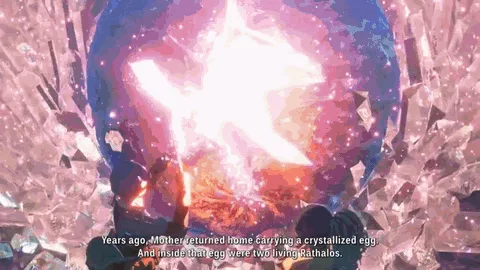
Monster Hunter Stories 3: Twisted Reflection revolves around the fragile relationship between the kingdoms of Azuria and Vermeil, the mysterious reappearance of Rathalos, and the possibility of history repeating itself. Two hundred years before the events of the game, a civil war connected to creatures bearing the Skyscale mark devastated the region, leaving both societies with a deep and lasting fear. That fear returns in the present when a single Rathalos egg hatches into twins, both carrying the same ominous marking associated with the ancient catastrophe. Rather than celebrating the return of a supposedly extinct species, the kingdoms respond with political panic, suspicion, and concern that another disaster may be approaching.
Azuria’s leadership decides that one of the twins must be eliminated, but Queen Amara rejects the judgment and flees with one of the creatures. Her actions fracture political trust and create a mystery that remains central to the story. The player assumes the role of Azuria’s heir and captain of the Rangers, who is bonded with the remaining Rathalos, Ratha. Years later, tensions between the two kingdoms intensify when Princess Eleanor of Vermeil arrives in Azuria as a political hostage, demonstrating how fragile the peace has become.
At the same time, the Crystal Encroachment begins spreading across habitats, disrupting ecosystems and changing monster behavior. This environmental crisis becomes as important as the political conflict, forcing Riders and Rangers to investigate the connections between the past civil war, the twin Rathalos, and the present ecological collapse.
The narrative unfolds as a layered mystery that gradually reveals how history, fear, and misunderstanding continue to shape the present. Rather than relying on excessive exposition, the game develops its story through character interactions, regional conflicts, and discoveries made during exploration. It also balances emotional storytelling with restraint, avoiding unnecessary melodrama while still giving its characters meaningful arcs and allowing the central mysteries to build momentum naturally.
The gameplay follows a familiar but significantly refined loop built around exploration, monster encounters, egg collection, team building, crafting, and progression through story-driven quests. Players travel across expansive regions instead of segmented zones, where they can discover monster dens, gather materials, and encounter both wild creatures and story-critical threats. Entering dens to retrieve eggs remains a central activity, but eggs now have greater importance because they contribute to several progression systems, including combat strength and habitat restoration.
Frequent battles rarely feel overly repetitive because of the variety of monsters, environments, and tactical choices involved, while crafting allows players to forge weapons and armor from collected monster parts, preserving the strong connection between hunting and character progression that defines the wider Monster Hunter franchise.
Side content includes Ranger assignments, environmental tasks, and optional objectives that expand the world while providing additional rewards. Although some activities follow familiar role-playing game patterns, the ecosystem mechanics make them feel more integrated than ordinary fetch quests. The absence of multiplayer at launch places the focus entirely on the single-player experience, which may disappoint some players but also allows the game to prioritize narrative cohesion and system depth. Overall, the gameplay balances accessibility with complexity: newcomers can quickly understand its core mechanics, while experienced players can explore deeper systems involving genes, elemental affinities, crafting, and team optimization.

Monster Hunter Stories 3: Twisted Reflection Story Review
Monster Hunter Stories 3: Twisted Reflection revolves around the fragile relationship between the kingdoms of Azuria and Vermeil, the mysterious reappearance of Rathalos, and the possibility of history repeating itself. Two hundred years before the events of the game, a civil war connected to creatures bearing the Skyscale mark devastated the region, leaving both societies with a deep and lasting fear. That fear returns in the present when a single Rathalos egg hatches into twins, both carrying the same ominous marking associated with the ancient catastrophe.
Rather than celebrating the return of a supposedly extinct species, the kingdoms respond with political panic, suspicion, and concern that another disaster may be approaching. Azuria’s leadership decides that one of the twins must be eliminated, but Queen Amara rejects the judgment and flees with one of the creatures. Her actions fracture political trust and create a mystery that remains central to the story.
The player assumes the role of Azuria’s heir and captain of the Rangers, who is bonded with the remaining Rathalos, Ratha. Years later, tensions between the two kingdoms intensify when Princess Eleanor of Vermeil arrives in Azuria as a political hostage, demonstrating how fragile the peace has become. At the same time, the Crystal Encroachment begins spreading across habitats, disrupting ecosystems and changing monster behavior.
This environmental crisis becomes as important as the political conflict, forcing Riders and Rangers to investigate the connections between the past civil war, the twin Rathalos, and the present ecological collapse. The narrative unfolds as a layered mystery that gradually reveals how history, fear, and misunderstanding continue to shape the present. Rather than relying on excessive exposition, the game develops its story through character interactions, regional conflicts, and discoveries made during exploration. It also balances emotional storytelling with restraint, avoiding unnecessary melodrama while still giving its characters meaningful arcs and allowing the central mysteries to build momentum naturally.
Monster Hunter Stories 3: Twisted Reflection Gameplay Review
The gameplay follows a familiar but significantly refined loop built around exploration, monster encounters, egg collection, team building, crafting, and progression through story-driven quests. Players travel across expansive regions rather than segmented zones, discovering monster dens, gathering materials, and encountering both wild creatures and story-critical threats. Entering dens to retrieve eggs remains a central activity, but eggs now have greater importance because they contribute to several progression systems, including combat strength and habitat restoration.
Frequent battles rarely feel overly repetitive because of the variety of monsters, environments, and tactical choices involved. Crafting also allows players to forge weapons and armor from collected monster parts, preserving the strong connection between hunting and character progression that defines the wider Monster Hunter franchise.
Side content includes Ranger assignments, environmental tasks, and optional objectives that expand the world while providing additional rewards. Although some activities follow familiar role-playing game patterns, the ecosystem mechanics make them feel more integrated than ordinary fetch quests. The absence of multiplayer at launch places the focus entirely on the single-player experience, which may disappoint some players but also allows the game to prioritize narrative cohesion and system depth. Overall, the gameplay balances accessibility with complexity. Newcomers can quickly understand its core mechanics, while experienced players can explore deeper systems involving genes, elemental affinities, crafting, and team optimization.

How Monster Hunter Stories 3 Compares to Its Predecessor and Mainline Games
Monster Hunter Stories 3: Twisted Reflection builds on the foundation of Monster Hunter Stories 2 while introducing several systems that make the experience feel more interconnected and dynamic. One of the most significant additions is Habitat Restoration, an ecological management system that was absent from the previous game. Combat has also evolved through mechanics such as Synchro Rush and the introduction of the Long Sword, giving players more strategic options and greater variety during battles. The voiced protagonist and more mature narrative tone further distinguish the sequel by addressing criticism of the simpler storytelling approach used in the earlier entry.
At launch, the lack of multiplayer and a traditional High Rank system represented a notable departure from previous Monster Hunter Stories games. However, post-launch updates have begun expanding the endgame with additional story content, challenges, and Royal Monsters. Although the game remains focused on its single-player narrative and system-driven progression, these updates provide more activities for players who have completed the main story.
Twisted Reflection also differs considerably from the mainline Monster Hunter games without abandoning the identity of the wider series. Instead of real-time action combat, encounters use a turn-based system built around strategic choices and recognizable monster attack patterns. Players form bonds with Monsties and raise them as companions rather than primarily hunting creatures to defeat or capture them. However, familiar elements remain, including gathering materials, crafting equipment, exploiting elemental weaknesses, and breaking monster parts during combat.
This combination allows the game to appeal to both newcomers and long-time fans. It makes the Monster Hunter universe more accessible while retaining enough mechanical depth and familiar systems to satisfy experienced players. Rather than attempting to copy the action-oriented structure of the main series, Monster Hunter Stories 3 confidently reinterprets its core ideas through a turn-based RPG framework. Its ambitious Habitat Restoration system, strong presentation, compelling narrative, and balance between accessibility and depth help it feel like a fully realized game rather than a smaller side project, supporting its position as one of the strongest modern video game spin-offs.
Monster Hunter Stories 3 Release Details and Beginner Tips
Monster Hunter Stories 3: Twisted Reflection launched globally on March 13, 2026, for Nintendo Switch 2, PlayStation 5, Xbox Series X|S, and PC via Steam. Some digital storefronts, including Steam, may display March 12 because of regional time settings, but March 13 is recognized as the official release date. A playable demo became available on February 5, 2026, allowing players to experience the opening portion of the game and transfer their progress into the full version. Its availability across several platforms, combined with the transferable demo, makes the game accessible to a broad audience.
New players should learn the Power, Speed, and Technical attack system as early as possible because it forms the foundation of combat. Observing enemy patterns and selecting the appropriate attack type is usually more effective than relying on brute force. Players should also experiment with different weapons, as each type provides distinct advantages and switching between them can create more strategic flexibility during difficult encounters.
Gene inheritance is another important progression system that should not be overlooked. Transferring and optimizing genes can significantly improve a Monstie’s abilities, making careful gene management essential when preparing for stronger opponents. Habitat Restoration should be approached gradually rather than completed all at once, as steady progress provides consistent rewards while preventing the system from becoming overwhelming.
Exploration should be thorough but efficient. Using Monstie traversal abilities can reveal hidden areas, alternate routes, and valuable resources that may otherwise be missed. Players should also craft and upgrade equipment regularly because stronger weapons and armor can make a substantial difference during challenging battles. Combining upgraded gear, optimized Monstie genes, varied weapons, and a solid understanding of enemy attack patterns provides the strongest foundation for progressing through the game.

Frequently Asked Questions[FAQs]
- Is Monster Hunter Stories 3 beginner friendly?
Yes. The game introduces its combat, exploration, Monstie, and progression systems gradually, giving newcomers time to understand each mechanic before adding more complexity. Experienced players can still find depth through team building, attack matchups, equipment choices, and more challenging encounters. - Do I need to play previous Monster Hunter Stories games?
No. Monster Hunter Stories 3 tells a standalone story that is designed to be understandable without knowledge of the earlier games. Although it takes place 200 years after previous entries, new players can follow its characters, kingdoms, conflicts, and major events without needing additional background. - What is the release date of Monster Hunter Stories 3?
Monster Hunter Stories 3 launched globally on March 13, 2026. Players across all supported platforms gained access to the full game on that date, following the release of its playable demo in February. - What platforms is the game available on?
The game is available on Nintendo Switch 2, PlayStation 5, Xbox Series X|S, and PC through Steam. This gives players a choice between console and PC versions depending on their preferred platform and control setup. - Is there a demo available?
Yes. A playable demo was released on February 5, 2026, allowing players to experience part of the opening section before purchasing the full game. Progress made in the demo can be transferred, so players do not have to repeat the beginning after upgrading. - Is the combat turn-based?
Yes. Battles use a turn-based system centered on Power, Speed, and Technical attacks, with each type having advantages and disadvantages against another. Players must predict enemy behavior, choose suitable attacks, and coordinate with their Monsties to win encounters effectively. - Does Monster Hunter Stories 3 have multiplayer?
No. At launch, the game is designed as a single player experience, with the story, exploration, battles, and progression focused on the player’s personal journey. Multiplayer modes were not included in the initial version. - What is the Habitat Restoration system?
The Habitat Restoration system allows players to rebuild damaged ecosystems by releasing suitable Monsties into different habitats. Improving these areas can provide better rewards, create new opportunities, and unlock additional content as restoration progress increases. - What are the best Monsties in the game?
Velkhana, Namielle, and Malzeno are among the stronger Monsties available, offering powerful abilities and useful combat potential. However, the best choice depends on the player’s build, current progression, enemy weaknesses, and how each Monstie fits into the overall team. - How long is Monster Hunter Stories 3?
The main story is estimated to take between 30 and 50 hours to complete. The total playtime depends on how quickly players move through the campaign and how much time they spend exploring, completing optional activities, developing Monsties, and restoring habitats.

Conclusion
Monster Hunter Stories 3: Twisted Reflection succeeds in delivering a rich, engaging, and thoughtfully designed RPG experience. It captures the essence of the Monster Hunter universe while offering a fresh perspective through turn-based gameplay and story-driven design.
Its strengths lie in its interconnected systems, immersive world, and strategic depth. While it has some minor shortcomings, they do not detract from the overall quality of the experience.
For players seeking a compelling spin-off that respects its origins while forging its own identity, Monster Hunter Stories 3 is an outstanding choice.
Sources and Citation
- Capcom, March 13, 2026, Monster Hunter Stories 3: Twisted Reflection Launch Announcement: Official release information covering the game’s story, characters, monster-raising mechanics, and availability on Nintendo Switch 2, PlayStation 5, Xbox Series X|S, and PC.
https://www.gamespress.com/ja-JP/Monster-Hunter-Stories-3-Twisted-Reflection-Launches-Today-on-Nintendo - Capcom, Monster Hunter Stories 3 Official FAQ: Technical information covering platform differences, graphics resolutions, supported controllers, save data, and PC system requirements.
https://www.capcom-support.com/hc/en-us/articles/26000599030556-Monster-Hunter-Stories-3-Twisted-Reflection-Frequently-Asked-Questions-All-Platforms - Nintendo, Monster Hunter Stories 3: Twisted Reflection: Official Nintendo Switch 2 listing confirming the March 13, 2026 release date, single-player gameplay, supported play modes, amiibo compatibility, and downloadable content.
https://www.nintendo.com/us/store/products/monster-hunter-stories-3-twisted-reflection-switch-2/ - Xbox, Monster Hunter Stories 3: Twisted Reflection: Official Xbox listing detailing Series X|S optimization, 4K support, cloud saves, available editions, and gameplay features.
https://www.xbox.com/en-US/games/store/monster-hunter-stories-3-twisted-reflection/9NT1VLG29DG8 - Steam, Monster Hunter Stories 3: Twisted Reflection: Official PC storefront documenting gameplay, turn-based combat, monster collection, system requirements, achievements, and player reviews.
https://store.steampowered.com/app/2852190/Monster_Hunter_Stories_3_Twisted_Reflection/ - Game Informer, January 27, 2026, Monster Hunter Stories 3 Preview: Developer interview with director Kenji Oguro discussing the game’s more mature storytelling, enhanced combat strategy, visual design, and expanded RPG systems.
https://gameinformer.com/preview/2026/01/27/shooting-for-the-big-leagues - Game Informer, March 10, 2026, Monster Hunter Stories 3 Review: Charles Harte evaluates the story, combat, Monstie collection, habitat restoration, graphics, and Nintendo Switch 2 performance.
https://gameinformer.com/review/monster-hunter-stories-3-twisted-reflection/beauty-and-the-toothless-beast - Metacritic, Monster Hunter Stories 3: Twisted Reflection: Aggregated critic reviews and player ratings across Nintendo Switch 2, PC, PlayStation 5, and Xbox Series X, providing comparative reception data.
https://www.metacritic.com/game/monster-hunter-stories-3-twisted-reflection/
Recommendations
- Google Play will let you try a game before you buy it: Game Trials explained (release, supported games, and how it works)
- Assassin’s Creed Black Flag Resynced Heavy Shot Strength Ultimate Plan Location Guide
- Riot Games Animation Techniques: A Comprehensive Guide to Workflow, Tools, and Stylistic Choices
- LEGO is Releasing a SEGA Genesis Set Complete with Little Controllers (40926)
- Corsair Cove Challenges Players to Build a Pirate Empire and Defeat the Crown
- Dan Houser Explains How 9/11 Changed GTA 3 Before Launch
- Easy Stylized Line Art Technique for Blender With Edutaker’s Free Setup
- Super Mario Galaxy 2 Surprise Update Adds More Story: Version 1.4.0 Patch Notes, New Storybook Chapter, and How to Unlock It
- All Mayan Stone Locations in Assassin’s Creed Black Flag Resynced Guide
- Ex-Fortnite Player D4vd Arrested on Murder Charges: 15 Key Facts



































































































