









In This Article (7 sections)
Morrowind Radiant AI Overhaul and Dynamic NPC Scheduling
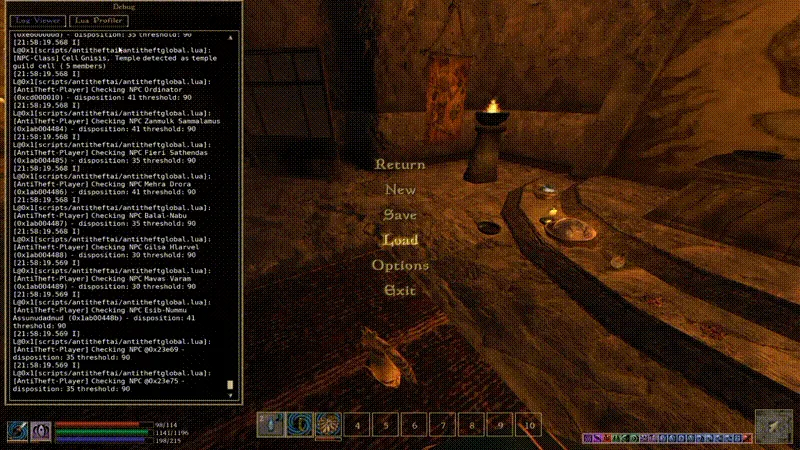
The Morrowind overhaul inspired by Oblivion style Radiant AI is part of a growing effort to modernize The Elder Scrolls III: Morrowind without replacing its core world design. These projects focus on transforming NPCs from mostly static quest givers into characters with routines, goals, schedules, and contextual behavior.
In the original game, many NPCs remain in fixed locations for long periods and rely heavily on scripted dialogue. Radiant AI inspired mods add layers of logic that allow characters to respond to time of day, location, environmental conditions, and surrounding activity.
Common improvements include:
- Daily work schedules
- Sleep and rest cycles
- Guard patrols
- Merchant opening and closing hours
- Context aware dialogue
- Social interactions between NPCs
- Location based movement
- Environment driven behavior
A merchant may leave home in the morning, open a shop, interact with customers during the day, and return home in the evening. Guards may change patrol routes depending on the time, while citizens can visit public spaces, taverns, or homes instead of remaining in one location indefinitely.
These systems are inspired by the philosophy behind The Elder Scrolls IV: Oblivion, where NPCs were designed to behave more like autonomous characters with routines and needs. Morrowind’s older engine was not originally built for this level of simulation, so modders recreate the effect through scripting, AI package switching, timed triggers, conditional behavior, and expanded pathfinding.
Typical schedules can include:
- Morning routines such as eating or preparing for work
- Daytime jobs including trading, crafting, patrolling, or farming
- Social periods where NPCs interact with others
- Evening activities in homes or taverns
- Sleep cycles tied to the game clock
The goal is not always to reproduce Oblivion’s system exactly. Instead, modders borrow its core idea that NPCs should behave as if they have lives independent of the player.

How Living Schedules Change Morrowind Cities and Gameplay
Dynamic scheduling changes the feel of towns such as Balmora, Vivec, and Sadrith Mora without requiring their layouts to be completely redesigned. Modders can keep the original architecture while layering new activity on top of it through movement patterns, interior transitions, patrol routes, and public interactions.
Key techniques include:
- Assigning different AI packages to individual NPCs
- Linking actions to specific times of day
- Creating routes between homes, shops, and public spaces
- Expanding interior and exterior transitions
- Improving pathfinding through city areas
- Increasing the number of context sensitive conversations
The result is a much stronger sense of continuity. Towns no longer feel frozen until the player activates a quest. Instead, they appear to operate on their own schedule.
The difference from the original game is substantial. In vanilla Morrowind, time often has only a limited effect on how NPCs behave. In a Radiant AI inspired overhaul, time becomes part of the simulation.
Vanilla behavior generally involves:
- Stationary NPC placement
- Repetitive dialogue
- Limited movement
- Minimal daily routines
Overhauled behavior can include:
- Scheduled travel
- Changing dialogue based on location or time
- Work and sleep cycles
- More active streets
- Reactive social behavior
This also changes how players interact with the world. A quest character may not always be standing in the same place, which encourages players to learn routines and observe the environment. A merchant who closes at night creates a different rhythm for exploration than one who remains permanently available.
The increased activity can also create emergent moments that were never explicitly scripted. Players may encounter NPCs crossing paths, talking in unexpected locations, or reacting differently depending on when they enter a town.
That shift strengthens roleplaying because characters begin to feel like residents rather than interface points.

Technical Design, Immersion Benefits, and Limits of Radiant AI Mods
Morrowind’s engine places clear limits on how complex these systems can become, so most Radiant AI inspired projects rely on carefully layered scripting rather than true modern autonomous simulation.
The technical foundation usually includes:
- Time based triggers
- AI state switching
- Location checks
- Pathfinding routes
- Dialogue conditions
- Environmental triggers
- Interaction logic
These systems work by assigning behavior blocks that activate when certain conditions are met. For example, an NPC may receive one package during working hours, another after sunset, and a third during special events or weather conditions.
Some mods also experiment with more advanced ideas such as relationship driven dialogue, emotion based reactions, adaptive movement, and context sensitive interactions. These features vary significantly between projects because they depend on scripting complexity and engine limitations.
The main benefits are increased immersion, stronger world simulation, more emergent storytelling, greater roleplaying depth, and higher replay value. Players are encouraged to pay attention to routines rather than treating every NPC as a static object.
There are also tradeoffs. More complex AI can introduce pathfinding problems, unexpected behavior, compatibility conflicts, or performance issues when several immersion mods are stacked together. Load order and optimization therefore become especially important for heavily modded installations.
Even with those limits, Radiant AI inspired systems represent one of the most ambitious directions in modern Morrowind modding. They preserve the original geography and quest structure while changing how the world behaves around the player.
That is why many players see this type of overhaul as a major bridge between classic RPG design and more modern open world expectations. Instead of rebuilding Morrowind from scratch, modders are making its existing cities feel more alive by giving the people inside them routines, movement, and a sense of purpose.

Frequently Asked Questions (FAQs)
- What is the Morrowind Radiant AI overhaul?
It is a modding approach that gives NPCs more dynamic behavior through schedules, movement routines, work cycles, sleep patterns, and context based interactions. The goal is to make towns and cities feel less static and more like functioning communities. - Does it change the main story?
No. These overhauls generally focus on how NPCs behave rather than rewriting the main quest or changing Morrowind’s core narrative. The story remains the same, but the world around it becomes more active and believable. - Do NPCs really follow schedules?
Yes. Depending on the mod, NPCs can travel between homes, shops, workplaces, taverns, and other locations according to the in game time. Some may work during the day, socialize in the evening, and sleep at night. - Is it similar to Oblivion AI?
Yes. The system is inspired by Oblivion’s Radiant AI philosophy, where NPCs behave as though they have their own routines and goals. However, Morrowind mods usually recreate these ideas through scripting because the original engine was not built for the same level of AI simulation. - Does it improve immersion?
Yes. Dynamic schedules make cities feel more alive because NPCs no longer remain in one place constantly. Seeing merchants close shops, guards patrol, and citizens move through daily routines can make exploration and roleplaying feel much more natural. - Are there performance issues?
There can be, depending on how many AI and immersion mods are installed and how complex their scripts are. Large numbers of moving NPCs, additional pathfinding, and multiple behavior systems can increase the load on the game. - Can it work with other mods?
Yes, but compatibility depends on the specific mods being combined. Overhauls that modify the same NPCs, cities, dialogue, or pathfinding may require patches or careful load order management to prevent conflicts. - Does it change dialogue?
Some versions add context sensitive dialogue that changes according to time, location, relationships, or NPC activity. Others focus only on movement and schedules, so the amount of dialogue improvement varies between projects. - Is it lore friendly?
Most overhauls aim to preserve Morrowind’s established lore, characters, and world design while making NPC behavior more believable. The changes are generally intended to enhance immersion rather than rewrite the setting. - Is it worth installing?
For players who value immersion, roleplaying, and a more active world, these overhauls can be very worthwhile. They make familiar cities feel noticeably different without fundamentally changing Morrowind’s original story or overall identity.

Conclusion
The evolution of Morrowind through Radiant AI inspired overhauls represents one of the most significant advancements in classic RPG modding. By introducing structured NPC schedules, dynamic interactions, and Oblivion style behavioral systems, these mods transform the game into a living world filled with autonomous characters. While still limited by the original engine, the improvements dramatically enhance immersion and player engagement, making Morrowind feel closer to a modern open world simulation than ever before.
Sources and Citation
- The Elder Scrolls III: Morrowind – Official Documentation
- Source: Bethesda Support – What is Morrowind?
- Citation: Bethesda Support, “What is Morrowind?”, official support documentation.
- Source: The Elder Scrolls – Official Bethesda Website
- Citation: Bethesda Softworks, The Elder Scrolls, official website.
- The Elder Scrolls IV: Oblivion – Radiant AI Overview
- Source: UESP – Oblivion Construction Set: AI Portal
- Citation: Unofficial Elder Scrolls Pages, “Portal:AI,” Oblivion Construction Set Wiki.
- Source: The Elder Scrolls Wiki – Radiant AI
- Citation: The Elder Scrolls Wiki, “Radiant AI.”
- Source: Academic Research – NPC Behaviour and Radiant AI
- Citation: University of Alberta research document, discussion of NPC behaviour and Radiant AI, Canada’s Digital National Collection.
- Morrowind Modding Community Resources
- Source: Nexus Mods – Morrowind
- Citation: Nexus Mods, Morrowind – Mods and Community.
- Source: Morrowind Modding Wiki
- Citation: Morrowind Modding Wiki, community documentation.
- Source: Project Tamriel – Morrowind Scripting for Dummies
- Citation: Project Tamriel Wiki, “Morrowind Scripting for Dummies.”
- Game AI and NPC Behaviour Systems – Research Papers
- Source: University of Alberta – Research on NPC Behaviour in RPGs
- Citation: University of Alberta academic research document, analysis of NPC behaviour in role-playing games, Canada’s Digital National Collection.
- Source: North Carolina State University – Research on Game Characters and NPC Behaviour
- Citation: Christin Ann Gulick Phelps, graduate research document, North Carolina State University.
- Source: OpenMW – Game Settings and Behaviour Documentation
- Citation: OpenMW Documentation, “Game Settings.”
- Open-source Game AI Simulation Discussions and Modding Forums
- Source: Nexus Mods Forums
- Citation: Nexus Mods, official community forums.
- Source: UESP – Oblivion Construction Set Wiki
- Citation: Unofficial Elder Scrolls Pages, Oblivion Construction Set Wiki.
- Source: Morrowind AI Documentation – TES3 Construction Set
- Citation: TES3 Construction Set Documentation, “AI.”
Recommendations
- Fortnite Sprites List and Guide: All Types, Abilities, Rarity Tiers, Extraction System, and Pro Tips for Chapter 7 Season 3
- Paralives Sells 1 Million Copies and Exceeds Expectations by 10 Times
- SEGA Shows Sonic Racing: CrossWorlds at Tokyo Game Show 2026: Demo and Highlights
- Ready or Not 2: Here I Come Review: Samara Weaving Leads a Bigger, Bloodier Horror Sequel
- Every LEGO Game on PS5 in 2026: Complete List of LEGO PS5 and Backwards-Compatible LEGO Games
- Kiki’s Delivery Service Live-Action TV Show: Everything We Know About the New Series, Cast, Story, and Release Details
- Warframe Official Jade Shadows: Constellations Gameplay Launch Trailer Breakdown
- Everything You Need To Know About Houdini 22: Features, Tools, and Workflow Improvements
- Ghost of Yōtei: Most Wanted Brings Back Jin Sakai on October 1
- Songs of the Past Expansion for the Witcher 3 Was Originally Planned for this Year



































































































