












In This Article (8 sections)
MSI MPG OLED 322URDX36 Overview, Core Specifications, Release Window, and Pricing Expectations
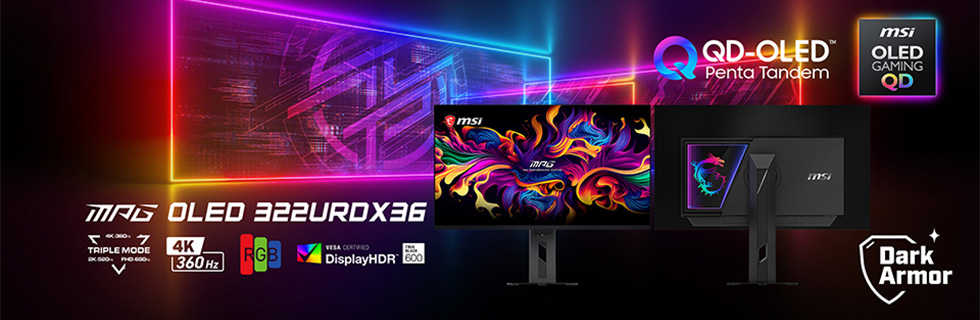
The MSI MPG OLED 322URDX36 has emerged as one of the most talked-about next-generation gaming display concepts, combining 4K OLED visual fidelity with extreme refresh rate performance of up to 680Hz. Positioned at the cutting edge of gaming monitor innovation, it targets competitive esports players, high-end PC enthusiasts, and content creators who want both speed and image quality without major compromise. As display technology evolves in 2026, the monitor represents a convergence of OLED clarity, QD-OLED advancements, and dual-mode refresh rate engineering. While many details are still based on early reports, leaks, and expected industry direction, it is widely discussed as part of MSI’s push into extreme-performance gaming displays.
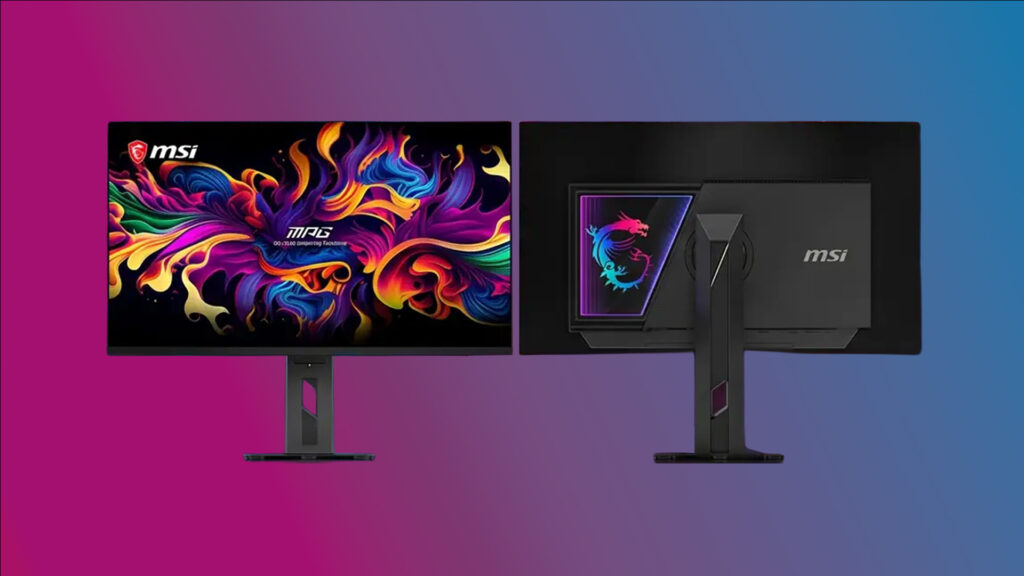
The MSI MPG OLED 322URDX36 is expected to be a flagship 32-inch class gaming monitor built around a 4K UHD OLED or QD-OLED panel. Its design philosophy focuses on balancing cinematic resolution with ultra-fast motion performance, making it a hybrid display for both immersive single-player gaming and esports-focused competitive play.
Key expected specifications include:
- 32-inch OLED or QD-OLED panel.
- 3840 × 2160 4K UHD native resolution.
- Dual-mode refresh rate support, combining 4K high refresh and FHD ultra-high refresh modes.
- Up to 680Hz in competitive mode, likely at reduced resolution.
- Near-instant sub-0.1ms class OLED pixel response time.
- Adaptive Sync support, including expected G-SYNC Compatible and FreeSync Premium Pro support.
- HDR support with advanced OLED contrast handling.
- Wide color gamut, with near 99% DCI-P3 coverage typical of QD-OLED panels.
As of current industry expectations, the MSI MPG OLED 322URDX36 has not been officially confirmed with a fixed global release date. Based on MSI’s previous OLED rollout cycles, a likely launch timeline would include a major announcement phase at CES or another major tech expo, early production units around the middle of the year, and wider retail availability later in the year through a staggered regional rollout. Availability will likely vary by region, with priority markets expected to include North America, Europe, East Asia, including South Korea, Japan, and China, and select high-demand gaming regions. Given the complexity of OLED manufacturing and high-refresh panel tuning, supply constraints are expected during the first production wave.
The MSI MPG OLED 322URDX36 is expected to sit at the premium end of the gaming monitor market. Pricing will likely be shaped by several major factors, including OLED or QD-OLED panel costs, dual-mode refresh technology, high-bandwidth display controllers, premium cooling, and burn-in mitigation systems. Current price expectations place the monitor in the following range:
- Entry estimate: $1,200 to $1,500.
- High-end retail estimate: $1,600 to $2,000 or more.
Pricing may also depend on whether MSI includes advanced accessories and features such as an adjustable ergonomic stand, RGB lighting integration, firmware-based gaming profiles, and advanced calibration tools.
Dual-Mode 4K 360Hz and 1080P 680Hz Performance, Response Time, Connectivity, and PC Hardware Requirements
The standout feature of the MSI MPG OLED 322URDX36 is its rumored dual-mode refresh system, which allows users to switch between 4K cinematic visuals and extremely high refresh rate gameplay. Dual-mode operation typically works by prioritizing resolution and visual fidelity in 4K mode, while reducing resolution in competitive mode to unlock much higher refresh rates. This approach is becoming more common in next-generation gaming monitors because current GPU limitations make ultra-high refresh rates at native 4K impractical in many demanding games.
The likely operational structure is:
- 4K Mode:
- 3840 × 2160 resolution.
- 240Hz to 360Hz refresh range.
- Performance Mode:
- 1920 × 1080 resolution.
- Up to 680Hz refresh capability.
This gives users the option to choose between visual fidelity for cinematic 4K gaming and competitive performance for ultra-high-FPS esports gameplay. The trade-off is resolution versus speed, which remains a necessary compromise for current GPU technology. The theoretical 680Hz mode is especially targeted at esports titles such as Counter-Strike 2, Valorant, Overwatch 2, and Rainbow Six Siege. At these refresh rates, motion clarity becomes extremely smooth, perceived input lag is reduced, and reaction timing can improve for competitive players.
OLED technology already delivers near-instant response times, and the MSI MPG OLED 322URDX36 is expected to continue this advantage. Expected performance characteristics include:
- Sub-0.1ms pixel response time, which is a major OLED advantage.
- Virtually zero motion blur compared to LCD displays.
- Reduced ghosting in fast-paced scenes.
- Extremely low input latency in high-refresh modes.
For competitive gaming, this can translate into faster target tracking, improved flick shot accuracy, reduced visual smearing during fast camera movement, and more consistent perceived frame delivery. Combined with the monitor’s expected 680Hz capability in reduced-resolution mode, the display is clearly aimed at the highest tier of esports performance.
Modern high-end monitors require next-generation connectivity to handle extreme refresh rates and 4K bandwidth. The MSI MPG OLED 322URDX36 is expected to include HDMI 2.1 ports for console and PC gaming, DisplayPort 2.1 or high-bandwidth DisplayPort 1.4 with DSC depending on the final design, and USB-C connectivity for laptops and hybrid workflows. These ports are expected to support compatibility with PlayStation 5, Xbox Series X, high-end NVIDIA and AMD GPUs, and future-generation graphics cards. Bandwidth compression technologies may also be used to enable high refresh rates at 4K resolution.
To fully utilize this monitor, high-end PC hardware is recommended. A suitable system configuration would include:
- GPU: NVIDIA RTX 4080, RTX 4090, AMD RX 7900 XTX, or future equivalents.
- CPU: High-end Ryzen 7, Ryzen 9, Intel Core i7, or Intel Core i9.
- RAM: 32GB DDR5 minimum.
- Storage: NVMe Gen4 or Gen5 SSD.
- Cooling: Advanced air or liquid cooling for sustained performance.
For 4K gaming at high refresh rates, GPU power is the most critical factor, especially if users want to push demanding games near the monitor’s upper refresh capabilities.
OLED Panel Technology, HDR, Burn-in Protection, Text Clarity, and Improvements over Previous MSI QD-OLED Monitors
One of the most important innovations expected in next-generation MSI OLED displays is the adoption of advanced panel structures potentially based on Samsung Display’s multi-layer QD-OLED technology. A 5-layer tandem QD-OLED structure typically improves brightness efficiency, panel lifespan, color volume, burn-in resistance, and energy efficiency. If integrated into the MSI MPG OLED 322URDX36, this technology would significantly enhance HDR performance while maintaining OLED’s signature deep blacks and infinite contrast. The result would be a brighter, more durable OLED panel suitable for long gaming sessions and professional use.
The monitor is also expected to support DisplayHDR True Black certification standards, which are specifically designed for OLED panels. Key HDR advantages include:
- Perfect black levels with no backlight bleed.
- Pixel-level luminance control.
- A contrast ratio that exceeds traditional LCD monitors.
- Enhanced shadow detail in dark scenes.
- Improved HDR gaming immersion.
These strengths make the monitor particularly effective for horror games, cinematic RPGs, HDR video editing, and streaming content consumption. OLED HDR performance remains one of the strongest advantages over traditional LCD and Mini-LED displays.
OLED burn-in prevention remains a critical focus for manufacturers, and MSI is expected to include advanced OLED Care technologies. These may include pixel shift algorithms, automatic brightness stabilization, logo detection and dimming, screen refresh cycles, and static UI protection systems. These features help extend panel lifespan, especially for users who play HUD-heavy games, use static desktop layouts, or stream and edit for long hours. While OLED burn-in risk cannot be completely eliminated, modern mitigation systems significantly reduce long-term degradation.
One common concern with OLED and QD-OLED monitors is text fringing caused by subpixel layouts. The MSI MPG OLED 322URDX36 is expected to improve this through refined subpixel arrangement, RGB stripe optimization, improved font rendering algorithms, higher pixel density at 4K resolution, and firmware-level sharpening adjustments. These enhancements are especially important for productivity users, programmers, content creators, and users who alternate between gaming and office work. At 32 inches with 4K resolution, pixel density already helps significantly reduce visible text artifacts.
Compared to earlier MSI OLED models, the 322URDX36 is expected to represent a major generational leap. Expected improvements include:
- Higher maximum refresh rate, reaching up to 680Hz compared with earlier 240Hz to 360Hz models.
- Enhanced HDR brightness efficiency.
- Improved burn-in protection systems.
- Better connectivity through next-generation DisplayPort and HDMI support.
- Refined motion clarity processing.
These upgrades position it as MSI’s potential flagship esports OLED display.
MSI MPG OLED 322URDX36 Competitors, Market Position, and 2026 Best OLED Monitor Potential
The MSI MPG OLED 322URDX36 is expected to compete directly with premium OLED monitors from brands such as ASUS, especially under the ROG Swift lineup. The main comparison points focus on refresh rate, resolution, gaming features, and overall design philosophy. MSI’s rumored advantage is its 680Hz dual-mode capability, while current ASUS ROG Swift OLED models typically sit in the 240Hz to 360Hz range. Both brands are expected to focus on 4K OLED performance in flagship models, but MSI appears to be targeting extreme competitive gaming more aggressively.
Key comparison points include:
- Refresh rate:
- MSI: Rumored 680Hz dual-mode capability.
- ASUS ROG Swift OLED: Typically 240Hz to 360Hz in current models.
- Resolution:
- Both brands focus on 4K OLED in flagship displays.
- Gaming features:
- MSI: Esports-first dual-mode optimization.
- ASUS: Strong calibration and ecosystem integration.
- Design philosophy:
- MSI: Performance-driven competitive edge.
- ASUS: Premium balance of gaming and creator features.
Overall, MSI appears to be targeting extreme competitive gamers more directly, while ASUS maintains a more balanced premium OLED approach that appeals to both gamers and creators.
If the reported specifications prove accurate, the MSI MPG OLED 322URDX36 could become one of the most advanced OLED gaming monitors of 2026. Its strengths include an extreme refresh rate ceiling, true 4K OLED visual quality, competitive dual-mode flexibility, advanced HDR performance, and cutting-edge gaming connectivity. However, its final position in the market will depend on real-world availability, pricing competitiveness, actual sustained performance at 680Hz, and competing releases from ASUS, LG, and Samsung.
The monitor is positioned as a potential category leader, but its dominance is not guaranteed until final specifications, pricing, and independent performance results are confirmed.

Frequently Asked Questions (FAQs)
- What is the MSI MPG OLED 322URDX36?
It is a rumored next-generation 4K OLED gaming monitor expected to target high-end gamers, esports players, and PC enthusiasts. The monitor is being discussed as a premium 32-inch class display that combines sharp 4K image quality with extremely high refresh rate performance, making it suitable for both cinematic gaming and competitive play. - Does it really support 680Hz?
Reports suggest that the MSI MPG OLED 322URDX36 may support a dual-mode system capable of reaching up to 680Hz, but this has not been officially confirmed. If accurate, the 680Hz mode would likely be designed for competitive gaming where maximum motion clarity and reduced input latency matter more than native 4K resolution. - Is it true 4K at 680Hz?
No, the rumored 680Hz mode is not expected to run at native 4K resolution. Instead, the monitor would likely use a lower-resolution competitive mode, such as 1080p, to achieve that refresh rate. Native 4K gaming would likely run at a lower refresh range, possibly around 240Hz to 360Hz depending on the final specifications. - What panel type does it use?
The monitor is expected to use OLED or QD-OLED panel technology. This means it should offer deep black levels, strong contrast, fast pixel response times, and vivid color reproduction. If it uses QD-OLED, it may also provide improved color volume and brightness compared to older OLED monitor designs. - Is it good for competitive gaming?
Yes, it is expected to be very strong for competitive gaming because of its ultra-high refresh rate modes and near-instant OLED response time. These features can reduce motion blur, improve target tracking, and lower perceived input delay. Games like Valorant, Counter-Strike 2, Overwatch 2, and Rainbow Six Siege would benefit most from this kind of display. - Does it support HDR?
Yes, the monitor is expected to support HDR, likely through DisplayHDR True Black standards designed for OLED panels. This would allow it to deliver deep blacks, strong contrast, and better shadow detail in supported games and media. HDR performance will still depend on final brightness levels, panel tuning, and MSI’s implementation. - Will it have burn-in protection?
Yes, MSI OLED Care features are expected to be included to reduce burn-in risk. These may include pixel shifting, panel refresh cycles, static logo detection, brightness control, and protection against long-lasting fixed UI elements. These features do not remove burn-in risk completely, but they help make OLED monitors safer for long-term gaming and desktop use. - What GPUs are needed?
High-end GPUs such as the RTX 4080, RTX 4090, AMD RX 7900 XTX, or newer equivalents are recommended, especially for 4K high-refresh gaming. Less powerful GPUs may still work, but they may not fully take advantage of the monitor’s capabilities. To reach very high frame rates, users will also need a strong CPU and optimized game settings. - Is it good for productivity?
Yes, the 4K resolution should make it good for productivity tasks such as writing, editing, programming, content creation, and multitasking. A 32-inch 4K OLED display can provide sharp detail and plenty of screen space. However, users who work with static windows for long periods should use burn-in protection features and avoid leaving fixed UI elements on screen for too long. - When will it release?
No official release date has been confirmed yet. Based on current expectations, MSI may reveal more details through a major technology event or product showcase before announcing regional availability. Pricing, final specifications, and release timing should be treated as unconfirmed until MSI provides official information.

Conclusion
The MSI MPG OLED 322URDX36 represents a forward-looking vision of gaming display technology, merging OLED image quality with extreme refresh rate engineering. If the rumored specifications become reality, it will stand as one of the most aggressive pushes toward esports-level performance ever seen in a consumer 4K OLED monitor. However, its final impact will depend on manufacturing feasibility, pricing strategy, and real-world performance validation once officially launched.
Sources and Citations
- MSI Official Website
https://www.msi.com - ASUS Official Website
https://www.asus.com - Samsung Display (QD-OLED Technology Information)
https://www.samsungdisplay.com - DisplayHDR Certification Overview
https://displayhdr.org - HDMI 2.1 Specification Overview
https://www.hdmi.org - VESA DisplayPort Standard Information
https://www.displayport.org
Recommended
- Asus ROG Ally X 2TB Drops $200 in Huge Handheld Deal
- Elden Ring Tarnished Edition Switch 2: Reviews, Release Date and DLC
- Resident Evil Requiem Mod Guide: Best Mods, How to Install, and Safe Download Tips
- Avowed Gets New Game+ And A Photo Mode Alongside PS5 Launch: Everything New in the Anniversary Update 2.0
- Game Industry Conference 2026: Minsk Event Recap and Upcoming Moscow Edition Preview
- All Available Pokémon in Pokémon Champions Full List Guide
- Bruce Campbell Says He Will No Longer Play Evil Dead’s Ash Williams
- Brendan Fraser is Training for the Mummy 4 and Asks Fans for Luck: Full Update on His Return as Rick O’Connell
- Robot Arms for MetaHuman: Free Rotating Cybernetic Arms for Unreal Engine



































































































