





In This Article (8 sections)
My Beautiful Faraway Release, Developer Background, and Godot Production
My Beautiful Faraway, Please Don’t Be Cruel To Me is a single-player, first-person adventure created and published by solo developer arch1t3ct. The game combines exploration, conversations, puzzles, and an existential story concerned with mortality, regret, memory, and meaning. Its official description emphasizes an unfamiliar world filled with enigmatic inhabitants and clues that often require interpretation rather than direct instruction.
The full game launched on Steam on October 13, 2026, despite some later coverage appearing on October 15. That later date reflects when certain articles were published rather than when the game became available. A free demo had already launched on April 17, offering roughly 30 minutes of the opening, atmosphere, initial story, and examples of the core mechanics. Players researching the game should therefore distinguish discussion of the demo from impressions of the finished release.
The developer’s launch announcement confirms Windows, macOS, and Linux versions. arch1t3ct has also described native macOS development and testing on an M1 MacBook Air. Platform availability should not be confused with universal hardware compatibility, however. Linux support does not guarantee identical behavior across every distribution or driver combination, while the available information does not establish PlayStation, Xbox, Nintendo Switch, or mobile versions.
arch1t3ct is credited as both developer and publisher. In public posts, the creator described the project as a solo development effort lasting approximately a year and a half, begun without previous game-development experience. That background helps explain the game’s personal creative direction, but it does not replace an assessment of whether its pacing, puzzles, and presentation appeal to an individual player.
The project was created in Godot. arch1t3ct has credited the Godot community and educational creators with helping during the learning process, while earlier development posts documented learning the engine before eventually bringing the game to Steam. Reporting from 80 Level also describes visual techniques involving screen-space ambient occlusion and volumetric fog, which contribute to the subdued atmosphere.
The engine itself does not explain the game’s identity. Godot provided the implementation tools, while decisions involving dialogue, framing, lighting, architecture, pacing, and interaction shaped the finished experience. The development story is therefore most useful as an example of learning technology in service of a defined project rather than evidence that using a particular engine automatically produces a particular aesthetic.
For aspiring developers, the more practical lesson is that a relatively small project can establish a strong identity when its presentation and interaction support the same creative direction. Finishing such a game still requires more than assembling attractive scenes. Dialogue, progression, puzzles, testing, distribution, and platform support all need to function together as a complete release.

Exploration, Puzzles, Characters, Nonlinear Storytelling, and Multiple Endings
The core experience revolves around moving through an unfamiliar world, talking to unusual characters, solving puzzles, and piecing together information that is not always presented directly. “Walking simulator” can describe the game’s pace and focus on place, but it should not imply that interaction is limited to simply walking between conversations. The developer also describes unconventional puzzles, minigames, optional discoveries, nonlinear progression, and multiple endings.
The game works best as an exploratory mystery rather than a conventional detective story with clearly listed objectives. Conversations, unusual objects, written clues, and environmental details may become significant later, so players are encouraged to remember what they encounter instead of expecting every useful detail to be immediately marked as important.
The official description identifies seven distinct characters, each with a story of their own. A relatively small cast allows individual encounters to carry more weight, especially when characters reveal information selectively or leave important things unsaid. Players may need to separate what a character actually communicates from the assumptions they form around it.
Tone can matter alongside factual information. A conversation may provide a practical clue while also expressing regret, reluctance, disappointment, or attachment. That does not mean every line contains a hidden code. It means the game invites players to pay attention to both what is said and how it is presented.
The developer’s itch.io description frames the world around inhabitants caught in regret, with memories and fragments of speech suggesting something familiar underneath the strangeness. The stated narrative concerns bringing closure to a story whose decisive events have already occurred. This shifts the mystery away from simply discovering what will happen next and toward understanding what remains after important events have already taken place.
The project was initially considered as a visual novel or book before becoming an exploratory game with puzzles. That transition changed the role of the audience. Instead of receiving every detail in a fixed sequence, players can encounter information in different orders, revisit locations, reconsider assumptions, and take an active role in constructing meaning.
Conversation fragments and written clues are specifically identified as puzzle guidance. Reporting also notes the developer’s suggestion that keeping a notebook can be useful, including for navigation. A practical approach is to record observations before assigning them a definite meaning. Writing down that a character mentioned a location preserves information, while immediately deciding what that reference must mean can narrow the investigation too early.
When progress stalls, reviewing previously collected information may be more productive than randomly testing every interaction. The missing piece may be a relationship between clues rather than a new item. However, the existence of ambiguous puzzles does not prove that every challenge is equally clear or satisfying. Players who prefer explicit objectives may find the experience more frustrating than those who enjoy testing interpretations.
Nonlinear progression and multiple endings mean that reaching one conclusion does not necessarily expose everything the game contains. “Nonlinear” should not be exaggerated into a claim that every choice creates a major story branch. It can also refer to exploration order, optional content, and different paths toward outcomes.
A first completion may therefore provide one perspective rather than a complete understanding of the story. Players returning for another playthrough can focus on a specific unresolved question, revisit earlier conversations with new context, and investigate optional material they previously missed. This creates replay value through reinterpretation rather than simply repeating an identical route.
Silent Hill Comparisons, Early-2000s Visuals, Atmosphere, and Soundtrack
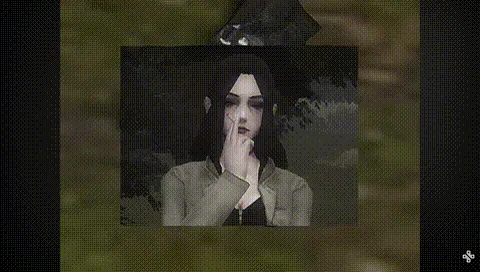
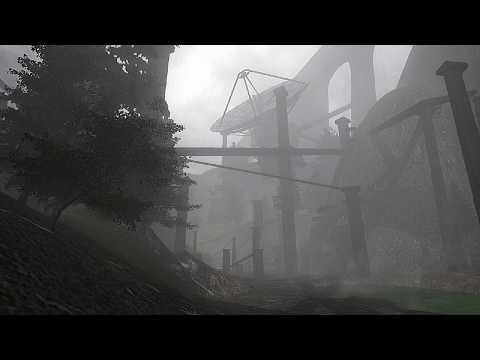
Public discussion has frequently compared My Beautiful Faraway with Silent Hill, particularly because of its fog, desaturated colors, melancholy tone, interface, and older visual presentation. 80 Level also used the comparison in its coverage. However, the developer has stated that the visuals were not created specifically to imitate Silent Hill.
That distinction allows both perspectives to remain valid. Players can reasonably recognize similarities in atmosphere while the creator can accurately explain that direct imitation was not the intention. arch1t3ct instead identified Resident Evil and Dark Souls as influences on areas such as structure, pacing, and limited guidance.
The Silent Hill comparison is therefore best used as a broad visual and emotional reference rather than a promise of identical mechanics, combat, narrative conventions, or production scale. Players interested primarily in unsettling spaces, ambiguity, and melancholy may find the comparison useful. Someone expecting the specific systems or mythology of Silent Hill should not assume those elements are present.
The game deliberately uses an early-2000s-inspired presentation and a fixed 4:3 aspect ratio. arch1t3ct has confirmed that this display format is intentional rather than an accidental lack of widescreen support. The narrower frame changes composition by concentrating attention and reducing the amount of peripheral space visible at once, which can contribute to a more enclosed or intimate presentation.
Broad labels such as “PS1-style” or “PS2-style” can communicate an immediate impression, but they are less precise than describing the game as drawing from an early-2000s visual language. A modern developer can select certain older visual qualities without reproducing every technological limitation of that period.
Atmosphere also depends on more than low-resolution visuals or fog. Lighting, architecture, color, framing, environmental spacing, and sound all contribute to how a location feels. Volumetric fog can conceal distance or soften geometry, but its effect depends on the surrounding visual composition.
The soundtrack is another important part of the presentation. Its Steam listing credits arch1t3ct as artist and Lukian Akhunov as composer and contains 15 tracks described as ambient and melancholy music created specifically for the game without pre-made music or loops.
The soundtrack is included with the base game and is automatically added to the buyer’s Steam library. Its separate listing should therefore not be interpreted as meaning existing owners must purchase it again.
Music can carry particular weight in a quiet exploratory game because there may be fewer constant action sounds competing for attention. Changes in music or ambience can affect how a location, conversation, or period of silence is perceived. That does not mean every player will respond identically, but it reinforces the game’s broader focus on mood and interpretation.
The free demo is especially useful for evaluating the presentation because screenshots cannot show how the 4:3 framing, lighting, navigation, sound, and text feel during actual movement. Players unsure whether the aesthetic is immersive or restrictive can use the demo to test the experience directly.

Playtime, Demo Access, Platform Support, and What Players Should Expect
The published estimate for My Beautiful Faraway, Please Don’t Be Cruel To Me is approximately three hours for a first playthrough and six or more hours for players trying to discover everything. These figures are advertised estimates rather than independently measured averages, and actual playtime can vary with reading speed, puzzle-solving ability, use of outside help, and interest in optional content.
The difference between initial completion and broader discovery is more informative than a single runtime figure. Someone looking for a short atmospheric experience may be satisfied with one playthrough, while players interested in alternate endings, optional material, and unresolved story details may spend considerably longer exploring.
A three-hour estimate should not be treated as a deadline. Taking longer does not mean someone is playing incorrectly. Exploratory puzzle games can also benefit from longer uninterrupted sessions because returning after a lengthy break may make it harder to remember the significance of earlier conversations or locations.
Players unsure about the pacing can use the free Steam demo before buying. The demo has its own listing titled DEMO: My Beautiful Faraway, Please Don’t Be Cruel To Me and covers roughly the first 30 minutes. To access it, players can search for the game on Steam and use the demo option from the main product page or open the separate demo listing.
The demo is most useful when treated as a test of interaction rather than simply a visual preview. Players can assess whether reading feels comfortable, whether navigation encourages curiosity, whether the puzzles feel interesting, and whether ambiguity creates intrigue or frustration. It cannot establish the quality of later puzzles, every ending, or the complete narrative, but it can answer whether the fundamental style is appealing.
The game is confirmed for Windows, macOS, and Linux. Native Mac support has been specifically discussed by the developer, but platform availability remains separate from hardware compatibility. Players should still compare their machines with the current requirements and test the demo when possible.
Linux availability similarly does not guarantee identical results across every distribution, driver setup, or handheld device. The fact that the game was developed with Godot also does not justify assuming future console or mobile ports. Those platforms would require their own announcements.
The most useful expectation is therefore a short, deliberately paced adventure built around atmosphere, observation, conversations, puzzles, and interpretation rather than action-heavy progression. Its retro presentation and comparisons with older psychological games may attract attention, but its actual identity lies in the way exploration and fragmented information are used to construct an existential mystery.
Players who enjoy uncertain narratives, note-taking, optional discoveries, and gradually reconsidering what they have seen are likely to understand what the game is trying to offer. Those who prefer explicit objectives and constant forward momentum may find the demo especially valuable before committing to the full experience.
Frequently Asked Questions (FAQs)
- What is My Beautiful Faraway, Please Don’t Be Cruel To Me?
It is an independent first-person adventure created by arch1t3ct that focuses on exploration, unusual characters, environmental details, and puzzles rather than constant action. Its story deals with themes such as memory, regret, mortality, and meaning, while its deliberately melancholy presentation encourages players to interpret what they discover instead of expecting every answer to be stated directly. - When was My Beautiful Faraway released?
The full game launched on October 13, 2026. The October 15 date seen in some searches refers to later coverage, including reporting from 80 Level, rather than the actual launch. A separate free demo was released earlier on April 17, 2026, so impressions or videos from that period may describe the introductory demo rather than the finished game. - Who developed My Beautiful Faraway?
The credited developer and publisher is arch1t3ct. The creator has publicly described My Beautiful Faraway as a solo-developed project that took roughly a year and a half to make while learning game development. That background helps explain the project’s personal creative direction, although players should still judge the finished pacing, puzzles, and presentation on their own merits. - Was My Beautiful Faraway made with Godot?
Yes. arch1t3ct directly identified Godot as the engine used for the project and discussed learning from community resources and educational material while developing it. Godot provided the technical foundation, but the game’s particular atmosphere comes from choices involving lighting, fog, framing, dialogue, architecture, pacing, and interaction rather than from the engine alone. - Is My Beautiful Faraway officially a Silent Hill game?
No. My Beautiful Faraway has no stated franchise connection to Silent Hill. Players and coverage have compared its fog, desaturated colors, melancholy atmosphere, and older visual style with Silent Hill, but arch1t3ct has said the visuals were not deliberately designed to imitate that series. The comparison is therefore best treated as an atmospheric reference rather than a description of identical gameplay or story conventions. - How long does My Beautiful Faraway take to finish?
The advertised estimate is approximately three hours for an initial playthrough and six or more hours for players trying to discover more of the available content. Those are estimates rather than guaranteed completion times. Reading speed, puzzle-solving ability, note-taking, optional exploration, and interest in alternate outcomes can all make an individual playthrough shorter or longer. - Does My Beautiful Faraway have multiple endings?
Yes. Multiple endings and nonlinear progression are advertised features. However, the reviewed material does not establish a definitive number of endings, so assigning a specific total would go beyond the available information. Nonlinear progression can also involve exploration order and optional discoveries rather than meaning that every conversation or interaction creates a major story branch. - Is there a free My Beautiful Faraway demo?
Yes. Steam has a separate free demo that provides roughly 30 minutes of the opening experience, including the atmosphere, early story material, and examples of the game’s basic mechanics. It is useful for deciding whether the navigation, reading, puzzle style, and ambiguity appeal to you, although a short demo cannot represent every later puzzle, optional discovery, or ending. - Can My Beautiful Faraway be played on Mac or Linux?
Yes. The launch announcement confirms Windows, macOS, and Linux versions, and the developer has specifically discussed native macOS support and development testing on an M1 MacBook Air. Platform support does not guarantee identical performance on every computer, so players should still check the current requirements and use the demo where possible to test their own system. - Is the My Beautiful Faraway soundtrack included?
Yes. The soundtrack’s Steam listing states that it is included with the base game and automatically added to the purchaser’s library. There is also a separate soundtrack page, which could make it appear as though another purchase is necessary. Existing owners should therefore check their Steam library first before buying the soundtrack separately.

Conclusion
My Beautiful Faraway, Please Don’t Be Cruel To Me offers a deliberately focused experience built around entering an unfamiliar world, listening closely to its inhabitants, solving puzzles, and gradually forming an understanding of what its fragmented memories and conversations suggest. Its appeal depends less on spectacle than on whether the player enjoys ambiguity, observation, and a slower form of discovery.
The game’s development story adds another layer of interest. arch1t3ct has described learning Godot while creating the project as a solo developer, but that background is best treated as context rather than the main reason to play. For prospective players, the more important question is whether its restrained pacing, nonlinear exploration, and interpretive storytelling match their preferences.
Two details are especially important for describing the release accurately. The full game launched on October 13, 2026, while October 15 refers to later coverage. Its comparisons with Silent Hill should also remain qualified, since the developer has said the visuals were not created specifically to imitate that series, even though players may reasonably recognize similarities in atmosphere, fog, color, and melancholy tone.
For anyone still unsure, the free demo provides the most useful introduction. It allows players to experience the presentation, navigation, dialogue, and puzzle style directly before committing to the full game, while leaving its deeper mysteries, optional discoveries, and multiple endings to be uncovered on their own terms.
Sources and Citations
- Steam, Official Product Page: Confirms My Beautiful Faraway, Please Don’t Be Cruel To Me as a solo-developed adventure by arch1t3ct, with an October 13, 2026 release date. The page also establishes the game’s current description, around three hours for a first playthrough, multiple endings, 10+ puzzles, an early-2000s visual style, original soundtrack, and native Windows, macOS, and Linux support. Steam Store
My Beautiful Faraway, Please Don’t Be Cruel To Me | Steam - Steam Community, October 6, 2026: The developer’s official release announcement confirms the October 13 worldwide launch, regional unlock times, supported languages, inclusion of the original soundtrack with the base game, and an updated demo. Steam Community
My Beautiful Faraway Steam Community - Steam, Official Demo Page: Confirms that the free demo launched on April 17, 2026. Steam describes it as an approximately 30-minute introduction covering the beginning of the game, atmosphere, early story setup, puzzles, and core mechanics. Steam Store
DEMO: My Beautiful Faraway, Please Don’t Be Cruel To Me - arch1t3ct, itch.io: Provides a first-party description of the project as a solo-developed adventure focused on exploration, implicit storytelling, and obscure puzzles. It also confirms the ~30-minute demo, roughly three-hour first playthrough, 6+ hours for fuller exploration, multiple endings, seven major figures, 10+ puzzle minigames, and that no generative AI was used. itch.io
My Beautiful Faraway, Please Don’t Be Cruel To Me | itch.io - arch1t3ct on Reddit, October 14, 2026: The developer’s r/Godot launch post confirms that the game was made in Godot over roughly a year and a half as a first solo game-development project. It describes the game as a short surreal, melancholic adventure inspired by older games that expect players to explore carefully and solve unconventional puzzles without much guidance. Reddit
Solo-developed Godot game launch post - arch1t3ct on Reddit, April 18, 2026: In an earlier r/Godot demo post, the developer clarified that the project’s gameplay structure and pacing were influenced mainly by Resident Evil and Dark Souls. This is useful for distinguishing the creator’s stated inspirations from comparisons based only on visual resemblance. Reddit
My Beautiful Faraway demo development discussion - arch1t3ct on Reddit, October 14, 2026: The developer’s macOS post confirms native Mac support and says the game was tested throughout development on an M1 MacBook Air. Reddit
Native macOS support confirmation - arch1t3ct on Reddit, October 14, 2026: A separate Linux post confirms that the Godot-built game has a native Linux version and does not require Proton or another compatibility layer. Reddit
Native Linux support confirmation - 80 Level, October 15, 2026: Secondary release coverage describes the game as a 2000s-inspired, dreamlike adventure built by solo developer arch1t3ct in Godot. It covers the three-hour approximate playthrough, multiple endings, cryptic puzzles, note-taking, and the project’s visual influences, including Silent Hill, Resident Evil, Death Stranding, Northern Journey, and Lunacid. 80 Level
This Melancholic Silent Hill-Inspired Adventure Set in a Half-Dead Place Is Out - Steam, Official Soundtrack Page: Confirms the original soundtrack’s October 13, 2026 release, its 15 tracks, arch1t3ct as artist, Lukian Akhunov as composer, and that the soundtrack is included automatically with the base game. Steam describes the music as handcrafted without loops or pre-made music. Steam Store
My Beautiful Faraway, Please Don’t Be Cruel To Me Soundtrack
Recommendations
- Vivian Kubrick Debunks Eyes Wide Shut Deleted Scenes Theory
- Battlefield 6 2026 Roadmap: More Maps, “Legendary” Battlefield 4 & Battlefield 3 Remakes, and Wake Island’s Return
- Apple TV’s Widow’s Bay is the First Breakout TV Hit of 2026: Why Everyone is Talking About the Horror Comedy
- Pitchify Launches New Service to Connect Developers and Publishers: How Pitch Direct Works
- Pokémon Pokopia Bubbly Basin DLC Release: Date, New Pokémon, and Everything You Need to Know
- Nordic Game 2026 (NG26 Spring): Dates, Venue, Passes, Speakers, Expo & Awards in Malmö
- Subnautica 2 Early Access Roadmap: Co-Op Updates, Sprinting, and More
- Virtua Fighter 6 Leak Explained
- The Future of 3D Modeling: Insights on AI Advancements
- GTA 6 is Already Outselling Everything Else: Why Pre-Orders Are Dominating Gaming



































































































