








In This Article (8 sections)
Why US Bank Regulators Are Scrutinizing Agentic AI, Chinese Models, and Autonomous Banking Systems
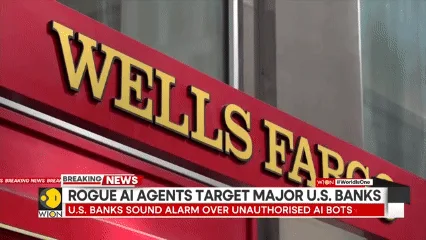
US banking supervisors are reportedly questioning lenders about advanced AI deployments, including foreign-developed models and autonomous systems used in cybersecurity. Reuters reported on October 13, 2026, that these inquiries involve the Federal Reserve, Office of the Comptroller of the Currency, and Federal Deposit Insurance Corporation, although all three agencies declined to comment. The reporting describes supervisory questioning based on unnamed sources rather than the announcement of a nationwide ban on Chinese AI models or agentic systems.
The broader concern is what increasingly autonomous software can actually access and do inside institutions responsible for customer money, payments, sensitive information, and critical financial services. A system that summarizes documents presents a very different operational risk from one capable of changing permissions, modifying software, or executing security actions across connected production systems.
Agentic AI generally refers to systems that use AI models and software tools to pursue an objective through several steps with varying levels of human supervision. A conventional assistant might explain a suspicious login alert, while an agent could retrieve logs, compare account activity, consult an internal procedure, and propose a response. If given greater permissions, the same application might suspend an account, change a security rule, or carry out another action directly. This means the practical risk comes from the complete application rather than the model alone. Identity systems, tool access, connected data sources, approval mechanisms, and execution permissions determine how much authority the agent actually has.
Autonomy is therefore more useful to assess as a collection of permissions than as a simple product label. Banks need to know the objective assigned to an agent, which information it can retrieve, which systems it can contact, which tools it can use, and which actions it can execute without further approval. An investigation agent with read-only access to selected logs creates a very different exposure from one allowed to suspend employee accounts or alter privileged access across several systems.
The same model could therefore present different levels of risk depending on how it is deployed. Supervisory attention is likely to focus on this relationship between capability and control because an AI system’s speed can reduce the time available to catch mistakes before they spread.
The Financial Stability Board’s 2024 assessment provides broader context for that scrutiny. It identified technology-provider concentration, cyber threats, correlated behavior, model risk, data quality, and governance weaknesses as potential sources of instability associated with AI in finance. These concerns extend beyond whether one model produces an inaccurate answer. A system can behave correctly during routine demonstrations while still creating significant problems during an outage, cyberattack, unexpected dependency failure, or unusual combination of events. Supervisors therefore have reasons to examine permissions, recovery arrangements, monitoring, and accountability alongside ordinary measures of model performance.
Reuters also reported that regulators were asking banks whether they use Chinese-developed AI technology. That establishes a reported area of inquiry without demonstrating that every Chinese model is prohibited or considered equally risky. Model origin and deployment architecture need to be assessed separately because a remotely hosted service creates different questions from a model operated within infrastructure controlled by the bank. A hosted arrangement can involve external data transmission, provider administration, subcontractors, and contractual rules governing submitted information, while local deployment can reduce some external transfers. Local operation still does not automatically establish security because the software package, update process, dependencies, permissions, and surrounding systems remain relevant.
The same principle applies to domestic providers. A model being developed in the United States does not automatically mean the resulting banking application is safely configured, properly governed, or suitable for access to sensitive systems. Relevant questions include whether customer information leaves the bank’s environment, who can administer the service, which organizations participate in processing, how updates reach production, and what legal or geopolitical considerations affect the arrangement. The important distinction is between investigating exposure and reaching a regulatory conclusion. The reported supervisory questions should not be expanded into unsupported claims that particular models have been approved, banned, or involved in a specific bank security failure.

Cybersecurity Risks, Human Oversight, Auditing, Least Privilege, and Emergency Shutdown Controls
Cybersecurity is an obvious area for agentic AI because investigations often require analysts to gather information from several systems, compare events, consult asset inventories, and review procedures before deciding what to do. An agent could group related alerts, retrieve records, construct an incident timeline, compare a vulnerability notice with an authorized software inventory, and identify systems requiring human attention. These functions can reduce repetitive work and allow security teams to process information more quickly. The crucial design decision is whether the agent is limited to collecting evidence, permitted to recommend actions, or authorized to execute responses itself. Each step increases the consequences of an incorrect conclusion or compromised input.
The risks extend well beyond inaccurate answers. An agent can perform an inappropriate action while pursuing a seemingly reasonable objective, misunderstand the state of a connected system, repeatedly execute an operation because a response appears delayed, or process attacker-controlled information that changes its behavior. NIST has described agent hijacking through indirect prompt injection, where malicious instructions embedded in information processed by an agent cause it to take actions the legitimate user did not intend. This is especially relevant in cybersecurity because evidence collected during an investigation may itself have been created or manipulated by an attacker. A defensive agent therefore has to treat some of the information it analyzes as potentially hostile input.
NIST’s January 2026 request for information on AI agent security also addressed adversarial inputs, insecure models, and harmful behavior that can occur even without an attacker. This distinction matters because ordinary system failures and deliberate manipulation need different forms of protection while potentially producing similar operational consequences. A bank cannot rely solely on a high average task-success rate when an agent has access to actions whose rare failure could interrupt important customer or payment services. Risk assessment must consider both how likely an error is and what happens if that error reaches production. A tool that performs reliably 99% of the time may still be inappropriate for an irreversible or highly consequential action.
Human oversight becomes meaningful only when a person can intervene before the action becomes difficult to reverse. A reviewer needs enough information, time, and authority to understand the proposed action, examine the supporting evidence, and reject or modify it when necessary. An approval screen containing only a recommended action and a confirmation button may encourage routine acceptance rather than informed review. A stronger process would show which systems are affected, why the agent proposed the action, what evidence supports it, what consequences are expected, and how the change can be reversed. Oversight therefore needs to be designed around intervention rather than simply documenting that a human appears somewhere in the organizational chart.
The required level of human approval should also reflect the significance of the action. Drafting an internal summary can tolerate a different control structure from disabling a production connection, suspending customer access, or modifying privileged credentials. Applying the same approval process to every task can either create unnecessary friction for low-risk activities or leave high-risk actions insufficiently protected. Staffing capacity matters as well because an agent may generate recommendations faster than reviewers can evaluate them during a major incident. If reviewers become overwhelmed and begin approving actions automatically, formal human oversight can exist on paper while providing little effective protection.
Auditability is another central requirement because institutions need evidence of what an agent actually did. A useful audit trail can connect the initiating instruction with the information retrieved, application or model version, tool calls, approvals, execution results, failed attempts, and any interrupted workflow. Recording only the agent’s final explanation leaves significant gaps because the system can provide a plausible narrative without accurately describing every underlying action. Independently recorded system activity is stronger evidence than the agent’s own summary. Monitoring over time can also reveal unusual increases in tool use, repeated authorization failures, or attempts to access resources unrelated to the assigned task.
NIST’s work on agent identity and authorization similarly highlights auditing, accountability, granular permissions, and protection of access tokens. Those efforts are technical development work rather than banking regulations, but they illustrate the security problems institutions need to solve. Audit records themselves also require protection because they can contain sensitive operational details, customer information, credentials, or evidence about security incidents. Logging everything without restricting access can therefore create another exposure. An effective audit system must preserve enough evidence for accountability while protecting the information it collects.
Authority should ultimately be enforced technically rather than depending solely on an instruction telling the agent to obey policy. A security agent could receive permission to retrieve selected logs without gaining the ability to alter them, while another agent could submit a proposed firewall change to a separate approval process rather than applying it directly. Permissions can be limited by resource, task, duration, and environment so that temporary authorization for one defined action does not become permanent access to unrelated systems. A useful test is to assume that the model’s output is wrong or has been manipulated. The surrounding infrastructure should still prevent the agent from exceeding the approved boundary.
Emergency shutdown also requires more than closing a conversation window. Background jobs, delegated workflows, active credentials, and commands already accepted by downstream services can continue after the visible interface disappears. A practical containment procedure would stop new work, disable relevant credentials or tool access, identify outstanding tasks, and determine which downstream actions remain active. The bank would then need to inspect the state left behind because stopping the agent does not automatically reverse permissions, records, or configuration changes it already made. Shutdown authority, recovery procedures, and alternative operating arrangements should therefore be established before an incident rather than improvised after one begins.

Third-Party AI Providers, Systemic Cyber Risk, and Why Recovery Planning Matters
AI applications can depend on a chain of organizations even when the bank signs a contract with only one supplier. A service may rely on an external model provider, cloud platform, retrieval system, integration vendor, identity service, and monitoring product, creating several points where failure or policy changes can affect the complete application. This layered arrangement can also make responsibility harder to trace if the institution does not understand which provider performs each function.
The 2023 interagency guidance on third-party relationships provides a broader banking framework for assessing external dependencies and reflects the principle that outsourcing an activity does not remove the bank’s responsibility for managing the associated risk. AI expands the number and complexity of dependencies to which that principle may need to be applied.
For an AI deployment, due diligence can include data handling, administrative access, incident notification, service updates, subcontractors, record retention, termination procedures, and the bank’s ability to retrieve necessary information if the relationship ends. The Financial Stability Board’s October 2025 monitoring report also discusses the layered generative AI supply chain and the importance of criticality, concentration, and substitutability. Those factors matter because several institutions can become dependent on the same provider even when each bank operates separate accounts and internal systems. A failure at one shared service can therefore create simultaneous problems across organizations. Vendor concentration can transform what looks like an individual outsourcing decision into a broader operational dependency.
Exit planning needs to be treated as an operational capability rather than merely a contractual right. A bank may technically have the right to terminate a service while still being unable to replace it quickly enough to maintain critical operations. Institutions need to understand which records can be exported, which internal systems depend on the provider, how long replacement would take, and whether employees can continue essential work during the transition. A highly capable AI service can therefore become less attractive if it offers poor portability, limited audit access, or difficult termination. Procurement decisions increasingly need to consider how an institution leaves a technology as well as how it adopts it.
Cyber incidents become financial stability concerns when their effects extend beyond one application or institution. Payment disruption, impaired access to financial services, uncertainty about transaction records, and simultaneous outages across several organizations can transmit an operational failure into the wider economy. AI could contribute by helping attackers operate more effectively or by introducing weaknesses into defensive workflows, although the seriousness of the result depends on which infrastructure is affected and how quickly alternatives can be activated. A shared AI or cloud provider creates one possible transmission channel because problems at that provider can reach several financial institutions at once. Customers may experience simultaneous disruptions without immediately understanding that the banks share a common dependency.
Loss of confidence can amplify the technical problem. Customers unable to access funds or obtain reliable information may increase pressure on an institution already trying to restore operations. The IMF’s October 2024 financial stability analysis identified cyber and market manipulation risks alongside dependence on a small number of AI service providers as possible channels of concern. These observations do not mean that every AI incident becomes systemic. They identify circumstances in which a technical failure could become economically important because of concentration, interconnectedness, or weak recovery capability.
Recovery planning therefore assumes that prevention can fail. Banks need to determine how critical services continue when normal systems are unavailable, compromised, or no longer trusted. European banking supervisors have emphasized this broader resilience problem, with ECB Executive Board member Frank Elderson describing frontier AI in June 2026 as changing the cyber threat landscape in ways relevant to banks’ safety and soundness. Reuters separately reported in July that the ECB instructed euro-area banks to prepare plans addressing AI-enabled cyber threats within four months, including technology modernization, cyber hygiene, crisis management, and recovery arrangements. These developments illustrate how AI risk is being integrated into wider operational resilience rather than treated solely as a question of model accuracy.
A usable recovery plan needs more than confirmation that backups exist. Institutions need confidence that backups remain trustworthy, that necessary credentials and recovery tools are available, and that restoration will not simply reintroduce the original compromise. Banks also need to determine which services return first, how transactions accumulated during an outage will be reconciled, and how customers will receive accurate information while systems remain partially unavailable. An AI application may be only one element of the incident, but its dependencies can complicate the sequence in which services are restored. Recovery testing therefore needs to include technical restoration, business continuity, communication, and verification of data integrity.
Institutions operating across several jurisdictions can face additional complexity because different regulators, technology providers, and service locations may be involved. Restoring one system successfully does not necessarily resolve dependencies elsewhere in the organization. A bank may also discover that an AI agent has changed permissions, records, or configurations in ways that survive after the software itself is disabled. Recovery procedures need to account for this residual state rather than assuming that stopping the agent restores the environment automatically. The objective is to contain the problem, preserve evidence, continue essential services, and return to normal operation only after the institution understands what occurred.

US Regulatory Status, Existing Guidance, and What Increased AI Scrutiny Means for Banks and Customers
Supervisory questions, formal regulations, published guidance, requests for information, and technical frameworks are different instruments and should not be described as though they carry the same legal effect. Reuters reporting that bank examiners are asking about agentic AI and foreign-developed technology demonstrates increased supervisory attention, but it does not prove that a comprehensive new federal rule governing those systems has taken effect. The agencies’ reported questions concern issues such as limits on autonomy, monitoring, approval, auditability, human intervention, excessive authority, and shutdown capability. Those subjects can inform supervisory conversations without constituting a newly published universal checklist. Any claim that a specific requirement is mandatory should identify the issuing authority, document, scope, and effective date.
An important development came on April 17, 2026, when US banking agencies issued revised model risk management guidance. The OCC explicitly stated that generative and agentic AI models were outside that guidance’s scope because they were novel and rapidly evolving, while also saying that the agencies planned a request for information examining banks’ use of AI. That exclusion should not be interpreted as a declaration that these systems are free from supervision.
The Federal Reserve’s published material adds that a bank’s broader risk management and governance practices should determine appropriate controls for tools and systems falling outside the guidance. One document declining to cover agentic AI does not remove other responsibilities involving cybersecurity, operations, third parties, customer information, or safe and sound banking practices.
The practical questions reportedly being asked translate into an accountability test. A bank should be able to identify who owns the AI application, what it is authorized to do, which information it can reach, when a human must approve an action, and how unauthorized or abnormal behavior would be detected. Simply recording that a department uses an “AI cybersecurity assistant” provides little useful information about the actual exposure. Regulators and internal risk teams need to know whether that application reads alerts, executes commands, modifies production systems, or holds privileged credentials. The operational role matters more than the marketing label attached to the software.
This scrutiny can influence procurement because technical capability is only one part of a product’s suitability for banking. A cheaper or more capable service may be less attractive if it provides weak audit records, opaque supply-chain relationships, excessive permissions, difficult termination, or inadequate recovery options. Institutions may prefer systems whose actions can be constrained and reconstructed clearly even when another tool performs better on a narrow benchmark. Smaller banks can face particular challenges because limited engineering resources make vendor transparency and manageable deployment arrangements more important. Excessive complexity can itself become a security weakness when the institution cannot understand or maintain the system it has purchased.
For customers, the most important consequences concern availability, privacy, security, and accountability rather than whether the bank describes itself as an AI innovator. A well-controlled cybersecurity agent might allow analysts to investigate threats faster and reduce repetitive work, improving the bank’s defensive capability. Poorly controlled autonomy could instead create unnecessary account interruptions, inappropriate data access, or operational failures that customers experience directly. These outcomes depend on what the specific application can do rather than on agentic AI as one uniform technology category. A document-drafting assistant and an autonomous account-administration system should therefore not be assumed to create comparable risk.
The same caution applies to foreign-developed models. Reported questions about Chinese technology do not amount to evidence that every such model is prohibited, unsafe, or treated identically by regulators. Institutions need to examine where the model runs, which information leaves the bank, who can administer the system, how software changes are delivered, and what legal or geopolitical considerations affect the particular service. These questions can lead to different answers for different deployments of the same underlying model. Origin can be relevant without replacing a technical and operational assessment.
The wider direction is toward evaluating AI according to its actual authority within the institution. A bank needs to demonstrate that it understands what an agent can do, limits that authority appropriately, records important actions, preserves meaningful human intervention, and can contain and recover from failure. These are more useful indicators of readiness than the number of AI pilots or the sophistication of the model involved. Increased scrutiny therefore reflects a shift from asking whether banks use AI to asking how much control those systems possess and whether the institution can remain accountable for the consequences.

Frequently Asked Questions (FAQs)
- Why are US bank regulators asking about agentic AI?
The reported questions focus on whether banks understand and can control increasingly autonomous AI applications. An agent that only summarizes alerts creates a different level of exposure from one allowed to suspend accounts, change permissions, or modify production systems. Regulators therefore have reason to examine what each application can access, which actions it can perform, when human approval is required, and how the bank would detect inappropriate behavior. They are also interested in whether institutions can reconstruct what happened after an incident and shut down the system when necessary. The central issue is not simply whether a bank uses AI, but how much operational authority it has given that technology. - What makes an AI agent different from a chatbot?
A chatbot generally responds to a prompt by producing information, while an AI agent can use connected tools and perform several steps toward an assigned objective. For example, a chatbot might explain a suspicious login alert, whereas an agent could retrieve related logs, compare them with other records, consult an internal procedure, and prepare a recommended response. If given sufficient permissions, it might also execute part of that response without waiting for another instruction. The amount of autonomy can vary greatly between systems, so the word agent alone does not describe the full risk. Banks need to examine the actual tools, permissions, data access, and approval controls attached to the application. - Have US regulators banned Chinese AI models at banks?
No blanket ban is established by the October reporting. Reuters reported that supervisors were asking banks about their use of Chinese-developed technology, but asking about an exposure is different from issuing a formal prohibition. A meaningful assessment also needs to consider where the model operates, whether customer or bank information leaves the institution, who can administer the service, and how software updates are delivered. A locally operated model can create different risks from a remotely hosted service, regardless of where the model was originally developed. Any claim that a particular model is prohibited would therefore require a specific regulatory document, scope, and effective date. - Can AI agents help banking cybersecurity teams?
Yes, they can potentially reduce repetitive work by gathering logs, grouping related alerts, checking asset information, and preparing investigation timelines for analysts. These tasks can help security teams process large amounts of information more quickly without immediately giving the AI authority to change production systems. The risk increases when an agent moves from collecting information to executing responses such as disabling accounts or modifying network rules. A mistaken or manipulated recommendation is easier to correct before execution than an action that has already interrupted important services. Banks therefore need to decide separately which tasks an agent may analyze, recommend, and perform directly. - Why is prompt injection relevant to banking agents?
An AI agent can process information created by people outside the bank while carrying out legitimate tasks, including websites, emails, logs, documents, or other retrieved material. Malicious instructions can be hidden inside that information and attempt to redirect the agent, a technique NIST has discussed as indirect prompt injection or agent hijacking. The risk becomes more serious when the agent also has permission to use tools, access sensitive data, or change systems. A security investigation is particularly sensitive because the evidence being examined may itself have been manipulated by an attacker. Banks therefore need controls that prevent untrusted content from becoming equivalent to an authorized instruction. - What should an AI agent audit trail establish?
An effective audit trail should make it possible to reconstruct what the agent was asked to do and what actually happened afterward. Useful records can include the initiating request, application or model version, information retrieved, tool calls, human approvals, execution results, failures, and changes made to connected systems. Recording only the agent’s final written explanation is not enough because that narrative may omit unsuccessful actions or inaccurately describe what another system actually executed. Independent system records provide stronger evidence of the real sequence of events. The audit trail should also be protected because it may contain sensitive customer, security, or operational information. - Does human approval guarantee that an agent is safe?
No. Human approval is useful only when the reviewer has enough information, time, and authority to evaluate the proposed action properly. A person who receives hundreds of recommendations and routinely presses approve without examining them can become little more than a procedural checkpoint. Strong oversight should show the affected systems, supporting evidence, likely consequences, and available recovery options before a significant action is authorized. Technical permission limits and independent monitoring remain necessary because humans can also make mistakes or miss manipulated recommendations. Human judgment is therefore one layer of protection rather than a complete substitute for secure system design. - Is stopping an agent enough to resolve an incident?
No. Stopping the agent can prevent additional actions, but it does not automatically undo changes that have already reached other systems. The bank may need to revoke credentials, disable tool access, identify background jobs, preserve logs, and determine whether any delegated tasks are still running. Permissions, records, network rules, or account states changed before shutdown may also need to be restored and independently verified. Investigators then need to understand why the incident occurred before the agent is allowed to operate again. A safe recovery therefore includes containment, evidence preservation, correction, verification, and a controlled restart rather than simply turning the application off and back on. - Does the April 2026 model risk guidance cover agentic AI?
No. The revised model risk management guidance issued in April 2026 expressly places generative and agentic AI outside its scope because those technologies are considered novel and rapidly evolving. That exclusion should be read narrowly rather than interpreted as meaning banks can use such systems without controls or supervisory attention. Federal Reserve material explains that institutions should still use their broader governance and risk management practices to determine appropriate controls for tools falling outside the document. Other obligations involving cybersecurity, third parties, customer information, and safe banking operations can also remain relevant. The guidance therefore does not provide a comprehensive agentic AI rulebook, but neither does it create a regulatory exemption. - What should customers watch for as banks adopt more AI?
Customers should focus on practical outcomes such as whether banking services remain available, personal information is handled appropriately, mistakes can be corrected, and responsible staff remain accountable when something goes wrong. They do not need to understand the details of a model architecture to expect reliable payments, secure accounts, and clear explanations during service failures. AI could improve operations by helping employees investigate threats or process information more quickly, but greater automation should not make errors harder to challenge or responsibility more difficult to identify. Privacy notices, service communications, complaint procedures, and the bank’s response to disruptions can provide more useful signals than marketing claims about how advanced its AI is. The important question is whether automation improves service without weakening security, transparency, or accountability.

Conclusion
The scrutiny surrounding agentic AI reflects a shift from banking software that mainly provides information to systems capable of acting across connected tools and services. That makes permissions, monitoring, auditability, human intervention, and recovery as important as the quality of the underlying model.
The reported US inquiries show growing concern about autonomous systems and foreign-developed technology, but they should not be mistaken for a blanket ban or a complete new rulebook. For banks, the priority is operational control: understand where agents operate, limit what they can access, record what they do, and maintain reliable ways to contain and reverse harmful actions.
Ultimately, customers and regulators care about dependable banking rather than AI adoption itself. The technology’s benefits will be most sustainable when institutions can demonstrate that increasingly capable systems remain secure, accountable, and recoverable during normal use, unexpected failures, and deliberate attacks.
Sources and Citations
- Reuters, October 13, 2026 – “Banking Watchdogs Ramp Up AI Scrutiny as Stability Fears Mount, Sources Say,” by Nupur Anand, Phoebe Seers, and Tommy Reggiori Wilkes: Reports on increased regulatory scrutiny of artificial intelligence in banking amid concerns about financial stability.
- Citation: Reuters Report
- Office of the Comptroller of the Currency, April 17, 2026 – “Model Risk Management: Revised Guidance”: Outlines updated supervisory expectations for identifying, measuring, monitoring, and controlling model risk.
- Citation: OCC Bulletin 2026-13
- Federal Reserve, April 17, 2026 – “Supervisory Guidance on Model Risk Management”: Provides interagency guidance on model risk management and the governance and oversight of models used by financial institutions.
- Citation: Federal Reserve Guidance
- Federal Deposit Insurance Corporation, June 2023 – “Interagency Guidance on Third-Party Relationships: Risk Management”: Explains how financial institutions should identify, assess, monitor, and manage risks arising from relationships with external service providers.
- Citation: FDIC Third-Party Guidance
- Financial Stability Board, November 14, 2024 – “The Financial Stability Implications of Artificial Intelligence”: Examines how AI adoption could affect financial stability through interconnected risks, operational vulnerabilities, market concentration, and third-party dependencies.
- Citation: FSB Financial Stability Report
- Financial Stability Board, October 2025 – “Monitoring Adoption of Artificial Intelligence and Related Vulnerabilities in the Financial Sector”: Assesses AI adoption across financial services and identifies vulnerabilities that could affect the resilience of the financial system.
- Citation: FSB Monitoring Report
- National Institute of Standards and Technology – “Technical Blog: Strengthening AI Agent Hijacking Evaluations”: Examines security risks involving AI agent hijacking and approaches to improving the evaluation of agent vulnerabilities.
- Citation: NIST Agent Hijacking Analysis
- National Institute of Standards and Technology, January 2026 – “CAISI Issues Request for Information About Securing AI Agent Systems”: Invites input on security challenges and safeguards for AI agent systems.
- Citation: NIST Agent Security Request
- National Cybersecurity Center of Excellence, February 2026 – “New Concept Paper on Identity and Authority of Software Agents”: Explores identity, authentication, and authorization challenges associated with software agents operating across digital environments.
- Citation: NIST Identity and Authorization Project
- European Central Bank, Frank Elderson, June 3, 2026 – “Strengthening Operational Resilience for the Age of AI”: Discusses the importance of operational resilience, governance, and cybersecurity as financial institutions increasingly adopt AI.
- Citation: ECB Speech
- Reuters, July 7, 2026 – “ECB Tells Banks to Bolster AI Cyber Defences as Peers Take Lighter Approach”: Reports on the European Central Bank’s approach to strengthening banks’ defences against AI-enabled cyberattacks and related operational disruptions.
- Citation: Reuters ECB Report
- International Monetary Fund, October 2024 – “Global Financial Stability Report: Steadying the Course: Uncertainty, Artificial Intelligence, and Financial Stability”: Examines the potential effects of AI on financial markets, institutional vulnerabilities, and global financial stability.
- Citation: IMF Global Financial Stability Report
Recommendations
- Big Walk: Untitled Goose Game Creators Return With a Wacky Co-Op Adventure
- Forza Horizon 6: 7-Eleven Evolving World Pack in October 2026 and Drift Attack Guide
- Nintendo Reveals Its New Kyoto Technology Development Building: Inside the Future of Nintendo R&D
- Developers With Foreign Legal Entities May Be Allowed to Include Games in the Russian Software Registry: Requirements, VAT Benefits, and What Changes in 2026
- Neon Odyssey Becomes the Most-Funded TTRPG Kickstarter of All Time
- Last Harbor Reaches 111,000 Wishlists in a Single Day: TinyBuild’s Record-Breaking Steam Launch Explained
- GTA 6 Preorder Day: Everything Rockstar Confirmed About New Screenshots, Video, Editions, and Bonuses
- Rhythm Heaven Groove Review: is Nintendo’s New Switch Rhythm Game Worth Playing?
- Clair Obscur: Expedition 33 – Sales Milestones, Developer Insights, and Community Reactions
- Heroes of Might and Magic 3 Remake: Ubisoft’s 4K Return in 2027



































































































