







In This Article (7 sections)
Marvel Tōkon Fighting Souls PC Performance Patch and Major Fixes
The latest Marvel Tōkon: Fighting Souls PC performance patch is primarily an optimization and stability update designed to reduce the unusually heavy workload the launch version placed on computer hardware. Arc System Works had already attempted to improve performance with launch day changes that removed unnecessary character animation updates, reduced user interface processing, improved compatibility with OBS and Discord overlays, and adjusted automatic anti aliasing behavior so unsupported or unnecessarily demanding techniques would not create additional overhead. Those changes were not enough for every PC configuration, and players continued reporting micro stuttering, CPU spikes, sudden frame drops, and cases where capable systems could not maintain the steady 60 FPS expected from a competitive fighting game.
The August 10 update targeted deeper causes of those problems. Arc System Works reduced CPU usage during startup, removed unnecessary periodic audio processing during matches, and changed behavior that caused Marvel Tōkon to repeatedly check the operating system for available audio input devices. Those checks could trigger abrupt performance drops, making the fix more significant than simply lowering visual quality. The patch also corrected frame rate issues affecting certain display resolutions and included broader bug and stability fixes.
The update should therefore be understood as a collection of targeted optimizations rather than one broad performance adjustment. Startup behavior, audio processing, device polling, resolution handling, CPU utilization, and general stability were addressed separately, which helps explain why some players reported noticeably smoother performance without changing their graphics hardware or in game presets.

How the Marvel Tōkon August Patch Improves PC Performance, Stability and CPU Usage
The August 10 Marvel Tōkon patch focused heavily on reducing unnecessary CPU workload, improving frame consistency and addressing several stability problems that remained after launch. Arc System Works had already identified CPU utilization as a priority following the PC open beta, alongside shader compilation, frame rate drops, lag, rollback behavior, cross play and compatibility with software such as OBS and Discord. The launch version removed some unnecessary character animation calculations and reduced interface workload, but deeper processing problems remained.
The August update targeted processes that were consuming more resources than necessary. CPU activity during startup was reduced, while periodic audio operations running during matches were modified because they generated unnecessary workload. Arc System Works also found that the game repeatedly checked for available audio input devices, which could trigger sudden performance drops. Removing that behavior through the Marvel Tōkon: Fighting Souls PC Patch directly addressed one source of the stuttering experienced by players.
These improvements matter beyond the average frame rate. A game can remain close to 60 FPS while still feeling uneven when individual frames take inconsistent amounts of time to process. Marvel Tōkon must simultaneously handle character logic, physics, animation, audio, inputs, stage activity, online synchronization and rendering, so unnecessary CPU interruptions can create visible hitching even when the graphics card is not fully occupied. Reducing those interruptions gives the system more consistent processing headroom and improves frame pacing.
That consistency is particularly important because Marvel Tōkon battles are designed around a 60 FPS target. Predictable frame delivery makes animation timing easier to read, inputs more consistent and rollback based online play more stable on the local machine. The patch also corrected certain resolution specific frame drops, removing another source of inconsistent performance.
Stability problems had already received attention in the day one update. Arc System Works fixed a crash caused by rapid mouse movement in menus and an issue where losing network access during a Challenger Alert screen could leave the game unplayable. Game Server Connectivity was also improved, while significant performance deterioration caused by OBS Game Capture and Discord overlay or video capture functions received fixes. These issues illustrate why the PC launch problems could not be traced to a single bottleneck. Drivers, display configurations, overlays, audio devices, networking, capture tools, shader compilation and other systems can all interact with a fighting game running at the same time.
The August 10 patch continued that stabilization effort while further reducing system load. Its reported download size was approximately 10GB, but that does not mean 10GB of new characters, stages, textures or other gameplay content was added with the Marvel Tōkon: Fighting Souls PC Patch. Modern games frequently package executable data and assets inside large archives, so changing relatively small portions can require substantial replacement downloads. The update was primarily technical, concentrating on CPU behavior, audio processing, sudden performance drops, resolution related problems and overall stability.
Steam currently lists 27GB of available storage under both the minimum and recommended requirements, so the approximately 10GB patch should also be distinguished from the game’s full installation size. Its release only four days after Marvel Tōkon launched on August 6 shows that Arc System Works moved quickly to address the most visible PC performance and stability complaints rather than waiting for a larger content update.

Marvel Tōkon PC Performance, Best Settings and Remaining Issues After the August Patch
Before the August 10 update, Marvel Tōkon had developed a reputation for inconsistent PC performance. Problems were already visible during the July open beta, when players reported serious stuttering and unstable frame rates even on powerful hardware. Arc System Works acknowledged abnormal CPU behavior, shader compilation problems, overlay compatibility issues, lag and rollback inconsistencies before launch and promised improvements. The launch patch removed several inefficiencies, including unnecessary character animation processing, excessive interface workload and problems with automatic graphics configuration. It also improved anti aliasing handling and corrected unintended activation of technologies such as DLSS, FSR and XeSS, although deeper issues involving repeated audio device polling and periodic audio processing continued affecting some systems after release.
The August 10 update substantially improved those conditions. Independent coverage and player reports on the Marvel Tōkon: Fighting Souls PC Patch pointed to reduced CPU inefficiencies, fewer sudden performance drops and the removal of unnecessary audio input checks as some of the most important changes. That does not mean every PC now performs identically, since hardware combinations, drivers, display settings, overlays, background applications, shader compilation and online conditions can still influence results. Performance has improved considerably compared with the August 6 launch version, but some players continue to report inconsistent frame rates and other technical problems.
Shader warm up remains particularly important. Arc System Works recommends allowing the process to finish because it prepares shaders before gameplay and reduces temporary lag caused by compilation during matches. CPU usage can rise while the warm up is running, but the load should decrease once it finishes. Players who skip it may encounter temporary stuttering and could mistakenly conclude that the August optimization work has had less effect than it actually has.
The main graphics priority after applying the Marvel Tōkon: Fighting Souls PC Patch should be maintaining a stable 60 FPS rather than maximizing visual quality. Battles are designed around that target, so lowering selected settings is preferable if Ultra causes repeated drops. The automatic graphics quality system is more useful than it was during the beta because Arc System Works improved its anti aliasing selection and reduced the chance of unnecessarily demanding techniques being enabled. Players tuning manually can reduce effect quality or background character update frequency when additional performance headroom is needed.
Display configuration can also directly affect gameplay. Arc System Works warns that using Windows at 50Hz or 30Hz while enabling in game V Sync can force the game to run at the same reduced frame rate, potentially producing slow motion. A 60Hz or higher display mode should generally be used. Players still experiencing unusual stuttering can also test with Discord overlays, recording software, monitoring utilities and other background programs disabled, even though compatibility with OBS and Discord has already been improved.
The official PC requirements are:
- Minimum: Windows 11, 16GB RAM, Intel Core i5 8400 or AMD Ryzen 5 1600X, Nvidia GeForce RTX 2060 6GB or AMD Radeon RX 6600 XT 8GB, and 27GB of available storage.
- Recommended: Windows 11, 16GB RAM, Intel Core i7 8700 or AMD Ryzen 5 3600X, Nvidia GeForce RTX 3070 8GB or AMD Radeon RX 7600 XT 16GB, and 27GB of available storage.
The optimization patch brings actual performance closer to what players would reasonably expect from those specifications, especially by reducing CPU overhead that could previously cause trouble regardless of graphics card strength. Systems significantly below the minimum requirements should not expect the patch to make unsupported hardware perform like a recommended configuration.
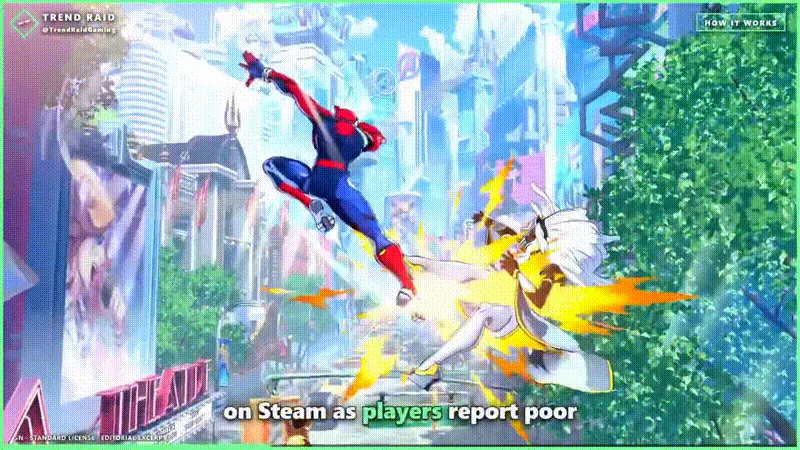
Steam reception remains mixed despite the technical improvements delivered by the Marvel Tōkon: Fighting Souls PC Patch. At the captured point, roughly 48 percent of more than 3,000 English language reviews were positive. Performance is only one factor behind that response. The PC release also requires a PlayStation Account and internet connectivity for several online features, while Easy Anti Cheat operates at the kernel level. Crashes, platform requirements and other complaints therefore contributed alongside performance concerns. Marvel Tōkon is now in a much better technical state than it was at launch, but additional optimization would still be valuable, particularly for players continuing to experience frame rate instability, shader related stutter or online issues.

Frequently Asked Questions (FAQs)
- What does the latest Marvel Tōkon: Fighting Souls PC patch fix?
The latest major PC update focuses primarily on performance and stability. It reduces CPU usage during startup, removes unnecessary audio processing during matches, stops repeated checks for audio input devices that could cause sudden performance drops, and fixes frame rate problems associated with certain resolutions. The update also includes additional stability and gameplay related fixes, making it a broader optimization patch rather than a single issue hotfix. - Did the Marvel Tōkon patch fix PC stuttering?
The patch appears to have substantially reduced stuttering for many players by removing several processes capable of creating abrupt CPU and frame time spikes. In particular, repeated audio device checks were identified as a source of sudden performance drops and have now been addressed. Reports following the update describe noticeably smoother gameplay, although some players can still encounter inconsistent frame rates depending on their hardware and system configuration. - How large is the Marvel Tōkon PC performance update?
The August 10 performance update was reported as approximately 10GB on PC. That does not mean the patch contains 10GB of new characters, stages, textures, or other gameplay content. Modern games often store data in large archives, so changing relatively small parts of the game can require substantial replacement downloads. The update itself is primarily focused on technical fixes and optimization. - Why was Marvel Tōkon using so much CPU?
There was no single cause behind the unusually high CPU usage. Arc System Works identified several sources of unnecessary processing, including elevated startup activity, periodic audio operations during matches, repeated checks for available audio input devices, and unnecessary character animation calculations addressed in an earlier update. Removing these processes gives the CPU more headroom for the calculations actually required during gameplay. - Should I run shader warm-up in Marvel Tōkon?
Yes. Arc System Works recommends completing shader warm up because it prepares and loads shaders before normal gameplay, reducing the likelihood of compilation related lag during matches. CPU usage can temporarily increase while the process is running, but it should decrease afterward. Skipping warm up means shaders may instead compile in the background while playing, potentially causing temporary stutters or performance drops. - What frame rate should Marvel Tōkon run at on PC?
Marvel Tōkon battles are designed around a locked 60 FPS target, and Steam describes the PC version as delivering 60 FPS during battles under appropriate performance conditions. For a competitive fighting game, maintaining that target consistently is more important than maximizing graphical settings because unstable frame rates can affect animation smoothness, input timing, and the overall quality of online matches. - What are the minimum PC requirements for Marvel Tōkon: Fighting Souls?
The minimum specifications are Windows 11, an Intel Core i5 8400 or AMD Ryzen 5 1600X processor, 16GB of RAM, and either an Nvidia GeForce RTX 2060 with 6GB of VRAM or an AMD Radeon RX 6600 XT with 8GB. The game also requires 27GB of available storage. Systems below these specifications may still encounter technical or performance limitations even after the optimization patch. - Has the Marvel Tōkon Steam rating improved after the patch?
The technical response has become more positive as players report smoother performance, but the overall Steam rating remains Mixed. Performance problems are also not the only reason for negative reviews. The PlayStation Account requirement, crashes experienced around launch, and other PC specific concerns have contributed to the reception, so improved optimization may not immediately produce a major change in the overall review score. - Is Marvel Tōkon completely fixed on PC now?
Not completely. The August 10 patch addresses several of the most serious launch problems, including excessive CPU activity, unnecessary audio processing, audio device polling, and certain resolution related frame drops. Many players have experienced significant improvements, but occasional frame rate and system specific issues are still being reported. Hardware, drivers, background software, display settings, shader compilation, and online conditions can also continue to affect performance. - Does Marvel Tōkon require a PlayStation Account on PC?
A PlayStation Account and internet connection are required for connected features including Online Lobby, Ranked Matches, Casual Matches, private Room Matches, Player Profile functions, and other online functionality. Several offline modes remain available without using those connected features, but players who want to participate in the game’s main online multiplayer systems will need a PlayStation Account.

Conclusion
Marvel Tōkon: Fighting Souls’ August 10 update addresses several PC launch issues, including high CPU usage during startup, unnecessary audio-processing load, repeated audio-input checks that caused sudden frame drops, and resolution-related frame rate problems. The roughly 10GB patch arrived four days after the August 6 launch, demonstrating Arc System Works’ quick response to specific technical problems.
These fixes build on earlier optimization work that reduced unnecessary character animation processing and UI load, improved OBS and Discord compatibility, refined automatic graphics configuration, and corrected unwanted anti-aliasing behavior. For a competitive fighting game built around 60 FPS battles, consistent frame delivery matters for animation readability, input execution, and online rollback behavior. The improvements bring the PC version closer to the performance expected from its official hardware requirements.
However, the update does not erase the troubled launch. Marvel Tōkon still carries a Mixed rating on Steam, and some players continue reporting performance inconsistencies. The PlayStation Account requirement for online features remains controversial, while support limitations beyond Windows remain a concern for parts of the PC audience. These issues mean the improved performance should not be mistaken for a complete resolution of every PC complaint.
For players affected by severe stuttering, unpredictable frame drops, or excessive CPU usage, Marvel Tōkon: Fighting Souls is now in a better position. Further optimization is needed, but Arc System Works has identified and corrected concrete software problems rather than dismissing them as unavoidable hardware limitations. The update represents meaningful progress toward the dependable performance its combat demands.
Sources and Citations
- MARVEL Tōkon: Fighting Souls — Official Support / PC Performance Notes
PC Performance Updates, Bug Fixes, and Gameplay Updates
This official support article documents the major PC optimization work: reduced CPU load from unnecessary character-animation updates, UI-load improvements, OBS and Discord overlay/capture compatibility, automatic anti-aliasing selection, unintended DLSS/FSR/XeSS activation, background-character update frequency, shader warm-up behavior, Steam input-delay fixes and other technical changes. (Marvel Tōkon) - Steam — Official August 10, 2026 Patch Update
MARVEL Tōkon: Fighting Souls — Official Steam News
The August 10 patch specifically targeted excessive CPU usage during startup, periodic audio-processing load during matches, unnecessary polling for available audio inputs, resolution-related frame-rate drops, shader warm-up and automatic graphics-profile detection. The official announcement is also reproduced through Steam’s news feed. - Steam — MARVEL Tōkon: Fighting Souls official store listing
MARVEL Tōkon: Fighting Souls on Steam
The listing confirms the August 6, 2026 release, Windows 11 requirements, 27 GB storage, the 60 FPS locked battle target, PlayStation Account requirements for online features and kernel-level Easy Anti-Cheat. It currently carries a Mixed English-user-review rating, although the exact percentage and review count naturally change over time. (Steam Store) - PlayStation Support — MARVEL Tōkon: Fighting Souls PC requirements
MARVEL Tōkon: Fighting Souls Support
Sony independently lists the August 6, 2026 release and the PC minimum/recommended specifications. Minimum requirements are Windows 11, i5-8400/Ryzen 5 1600X, 16 GB RAM, RTX 2060/RX 6600 XT and 27 GB storage; recommended specs include i7-8700/Ryzen 5 3600X and RTX 3070/RX 7600 XT. - PC Gamer — Severe PC beta performance problems — July 28, 2026
Marvel Tōkon’s developer has apologised to PC players for the beta’s performance issues
PC Gamer documented intense stuttering and poor optimization during the PC beta, including complaints that the issues occurred across a broad range of hardware. Arc System Works acknowledged the problems and suggested temporary measures involving shader warm-up, frame generation and overlays. (PC Gamer) - PC Gamer — Major post-launch patch improvement — August 12, 2026
Marvel Tōkon’s first big PC patch has mostly fixed performance woes
This is the strongest match for your second PC Gamer citation. PC Gamer reported that the patch made the game substantially smoother by addressing CPU inefficiencies and unnecessary audio-input checks. It also noted that some players continued reporting inconsistent frame rates and other residual performance issues, while the Steam rating remained damaged by the launch. (PC Gamer)
Recommended
- Wants Players “Impacted, Not Entertained”: on , Higgs, and Kojima’s “Big Swings” Philosophy
- EA Sports College Football 27 Preview: Defense Wins Championships
- Intergalactic: The Heretic Prophet May Be Nearing the End of Development
- Pokemon: Go Choose Your Path Timed Research
- The Critic Reboot: Creators Tease Revival as ‘It’s Never Been Closer to Actually Happening
- Latest Updates on the Cult Animated Series Return
- Summer Game Fest Has Officially Replaced E3: Why June Became the Busiest Month in Video Game News
- Avatar Legends: The Fighting Game Delayed by 3 Weeks — New Release Date, Beta Access, and What It Means for Fans
- Christopher Nolan’s “AI Slop” Comments Explained: Why He Says Gen Z Is Rejecting AI
- What Is Film Grain? Understanding Its Role in Cinematic Aesthetics
- Project Hail Mary Is Doing So Well at the Box Office That There’s Already Talk of Turning It Into a Franchise
- Taskmaster Feels a Lot More Fun Now, Say Greg Davies and Alex Horne



































































































