






In This Article (9 sections)
Christopher Nolan AI Slop Comments Explained
Artificial intelligence has become one of the biggest topics shaping the future of filmmaking, with studios investing billions into generative AI tools while actors, writers, directors, and audiences debate where the technology belongs. Few filmmakers carry more influence in this conversation than Christopher Nolan, whose commitment to practical filmmaking and large-format cinema has made him one of Hollywood’s most recognizable advocates for traditional craft.
Ahead of the release of The Odyssey, Nolan made headlines after arguing that younger audiences are rejecting what he described as “AI slop.” Rather than focusing on AI as an existential threat to artists, Nolan suggested the technology has arrived at the wrong cultural moment, as audiences increasingly value authenticity, practical craftsmanship, and human creativity.
His comments also challenged another common assumption—that Gen Z only wants short-form, algorithm-driven entertainment. Instead, Nolan pointed to the popularity of films like Backrooms and Obsession as evidence that younger viewers still embrace ambitious, mysterious storytelling created with genuine artistic intent.
Nolan made these remarks during an interview promoting The Odyssey, where he discussed the changing relationship between technology and filmmaking. Rather than criticizing artificial intelligence as a whole, he focused specifically on generative AI being used to replace creative work. He argued that younger audiences have reacted far more negatively to AI-generated content than many technology companies and entertainment executives expected. According to Nolan, he has “never seen a more rapid wholesale dismissal of a supposedly foundational jump in technology” during his lifetime. (euronews)
His use of the phrase “AI slop” refers to low-quality AI-generated media that often floods social media platforms, image-sharing sites, and video feeds. The term has become common online as users criticize content that appears mass-produced, repetitive, or lacking genuine artistic effort. Importantly, Nolan did not argue that every AI application is useless. Instead, he suggested AI is entering filmmaking at precisely the wrong time because audiences are increasingly seeking authentic, handcrafted storytelling. (TheWrap)
One of Nolan’s central arguments was that young people recognize AI-generated material remarkably quickly. He explained that his own children immediately identify AI-generated content and dismiss it because they grew up immersed in online culture, making them particularly skilled at recognizing artificial imagery and synthetic media. He described their judgment of AI-generated material as “immediate and harsh.” (euronews)
Nolan also believes Generation Z is driving a broader cultural rejection of AI-generated entertainment. According to him, younger viewers understand internet culture better than previous generations because they grew up surrounded by digital media. As a result, they quickly recognize when content feels algorithmic, repetitive, or artificially generated. Rather than being impressed by AI simply because it is new technology, Nolan argues that Gen Z judges the final creative result. If content appears generic or lacks human intention, younger audiences often dismiss it immediately. (euronews) This perspective contrasts with the common assumption that younger audiences automatically embrace every new technological development.
He further emphasized that while certain AI technologies may prove useful in other fields, filmmaking currently appears to be moving in the opposite direction. After years of increasingly virtual production techniques, Nolan believes audiences now appreciate tangible filmmaking methods more than ever.
His description of AI as a “supposedly foundational jump in technology” reinforces this viewpoint. By using that phrase, Nolan acknowledged the enormous expectations surrounding generative AI, which technology companies frequently describe as a transformative platform comparable to the internet or smartphones. However, he argued that public enthusiasm has not matched those expectations within creative industries. His point was not that AI lacks technical capability, but that audiences have rejected many creative applications much faster than expected, creating a disconnect between Silicon Valley’s optimism and public reception. (euronews)

Price, Included Content, and What Buyers Receive
Moss: The Forgotten Relic will cost $19.99 in the United States, with regional prices varying by platform and market. Polyarc confirmed the price alongside the announcement that the game had passed 100,000 Steam wishlists, suggesting there is already notable interest from players ahead of release. The relatively modest price also positions the package as an accessible way for new players to experience the Moss series without needing to purchase the original games separately.
The standard package contains the complete playable content from Moss and Moss: Book II, along with the Twilight Garden expansion. These adventures have been reorganized into one continuous release rather than presented as completely separate entries, creating a more unified version of Quill’s journey. The release also includes updated presentation, enhanced visuals, new cinematic sequences, a smart follow camera, conventional controls, performance improvements, and the skip-combat option. These changes are especially important because The Forgotten Relic is designed for traditional platforms rather than being limited to the original VR-focused format.
Polyarc has not announced a separate deluxe edition, collector’s edition, season pass, or premium gameplay package. No new story expansion created exclusively for The Forgotten Relic has been confirmed, so buyers should understand that the main value comes from the combined and updated version of existing Moss content. Twilight Garden should not be confused with future downloadable content because it is established material already included in the base release. Unless Polyarc announces additional editions later, the standard purchase appears to be the main version available to players.
The adventure features orchestral music composed by Jason Graves, with lyrical contributions from Malukah, continuing one of the series’ most recognizable presentation strengths. However, Polyarc has not stated that a separately downloadable soundtrack will be bundled with the standard purchase. Regional pricing, preorder availability, installation size, and any future edition announcements may differ between digital storefronts, so players should check the listing for their preferred platform before buying.
Christopher Nolan on AI in Filmmaking and Why Audiences Dislike AI-Generated Content
Audience criticism of AI-generated media extends well beyond filmmaking. Many viewers argue that AI-generated images, videos, voices, and writing often feel repetitive, emotionally flat, or visually inconsistent, even when the surface-level quality appears polished. The internet has popularized the term “AI slop” to describe large volumes of quickly generated content that prioritize quantity over originality rather than thoughtful craftsmanship. Creative audiences frequently value intentional artistic decisions, unique imperfections, and personal storytelling—qualities they believe generative AI struggles to reproduce consistently. Although AI technology continues improving rapidly, much of the criticism centers on authenticity rather than technical quality. For many viewers, simply knowing that a human artist deliberately created something adds emotional value to the finished work.
Christopher Nolan has consistently echoed many of these concerns while making it clear that he does not oppose technology itself. His criticism focuses primarily on how generative AI is being introduced into filmmaking after years in which Hollywood already leaned heavily on virtual production, digital environments, and computer-generated imagery. According to Nolan, audiences now seem to be rediscovering an appreciation for tactile filmmaking techniques instead of demanding even more synthetic production methods. At the same time, he has repeatedly rejected the idea that AI will replace human creativity, framing that fear as an overstatement rather than an inevitable future.
While acknowledging that artificial intelligence may have useful applications, he has described the notion that AI could replace artists as “nonsense.” His filmmaking philosophy has always emphasized human decision-making, arguing that creative expression comes from artistic judgment rather than technological shortcuts. In this view, tools can assist artists, but they cannot replace the choices, instincts, lived experience, and emotional intent that shape meaningful work. His recent comments reinforce that belief by suggesting audiences continue to value distinctly human storytelling, especially when they can sense the effort and intention behind the final image.
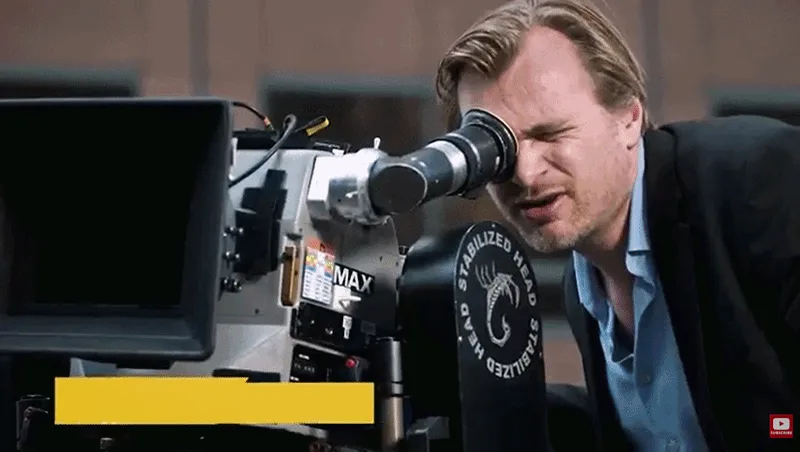
Nolan’s approach to filmmaking reflects this philosophy in practice. He has long favored practical effects whenever possible, with his productions regularly featuring real locations, large-scale sets, practical explosions, miniature effects, and IMAX film cameras instead of relying exclusively on computer-generated imagery. This does not mean he opposes every digital filmmaking tool—throughout his career he has used visual effects where appropriate. Instead, his work shows a preference for combining technology with physical craft, using digital tools to support an image rather than allowing them to become the entire foundation of it.
Instead, he argues that technology should serve the story rather than replace creative craftsmanship. During the production of The Odyssey, Nolan reportedly built a massive practical Cyclops puppet rather than relying entirely on digital animation, continuing his preference for physical filmmaking techniques. Practical effects often provide a level of weight, texture, and physical realism that audiences subconsciously recognize, even when they cannot explain why an image feels more convincing. That supports Nolan’s broader belief that authenticity, intention, and craftsmanship remain valuable in modern filmmaking, especially at a time when audiences are becoming more skeptical of synthetic media.

Christopher Nolan on AI, Authentic Filmmaking, and Hollywood’s AI Debate
Christopher Nolan believes younger audiences have an advantage when identifying AI-generated media because they grew up navigating online platforms filled with manipulated images, edited videos, memes, and algorithmically generated content. Years of exposure to internet culture have made many younger users more sensitive to visual inconsistencies, unnatural motion, repetitive phrasing, and other characteristics commonly associated with AI-generated material. Although AI tools continue to improve and distinguishing human-created work from machine-generated content will become increasingly difficult, Nolan argues that today’s younger generation already demonstrates remarkably strong instincts for recognizing content that lacks authentic creative intent. (Euronews)
Authenticity has long defined Nolan’s filmmaking philosophy. His films emphasize practical craftsmanship, large-format photography, real locations, practical stunts, and immersive physical production wherever possible. These choices reflect a broader creative approach that values tangible filmmaking over technological spectacle for its own sake. Rather than rejecting technology entirely, Nolan believes audiences continue to appreciate stories shaped through genuine artistic effort instead of automated generation, and his recent comments suggest he sees viewers increasingly sharing those priorities.
At the same time, Hollywood continues investing heavily in generative AI despite widespread skepticism from many filmmakers. Studios see potential applications across production, including concept art, previsualization, script analysis, dubbing, visual effects assistance, marketing materials, localization, and production planning. Supporters argue that AI can reduce costs and accelerate workflows without necessarily replacing creative professionals. Critics, however, worry that studios could eventually use AI to reduce staffing, reuse performers’ likenesses without adequate compensation, or limit opportunities for artists. As a result, Hollywood’s relationship with AI remains both commercially attractive and highly controversial.
These concerns came to the forefront during the 2023 Hollywood labor disputes, where artificial intelligence became one of the industry’s most significant issues. Writers and actors raised concerns that studios could use AI to generate scripts, digitally recreate performers, or reuse actors’ likenesses without meaningful consent or compensation. The agreements that ended the strikes introduced new protections governing AI’s use in writing and performance, although debate continues over how those rules will evolve as the technology advances. Nolan’s recent comments reflect many of the broader cultural concerns that emerged during those negotiations, even though his primary focus remains audience reactions rather than labor policy. (The Guardian)

What Christopher Nolan’s AI Comments Mean for Hollywood
To support his argument, Christopher Nolan highlighted the success of Backrooms and Obsession. He praised both films as examples of younger filmmakers embracing mystery, atmosphere, practical effects, and original storytelling instead of relying heavily on generative AI. Nolan argued that these films demonstrate younger audiences are willing to embrace challenging, thoughtful cinema despite persistent claims that modern viewers only consume short-form content. He even compared portions of Backrooms to the work of David Lynch, emphasizing its surreal and contemplative style. For Nolan, their success illustrates that originality and craftsmanship still resonate with moviegoers.
Nolan’s remarks arrive during a pivotal period for the entertainment industry, as studios rapidly experiment with AI while audiences increasingly debate authenticity, originality, and artistic integrity. His comments suggest that technological innovation alone will not determine filmmaking’s future. Instead, audience trust, emotional connection, and creative craftsmanship may ultimately prove just as important.
If younger moviegoers continue rewarding films that emphasize practical filmmaking, distinctive artistic voices, and genuine human creativity, studios may find themselves balancing AI-assisted efficiency with audience demand for authenticity. Rather than predicting AI’s failure, Nolan’s comments serve as a reminder that successful filmmaking has always depended on more than technology alone. Human imagination, artistic judgment, and meaningful storytelling remain the qualities that audiences remember long after visual innovations become commonplace.
There is evidence that many audiences react negatively when AI appears to replace artistic work, particularly in marketing materials, concept art, or creative production. However, describing the entire moviegoing public as rejecting generative AI would overstate the available evidence, as audience opinions remain mixed. Some viewers object strongly to AI-generated creative work, while others are comfortable with AI serving as a behind-the-scenes production tool. Many simply care whether the finished film is entertaining regardless of the methods used. Nolan’s comments should therefore be understood as his interpretation of an emerging cultural trend rather than a definitive measurement of audience behavior.
Frequently Asked Questions
- What did Christopher Nolan say about AI?
Nolan said he has never seen a faster public rejection of a supposedly transformative technology. He argued that many younger audiences quickly recognize and dismiss low-quality AI-generated content while still appreciating authentic filmmaking. (euronews) - What does “AI slop” mean?
“AI slop” is an internet term used to describe low-quality, mass-produced AI-generated content that appears repetitive, generic, or lacking genuine artistic effort. - Why does Nolan believe Gen Z rejects AI?
He believes younger audiences grew up in online environments that make them especially good at identifying AI-generated content and judging its quality quickly. - Is Christopher Nolan against all AI?
No. Nolan said not every aspect of AI is useless. His criticism is focused on how generative AI is currently being applied to filmmaking. - Why did Nolan mention Backrooms and Obsession?
He cited both films as examples of younger filmmakers creating successful, mysterious, practical, and human-driven stories that resonate with audiences. - Does Christopher Nolan use CGI in his movies?
Yes. Nolan uses CGI when necessary but generally prefers practical effects, real locations, and physical filmmaking whenever possible. - How did AI affect the Hollywood strikes?
AI became a major issue during the 2023 labor disputes, with writers and actors seeking protections against unauthorized AI-generated scripts and digital recreations. - Why is Hollywood investing in generative AI?
Studios believe AI can reduce costs, improve efficiency, assist visual effects, streamline production, and support various creative workflows. - Has Christopher Nolan said AI can replace filmmakers?
No. Nolan has dismissed the idea that AI can replace human creativity, describing that belief as unrealistic. (The Guardian) - What do Nolan’s AI comments mean for the future of Hollywood?
His comments suggest that while AI will likely remain part of filmmaking, audience demand for authentic storytelling, practical craftsmanship, and human creativity may continue shaping the industry’s future.

Conclusion
Christopher Nolan’s remarks about “AI slop” are less a rejection of technology itself than a critique of how generative AI is being introduced into creative industries. He argues that audiences—particularly Gen Z—are proving more discerning than many expected, rewarding films that emphasize originality, practical craftsmanship, and authentic artistic vision over content that feels automated or generic.
Whether his prediction proves entirely accurate remains to be seen, but his comments have intensified an important debate at a time when Hollywood is investing heavily in generative AI while simultaneously facing growing public scrutiny over its creative use. As studios search for the right balance between innovation and artistry, Nolan’s perspective highlights a central question for the industry: technological advancement alone may not be enough if audiences continue to value the unmistakable qualities of human creativity.
Sources and Citation
- The Telegraph
https://www.telegraph.co.uk/ - Euronews
https://www.euronews.com/ - The Guardian
https://www.theguardian.com/film/2026/jul/13/christopher-nolan-odyssey-director-comments-ai-artificial-intelligence - TheWrap
https://www.thewrap.com/ - PC Gamer
https://www.pcgamer.com/gaming-industry/chirstopher-nolan-celebrates-backrooms-success-believes-younger-generations-are-rejecting-ai-their-judgement-of-ai-slop-has-been-immediate-and-harsh/ - The Economic Times
https://economictimes.indiatimes.com/magazines/panache/gen-z-is-rejecting-ai-christopher-nolan-makes-big-prediction-about-hollywood-says-ai-tech-arrived-at-the-wrong-time/articleshow/132336131.cms
Recommendations
- Elliot Page as Achilles? Lupita Nyong’o as Helen of Troy? Rumored Cast and Character Guide for Christopher Nolan’s the Odyssey (2026)
- Coffee Stain Malmö Closed: What Happened to the Goat Simulator 3 Mobile Studio?
- Love Death and Robots Season 4: Release Date, Episodes, Animation Studios, and Everything We Know So Far
- Top Gun Back in Theaters for 40th Anniversary: Release Date, IMAX Return, and What Fans Can Expect
- PS5, Xbox Series X|S, And Switch 1 Sales Dropped In January For The US — January 2026 Circana Report Breakdown
- The Audience for the Silent Hill 2 Remake Has Surpassed 5 Million People: What Konami Announced and What It Means
- The Lost Wild – Official Gameplay Trailer Breakdown, Release Date, Story, Dinosaurs & Survival Horror Details Explained
- Blight: Survival Blends Co-Op Medieval Combat with a Grounded Zombie Plague
- Nintendo Pokémon Pokopia Switch 2 Pack Launches Next Month
- Lost Castle 2 Achievement Guide: How to Unlock Every Achievement



































































































