






In This Article (9 sections)
What is Fears to Fathom: Scratch Creek? Story, Setting, and Tessa and Marcus Explained
Fears to Fathom: Scratch Creek expands the psychological horror series’ episodic formula into a larger, more cinematic experience centered on cooperative survival. Known for unsettling and often grounded survival scenarios, the series traditionally places isolated protagonists in dangerous situations. This installment moves beyond solitary horror by following a couple trapped inside Scratch Creek, a collapsing and abandoned urban environment filled with broken infrastructure, environmental hazards, and unknown threats that stalk anyone attempting to survive within it. The city no longer functions as a normal settlement and instead becomes a hostile maze that the protagonists must navigate while uncovering the reasons behind its destruction.
The story follows two survivors with different strengths and perspectives:
- Tessa: A resourceful strategist with strong observational skills.
- Marcus: A physically capable but emotionally driven partner.
After arriving in Scratch Creek for what was intended to be a temporary stop during a longer journey, Tessa and Marcus quickly discover that the city is not abandoned in the traditional sense. It remains active in its decay, with its damaged surroundings and hidden dangers creating an immediate threat to the couple. Unlike earlier entries focused on a single character, the game introduces a dual-character system that allows the player to alternate between or cooperate as both protagonists. Their individual abilities and narrative perspectives influence how they investigate the environment, respond to danger, and attempt to escape.
As Tessa and Marcus venture deeper into the city, they uncover fragmented evidence suggesting that Scratch Creek suffered a rapid societal collapse caused by unexplained events. Emergency broadcasts, abandoned shelters, and handwritten warnings indicate that something forced the population to flee almost overnight. The story develops through environmental clues, VHS-style recordings, and fragmented flashbacks, requiring players to reconstruct what happened while simultaneously surviving the dangers of the present. The central objective is straightforward in principle but increasingly difficult in practice: survive the city, uncover its mysteries, and escape before Scratch Creek and the threats concealed within it overwhelm the couple.

How Scratch Creek’s Decaying City and Co-Op Survival Systems Shape the Horror
Scratch Creek is designed as a fully decayed urban labyrinth. Once a moderately industrial city, it now exists in a semi-destroyed state where nature and structural collapse compete for dominance. Its environment includes several dangerous and unsettling locations:
- Collapsed highways and blocked tunnels
- Flickering streetlights powered by unstable generators
- Abandoned residential zones filled with locked interiors
- Flooded underground metro systems
- Industrial districts containing hazardous machinery that remains partially active
The atmosphere is heavily influenced by liminal horror design, transforming recognizable urban spaces into environments that feel familiar yet deeply wrong. Empty streets extend farther than expected, silence becomes oppressive, and distant mechanical noises create a constant sense of tension. The city is not merely a visual backdrop, as its damaged infrastructure and environmental hazards directly influence how players navigate, hide, solve problems, and survive.
Fears to Fathom: Scratch Creek also introduces a co-op survival-horror structure that differentiates it from earlier entries in the series. Players can experience the game in several ways:
- Play solo with an AI-assisted partner
- Play in full co-op mode with both characters controlled by players
- Switch between Tessa and Marcus during key story segments
The co-op system directly affects puzzle-solving, stealth, exploration, and survival outcomes rather than functioning as a cosmetic multiplayer addition. Certain areas require coordinated actions, such as having one character distract a threat while the other escapes, activating separate levers simultaneously, or exploring divided paths that require clear communication. This design creates a distinctive form of tension because players are no longer completely alone, yet both characters remain vulnerable to the city and its hidden dangers.
Multiplayer cooperation is frequently asynchronous, meaning Tessa and Marcus are not always able to remain together. Several interconnected mechanics shape how players coordinate while separated:
- Distance Link System: Communication is restricted by a limited radius between the two characters.
- Shared Stress Meter: The characters’ emotional states can influence gameplay performance.
- Asymmetric Objectives: Tessa and Marcus may be assigned different survival tasks at the same time.
- Resource Sharing: Items must be physically transferred from one character to the other.
These systems require careful communication, preparation, and resource planning. Miscommunication can result in lost supplies, missed escape routes, or accidentally triggered environmental hazards. By combining a hostile urban setting with character separation and interdependent objectives, Scratch Creek makes cooperation essential without removing the isolation and vulnerability that define its horror.

Fears to Fathom: Scratch Creek Gameplay, Characters, and Survival Strategies
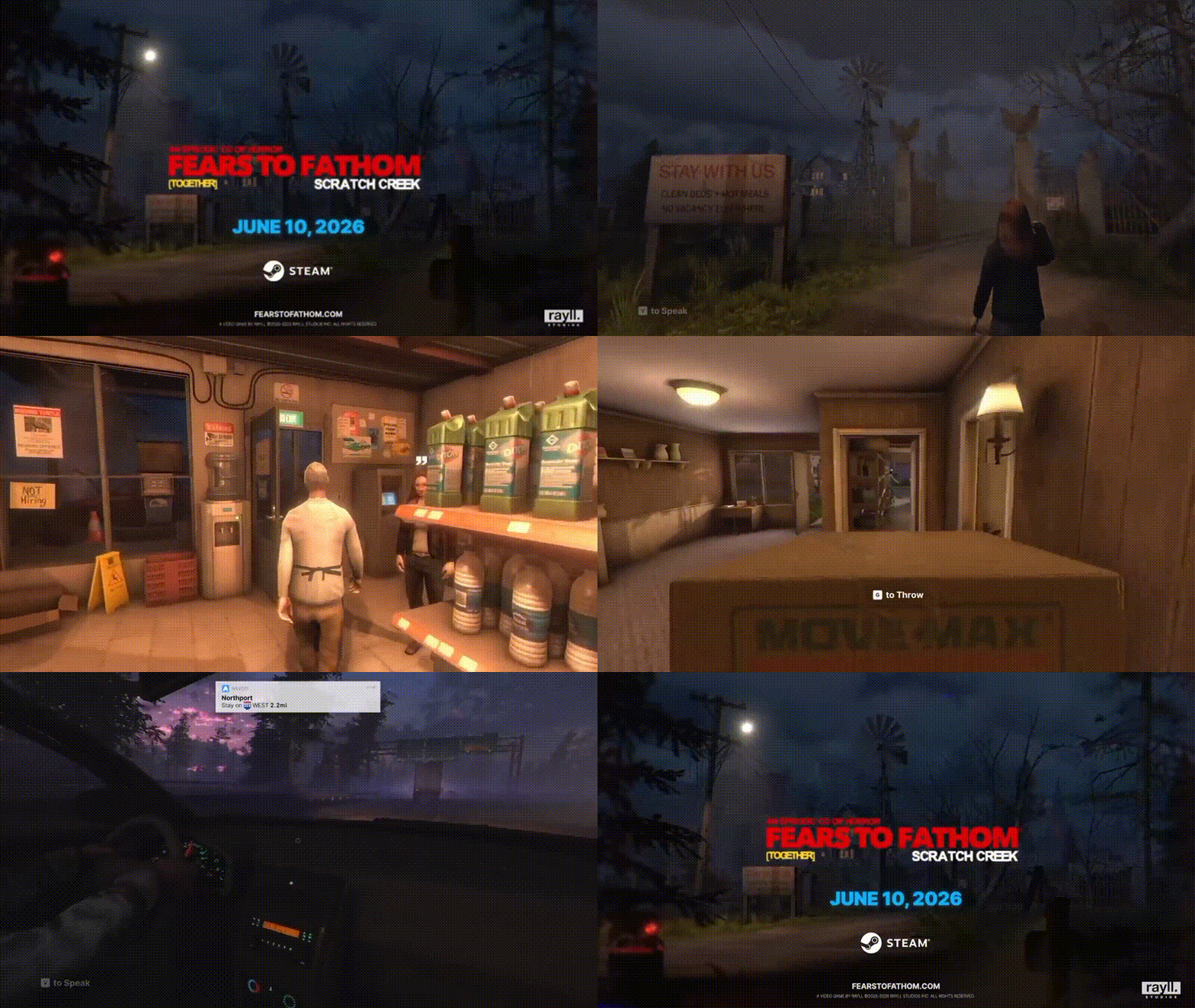
Fears to Fathom: Scratch Creek combines exploration, driving, resource management, and environmental survival within a gameplay loop that continually shifts between investigation, tension-building, and escape sequences. Players search abandoned buildings, underground systems, and collapsed infrastructure for tools, keys, and narrative clues. Certain sections also allow vehicle travel across broken highways and unstable roads, although limited fuel and poor visibility make driving another source of danger rather than a guaranteed means of escape.
The main survival systems include:
- Stamina management
- Limited flashlight battery power
- Noise-detecting AI enemies
- Environmental hazards such as gas leaks and collapsing structures
Tessa and Marcus bring different abilities to these situations, creating a balanced survival partnership. Tessa serves as the analytical core of the duo and is particularly effective at solving environmental puzzles, spotting hidden clues, and managing resources efficiently. Marcus provides greater physical capability and is more inclined toward risk-taking decisions. His strengths include breaking through obstacles, distracting threats, and navigating dangerous physical terrain. Together, their complementary abilities help them overcome different obstacles, while their emotional bond becomes an important part of the story and influences the decisions they make.
Surviving Scratch Creek requires players to use both characters effectively and plan their movements carefully. Useful strategies include:
- Prioritize high-ground routes to avoid threats at street level.
- Conserve battery-powered tools for critical moments.
- Maintain a clear line of sight between Tessa and Marcus whenever possible.
- Use environmental distractions, including alarms and generators, carefully.
- Avoid unnecessary exploration during chase sequences.
Escape routes frequently require backtracking through areas that have already been explored, but these locations become increasingly dangerous over time. Players must therefore balance the need to search for resources and clues against the risks created by limited supplies, environmental hazards, and threats capable of responding to noise. Successfully escaping depends on understanding each character’s strengths, conserving essential equipment, and recognizing when exploration should give way to immediate survival.

Fears to Fathom: Scratch Creek Psychological Horror, True-Story Inspiration, Release, and Platforms
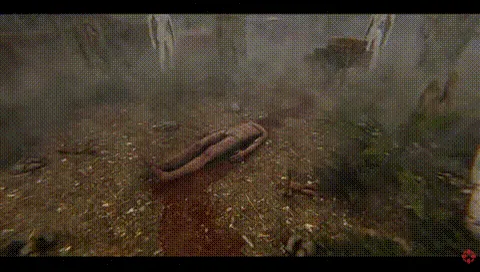
Fears to Fathom: Scratch Creek relies heavily on psychological horror, using distorted audio logs, unreliable environmental storytelling, sudden reality shifts, and VHS-style visual degradation during moments of extreme stress. The VHS aesthetic creates the impression that players are viewing a recorded or reconstructed memory rather than experiencing an entirely stable present, encouraging them to question what is real and what may have been altered. Its horror does not depend on enemies appearing constantly. Instead, anticipation, uncertainty, and the possibility that the environment cannot be trusted maintain the tension even when no immediate threat is visible.
The wider Fears to Fathom franchise is known for presenting found-footage-style narratives inspired by real-world fears and horror experiences submitted online. Although Scratch Creek itself is fictional, it continues the series’ tradition of grounding its horror in believable situations, including urban collapse, missing-person cases, and survival against unknown threats. This realism-first approach strengthens immersion by placing unusual or unexplained events within recognizable circumstances, making the psychological tension feel more immediate.
Scratch Creek is designed as a modern survival-horror expansion that may target PC and console platforms. Its expected platform features include:
- Full controller support
- Co-op matchmaking systems
- Adjustable horror-intensity settings
- Performance scaling for lower-end hardware
The game follows an episodic release pattern similar to earlier entries in the series, allowing its content to develop through incremental updates and expansions.

How Scratch Creek Reinvents the Fears to Fathom Formula with Co-Op Horror
Scratch Creek reflects a broader shift in survival-horror design by changing several elements traditionally associated with the Fears to Fathom formula:
- From solo survival to dual-character dependency
- From scripted scares to adaptive psychological tension
- From linear storytelling to a branching co-op narrative flow
By integrating cooperative mechanics, the game introduces emotional dependency as a new source of horror. Players must do more than survive the hostile environment, as they are also required to communicate, coordinate their actions, and depend on one another while under stress. This makes cooperation part of the tension, with the pressure of maintaining the partnership becoming as important as escaping the dangers of Scratch Creek.

Frequently Asked Questions (FAQs)
- What is Scratch Creek in Fears to Fathom?
Scratch Creek is a survival-horror setting built around a collapsing urban environment. Players must navigate the city, remain alive, and search for a way out while dealing with the dangers created by its deteriorating condition. The setting is therefore more than a background for the story, as escaping the city is one of the central challenges of the experience. - Who are the main characters?
Tessa and Marcus are the two central characters. They are a couple attempting to survive the events in Scratch Creek together, which makes their relationship an important part of the survival experience. Their shared situation means that both characters must endure the dangers of the city while working toward the same goal of escaping alive. - Is Scratch Creek a co-op game?
Yes, it includes cooperative gameplay mechanics that allow the survival experience to be shared between players. Cooperation is part of how the characters respond to the dangers around them, making coordination important as they move through Scratch Creek and attempt to survive its collapsing environment. - Can it be played solo?
Yes, solo play is supported through AI-assisted partner behavior. This allows one player to experience the story without requiring another person to control the second character. The AI partner assists during the journey so that the cooperative structure involving Tessa and Marcus can still remain part of the gameplay. - What type of horror is used?
The game combines psychological, environmental, and VHS-style horror. Psychological horror creates fear through uncertainty and mental pressure, while environmental horror makes the deteriorating city itself feel threatening. The VHS-style presentation adds a distorted recorded quality that strengthens the unsettling tone of the experience. - Does Scratch Creek have combat?
Combat is limited, with survival and stealth receiving greater emphasis. Players are encouraged to avoid danger, move carefully, and focus on staying alive rather than confronting every threat directly. This approach makes caution and awareness more important than relying primarily on fighting. - What is the main objective?
Players must escape the city while uncovering the mystery surrounding it. Survival and investigation are therefore connected, as progressing through Scratch Creek also reveals more about what is happening there. Reaching safety requires players to continue moving through the environment while searching for information and a viable escape route. - Is it open world?
The game uses a semi-open structure made up of interconnected zones. Players can move between different areas of Scratch Creek, but the experience is not described as a completely unrestricted open world. Its connected locations provide room for exploration while keeping the survival journey focused on the city and its escape routes. - Does player choice matter?
Yes, decisions can influence survival outcomes. The choices made during the experience may affect how successfully the characters respond to danger and whether they survive particular situations. This gives player decisions a meaningful role in determining how the journey through Scratch Creek develops. - Is it connected to other Fears to Fathom games?
Yes, it belongs to the anthology-style continuity of the Fears to Fathom series. This means it is part of the same broader collection of horror stories while presenting its own setting, characters, and survival scenario within that format.

Conclusion
Fears to Fathom: Scratch Creek redefines survival horror by combining cooperative gameplay, psychological tension, and environmental storytelling within a collapsing urban nightmare. Through the intertwined journeys of Tessa and Marcus, players experience not only external danger but also emotional dependency and strategic survival pressure. Its blend of VHS aesthetics, adaptive perspective systems, and co-op mechanics positions it as a standout evolution in modern indie horror design.
Sources and Citations
- Fears to Fathom — Official Website
The official series website describes Fears to Fathom as an episodic psychological-horror anthology and lists the released episodes, including Home Alone, Norwood Hitchhike, Carson House, Ironbark Lookout, and Woodbury Getaway.
Fears to Fathom Official Website - Steam — Fears to Fathom: Home Alone
The official store page confirms Rayll as developer, the episodic psychological-horror format, first-person presentation, interactive-fiction elements, player choices, and VHS aesthetic.
Fears to Fathom: Home Alone on Steam - Steam — Fears to Fathom: Ironbark Lookout
Useful for the series’ later design direction. It identifies Ironbark Lookout as the fourth episode and documents its first-person narrative, exploration, driving, conversation mechanics, atmospheric presentation and VHS film aesthetic.
Fears to Fathom: Ironbark Lookout on Steam - Steam Community — Fears to Fathom: Ironbark Lookout
The official community hub is useful for developer/community updates. It also currently identifies Scratch Creek as an online co-op episode, making it particularly relevant to research into the series’ move toward cooperative horror.
Fears to Fathom Steam Community - Steam — Fears to Fathom Franchise Collection
The individual Steam listings provide a useful primary-source record of the anthology’s episodic structure, release history, mechanics and presentation across different installments.
Fears to Fathom on Steam - GDC Vault — Game Development Talks
A strong industry reference for survival-horror design, environmental storytelling, tension, player psychology, level design and horror-game production.
GDC Vault - Game Developer — Horror Game Design Coverage
Formerly Gamasutra, Game Developer publishes professional game-design analysis and developer interviews covering horror mechanics, level design, narrative design and indie development.
Game Developer - IGN — Horror Games Coverage
Useful for comparative coverage of survival horror, psychological horror, indie horror and major genre releases.
IGN Horror Games Coverage - GameSpot — Horror Games Coverage
Provides reviews, previews, interviews and comparative coverage of survival-horror and psychological-horror games.
GameSpot Horror Coverage - Steam — Fears to Fathom: Scratch Creek
Particularly relevant for the co-op portion of your source list. The official Steam Community information identifies Scratch Creek as an online co-op episode.
Fears to Fathom: Scratch Creek on Steam - Steam — Phasmophobia
A useful comparative primary source for cooperative horror, documenting its multiplayer ghost-hunting structure and team-based gameplay.
Phasmophobia on Steam - Steam — The Outlast Trials
Useful for comparing cooperative survival-horror mechanics, multiplayer objectives, resource management and psychological horror.
The Outlast Trials on Steam - Fears to Fathom — Official Website
The official series description establishes the anthology’s psychological-horror identity.
Fears to Fathom Official Site - Steam — Home Alone
This is one of the strongest primary sources for the VHS aesthetic claim: the official listing explicitly identifies atmospheric/photo-realistic graphics and a VHS film aesthetic as key features.
Fears to Fathom: Home Alone — Steam - Steam — Ironbark Lookout
Also explicitly lists the VHS film aesthetic, atmospheric environments and psychological-horror classification, making it useful for demonstrating that the visual style is a recurring series convention rather than a one-off design choice.
Fears to Fathom: Ironbark Lookout — Steam
Recommendations
- Stranger Things: Tales From ’85 Ending Explained — Eric Robles Teases Hidden Meaning and Future Clues
- Custom Skyboxes with Blender: Create Equirectangular HDRIs, Fix Seams, and Export to Unity & Unreal
- Xenoblade Chronicles X Switch 2 Edition Update Called the “Worst Switch 2 Edition” Why Players Are Requesting Refunds
- The 9th Dragon – Official Announcement Trailer Breakdown (Story, Setting, Gameplay, Platforms)
- End of Abyss is a Quiet, Creepy Twin-Stick Metroidvania from Ex-Little Nightmares Devs
- Schneider Electric Buying Cognite for $3.1B: What it Means for Industrial AI
- Stupendium Softworks: Industry Veteran Alex Oxspring and YouTube Musician the Stupendium Launch New UK Indie Game Studio
- World Creator 2026.4 Released: New Free Community Edition, Features, Performance Boosts & What’s New
- Deltarune Chapter 5 Revealed, And It’s Out Very Soon
- Metaphor: ReFantazio Switch 2 Release Date & Details



































































































