






In This Article (8 sections)
NASCAR 26 Gameplay Trailer, Release Date, Platforms, Editions, and Cover
NASCAR 26 is off to a promising start with a first gameplay trailer that presents iRacing Studios’ second modern NASCAR release as a substantial evolution rather than a routine annual roster update. NASCAR and iRacing Studios released the trailer on July 29, 2026, while simultaneously opening pre-orders. The footage moves quickly across nearly every major part of the package, highlighting changes to track conditions, handling, artificial intelligence, online play, career progression, championship formats, graphics, replay presentation, and race celebrations.
The official release date is September 18, 2026, with simultaneous availability planned for PlayStation 5, Xbox Series X|S, and Windows PC through Steam. This unified launch is important because NASCAR 25 reached PC after its original console release, whereas NASCAR 26 is scheduled to arrive across all three supported platforms within the same launch period. Steam may show September 17 in some regions because of regional unlock timing, but NASCAR identifies September 18 as the formal launch date.
No PlayStation 4 or Xbox One version has been announced. By focusing on current-generation consoles and PC, iRacing Studios can develop the game’s physics, lighting, artificial intelligence, track evolution, and other technical systems without also designing around older console hardware.
The confirmed release and purchasing details include:
- Standard Edition: $59.99 in the United States
- Gold Edition: $79.99 in the United States
- Gold Edition early access: Begins September 15, three days before the standard launch
- Gold Edition Season Pass: Four monthly paint-scheme DLC packs, 1,000 Career Reputation Points, $10,000 in Career Bonus Dollars, and additional content through the end of 2026
- Pre-order bonuses for eligible purchases: 5,000 Career Bonus Dollars, 500 Career Reputation Points, and an exclusive Kyle Larson paint scheme
The Gold Edition does not contain exclusive access to the major racing systems. Dynamic Track, enhanced physics, career mode, The Chase, Peak Performance, cross-platform multiplayer, and the other fundamental improvements are part of the core game. The premium edition is aimed more directly at players who value early access, career resources, paint schemes, and the planned post-launch content.
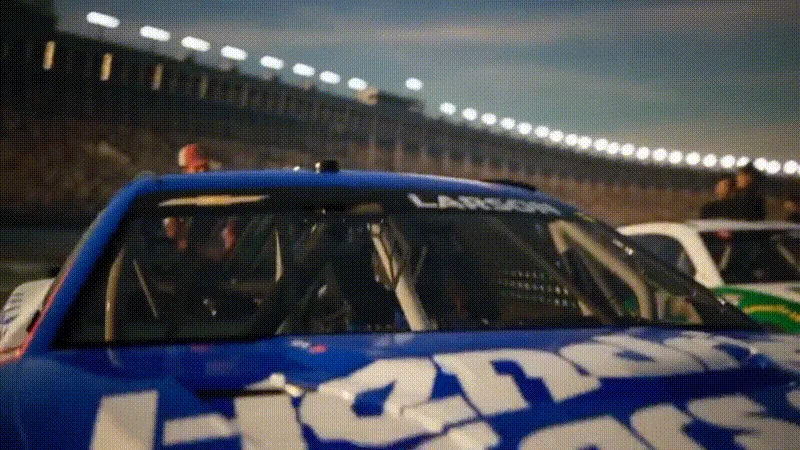
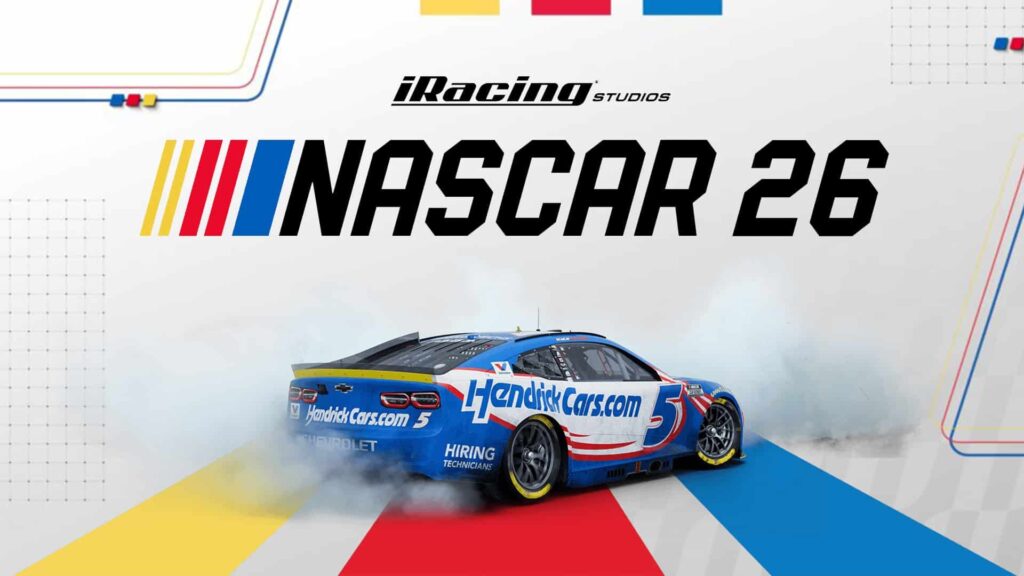
Kyle Larson is the official cover driver. NASCAR and iRacing Studios revealed his involvement during an event aboard the USS Midway in San Diego in June 2026. Larson performed a burnout during the presentation, creating a direct connection with the new burnout celebrations included in the game. His exclusive paint scheme is also part of the pre-order package.
Freddie Kraft joins the game as a new spotter voice. Spotter communication is especially important in NASCAR because players frequently spend long periods racing side by side at high speed. Clear information about cars running inside, outside, or clear can directly influence whether a player avoids contact and maintains position. NASCAR-related media is also becoming more visible within the wider presentation, with developer material referencing Dale Jr. Download content and the addition of Door Bumper Clear.
The trailer confirms an unusually broad collection of additions and improvements:
- Dynamic Track technology with visible rubber buildup
- Revised tire, braking, and chassis physics
- Cross-platform multiplayer
- Expanded career facilities and team upgrades
- New race shops
- The Chase championship mode
- Peak Performance training
- AI-controlled DNFs
- Safety violations
- Revised road-course behavior and track limits
- Improved skies and dynamic lighting
- Enhanced smoke, debris, and particle effects
- Better replay cameras and motion blur
- Burnout celebrations
- A trophy room
- An improved paint system
- A 750-horsepower package
- New circuits and refreshed existing tracks
- The new Dodge Ram truck
- Freddie Kraft as a spotter
The first trailer remains promotional footage rather than proof that every feature will work perfectly at launch. Online stability, artificial intelligence consistency, wheel compatibility, controller balance, penalties, career progression, and the strength of the dynamic racing surface will require testing in the finished game. However, the scope of the reveal shows that iRacing Studios is concentrating on systems players will encounter throughout complete races rather than relying only on updated liveries and presentation changes.
Dynamic Track, Driving Physics, Cross-Platform Multiplayer, AI, and Graphics
Dynamic Track technology is positioned as one of NASCAR 26’s defining gameplay systems. Instead of treating each circuit as a completely static surface, the game allows track conditions to develop throughout practice, qualifying, and the race. A weekend begins with a relatively green surface containing little deposited rubber. As cars circulate, rubber builds across the lanes they use most frequently, changing grip and potentially altering which parts of the circuit are most effective.
This could have a particularly important effect on oval racing. The fastest lane during the opening portion of a race may not remain the ideal option after several long runs. A lower groove could lose some of its advantage, while the upper lane may become more useful as competitors deposit rubber and search for clean air. Players may need to adapt rather than repeatedly following one predetermined racing line from the first lap to the last.
Track evolution can also influence setup decisions. A car that feels secure during early practice may behave differently after the racing surface changes. Players must consider not only immediate speed but how the vehicle could respond later in the weekend. Practice therefore becomes an opportunity to study changing conditions rather than simply memorize braking points and perfect one line.
Rubber buildup is represented visually through the revised surface and particle systems, helping players see how the track has developed. The system could improve replay value because separate races at the same venue may not evolve identically. Different traffic patterns, race lengths, and lane choices can potentially create different passing opportunities and handling challenges.
The driving model has also been revised rather than carried over unchanged from NASCAR 25. iRacing Studios has confirmed overhauled tire and braking behavior alongside physics improvements for the different chassis represented in the game. Tire behavior is critical because grip changes across a fuel run. A car that feels stable on fresh tires may become harder to rotate later, while overly aggressive driving can reduce performance before the next pit stop.
A stronger tire model can therefore affect several connected areas:
- Throttle control
- Long-run pace
- Tire conservation
- Pit strategy
- Restarts
- Lane selection
- Car setup
- The value of taking fresh tires under caution
Braking changes are especially relevant on road and street courses. NASCAR’s modern schedules require drivers to move between superspeedways, intermediate ovals, short tracks, conventional road courses, and tight street circuits. Stable braking and predictable weight transfer become much more important when players must slow a heavy stock car for technical corners and narrow barriers.
NASCAR 26 also contains improved control calibration and force-feedback adjustment. These tools are intended to serve both controller players and racing-wheel users. More detailed settings should allow players to adapt steering response, pedal behavior, vibration, and force feedback to their own hardware instead of depending entirely on a universal preset.
A 750-horsepower package adds further flexibility to the available racing configurations. The game is not being marketed as a replacement for the full iRacing simulator, but the objective is clearly to bring more of iRacing Studios’ technical understanding into an accessible NASCAR game for consoles and PC.
Cross-platform multiplayer is one of the most consequential community improvements. Players on PlayStation 5, Xbox Series X|S, and PC can compete across platform boundaries rather than remaining divided into separate pools. This should make it easier for friends on different systems to race together and increase the number of competitors available for matchmaking.
A combined player base is particularly valuable outside peak hours. Racing games depend on having enough participants to form meaningful grids, and a fragmented population can make finding suitable events difficult. Cross-play removes one of the largest structural barriers to sustaining an active online NASCAR community.
The feature also increases the importance of balanced controls. PC competitors may use advanced wheel-and-pedal equipment, while many console players will rely on standard controllers. The expanded calibration settings need to make both methods practical without allowing one input type to dominate every online event. Server performance, collision behavior, matchmaking, penalty enforcement, and protection against deliberately destructive driving will ultimately determine how successful the online experience becomes.
Artificial intelligence has received several meaningful changes. AI-controlled drivers can now suffer DNFs, preventing every computer opponent from circulating automatically until the finish. This introduces greater volatility into individual races and championships because a leading rival can lose substantial points through an accident or failure.
AI DNFs also give the player more reason to continue after a difficult start. Even when victory is no longer realistic, completing the race may still protect valuable championship points if competitors retire. This becomes especially significant in The Chase, where one failure during a condensed 10-race title battle can transform the standings.
General driver AI has also been improved, although NASCAR has not released a complete technical description of every behavioral change. The final game will need to demonstrate whether computer drivers can use evolving lanes, race side by side naturally, respond intelligently to changing grip, and avoid repetitive or unrealistic contact.
Safety violations add another level of race regulation. These systems can affect pit-road behavior, track limits, and road-course procedures, creating consequences beyond ordinary collision penalties. Developers have also revised road-course boundaries and relaxed some track-limit restrictions following feedback, suggesting that iRacing Studios is trying to distinguish between genuine shortcuts and reasonable use of the racing surface.
The presentation upgrades support the mechanical changes. NASCAR has confirmed improved graphics, dynamic lighting, upgraded skies, enhanced smoke and debris, visible rubber buildup, better motion blur, and revised replay cameras. Lighting conditions can transform the appearance of cars, grandstands, and track surfaces across a session, making venues feel less visually static.
Improved particle effects should make crashes, tire smoke, debris, and burnouts more convincing. Better replay cameras can present those effects using views inspired by NASCAR broadcasts, including long-lens shots, trackside positions, and sweeping images of large groups of cars. These improvements extend beyond texture resolution by changing how speed, atmosphere, surface evolution, and race incidents are communicated.
Career Mode, the Chase, Peak Performance, and NASCAR’s Four-Series Ladder
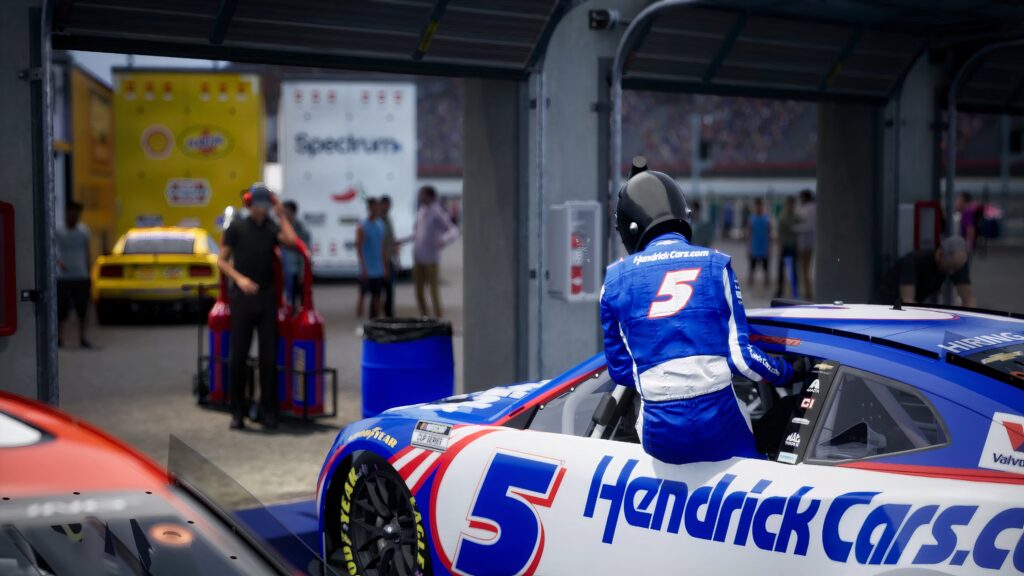
Career mode returns with expanded management features intended to make progression feel more like building a racing organization. NASCAR has confirmed new facilities, team upgrades, and race shops, adding greater depth to the off-track side of the experience. Instead of simply moving from one race on a calendar to another, players can develop the structure supporting their team and career.
The fundamental progression still follows NASCAR’s competitive ladder. Players can begin in the lower divisions and work toward the highest level while improving their reputation, resources, and organization. The four included series are:
- NASCAR Cup Series
- NASCAR O’Reilly Auto Parts Series
- NASCAR Craftsman Truck Series
- ARCA Menards Series
Real drivers from all four championships are included. Each series has a different competitive identity and provides its own place within the career journey. ARCA acts as an entry point, Trucks introduce their own handling and racing style, the O’Reilly Auto Parts Series raises the level of competition, and Cup represents the highest tier.
The inclusion of several chassis also makes the physics overhaul more meaningful. Steam’s description states that enhanced driving behavior applies across every chassis, meaning the vehicles should not feel identical simply because they share the same basic controls. The new Dodge Ram truck expands the authenticity and variety of the Truck Series roster.
Facilities and team upgrades can potentially influence how quickly the organization develops, how resources are allocated, and how competitive the player becomes. The exact costs, upgrade paths, and performance effects will depend on the finished career economy. Career Bonus Dollars and Reputation Points remain important progression resources, explaining why both editions and pre-orders include additional quantities.
A trophy room provides a permanent place to display career accomplishments. Although it does not directly change the driving model, it gives victories and championships a visible record inside the player’s organization. For long-term solo play, that sense of accumulated history can make each season feel more meaningful.
The Chase is a separate championship mode built around a condensed 10-race title run. Instead of completing an entire season before reaching the decisive portion of the championship, players can begin directly with the final battle and select which drivers participate in the field.
This structure benefits players who enjoy championship pressure but do not want to complete a full campaign first. It also allows hypothetical lineups and customized title battles. Players can place a favorite driver into contention, recreate a preferred field, or construct a championship involving a different combination of competitors.
AI DNFs should have an especially large effect in this format. One retirement during a short 10-race championship can reshape the standings, forcing both the player and computer-controlled rivals to recover over a limited number of remaining events. Dynamic Track conditions and changing tire behavior could further prevent every title run from following the same pattern.
Peak Performance is a new training mode intended to help players understand the revised handling model. Official descriptions confirm the mode but provide fewer details than the explanations released for Dynamic Track or The Chase. Its inclusion is nevertheless logical because the game asks players to learn new tire behavior, braking characteristics, force feedback, changing racing lines, and several different types of circuit.
A structured training environment can help players practice without simultaneously worrying about career points, online opponents, or championship consequences. Newcomers may use it to learn basic stock-car control, while experienced players can use it to refine consistency and adapt to the new physics.
The concepts that Peak Performance can potentially help players understand include:
- Throttle management
- Trail braking
- Drafting
- Tire conservation
- Corner entry and exit
- Changing racing grooves
- Road-course braking
- Car control during long runs
- Controller and wheel calibration
Information discussed after developer Q&A material also suggested that Peak Performance could assist players in finding an appropriate artificial intelligence difficulty baseline. The full implementation should be judged through the final game’s documentation and release build, but the concept gives iRacing Studios an opportunity to teach NASCAR driving principles rather than expecting every player to learn through repeated failure.
Together, expanded career facilities, the four-series progression ladder, The Chase, Peak Performance, and the trophy room create a broader solo package. Physics improvements affect every race, but these modes give players long-term reasons to continue after mastering the basic controls.

New Tracks and the Biggest Changes from NASCAR 25
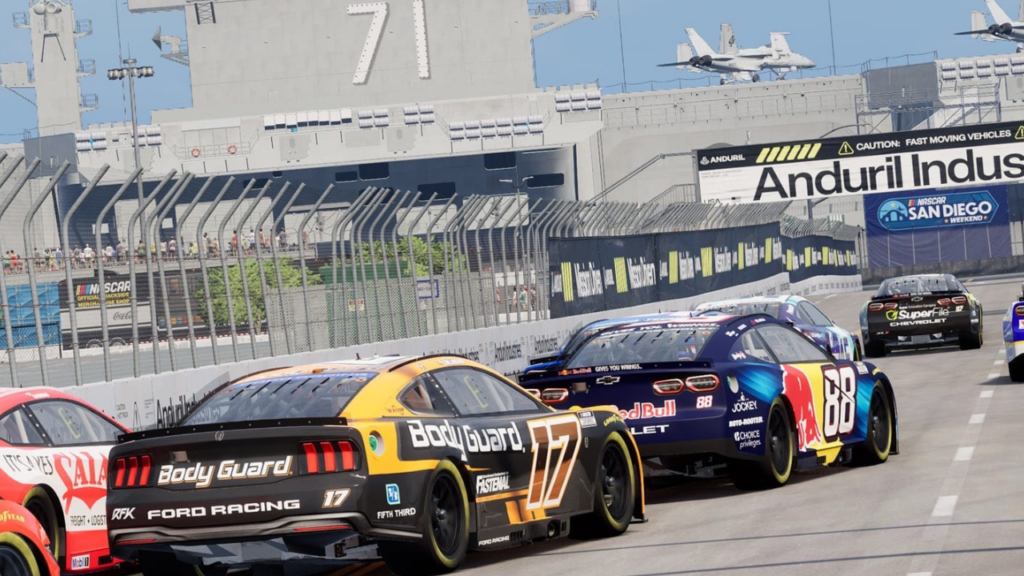
NASCAR 26 expands its track roster with three particularly notable additions: the Qualcomm Circuit at Naval Base Coronado, Chicagoland Speedway, and St. Petersburg. Each presents a different test of the game’s revised physics and Dynamic Track technology.
The new venues include:
- Qualcomm Circuit at Naval Base Coronado: Connected to NASCAR’s San Diego event and the game’s promotional campaign
- Chicagoland Speedway: A traditional oval where evolving grooves and rubber buildup could influence lane choice
- St. Petersburg: A street circuit requiring careful braking, precision, and control near barriers
Coronado has a particularly strong connection to the game’s marketing. Kyle Larson’s cover reveal took place aboard the USS Midway in San Diego, and Naval Base Coronado was discussed during the first developer diary. Its inclusion connects the cover presentation with one of the new playable circuits.
Chicagoland gives Dynamic Track another oval environment in which multiple lanes may develop over a full event. If rubber buildup meaningfully changes available grip, the circuit could reward drivers who move away from the original line and search for speed elsewhere on the banking.
St. Petersburg places greater emphasis on the improved braking model. Street circuits demand precision because walls, narrow corners, and limited runoff punish mistakes. The venue also increases the range of skills required across the game’s schedule, ensuring that players cannot rely entirely on oval-specific techniques.
Existing tracks are receiving attention as well. The gameplay material references an updated Circuit of the Americas and a refreshed Rockingham. Road-course boundaries and track-limit behavior have been adjusted, with some restrictions reportedly relaxed following player feedback. Track work therefore includes both new venues and revisions to locations inherited from the previous release.
The biggest difference between NASCAR 26 and NASCAR 25 is the emphasis on making races less predictable. NASCAR 25 established the modern foundation for iRacing Studios’ licensed console project, including all four major series, laser-scanned assets, career progression, and a handling model informed by real motorsport experience. Its Steam version launched on November 11, 2025, after the initial console release.
NASCAR 26 builds on that base through interconnected systems affecting individual laps and complete championships:
- Dynamic Track changes available grip and racing lines.
- Revised tire physics affects long-run behavior and strategy.
- Improved braking supports road and street circuits.
- AI DNFs make race and championship results less predictable.
- Safety violations add procedural consequences.
- Cross-platform multiplayer combines the online community.
- Career facilities and team upgrades deepen progression.
- The Chase adds a focused title battle.
- Peak Performance provides a structured learning environment.
- New tracks broaden the required driving skills.
- Better graphics and replay cameras improve presentation.
- Burnout celebrations answer a visible fan request.
- The trophy room preserves long-term accomplishments.
- Freddie Kraft strengthens spotter communication.
- The unified launch avoids making PC players wait after the console release.
The sequel is not defined by one completely new engine or isolated revolutionary mechanic. Its identity comes from the accumulation of changes across physics, track behavior, artificial intelligence, online functionality, career management, training, championships, venues, and presentation. These systems can reinforce one another. Dynamic grip affects tire strategy, changing lanes influence AI behavior, DNFs alter championships, and cross-play gives more players access to the same racing environment.
NASCAR Vice President of Interactive and Emerging Platforms Nick Rend has emphasized improvements to driving, evolving tracks, and cross-platform connectivity, while iRacing Studios producer Matt Lewis has described the project as part of a longer effort to build an increasingly authentic NASCAR console franchise. That framing positions NASCAR 26 as another stage in an ongoing foundation rather than an isolated yearly product.
The finished game will determine whether the new systems operate consistently across full race distances and online sessions. The first gameplay trailer is significant because it identifies where iRacing Studios believes the previous release needed to evolve, and most of its answers involve systems players will engage with every lap rather than features confined to menus or promotional screenshots.

Frequently Asked Questions (FAQs)
- When is NASCAR 26 coming out?
NASCAR 26 officially launches on September 18, 2026, for PlayStation 5, Xbox Series X|S, and PC through Steam. Players who purchase the Gold Edition receive three days of early access beginning September 15. Some digital storefronts may show September 17 because of regional unlock times, but September 18 is the official worldwide release date. - Is NASCAR 26 coming to PS4 or Xbox One?
No PlayStation 4 or Xbox One version has been announced. The confirmed console platforms are PlayStation 5 and Xbox Series X|S, while PC players can purchase the game through Steam. Focusing on current-generation hardware gives iRacing Studios more freedom to develop the enhanced physics, lighting, AI, and evolving track systems without accommodating older consoles. - Does NASCAR 26 have cross-platform multiplayer?
Yes. Cross-platform multiplayer allows players on supported systems to compete together instead of being separated into PlayStation, Xbox, and PC communities. This should make it easier to race with friends on different platforms and may improve matchmaking by combining more players into the same online population. - What is Dynamic Track in NASCAR 26?
Dynamic Track allows the racing surface to evolve throughout practice, qualifying, and the race. A circuit begins relatively green, but cars gradually deposit rubber as they complete laps, changing the amount of grip available in different lanes. This can make alternative racing lines more effective later in an event and may require players to adjust their driving and setups as conditions develop. - Does NASCAR 26 have career mode?
Yes. Career mode returns with new facilities, team upgrades, race shops, reputation progression, and additional organizational management. Players can work through ARCA, the NASCAR Craftsman Truck Series, the O’Reilly Auto Parts Series, and the Cup Series while developing both their driver and team. A new trophy room also provides a place to display long-term achievements and championships. - What is The Chase mode in NASCAR 26?
The Chase is a standalone championship mode built around a condensed 10-race title battle. Players can choose the drivers participating in the championship and experience the pressure of the closing portion of a season without completing an entire campaign first. AI DNFs and changing track conditions can also make each Chase run less predictable. - Can AI drivers DNF in NASCAR 26?
Yes. AI-controlled drivers can fail to finish races because of incidents or other race-ending problems. This should create more realistic results and prevent every computer opponent from automatically completing every event. DNFs can also significantly alter championship standings, particularly during a short mode such as The Chase. - Who is on the NASCAR 26 cover?
Kyle Larson is the official NASCAR 26 cover driver. His cover appearance was revealed during a June 2026 event aboard the USS Midway in San Diego, where he also performed a burnout. Players who pre-order an eligible edition receive an exclusive Kyle Larson paint scheme. - How much does NASCAR 26 cost?
The Standard Edition costs $59.99 in the United States, while the Gold Edition costs $79.99. The Gold Edition includes three days of early access, a Season Pass, four monthly paint-scheme DLC packs, Career Reputation Points, Career Bonus Dollars, and additional content. Prices may differ by region and digital storefront. - What are the biggest improvements from NASCAR 25 to NASCAR 26?
The biggest improvements include Dynamic Track technology, cross-platform multiplayer, revised tire and braking physics, enhanced handling across different chassis, AI DNFs, safety violations, and improved control and force-feedback calibration. Career mode gains facilities and team upgrades, while The Chase and Peak Performance add new championship and training options. The sequel also introduces new tracks, dynamic lighting, improved skies, better smoke and debris effects, upgraded replay cameras, burnout celebrations, Freddie Kraft as a spotter, and a unified console and PC launch.
Conclusion
NASCAR 26 is off to a great start with a first gameplay trailer that demonstrates a noticeably broader ambition than a routine yearly update. iRacing Studios appears to be using NASCAR 25 as a foundation and concentrating on systems capable of changing the way races unfold.
Dynamic Track technology is the centerpiece because it introduces evolving racing surfaces, changing grip and potentially more varied racing lines. The redesigned tire and braking models reinforce that system by giving players more reason to think about car behavior throughout a run rather than judging handling only on the opening laps.
Cross-platform multiplayer addresses a major community request and should make it easier to find opponents regardless of platform. AI DNFs add unpredictability to offline championships, while safety violations, revised road-course rules and improved computer drivers aim to make races more believable.
Career players are receiving facilities, team upgrades, new race shops and a trophy room. Players who prefer shorter championship experiences can turn to The Chase, while newcomers and experienced racers have the Peak Performance training mode for developing consistency.
The content expansion is equally notable. Coronado, Chicagoland and St. Petersburg add distinctly different track types, while refreshed locations and road-course improvements strengthen existing content. The four-series structure remains intact with the NASCAR Cup Series, NASCAR O’Reilly Auto Parts Series, NASCAR Craftsman Truck Series and ARCA Menards Series.
Presentation improvements including dynamic lighting, upgraded skies, better particles and revised replay cameras make the package look more polished, while additions such as burnouts and Freddie Kraft’s spotter role give the game more NASCAR personality.
There are still important questions that cannot be answered until players have the finished game. Dynamic Track must produce meaningful changes rather than merely cosmetic rubber buildup. AI needs to remain competitive without becoming erratic. Online racing needs stable connections and effective race management. Career upgrades must provide enough depth to remain interesting over multiple seasons.
What has been officially revealed, however, gives NASCAR 26 a strong foundation heading toward its September 18, 2026 launch.
Instead of relying on a single marketable feature, iRacing Studios has targeted several interconnected parts of NASCAR racing: surface evolution, tire behavior, braking, AI, multiplayer, championship structure, career management, track variety and presentation.
That combination makes NASCAR 26 one of the more interesting licensed NASCAR games in development. If the systems perform as promised, the sequel could demonstrate exactly why establishing NASCAR 25 as a technical foundation was important. The first game created the base; NASCAR 26 now has an opportunity to show how quickly iRacing Studios can build upon it.
For players searching for NASCAR 26 gameplay details, the first trailer provides encouraging evidence that this release is about more than updated drivers and paint schemes. Dynamic Track, improved physics, cross-play, AI DNFs, The Chase, Peak Performance, expanded career management and new circuits all target aspects of the experience that directly affect racing.
The first gameplay reveal does not guarantee the quality of the finished product, but it does establish a clear direction. NASCAR 26 is being developed as a deeper, more responsive and more connected interpretation of the sport, with September 2026 now shaping up to be an important month for NASCAR gaming fans.
Sources and Citations
- NASCAR. NASCAR and iRacing Studios Debut Official Gameplay Trailer, Open Pre-Orders for NASCAR 26. July 29, 2026.
https://www.nascar.com/news-media/2026/07/29/nascar-iracing-studios-debut-gameplay-trailer-open-pre-orders-for-nascar-26/ - iRacing Studios. NASCAR 26 Official Website, Gameplay Trailer, Developer Diaries and Release Information.
https://nascar26.com/ - iRacing Studios. NASCAR 26 Official Gameplay Trailer and Pre-Order Details.
https://nascar26.com/nascar-and-iracing-studios-debut-official-gameplay-trailer-open-pre-orders-for-nascar-26/ - Operation Sports. NASCAR 26 Dev Diary Details Dynamic Tracks, Chase Mode, Burnouts and More.
https://www.operationsports.com/nascar-26-dev-diary-details-dynamic-tracks-chase-mode-burnouts-and-more/ - Operation Sports. NASCAR 26 Developers Discuss Dynamic Tracks, Peak Performance Training and More.
https://www.operationsports.com/nascar-26-developers-discuss-dynamic-tracks-peak-performance-training-and-more/ - Operation Sports. NASCAR 26 Gameplay Trailer and New Details Revealed.
https://www.operationsports.com/nascar-26-gameplay-trailer-and-new-details-revealed/ - Operation Sports. NASCAR 26 Developer Diary 3 Covers Career Mode, The Chase and More.
https://www.operationsports.com/nascar-26-developer-diary-3-covers-career-mode-the-chase-and-more/ - Steam. NASCAR 25 Official Store Page.
https://store.steampowered.com/app/3873970/NASCAR_25/
Recommendations
- NASCAR 26 Racing Upgrades
- League of Legends Classic Launches July 29 with Update 26.15: Everything You Need to Know
- Invincible Season 4 Animation Error Sparks Fan Debate
- Should Video Game Publishers Be Allowed to Disable Games You Bought? What the European Parliament Hearing on “Stop Destroying Videogames” Means
- Ghost Recon Wildlands Gets PS5 and Xbox Series X|S Upgrade
- Kristen Bell Joins Sonic the Hedgehog 4 as Amy Rose: Release Date, Cast, and What We Know
- Solo Leveling: Karma, Official Story Trailer
- Toy Story 5 Director Explains Why He Returned to Pixar After 10 Years: Everything We Know so Far
- Moss: the Forgotten Relic Reimagines the Beloved VR Adventures for Consoles and PC
- Valor Mortis Won’t Have Difficulty Levels at Launch: Everything We Know



































































































