








In This Article (8 sections)
Nintendo My Mario: Hello, Peach! and Hello, Luigi!
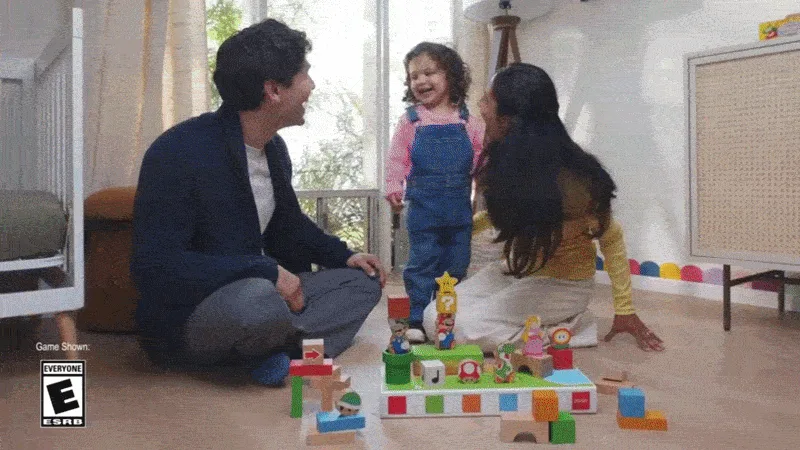
Nintendo My Mario expands in October 2026 with Hello, Peach! and Hello, Luigi! These two free apps offer touch-based character interactions, offline play and optional breaks on Nintendo Switch, with Nintendo Switch 2 compatibility.
The discussion centers on production scale, engine utilization, and modern development pipelines. Japanese developers have historically excelled in stylized design, gameplay identity, character-driven narratives, and narrative innovation. However, recent comparisons focus more on technical scalability, photorealistic rendering, and rapid adoption of global middleware tools such as Unreal Engine.
Yoko Taro, known for the Nier series, has long expressed unconventional views about the game industry. His perspective is often understood as aligning with the idea that Korean studios have made significant progress in technical execution, particularly in real-time rendering and high-end production consistency. The argument is not that Japanese developers lack creativity, but that Korean studios have increasingly optimized workflows for large-scale AAA production, including stronger integration between art pipelines, motion capture systems, and engine-level optimization.
Hideki Kamiya, known for directing Devil May Cry and Bayonetta, has also been part of broader industry conversations acknowledging Korea’s rapid growth in AAA development capacity. While Kamiya is famously protective of Japanese game design identity, industry commentary around his views reinforces the idea that Korean studios are now producing action games with production values that rival or exceed many mid-to-high-tier Japanese releases. These include fluid combat systems, cinematic presentation, and large-scale world design.
The comments spread quickly across forums, livestreams, and developer panels, where they were debated not as definitive rankings but as signs of changing industry momentum. They point to a global market where competition is no longer dominated by a single region.

How Korean Studios Built AAA Competitiveness Through Technology and Production Pipelines
Korean game development has changed dramatically over the last decade. Once primarily associated with online MMOs and PC-centric models, Korea’s AAA sector has expanded into console and cross-platform development. This evolution has allowed Korean studios to compete more directly with established Japanese and Western developers in global markets.
Several factors have contributed to this shift:
- Heavy investment from major publishers such as Nexon and Krafton
- Government-backed technology initiatives
- Recruitment of international talent from Japan, Europe, and North America
- Aggressive adoption of Unreal Engine as a primary development tool
- Centralized development structures that support faster iteration cycles
One of the clearest differentiators is engine adoption. Unreal Engine has become a central pillar of Korean AAA development, enabling photorealistic graphics, scalable open-world systems, and streamlined asset integration. Many Korean studios begin new projects directly in Unreal Engine 4 or 5, allowing them to use advanced rendering systems such as Nanite and Lumen more quickly.
Japan has increasingly adopted Unreal Engine in recent years, but many studios still maintain proprietary engines built over decades. These engines can be powerful, but they often require extensive internal maintenance and may reflect legacy architecture optimized for older hardware generations. This can slow adaptation to rapidly evolving rendering technologies and global AAA standards.
This difference has helped reshape the balance between Japan and Korea. Unreal Engine’s accessibility has reduced barriers for emerging AAA studios, allowing Korean developers to catch up quickly in visual quality. It has also encouraged more outsourcing, co-development with Western studios, and modernization efforts among Japanese developers. The result is a more level global playing field than ever before.
Games Like Stellar Blade and Crimson Desert Show Korea’s Expanding AAA Ambition
Two of the most frequently cited examples of Korea’s AAA evolution are Stellar Blade and Crimson Desert. Both titles are often discussed as evidence that Korean studios are moving beyond online-first design and into console-quality, action-focused, and narrative-driven experiences.
Stellar Blade, developed by Shift Up, showcases high-end character animation, fluid combat systems, and cinematic presentation that align with global console standards. It demonstrates how Korean studios have adapted to expectations traditionally associated with major Japanese and Western action games.
Crimson Desert, developed by Pearl Abyss, pushes Korea’s open-world ambition further by combining large-scale environmental design with complex action mechanics. It reflects a growing confidence in producing single-player AAA experiences with high technical and visual expectations.
Together, these titles serve as benchmarks in discussions about Korea’s rising parity with Japan in technical execution. They also highlight the broader strengths Korean studios are developing, including real-time rendering fidelity, large-scale production pipelines, and systemic gameplay integration.
This does not mean Japanese studios are simply falling behind. The phrase “losing ground” is often debated and usually refers to technological adoption speed rather than creative quality. Japanese developers continue to lead in areas such as artistic direction, stylized combat systems, gameplay identity, and long-running franchise development. However, Korean studios often prioritize faster prototyping, engine standardization, and high-fidelity realism, which can create the perception of a technical gap in certain modern AAA categories.

What Korea’s Rise Means for Japan and the Future of Global Action Games
Global competition has pushed both Japanese and Korean developers to refine their strengths. Japanese studios remain influential through character-driven narratives, distinctive art direction, stylized combat systems, and strong franchise identities. Korean studios are increasingly gaining recognition for real-time visual fidelity, large-scale production systems, cinematic presentation, and engine-driven realism.
This competition has also led to hybridization. Many modern action games now borrow design principles from multiple regions, combining Japanese-style combat and character identity with Korean and Western approaches to production scale, rendering technology, and open-world design. Developers associated with franchises such as Devil May Cry and Nier often emphasize that the industry is becoming more interconnected, with ideas, tools, and talent flowing across borders more freely than before.
This interconnected era has led to:
- Shared development standards
- Cross-regional hiring
- Collaborative engine ecosystems
- More competition across console, PC, and hybrid online experiences
Korean studios are now positioning themselves as major players in the future of AAA action games. Their focus on high-intensity combat, cinematic presentation, narrative-driven action RPGs, console-first development, and hybrid online/offline experiences aligns closely with global market demand.
The shift is not limited to Korea. China has also become a significant contributor to the global AAA landscape, and together these regions represent a broader power shift away from traditional Western and Japanese dominance. Massive domestic markets, strong funding ecosystems, and rapid talent development pipelines have helped create a multipolar gaming industry where innovation is distributed across several regions.
For Japan, the future is not about decline but adaptation. Japanese studios continue to lead in artistic identity and franchise longevity, but they face growing pressure to modernize production pipelines, integrate global tools more quickly, and balance distinctive gameplay design with modern technical expectations. Rather than being replaced, Japanese developers are being challenged to redefine their leadership in a more competitive global ecosystem.
Frequently Asked Questions (FAQs)
- What are Hello Peach and Hello Luigi in Nintendo My Mario?
Hello, Peach! and Hello, Luigi! are free interactive Nintendo applications in the My Mario collection, a family-oriented series designed mainly for young children. Instead of traditional levels, scores, or missions, these apps focus on simple touch-based play with familiar Super Mario characters. Players can poke, stretch, rotate, and interact with Peach’s or Luigi’s face to trigger funny expressions and reactions. The apps also include gentle activities such as peekaboo, interactions with recognizable Mario objects, and optional rest features that pause play after a period of use. They are intended more as playful character experiences than full platforming games. - When were Hello Peach and Hello Luigi released?
Nintendo’s North American product listings give October 5, 2026, as the release date for both Hello, Peach! and Hello, Luigi! on supported Nintendo Switch systems. Nintendo’s European My Mario website lists October 6, 2026, for the console releases in that region. The one-day difference appears to reflect regional storefront timing rather than a major content difference. Because Nintendo sometimes staggers releases by region, families should check their own regional Nintendo eShop or official Nintendo website for the most accurate local release information. - Are Hello Peach and Hello Luigi completely free?
Yes. Hello, Peach! and Hello, Luigi! are listed by Nintendo as free downloadable software on supported Nintendo Switch systems. This means families can download and use the main interactive features without buying the apps. However, an internet connection is still needed to download the software from Nintendo’s digital storefront and to receive any updates. Optional related physical products, such as compatible My Mario wooden character blocks, are separate items and are not required for basic play. - Can Hello Peach and Hello Luigi run on Nintendo Switch 2?
Yes. Nintendo confirms that Hello, Peach! and Hello, Luigi! are compatible with Nintendo Switch 2. The official compatibility information states that the apps behave consistently with their versions on the original Nintendo Switch family of systems. Players do not need to purchase separate Switch 2 editions. They can access the apps through Nintendo’s digital storefront on compatible hardware, subject to regional availability and normal account or system requirements. - Are Hello Peach and Hello Luigi available on Android and iPhone?
Nintendo has announced smartphone versions, but their availability is not the same as the confirmed Nintendo Switch releases. As of October 8, 2026, Nintendo’s European My Mario website lists the Android and iOS versions of the Peach and Luigi apps as coming later. This means the console versions may be available before the mobile versions in some regions. Families interested in the smartphone editions should check official regional app stores, such as Google Play and the Apple App Store, as well as Nintendo’s regional websites for current availability. - Do Hello Peach and Hello Luigi require an internet connection?
No. After the apps have been downloaded and installed, they do not require a continuous internet connection for normal play. Nintendo confirms that the applications support offline play, so children can continue interacting with Peach or Luigi without staying connected. Internet access is still required for the initial download, software updates, and any storefront-related activity. If a family wants to use the apps while traveling or away from Wi-Fi, it is best to install and update them beforehand. - How do parents limit screen time in the new My Mario apps?
Hello, Peach! and Hello, Luigi! include a built-in rest feature designed to encourage breaks. After a child plays for a while, the character becomes tired and falls asleep. During this rest period, normal interaction is paused, creating a natural stopping point. Parents can disable this feature in the settings menu if they prefer to manage playtime themselves. Even with the built-in rest mechanic, it is still important for adults to supervise use, set household screen-time rules, and help younger children transition away from the screen when needed. - Can My Mario wooden amiibo blocks work with Hello Peach and Hello Luigi?
Yes. Nintendo states that compatible My Mario wooden character blocks for Mario, Luigi, Peach, and Yoshi support amiibo interactions in the apps on supported Nintendo consoles. When a compatible block is tapped to the controller’s NFC touchpoint, its character can appear on screen. This feature is limited to the compatible My Mario wooden character blocks. Nintendo specifies that unrelated amiibo figures are not supported for this function, so standard amiibo from other Nintendo series should not be expected to work in the same way. - What is the difference between Hello Mario, Hello Yoshi, Hello Peach, and Hello Luigi?
All four apps follow the same basic idea: they are simple, character-focused interactive experiences with touch controls, facial reactions, and playful activities for young children. The main difference is the character and the unique interactions built around that character’s personality and appearance. Hello, Mario! focuses on Mario’s familiar face, moustache, and cap. Hello, Yoshi! includes Yoshi-specific play such as tongue-stretching and egg interactions. Hello, Luigi! highlights Luigi’s expressive eyebrows and nervous, funny reactions. Hello, Peach! includes Peach-themed interactions such as brushing her hair. The apps are similar in structure but different in character details. - What is the My Mario Melody Car, and when will it be released?
The My Mario Melody Car is a physical toy in the My Mario line. It is designed to work with compatible wooden character blocks and plays character-related sounds and melodies as it moves. The sounds respond to how the toy is pushed, including changes in movement speed. Nintendo has announced an October 20, 2026, release date for the My Mario Melody Car in Japan. A universal international release date has not been confirmed, so availability outside Japan may vary by region. Families interested in the toy should follow Nintendo’s regional announcements or check official retailers for local release information.
Conclusion
Nintendo’s October 2026 My Mario expansion broadens the series as a family-friendly introduction to Super Mario for young children. The launch of Hello, Peach! and Hello, Luigi! adds two free interactive apps to the collection, focusing on simple touch controls, character reactions, peekaboo activities, offline play, and optional built-in breaks rather than traditional gameplay.
The apps are available on Nintendo Switch and compatible with Nintendo Switch 2, while Nintendo’s update also adds support for compatible wooden character blocks, linking the digital apps with My Mario physical toys. The newly announced Melody Car, along with books, animated shorts, apparel, and other merchandise, shows Nintendo developing My Mario into a wider children’s entertainment brand.
Some details, including smartphone release dates for Peach and Luigi and international availability for the Melody Car, remain unconfirmed. Overall, My Mario offers young children an accessible, playful way to engage with Nintendo characters through curiosity and imagination.
Sources and Citations
- Japanese and Korean Game Development
- CLOVERS’ transcript of Hideki Kamiya and Yoko Taro’s G-CON discussion, published May 20, 2026This is the strongest source for the quotation underlying the article. The discussion took place on November 14, 2025, at G-CON in Busan, rather than being a new October 2026 statement. Yoko Taro says that “a lot of Korean developers are ahead of Japan” in technology. Kamiya similarly praises Korea’s technical progress and describes international competition as motivation to improve his own games. CLOVERS credits Famitsu’s Japanese article as the original source. These are the developers’ opinions, not a measured ranking of national production capabilities. Clovers
Citation: CLOVERS: Hideki Kamiya and Yoko Taro’s G-CON 2025 Discussion
Citation: Famitsu: Original Japanese Report on Kamiya and Yoko Taro’s Discussion - GamesRadar’s report on the Korean-developer comments, May 25, 2026This report reproduces the relevant remarks and links directly to CLOVERS’ transcript. It places the comments alongside discussion of Stellar Blade, Lies of P, The First Berserker: Khazan and Crimson Desert. It is useful for tracing how the quotation entered wider English-language coverage, but its discussion of those games should remain separate from what the two developers specifically said during the panel. GamesRadar+
Citation: GamesRadar: Nier and Devil May Cry Creators Discuss Korean Developers’ Technical Progress - GamesRadar’s direct interview with Shift Up technical director Dong-ki LeeSpeaking with Austin Wood at Gamescom 2026, Lee explains that games such as Stellar Blade and Lies of P encouraged more Korean developers to attempt console projects. He also identifies Crimson Desert as part of that mutually encouraging development scene. This supplies direct industry testimony for the article’s discussion of Korea expanding beyond its established mobile and online markets, while remaining an individual developer’s assessment rather than a comprehensive market study. GamesRadar+
Citation: GamesRadar: Stellar Blade and Lies of P Encouraged Korean Developers to Pursue Console Games - PlayStation’s official Stellar Blade product pageSony identifies Stellar Blade as Korean developer Shift Up’s debut console release and describes it as a single-player, story-driven action adventure with fast-paced combat and RPG elements. The page also documents deliberate attacks, defense, evasion and learning enemy patterns. This supports the game’s identity and action-focused design, but it does not establish that Shift Up’s production pipeline is faster or more efficient than those of Japanese studios. PlayStation
Citation: PlayStation: Stellar Blade Official Game Information - Pearl Abyss’ official BlackSpace Engine development feature, March 28, 2025“Dev Archives: A Look into Pearl Abyss’ BlackSpace Engine” documents the technology behind Crimson Desert, including water simulation, volumetric fog, atmospheric scattering, GPU-based cloth and hair simulation, and ray tracing. Crucially, Pearl Abyss explicitly identifies BlackSpace as its own in-house engine. Crimson Desert therefore cannot be used as evidence that adopting Unreal Engine explains every Korean studio’s technical progress. The feature also labels its demonstration as development footage that could differ from the final game. Crimson Desert
Citation: Pearl Abyss: A Look into Crimson Desert’s BlackSpace Engine - Wccftech’s direct interview with The First Descendant development team, October 24, 2022Alessio Palumbo’s developer Q&A provides a concrete example supporting the engine-adoption discussion. Nexon’s team explains that it began development using Unreal Engine 4, then moved to Unreal Engine 5, particularly for Nanite and Lumen. The developers also acknowledge optimization difficulties on older consoles and lower-specification PCs. This is useful project-specific evidence of the benefits and costs of adopting newer middleware, not proof that adopting it automatically produces faster development or superior performance. Wccftech
Citation: Wccftech: The First Descendant Developer Q&A on Unreal Engine 5 - Epic Games’ official Unreal Engine 5 feature overviewEpic describes Nanite as a virtualized geometry system and Lumen as a dynamic global-illumination and reflections solution. These descriptions support the technical explanation of detailed environments and responsive lighting. They also clarify an important distinction in the draft: Nanite and Lumen are Unreal Engine 5 features, so references to studios using “Unreal Engine 4 or 5” should not imply that both versions provide those same systems. Unreal Engine
Citation: Epic Games: Unreal Engine 5 Features - InvestKOREA’s report on government support for console development, May 3, 2024KOTRA’s investment portal reproduces Pulse by Maeil Business News Korea’s reporting on the government’s 2024–2028 game-industry promotion plan. It describes support for console-market entry, promotion, consulting, distribution and sharing production expertise. This supports the existence of government-backed diversification efforts, but the announced programme should not be treated as measured proof that those policies caused particular studios’ technical achievements. The page is an attributed news reproduction, not the original ministry policy document. Invest Korea
Citation: InvestKOREA: Korean Government Unveils Plans to Diversify the Game Industry - Nintendo My Mario FAQ and Conclusion
- Nintendo’s original My Mario announcement, August 8, 2025Nintendo’s corporate release introduces My Mario as a product series for young children and their parents, initially launching on August 26, 2025, at Nintendo TOKYO, OSAKA and KYOTO. It documents wooden blocks, character-block amiibo functionality, a board book, the original Hello, Mario! application and stop-motion videos. This is the primary source for the range’s origins, not the later Peach and Luigi release dates. 任天堂ホームページ
Citation: Nintendo: My Mario Product-Line Announcement - Nintendo’s official U.S. Hello, Peach! and Hello, Luigi! listingsBoth listings give October 5, 2026 as the release date and confirm that the apps are free Nintendo Switch software compatible with Nintendo Switch 2. Their descriptions cover touching and stretching the characters’ faces, peekaboo, items and enemies, offline play after downloading, and a sleep-based break feature that can be disabled in settings. Nintendo’s publisher notices also confirm that compatible My Mario character blocks can make their corresponding characters appear within the apps. Nintendo Co., Ltd.
Citation: Nintendo U.S.: Hello, Peach!
Citation: Nintendo U.S.: Hello, Luigi! - Nintendo UK’s official My Mario apps overviewThe UK page lists October 6, 2026 for the Peach and Luigi console apps, confirming the regional date difference described in the FAQ. At the October 12, 2026 check, their smart-device versions remain marked “Coming later.” The page also documents character-specific interactions, including Luigi’s eyebrows, Peach’s hair and Yoshi’s egg. This is stronger evidence for regional availability than news headlines broadly describing the apps as already released on both consoles and mobile devices. Nintendo Co., Ltd.
Citation: Nintendo UK: My Mario Apps, Release Dates and Mobile Availability - Nintendo Japan’s official My Mario application guideThis page corroborates the October 6 Japanese console releases and separately identifies the Peach and Luigi smartphone/tablet versions as scheduled for later distribution. It explains how My Mario character blocks interact with the Nintendo Switch apps, and shows the relevant NFC reading locations on supported consoles and controllers. It also provides the character-specific play examples used to distinguish the Mario, Luigi, Peach and Yoshi applications. Nintendo Co., Ltd.
Citation: Nintendo Japan: My Mario Application Guide and Character-Block Instructions - Nintendo’s official October 6, 2026 My Mario expansion announcement and Melody Car listingThe Japanese announcement confirms an October 20, 2026 release for the Melody Car set with Mario and Toad blocks. Nintendo explains that different character blocks change the melody and instrument sounds, while moving the car faster or slower changes the music’s tempo. The dedicated product page independently confirms the Japanese release date and lists the included set and musical variations. These sources establish the Japanese launch, not a universal international release date. Nintendo Co., Ltd.
Citation: Nintendo: October 2026 My Mario Expansion and Melody Car Announcement
Citation: Nintendo Japan: My Mario Wooden Blocks and Melody Car Product Details
Recommendations
- Vivian Kubrick Debunks Eyes Wide Shut Deleted Scenes Theory
- Battlefield 6 2026 Roadmap: More Maps, “Legendary” Battlefield 4 & Battlefield 3 Remakes, and Wake Island’s Return
- Apple TV’s Widow’s Bay is the First Breakout TV Hit of 2026: Why Everyone is Talking About the Horror Comedy
- Pitchify Launches New Service to Connect Developers and Publishers: How Pitch Direct Works
- Pokémon Pokopia Bubbly Basin DLC Release: Date, New Pokémon, and Everything You Need to Know
- Nordic Game 2026 (NG26 Spring): Dates, Venue, Passes, Speakers, Expo & Awards in Malmö
- Subnautica 2 Early Access Roadmap: Co-Op Updates, Sprinting, and More
- Virtua Fighter 6 Leak Explained
- The Future of 3D Modeling: Insights on AI Advancements
- GTA 6 is Already Outselling Everything Else: Why Pre-Orders Are Dominating Gaming



































































































