







Guild Wars 3 Officially Announced: Business Model, No Subscriptions, and Pay-to-Win Stance Explained
Guild Wars 3 is no longer a rumor or a distant corporate plan. ArenaNet officially announced the game on June 5, 2026, describing it as an action-adventure MMORPG set in Orr more than a thousand years before the original Guild Wars, and confirming that the first beta is planned for fall 2027 on PC and PlayStation 5. The most important update for anyone tracking the game’s business model arrived on June 16, 2026, when Studio Head Colin Johanson published ArenaNet’s monetization philosophy in unusually direct language.
The clearest way to explain the Guild Wars 3 business model is that ArenaNet is positioning the game as a premium, buy-to-play entry MMO that you purchase once to access at launch, then continue to play without a recurring monthly fee. Johanson paired this announcement with a wider philosophy about player freedom and long-term value, emphasizing that players should return because they want to, not because they are financially locked into a billing cycle. While Johanson noted that ArenaNet plans to sell expansions and “other things,” he stressed that these will exist under guardrails that reject pay-to-win advantages.
This approach stands out in a fragmented MMO market where some games rely on mandatory subscriptions, optional memberships with strong progression bonuses, or seasonal battle passes. Rather than combining a box price with a recurring fee or a premium seasonal track, the studio is arguing for a simpler value proposition: buy the game, play on your own schedule, and decide later whether future expansions or optional purchases are worth paying for.
The Breakdown of Confirmed Monetization Pillars
- No Subscription Fee: In ArenaNet’s June 16 philosophy post, Johanson explicitly wrote that Guild Wars 3 will have “no subscription fee.” He did not leave it at a vague “no monthly fee right now” formulation, but instead linked the decision to the franchise’s original 2005 mission when Guild Wars launched without the monthly charges that defined older MMORPGs. ArenaNet also reinforced this by broadening what it counts as a subscription. Recognizing that many paid battle passes and recurring seasonal systems effectively work like hidden subscriptions, Johanson clarified that Guild Wars 3 will have no monthly fees and no battle pass subscription fees either—wording that GameSpot and PC Gamer highlighted for being far more categorical than usual pre-launch PR language.
- The Buy-to-Play Model: Buy-to-play means a player purchases access to the game and keeps that access without a mandatory ongoing fee. While ArenaNet has not yet published a launch price, edition structure, or expansion price list for Guild Wars 3, Johanson’s wording strongly signals the familiar Guild Wars pattern: a one-time purchase at launch, optional paid expansions later, and no requirement to keep paying just to remain active. He described this intended rhythm in plain terms, stating that players can take a break, play other games, and come back when the next expansion arrives. This interpretation inherits the long-running franchise model of Guild Wars 2, where official support documentation guarantees “No subscription fee ever,” even for future expansion updates.
- The Pay-to-Win Question: Based on the official evidence available as of June 18, 2026, Guild Wars 3 is not being designed as a pay-to-win MMO. Johanson’s wording was direct, stating that while players may be allowed to spend money on visual distinction, account services, and time-saving convenience items, “it’s never okay” in a Guild Wars game for people who spend money to gain an unfair advantage over people who spend time. This is the clearest anti-pay-to-win statement ArenaNet could realistically make before revealing the full store catalogue.
- Addressing Battle Pass Controversies: The potential “battle pass controversy” around Guild Wars 3 is less a case of ArenaNet walking something back and more a case of the studio answering a player fear before it could fully mature. When a modern MMO gets announced in 2026, many players immediately assume there will be a premium seasonal track, daily engagement pressure, or fear-of-missing-out rewards. Johanson addressed that expectation head-on by stating that ArenaNet sees many paid battle passes as a concealed form of subscription incompatible with player freedom. PC Gamer framed this position as a deliberate rejection of “battle pass fee buried in it” design, while GameSpot emphasized ArenaNet’s line that “no subscription means no subscription.”
Note on Unconfirmed Details: What remains unconfirmed are the exact catalogue, pricing cadence, and full store structure that will sit around these promises. Accuracy requires one important distinction: ArenaNet has confirmed its principles, not every implementation detail. The studio has not yet published a full cash-shop list, nor has it explained whether convenience items will resemble Guild Wars 2’s current store offerings, be narrower, or be structured differently. The correct conclusion is that ArenaNet has officially committed to a non-pay-to-win standard and has publicly ruled out direct, monetized unfair advantages.

Guild Wars 3 Monetization Philosophy and Structure
ArenaNet’s public monetization plan for Guild Wars 3 currently consists of four confirmed pillars: buy-to-play at release, no subscription fee, no pay-to-win mechanics, and the sale of expansions alongside some additional optional purchases (restricted within limits described by game director Colin Johanson). Beyond that, the official Steam page labels the game as containing “in-game purchases,” confirming that a monetized in-game store of some kind is planned even though its exact scope has not yet been revealed.
This means the monetization plan is broad in principle and narrow in specifics; ArenaNet is unusually clear about what it will not do, but still cautious about exactly what it will sell. That is a sensible pre-launch posture for a game whose beta is not due until fall 2027. For researchers and MMO fans, the practical reading is simple: the red lines are official, while the details inside those red lines are still pending.
Microtransactions are effectively confirmed, but their allowed categories are strictly constrained by ArenaNet’s own philosophy. Johanson stated that players should be able to spend money on cosmetic expression, account services, and time-saving convenience. Taken together with the Steam page flags, these sources tell us Guild Wars 3 will almost certainly feature a cash shop or equivalent in-game commerce layer. What they do not tell us yet is the exact balance between cosmetics, utility, character services, storage-style upgrades, or currency-related systems.
The most careful way to explain Guild Wars 3 microtransactions is to say they are expected to exist, but under a declared non-pay-to-win standard. This puts Guild Wars 3 in a different category from games that sell raw power, mandatory premium passes, or direct performance advantages. Consequently, future scrutiny will probably focus less on whether microtransactions exist and more on whether ArenaNet’s eventual convenience offerings stay on the safe side of its own anti-advantage promise.
Pay-to-win concerns do not disappear just because a studio says the right thing; they are answered properly only when the studio’s language is compared with its historical practices and the concerns of the community. In Guild Wars 2, ArenaNet has long sold gems, skins, tools, and other store items through the Black Lion Trading Company, and official support pages confirm that gems can be exchanged for gold through official channels. That history is one reason veteran MMO players tend to treat “not pay-to-win” as a promise that must be tested in practice, not merely applauded in theory.
That said, ArenaNet’s Guild Wars 3 wording is stricter than a vague assurance about “fairness.” Johanson explicitly rejects unfair monetary advantage and limits acceptable spending to the following categories:
- Aesthetics: Cosmetic expression and skins.
- Services: Account and character services.
- Convenience: Time-saving utility.
Community reactions show a logical split: many fans are relieved because the franchise has never embraced hard pay-to-win, while others warn that convenience monetization can still feel aggressive if it is tied to friction points like storage, inventory, or progression shortcuts. These concerns are not proof that Guild Wars 3 will cross the line, but rather a reminder that ArenaNet will be judged by its eventual implementation.
Furthermore, ArenaNet rejected subscription models for philosophical, historical, and market-positioning reasons. Johanson tied the decision back to the original Guild Wars launch in 2005, when refusing subscription fees was meant as a statement about accessibility and long-term value. He argued that the same principle matters today because players have more games, less tolerance for feeling locked in, and less interest in MMOs that resemble second jobs. He also rejected subscriptions because of how they shape player psychology; in ArenaNet’s view, Guild Wars 3 should be a game players choose to return to, not a service they feel compelled to justify every month.
That is why the studio’s anti-subscription position is tied directly to its “respecting your time and investment” pillar. The no-subscription choice is therefore not just about price sensitivity—it is fundamentally about design philosophy, retention philosophy, and the type of relationship ArenaNet wants players to have with the game.

Guild Wars 3: Monetization, Structural Design, and Progression Strategy
If ArenaNet follows through, Guild Wars 3’s player-friendly monetization strategy will rest on three linked ideas: permanent access after purchase, optional spending rather than mandatory recurring spending, and a rule against paying for unfair power. This is a friendlier approach than the traditional subscription model represented by games like World of Warcraft and Final Fantasy XIV, both of which still officially sell recurring subscription access. It is also cleaner than games built around premium seasonal obligations.
At the same time, “player-friendly” does not mean “monetization-free.” ArenaNet is not promising a charity model; it is promising a narrower and more consumer-legible one. Compared with optional subscription systems such as ESO Plus—which grants access to DLC and several gameplay bonuses including experience, gold, research, and storage benefits—Guild Wars 3 is trying to define player-friendliness through absence:
- No monthly toll
- No paid battle pass
- No unfair paid power
That is a compelling strategy in SEO terms and a meaningful one in MMO terms, provided the eventual store does not undermine it.
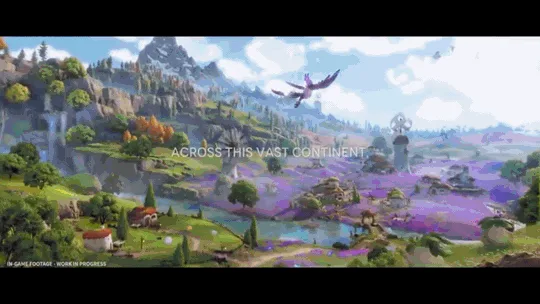
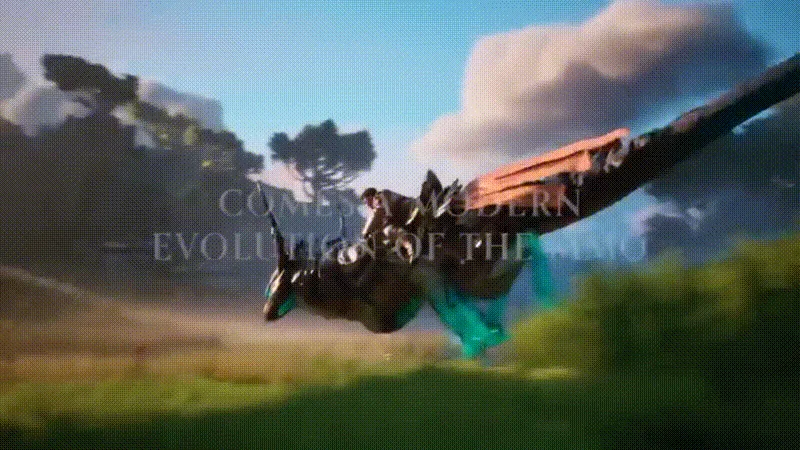
Guild Wars 3 differs from many other MMOs first at the business-model level, but ArenaNet is also pitching it as a structural design departure. The official site and Steam page emphasize action combat, momentum-based traversal, skill collection, and a style of character building that is meant to feel distinct from both older hotbar MMOs and broad live-service conventions. ArenaNet’s own messaging repeatedly calls the game “a modern evolution of the MMO,” not a copy of dominant incumbents.
The comparison becomes clearer when set beside the bigger market. While World of Warcraft still sells a recurring subscription with separate expansion access, and Final Fantasy XIV requires a purchase followed by an ongoing subscription, games like The Elder Scrolls Online offer ESO Plus. This optional membership confers meaningful convenience and progression bonuses while unlocking DLC access. Guild Wars 3 is trying to stand apart from all three patterns by combining a premium entry point with no mandatory subscription and no paid battle pass.
The progression system details for Guild Wars 3 are still incomplete, and that fact is essential to any accurate article. ArenaNet has not yet announced a level cap, class roster, mastery-style horizontal system, endgame gear structure, or definitive reward loop. What is confirmed is that the game blends character building and skill collection, that combat depth will come from positioning, movement, and strategic skill use, and that the studio wants the overall experience to respect a player’s time and investment.
A few additional clues are public through press releases and the official site:
- Deep Character Customization: The game focuses heavily on tailored skill-building gameplay.
- The Vaelwarden Role: Players take on the role of a Vaelwarden, forming relationships with the land, the spirits of Orr, other players, and key NPCs.
- Account Legacy: ArenaNet has confirmed a new Hall of Monuments link from Guild Wars 2 to Guild Wars 3, signaling some form of account-based legacy reward path for existing players.
Even so, researchers should be careful not to overstate what is known. At this stage, Guild Wars 3 progression is better described as directionally clear but mechanically under-disclosed.
What to Expect From Guild Wars 3: Release, Features, and Community Reaction
The current release expectation for Guild Wars 3 is straightforward. The game was officially announced on June 5, 2026, with its first beta scheduled for fall 2027. While Steam lists the release date as “to be announced,” there is still no official launch date, and any date beyond the beta window remains speculation. The safest evidence-based expectation is that ArenaNet is still in a long pre-release information phase rather than a final launch countdown mode.
Despite the lack of a launch date, the confirmed features are substantial. Guild Wars 3 is coming to PC, Steam, and PlayStation 5, marking the franchise’s first home-console launch. Steam lists multiplayer and MMO functionality, partial controller support, and in-game purchases. Key features highlighted by ArenaNet include:
- The Seeker Spirit Mount: A central element of a movement system built around gliding, riding, leaping, sprinting, and wall-running.
- Action-Combat Model: Designed seamlessly for both controller and mouse-and-keyboard play.
- New Setting: A story set in ancient Orr.
- Seamless Exploration: A more interconnected world featuring fewer loading screens than previous Guild Wars titles.
When comparing Guild Wars 3 to Guild Wars 2, ArenaNet’s shifting design philosophy becomes most interesting. In its own words, Guild Wars 2 sits at the large-scale end of the franchise spectrum, defined by giant open-world experiences, map-wide meta-events, massive PvP, and the megaserver system. Guild Wars 3, by contrast, is meant to sit nearer the middle of the MMO spectrum. ArenaNet says it will still be significantly more MMORPG-like than Guild Wars Reforged, but it will not try to replicate the giant-scale gameplay pillars that uniquely define Guild Wars 2.
The business model differs as well. While Guild Wars 2 today offers a free-to-play core entry point with paid expansions and no subscription fee, Guild Wars 3 is officially described as buy-to-play at release. Furthermore, Guild Wars 3 is not being framed as a replacement that erases its predecessor. Guild Wars 2 remains an ongoing game, and ArenaNet has explicitly stated it will continue receiving support. The studio plans to spend substantial time improving its foundations, starting with a Hall of Monuments update later in 2026. Ultimately, Guild Wars 3 is being developed as a separate new experience with a different scale, location, time period, and gameplay emphasis.
This shift in strategy has heavily influenced community reaction and player sentiment, particularly regarding how Guild Wars 3 will handle monetization. Early fan reaction has been strongly positive regarding the absence of a subscription fee or a battle pass. Large Reddit threads in both the broader MMORPG community and Guild Wars communities show highly upvoted enthusiasm for a buy-to-play, expansion-based approach—especially from players tired of seasonal pressure or paying monthly for games they may only play in bursts. This reaction lines up neatly with ArenaNet’s own claim that players want the freedom to leave and return without feeling punished.
However, this positive reaction is not the whole picture. Many veteran players express caution because Guild Wars 2’s monetization history includes convenience sales, storage and account-style purchases, and a gems-to-gold exchange system. In community discussions, that history leads some players to say ArenaNet’s philosophy sounds good, but they want proof that Guild Wars 3 will not lean too heavily on paid convenience friction. This does not amount to a verdict against Guild Wars 3. Rather, it reflects a sober community mood: optimism regarding subscriptions and battle passes, alongside caution about how convenience monetization will ultimately be implemented.agreement that the official anti-pay-to-win line now needs to survive contact with the actual in-game store.

In This Article (8 sections)
Frequently Asked Questions
- Is Guild Wars 3 officially confirmed to have no subscription fee?
Yes. In a major philosophy post published on June 16, 2026, ArenaNet studio head Colin Johanson explicitly stated that Guild Wars 3 will reject the traditional monthly subscription model. This preserves the foundational monetization philosophy established by the previous two games in the franchise, ensuring players can access the game world indefinitely after their initial purchase without a recurring financial barrier. - Will Guild Wars 3 have a battle pass?
ArenaNet has explicitly stated there will be no paid battle passes or recurring seasonal progression tracks that require real money to unlock premium tiers. The studio’s stated goal is to prevent the implementation of “hidden subscriptions”—predatory systems common in modern live-service games that leverage fear of missing out (FOMO) to coerce players into making regular, recurring payments just to keep up with rewards. - Is Guild Wars 3 officially buy-to-play?
Yes. Colin Johanson confirmed that Guild Wars 3 will launch as a buy-to-play (B2P) title. This means players will need to make a one-time purchase of the base game client to gain full access to the launch content. Future major content drops will follow this structure through standard premium expansions rather than forcing players into a free-to-play model with heavy gameplay restrictions. - Has ArenaNet confirmed that Guild Wars 3 will not be pay-to-win?
Yes. ArenaNet has explicitly drawn a line in the sand regarding competitive integrity, stating it is entirely unacceptable for players to buy their way to power. The studio’s design philosophy mandates that spending real money should never grant statistical or functional advantages over players who invest their actual time and skill into the game. - Will Guild Wars 3 still have microtransactions?
Almost certainly yes. To fund long-term development without a subscription fee, ArenaNet has confirmed the game will feature an in-game cash shop. This storefront will sell cosmetic skins, account services (like character slots or renames), convenience upgrades, and future expansions. Additionally, the game’s official Steam listing carries an explicit “In-App Purchases” label, confirming a microtransaction infrastructure is actively built into the client. - What platforms is Guild Wars 3 coming to?
The game has been officially announced for PC (via a standalone client), Steam, and the PlayStation 5. While previous entries in the franchise were strictly locked to PC environments, ArenaNet is engineering the engine and user interface of Guild Wars 3 from the ground up to support modern console hardware alongside its traditional desktop player base. - Does Guild Wars 3 have a release date yet?
No official launch date has been locked in by ArenaNet or publisher NCSoft. The development timeline currently points to a first public beta test scheduled for the fall of 2027. Given the typical duration of MMORPG beta phases for testing server stability and balancing, a full retail launch is highly unlikely to happen until late 2028 or mid-2029. - Will Guild Wars 2 continue after Guild Wars 3 launches?
Yes. ArenaNet has reassured the community that Guild Wars 2 will not be shut down or abandoned when the sequel arrives. The studio intends to run both games simultaneously, promising ongoing server support, quality-of-life improvements, and a parallel live-service content plan rather than forcing the existing player base to migrate to the new title. - What progression details are officially known so far?
ArenaNet has confirmed that the core gameplay loop will rely heavily on deep character building, horizontal skill collection, and a fluid, action-oriented combat system. Their stated design goal is to “respect player time,” meaning your gear won’t immediately become obsolete with every update. However, specific mechanical details—such as the hard level cap, the exact structure of the endgame progression, or how gear tiers will work—remain unannounced. - Why are some fans still cautious if ArenaNet has already said no pay-to-win?
Because veteran players understand that the definition of “pay-to-win” can be highly subjective. In Guild Wars 2, players can buy Gems with real money and legally trade them for gold to buy top-tier crafting materials, and the cash shop heavily features “convenience items” like infinite gathering tools or inventory expansions. MMO communities are waiting to see if Guild Wars 3 stretches the definition of “convenience” to a point where it disrupts the natural pacing of the game for non-paying users.

conclusion
Guild Wars 3’s monetization story is unusually clear for a game this far from launch. ArenaNet has officially confirmed the three claims that matter most for the SEO conversation around the game: Guild Wars 3 will be buy-to-play at release, it will not require a subscription, and it will not be pay-to-win. It has also ruled out paid battle passes that behave like hidden subscriptions. Those are confirmed facts, not wishful reading.
What is still unknown is the detailed shape of the in-game store, the exact scope of convenience items, and the pricing structure for launch editions and future expansions. For now, the best evidence supports a simple conclusion: Guild Wars 3 is being positioned as a player-controlled MMO where revenue should come from purchase, expansions, cosmetics, services, and bounded convenience rather than from mandatory recurring fees or monetized competitive advantage.
sources and citation
- ArenaNet — “Our Guild Wars Philosophy”
The primary June 16, 2026 source covering buy-to-play, no subscription, no paid battle pass, no pay-to-win, and optional spending.
Our Guild Wars Philosophy — Guild Wars 3 - ArenaNet — “Announcing Guild Wars 3”
Official reveal, game premise, platforms/beta information, and initial feature details.
Announcing Guild Wars 3 — Guild Wars 3 - ArenaNet — “The Setting of Guild Wars 3: Stepping into Ancient Orr”
Official setting, timeline, Orr, story background, and world details.
Stepping into Ancient Orr — Guild Wars 3 - Official Guild Wars 3 Homepage
Movement system, action combat, Orr setting, beta information, and official news.
Guild Wars 3 Official Website - Steam — Guild Wars 3 / ArenaNet
Official Steam developer page showing Guild Wars 3’s listing and description.
ArenaNet on Steam — Guild Wars 3 - NCSOFT — Guild Wars 3 announcement/press materials
The requested June 5 NCSOFT source was not surfaced reliably in this search, so I would not use an unverified URL. - Guild Wars 2 / Franchise sources
- ArenaNet — “The Future of the Guild Wars Franchise: Our Commitment to Tyria”
Covers the future of Guild Wars 2 alongside the announcement of Guild Wars 3 and ArenaNet’s ongoing support plans.
The Future of the Guild Wars Franchise: Our Commitment to Tyria - Official Guild Wars 2 Website
Current Guild Wars 2 information, including its free-to-play/no-subscription model.
Guild Wars 2 Official Website - World of Warcraft — Official Blizzard Subscription Information
Official Battle.net/Blizzard subscription material for comparison with Guild Wars 3’s model.
World of Warcraft Subscription — Blizzard - Final Fantasy XIV — Official Product Page
Official product and subscription information, including current monthly subscription pricing.
FINAL FANTASY XIV Product Page - The Elder Scrolls Online — ESO Plus Support
Official documentation explaining ESO Plus as an optional premium membership and its benefits.
What is included with ESO Plus? — ESO Support - Secondary Industry Coverage
- GameSpot — “Guild Wars 3 Won’t Have ‘Hidden’ Subscriptions Like Battle Passes”
June 16, 2026 coverage of ArenaNet’s no-subscription and no-paid-battle-pass stance.
GameSpot — Guild Wars 3 Won’t Have “Hidden” Subscriptions Like Battle Passes
Recommendations
- Like or Die: NC’s Survival FPS Where Streamers Reshape the Map With Blocks
- Supergirl Reviews Are Mixed as James Gunn’s DC Universe Enters Its Second Movie
- Magic: the Gathering Reality Fracture Secret Lair Bundle: Complete Product Breakdown, Contents, Promos, and Value
- Star Wars: Galactic Racer Is Just Like Burnout in a Galaxy Far, Far Away
- Epstein Files Reveal Gaming Connections, Plans to Buy Activision Stock: Bobby Kotick Emails, Call of Duty, and More
- Star Wars: Galactic Racer Shows What People Do for Fun After Return of the Jedi
- Animal Farm Review: Orwell’s Classic Explained (Themes, Ending, Best Editions) Plus the 2026 Movie Adaptation Reactions
- Assassin’s Creed: Black Flag Resynced – Havana 100% Collectibles Guide
- Uri Tupka and the Gods Is the New Mike Mignola Sequel Graphic Novel Expanding Lands Unknown
- Resident Evil: Code Veronica Remake’s Biggest Rewrite Could Be Its Villain, How the Ashford Family and Wesker May Change the Story



































































































