



Animal Farm Review: is George Orwell’s Novella Worth Reading Today?
Yes. Animal Farm still earns its place on modern reading lists because it does two difficult things at once: it works as a swift, readable story about a failed revolution, and it also functions as a precise political allegory about the Russian Revolution and the betrayal of socialist ideals under Stalin. Orwell wrote it in 1943–44 and it was published in 1945, but its concerns with power, propaganda, class hierarchy, and the corruption of language still feel current. That sense of continued relevance was underscored again during the book’s 80th anniversary in 2025, when major cultural coverage emphasized how easily Orwell’s warning maps onto modern arguments about manipulation, authoritarianism, and truth.
What makes the novella especially worth reading today is its compression. Orwell deliberately uses a plain, almost fable-like narrative style, which makes the book accessible even when the ideas are sharp and unsettling. The prose is not ornamental, but that simplicity is the point: the cleaner the language, the more clearly the reader can watch ideals harden into slogans and slogans become instruments of control.
The main caveat is that Animal Farm is not a psychologically rich realist novel in the way some readers expect from literary classics. It is schematic by design. Characters often stand for social forces as much as they stand as individuals. Readers who want intricate interiority may prefer Nineteen Eighty-Four or a more conventional political novel. But readers who want a brief, powerful, teachable book that still speaks to media manipulation, elite impunity, and political memory will find that Orwell’s novella has aged unusually well.
Animal Farm Plot Summary (short and Spoiler-Free)
This section stays spoiler-free. Animal Farm begins when the abused animals of Manor Farm overthrow their neglectful owner, Mr. Jones, and try to build a new society based on equality, shared labor, and a simple code called Animalism. At first, the revolution looks like a liberation. But as leadership concentrates among the pigs, the farm becomes a test case for how quickly noble ideals can be bent by ambition, fear, propaganda, and control over history itself.
As a short spoiler-free verdict, the plot is not driven by twists so much as by a chilling sense of moral drift. Readers watch a community move from hope to compromise to complicity, which is one reason the book remains so effective in classrooms and book clubs: even readers who know the allegory still feel the slow tightening of the trap.
Animal Farm Themes Explained: Power, Propaganda, and Corruption
Power is the novella’s central engine. Orwell’s point is not merely that bad leaders behave badly; it is that revolutions often recreate hierarchies once one class gains superior access to education, force, and language. In Animal Farm, the pigs become “brainworkers,” then use their intellectual advantage to justify privilege, creating a new class system within what was supposed to be an equal society.
Propaganda is the method by which power stabilizes itself. The book repeatedly shows slogans replacing thought, statistics replacing reality, and revised language replacing memory. Snowball’s simplified chant and Squealer’s constant rhetorical spin show how language can be reduced, distorted, and weaponized until the oppressed can no longer describe their own oppression clearly enough to resist it.
Corruption in Animal Farm is not portrayed as a sudden fall but as a gradual normalization of exception-making. The pigs first claim extra food for health reasons, then special housing for efficiency, then violence for safety, then lies for stability. By the end, the language of equality still survives, but only as an empty shell used to defend inequality. Orwell’s lasting insight is that ideals do not usually disappear all at once; they are hollowed out from the inside.
A fourth major theme, often underestimated, is the danger of an uncritical working class. Orwell does not blame ordinary animals for their oppression, but he does show how loyalty, exhaustion, and lack of education make resistance harder. Boxer becomes the clearest example: his sincerity is real, but because he substitutes effort for analysis, his virtue becomes exploitable.
Animal Farm Allegory Explained: What the Animals Represent
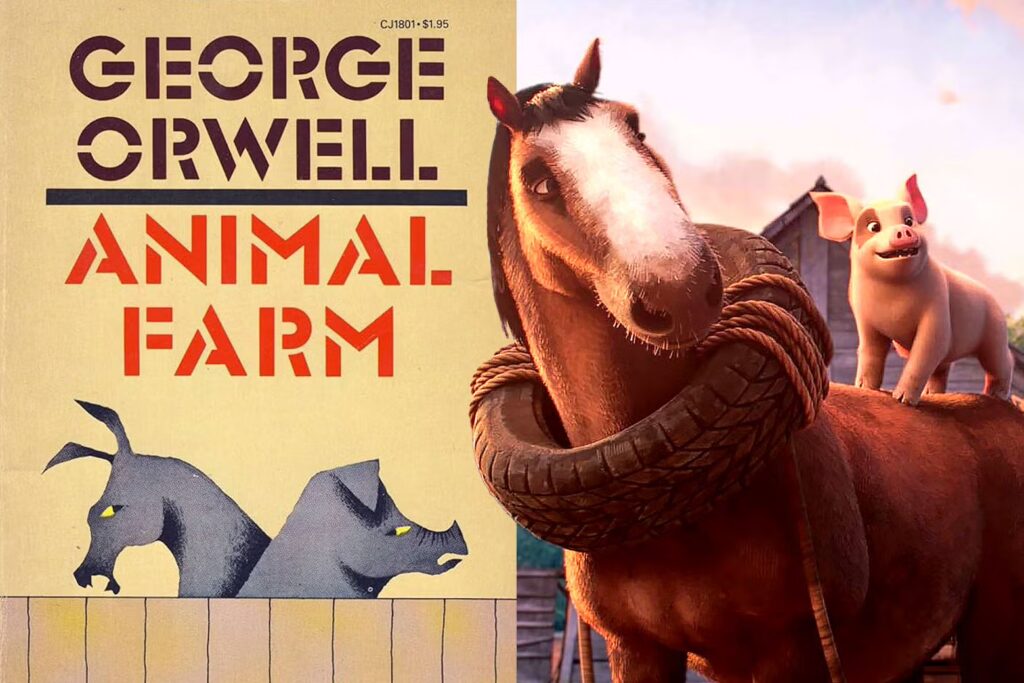
The allegory is anchored in the Russian Revolution and its aftermath. Old Major combines elements of Karl Marx and Vladimir Lenin as the visionary theorist who dies before the new order hardens. Napoleon represents Joseph Stalin as the cunning consolidator of power, while Snowball represents Leon Trotsky as the intelligent rival driven into exile. Boxer stands for the proletariat, especially the loyal industrial and agricultural working class; Squealer stands for propaganda; and Mr. Jones stands for Tsar Nicholas II and the old regime.
Other symbols matter too. Napoleon’s dogs function as a private terror apparatus, often read as the secret police. Moses the raven represents religion used as consolation and pacification. The sheep embody mass conformity, repeating whatever slogan power needs repeated. Benjamin, meanwhile, represents skeptical intelligence that sees what is happening but does not act in time to stop it.
The reason the allegory still works is that it is specific enough to be historically legible and broad enough to travel. The book is certainly about Stalinism, but its mechanisms of betrayal—elite capture, slogan politics, administrative lying, coerced consent, and ritualized public loyalty—are not confined to one country or one ideology.
Animal Farm Characters Ranked: Napoleon vs Snowball vs Old Major
Ranking the characters by narrative importance, symbolic force, and lasting reader impact, the strongest order is this:
- Napoleon. He is the book’s dominant force because he turns theory into regime. Orwell uses him to show how fear, bureaucracy, and staged necessity consolidate dictatorship after a revolution.
- Boxer. Boxer is the novella’s emotional core. He is not the cleverest character, but he is the one who makes the book hurt. His loyalty, work ethic, and trust expose the moral cost of political betrayal more powerfully than any speech does.
- Snowball. Among the “Napoleon vs Snowball vs Old Major” trio, Snowball ranks second because he gives the story its lost alternative. He is energetic, articulate, and flawed, but his expulsion marks the end of debate and the beginning of pure coercion.
- Squealer. If Napoleon is the fist, Squealer is the voice. He matters because he translates raw domination into something that sounds respectable, necessary, and even benevolent.
- Old Major. Old Major ranks below Napoleon and Snowball in page time, but not in ideological importance. He supplies the founding dream, which makes his posthumous corruption one of the novella’s central tragedies.
- Benjamin. Benjamin’s bitterness and late-arriving clarity make him one of Orwell’s most haunting creations. He understands more than most characters, but his detachment becomes its own kind of moral failure.
- Clover. Clover matters as the conscience that almost wakes up. She repeatedly senses that something is wrong, but because she mistrusts her own memory, she becomes one more casualty of manipulated language.
If the ranking is narrowed to the headline trio alone, the best order is Napoleon first, Snowball second, Old Major third: one becomes the regime, one becomes the lost possibility, and one becomes the founding myth both sides claim to inherit.
Animal Farm Chapter-by-Chapter Summary with Key Takeaways
- Chapter I: Old Major gathers the animals, explains human exploitation, and imagines a future revolt, planting the moral and ideological seed of the entire story. Key takeaway: revolutions usually begin in genuine grievance and genuine hope.
- Chapter II: The rebellion happens sooner than expected, Mr. Jones is driven out, Manor Farm becomes Animal Farm, and the Seven Commandments are painted on the barn. Key takeaway: founding moments feel clean and unanimous, which later makes betrayal harder to admit.
- Chapter III: The harvest succeeds, the animals work collectively, and Snowball reduces complex principles into the chant “four legs good, two legs bad,” while the pigs begin claiming special food. Key takeaway: simplification is politically useful, but it also creates the conditions for manipulation.
- Chapter IV: Humans attack in the Battle of the Cowshed, and the animals’ victory strengthens their confidence and the farm’s mythology. Key takeaway: external conflict can deepen collective identity and help leaders build patriotic narratives.
- Chapter V: Snowball and Napoleon clash over the windmill, and Napoleon uses trained dogs to expel Snowball and abolish meaningful debate. Key takeaway: once violence enters governance, argument is replaced by obedience.
- Chapter VI: The animals labor harder, the pigs start trading with humans, and the commandments are reinterpreted to excuse obvious hypocrisy. Key takeaway: authoritarian systems normalize contradiction by controlling language and memory.
- Chapter VII: Hunger, egg seizures, forced confessions, and executions turn the revolution into terror. Key takeaway: the regime now depends on fear, not consent.
- Chapter VIII: Frederick pays with forged money, the windmill is destroyed again, and the pigs quietly alter another rule after discovering whiskey. Key takeaway: corruption is now routine, and the law exists only to ratify whatever leaders have already done.
- Chapter IX: Boxer collapses, is taken away in a cart marked for slaughter, and Squealer falsely claims he died in a hospital while the pigs soon acquire more whiskey. Key takeaway: the regime consumes its most loyal supporters once they cease to be useful.
- Chapter X: Years later, the pigs walk on two legs, revise the farm’s principles again, and become indistinguishable from the humans they once denounced. Key takeaway: the revolution ends in restored hierarchy, proving Orwell’s bleak circular vision of power.

Animal Farm Ending Explained: What Happens to Boxer and the Farm
Spoilers begin here. Boxer, the farm’s strongest and most loyal worker, is injured, declines physically, and is eventually taken away in a cart that Benjamin identifies as a knacker’s or glue-maker’s vehicle. Squealer then lies to the animals, claiming Boxer died peacefully in a hospital, and the pigs soon seem to spend the proceeds on whiskey. Orwell makes Boxer’s fate intentionally devastating because Boxer represents labor exploited to exhaustion and discarded once no longer profitable.
The farm’s ending is even grimmer. Years pass, the pigs adopt more human habits, they walk on two legs, they entertain human neighbors, and the old revolutionary distinction between animal and human oppression collapses. The final image—of creatures outside looking from pig to man and back again without being able to tell the difference—completes Orwell’s idea that a revolution can reproduce the very order it claimed to destroy if power is allowed to accumulate unchecked.
What the ending finally says is not that rebellion is meaningless, but that memory, language, and accountability are fragile. Once the animals lose the ability to remember original principles accurately, they also lose the ability to measure betrayal. That is why the book’s last movement feels so final: the moral vocabulary of resistance has been taken away before the physical resistance ever fully begins.
Best Animal Farm Quotes and What They Mean (explained)
“Four legs good, two legs bad.” This slogan starts as a simplification of Animalism, but Orwell shows how quickly simplified doctrine becomes anti-thinking doctrine. It unites the animals at first, then turns into noise used to drown out dissent.
“I will work harder!” Boxer’s mantra sounds noble, but Orwell uses it to show how sincerity can be redirected into self-destructive obedience. Hard work without political judgment becomes one of the regime’s most valuable resources.
“Napoleon is always right.” This line marks Boxer’s slide from solidarity into personality cult. It is the moment when trust in the revolution becomes trust in a ruler, and the difference is everything.
“All animals are equal, but some animals are more equal than others.” This is Orwell’s most famous paradox because it captures the final abuse of language: words still look moral while their content has been reversed. Equality survives only as propaganda for inequality.
“The creatures outside looked from pig to man … but already it was impossible to say which was which.” This closing image is the novel’s most efficient summary of revolutionary betrayal. The oppressed overthrow the old masters only to find the new rulers structurally identical to them.
Animal Farm Graphic Novel Review: is the Illustrated Edition a Good First Read?
The strongest graphic version for first-time readers remains Odyr’s fully authorized adaptation, published in English by major trade publishers including HarperCollins and Penguin. Official publisher copy presents it as a “gorgeously imagined” and fully authorized retelling, and the edition runs about 176 pages in the Penguin format, making it substantial enough to feel like a real reading experience rather than a superficial summary.
Critically, the adaptation is respected because it keeps Orwell’s structure and message intact. School Library Journal notes that the book preserves the original 10-chapter division, makes strategic edits for brevity, and does not confuse or diminish the allegory in graphic form. Publishers Weekly similarly argues that Odyr is faithful to Orwell’s vision, even if that fidelity means the book does not reinvent the material as radically as some graphic adaptations do. Common Sense Media calls the adaptation clear and compelling, with watercolor art that grounds the story in reality.
That leads to the right verdict: yes, the illustrated edition is a good first read for visual learners, reluctant readers, and classrooms, especially when the goal is to understand plot, symbolism, and core political themes. But it is not the best stand-alone choice for close textual analysis, because Orwell’s prose economy and tonal control are part of what makes the original novella so effective. The graphic novel is best seen as a gateway edition or a strong companion edition, not a full replacement for the prose text.
Animal Farm Stage Play Review: Best Theatre Adaptations and What to Expect
Among recent stage versions, two productions stand out most clearly. The first is Robert Icke’s adaptation, a Children’s Theatre Partnership production that official venue materials describe as a contemporary reimagining featuring puppetry by Toby Olié, with an age recommendation of 11+ and a compact 90-minute running time in at least one touring booking. Reviews praised the production’s visual daring and brutality, especially its puppet work and its ability to make younger audiences feel the novel’s darkness without reducing it to schoolroom didacticism.
The second is the Tatty Hennessy adaptation directed by Amy Leach, staged at Theatre Royal Stratford East and co-produced with Leeds Playhouse and Nottingham Playhouse. The official production page framed it as an 80th-anniversary interpretation exploring loss of identity, greed, and corrupt political power, with age guidance of 11+ and a running time of about two and a half hours. That revival went on to win the 2025 UK Theatre Award for Best Play Revival, and contemporary review coverage highlighted its intense physicality and unusually modern stage language, including integrated British Sign Language.
What should audiences expect from the best Animal Farm stage play adaptations? Usually not literal barnyard realism. The strongest theatre versions lean into either puppetry and visual metaphor or actorly physical transformation and stylized movement. They also tend to feel harsher than many school recollections of the book: violence, fear, and the collapse of solidarity land harder in live performance, especially when the production resists cute anthropomorphism. Readers who want spectacle should seek the Icke route; readers who want a more contemporary, ensemble-driven political charge should seek the Leach/Hennessy route.
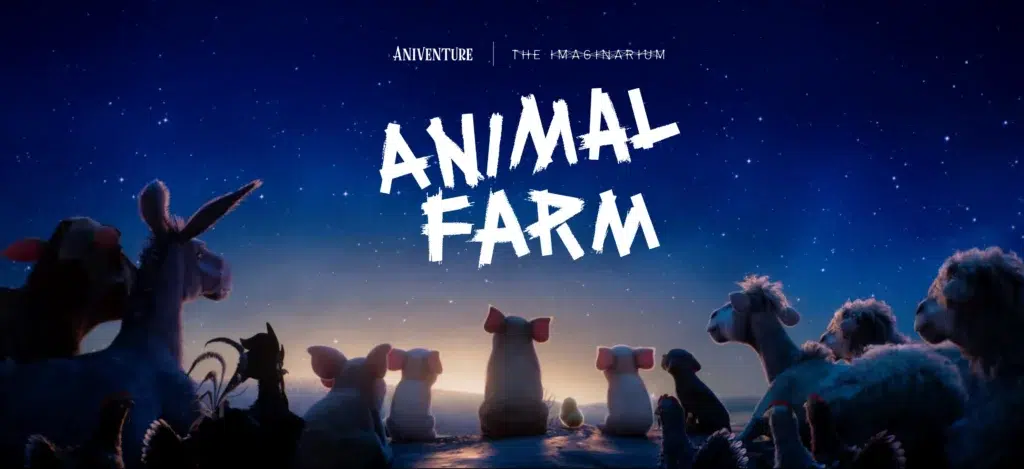
Animal Farm Book vs Movie: What Changes in the 2026 Film Adaptation
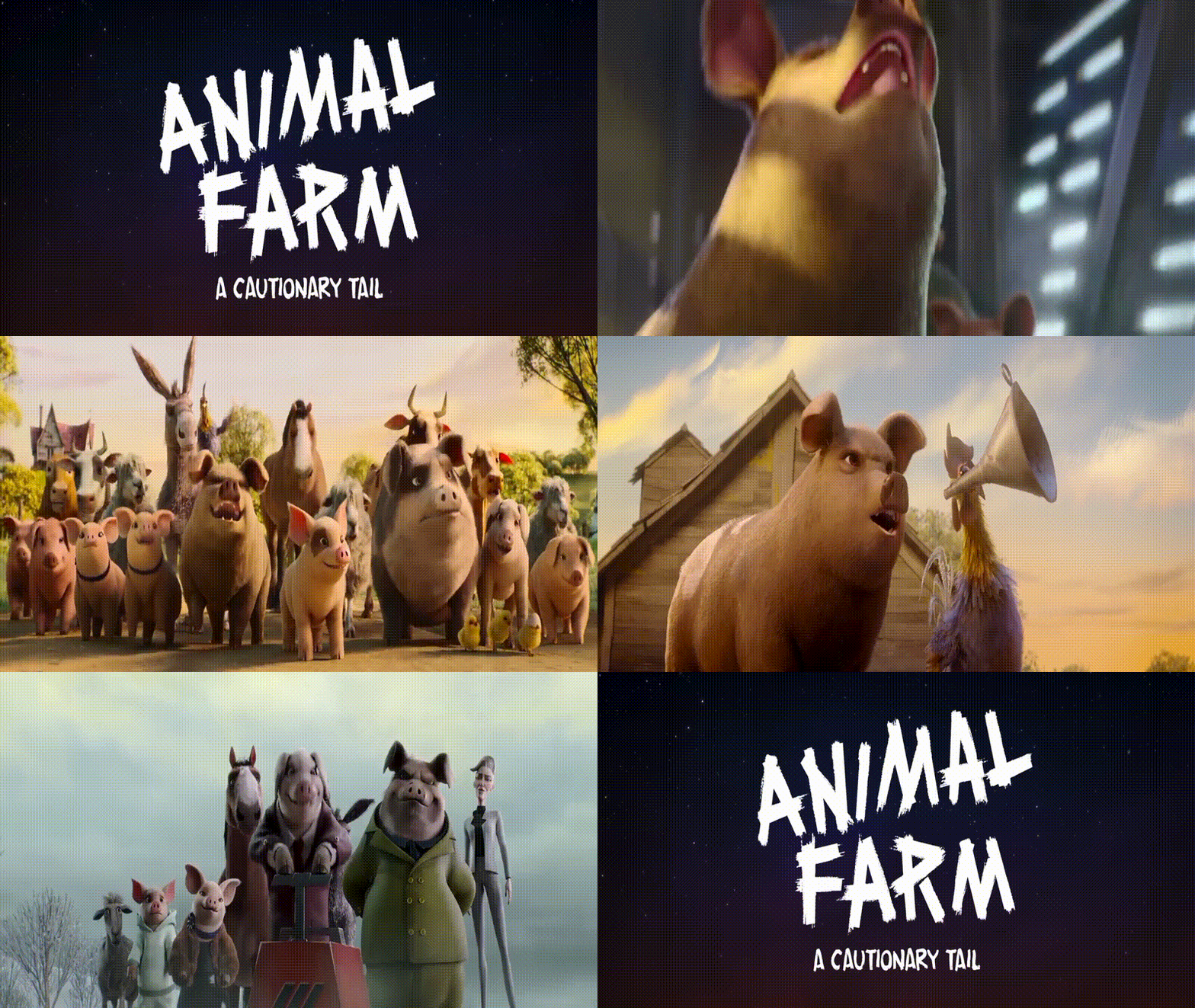
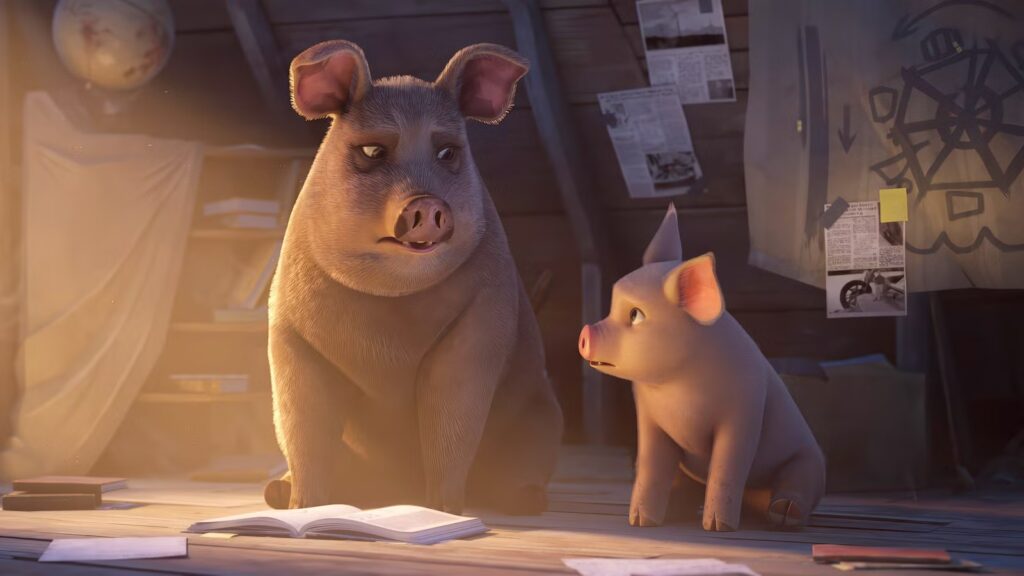
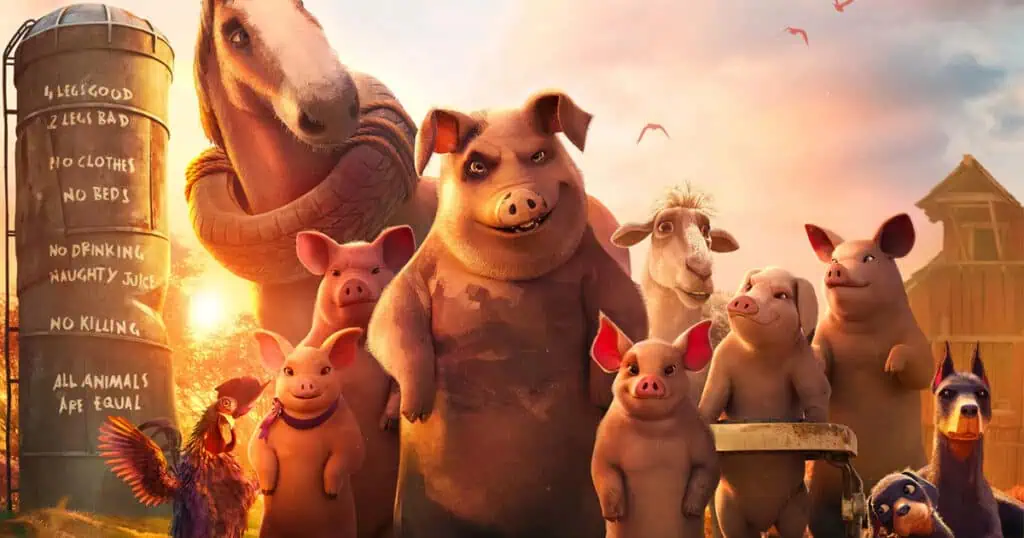
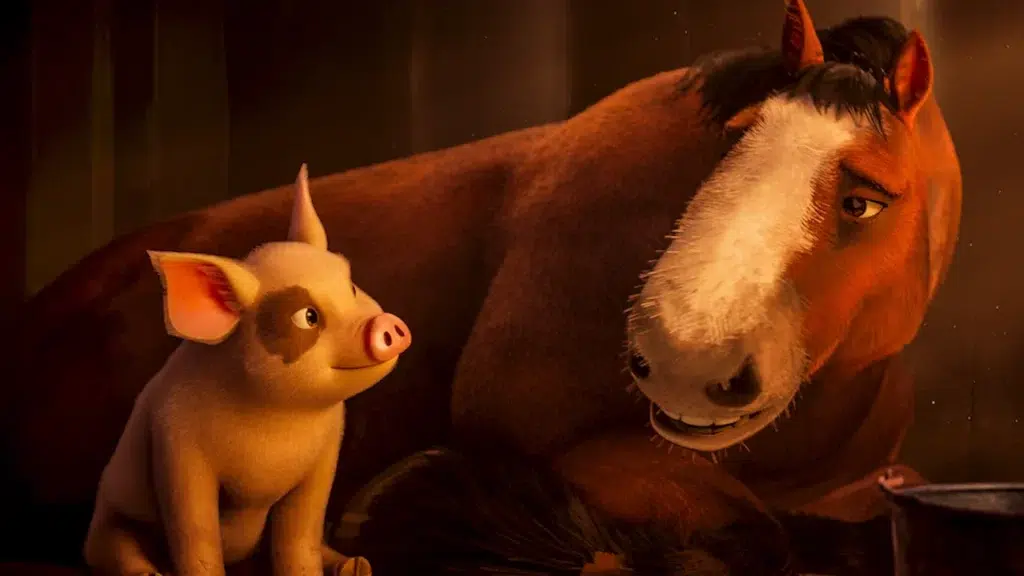
The first major change is structural: the 2026 film adds Lucky, a new piglet protagonist voiced by Gaten Matarazzo, and uses him as the audience’s point-of-view character. Andy Serkis explained that the team wanted a central young character through whom moviegoers could experience the story, and Parents coverage confirms Lucky was added specifically to make the ideas more accessible to children.
The second major change is tonal. Official materials frame the film as a PG animated satire of revolution and power, and Common Sense Media describes it as lighter, more kid-friendly, simpler in plot, and explicitly endowed with a happy ending. That is a huge departure from the book’s uncompromising final turn and one reason critics reacted so sharply.
The third change is thematic emphasis. Angel’s official synopsis still markets the film as fulfilling Orwell’s warning about communism, but several critics and reviewers argued that the adaptation redirects much of its satire toward corporate greed and modern capitalism, partly through the expanded human villain Freida Pilkington and a more contemporary setting logic. The result is that the movie’s political target feels broader and, to many reviewers, blurrier than Orwell’s anti-Stalinist original.
The fourth change is tonal texture: rude humor, fart jokes, and broader family-animation beats play a much bigger role than they do in the book. That has defenders, who see the movie as an entry point for younger viewers, but it was also one of the most commonly cited reasons critics felt the film had diluted Orwell’s edge.
The fifth change is the ending itself. RogerEbert’s review confirms that Lucky ultimately overthrows Napoleon and restores equality in a far more hopeful finish than Orwell’s novel allows. That shift matters more than any single casting or visual decision because the book’s original ending is the mechanism by which Orwell delivers his final warning. Change that, and the moral pressure of the whole fable changes with it.
A final practical note prevents confusion: some databases and review aggregators label this as a 2025 film because festival reviews appeared in 2025, but Angel’s official U.S. and Canada theatrical release date is May 1, 2026. In SEO terms, treating it as the 2026 release is the clearest choice for general readers.
Animal Farm (2026) Review Roundup: Critics’ Reactions and Common Complaints
As of May 4, 2026, the critical picture is poor. Rotten Tomatoes lists the film at 24% on 50 reviews, while Metacritic shows a 28 Metascore based on 15 critic reviews, both of which signal broadly negative reception. Rotten Tomatoes’ critics consensus is effectively a warning label: some adaptations are “more watchable than others,” and this one is not among the more admired versions.
The dominant complaint is tonal confusion. Variety’s capsule on Metacritic says the message gets muddled amid pratfalls and fart jokes; The Hollywood Reporter says the political and social themes are sacrificed for by-the-numbers plotting; the Los Angeles Times criticizes the film’s overly loud, jokey, oversized approach; RogerEbert argues the movie panders to children and turns a cautionary tale into something overly reassuring.
The second big complaint is ideological drift. AP’s review argues that the film trades Orwell’s anti-totalitarian force for a noisier, less coherent children’s adventure centered on corporate greed and spectacle. Several critics also object to the hopeful ending, viewing it not as a fresh reinterpretation but as a contradiction of the novel’s central warning.
The third complaint is audience mismatch. Common Sense Media is notably kinder than most professional critics and sees the movie as a workable tool for teaching critical thinking to children, but even that more favorable review stresses that the film has been simplified, softened, and redesigned as a gateway text. In other words, the movie seems to function best when treated as an educational conversation starter, not as the definitive screen version of Orwell’s novella.
There are some more positive notes. Screen Daily’s review, as captured by Metacritic, says the film still takes a political stance and delivers a message about equality and collective power, even if it will not satisfy Orwell purists. Movie Nation also found something salvageable in the adaptation’s agenda and sincerity. But those are minority positions inside an otherwise clearly negative consensus.
Is the 2026 Animal Farm Movie Kid-Friendly? Rating, Tone, and Parent Guidance
Officially, the film is PG for “thematic elements, some action/violence, rude humor and language,” and Angel confirmed that rating ahead of the theatrical release. Common Sense Media places it at age 8+, explicitly describing it as lighter and more kid-friendly than the book.
That said, “kid-friendly” needs context. Common Sense notes that a beloved horse dies off-camera, dogs menace and attack, and the film introduces dictatorship, lies, manipulated rules, and power abuse in simplified form. Kids-In-Mind also flags implied deaths, arguments, greed, strong language, and some crude humor. So the movie is clearly toned down compared with the novella, but it is not harmless background entertainment for very young children.
The best guidance is this: the 2026 Animal Farm movie is appropriate for older elementary or middle-school viewers who are comfortable with tension and who have an adult ready to talk through the politics. It is less suitable for children who are very sensitive to betrayal, off-screen death, or domineering characters. The adaptation is at its strongest when it leads to conversation rather than when it is treated as a plug-and-play family cartoon.
Animal Farm 2026 Voice Cast and Characters: Who Plays Napoleon and Boxer
The headline casting answers the most commonly searched question directly: Napoleon is voiced by Seth Rogen, and Boxer is voiced by Woody Harrelson. The rest of the principal official cast includes Gaten Matarazzo as Lucky, Laverne Cox as Snowball, Kieran Culkin as Squealer, Glenn Close as Freida Pilkington, Steve Buscemi as Mr. Whymper, Jim Parsons as Carl/Sheep, Kathleen Turner as Benjamin, Iman Vellani as Puff/Tammy, and Andy Serkis as Mr. Jones, Old Major, and Rooster.
That casting mix helps explain one of the film’s few broadly acknowledged strengths: even hostile reviews often concede that the voice ensemble is strong and that several performers fit their roles better than the adaptation’s overall critical reputation might suggest. In particular, Seth Rogen’s casting as Napoleon was repeatedly singled out as unexpectedly effective, even by critics who disliked the film around him.
Frequently Asked Questions (FAQs)
- What age is Animal Farm best for as a book?
Most readers do well with it from about 11–14 and up, depending on reading maturity and the amount of historical context available. Common Sense Media rates the book at 11+, while some consumer editions are commonly tagged around 14+, which reflects the fact that the prose is accessible but the politics and cruelty are more mature than the page count suggests. - What reading level is Animal Farm?
The book’s Lexile measure is 1170L, and Lexile classifies it as frequently taught in 9th and 10th grade. Scholastic also lists it at Reading Level Z and ACR 7.3, which is a useful reminder that decoding the sentences is easier than fully unpacking the allegory. - Is Animal Farm hard to read?
Linguistically, no. Conceptually, yes. Britannica and major educational guides emphasize Orwell’s simple narrative style, but that simplicity hides a layered political design, so many readers can finish the book quickly while still needing discussion or annotation to appreciate its full meaning. - What is the best edition to buy for most readers?
For a standard text copy, a current Penguin paperback is a safe, easy recommendation. For a giftable or shelf-worthy hardcover, the Everyman’s Library edition is strong. For visual learners or reluctant readers, Odyr’s Animal Farm: The Graphic Novel is the best alternate entry point. - Is the graphic novel a good substitute for the original?
It is a good first approach or companion edition, but not the best full substitute if the goal is close classroom analysis of Orwell’s prose. School Library Journal and Publishers Weekly both praise the adaptation’s fidelity and clarity, which is exactly why it works well for enrichment. - Should readers finish the book before watching the 2026 movie?
Yes. The film adds Lucky, softens the politics, changes the tone, and rewrites the ending, so reading the novella first gives the clearest sense of what the adaptation preserves and what it reshapes. - Is the 2026 movie faithful to Orwell?
Only at the broadest plot level. The farm revolution, pig leadership, and abuse of power remain, but critics broadly agree that the movie simplifies, modernizes, and child-proofs the material enough to make it a loose adaptation rather than a close one. - Is the 2026 movie okay for children?
With context, yes for many children around 8+; without context, not always. The official rating is PG, and parent guidance sources note peril, implied deaths, rude humor, and political manipulation themes that are likely to land differently depending on the child. - Which non-book version is the best bet: movie, graphic novel, or stage play?
For first-time understanding, the Odyr graphic novel is the safest alternative format. For artistic impact, recent stage productions—especially the Robert Icke version and the Amy Leach/Tatty Hennessy revival—have been more critically admired than the 2026 film. - How long does it take to read Animal Farm?
Most common prose editions run around 100–140 pages, so many adults can finish it in one or two sittings. In schools, though, the book often takes longer because discussion of allegory, Soviet history, and the ending is where much of the real value lies.
Conclusion
The clearest modern verdict is simple: the book remains the essential version of Animal Farm. Orwell’s novella still works because it is compact, teachable, and viciously exact about the way power recruits language, fear, and memory to preserve itself. For readers approaching the story for the first time, the best path is still to read the novella itself, then use adaptations as comparison tools rather than replacements.
Among the alternatives, Odyr’s graphic novel is the strongest visual first-read option, and the most compelling recent stage productions have arguably done more justice to Orwell than the new film has. The 2026 movie adaptation, despite a notable voice cast and a clear attempt to broaden the audience, has largely been received as a softened, tonally confused version that blunts the force of Orwell’s ending. That does not make the film useless, but it does make it secondary. The lasting work here is still the 1945 novella.
Sources and Citations
- The Orwell Foundation official page for publication context, historical background, and authorial framing surrounding George Orwell’s Animal Farm.
https://www.orwellfoundation.com/the-orwell-foundation/orwell/books-by-orwell/animal-farm/ - Angel Studios official page for the 2026 Animal Farm film covering the release date, rating, synopsis, cast, and production details.
https://www.angel.com/movies/animal-farm - Official theatre production pages for recent major stage adaptations of Animal Farm, including Leeds Playhouse production information and performance details.
https://leedsplayhouse.org.uk/event/animal-farm/ - Encyclopaedia Britannica reference entry for Animal Farm covering plot overview, allegory, themes, and literary significance.
https://www.britannica.com/topic/Animal-Farm - SparkNotes study guide for Animal Farm covering chapter summaries, themes, quotes, symbolism, and character analysis.
https://www.sparknotes.com/lit/animalfarm/ - ThoughtCo educational overview for Animal Farm covering allegory explanations, themes, and historical context.
https://www.thoughtco.com/animal-farm-study-guide-4588326 - Lexile reading-level database entry documenting Animal Farm reading metrics and educational classification data.
https://hub.lexile.com/find-a-book/book-details/9780451526342 - Scholastic educational guide for Animal Farm covering teaching context, themes, and student reading support materials.
https://www.scholastic.com/teachers/books/animal-farm-by-george-orwell/ - Rotten Tomatoes aggregation page for review-score and critic consensus data related to Animal Farm adaptations.
https://www.rottentomatoes.com/search?search=Animal%20Farm - Metacritic aggregation page for Animal Farm review-score tracking and critic reception data.
https://www.metacritic.com/search/animal-farm/ - RogerEbert.com reviews and adaptation commentary related to Animal Farm film releases and critical reception.
https://www.rogerebert.com/search?query=Animal+Farm - Associated Press coverage related to Animal Farm adaptations and production reporting.
https://apnews.com/search?q=Animal+Farm - Common Sense Media parental guide and age-rating breakdown for Animal Farm adaptations.
https://www.commonsensemedia.org/search/animal%20farm - Kids-In-Mind parental content guide for Animal Farm adaptation material and content descriptors.
https://kids-in-mind.com/search-results/?q=animal+farm - School Library Journal reviews and educational reception coverage related to Animal Farm editions and adaptations.
https://www.slj.com/search?query=Animal+Farm - Publishers Weekly reviews and publishing coverage related to Animal Farm editions, adaptations, and literary reception.
https://www.publishersweekly.com/pw/search/index.html?text=Animal+Farm - Leeds Playhouse production materials and adaptation notes for its recent stage production of Animal Farm.
https://leedsplayhouse.org.uk/event/animal-farm/
Recommended
- Last Flag Ending New Content Updates Amid Low Player Numbers: “We Don’t Want to Kill Our Game”, How Night Street Games Plans to Hand it to the Community— ×1
- Street Fighter 6 Alex Marriage Patch Update: What Happened and Why It Matters
- Suikoden Anime Trailer Breakdown: Suikoden: The Anime PV1 Reveals Cast, Story Clues, and October 2026 Release
- Scriptorium: Master of Manuscripts is the Kingdom Come: Deliverance and Animal Crossing-inspired medieval cozy art game with tiny dragons “Hans Capon mentioned therefore GOTY
- Pickmon Game: Release Date, Steam Details, Gameplay, Creatures, and the Pickmos Name Change Explained
- CodeForge: Native, Node-Based, Offline Visual C++ Programming Plugin for Unreal Engine (UE5)
- AI in Game Development (2026): Wins, Losses, and How to Use AI for Critique & Feedback
- My Voice Zoo: What it Is, How the Voice Recording Game Works, Platforms, Features, and Safety Tips
- Bluey’s Happy Snaps Trailer Reveals Fall 2026 Launch, Platforms, Gameplay, and Co-Op Details
- Impossible Mission 3 Release Date Confirmed for May as Classic Commodore 64 Series Returns After 38 Years