


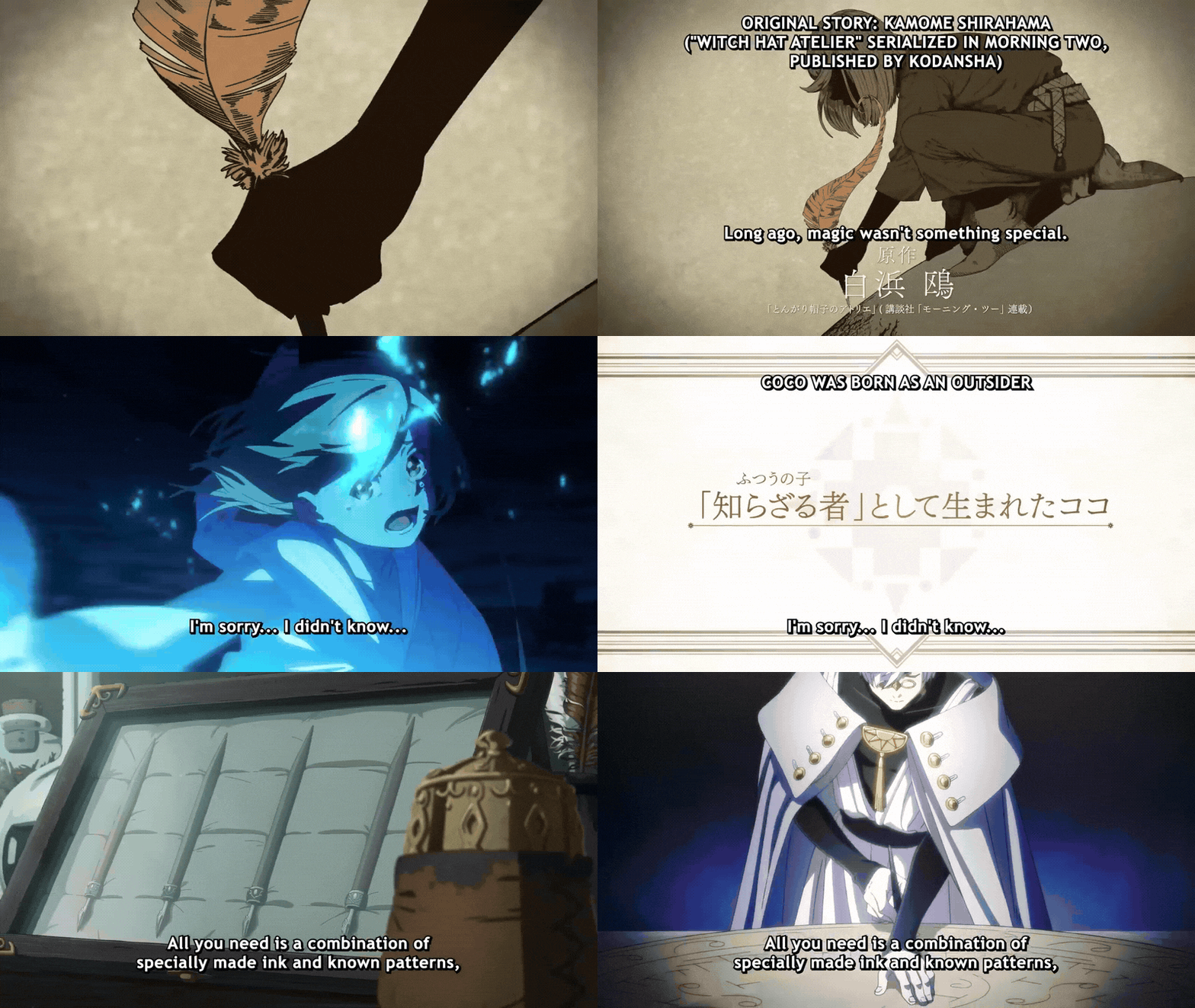


Scriptorium: Master of Manuscripts is a newly released cozy medieval art game from Yaza Games, published by Mythwright, built around running a manuscript workshop, decorating illuminated pages, taking commissions, and personalizing a creative space that the developers explicitly position as relaxing and pressure-free. The full version launched on Steam on April 16, 2026, and the Steam store currently lists it with a Very Positive user rating.
What makes the game stand out is how clearly it merges two very different sets of influences. Yaza says the gameplay draws from Animal Crossing: Happy Home Designer, Sticky Business, Potion Craft, Tiny Glade, and other cozy creative games, while the studio also cites Pentiment and Kingdom Come: Deliverance as major inspirations. That blend explains why Scriptorium feels less like a management sim in the traditional sense and more like a medieval creativity sandbox wrapped around a gentle narrative progression system.
The game’s early identity is also tied to two things that matter a great deal to its audience: authenticity and authorship. Yaza repeatedly frames Scriptorium as a human-made project built by artists, developers, and medievalists, and the studio says it has a strict zero-tolerance policy toward GenAI in the game’s art and text. That message is part of why the launch has resonated so quickly with players who care about handcrafted aesthetics as much as they care about cozy systems.
Scriptorium: Master of Manuscripts release date and where to buy on Steam
Scriptorium: Master of Manuscripts released on April 16, 2026. At launch, Yaza said the game would be available on PC via Steam first, and the current Steam store page confirms that Steam is the live storefront for the initial release.
Buying it is straightforward: the base game is sold directly through Steam, and the store page also lists bundle options, including a Deluxe Edition that packages the base game with the soundtrack. Yaza’s pre-launch pricing post listed a base price of $14.99, €14.99, £12.99, 55.00 CNY, and 49.99 PLN, with regional pricing adjustments for other territories.
As of April 17, 2026, the Steam page shows an introductory launch discount of 20% that runs through April 30. On the store page viewed in PLN, that drops the game from 49,99 zł to 39,99 zł, while Yaza’s launch communications say the same 20% launch discount applies across the listed base prices.
The practical answer to where to buy Scriptorium on Steam, then, is simple: the full game is on the main Steam store page, the free demo remains downloadable, and Steam is currently the only confirmed platform for the initial launch window.

Scriptorium: Master of Manuscripts Steam reviews and rating
The strongest evidence behind the claim that Scriptorium is launching to great reviews comes from Steam user feedback. As of April 17, 2026, the full game’s store page shows a Very Positive rating, with 149 user reviews and 98% of them marked positive.
The demo has been received even more enthusiastically. The Steam demo page currently shows 227 all-time user reviews with 99% positive, plus 16 recent reviews at 93% positive. That matters because it suggests the good reception did not appear out of nowhere on launch day; players had already been responding well to a playable slice of the game before release.
It is also worth being precise about what “great reviews” means right now. Steam clearly shows strong early player sentiment, but Metacritic did not yet have critic reviews available for the PC version when checked on April 17, 2026. So the game’s reception is currently better understood as a very strong early user-response story than as a finished critic-consensus story.
GamesRadar’s launch-day coverage reflects that same pattern. The outlet described the game as arriving to encouraging Steam reviews and noted an earlier snapshot of 55 user reviews at 96% positive, which aligns with the current trend on Steam even though the totals have already moved higher since publication.
Kingdom Come: Deliverance inspired cozy medieval game explained
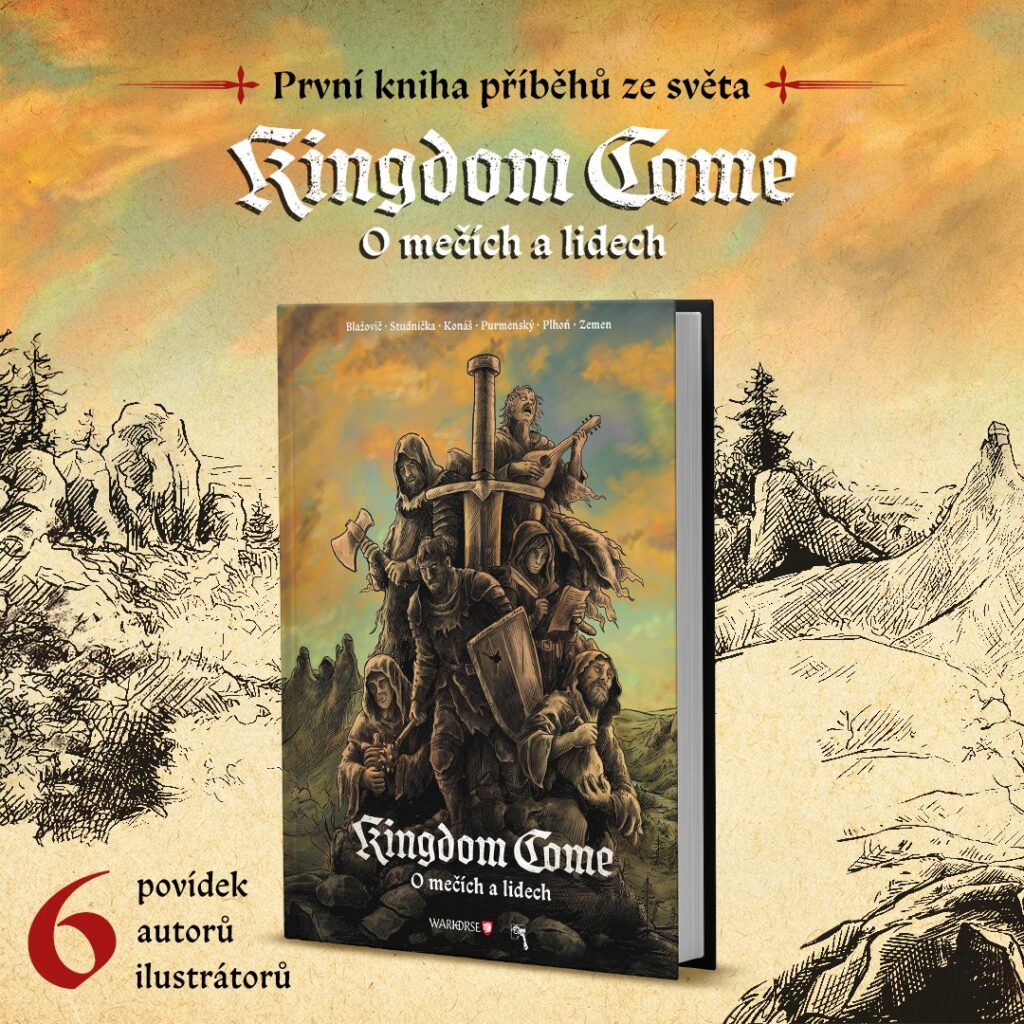
Yaza is unusually direct about Kingdom Come: Deliverance being part of Scriptorium’s DNA. In the studio FAQ, the developers say they were inspired by Kingdom Come: Deliverance and Pentiment, while GamesRadar reported that Yaza also told the Kingdom Come subreddit that KCD was “one of the biggest inspirations” when work on Scriptorium began.
That does not mean Scriptorium is trying to imitate Kingdom Come’s combat, systems depth, or first-person role-playing structure. The influence is more atmospheric and cultural. Scriptorium takes the appeal of living inside a richly imagined medieval world and translates it into a slower, cozier loop centered on illustration, patron requests, gossip, and artisanal work rather than swordplay or survival.
You can see this in the official store description. Story Mode revolves around prestigious patrons, battles and romances, love letters and blackmail notes, and a kingdom “overflowing with gossip,” all of which gives the game a social-medieval texture that feels spiritually adjacent to Kingdom Come even though the genre is completely different.
In other words, Scriptorium uses Kingdom Come: Deliverance less as a blueprint for mechanics and more as a reference point for mood, historical flavor, and fan-facing medieval specificity. That is a big reason the comparison makes sense instead of feeling like marketing overreach.

Animal Crossing: Happy Home Designer influence on Scriptorium gameplay
If Kingdom Come helps explain the setting, Animal Crossing: Happy Home Designer helps explain the loop. Yaza explicitly says Scriptorium’s gameplay was inspired by Happy Home Designer and other cozy creative games.
That comparison is useful because Happy Home Designer is built around fulfilling themed requests through decoration, layout choices, and aesthetic problem-solving. Scriptorium applies that same comfort-forward logic to illuminated manuscripts and workshop design. Instead of furnishing homes, you arrange parchment compositions, satisfy patrons, and gradually make your workshop feel more personal and more complete.
The overlap shows up especially clearly in Story Mode. You take commissions from quirky clients, earn money, unlock more decorative potential, and build a sense of cozy progression through taste and creativity rather than difficulty spikes. That is very much in the Happy Home Designer tradition, even if the visual language here is medieval marginalia instead of pastel interiors.
Yaza also links Scriptorium to Sticky Business, Potion Craft, and Tiny Glade, which makes the full design intention even clearer: this is a meditative make-things game first, and a progression-driven sim second.
How to decorate illuminated manuscripts in Scriptorium: Master of Manuscripts
The core decoration process happens in what the developers call the composition screen. According to the Steam store page, this is the creative heart of Scriptorium: you choose parchment types, shapes, and sizes, then drag and drop design elements directly onto the page.
The store page describes a library of 1,000+ pictures based on real medieval art, covering beasts, bugs, princes, paupers, faces, clothing, expressions, vegetation, oddments, and decorative marginalia. In a separate official community update, Yaza said the full game includes over 2,000 drawable assets across almost 50 parchments. Read together, the safest conclusion is that Scriptorium offers a very large asset pool, with the store description highlighting part of that creative toolkit and the community update describing the broader launch package.
Text and ornamentation are not afterthoughts. The store page says you can add text using medieval fonts with ornate uppercase letters, so page decoration is not limited to dropping pictures on parchment; it is also about building the visual grammar of an illuminated manuscript page.
The result is a system that treats manuscript-making as composition rather than as painting from scratch. That makes Scriptorium more approachable than a traditional digital art tool while still allowing pages to look elaborate, strange, and highly personalized.

Scriptorium: Master of Manuscripts story mode commissions and progression
Story Mode is the structured half of the game. Yaza says you create your own scribe, take commissions from quirky patrons, build relationships, earn money, and personalize your workshop while uncovering client stories and a broader royal drama.
An official Steam community post published just before launch adds a concrete number: Story Mode contains 70 commissions. GamesRadar repeated that same figure in its launch coverage, describing those commissions as the guided route toward your artistic masterpiece.
That progression matters because Scriptorium is not just a toybox. Every completed request moves you forward economically and narratively. You are not merely filling pages; you are building a reputation, unlocking decorative possibilities, and shaping the identity of your workshop over time.
The game’s strongest design choice may be that it lets progression serve creativity instead of the other way around. Story Mode gives structure to people who want direction, but the act of making art remains the central reward.
Scriptorium sandbox mode medieval Canva tools and features
If Story Mode is the guided experience, Sandbox Mode is the pure expression mode. The Steam store page calls it a medieval “Canva,” while Yaza’s community post goes even further and says the game acts like a medieval Photoshop or Canva when you enter Sandbox.
The official description is consistent across sources: no clients, no commissions, no pressure, just blank parchment and the asset library. Yaza also says that in Sandbox, everything is unlocked from the start, which makes it the ideal mode for players who want an immediate creative playground instead of a progression ladder.
The game’s own examples of Sandbox-style output explain why the “medieval Canva” label has stuck. Official Steam descriptions mention letters, invitations, illustrated quotes, tarot cards, coloring pages, desktop wallpapers, fantasy maps, TTRPG props and handouts, medieval recreations of pop culture, and memes. That is far broader than a narrow manuscript simulator.
For players who like pushing tools to their limit, Yaza also says there is no hard asset cap, though the game may warn you with a pop-up if a page becomes extremely crowded and performance risks rise on some hardware.

Best medieval art assets in Scriptorium: Master of Manuscripts
The most distinctive assets in Scriptorium are the ones that lean hardest into actual medieval weirdness. Yaza says its games are inspired by real-life medieval marginalia, and the official descriptions repeatedly emphasize bizarre beasts, cheeky humor, armed rabbits, oddments, and decorative doodles drawn from genuine manuscript traditions.
From the store page alone, the standout asset categories look like creatures, faces, clothing, vegetation, decorative borders, and social archetypes such as princes and paupers. Those are the pieces that give players enough material to create everything from courtly pages to grotesque jokes without losing the manuscript feel.
What makes the asset library especially strong is not just volume but range. Yaza’s official examples include fantasy maps, invitations, wallpapers, TTRPG handouts, and pop-culture recreations, which suggests the best assets are the ones flexible enough to bridge historical inspiration and modern reinterpretation.
So the “best” medieval art assets in Scriptorium are less about one single category and more about the combination of authenticity, absurdity, and utility. The game gives you enough historically flavored material to make something beautiful, silly, ceremonial, or deeply cursed on command.
How to add medieval fonts and lettering in Scriptorium
Text support is more robust than a simple letter-stamping system. Yaza says it implemented a proper text editor that lets players choose fonts, change sizes, and move text fields freely around the page.
The Steam store page complements that by saying players can use medieval fonts decorated with ornate uppercase letters. That means the lettering system is meant to be part of the page design, not merely a functional captioning tool.
Yaza also confirms that the full game supports complete UI and dialogue localization in English, Polish, German, French, Spanish, Simplified Chinese, and Japanese, while the in-game manuscript writing tool supports the Latin alphabet as well as Simplified Chinese and Japanese scripts.
If you want to write full sentences or build multi-page works, the answer is mixed but encouraging. Full sentences are supported through the text editor, but true multi-page book assembly is not a direct launch feature; instead, Yaza says you can export individual pages and combine them into a PDF externally.

Workshop customization in Scriptorium: furniture, lighting, and decorations
Workshop customization is a major part of the cozy appeal. The Steam store page says you spend earnings to decorate your scriptorium with furniture, lighting, tapestries, flowers, windows, columns, and carpets.
You are not just filling orders; you are gradually building a workspace that reflects your style and status as a manuscript maker.
This is where the Happy Home Designer comparison becomes especially persuasive. Decorating the workshop is not separate from the game’s core fantasy; it is central to it. The more successful you become as a scribe, the more your creative environment evolves into a lived-in home studio rather than a static menu backdrop.
Because of that, workshop customization helps Scriptorium feel like a life-of-the-craft game rather than just an editor. The room around the art matters almost as much as the art itself.
Tiny dragons pets in Scriptorium: Master of Manuscripts
Yes, Scriptorium has tiny dragons, and they are one of the easiest ways to understand its tone. The Steam store page says you can keep a pet companion by your side while you work, choosing from a cat, dog, or tiny dragon.
The important detail is that the game presents these pets as part of the workshop’s coziness and personality, not as combat companions or progression systems. They are there to complete the feeling of home, to sit beside your parchment and make the scriptorium feel warm, weird, and alive. That interpretation follows directly from how the store page places them inside the workshop-decoration description.
GamesRadar also highlighted the tiny dragons in its launch coverage, treating them as one of the game’s most instantly charming selling points. That outside reaction lines up with the way Yaza itself markets the pet feature.
For a game about manuscript illumination, tiny dragons are exactly the right kind of feature: playful, ornamental, and just a little ridiculous.

How to export PNG and share your Scriptorium creations
Scriptorium is built for sharing. Both the full game and demo descriptions say you can save your work to an in-game gallery and export it as a PNG optimized for printing and social sharing.
Yaza’s answer adds the policy details that matter once people start using the tool seriously. The studio says you can freely export and share your creations for personal, hobby, educational, cultural, and other non-commercial purposes.
Commercial use is a different story. Yaza says Scriptorium-generated works cannot be used in monetized or commercial projects such as published books or other money-making materials. That restriction is important for anyone thinking of the game as a professional asset pipeline rather than a personal creative tool.
For players who want more than single images, Yaza says the practical workaround is to export each page separately and assemble them into a PDF with an external tool. So PNG export is native, while book-style compilation is currently a manual extra step.
Is Scriptorium a 100% human-made game with zero GenAI policy
Yaza’s answer here is direct: yes. In an official pre-launch Steam community post, the studio said Scriptorium is a 100% human-made game created by human artists, developers, and medievalists, with a strict zero-tolerance policy for GenAI in both art and text.
The launch-day announcement used similar language, describing the game as a passion project built by real artists and medieval enthusiasts with zero AI assistance. That consistency across multiple official posts makes this one of the clearest identity statements attached to the game.
That policy matters because Scriptorium sells itself on handcrafted medieval aesthetics, historical inspiration, and the pleasure of composition. A zero-GenAI stance is not just a marketing badge in that context; it directly supports the credibility of the game’s artistic promise.
For players specifically looking for a human-made alternative to generative-image tools, this is one of Scriptorium’s most defined and most deliberate selling points.
Scriptorium: Master of Manuscripts demo download on Steam
The free demo for Scriptorium released on February 23, 2026, and it is still available on Steam after the full launch. Yaza explicitly said in the launch announcement that “the demo stays,” so players can continue trying the game before buying the full version.
Content-wise, the demo includes a few pages of Story Mode plus a sample of Sandbox Mode. That makes it a real test of both halves of the game rather than a narrow vertical slice limited to menus or tutorials.
The demo’s reception has also been strong. As of April 17, 2026, its Steam page shows 227 all-time reviews at 99% positive, which is a very good sign for players who want evidence that the core tools and vibe already work before they spend money on the full game.
One limitation is language support. Yaza says the demo is available in English only, while the full game supports seven UI and dialogue languages.
“Hans Capon mentioned therefore GOTY” meaning and Kingdom Come fan references
The phrase “Hans Capon mentioned therefore GOTY” comes from a Steam user review highlighted by GamesRadar in its April 17, 2026 launch coverage. In plain terms, it is a fan-joke way of saying that any game openly nodding to Kingdom Come: Deliverance instantly earns bonus goodwill from Kingdom Come fans.
That joke lands because Hans Capon is not a random side name in the Kingdom Come universe. On Deep Silver’s official Kingdom Come: Deliverance page, he is important enough to headline the Amorous Adventures DLC, which centers on Sir Hans Capon and Henry.
So when Scriptorium is framed as KCD-inspired, and when fans notice references or simply feel that overlap in spirit, “Hans Capon mentioned therefore GOTY” becomes shorthand for immediate medieval-fan approval. It is not a literal review rubric, of course; it is a community meme expressing affection for a shared medieval fandom language.
The line also captures why Scriptorium has found attention so quickly: it sits in a very specific overlap between cozy-game players, manuscript-art enthusiasts, Pentiment fans, and Kingdom Come devotees who are eager for anything with convincing medieval texture.
FAQ questions and answers
- What platforms is Scriptorium: Master of Manuscripts available on right now?
Scriptorium is currently available on PC via Steam for its initial release. Yaza says other platforms or storefronts are not ruled out later, but nothing else is confirmed yet. - Is there a free demo for Scriptorium?
Yes. The demo released on February 23, 2026, remains available on Steam, and includes a few Story Mode pages plus a sample of Sandbox Mode. - How many commissions are in Story Mode?
Yaza said before launch that the full game includes 70 Story Mode commissions. - Does Sandbox Mode unlock everything immediately?
Yes. Yaza says Sandbox gives you the full database of medieval-inspired graphics with no clients or commissions, and the pre-launch community post says everything is unlocked from the start there. - Can you write full sentences in Scriptorium instead of placing one letter at a time?
Yes. The game has a proper text editor with movable text fields, font choices, and size controls, rather than forcing players into single-letter placement only. - Can you export your art as PNG files?
Yes. The official Steam descriptions say creations can be exported as PNG files optimized for printing and social sharing. - Can exported Scriptorium art be used commercially?
No. Yaza says personal and non-commercial use is allowed, but monetized or commercial use is not permitted. - Is Scriptorium multiplayer?
No native multiplayer mode is planned. Yaza says Steam Remote Play may let friends work together informally, but Scriptorium itself is designed as a single-player experience. - Does Scriptorium support Steam Deck?
Yaza says community playtesters reported that the game performs well and is considered playable on Steam Deck, but the studio does not officially recommend it yet because verification had not been completed and some tutorials still show mouse-and-keyboard prompts. - Is Scriptorium really made without GenAI?
According to Yaza, yes. The studio says the game is 100% human-made and follows a strict zero-tolerance policy for GenAI in its art and text.

conclusion
Scriptorium: Master of Manuscripts succeeds because it understands exactly what niche it wants to occupy. It is not trying to be a hardcore medieval simulator, a conventional shop-management game, or a full digital art suite. Instead, it turns manuscript illumination, workshop decoration, and low-pressure client commissions into a creative loop that feels historically flavored, visually distinctive, and unusually inviting.
The Kingdom Come: Deliverance comparison makes sense because of the game’s medieval texture and fandom crossover, while the Animal Crossing: Happy Home Designer comparison makes sense because of how request-driven, decorative, and cozy the actual play loop is. That combination is rare, and it helps explain why the game has opened to such strong early user sentiment on Steam.
As of April 17, 2026, the picture is clear even if the critic side is still developing: Scriptorium launched on Steam, the demo remains available, user reviews are very strong, and Yaza has delivered a human-made medieval art game with enough tools, charm, and specificity to stand out in the 2026 cozy-game lineup.
sources and citation
- Steam store page for Scriptorium: Master of Manuscripts
https://store.steampowered.com/app/3119540/Scriptorium_Master_of_Manuscripts/ - Steam community hub and official Yaza launch/community posts for Scriptorium: Master of Manuscripts
https://steamcommunity.com/app/3119540/
https://steamcommunity.com/app/3119540/allnews/ - Official Yaza Games FAQ for Scriptorium
https://www.yazagames.com/faq - Steam page for Scriptorium: Master of Manuscripts Demo
https://store.steampowered.com/app/3765600/Scriptorium_Master_of_Manuscripts_Demo/ - GamesRadar launch coverage of Scriptorium and the “Hans Capon mentioned therefore GOTY” review reference
https://www.gamesradar.com/games/simulation/kingdom-come-deliverance-and-animal-crossing-inspired-this-medieval-cozy-game-where-you-hang-with-tiny-dragons-and-make-art-and-its-launching-to-great-reviews-hans-capon-mentioned-therefore-goty/ - Metacritic listing showing that critic reviews were not yet available for the PC version when checked
https://www.metacritic.com/game/scriptorium-master-of-manuscripts/critic-reviews/
https://www.metacritic.com/game/scriptorium-master-of-manuscripts/ - Deep Silver’s official Kingdom Come: Deliverance page, including the Amorous Adventures of Sir Hans Capon DLC description
https://www.deepsilver.com/games/kingdom-come-deliverance
Recommended
- Crimson Desert Dev Confirms Boss Rematches, Hard Difficulty, Enemy Territory Recapture, and Major New Updates Coming Soon
- Blender and NVIDIA GeForce RTX 5090: Everything You Need to Know
- s&box Open-Source Game Creation Platform: How to Build, Mod, and Publish Games with Source 2 + C#
- inZOI vs The Sims 4: A Comprehensive Comparison of Life Simulation Games
- How to Create a Sci-Fi Metahuman in Unreal Engine 5: A Step-by-Step Guide
- AdonisFX 2.0 Brings Full Support for Houdini: Features, Pricing, and Workflow Benefits
- Unreal Engine vs Unity: Which Game Engine Is Best for Your Project?
- NanoGS: Free Nanite-Style Tool To Render 3D Gaussian Splats in Unreal Engine 5 (UE5)
- Evil Dead Rise Star Lily Sullivan Has a Sneaky (and Extremely Gross) Cameo in Lee Cronin’s The Mummy (2026)
- How do I set a camera to render in orthographic mode in Blender?