






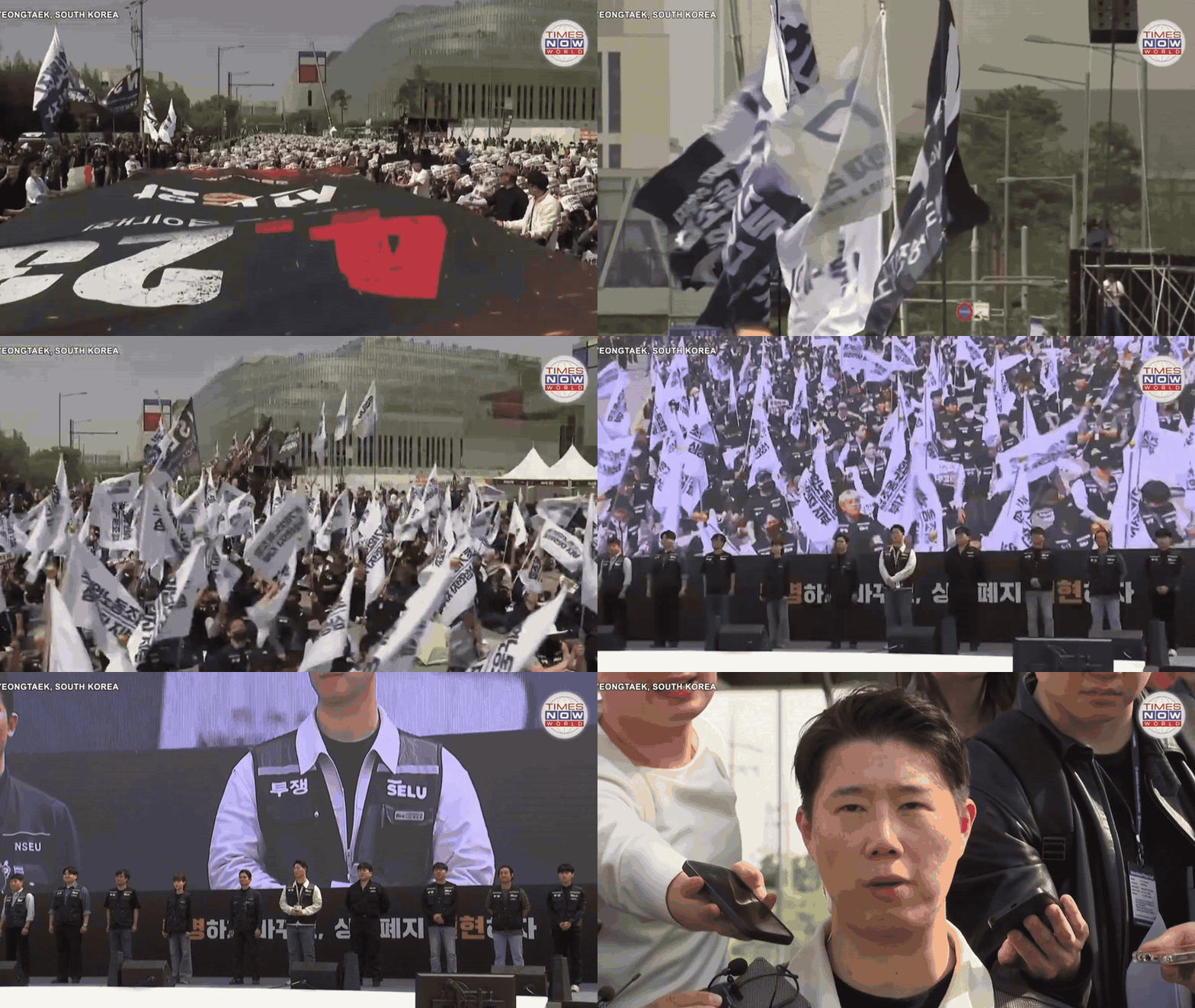
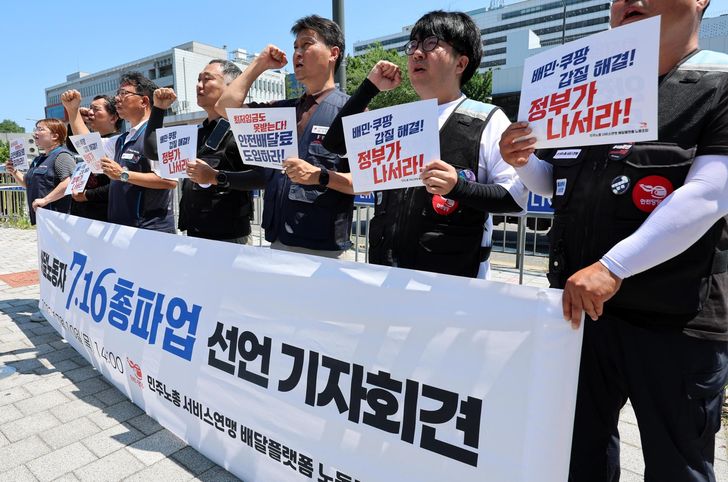
The Unity South Korea strike story is best understood as a labor dispute over whether a legally compliant restructuring process was used in substance as a pressure tactic to make employees leave. The clearest Korean reporting describes an April 16, 2026 protest outside Unity Korea’s office in Seoul, not just a vague social media “strike,” and places the dispute at the center of union claims about standby assignments, pay cuts, and alleged pressure to resign. Unity Korea, for its part, says it is aware of local union activity, respects employees’ rights to organize and express opinions, and continues to follow Korean labor law procedures.
The controversy matters well beyond one office. It connects Unity’s broader global restructuring to South Korea’s stricter dismissal rules, where direct layoffs for managerial reasons require urgent necessity, efforts to avoid dismissal, fair selection standards, and advance consultation with the union or employee representatives. That legal framework helps explain why the argument is not only about whether jobs were cut, but about how the company got there.

Unity South Korea strike over unfair dismissals explained
The phrase “Unity South Korea strike” has spread quickly online, but the underlying dispute is more precise than that label suggests. Korean reporting centers on an April 16, 2026 protest organized by the Unity Technologies Korea union, which argued that employees were being sidelined through standby and later leave-like statuses in a way that functioned as an indirect dismissal system. The union’s complaint is not simply that headcount fell. It is that workers were allegedly excluded from ordinary work, had their pay reduced, and were then pushed toward resignation under conditions the union says were unfair even if they were framed as lawful personnel measures.
What makes the dispute unusually sensitive is that South Korean labor law distinguishes between direct dismissal and other employer actions such as suspension, transfer, wage reduction, and shutdown allowances. That means the legal debate is not only whether people lost jobs, but whether the steps used to get there crossed the line into “unfair dismissal, etc.” under the Labor Standards Act. In that sense, the Unity Korea case is a dispute over process, legal classification, and practical coercion all at once.
Why Unity Korea employees went on strike in April 2026
Workers did not mobilize over one isolated incident. The immediate trigger, according to the union and local reporting, was a pattern that allegedly began late in 2025: employees were placed on standby, some were later converted into a leave or business-shutdown type status, and wages reportedly fell to about 70% of normal pay. Union representatives argued that for IT workers, prolonged removal from real assignments is not neutral downtime but a fast-moving career threat, because skill decay and résumé gaps can make staying in that condition professionally untenable.
Local reports also show a wider dissatisfaction with how restructuring was being handled. Union representatives criticized what they described as inconsistent personnel management, including hiring people and then seeking recommended resignations within months, and they contrasted that with accusations that executive compensation had increased even while staff numbers shrank. Read together, those claims show why employees treated the issue as one of dignity, fairness, and job security rather than a narrow wage grievance.
What happened at Unity Korea before the April 16 protest
The local conflict unfolded against a backdrop of global retrenchment at Unity. In its own SEC filings, Unity said it reduced its workforce by about 25% in the first quarter of 2024, had 4,987 full-time employees at the end of 2024, and 4,412 at the end of 2025. Unity’s 2025 annual report also said the company incurred additional workforce-reduction and office-footprint costs in 2025, while a March 26, 2026 company release said it would accelerate profitability by exiting certain non-strategic ad businesses.
Inside Korea, the union says the local version of that restructuring started to bite late in 2025. Automaton’s summary of Korean reporting says the alleged standby practice began late last year, including cases involving workers hired less than six months earlier. In September 2025, Inven reported that Unity Korea’s union, “Stay with Unity,” had formally launched and explicitly framed job insecurity and restructuring as the core reason for organizing. By the time employees protested on April 16, 2026, the issue had already moved beyond private frustration into formal labor organizing and bargaining.
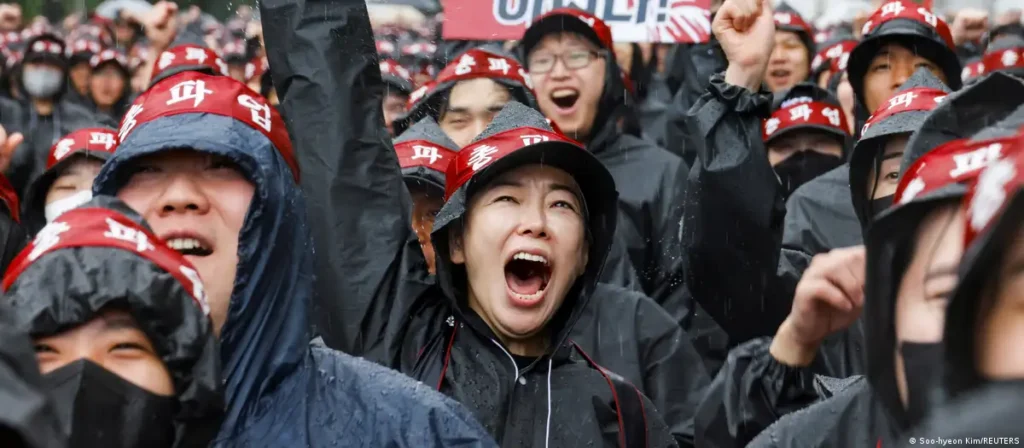
Unity South Korea union protest timeline and key events
The timeline shows a slow-building labor conflict rather than a sudden April blowup. Inven reported that the union filed its establishment report with Gangnam District Office on September 23, 2025 and publicly tied its launch to restructuring and shrinking headcount. A February 27, 2026 report then said the Unity Technologies Korea branch had held an opening representative-bargaining meeting, while labor calendars separately listed Unity branch bargaining on February 24, during the week of March 23–29, and again on April 22. That sequence suggests negotiations were active both before and after the April 16 protest.
The April 16 milestone was the first major public escalation. Chosun Biz’s report, carried on Daum, said employees protested outside the office near Yeoksam Station in Seoul and demanded withdrawal of standby measures. As of the latest publicly visible labor-calendar entries reviewed here, bargaining activity was still on the schedule after the protest, indicating the dispute remained unresolved through April 22, 2026.
Unity Korea union claims about forced resignations and standby status
The union’s central claim is that Unity Korea used standby status as a restructuring tool to avoid the legal and reputational burdens of straightforward layoffs. In the reporting summarized by Automaton and in the Korean Chosun Biz piece, the argument is consistent: employees were removed from ordinary work, later shifted into a status that reduced wages, and then left facing a choice between waiting indefinitely or resigning. The union says that sequence turned “voluntary” resignation into something much closer to managed attrition.
That allegation matters because it turns an HR dispute into a legal interpretation battle. If the company truly used legitimate standby or shutdown measures, it may argue that it followed Korean law. If, however, those measures were used primarily to pressure people out, workers can argue that the formal label does not capture the real effect. The entire dispute therefore hinges on whether the facts resemble lawful restructuring support or de facto dismissal pressure.
What Unity employees in South Korea said about unfair dismissals
Employee accounts in Korean gaming coverage make the union’s argument more concrete. ThisIsGame’s summary says that after restructuring in late 2025, many employees were not just reassigned lightly but were cut off from ordinary work life: commuting ceased to matter, work email access was blocked, and internal systems were no longer available. Their formal employment relationship remained, but the work itself disappeared.
Chosun Biz added the more distinctive IT-sector complaint: workers said it is extremely hard to endure total exclusion from work in a field where skills age quickly, portfolios matter, and long gaps can damage future prospects. That is why employees described the experience as functionally similar to dismissal even when management did not use the word “fired.” Their complaint was not merely about reduced income. It was about being professionally frozen in place until resignation became the practical exit route.
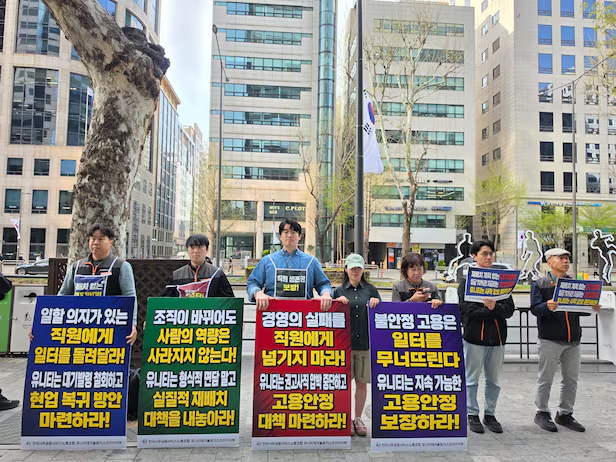
Unity Korea layoffs and workforce reduction from 230 to 120 employees
The most widely circulated headcount figure in April 2026 is that Unity Korea fell from roughly 230 employees to about 120. Chosun Biz stated that Korean staffing was once in the 230 range and had dropped to around 120, while Automaton repeated the same 230-to-120 framing based on Korean reports. Those figures are the basis for the headline narrative around the Unity Korea layoffs.
At the same time, one reason the numbers have confused readers is that not every report uses the same baseline. When the union’s establishment was reported in September 2025, Inven described recent reductions from roughly 180 to 120, not 230 to 120. The cleanest way to reconcile the reporting is to read 230 as an earlier peak or broader historical staffing level, and 180 as a nearer-term pre-union benchmark after earlier reductions had already happened. That means the local downsizing appears to have occurred in more than one stage, not as one single layoff event.
Unity Korea standby policy and 30 percent wage cut controversy
The wage issue is central because the reported reduction was precise enough to signal a legal structure. Chosun Biz said union representatives described a path where standby eventually changed into a status that cut compensation to about 70% of wages. Automaton’s write-up likewise said employees’ wages were reduced to 70% after the status change. That is why the public conversation often describes the dispute as a “30 percent wage cut” controversy.
Under South Korea’s Labor Standards Act, Article 46 says that when a business shuts down for a cause attributable to the employer, the employer must generally pay at least 70% of the employee’s average wages during the shutdown period, unless a lower amount is approved by the Labor Relations Commission for unavoidable reasons. The union’s case is that the company used a framework that may look lawful on paper but becomes coercive in practice when workers are indefinitely excluded from meaningful work. In short, the legal number and the public controversy are directly linked.
Are Unity Korea employees being pushed to resign voluntarily?
No court or labor commission finding reviewed here has yet publicly established that Unity Korea forced resignations. What exists in the public record is a repeated union allegation that so-called voluntary departures were being shaped by conditions employees could not realistically endure. The reported facts behind that allegation include exclusion from assignments, reduced pay, and the risk of losing current technical relevance during long periods away from actual work.
That interpretation also fits a wider pattern described elsewhere in South Korean game labor disputes. In February 2026, Netmarble’s union accused its affiliate Jampot of using standby orders, separation incentives, and reduced-pay at-home standby to steer employees toward resignations after a project ended. The Unity Korea case is not the same dispute, but the resemblance is important: in both, unions described “standby” not as a neutral temporary measure but as a structured exit path dressed in softer language than dismissal.
How South Korean labor laws shaped the Unity Korea dismissal dispute
South Korean labor law is the reason the Unity Korea controversy took the form it did. Article 23 of the Labor Standards Act says an employer cannot, without justifiable cause, dismiss, lay off, suspend, transfer, reduce wages, or take other punitive measures against an employee. Article 24 then sets strict conditions for managerial dismissals: urgent managerial necessity, efforts to avoid layoffs, fair selection criteria, and at least 50 days’ notice and good faith consultation with the majority union or employee representative.
Those rules make Korea very different from jurisdictions where employers can move faster and more directly on headcount cuts. The same statute also explains why standby or shutdown type arrangements become legally significant. Article 46 allows at least 70% of average wages during employer-attributable shutdowns, while Articles 26 and 27 require advance notice and written reasons for dismissals. In practical terms, that means a company trying to reduce labor costs in Korea has stronger incentives to use intermediate measures that are less exposed than direct dismissals, which is exactly why the union says the law’s structure shaped the Unity Korea dispute.
Could the Unity Korea unfair dismissal dispute lead to legal action?
Yes. The Labor Standards Act gives employees a formal route to challenge unfair dismissal and related treatment. Article 28 says an employee who is subjected to unfair dismissal may request a remedy from a labor relations commission, and it sets a three-month filing deadline. Article 30 further provides that if the employee does not want reinstatement, the Labor Relations Commission can instead order financial compensation at or above the wages the worker would have received during the dismissal period. Appeals can proceed to the Central Labor Relations Commission and then to administrative litigation.
Whether that happens in the Unity Korea case will depend on evidence. If disputes center on employees who formally resigned, the key question would be whether those departures were genuinely voluntary or the product of coercive circumstances. If the evidence pointed to adverse treatment because of union activity, the Trade Union and Labor Relations Adjustment Act could also matter: Article 81 bars dismissal or unfavorable treatment because a worker joined, intended to join, or lawfully acted for a union. That does not prove the Unity Korea case meets the standard, but it shows the legal pathways that could become relevant if the conflict escalates beyond bargaining.
Unity’s response to the Unity Korea strike and labor law allegations
Unity Korea’s public response, as quoted by Chosun Biz and its English sister coverage, has been narrow and procedural. The company said it is aware of local union activity in Korea, respects employees’ rights to organize and express their opinions, and continues to follow established procedures under Korean labor law. That statement is notable for what it does and does not do: it acknowledges the union and the legal framework, but it does not concede the union’s account of coercive restructuring.
There was also no publicly visible report in the reviewed sources of Unity reversing the standby policy, restoring full wages, or announcing a settlement by April 23, 2026. Instead, the latest labor-calendar entries continued to show representative bargaining after the protest. That suggests Unity’s immediate strategy was to defend the legality of its process while keeping the dispute within bargaining channels rather than public escalation.
How the Unity Korea labor dispute compares to wider South Korean tech union actions
The Unity Korea labor dispute is part of a much broader South Korean pattern in which unions are increasingly organizing around restructuring, job security, and management accountability rather than only annual pay. At Kakao Games, union membership reportedly crossed the majority threshold amid worries about a possible sale, spin-offs, and broader restructuring. At NHN, unions accused group management of failing to take responsibility for subsidiary-level restructuring and demanded stronger employment-stability measures from the parent company.
Unity also resembles other game-sector disputes in the specific way “standby” has become a contested labor tool. Netmarble’s union recently argued that affiliate Jampot used standby orders, time-limited incentives, and reduced-pay at-home standby to induce departures. The important difference is that Samsung’s ongoing 2026 labor confrontation, while also a sign of stronger worker mobilization in South Korea, is centered primarily on bonuses and profit-sharing rather than indirect dismissal tactics. So Unity Korea fits the wider labor moment, but its specific significance lies in the restructuring method being contested.
What the Unity Korea strike means for game industry workers in South Korea
For South Korean game workers, the Unity Korea case is important because it moves the conversation beyond crunch, bonuses, and annual raises into the harder question of what employment security actually means when studios or subsidiaries restructure. The dispute suggests that workers increasingly view formal employment status alone as insufficient protection if management can remove people from real work, reduce pay, and wait for attrition to do the rest. That is why the case is resonating inside labor discussions across the Korean game sector.
Recent Korean game-labor policy discussions reinforce that reading. In an April 2026 meeting between lawmakers and game unions, 77.3% of surveyed game workers said they felt job insecurity related to AI, while only 26.7% said formal labor-management discussion on AI was underway at their workplaces. Leaders from Kakao Games, NHN, Netmarble and other unions argued that productivity gains should not turn into staff cuts and called for broader mechanisms, including sector-wide consultation and even industry-level bargaining structures. In that sense, Unity Korea is not an outlier. It is a high-visibility case in a larger movement to redefine labor standards in Korea’s game and platform industries.
Unity Korea restructuring controversy and what happens next
The next phase of the Unity Korea restructuring controversy will likely turn on three tracks at once: bargaining, evidence, and corporate strategy. On the bargaining side, publicly listed representative-bargaining dates show the dispute remained active after the April 16 protest. On the evidence side, any future legal challenge would hinge on records of standby assignments, pay changes, access restrictions, resignation communications, and whether the affected workers were actually given real redeployment options.
On the corporate side, Unity is simultaneously pursuing a profitability-focused global strategy. Its 2025 annual report disclosed further workforce and office-footprint reductions, and its March 26, 2026 announcement said it would sharpen growth and margins by exiting non-strategic ad businesses. That larger corporate backdrop does not prove the union’s allegations in Korea, but it does explain why local workers see the dispute as part of a broader restructuring logic rather than an isolated HR misstep. Unless bargaining produces visible concessions, the most plausible next steps are continued protest pressure, labor-commission filings, or both.
Frequently Asked Questions (FAQs)
- Was the April 16, 2026 Unity Korea action a strike or a protest?
The clearest local reporting describes it as a protest outside Unity Korea’s office near Yeoksam Station in Seoul. Online summaries often call it a strike, but the strongest primary reporting reviewed here focuses on a public protest campaign tied to an ongoing labor dispute. - Why are workers calling the dispute an unfair dismissal issue?
Workers and the union say the problem was not only that jobs disappeared, but that employees were allegedly removed from normal work, later shifted into reduced-pay status, and effectively pressured into resigning. Under Korean law, dismissal, suspension, transfer, and wage reduction can all be examined as part of “unfair dismissal, etc.” depending on the facts. - How much were wages reportedly cut?
The reported reduction was to about 70% of wages, which is why the controversy is often described as a 30% pay cut. That number also aligns with the shutdown-allowance rule in Article 46 of Korea’s Labor Standards Act. - How many Unity Korea employees are reported to remain?
The mid-April 2026 reporting most often cited a current headcount of about 120 employees. The earlier baseline varies by source, with some reports using a historical peak of around 230 and others describing a nearer-term fall from around 180 to 120. - Did Unity admit the union’s allegations were true?
No. Unity’s public response said it respects employees’ rights to organize and express opinions and continues to follow established Korean labor-law procedures. That is a defense of process, not an admission of coercive or unfair restructuring. - What Korean labor laws matter most in this case?
The most important provisions are Article 23 of the Labor Standards Act on justifiable cause, Article 24 on managerial dismissals, Article 46 on shutdown allowances, and Article 28 on remedies through the Labor Relations Commission. If anti-union retaliation became an issue, Article 81 of the Trade Union and Labor Relations Adjustment Act would also matter. - Can employees challenge a resignation if they say it was not truly voluntary?
In practice, yes, but the outcome would depend on evidence about how the resignation happened. Korean labor remedies can address unfair dismissal and related treatment, and any dispute would likely revolve around whether the resignation reflected free choice or employer pressure created through exclusion, pay reduction, or lack of genuine alternatives. - Is the Unity Korea dispute linked to Unity’s global restructuring?
It appears closely connected in context. Unity officially disclosed a 25% workforce reduction in early 2024, additional workforce reductions in 2025, and a March 2026 move to exit certain non-strategic ad businesses in order to improve growth and profitability. - Are similar union disputes happening elsewhere in South Korean tech and games?
Yes. Recent reporting points to restructuring-related union action at NHN, growing job-security organizing at Kakao Games, standby-related controversy at Netmarble affiliate Jampot, and large-scale labor mobilization at Samsung over bonuses and compensation. The triggers differ, but the common thread is greater worker resistance to opaque management decisions. - What is the most likely next step in the Unity Korea dispute?
Based on the public record through April 23, 2026, continued bargaining is the most immediate path, because representative-bargaining dates remained on labor calendars after the protest. If talks stall, the dispute could widen into labor-commission complaints, public pressure campaigns, or both.
Conclusion
The Unity South Korea strike controversy is ultimately a dispute over whether legality in form matched fairness in substance. The union’s case is that standby assignments, loss of work access, and a 30% pay cut were used to turn resignation into the only realistic outcome. Unity’s case, at least publicly, is that it respected organizing rights and followed Korean labor procedures. The gap between those two narratives is exactly why the dispute has drawn so much attention.
What happens next will depend less on slogans and more on records: who was put on standby, how redeployment decisions were made, what written notices were given, how long workers remained excluded from real work, and whether bargaining can produce a settlement before labor authorities are asked to intervene. For South Korea’s game and tech workforce, the case has already become a test of whether modern restructuring can be meaningfully checked when formal employment survives on paper but meaningful work no longer does.
Sources and citation
- Unity Software Inc. 2025 Form 10-K (SEC Filing)
- Unity Investor Relations – SEC Filings Page
- Unity March 26, 2026 Strategic Update (8-K / IR Release)
- Unity Form 8-K (March 26, 2026 filing index)
Recommended
- GDC Festival of Gaming 2026 Launches: Registration Opens, Pass Prices, Dates & What’s New
- Developers With Foreign Legal Entities May Be Allowed to Include Games in the Russian Software Registry: Requirements, VAT Benefits, and What Changes in 2026
- Hasbro CEO Promises No Generative AI in Its Video Games as Chris Cocks Draws a Line on AI
- Canva Starts Previewing a More Powerful Version of Its AI Assistant (Canva AI 2.0)
- Walton Goggins Shares Unexpected Inspiration Behind The Ghoul In Fallout 76 & Fallout Season 2: Behind the Voice, Character, and Gaming Legacy
- Marvel Studios Lays Off Staff Across Departments: Visual Development Team Among the Most Affected
- Samsung Galaxy S26 Is About to Get AirDrop: How Quick Share Will Send Files to iPhone, iPad, and Mac
- How do I set up a tracking shot with a camera in Blender?
- How do I parent a camera to an object in Blender?
- Secrets to Blender Photorealism: How to Make Your Renders Look Real