










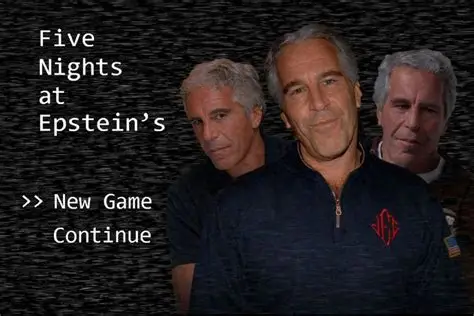
A satirical horror game called Five Nights at Epstein’s has been reported as a disruptive new “unblocked game” trend in US classrooms, with students allegedly pulling it up on school-issued devices when teachers step out. The title and premise reference Jeffrey Epstein, a convicted sex offender who died in 2019 while awaiting trial on new federal sex-trafficking charges—making the meme-style framing unusually sensitive and a flashpoint for parents, schools, and child-safety experts.
On itch.io, the best-known version is age-gated (18+) and includes a content warning describing “dark satire” and disturbing themes, while also saying it is not intended to promote or trivialize real events. Meanwhile, reporting and commentary vary on just how widespread the classroom phenomenon truly is: some outlets describe it as “sweeping” schools nationally, while others argue the “everyone is playing it” framing overstates a trend that may have peaked earlier and is being amplified by late-breaking coverage.
Why the game is viral and what “sweeping the country” means
What is “Five Nights at Epstein’s” and why is it going viral?
As described in reporting, “Five Nights at Epstein’s” is a Five Nights at Freddy’s-style survival horror parody that uses the “Five Nights” formula to turn a notorious real-world scandal into a stealth-and-survival loop. It has gone viral largely because it is easy to share (links, browser versions, reuploads), it reliably provokes reactions (shock, laughter, anger), and it fits the classroom “quick game when the teacher isn’t looking” pattern highlighted in reports.
The virality is also being fueled by social media attention—both formal news posts and user-generated clips—creating a feedback loop where coverage increases curiosity and curiosity increases searches.

Five Nights at Epstein’s “sweeping the country” claim (what reports are saying)
The “sweeping classrooms across the country” framing appears in Bloomberg Law coverage and related social posts, describing kids playing on school devices and role-playing as victims trying to survive on Epstein’s island. Newsweek similarly characterizes the game as being played “across the U.S.” and reports that classrooms in multiple states have seen it, citing Bloomberg reporting and interviews.
At the same time, Kotaku argues that the “sweeping the country” narrative is more complicated than headlines suggest, pointing to limited or indirect sourcing in some accounts and emphasizing that online trend timing can be short-lived and easily misread as ongoing nationwide saturation. A local investigation by WRAL also injects nuance: it reports confirmed support tickets and blocking activity in one district, plus parent testimony that sharing may be broader than official tickets suggest—without concluding that “every kid” is playing everywhere.
Where to play and how the game works
Where to play Five Nights at Epstein’s online (official link and web ports)
The most-cited “original” listing in recent reporting is hosted by a creator account named EvanProductions on itch.io, where the page is age-gated (18+) and the game is offered as a downloadable release for Windows, macOS, and Linux.
An unofficial HTML5 “web port” also exists on itch.io, where the uploader explicitly states it is unendorsed and describes the port as intended for “unblocked” play at school—an example of how reuploads can be tuned to classroom access patterns. A separate browser-run listing by another uploader (with minimal description) further illustrates that multiple playable versions and reuploads are circulating.
Official listing URL (downloadable version on itch.io):
textCopyhttps://evanproductions.itch.io/five-nights-at-epsteins
Five Nights at Epstein’s gameplay explained (how the game works)
Press descriptions of gameplay consistently emphasize a surveillance-and-resource-management loop reminiscent of Five Nights at Freddy’s: players monitor camera feeds, watch for the antagonist’s approach, and use limited defensive tools to last through “nights.”
In the school-focused reporting, the game is described as putting players in the role of a person trapped on Epstein’s island who must avoid being found, survive multiple nights, and use audio cues/sounds as a lure mechanic—an element repeatedly cited as one reason adults find the game particularly disturbing. The developer’s own update notes also indicate the presence of a “custom night,” a “Night 6,” and balancing changes tied to different characters and mechanics—signaling the game has been iterated like a typical fan-made horror project rather than existing as a single static upload.
Is Five Nights at Epstein’s on itch.io? (listing, tags, and mirrors)
The EvanProductions page shows the downloadable version labeled “Released,” built with Unity, and tagged with terms such as “Dark Humor,” “Horror,” “Survival Horror,” and a direct tag referencing “Five Nights at Freddy’s.” The same page includes a content warning stating that the game contains dark satire and fictional references to controversial real-world issues, advising player discretion and explicitly stating it does not intend to promote or glorify real individuals or events.
Beyond the “original” downloadable listing, mirrors and lookalike uploads appear as (1) an unofficial web port hosted on itch.io with explicit “unblocked” framing, and (2) separate “run in browser” listings that may be recreations or rehosts. This ecosystem matters because it makes a single URL block less effective: even if one version is removed or restricted, functionally similar pages can reappear under different uploader accounts.

Origins and relationship to Five Nights at Freddy’s
Is Five Nights at Epstein’s based on Five Nights at Freddy’s?
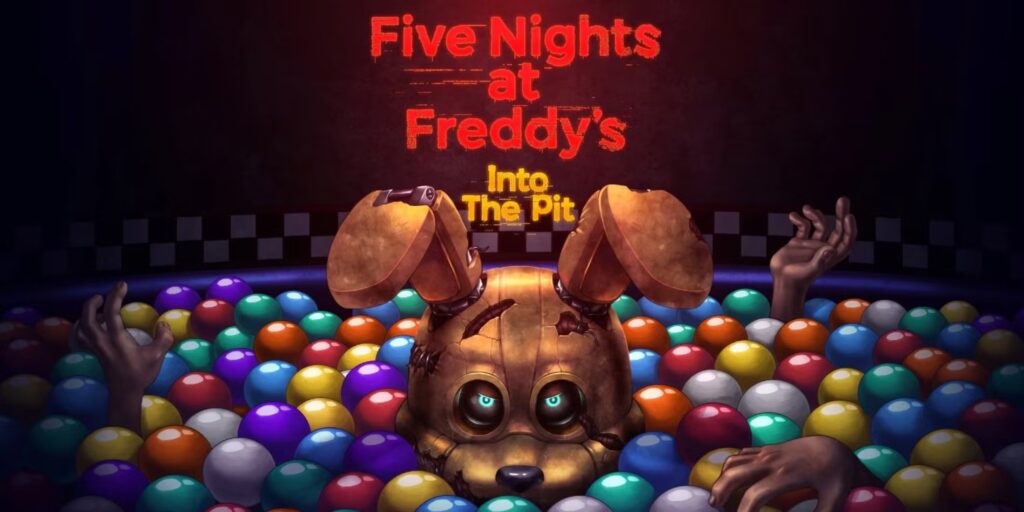
Mechanically, reports describe it as a direct riff on the classic Five Nights at Freddy’s template: a confined “survive the night(s)” structure built around monitoring security cameras and using limited tools to prevent a hostile character from reaching the player.
In the original Five Nights at Freddy’s, the player is a night security guard who uses camera feeds and doors while managing limited power; failing to keep threats out triggers a jump scare and game over. The EvanProductions listing’s tags explicitly name Five Nights at Freddy’s, reinforcing that the connection is intentional—while not implying any official affiliation.
Who made Five Nights at Epstein’s? (developer and upload history)
The most-cited version in recent reporting is attributed to EvanProductions on itch.io. The itch.io developer log shows updates dated January 22 and January 29, 2026 (including “custom night,” “Night 6,” and other features), documenting an active update cadence over that period.
At the same time, the broader ecosystem includes multiple other creators publishing similarly titled or explicitly derivative versions—such as an unofficial HTML5 web port uploaded later by a different account and separate browser-run or downloadable variants. This is typical of viral browser-game phenomena: “one game” can quickly become “a cluster of lookalikes,” which complicates attribution and makes it harder for schools and parents to track which version a child actually accessed.

Five Nights at Epstein’s plot and setting (Epstein Island horror premise)
On the EvanProductions itch.io page, the setup is framed like a familiar horror hook: the player sneaks onto an island to investigate, is discovered, escapes, and hides until rescue arrives—then must use audio lures and camera strategy to survive “five nights.” The same listing includes a prominent content warning about dark satire and disturbing themes, emphasizing that it is not intended to promote or glorify real people or events.
Multiple reports add that at least some versions incorporate real images released by the U.S. Department of Justice related to Epstein’s properties—specifically describing imagery from his home on Little Saint James—which heightens both realism and controversy compared with a purely fictional horror setting.
School spread, controversy, and content concerns
Why kids are reportedly playing Five Nights at Epstein’s in school
Reports suggest the “in-school” pattern is driven by a mix of access and social dynamics: kids reportedly open the game when unsupervised moments arise (for example, when a teacher steps out), and the game’s shock-value premise becomes a social currency for laughs and attention.
Access mechanisms vary by version. Some versions are browser-based (reducing friction on locked-down devices), and at least one itch.io uploader explicitly framed a web port as designed for “unblocked” school play, while an “unblocked games” host advertises compatibility with school computers and claims it can work behind school filters. Separately, WRAL reports a parent describing a Google Doc being circulated among students as a distribution mechanism—illustrating that spread can happen through everyday school collaboration tools rather than only through mainstream social platforms.

Five Nights at Epstein’s controversy explained (parents and schools reacting)
Adult reactions in reporting range from alarm to disgust to concern about normalization. In one widely reprinted account, a mother said she had avoided deeper questions because she had not yet discussed Epstein with her child, and described feeling devastated that children were exposed to the game at school. Other parents quoted in local reporting describe explicitly telling their child not to play and that “it’s not just a game,” especially when the child did not understand who Epstein was.
Schools, meanwhile, are positioned as responding through technical controls (blocking URLs, filtering) and policy enforcement—but often in a reactive mode because new mirrors and new links appear faster than formal reviews can keep up.
Is Five Nights at Epstein’s appropriate for children? (content concerns)
From an availability standpoint, the best-known itch.io listing is explicitly age-gated (18+) and labels the game as containing mature themes, alongside a content warning about disturbing material and controversial real-world references. That alone is a strong signal that the creator does not view the game as child-appropriate entertainment.
From a harm-and-development standpoint, multiple reports highlight worries that the game turns real-world victimization into play, potentially trivializing crimes and desensitizing students—especially when played socially for laughs. Swedish outlet Omni summarizes the controversy similarly, emphasizing that the game is spreading among schoolchildren and framing the premise as surviving multiple nights as a “victim” on Epstein’s island.
How schools are blocking Five Nights at Epstein’s (and how it spreads anyway)
Concrete blocking actions appear in multiple reports. WRAL quotes a spokesperson for Wake County Public School System saying the associated website was blocked on district-managed devices and describing the district’s default “games are blocked” posture plus a reporting-and-review workflow for new sites. The same piece notes the practical limitation that blocking on school systems does not stop access on personal devices and that content can spread via shared files or offline copies.
Similarly, an account cited by The Independent says Granite School District blocked a website used to access the game after a complaint. Omni also reports that schools in North Carolina and Utah have blocked websites as part of efforts to stop students from locating the game.
The “spreads anyway” dynamic is best explained as an ecosystem effect: once a controversial game is known by name, reuploads, ports, and alternative hosts can proliferate, and kids can pass around new URLs or files faster than institutional filters can adapt—without requiring sophisticated technical skill.
Five Nights at Epstein’s classroom videos on social media (what’s fueling the trend)
Social video content is repeatedly described as an accelerant. The Bloomberg Law write-up and accompanying discussion frames classroom play as something kids record and share, amplifying attention. Omni likewise states that videos from the game are spreading on social media, treating that visibility as part of why the story moved quickly across borders and into mainstream coverage.
The LinkedIn post by Bloomberg Law reporter Alexandra S. Levine is instructive because it describes the trend as being “supercharged” by videos of kids playing at their desks—capturing how attention can jump from student behavior to platform visibility to parental panic.
Parent guidance and safer alternatives
How to talk to kids about Five Nights at Epstein’s (parent guidance)
A consistent recommendation across reporting is to respond calmly and use the moment to assess what a child actually knows. In The Independent, Stephanie Marcello—identified as chief psychologist at Rutgers University Behavioral Health Care—recommends asking children what they’ve heard, what they think it means, and why they believe it is funny, noting that many kids may not truly understand the underlying reality.
Broader clinical guidance on Epstein-related memes and “dark humor” themes in teen spaces aligns with that approach. A Psychology Today essay argues that teens are often already exposed to major news topics through memes and group chats and that parental silence can leave kids processing disturbing material without adult context—making proactive, values-based conversations more protective than avoidance.
Practically, the guidance implied by these sources can be translated into four parent-focused aims: establish shared language for what exploitation and abuse are (at an age-appropriate level), reinforce that real victims exist and deserve dignity, set boundaries for content and device use, and keep the door open so a child will disclose uncomfortable encounters rather than hiding them.
Alternatives to Five Nights at Epstein’s (similar horror games without the controversy)
For families seeking “FNAF-like” tension without real-world exploitation references, itch.io’s “games like” recommendations for similarly tagged survival/horror experiences can be a useful starting point. Examples highlighted near the top of that recommendation list include:
- Andy’s Apple Farm, described as a retro VHS-style game.
- It’s Outside, explicitly described as “FNAF inspired” with a “survive the night” structure.
- Endacopia – DEMO, described as guiding a lost child through an unfamiliar world (tone varies by title, but the premise is not tied to a real-world abuse scandal).
When selecting alternatives, the key filtering criteria for “less controversy” are simple: fictional antagonists, no use of real individuals’ names/images, and clear age ratings or content notes that match a child’s developmental stage.

10 Frequently Asked Questions (FAQs)
Is Five Nights at Epstein’s a real, official product connected to Jeffrey Epstein?
No. It is described as a fan-made satirical horror game that references a real person and scandal; it is not an “official product” connected to Epstein or any recognized rights holder.
Is the game officially connected to Five Nights at Freddy’s?
No official connection is indicated. Reporting frames it as an imitation/parody of the Five Nights at Freddy’s formula, and the itch.io listing uses a Five Nights at Freddy’s tag to signal inspiration rather than affiliation.
Is the “original” version on itch.io marked as adult content?
Yes. The EvanProductions page is age-gated (18+) and includes a content warning about dark satire and disturbing themes.
Why are schools concerned, even if kids say it’s “just a game”?
Because the premise draws on real-world sexual exploitation and frames it as “survive five nights” gameplay—raising concerns about trivialization, desensitization, and exposure to mature themes.
How are students accessing it on school devices?
Reports describe access through browser-based versions or specific websites that were not initially restricted, plus link-sharing through peer networks and shared documents.
What are schools doing to stop it?
Examples in reporting include blocking the associated website(s) on district-managed devices and using content filtering tools with review workflows for newly reported game sites.
If a school blocks one website, does that end the problem?
Not necessarily. Reporting and platform behavior suggest that mirrors, ports, and alternative hosts can appear, and kids may still access versions on personal devices.
What should a parent do first if a child mentions the game?
Start by calmly asking what the child has seen and what they believe the game is about; multiple experts quoted in reporting emphasize that kids often repeat memes without fully understanding them.
Is there evidence the trend is nationwide and ongoing?
Some reports describe it as “sweeping” classrooms nationally, but other analysis argues the data and sourcing are mixed and that the trend may be overstated or time-shifted relative to peak attention.
Are there safer “FNAF-like” alternatives for horror fans?
Yes. Itch.io’s “games like” recommendations include multiple “survive the night” or horror titles that do not rely on real-world abuse scandals or real individuals’ names/images.

Conclusion
“Five Nights at Epstein’s” sits at the intersection of meme culture, survival-horror game design, and a uniquely sensitive real-world scandal—making it unusually polarizing for something that spreads like a typical browser game. Available versions range from an age-gated downloadable listing on itch.io with explicit content warnings to unofficial browser ports that make classroom access easier, which helps explain how the game can appear in school settings even when districts attempt to block it.
Whether it is truly “sweeping the country” depends on definitions and timing: some coverage frames it as broadly pervasive, while other analysis suggests the “national phenomenon” label may be inflated by media amplification and the natural tendency to generalize from localized outbreaks. Across interpretations, the most consistent practical takeaway in expert guidance is that parents and schools should treat the trend as a prompt for calm, values-based conversations and realistic device supervision—rather than assuming kids understand the underlying crimes or that a single site block will solve the distribution problem.
Sources and citation
1. Developer and Platform Listings
- itch.io Listing (Nachosama/EvanProductions):That’s Not My Neighbor by Nachosama
- Note: This contains the dev logs, content warnings, and the “18+” age gate information.
2. Legal and Behavioral Reporting
- Bloomberg Law:Schools Confront ‘That’s Not My Neighbor’ Game as Kids Play in Class
- Focus: Discusses classroom behavior, student privacy, and the game’s framing in a school setting.
3. School District and Regional Reporting
- WRAL News:NC School districts block ‘That’s Not My Neighbor’ game
- Focus: Specific reporting on North Carolina districts (like Wake County) blocking the site and concerns over distribution.
4. General News and Parent Reactions
- The Independent:What is That’s Not My Neighbor? The viral game parents are being warned about
- Focus: Parental warnings and expert advice on the game’s horror elements.
- Newsweek:What is ‘That’s Not My Neighbor’? Controversial Game Linked to Schools
- Focus: A synthesis of the platform responses and the spread of the game among minors.
5. Industry Critique and Media Literacy
- Kotaku:No, That Horror Game Isn’t Actually ‘Sweeping The Country’
- Focus: A critical look at the “moral panic” framing and how data about the game’s popularity was interpreted.
- Omni:That’s Not My Neighbor: The Horror Game Taking Over Schools
- Focus: Summary of the viral spread and the mechanics of school-level blocking.
6. Clinical and Psychological Context
Focus: Clinical context on exposure to mature themes in gaming and digital media.
Psychology Today:How to Talk to Your Teen About Disturbing Media
Note: While multiple articles exist, this specifically addresses the conversation strategies for viral horror trends.
Rutgers UBHC (University Behavioral Health Care):Resource Guide: Viral Media and Youth Mental Health
Recommended
- How to Export MetaHuman to Blender: Comprehensive Step-by-Step Guide
- The Seven Deadly Sins: Origin — Release Date, Platforms, Gameplay, and What Fans Need to Know
- IO Interactive and Build A Rocket Boy End MindsEye Partnership as Hitman Crossover DLC Is Canceled
- Can You Use Perspective and Orthographic Cameras in Blender?
- Why Does Hair Look Bad in Video Games? Exploring the Challenges of Realistic Hair Rendering
- What is the camera’s field of view in Blender?
- Resident Evil Requiem is likely the series’ biggest launch ever — 5 million units sold in under a week
- MetaHuman Creatures: Crafting Non-Human Characters with Unreal Engine’s MetaHuman Framework
- The Best Beards in Video Games: Iconic Characters and Their Legendary Facial Hair
- Blender Redistribute Curve Points Geometry Nodes Preset: A Comprehensive Guide