












In This Article (8 sections)
Nvidia Oversight, Commerce Department Pressure, and Jensen Huang’s Access
Nvidia export controls reached a revealing point inside the Commerce Department when officials reviewed draft rules affecting how thoroughly buyers would have to check their customers and how many chips Nvidia could ship to China. According to The New York Times, some officials felt pressure to handle Nvidia carefully because co-founder Jensen Huang had access to both President Donald Trump and Commerce Secretary Howard Lutnick. Commerce denied that those relationships discouraged enforcement.
By November 18, 2026, Treasury Secretary Scott Bessent had confirmed that several agencies had wanted tighter restrictions on Nvidia customer Megaspeed months earlier, while Commerce and the Justice Department confirmed that a criminal investigation into Megaspeed remained open. Those disclosures established that serious enforcement concerns existed, but they did not resolve whether Nvidia’s political access changed the handling of any particular rule, license, or investigation.
The Times described a Commerce Department in which matters involving Nvidia received unusually close attention. Current and former officials said communications passed through senior officials, staff prepared carefully for private meetings between Huang and Lutnick, and Nvidia general counsel Tim Teter was able to comment directly on draft regulatory language.
Some employees also said managers appeared more interested in pursuing investigations involving smaller customers than proposed inquiries touching Nvidia itself. That distinction matters because investigating a distributor can establish who received a shipment and where it went, while investigating the manufacturer can address what warnings the company received before supplying that distributor. The reported concern was therefore not simply whether enforcement occurred, but whether scrutiny was applied evenly across the supply chain.
Huang had multiple opportunities to argue Nvidia’s case directly to senior policymakers. The Times reported that he spoke with Trump by telephone, visited the White House, traveled with the president to China, and went to Mar-a-Lago to appeal restrictions affecting Nvidia’s H20 chip. Officials interviewed by the newspaper said that closeness made some employees wary of advancing policies that could anger the White House or Lutnick, although Commerce expressly disputed that interpretation.
The H20 episode shows both the influence and limits of access. Washington imposed a license requirement in April 2025, Nvidia later disclosed a $4.5 billion charge connected to H20 inventory and purchase commitments, and the government eventually granted licenses for certain Chinese customers in August. A meeting with senior officials, a policy change, an individual license, and a completed sale remained separate events.
Huang’s role at Nvidia later changed when the company announced on November 12, 2026, that he had resigned as president, chief executive, and a director, with Chief Financial Officer Colette Kress becoming interim CEO. The oversight questions, however, concern decisions made while Huang led the company. Congress has since requested records that could clarify how those decisions were handled.
Senators Elizabeth Warren and Chris Coons asked Commerce, State, and the White House to preserve records concerning license applications, enforcement matters, and communications, while House Foreign Affairs Committee Chair Brian Mast separately sought information from Jeffrey Kessler concerning Megaspeed and its affiliate Speedmatrix. Those requests establish the scope of congressional concern, but the significance of the records will depend on what they show about specific decisions and communications.

Howard Lutnick, Jeffrey Kessler, and the Drafting of Nvidia Export Rules
As commerce secretary, Howard Lutnick oversees the Bureau of Industry and Security, which administers US export controls and translates presidential decisions into licensing requirements that exporters and customers must satisfy. When Trump announced in December 2025 that approved Chinese customers could receive H200 chips, Commerce still had to determine the conditions governing those sales.
In January 2026, BIS adopted case-by-case review for qualifying exports, including Nvidia’s H200 and AMD’s MI325X. Lutnick publicly defended the licensing conditions, saying at a February hearing that Commerce and State had worked out terms Nvidia would have to accept. Reuters had reported that Nvidia objected to proposed customer-screening requirements, showing that the company and the department had different interests even while senior officials remained in contact.
The Times reported that Lutnick later raised objections to a proposal governing access to advanced chips through overseas data centers. His concerns reportedly included the effect on other countries and the risk of creating another trade confrontation with Beijing. That debate occurred against a broader policy backdrop in which the administration was also willing to adjust export restrictions for diplomatic reasons. In November 2025, for example, the government announced a one-year suspension of a rule extending restrictions to affiliates of certain listed companies. Officials weighing new Nvidia controls therefore faced competing signals: some parts of the administration wanted tighter restrictions, while others were concerned about trade negotiations and the commercial consequences of broader rules.
Jeffrey Kessler, the under secretary responsible for industry and security, also played a central role. Staff told the Times that Nvidia matters frequently passed through him, giving him visibility into both policy development and communications with the company. Kessler publicly supported conditional H200 sales, arguing that controlled exports could strengthen the broader American technology ecosystem. The January licensing framework reflected that approach by requiring applicants to address US supply concerns, recipient security procedures, and other safeguards while leaving officials authority to refuse individual applications.
Kessler’s role in the Megaspeed inquiry became more controversial after the Times reported that Nvidia general counsel Tim Teter invoked Kessler’s name when approaching Commerce investigators. The key unanswered question is what Kessler had actually authorized. Permission to contact investigators would leave those officials free to decline a meeting or withhold information, while an instruction to brief Nvidia on an active case would carry a very different significance. The public chronology confirms that Commerce opened an investigation, requested records, conducted an on-site inspection with Singaporean authorities, and later transferred the criminal investigation to the Justice Department. It does not explain whether Kessler directed any specific communication with Nvidia or whether such communication affected the investigation.
The same uncertainty applies to Nvidia’s access to draft regulations. The Times reported that Commerce staff found Teter’s comments in draft H200 rules, including suggestions concerning customer screening and allowable shipment volumes. Both issues could have immediate commercial consequences because stricter customer checks might prevent some sales, while a larger shipment allowance could increase the number of chips available to Chinese buyers.
Commerce responded that agencies routinely consult industry during rulemaking. The final regulation required applicants to certify that aggregate shipments of covered products to China and Macau would not exceed half the amount shipped for US end use, and it required ultimate recipients to screen for unauthorized remote access. Those final provisions show where the government landed, but they do not by themselves establish whether Nvidia succeeded in changing the draft language or how much influence its comments had.
Megaspeed, Remote AI Access, and the Enforcement Challenges Behind Nvidia Chip Sales
Megaspeed became central to the Nvidia oversight debate because of the scale of its purchases and questions about how advanced chips could be used after reaching overseas data centers. Warren and Coons cited more than $4.8 billion in purchases of advanced Nvidia chips by the Singapore-based cloud computing company since June 2024. That figure demonstrates the size of the commercial relationship but does not establish that any specific quantity of equipment was illegally diverted.
Commerce opened an investigation in 2024, requested Nvidia records concerning direct and indirect Megaspeed sales in May 2025, and participated with Singaporean law enforcement in an on-site inspection in June. Commerce also placed Megaspeed on an internal no-sell list that month before the Justice Department eventually took the lead on the criminal investigation.
The company drew additional scrutiny after reports that US intelligence suspected former Megaspeed executive Alice Huang, who had a personal relationship with Jensen Huang, of working for China. Beijing rejected that allegation, while Megaspeed denied that she was a spy and said inspections had found no evidence of illicit transfers. On November 12, chairman James Tan Yong Pong said the company had hired an American law firm to inventory its equipment. An inventory could help establish whether purchased hardware remains at expected facilities, but physical location does not answer every export-control question. A chip can remain in a Singapore or Malaysian data center while customers elsewhere access its computing power remotely.
That distinction has become increasingly important because remote access allows advanced computing capacity to cross borders without the physical chip moving. A server installed in Malaysia can remain physically there while a customer in another country submits workloads and receives results online. Understanding who benefits from the hardware therefore requires information about the customer, ownership structure, controlling company, and available computing capacity rather than shipping documents alone.
The November 16 interim final rule addressed this by imposing licensing requirements on covered chip transfers to data centers known to provide significant computing capacity to specified foreign customers. It also introduced separate destination-based requirements for Brazil, Indonesia, Malaysia, Singapore, and Thailand, while allowing exceptions for qualifying US-headquartered recipients or those with US-headquartered ultimate parents under reporting conditions.
The Megaspeed investigation also raised questions about related entities and third-party supply chains. The Times reported that trade records showed Speedmatrix, a Malaysian affiliate, continued receiving Nvidia technology, much of it through third-party server manufacturers. Nvidia said Commerce had authorized some shipments of repair parts. The existence of equipment deliveries to an affiliate does not establish subsequent diversion into China, but it shows why officials need visibility beyond a direct sale from Nvidia to one named customer. A manufacturer may sell to a server company, the server may go to an overseas data center, and that facility may then rent computing capacity to customers in other jurisdictions.
Scott Bessent publicly supported stronger restrictions on Megaspeed. On CNBC on November 13, he said Treasury, State, defense officials, and the US Trade Representative had favored placing the company on the Entity List for months. He also questioned whether Nvidia had done enough to identify its real customers and detect intermediaries buying on behalf of others.
An Entity List designation would address a different problem from Nvidia voluntarily declining a sale because a government listing can impose licensing requirements on other exporters and intermediaries dealing with the listed entity. Reports of a private confrontation between Bessent and Lutnick remain disputed, with Commerce denying the reported exchange, but Bessent’s public comments establish that there was a genuine policy disagreement inside the government over how aggressively Megaspeed should be restricted.
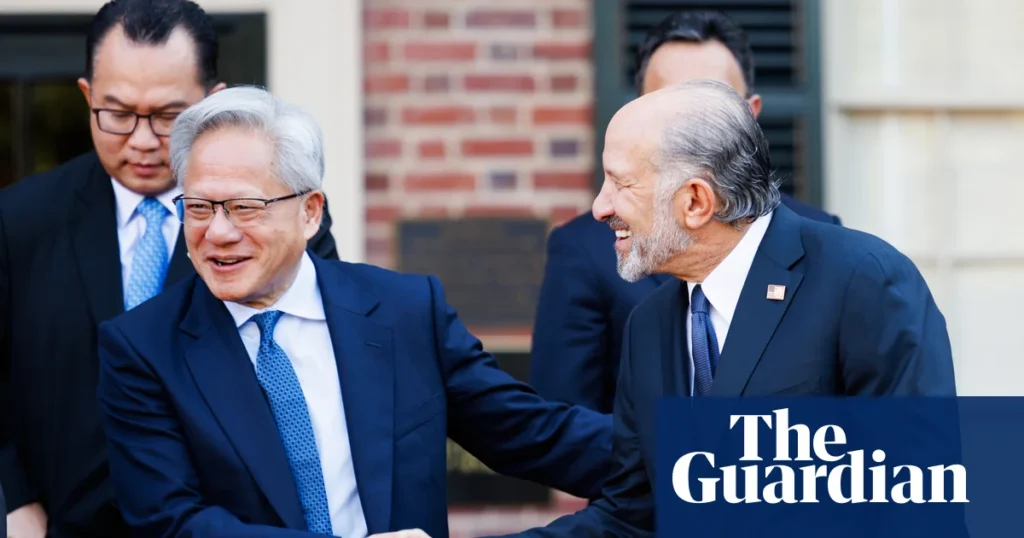
National Security, Nvidia’s China Strategy, and the Future of US AI Export Policy
The national security case for restricting advanced processors predates the controversy over Nvidia’s political access. In October 2022, BIS identified military planning, intelligence, surveillance, and advanced weapons development as areas in which access to high-end computing could benefit China. Advanced processors are commercially useful across many industries, but the same computing resources can also support sensitive applications. US policy has therefore increasingly focused not only on where chips are shipped but on the scale of computing capacity available, the identity of users, and the purpose of their workloads. The January H200 rule required applicants to identify certain remote users, while the November remote-access rule extended scrutiny to overseas facilities that provide substantial computing power to covered foreign customers.
Nvidia has argued that continued access to Chinese customers can also serve US strategic interests. Huang said in October 2025 that American companies would have a better chance of maintaining technological leadership if Chinese developers continued building on US computing systems rather than migrating to competing platforms.
Nvidia made a similar argument in a securities filing for the quarter ended July 26, 2026, saying it was effectively shut out of China’s data-center computing market and that competitors had gained an opportunity to establish their ecosystems. The company distinguished this business from products it could still sell, including certain gaming and workstation processors. Nvidia and national security officials are therefore emphasizing different risks: security officials focus on the capability an advanced system can provide immediately, while Nvidia emphasizes the longer-term danger of customers adopting competing technology and software ecosystems.
The Commerce Department has rejected the suggestion that Nvidia’s political relationships prevented meaningful enforcement. It cited the H20 license requirement as an example of a policy decision that imposed substantial costs on the company, defended industry consultation during rulemaking, and denied the reported confrontation between Bessent and Lutnick. Commerce and Justice also stated that 17 defendants had been charged across six semiconductor-related cases, while clarifying that the Megaspeed criminal investigation remains ongoing. Those broader enforcement figures demonstrate active enforcement across the sector but do not answer the more specific questions raised about Nvidia’s access to regulators, Teter’s approach to investigators, or how individual licenses were evaluated.
The department’s public chronology provides stronger evidence about actions its investigators actually took. Officials sought Nvidia records, conducted an overseas inspection, interviewed a Megaspeed executive, and ultimately transferred the criminal investigation to the Justice Department while BIS continued assisting. What remains less clear is the internal decision-making surrounding those actions, including why responsibility shifted, how investigators responded to Teter’s approach, and whether senior officials influenced the scope or timing of enforcement. Those are precisely the questions congressional requests for records could help clarify.
The broader policy consequence is already visible in the move toward regulating access to computing power rather than focusing solely on physical chip shipments. Data-center operators, cloud companies, parent companies, manufacturers, and end users can all sit at different points in the same transaction, making traditional export checks less effective when computing capacity is rented remotely. Future licensing decisions will therefore require officials to assess ownership, remote users, aggregate computing capacity, and customer relationships in addition to product specifications and destination countries.
Congressional scrutiny is also shifting toward the integrity of individual licensing and enforcement decisions. Warren and Coons have sought records concerning approvals and related trade measures, while Mast has requested information about Megaspeed and Speedmatrix from Kessler. Those documents could allow lawmakers to compare what investigators knew at specific moments with what licensing officials approved afterward. That comparison may ultimately provide stronger evidence about regulatory influence than the number of meetings Nvidia executives held with policymakers.
The immediate test for US AI export policy will come when agencies confront another customer or affiliate with comparable concerns. Officials will have to decide whether available evidence supports approval, additional safeguards, Entity List treatment, or outright refusal. The credibility of Nvidia export controls will depend partly on whether those decisions can be explained consistently using the customer’s records, the applicable regulations, and documented national security concerns, particularly when the exporter itself maintains direct access to senior government officials.
Frequently Asked Questions (FAQs)
- Did the Times establish that Trump ordered investigators to protect Nvidia?
No. The report described officials’ concerns about political pressure and attributed an instruction to halt the Megaspeed inquiry, but it did not establish that President Trump personally ordered investigators to protect Nvidia. Commerce denied that Trump’s relationship with Jensen Huang discouraged enforcement, while the Justice Department later confirmed that the criminal investigation into Megaspeed remained active. The available evidence therefore shows a dispute over how officials handled the matter, not a proven presidential order to shield the company. - What is the difference between Nvidia’s H20 and H200 in this dispute?
The H20 and H200 appeared at different stages of US export-control policy. The H20 became subject to an April 2025 license requirement, which contributed to Nvidia recording a $4.5 billion charge related to inventory and purchase commitments. The more advanced H200 was later addressed under a January 2026 policy that allowed qualifying applications for exports to China and Macau to be reviewed individually, provided applicants satisfied specified conditions. The distinction matters because the two chips were governed by different regulatory decisions and timelines. - Did Nvidia write the US rules governing its chip sales?
No. The Commerce Department retained formal authority to write and issue the regulations. However, the Times reported that Nvidia general counsel Tim Teter was able to comment directly on draft H200 rules, including provisions related to customer screening and shipment volumes. Industry consultation is not the same as writing the rule, and determining whether Nvidia’s suggestions materially changed the final regulation would require comparing the draft language, Nvidia’s comments, and the government’s final response. - Who is leading the Megaspeed criminal investigation?
The Justice Department is leading the criminal investigation. Commerce had already conducted investigative work, including requesting Nvidia records and participating with Singaporean authorities in an on-site inspection in June 2025. The departments later said that BIS continued working with Justice after the criminal inquiry changed hands. Their joint statement confirmed the transfer of responsibility but did not specify the exact date or fully explain why the lead changed. - Has the government proved that Megaspeed smuggled Nvidia chips into China?
No. The November government statement described possible violations that remained under investigation and did not announce a finding of guilt. Megaspeed has denied illicit transfers and said inspections found no evidence of illegal diversion. The company also said it hired outside US legal counsel to inventory its processors and review compliance. Those positions remain part of an unresolved investigation rather than a concluded enforcement case. - Why did Bessent want a government listing if Nvidia had already stopped direct sales?
Nvidia’s own sales block would only control transactions made directly by Nvidia. An Entity List designation can have broader consequences by requiring licenses for covered transactions involving other suppliers, intermediaries, and manufacturers. That matters when a buyer can obtain servers containing Nvidia processors through another company rather than purchasing the chips directly from Nvidia. Bessent’s position therefore concerned extending restrictions beyond Nvidia’s own customer controls. - Can someone use an Nvidia chip without possessing it?
Yes. A data center can own and physically operate Nvidia hardware while customers in other countries rent access to its computing capacity remotely. Those customers can submit workloads and receive results without ever taking possession of the processors themselves. This separation between physical ownership and remote use is one reason US export policy has expanded beyond simple shipment controls to examine who ultimately benefits from advanced computing resources. - Which countries are named in the new destination-based licensing provision?
Brazil, Indonesia, Malaysia, Singapore, and Thailand are named in the destination-based provision. The rule applies to specified advanced equipment and also contains an exception for qualifying recipients headquartered in the United States or controlled by a US-headquartered ultimate parent, provided reporting requirements are satisfied. Separate restrictions can also apply depending on the data center’s end use and the customers receiving computing capacity. - Is Jensen Huang still Nvidia’s CEO?
No. Nvidia announced on November 12, 2026, that Jensen Huang had resigned as chief executive, president, and a member of the board. Chief Financial Officer Colette Kress became interim CEO while continuing to hold her finance responsibilities. Nvidia also said the board had begun a search for a permanent successor, meaning the oversight questions discussed in the article concern decisions made while Huang still led the company. - What evidence could clarify whether political access changed an export decision?
Several kinds of records could provide a clearer answer. Dated regulatory drafts could show whether Nvidia’s suggestions changed customer-screening requirements or shipment limits, while license files could reveal what risks reviewers identified and who ultimately approved an application. Investigative correspondence could also explain why responsibility for the Megaspeed case moved from Commerce to Justice and whether senior officials influenced the process. Congressional requests already seek several categories of those records, including communications involving Nvidia and documents related to Megaspeed.

Conclusion
The clearest evidence of disagreement over Nvidia export controls comes from within the administration itself. Treasury Secretary Scott Bessent said several agencies had wanted action against Megaspeed months earlier, while Commerce defended its enforcement record and rejected claims that political relationships weakened oversight. When restrictions on overseas computing access were eventually issued, Commerce publicly credited Treasury and the National Security Council with helping drive the policy. These internal differences were not abstract, because they affected companies making real commercial decisions while Washington debated how aggressively advanced Nvidia technology should be restricted.
The more difficult question raised by The New York Times remains whether Jensen Huang’s access to senior officials changed decisions that would otherwise have been handled differently. Two areas could provide the strongest evidence: the drafting of the H200 rules and the transfer of the Megaspeed investigation. In the first case, the key comparison is between what officials initially proposed, what Nvidia requested, and what Commerce ultimately adopted.
In the second, the important issue is who decided that the case should move to the Justice Department and what reasons supported that decision. As of November 18, 2026, the government had published its licensing framework and confirmed that the Megaspeed criminal investigation remained active, but the internal records explaining those choices were still missing. Those documents, rather than the existence of meetings or political access alone, would provide the clearest basis for judging whether Nvidia received different treatment.
Sources and Citations
- The New York Times, November 12, 2026: Reports that Nvidia matters received unusually close attention inside Commerce, that Jensen Huang maintained direct access to Donald Trump and Howard Lutnick, and that Nvidia general counsel Tim Teter commented on draft regulations involving customer screening and shipment volumes. Commerce disputed claims that those relationships weakened enforcement. The Philadelphia Inquirer carries the syndicated Times investigation in accessible form. Inquirer.com
New York Times investigation
Philadelphia Inquirer syndicated version - U.S. Departments of Commerce and Justice, November 16-17, 2026: Their joint statement says Commerce opened the Megaspeed investigation in 2024, sought Nvidia sales records in May 2025, participated with Singapore authorities in an on-site inspection in June 2025, and that Nvidia put Megaspeed on a no-sell list that month. Justice subsequently took the lead in the criminal investigation while BIS continued working with it. The statement itself is dated November 16, while DOJ’s webpage lists publication on November 17. Department of Justice
Commerce and Justice joint Megaspeed statement - CNBC, November 13, 2026: Treasury Secretary Scott Bessent said the key issue was whether Nvidia properly knew its customers and detected pass-through shell companies. He argued there was significant “leakage” in the system and called for accountability where customer-screening failures occurred. pressroom.versantmedia.com
CNBC excerpts from Scott Bessent interview - Federal Register, January 15, 2026, 91 FR 1684: The final H200 rule changed licensing for Nvidia H200, AMD MI325X, and comparable chips to case-by-case review if specified safeguards were satisfied. Requirements included sufficient U.S. supply, no diversion of production capacity away from U.S. customers, customer security procedures, and independent U.S. testing. GovInfo
Federal Register H200 licensing rule - Bureau of Industry and Security, January 13, 2026: BIS’s announcement confirms the H200 policy and says eligible Chinese purchasers must implement export-compliance procedures including customer screening. Under Secretary Jeffrey Kessler argued that controlled H200 exports could strengthen the American technology ecosystem while protecting national security. Bureau of Industry and Security
BIS H200 licensing policy announcement - Nvidia SEC filing for quarter ended July 27, 2025: Nvidia says the U.S. government imposed a license requirement on H20 exports to China and related destinations in April 2025. Nvidia recorded a $4.5 billion charge for excess inventory and purchase commitments tied to the restriction. SEC
Nvidia July 2025 quarterly filing - Reuters, February 10, 2026: Howard Lutnick said Nvidia would have to accept the government’s licensing “guardrails” for H200 sales to China. Reuters also reported that Nvidia had objected to proposed safeguards, including Know Your Customer requirements designed to verify end users. Reuters
Reuters: Lutnick on Nvidia H200 guardrails - White House, November 1, 2025: The U.S.-China trade agreement included a one-year suspension, beginning November 10, 2025, of the rule extending export restrictions to affiliates of certain listed entities. This provides context for the administration’s willingness to adjust technology controls during broader trade negotiations. The White House
White House U.S.-China trade agreement fact sheet - Financial Times, November 4, 2026: Reports that Oracle cancelled an estimated $7 billion, five-year arrangement that would have given Tencent access to as many as 100,000 advanced AI chips through Southeast Asian data centers. U.S. officials had raised concerns about the arrangement. Financial Times
Financial Times: Oracle cancels Tencent AI-chip deal - Senators Elizabeth Warren and Chris Coons, November 11, 2026: Their congressional request directs Commerce, State, and the White House to preserve documents and communications concerning Nvidia’s advanced-chip exports to China, export licenses, enforcement matters, and related national-security concerns. banking.senate.gov
Warren-Coons Nvidia records request - Senator Ron Wyden and Representative Richard Neal, November 12, 2026: Their letter opens an investigation into the administration’s handling of advanced Nvidia chip exports to Chinese customers and requests preservation of records involving license approvals, semiconductor trade measures, and communications concerning Nvidia and Jensen Huang. U.S. Senate Committee On Finance
Wyden-Neal letter to Commerce Secretary Lutnick - House Foreign Affairs Committee, November 17, 2026: Chairman Brian Mast requested information from Jeffrey Kessler concerning Megaspeed, Speedmatrix, alleged chip smuggling, export licenses, and Commerce investigations. Republican Foreign Affairs Committee
House Foreign Affairs Committee: Mast letter on Megaspeed - Reuters via CNA, November 12, 2026: Megaspeed said it had cooperated with U.S. inspections and retained an American law firm to conduct a comprehensive census of its GPUs and independently review export-control compliance. The company denied illicit transfers, while Beijing rejected allegations involving former executive Alice Huang. CNA
Reuters via CNA: Megaspeed response and processor inventory - The New York Times via The Philadelphia Inquirer, November 17, 2026: Reports that Speedmatrix, Megaspeed’s Malaysian affiliate, continued receiving Nvidia technology through third-party manufacturers and that Nvidia said Commerce had authorized some repair-parts shipments after Megaspeed was placed on its no-sell list. Inquirer.com
Philadelphia Inquirer: Megaspeed investigation timeline - Axios, November 11, 2026: Reports an alleged Situation Room confrontation in which Scott Bessent pressed Lutnick over why Megaspeed had not been placed on the Entity List. Commerce denied that the confrontation occurred, making the reported exchange disputed rather than established fact. Axios
Axios: Bessent-Lutnick Megaspeed dispute - Bureau of Industry and Security, EAR Part 744: BIS explains that Entity List parties face specified licensing requirements and that additions or removals are generally decided by the End-User Review Committee, composed of Commerce, State, Defense, Energy, and where appropriate Treasury. Bureau of Industry and Security
BIS EAR Part 744 and Entity List rules - Bureau of Industry and Security, November 16, 2026: BIS announced an interim rule addressing remote access to advanced U.S. computing technology through third-country data centers. BIS says the rule was prepared at the direction of Treasury and the National Security Council to close loopholes where computing capability could be accessed without physically exporting chips to a restricted country. Bureau of Industry and Security
BIS remote-access rule announcement - Federal Register public-inspection rule on remote access: The November rule provides the detailed legal framework governing covered overseas data-center access, including destination-based controls and exceptions.
Federal Register public-inspection text - Bureau of Industry and Security, October 7, 2022: BIS’s original advanced-computing controls cited concerns that high-end chips could support Chinese military systems, weapons development, military planning, logistics, autonomous systems, and other national-security-sensitive uses. Bureau of Industry and Security
BIS: 2022 advanced-computing export controls - Reuters, October 28, 2025: Jensen Huang argued that U.S. strategic interests would benefit from keeping Chinese developers using American computing platforms and software ecosystems, warning that exclusion could push them toward domestic alternatives. Reuters
Reuters: Huang argues for continued China access - Nvidia SEC filing for quarter ended July 26, 2026: Nvidia states that U.S. export rules had effectively restricted its position in China’s data-center computing market, reiterates the H20 restrictions and $4.5 billion charge, and notes that licenses later allowed limited H200 shipments to specified customers. SEC
Nvidia July 2026 quarterly filing - Nvidia, November 12, 2026: Nvidia officially announced that Jensen Huang resigned as president, CEO, and director, effective immediately. CFO Colette Kress became interim CEO while remaining CFO, and Nvidia’s board began searching for a permanent successor. NVIDIA Investor Relations
Nvidia: CEO transition announcement
Recommendations
- Paramount Closes $111B to Warner Bros. Deal: WB Games Uncertain
- Final Fantasy X/X-2 HD Remaster Switch 2 Release Guide and New Features
- Blender DLSS (2026 Guide): Enable DLSS Ray Reconstruction for Faster Cycles Viewport Denoising
- Steam Controller Hidden Easter Egg Explained: Why It Screams When Dropped and What It Means
- ANBERNIC RG DDS: 3DS-Inspired Handheld Starts at $299.99
- Anthropic’s $660M Charity Match Bill Could Reach Billions After IPO
- Ghostly Whiskers Faces Haunted Paws Copycat Allegations on Nintendo eShop
- Chaos releases V-Ray 7.4 for Houdini
- Marvel Rivals “Daredevil’s Shadowed Start” Costume Trailer Explained: Release Date, Event Details, Skin Rewards, and Everything We Know
- Horror Romance Visual Novel This Game Is Not Real Gets Rejected By Steam For “Not Meeting Platform Criteria”



































































































