




In This Article (7 sections)
Why Nintendo Removed Mario and Yoshi Easter Eggs From the Ocarina of Time Remake
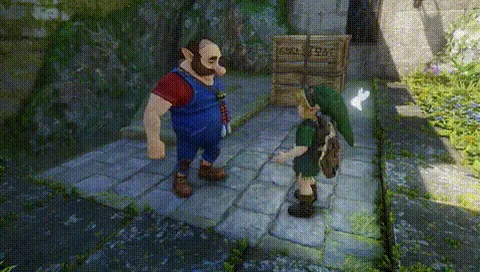
Nintendo removed the Mario and Yoshi Easter eggs from The Legend of Zelda: Ocarina of Time remake because the developers wanted players to remain focused on Hyrule rather than references to other Nintendo franchises. In an interview with Game Informer, Zelda series producer Eiji Aonuma explained that seeing Yoshi through a window in Hyrule Castle could interrupt the atmosphere of Link’s adventure. The Nintendo Switch 2 remake, released on November 5, 2026, replaces the original Mario character portraits with a tapestry depicting Link’s journey. It also removes the Skyward Sword artwork introduced in the Nintendo 3DS version. However, several other secrets remain, including the castle guard’s bomb reaction and the Bowser accessories worn by Malon and Talon.
The castle courtyard has featured three different displays across the game’s major releases. In the 1998 Nintendo 64 original, players could discover portraits of Mario, Luigi, Princess Peach, Yoshi, and Bowser. The 2011 Nintendo 3DS remake replaced those portraits with a miniature scene inspired by New Super Mario Bros., featuring recognizable pipes, blocks, and platforming scenery. The 2026 Switch 2 remake changes the same location again, replacing the crossover imagery with artwork connected to its Threads of Time feature. Each version preserves the opportunity to investigate the castle window but rewards that curiosity with something different.
Aonuma explained that the original developers were more relaxed about including references to other Nintendo properties. During the Nintendo 64 era, placing familiar characters inside Hyrule Castle was a playful surprise for anyone who recognized them. However, the remake team reconsidered whether those references supported the atmosphere of the scene. Aonuma specifically questioned how players might react to seeing Yoshi while exploring the castle, suggesting that the unexpected appearance could make them wonder why a character from another franchise was present. The concern was not that the reference was difficult to understand, but that recognizing it might shift attention away from the story unfolding around Link.
The location makes that reasoning particularly relevant. Young Link reaches Princess Zelda’s courtyard after navigating the castle grounds and avoiding guards. The encounter introduces important information about Hyrule’s royal family and Link’s developing responsibilities. In the original game, looking through the nearby window provides an amusing distraction from that moment. In the Switch 2 remake, the same optional exploration reveals artwork connected to Link’s own adventure. Nintendo preserved the discovery while changing its subject, allowing curious players to find something meaningful without directing their attention toward an unrelated franchise.
The decision reflects the broader development philosophy described by producer Hidemaro Fujibayashi. The remake team wanted to preserve the experience the original developers intended while using Nintendo Switch 2 hardware to improve graphics, controls, and camera movement. That approach allowed individual details to be reconsidered without removing the locations or encounters that made the original memorable. The castle courtyard remains recognizable, Princess Zelda’s introduction continues to serve the same narrative purpose, and the player can still investigate the windows. What changes is the visual reward behind one of them.
In the Nintendo 64 version, the original Mario portraits are located in the inner garden of Hyrule Castle, where Young Link first meets Princess Zelda. After passing the castle guards and entering the courtyard, face toward Zelda from the entrance side and examine the window on the right. Use the first person view to look through the glass, adjusting the camera to see the pictures displayed inside. The portraits feature five familiar Nintendo characters:
- Mario: The central character of Nintendo’s Super Mario franchise.
- Luigi: Mario’s brother, appearing alongside the other portraits.
- Princess Peach: The ruler of the Mushroom Kingdom.
- Yoshi: The recognizable green dinosaur whose appearance Aonuma specifically discussed.
- Bowser: Mario’s recurring enemy, whose likeness also appears elsewhere in Ocarina of Time.
The portraits form a small gallery rather than a single Mario image. Their placement inside the room means players may need to adjust their viewpoint to see every character. The original Nintendo 64 game also rewards experimentation with the Fairy Slingshot. Shooting into the portrait side window can produce a red rupee worth 20 rupees, although simply looking through the glass is enough to discover the pictures. This distinction matters when following older walkthroughs because the Switch 2 remake changes the right window’s display while retaining a separate guard interaction on the opposite side.
In Ocarina of Time 3D, the same right courtyard window contains a miniature New Super Mario Bros. environment instead of character portraits. Players can recognize the scene through its pipes, blocks, and other familiar platforming elements. The handheld remake therefore preserved the crossover joke but changed its presentation. Returning Nintendo 64 players could revisit the same hiding place and discover something new, while newcomers encountered a small Mario environment within the castle. Players using guides written for the original should remember that the portraits themselves are absent from the 3DS edition.
The Switch 2 remake replaces these earlier displays with a tapestry connected to Threads of Time, an illustrated feature that records Link’s progress throughout the adventure. The menu uses images and text to help players follow the story and identify their next objective. As the adventure progresses, additional illustrations become available, eventually forming a complete tapestry. The castle window displays artwork representing Link’s broader journey, giving the familiar discovery location a direct connection to the remake’s storytelling features.
There is an interesting distinction between the tapestry shown in the castle and the version players encounter through Threads of Time. The menu gradually reveals illustrations as Link advances, while the courtyard artwork already represents the larger adventure during his first meeting with Zelda. This can be interpreted as visual foreshadowing, although the developers have not provided a definitive explanation for its presence at that early point in the story. Nintendo described Threads of Time as a way to make the narrative easier to follow and encourage discussion between returning players and newcomers. Incorporating its imagery into Hyrule Castle connects that feature to the game world itself.
The three versions demonstrate how Nintendo’s approach to a familiar secret has changed over time. The Nintendo 64 original celebrated recognizable characters from another franchise, the 3DS remake updated the reference with a miniature Mario stage, and the Switch 2 edition emphasizes Link’s own story. The changes do not remove the player’s ability to explore the courtyard or discover something unexpected. Instead, they show how a small environmental detail can serve different creative purposes while occupying the same location across multiple generations.

Skyward Sword Easter Egg Locations and Other Nintendo References in Ocarina of Time
Nintendo also removed the Skyward Sword Easter eggs that appeared in Ocarina of Time 3D. These illustrations were introduced in 2011, when the handheld remake arrived several months before the original release of The Legend of Zelda: Skyward Sword. Aonuma recalled that the 3DS developers wanted to hide references throughout their version and that the upcoming game made the artwork particularly appropriate. Ocarina of Time 3D launched in June 2011, while Skyward Sword followed in November. The pictures therefore offered players a glimpse of another Zelda adventure during the year of its release.
The Switch 2 remake removes those pictures for essentially the same reason it replaces the Mario portraits. Aonuma explained that the developers wanted visual details to fit the player’s current activity rather than interrupt it with references to another game. Even though Skyward Sword belongs to the Zelda franchise, recognizing its artwork could draw attention away from the location being explored. The removal demonstrates that Nintendo’s decision was not limited to crossovers with Mario characters. The team also reconsidered Easter eggs referencing other Zelda titles when they conflicted with the remake’s intended presentation.
Three Skyward Sword illustrations are documented in the Nintendo 3DS edition. All depict Link in sword swinging poses and are hidden in locations players can discover through exploration. The Bombchu Shop picture is accessible to Young Link, while the documented routes for the Lon Lon Ranch and Gerudo Fortress pictures involve Adult Link. Their locations are:
- Bombchu Shop: As Young Link, visit Hyrule Castle Town at night and enter the Bombchu Shop. Speak with the shopkeeper, then move the view toward the left side of the interior to find the artwork. The picture is inside the shop, not the separate Bombchu Bowling Alley.
- Lon Lon Ranch: As Adult Link, enter the ranch farmhouse and travel upstairs. Locate the two pots positioned to the left of the bedroom doorway. Break them and examine the area near the chest of drawers to discover the illustration leaning nearby.
- Gerudo Fortress: As Adult Link, begin from the jail cell where the Gerudo place Link after capture. Use the Hookshot to escape, jump across to the platform on the left, and enter the doorway. Follow the corridor into the room containing two Gerudo guards, then break the crate concealing the artwork.
The Gerudo Fortress illustration requires the most deliberate searching because it is hidden inside a guarded area and remains concealed until the crate is destroyed. The Bombchu Shop and Lon Lon Ranch pictures are easier to investigate once players know the correct landmarks. These locations apply specifically to Ocarina of Time 3D and should not be treated as places where the same artwork remains available in the Switch 2 remake. Their removal also reflects the different release circumstances of the two remakes. In 2011, the pictures promoted an upcoming Zelda adventure, while the 2026 developers wanted decorative details to support the immediate experience of Ocarina of Time.
Hidemaro Fujibayashi, who directed Skyward Sword and returned as a producer on the Switch 2 remake, supported the decision. When Game Informer asked whether he was disappointed to see references to his earlier game removed, he laughed and agreed with Aonuma’s explanation, indicating there were no hard feelings. Aonuma provided the more detailed reasoning about maintaining the player’s focus, while Fujibayashi emphasized that the decision followed the remake’s underlying creative concept. Their comments explain why the artwork made sense in 2011 and why the later development team chose not to preserve it.
Not every Mario reference disappeared from the remake. Malon and Talon still wear accessories featuring Bowser’s likeness at Lon Lon Ranch. Aonuma specifically identified Talon’s Bowser clasp as a reference that belonged to the original character design, while Game Informer also observed the same imagery on Malon’s clothing. These details function as costume decorations rather than separate displays demanding the player’s attention. Fans who recognize Bowser can appreciate the reference without leaving the surrounding conversation or activity. The improved graphics also make the accessory easier to identify than it was in the Nintendo 64 original.
The preserved Bowser clasps demonstrate that Nintendo evaluated references according to their placement and purpose rather than removing everything associated with Mario. The castle portraits were prominent visual jokes positioned inside an important story location, while the ranch accessories were already integrated into the characters’ appearances. Their survival makes it inaccurate to suggest that every Mario Easter egg has been removed. The developers instead selected which references suited the remake’s presentation and which were better replaced.
Another possible Mario connection involves Sharp and Flat, the Composer Brothers associated with Kakariko Village Graveyard. Game Informer noted that Flat’s shorter, red appearance resembles Mario, while Sharp’s taller, green appearance resembles Luigi. Their relationship as brothers strengthens the visual comparison. However, this remains an interpretation rather than a confirmed Nintendo crossover. Unlike the Bowser accessory, which Aonuma explicitly discussed, the resemblance between the composers and Mario’s brothers has not been established as a deliberate reference by the developers.
Sharp and Flat also have an important role within Hyrule’s own history. They are deceased composers who served the royal family, and their gravestones stand beside the large royal headstone in Kakariko Village Graveyard. To learn the Sun’s Song, Link must play Zelda’s Lullaby at the Triforce symbol near the royal headstone, enter the tomb, and reach the inscription inside. The location is called the Tomb of the Royal Family in the Switch 2 remake, while earlier English releases use the name Royal Family’s Tomb. The Sun’s Song allows Link to change between day and night and temporarily freeze certain undead enemies, giving the brothers a meaningful purpose beyond their possible visual resemblance to Mario and Luigi.
Together, these examples show that the Switch 2 remake retains some references while removing others. The Skyward Sword artwork and castle Mario displays are absent, but Bowser remains visible on ranch clothing, and the Composer Brothers continue to occupy their familiar place in Hyrule’s history. Nintendo’s changes reflect decisions about how each detail contributes to the surrounding world. The result preserves recognizable character designs and gameplay discoveries while reducing some of the more obvious references to other Nintendo adventures.

Ocarina of Time Switch 2 Remake Easter Eggs That Return and Those That Were Removed
The Switch 2 remake preserves several classic Easter eggs that reward players for experimenting with items, exploring familiar locations, and interacting with scenery. Although the Mario portraits and Skyward Sword artwork are gone, the developers retained secrets such as the Hyrule Castle guard’s bomb reaction, unusual Gossip Stone behavior, and the ability to repair broken signs with Zelda’s Lullaby. These interactions maintain the playful spirit of the original game while fitting naturally into Hyrule’s environments. They also demonstrate that the remake’s approach to immersion does not prevent humorous discoveries.
The castle guard’s bomb Easter egg remains accessible during Young Link’s first visit to Princess Zelda. After entering the inner courtyard, face toward Zelda from the entrance side and locate the window on the left. Equip the Fairy Slingshot, aim through the window, and fire a Deku Seed. A guard appears, shouts at Link, and throws a bomb into the courtyard. This interaction takes place on the opposite side from the window displaying the Threads of Time tapestry. The Slingshot is the only item required because the guard provides the bomb, which Link cannot collect. Players can therefore trigger the secret before obtaining their own bombs.
The guard’s reaction is particularly memorable because it reverses the behavior expected during the castle’s stealth section. After spending time avoiding detection, players can deliberately attract attention and receive an exaggerated response. The interaction remains consistent with the setting because a castle guard reacts to someone firing a projectile through a window. Its humor comes from the severity of the response rather than introducing an unrelated character or location. This makes it an example of the playful environmental details Nintendo chose to preserve.
Gossip Stones also retain several unusual reactions in the remake. These objects provide information when Link wears the Mask of Truth, but experimenting with other equipment produces additional effects. Placing a bomb near a Gossip Stone can cause it to launch upward like a rocket, while striking one with the Megaton Hammer temporarily flattens it. Players may encounter these stones early in the adventure and return later after acquiring the items needed to test their different responses. Their behavior rewards curiosity without requiring a separate quest or interrupting the main story.
The sign repair trick returns as another example of unexpected item interaction. After cutting a readable sign with Link’s sword, players can stand nearby and play Zelda’s Lullaby to reassemble the broken pieces. The song is normally associated with the royal family and important story progression, making its ability to repair an ordinary sign a humorous discovery. Game Informer also observed floating shapes around Kokiri Forest and the Lost Woods that resemble Koroks. Those shapes may be a visual reference to later Zelda games, although their identity remains an interpretation rather than a confirmed interaction like the sign repair trick.
The preserved secrets and documented removals can be distinguished as follows:
- Mario character portraits: Removed from the castle courtyard in the Switch 2 remake and replaced with the Threads of Time tapestry.
- New Super Mario Bros. stage: The miniature display introduced in Ocarina of Time 3D is absent from the Switch 2 edition.
- Skyward Sword artwork: All three documented 3DS illustrations are removed from the Bombchu Shop, Lon Lon Ranch, and Gerudo Fortress.
- Bowser clasps: Retained on Malon and Talon’s clothing at Lon Lon Ranch.
- Castle guard’s bomb: Still triggered by firing a Deku Seed into the left courtyard window.
- Gossip Stone reactions: Bombs and the Megaton Hammer continue producing unusual effects.
- Broken sign repair: Zelda’s Lullaby still reassembles signs damaged by Link’s sword.
- Composer Brothers: Sharp and Flat remain present, along with the Sun’s Song quest.
- Possible Korok shapes: Similarities in floating debris around Kokiri Forest and the Lost Woods have been observed but not definitively established as deliberate references.
Another documented omission concerns the large statue inside the Spirit Temple. In the original Nintendo 64 version, Link could attach the Hookshot to the statue’s chest. The Nintendo 3DS remake removed that interaction, and the Switch 2 version does not restore it. This distinction matters because the change did not originate with the 2026 remake. The Spirit Temple interaction was already absent in the handheld edition, while the Mario portraits and Skyward Sword artwork have different histories. Comparing the three versions accurately requires identifying when each detail was introduced, changed, or removed.
The courtyard provides the clearest example of how Easter eggs evolved across the Nintendo 64, Nintendo 3DS, and Switch 2 releases. Players looking through the same right window encounter three different displays depending on the version they are playing. Meanwhile, the opposite window continues to support a humorous guard interaction. The remake therefore maintains both visual discovery and environmental experimentation, even though one of the most recognizable crossover jokes has been replaced. This balance reflects the developers’ intention to preserve the original adventure’s structure while reconsidering details that might distract from its atmosphere.
The documented changes also explain why older walkthroughs and player memories sometimes appear contradictory. Someone describing Mario portraits is referring to the Nintendo 64 original, while a player remembering pipes and blocks is describing the 3DS remake. A Switch 2 player looking through the same window encounters the tapestry instead. The platform is therefore essential when following instructions for these secrets. Game Informer’s comparison identifies several confirmed changes, but it does not establish that every minor difference across the three releases has already been discovered.
Nintendo’s treatment of these Easter eggs demonstrates how the Switch 2 remake balances preservation with reinterpretation. The developers retained interactions that reward curiosity within Hyrule while replacing some references that direct attention toward other Nintendo games. Familiar secrets such as the guard’s bomb, Gossip Stone reactions, and broken sign repair remain available, while the castle tapestry provides a new discovery tied to Link’s adventure. For returning players, examining these differences offers another reason to revisit recognizable locations and compare how Ocarina of Time has evolved across three generations.

Frequently Asked Questions (FAQs)
- Why did Nintendo remove the Mario and Yoshi Easter eggs from the Ocarina of Time remake?
Nintendo removed the Mario and Yoshi portraits because producer Eiji Aonuma believed that recognizable characters from another franchise could distract players from Hyrule’s atmosphere. The portraits appeared in the castle courtyard, where Young Link first meets Princess Zelda. The Switch 2 remake replaces them with a tapestry connected to Link’s journey, preserving the discovery while making it more relevant to the game’s story. - Which Mario characters appear in the original Ocarina of Time castle portraits?
The original Nintendo 64 version features portraits of Mario, Luigi, Princess Peach, Yoshi, and Bowser. Players can discover them by looking through the right window in Princess Zelda’s courtyard after completing the castle stealth section. The pictures are arranged inside the room beyond the glass, so adjusting the viewing angle helps reveal the complete gallery. These portraits are not present in the Switch 2 remake. - Does Ocarina of Time 3D have the original Mario and Yoshi portraits?
No. The Nintendo 3DS remake replaces the original portraits with a miniature scene inspired by New Super Mario Bros.. Players can find the display through the same right courtyard window, but the room contains familiar Mario pipes, blocks, and platforming scenery instead of individual character portraits. The Switch 2 remake changes the display again, replacing the Mario environment with artwork from Threads of Time. - What is behind the right hand courtyard window in the Switch 2 remake?
The right courtyard window displays a tapestry representing Link’s adventure. Its artwork is connected to Threads of Time, the remake’s illustrated story tracker that records major events and helps players follow their next objective. Unlike the menu version, which develops as the story progresses, the castle display already represents the broader journey during Link’s first meeting with Zelda. - Where are the Skyward Sword posters in Ocarina of Time 3D?
Three Skyward Sword pictures appear in the Nintendo 3DS edition. The first is inside the Bombchu Shop in Hyrule Castle Town, accessible to Young Link at night. The second is upstairs in the Lon Lon Ranch farmhouse, near two pots and a chest of drawers. The third is concealed behind a crate inside Gerudo Fortress. The documented ranch and fortress routes use Adult Link. These pictures are absent from the Switch 2 remake. - Is Bowser still in the Ocarina of Time remake as an Easter egg?
Yes. Although Bowser’s original portrait was removed from the castle courtyard, his likeness remains on the decorative clasps worn by Malon and Talon at Lon Lon Ranch. Aonuma explained that Talon’s accessory was already part of the original character design, making it appropriate to preserve. The improved graphics also make the small Bowser decoration easier to recognize than in the Nintendo 64 version. - Can you still make the castle guard throw a bomb on Switch 2?
Yes. Visit Princess Zelda’s inner courtyard as Young Link and locate the window on the left when facing toward Zelda from the entrance side. Equip the Fairy Slingshot and fire a Deku Seed through the window. A guard will appear, shout at Link, and throw a bomb into the courtyard. The interaction remains available during the early castle visit, and Link does not need to possess bombs to trigger it. - Are Sharp and Flat confirmed Mario and Luigi cameos?
No official confirmation establishes Sharp and Flat as deliberate Mario and Luigi cameos. The comparison comes from their appearances, with Flat resembling the shorter, red Mario and Sharp resembling the taller, green Luigi. The characters are brothers, which strengthens the resemblance. Within Ocarina of Time, however, they are the Composer Brothers associated with Hyrule’s royal family and the Sun’s Song quest in Kakariko Village Graveyard. - Does Zelda’s Lullaby still repair broken signs in the remake?
Yes. Players can still repair certain broken signs by cutting them with Link’s sword and then playing Zelda’s Lullaby nearby. The damaged pieces reassemble, restoring the sign to its original readable condition. This unusual interaction remains one of the game’s playful environmental secrets, allowing a song normally associated with the royal family to affect an ordinary object. - When did the Nintendo Switch 2 remake of Ocarina of Time release?
Nintendo released The Legend of Zelda: Ocarina of Time for Nintendo Switch 2 on November 5, 2026, during the Zelda franchise’s 40th anniversary year. The remake updates graphics, controls, and camera movement while preserving the original adventure’s main structure. It also revises several Easter eggs, replacing the castle’s Mario imagery with a Threads of Time tapestry while retaining secrets such as the guard’s bomb reaction and Bowser accessories.

Conclusion
The Hyrule Castle courtyard window reflects how The Legend of Zelda: Ocarina of Time has evolved across three generations. The Nintendo 64 original features portraits of Mario, Luigi, Princess Peach, Yoshi, and Bowser, preserving a playful crossover from Nintendo’s earlier development era. The Nintendo 3DS remake replaces those portraits with a miniature New Super Mario Bros. stage, while the Nintendo Switch 2 version introduces a tapestry connected to Threads of Time, the illustrated feature that records Link’s adventure. Although the location remains unchanged, each version offers a different discovery that reflects its developers’ creative priorities.
Nintendo’s decision to remove the familiar Mario and Skyward Sword artwork reflects Eiji Aonuma’s desire to keep players focused on Hyrule and its story. However, the remake continues to reward exploration through returning secrets such as the castle guard’s bomb reaction, Bowser clasps on Malon and Talon, unusual Gossip Stone interactions, and the ability to repair broken signs. Rather than eliminating the original game’s playful discoveries, Nintendo has selectively preserved or reinterpreted them. The result maintains the spirit of curiosity that made Ocarina of Time memorable while connecting its most recognizable castle window to Link’s own journey.
Sources and Citations
- Game Informer, Kyle Hilliard, November 4, 2026 — “Zelda Ocarina Remake Producers Talk Changing And Maintaining The Game, Easter Eggs, The Bombchu Bowling Alley Operator, And More”: Interview with series producer Eiji Aonuma and remake producer Hidemaro Fujibayashi. Aonuma explains that the Mario and Yoshi imagery was removed because the developers did not want unrelated references interrupting the player’s experience of Hyrule. He also confirms that the Skyward Sword artwork from Ocarina of Time 3D was deliberately removed for the same reason, while Fujibayashi says the decision was consistent with the remake’s underlying creative concept. Game Informer
Game Informer – Ocarina of Time Remake Producer Interview - Nintendo, November 2, 2026 — “Ask the Developer Vol. 24: The Legend of Zelda: Ocarina of Time — Part 3”: Official Nintendo developer interview explaining the new Threads of Time feature. The developers say new illustrations and story passages unlock as the adventure progresses and eventually combine into one complete tapestry, supporting the article’s description of the artwork replacing the older crossover imagery. Nintendo
Nintendo – Ask the Developer Vol. 24, Part 3 - Nintendo, November 5, 2026 — “It’s Time. Experience The Legend of Zelda: Ocarina of Time, Reborn Exclusively for Nintendo Switch 2!”: Nintendo’s official launch announcement confirms that the remake released exclusively for Nintendo Switch 2 on November 5, 2026. Nintendo describes the game as rebuilt from the ground up with overhauled visuals, refreshed audio, expanded dialogue, reworked controls, and other modernized elements. Nintendo
Nintendo – Ocarina of Time Switch 2 Launch Announcement - Nintendo, September 8, 2026 — The Legend of Zelda 40th Anniversary Direct: Earlier official confirmation that Ocarina of Time would launch on November 5 for Nintendo Switch 2, alongside details about the remake’s overhauled graphics, fully voiced cutscenes, expanded dialogue, orchestral soundtrack, and revised camera and movement controls. Nintendo
Nintendo – Zelda 40th Anniversary Direct - NinDB — “Cameos in The Legend of Zelda: Ocarina of Time 3D”: Documents the Nintendo 3DS version’s replacement of the N64 Mario portraits with a miniature New Super Mario Bros. scene containing pipes, blocks, and themed scenery. It also identifies all three Skyward Sword pictures: the Bombchu Shop in Hyrule Castle Town, the upstairs room at Lon Lon Ranch, and a crate-hidden picture inside Gerudo Fortress. nindb.net
NinDB – Ocarina of Time 3D Cameos - NinDB — “Cameos in The Legend of Zelda: Ocarina of Time”: Documents the original Nintendo 64 game’s Mario-series portraits visible through the Hyrule Castle garden window and the Bowser brooches worn by Malon and Talon at Lon Lon Ranch. This provides additional reference material for comparing the original game with later versions. nindb.net
NinDB – Ocarina of Time Nintendo 64 Cameos - Nintendo Wire, Peter Glagowski, November 6, 2026 — “Zelda: Ocarina of Time Remake Removes Some Mario References to Not ‘Interrupt the Player’s Experience’”: Follow-up coverage of Aonuma’s Game Informer comments. It reproduces his explanation that seeing Yoshi in Hyrule Castle could distract players from the game world and also confirms that Talon’s Bowser accessory remains because Nintendo considers it part of the character’s original design. Nintendo Wire
Nintendo Wire – Ocarina of Time Remake Removes Mario References - GameFAQs — The Legend of Zelda: Ocarina of Time Guides and FAQs: Historical player documentation for the Nintendo 64 release includes the Hyrule Castle courtyard interactions and other original-version secrets. GameFAQs pages are useful as supporting walkthrough references, although the site was not directly accessible during verification, so the stronger citations for the Mario portraits and Bowser accessories are NinDB and the developer interview above.
- Zelda Wiki — “Tomb of the Royal Family”: Documents the renamed Switch 2 location and its earlier “Royal Family’s Tomb” name in the N64 and 3DS versions. It confirms that the large Kakariko Village Graveyard headstone is flanked by the Composer Brothers’ graves, opens when Zelda’s Lullaby is played, and contains the inscription leading to the Sun’s Song. Zelda Wiki
Zelda Wiki – Tomb of the Royal Family - Zelda Wiki — “Kakariko Village Graveyard”: Additional reference confirming that Sharp and Flat, the Composer Brothers, are associated with the graveyard and that their Sun’s Song is found inside the Tomb of the Royal Family after Link plays Zelda’s Lullaby to open it. Zelda Wiki
Zelda Wiki – Kakariko Village Graveyard
Recommendations
- Subnautica 2 Early Access Roadmap: Co-Op Updates, Sprinting, and More
- Virtua Fighter 6 Leak Explained
- Best Gaming Headsets for 2026: Top Wireless, Wired, PC, PS5, and Xbox Picks
- Take-Two CEO Comments on Roblox and GTA Explained
- All characters and color variations in Mario Tennis Fever: Full roster, unlocks, and alternate colors
- Assassin’s Creed Black Flag Remake
- How to Make a 3D VTuber Avatar: The Complete Guide for Beginners and Content Creators
- Farm to Table Grow Your Own Food & Make Fine Dishes in Cozy Restaurant Simulator: Complete Gameplay Guide
- Don’t Fret Hits All the Right Notes for a Frightening Survival-Horror Experience
- Assassin’s Creed Black Flag Resynced Post-Game Support Teased Ahead of GTA 6



































































































