








In This Article (19 sections)
What is Ranked Brawl in MTG Arena?
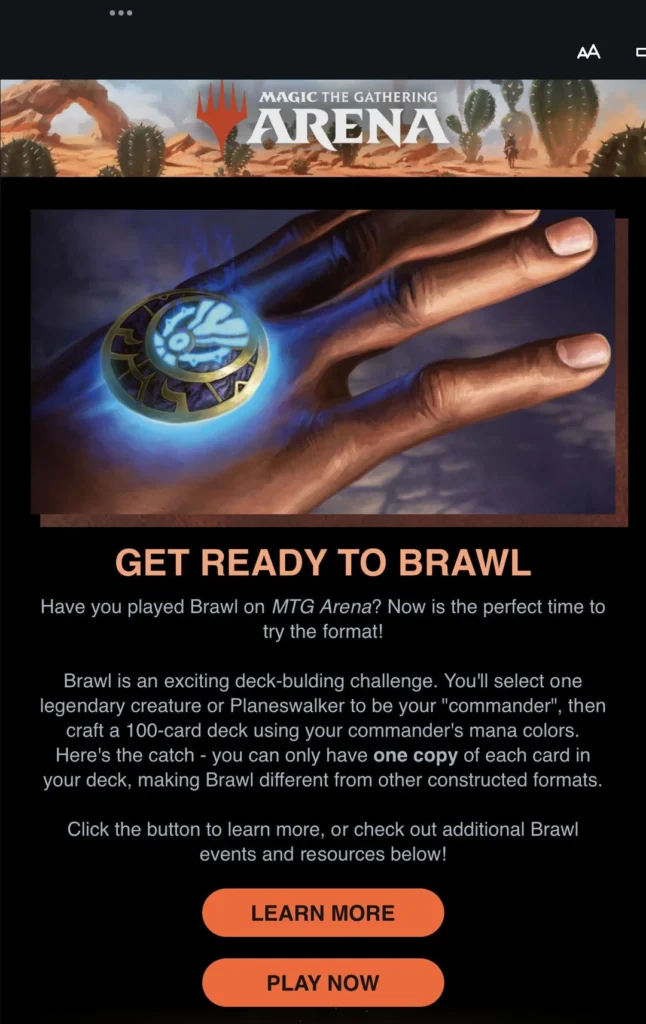
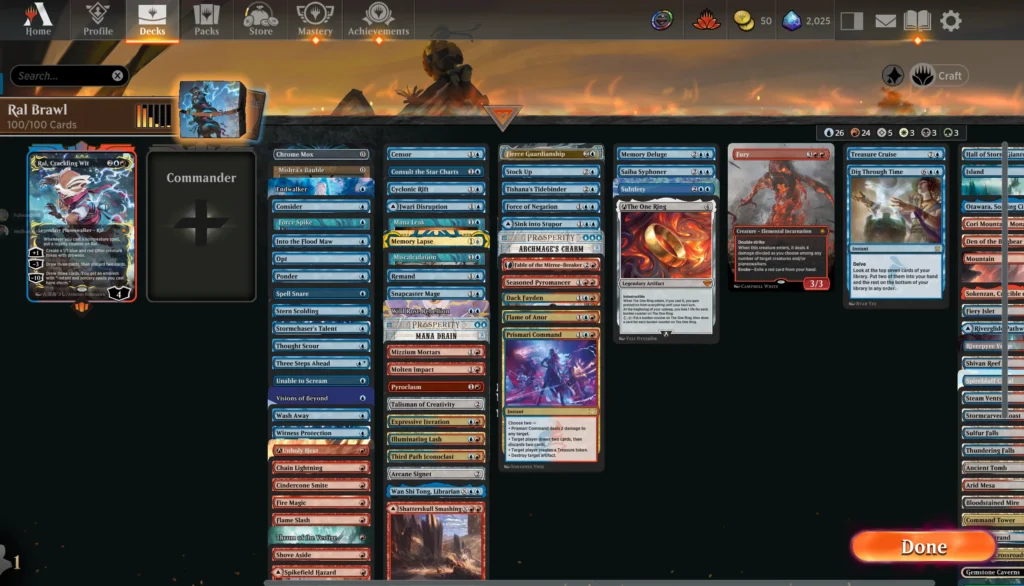
Ranked Brawl is a brand-new competitive format coming to MTG Arena that combines the deck-building and commander-focused gameplay of Brawl with a true ranked ladder system. Unlike traditional Brawl queues, which have historically relied heavily on deck-strength matchmaking and commander weighting, Ranked Brawl introduces progression through the existing MTG Arena Constructed ranking system, allowing players to climb from Bronze to Mythic while competing with singleton commander decks. Wizards of the Coast describes the format as a competitive evolution of Brawl designed for players who want a more structured environment and meaningful rank progression.
The format represents one of the most significant additions to MTG Arena’s competitive ecosystem in years because it finally provides commander-style players with a ranked experience that mirrors the competitive opportunities available in Standard, Explorer, Historic, and Timeless.
MTG Arena Ranked Brawl Release Date and Launch Details
Wizards of the Coast has officially confirmed that Ranked Brawl will launch on June 23, 2026. Players will be able to access the format through both the Ranked tab and the Brawl tab within MTG Arena. The format arrives alongside major content updates and introduces a unique competitive structure specifically designed for Brawl players.
According to Wizards, Ranked Brawl includes a dedicated banned list, ranked progression, achievements, and matchmaking systems built specifically around competitive play. The launch is being positioned as more than simply adding ranks to Historic Brawl. Instead, it is a separate environment designed from the ground up to support higher-level competition.
The announcement follows several experimental competitive Brawl events that Wizards used to test alternative ban lists, ranked structures, and player behavior before introducing a permanent ranked format.

How Ranked Brawl Changes Competitive MTG Arena
Ranked Brawl fills a major gap within MTG Arena’s competitive ecosystem.
For years, Brawl and Historic Brawl have been among Arena’s most popular casual formats. However, players who preferred commander-style gameplay lacked a dedicated ranked environment. Traditional ladder grinders often focused on Standard, Explorer, Historic, or Timeless because those formats provided visible progression and competitive incentives.
Ranked Brawl changes that dynamic entirely. Players can now pursue Mythic rankings while playing singleton commander decks, creating a new pathway toward competitive play that rewards strategic deck building, commander mastery, and metagame adaptation.
This shift is expected to attract both experienced competitive players and longtime Brawl enthusiasts.
Ranked Brawl vs Historic Brawl Differences Explained
Although the formats share many similarities, Ranked Brawl is not simply Historic Brawl with ranks attached.
Historic Brawl traditionally uses deck-strength weighting and commander-based matchmaking to create balanced games. Ranked Brawl instead emphasizes rank progression and competitive ladder play. Wizards has also confirmed that Ranked Brawl will feature its own banned list and competitive-focused structure.
Historic Brawl remains primarily a casual format where players can experiment with creative decks and unusual commanders. Ranked Brawl encourages optimization, metagame awareness, and strategic refinement because every match affects rank progression.
This distinction means players should expect stronger decks, more efficient strategies, and higher overall competition levels within Ranked Brawl.
MTG Arena Ranked Brawl Ranking System Explained
Ranked Brawl uses MTG Arena’s existing Constructed ranking framework.
Players will progress through Bronze, Silver, Gold, Platinum, Diamond, and Mythic tiers based on match performance. Similar to other ranked formats, wins increase rank progression while losses can slow advancement or cause players to drop within certain tiers.
The addition of ranked progression introduces new incentives for deck optimization and strategic play. Every game becomes meaningful because individual matches contribute directly toward ladder advancement.
For competitive players, Mythic status remains the ultimate goal. Reaching Mythic may eventually influence qualification opportunities and competitive recognition if Wizards expands Ranked Brawl support further in the future.
How Ranked Brawl Matchmaking Works in MTG Arena
Historically, Brawl matchmaking has worked differently from most Arena formats.
Wizards previously explained that Brawl matchmaking evaluates both the commander and the deck itself, assigning a power level that influences opponent selection. The commander receives significant weighting, and decks are generally paired against others of similar strength. If matchmaking takes too long, acceptable power differences gradually widen to reduce queue times.
Ranked Brawl introduces rank-based matchmaking into that equation. Wizards has stated that Ranked Brawl will use Constructed rank as a major matchmaking factor, creating a more competitive environment where players face opponents at similar skill levels.
The exact balance between rank and deck-strength evaluation remains one of the most closely watched aspects of the format.

How Deck Strength Affects Ranked Brawl Matchmaking
Deck strength has long been one of the defining characteristics of Brawl matchmaking.
Wizards previously revealed that Arena evaluates both commanders and cards within the deck when determining matchmaking quality. Strong commanders and highly efficient card packages often receive higher weighting values than weaker or more casual options.
The introduction of Ranked Brawl creates interesting questions regarding how much deck strength will continue to influence pairings. Wizards has suggested that rank will play a larger role in matchmaking, but deck construction may still affect opponent selection to some degree.
If deck weighting remains relevant, players may need to carefully balance power and consistency when building competitive decks.
How Commander Power Levels Impact Matchmaking
Commander power has historically been the single most important matchmaking factor in Arena Brawl.
According to Wizards’ previous matchmaking explanations, commander strength receives significant emphasis during matchmaking calculations. Highly efficient commanders capable of generating mana, card advantage, or immediate board control tend to receive stronger matchmaking ratings.
Community analyses and data investigations have repeatedly shown that certain commanders are placed into higher matchmaking brackets due to their competitive potential. Examples frequently discussed include Kinnan, Bonder Prodigy, Sythis, Harvest’s Hand, Magda, Brazen Outlaw, and other commanders capable of generating overwhelming value.
Ranked Brawl may reduce some of the emphasis placed on commander weighting because rank itself becomes a major factor, but commander selection will still be critical for competitive success.
Best Commanders for Ranked Brawl in MTG Arena
The strongest Ranked Brawl commanders will likely be those that provide consistent advantages regardless of matchup.
Historically powerful commanders include Kinnan, Bonder Prodigy, Atraxa variants, Rusko, Sythis, Magda, Niv-Mizzet, and other commanders capable of generating card advantage, mana acceleration, or overwhelming board presence.
Aggressive commanders may also perform well because ladder environments often reward fast, consistent victories. Commanders that pressure opponents early while maintaining resilience against removal could become staples of the Ranked Brawl metagame.
Control-focused commanders remain attractive because singleton formats reward flexible answers and repeatable value engines.
The exact hierarchy will ultimately depend on the launch ban list and early metagame developments.
Ranked Brawl Tier List for Competitive Players
Although the metagame has not fully formed, several categories are likely to emerge.
Top-tier commanders will probably combine efficiency, consistency, and resilience. These decks will likely dominate high-level ladder play.
Second-tier commanders may remain competitive but require favorable matchups or specialized deck construction to succeed consistently.
Mid-tier commanders will likely thrive in local metagames or among players seeking unique strategies but may struggle against optimized lists.
Lower-tier commanders can still achieve success through player skill, but they will generally face greater challenges against the strongest archetypes.
The first few weeks after launch should establish a clearer hierarchy as competitive players refine strategies and identify optimal deck configurations.
How to Build a Strong Ranked Brawl Deck
Successful Ranked Brawl decks begin with commander selection.
Players should choose commanders that provide consistent value and fit a clearly defined strategy. Every card should contribute directly toward that plan, whether through ramp, interaction, card draw, removal, or win conditions.
Consistency is especially important in singleton formats. Since players cannot rely on multiple copies of powerful cards, redundancy becomes essential. Multiple cards should perform similar functions to ensure the deck operates smoothly throughout a match.
Mana bases also require careful attention. Competitive decks cannot afford frequent color-screw situations or slow starts.
Finally, players should test extensively against a variety of archetypes and adjust their lists based on performance data rather than personal preference alone.
Best Budget Ranked Brawl Decks for New Players
Budget players can still succeed in Ranked Brawl.
Mono-colored commanders often provide the most affordable entry point because they require fewer rare lands and simpler mana bases. Aggressive commanders capable of applying early pressure may also perform well without requiring expensive mythic-heavy builds.
Green-based ramp strategies frequently offer excellent value because they can compensate for weaker card quality through mana acceleration and large threats.
Red aggressive commanders remain attractive because they often rely on efficient commons and uncommons rather than expensive mythics.
The key for budget players is maximizing synergy rather than chasing individual high-cost cards.
Ranked Brawl Meta Predictions After Launch
Several trends seem likely once Ranked Brawl launches.
Early ladder play will probably feature established Historic Brawl powerhouses as players attempt to identify the strongest strategies quickly.
Control decks are expected to remain popular because singleton formats naturally reward flexible interaction and card advantage.
Midrange value decks may become dominant if the format slows down enough for powerful commanders to generate repeated advantages.
Aggressive strategies will likely emerge as effective ladder-climbing options because shorter games allow players to complete more matches and rank up faster.
The first major balance updates and ban list adjustments could dramatically reshape the metagame within the format’s first few months.
Common Ranked Brawl Mistakes that Hurt Your Rank
One of the biggest mistakes players make is building around favorite cards instead of overall deck efficiency.
Another common error is neglecting interaction. Competitive formats require answers to opposing threats, and decks that focus exclusively on their own strategy often struggle against experienced opponents.
Poor mana construction remains a major problem. Even powerful decks can lose consistently if they cannot cast spells on curve.
Many players also underestimate the importance of adapting to the metagame. Decks that performed well during launch week may become less effective as opponents adjust their strategies.
Finally, some players overcommit to flashy win conditions while ignoring consistency and card advantage.
Is Ranked Brawl the Best Competitive Format in MTG Arena?
Ranked Brawl has the potential to become one of MTG Arena’s most popular competitive formats.
It combines the creativity and variety of commander-style gameplay with the progression and prestige of ranked competition. Players who enjoy singleton deck building, unique commanders, and dynamic gameplay may find it more appealing than traditional ladder formats.
However, whether it becomes the best competitive format depends on several factors. Matchmaking quality, metagame diversity, ban list management, and long-term support will all influence player perception.
For many Arena players, Ranked Brawl represents the competitive commander experience they have wanted for years. If Wizards successfully balances the format and maintains healthy metagame diversity, it could become a cornerstone of MTG Arena’s competitive future.
Frequently Asked Questions (FAQs)
- When does Ranked Brawl launch on MTG Arena?
Ranked Brawl officially launches on June 23, 2026. - Is Ranked Brawl different from Historic Brawl?
Yes. Ranked Brawl uses ranked progression, competitive matchmaking, and a separate competitive structure. - Will Ranked Brawl have its own ban list?
Yes. Wizards has confirmed a unique banned list for the format. - Does commander strength affect matchmaking?
Historically, commander power has been a major matchmaking factor in Brawl. - Can players reach Mythic in Ranked Brawl?
Yes. Ranked Brawl uses the Constructed ranked ladder system that includes Mythic rank. - Will Ranked Brawl replace Historic Brawl?
No. Historic Brawl will continue to exist alongside Ranked Brawl. - Are budget decks viable in Ranked Brawl?
Yes. Strong synergy and efficient gameplay can compensate for a smaller collection. - What commanders are expected to be strongest?
Commanders with strong value generation, mana acceleration, and card advantage are expected to perform best. - Will Ranked Brawl have seasonal rewards?
Because it uses the ranked ladder system, seasonal rewards are expected to apply similarly to other ranked formats. - Why is Ranked Brawl such a significant addition?
It finally gives commander-style players a permanent ranked competitive environment on MTG Arena.

Conclusion
Ranked Brawl is one of the most important additions MTG Arena has introduced in recent years. Launching on June 23, 2026, the format combines the depth and creativity of Brawl with the competitive progression of MTG Arena’s ranked ladder. By introducing rank-based matchmaking, a dedicated competitive environment, and specialized format rules, Wizards of the Coast is giving commander-focused players a new reason to compete. While questions remain about matchmaking balance, commander weighting, and long-term metagame health, Ranked Brawl has the potential to become a defining format for MTG Arena. Whether you are a veteran Brawl enthusiast or a competitive ladder grinder looking for something new, Ranked Brawl appears poised to reshape the way players experience commander-style Magic online.
Sources and Citations
- Wizards of the Coast MTG Arena Announcements June 1 2026 Introducing Ranked Brawl
https://magic.wizards.com/en/news/mtg-arena/announcements-june-1-2026 - Wizards of the Coast Brawl Our Plans
https://magic.wizards.com/en/news/mtg-arena/brawl-our-plans - Wizards of the Coast MTG Arena Ranked Season Details
https://magic.wizards.com/en/news/mtg-arena/ranked-season - Wizards of the Coast MTG Arena State of the Formats 2026
https://magic.wizards.com/en/news/mtg-arena/state-of-the-formats-2026 - Wizards of the Coast MTG Arena Brawl Matchmaking Update
https://magic.wizards.com/en/news/mtg-arena/announcements-may-18-2026 - Wizards of the Coast MTG Arena Patch Notes 2026.59.0 Brawl Matchmaking Changes
https://mtgarena-support.wizards.com/hc/en-us/articles/49377952595860-Patch-Notes-2026-59-0 - Wizards of the Coast MTG Arena Official Website
https://magic.wizards.com/en/mtgarena - Wizards of the Coast MTG Arena News Archive
https://magic.wizards.com/en/news/mtg-arena - MTG Arena Zone Brawl Guides and Metagame Analysis
https://mtgazone.com/brawl/ - AetherHub Brawl Decks and Metagame Data
https://aetherhub.com/Metagame/Brawl/
Recommendations
- Hell Clock Cursed War DLC Release Date Trailer: Everything We Know
- Hello Neighbor hits new Steam concurrent player record: 2,119 players peak for the first time (2026)
- How to Split Keyframes in Blender: Move and Edit Keys in the Dope Sheet and Graph Editor
- Invincible Season 4 Animation Error Sparks Fan Debate
- Last Flag Free Weekends Explained: Why the Imagine Dragons Shooter Is Going Free Every Weekend to Boost Player Numbers
- Tom Noonan, RoboCop 2 and Manhunter Actor, Dead at 74: Cause of Death, Movies, and Tributes
- Scientific Study Concludes Finishing RPGs Evokes The Strongest “Post-Game Depression” (Post-Game Depression Scale Explained)
- Star Wars Zero Company Final Trailer Arrives Before August 27 Launch
- War Machine VFX Breakdown: Framestore’s 252 Shots and Dinosaur-Inspired CG Robot
- Slay the Spire 2 Is Powered by Godot: Why Mega Crit Switched Engines and What It Means for Players



































































































