






In This Article (7 sections)
Why Overwatch Is Bringing Back 6v6 Role Queue and How the Season 6 Competitive Mini Season Will Work
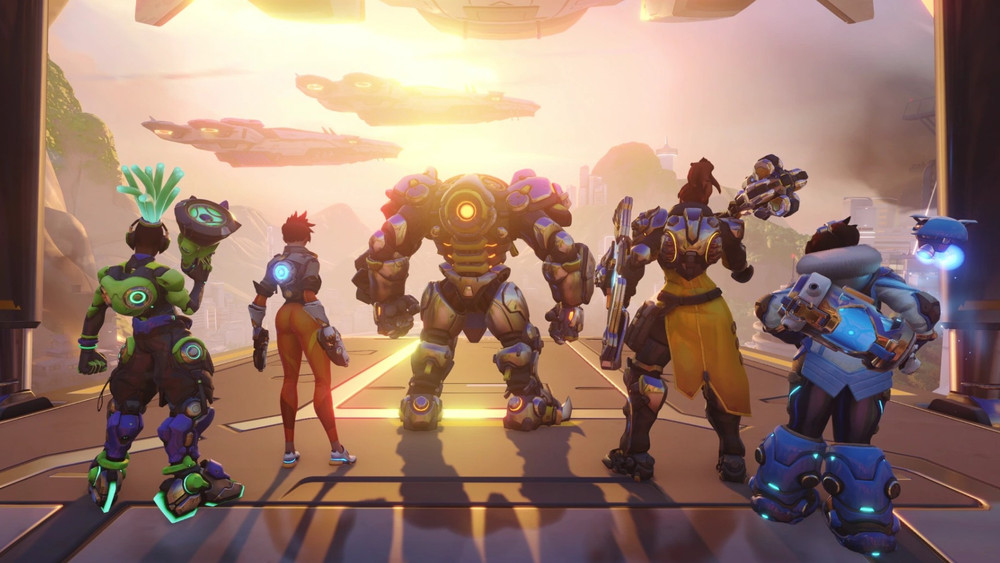
Overwatch brings back 6v6 in response to player requests as Blizzard Entertainment prepares to introduce a dedicated 6v6 Role Queue Competitive mini season during Overwatch Season 6. The upcoming mode restores the traditional team composition of two tanks, two damage heroes, and two supports that defined a significant portion of the original Overwatch competitive experience. Rather than replacing the existing 5v5 format, Blizzard intends to operate both team sizes simultaneously, giving players greater control over their competitive experience.
In a Director’s Take published on November 10, 2026, Overwatch game director Aaron Keller outlined plans to expand support for six player teams following growing interest in 6v6 Open Queue, requests for structured competition, and player surveys indicating that preferences between the two formats remain closely divided.
The original Overwatch launched in May 2016 with six players on each team. Role Queue was subsequently introduced in 2019, establishing the familiar 2-2-2 team composition across its primary structured matchmaking modes. When Overwatch 2 launched in October 2022, Blizzard reduced the standard team size to five players, removing the second tank while retaining two damage heroes and two supports. This adjustment was intended to improve matchmaking efficiency, reduce defensive stalemates, and create more opportunities for individual players to influence engagements. However, removing the second tank also changed the responsibilities of every role. Tanks became solely responsible for many frontline duties, damage players encountered different offensive opportunities, and supports had fewer defensive resources protecting them.
The continued popularity of six player matches demonstrates that the transition did not satisfy every segment of the community. Some players prefer the faster engagements and greater individual agency associated with 5v5, while others appreciate the coordination, tactical depth, and defensive flexibility offered by 6v6. Although Blizzard has maintained six player gameplay through Open Queue, many players have continued requesting a version that guarantees traditional role distribution. Keller also identified dedicated hero balancing as another major community request, as adjustments primarily developed for five player teams do not necessarily produce equivalent results in larger compositions. The Season 6 experiment addresses both concerns by restoring structured competition and introducing balance changes specifically designed for six player matches.
Overwatch 6v6 Role Queue is scheduled to return on December 8, 2026, alongside the launch of Season 6. According to reporting from Video Games Chronicle following Blizzard’s November announcement, the playlist will become available at the beginning of the season rather than arriving through a subsequent update. Season 6 will also introduce a new hero, with further information scheduled to appear during the Overwatch Champions Series Finals broadcast. The combination of a new playable character, dedicated six player balancing, and additional competitive matchmaking options makes Season 6 an important update. Unlike previous experiments restricted to unranked playlists, the upcoming test will operate within Competitive, where consistent performance, communication, positioning, and coordinated hero selection carry greater significance.
The Competitive mini season will operate for four weeks, placing its anticipated conclusion around January 5, 2027, based on the December 8 launch date. The precise ending time remains subject to Blizzard’s official scheduling. Each match will feature two teams of six players, with participants entering matchmaking through a designated role and selecting heroes belonging to that category. This arrangement guarantees consistent team composition and allows players to develop strategies around predictable responsibilities. As of November 25, 2026, Blizzard has not disclosed comprehensive information regarding placement matches, separate competitive rankings, exclusive rewards, or the relationship between existing competitive ratings and the new playlist.
Season 6 will initially feature three competitive matchmaking options, accommodating different preferences while preserving the existing standard competitive experience:
- 5v5 Role Queue: The primary competitive format will remain available, featuring one tank, two damage heroes, and two supports on each team.
- 6v6 Open Queue: The established six player playlist will continue offering greater flexibility regarding hero selection and team composition, subject to applicable restrictions.
- 6v6 Role Queue: The temporary Competitive mini season will restore the traditional 2-2-2 format, guaranteeing two players in each hero category.
Role Queue and Open Queue differ primarily in how players construct their teams. Role Queue provides predictable responsibilities by restricting participants to their selected hero categories. Open Queue allows players to change categories during matches, potentially introducing additional supports or adjusting offensive and defensive capabilities according to circumstances. Although this flexibility creates interesting tactical opportunities, it can also lead to disagreements about healing, frontline responsibilities, and team composition. Maintaining both formats allows Blizzard to investigate whether demand for six player matches is primarily associated with team size, role flexibility, or a combination of both. However, operating multiple competitive playlists also introduces challenges because each additional mode divides participants across separate matchmaking pools.
The four week testing period should provide more meaningful information than a short weekend event. Players will have sufficient time to experiment with different heroes, establish tank partnerships, and identify balance problems that might not become immediately apparent. Blizzard can monitor whether the initial excitement surrounding the returning format develops into sustained competitive participation. The company has not announced that Role Queue will automatically remain available after the experiment, but its conclusion does not mean that six player Overwatch will disappear entirely. The existing Open Queue playlist will continue providing a separate competitive option.
Blizzard’s player surveys offer additional context for the decision. According to the November 2026 Director’s Take, 32% of respondents expressed the strongest preference for 5v5, while another 32% expressed the strongest preference for 6v6. The remaining 36% occupied other preference categories. These figures indicate substantial enthusiasm for both formats among surveyed players rather than establishing that the entire Overwatch community is divided into precisely equal groups. Survey preferences may also differ from actual participation because queue times, friends’ preferences, and competitive availability can influence which modes players select. Nevertheless, the findings support Blizzard’s decision to investigate coexistence instead of forcing another universal transition between team sizes.

Overwatch 6v6 Team Composition, Gameplay Differences, Tank Partnerships, and Dedicated Hero Balancing
The traditional 2-2-2 format establishes a structured team composition consisting of two tank heroes, two damage heroes, and two support heroes. Although both teams receive identical role distributions, the arrangement allows considerable strategic variety through different hero combinations. Teams can develop aggressive dive compositions, close range brawl strategies, defensive formations, and hybrid approaches. The fixed distribution prevents players from completely neglecting essential roles and makes it easier to establish recognizable team structures. However, each role must adapt to the additional player and the increased number of offensive and defensive abilities available during engagements.
The responsibilities of the three hero categories remain fundamentally recognizable, although their interactions change considerably in six player competition:
- Tank heroes: Create space, contest objectives, disrupt enemy formations, absorb pressure, and protect vulnerable teammates. Two tanks can distribute frontline responsibilities, defensive assistance, and control of alternative positions.
- Damage heroes: Apply offensive pressure, secure eliminations, control important positions, and exploit weaknesses in enemy formations. Their opportunities depend partly on how effectively tanks create space and supports provide assistance.
- Support heroes: Contribute healing, defensive utility, offensive enhancements, mobility assistance, and other abilities that help teammates survive engagements. The additional tank introduces another potentially demanding target for healing and defensive resources.
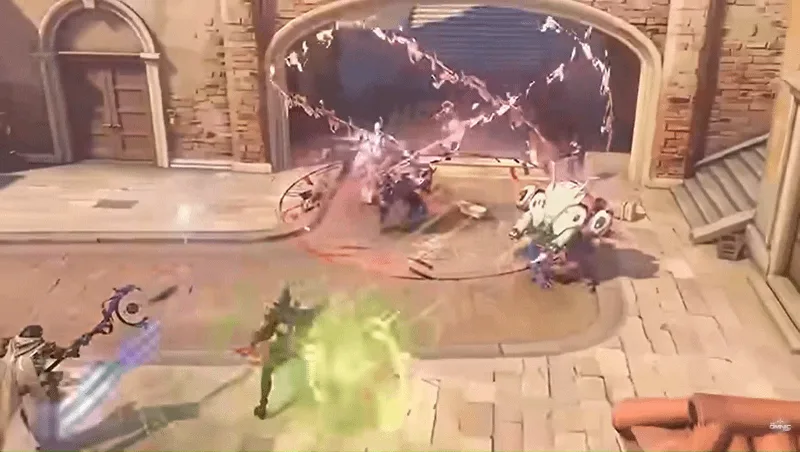
The most significant difference between 6v6 and 5v5 is the restoration of the second tank position. In five player matches, tanks carry considerable responsibility for maintaining space, protecting teammates, initiating engagements, and contesting objectives. Losing the team’s only tank can significantly weaken its ability to maintain an important position. Six player matches distribute these responsibilities between two players, allowing one tank to maintain frontline pressure while another responds to emerging threats, protects the backline, or supports aggressive teammates. This arrangement may also reduce some of the pressure associated with being solely responsible for the team’s frontline.
The additional player changes the relative importance of individual eliminations. In 5v5, eliminating an opponent removes 20% of the enemy team’s active lineup, compared with approximately 16.7% in 6v6. Although these percentages do not determine every engagement, they illustrate how individual eliminations can influence matches differently depending on team size. Additional defensive resources may also make certain engagements more complicated, while the increased number of available abilities creates opportunities for more extensive offensive and defensive combinations. However, having twelve active heroes on the battlefield can increase visual activity and make engagements more difficult to interpret.
Traditional tank partnerships could become particularly important during the returning competitive format. Winston and D.Va illustrate how complementary mobility and defensive abilities can support coordinated aggressive engagements. Winston can pressure vulnerable enemies while D.Va provides additional mobility, disruption, and defensive assistance. Reinhardt and Zarya represent another familiar partnership, with Reinhardt establishing frontline pressure while Zarya provides protective barriers and contributes offensive damage. These combinations are historical examples rather than confirmed recommendations for the Season 6 competitive meta. Their actual effectiveness will depend on current hero abilities, the expanded roster, and Blizzard’s forthcoming balance adjustments.
Sharing tank responsibilities also introduces additional coordination requirements. Poorly synchronized tanks may pursue different objectives, consume defensive resources inefficiently, or leave vulnerable teammates without sufficient protection. Damage players must account for an additional opponent capable of disrupting attacks and protecting potential targets, although an extra allied tank may also create more opportunities for coordinated offensive maneuvers. Supports must manage another teammate who may require considerable assistance while taking advantage of the additional protection available against divers and flankers. Effective positioning, communication, resource allocation, and ability timing could therefore become increasingly important.
One of the most significant components of Season 6 is the introduction of a dedicated 6v6 hero balance patch. Blizzard has acknowledged that abilities balanced around five player teams do not necessarily perform equivalently in larger compositions. An ability that functions appropriately when a team has only one tank may produce different results when complementary tank abilities and additional defensive resources become available. Hero health, damage output, cooldown duration, healing effectiveness, survivability, passive abilities, and ultimate interactions can all contribute to these differences.
Aaron Keller specifically identified D.Mon and Domina as examples of heroes whose effectiveness varies between team sizes. D.Mon has demonstrated stronger performance in six player matches, while Domina has performed less effectively. These differences illustrate why restoring the second tank without additional balancing would not necessarily guarantee a fair competitive environment. Blizzard previously explored dedicated balancing during its December 2024 6v6 experiment, introducing adjustments to tank abilities, passive effects, survivability, and other mechanics. That experiment demonstrated that the company had already investigated separate balancing frameworks before announcing the Season 6 Competitive mini season.
The upcoming balance adjustments will apply to both 6v6 Role Queue and 6v6 Open Queue, meaning players who prefer the established six player playlist will also benefit from the additional development attention. As of November 25, Blizzard has not published the complete list of individual hero adjustments, so specific health changes, damage values, cooldown modifications, and competitive hero rankings remain unconfirmed. The eventual patch notes will provide a more reliable foundation for evaluating effective compositions and determining how the new hero interacts with the returning format. Neither team size is inherently superior in every situation, as their differences reflect competing priorities involving strategic complexity, individual agency, defensive flexibility, and gameplay accessibility.

How 6v6 Could Affect Overwatch Matchmaking and Whether Role Queue Will Become Permanent
Matchmaking performance remains one of the greatest challenges associated with restoring traditional 6v6 Role Queue. Each complete twelve player match requires four tanks, compared with only two in standard 5v5 competition. Blizzard previously explained that matchmaking difficulties are closely connected to the distribution of players across tank, damage, and support rather than simply the total number of active users. During the original Overwatch, damage was particularly popular, while comparatively fewer players consistently selected tanks. The matchmaker consequently had to wait for enough suitable tank players to become available before constructing complete matches.
Reducing the tank requirement helped improve queue times when Overwatch 2 introduced five player teams in October 2022. Blizzard’s July 2024 discussion of matchmaking performance documented substantial improvements following that transition, particularly for damage players. The Season 6 experiment introduces the possibility that players who previously avoided tank gameplay may return because they prefer sharing responsibilities with another tank. Increased tank participation could partially offset the additional matchmaking demand. Conversely, if most participants continue preferring damage or support, the requirement for four tanks could create longer waiting periods.
The existence of three competitive playlists introduces further complications because players who previously occupied the same matchmaking pool will have additional options. Depending on how participants distribute themselves, certain roles, regions, and competitive skill levels may experience longer waiting periods. Blizzard plans to introduce matchmaking improvements alongside Season 6, although the company has not guaranteed specific queue times. Match quality will be equally important because shorter waiting periods provide limited benefits if they consistently produce poorly balanced competitive matches.
Blizzard has conducted several experiments involving six player teams since transitioning its primary competitive format to 5v5. In October 2024, the company outlined approaches involving flexible composition rules and the traditional 2-2-2 structure. One experimental format, described as Min 1, Max 3, required teams to include at least one hero from every role while preventing any category from exceeding three players. This arrangement attempted to preserve flexibility without allowing teams to completely neglect essential roles. Blizzard also introduced a traditional 2-2-2 experiment beginning December 17, 2024, featuring dedicated hero adjustments within an unranked environment.
Subsequent experiments continued exploring how larger teams could coexist with the modern multiplayer structure. In November 2026, Keller acknowledged that two tests conducted earlier in the year using different queueing approaches had not fully delivered the Role Queue experience players requested. This does not mean that previous experiments were entirely unsuccessful, as they provided valuable information about player demand and composition challenges. However, unconventional role restrictions and temporary unranked playlists could not fully reproduce the experience of structured competitive matches. The Season 6 mini season addresses these limitations through guaranteed role distribution, competitive matchmaking, dedicated balancing, and an extended testing period.
Keller’s November Director’s Take also outlined an evolving philosophy for Overwatch Competitive. Blizzard does not currently intend to replace its primary five player format with six player matches, but the company recognizes that 6v6 deserves greater development attention. Rather than treating team size as a decision requiring one format to eliminate another, Blizzard is investigating how different competitive communities can coexist. The eventual solution could involve Open Queue, Role Queue, both formats, or another approach developed through additional experimentation.
The permanent return of traditional 6v6 Role Queue remains unconfirmed. Blizzard will likely consider several important factors when determining the playlist’s future:
- Sustained participation: Whether players continue participating after the initial excitement surrounding the returning format diminishes.
- Matchmaking efficiency: Whether the game can consistently find enough tank players without significantly increasing waiting periods or affecting other competitive queues.
- Hero balance: Whether dedicated adjustments can maintain fair competition across different team compositions and hero interactions.
- Player satisfaction: Community feedback concerning tank partnerships, fight pacing, individual agency, composition consistency, and competitive fairness.
- Development requirements: Whether Blizzard can maintain multiple competitive formats while continuing to introduce new heroes and balance changes.
A successful experiment could encourage Blizzard to extend the testing period or introduce 6v6 Role Queue as a recurring or permanent Competitive playlist. Alternatively, the findings could result in further experimentation before the development team makes a lasting decision. The most significant development is Blizzard’s willingness to support larger teams without treating their existence as a threat to five player competition. The upcoming mini season is therefore not simply an attempt to reproduce the original Overwatch, but an effort to determine whether its traditional team structure can coexist successfully with modern heroes, matchmaking systems, and competitive gameplay.
Frequently Asked Questions (FAQs)
- When is Overwatch bringing back 6v6 Role Queue?
Overwatch is scheduled to bring back 6v6 Role Queue on December 8, 2026, with the launch of Season 6. The mode will be available as a Competitive mini season featuring two tanks, two damage heroes, and two supports per team. Players will be able to access the returning format from the beginning of the season. - Is Overwatch replacing 5v5 with 6v6?
No. Blizzard has confirmed that 5v5 will remain the primary competitive format. The company is introducing 6v6 Role Queue as an additional option alongside standard 5v5 Role Queue and 6v6 Open Queue. This approach allows players to select their preferred format without forcing the entire community to change team sizes. - How long will Overwatch 6v6 Role Queue be available?
The initial Competitive experiment will last for four weeks. Based on the scheduled December 8, 2026, launch, the test is expected to conclude around January 5, 2027. Blizzard has not confirmed the precise ending time or whether the playlist will receive an immediate extension. - What is the 2-2-2 format in Overwatch?
The 2-2-2 format requires every six player team to contain two tanks, two damage heroes, and two supports. Players select their preferred role before entering matchmaking and remain restricted to that hero category throughout the match. This structure guarantees consistent team responsibilities and encourages coordinated strategies between complementary heroes. - Will Overwatch 6v6 receive separate hero balance updates?
Yes. Blizzard has announced dedicated six player balancing for Season 6, with adjustments applying to both Role Queue and Open Queue. The changes aim to address differences in hero effectiveness between team sizes. However, the complete list of health adjustments, damage changes, cooldown modifications, and other balance changes remains unconfirmed. - Will Overwatch 6v6 Open Queue be removed?
No. The existing 6v6 Open Queue playlist will remain available alongside standard 5v5 Role Queue and the temporary 6v6 Role Queue Competitive mini season. Maintaining both six player formats allows Blizzard to evaluate whether players primarily prefer larger teams, flexible hero selection, or structured role distribution. - Why did Overwatch originally switch from 6v6 to 5v5?
Blizzard introduced five player teams in October 2022 to improve matchmaking efficiency, reduce certain defensive stalemates, and increase opportunities for individual players to influence engagements. Removing the second tank reduced the number of tank players required per match, helping shorten queue times, particularly for damage players. - Will the return of 6v6 increase Overwatch queue times?
It could, because traditional 6v6 Role Queue requires four tank players per match instead of two. Maintaining three competitive playlists could also divide the available matchmaking population. Blizzard intends to introduce matchmaking improvements and monitor waiting periods, although actual queue times will depend on player participation and role distribution. - Will Overwatch 6v6 Role Queue have separate ranks and rewards?
Blizzard has not yet provided comprehensive information regarding separate competitive ratings, placement matches, exclusive rewards, or how existing rankings will interact with the new mode. As of November 25, 2026, these details remain unconfirmed and will depend on further official Season 6 announcements. - Is Overwatch 6v6 Role Queue returning permanently?
The permanent return of traditional 6v6 Role Queue has not been confirmed. Blizzard will initially operate the playlist for four weeks and evaluate player retention, matchmaking efficiency, hero balance, and community satisfaction. Positive results could encourage an extension or permanent implementation, but the company has not committed to either outcome.

Conclusion
Overwatch brings back 6v6 in response to player requests, restoring the traditional 2-2-2 competitive experience while maintaining the existing five player format. Scheduled to begin on December 8, 2026, the Season 6 Competitive mini season gives Blizzard an opportunity to evaluate whether structured six player competition can operate successfully alongside its established matchmaking options. The introduction of dedicated balancing also demonstrates the company’s recognition that larger teams require individual consideration rather than simply inheriting adjustments developed for 5v5.
The returning format could significantly influence tank gameplay, team coordination, defensive strategies, hero combinations, and competitive decision making. However, maintaining three competitive matchmaking environments introduces challenges involving player distribution, tank availability, queue times, and ongoing balance requirements. Although permanent 6v6 Role Queue support remains unconfirmed, Blizzard’s willingness to accommodate different player preferences represents an important development for Overwatch. Rather than forcing the community to choose between competing team sizes, Season 6 will help determine whether both formats can contribute to a more flexible and sustainable competitive experience.
Sources and Citations
- Blizzard Entertainment, November 10, 2026, “Director’s Take: 5v5 and 6v6, Better Together”: Official announcement confirming a four-week 6v6 Role Queue Competitive mini season in Season 6, player survey findings, dedicated 6v6 balance adjustments, matchmaking concerns, and Blizzard’s intention to support both team sizes. It also confirms that 5v5 remains the primary mode.
- Video Games Chronicle, November 10, 2026, “Overwatch Brings Back 6v6 Role-Queue Following Player Feedback”: Reports that 6v6 Role Queue Competitive is scheduled for December 8, 2026, alongside the existing 5v5 Role Queue and 6v6 Open Queue options.
- Citation: VGC – Overwatch Brings Back 6v6 Role Queue VGC
- Blizzard Entertainment, “Director’s Take: Opening Up the Conversation on 5v5 and 6v6”: Historical developer discussion explaining the move from six-player to five-player teams, including role participation, matchmaking performance, queue times, and gameplay considerations.
- Citation: Blizzard – Overwatch Director’s Takes
- Blizzard Entertainment, “Director’s Take: Continuing the 6v6 Discussion”: Documents earlier six-player experiments, alternative role restrictions, traditional team compositions, and Blizzard’s investigation into possible formats.
- Citation: Blizzard – Overwatch News
- Blizzard Entertainment, December 17, 2024, “Overwatch 2 6v6 Experiment Patch Notes”: Official historical patch notes documenting the experimental 2-2-2 Role Queue format, its availability, and hero-specific balance adjustments.
- Citation: Blizzard – December 17, 2024 Patch Notes Patch Notes
- Blizzard Entertainment, “Director’s Take: Looking Back and Looking Ahead”: Provides historical context on participation in previous six-player experiments and the development team’s plans for further competitive testing.
- Citation: Blizzard – Overwatch News
- PC Gamer, November 11, 2026, “Overwatch Is Adding 6v6 Role Queue to Its Competitive Play”: Covers the returning 2-2-2 team composition, dedicated balance changes, matchmaking concerns, and Blizzard’s plan to maintain both competitive formats.
- Citation: PC Gamer – Overwatch Adds 6v6 Role Queue PC Gamer
- Esports.gg, “Overwatch Tests 6v6 Ranked Role Queue in Season 6”: Reports on player survey findings, the community’s divided preferences, competitive matchmaking considerations, and the four-week 6v6 experiment.
- Citation: Esports.gg – Overwatch Tests 6v6 Ranked Role Queue Esports.gg
- Massively Overpowered, November 13, 2026, “Overwatch Confirms Plans for 5v5 and 6v6 Queues for the Start of Season 6”: Additional coverage of the three competitive playlists, dedicated balance adjustments, and potential matchmaking implications.
- Citation: Massively Overpowered – Overwatch 5v5 and 6v6 Queues Massively Overpowered
- PPRGaming, November 11, 2026, “Overwatch Is Bringing Back 2-2-2 Role Queue for 6v6 Competitive in Season 6”: Covers the four-week competitive experiment, dedicated balance patch, previous matchmaking tests, and continued support for five-player competition.
- Citation: PPRGaming – Overwatch Brings Back 2-2-2 Role Queue PPRGaming
Recommendations
- IO Interactive “Can’t Wait” to Return to the Hitman Series: What the Studio Has Said About the Next Agent 47 Game
- Skich CEO Explains How Google Play Changes Help Mobile Developers Test Alternative Stores
- Steam Machine Sales Estimated at 12,000 to 15,000 Weekly
- Sealbreakers Official Gameplay Trailer Explained: Everything We Know So Far
- Dragon Ball: Sparking Zero – Every DLC Character and Unique Costume Guide
- Celeste Co-Creator is Making a Gorgeous New Game Boy-Style Metroidvania: City of None
- 15 Huge Horizon Steel Frontiers Details Ahead of the 2027 Launch
- Stuntman: Hollywood Knight Rider Gameplay Revealed at Galaxies Autumn Showcase 2026
- GTA 6 Launch Trailer Released by Rockstar: October 15 Breakdown
- The 10 Best Football Game Covers of All Time Ranked



































































































