









The results of Palworld’s full release were immediate and measurable. Within days, the game surged back into the upper tier of Steam’s most played titles, reaching a second weekend peak of roughly 961,897 concurrent players according to SteamDB and 956,613 according to Steam Charts. Those figures show that Palworld came extremely close to one million concurrent players again, a milestone achieved by relatively few games outside the biggest live service releases.
The resurgence was driven by much more than the removal of the Early Access label. Version 1.0 substantially expanded the game with a redesigned narrative, a higher level cap, 72 new Pals, new regions including Sunreach and the World Tree, expanded base systems, refined combat and improved multiplayer infrastructure. The update therefore functioned more like a major transformation of the existing game than a routine patch, giving both returning players and newcomers significant reasons to start playing.
One of the biggest changes is the sense of completion. During Early Access, players could explore a large world, capture Pals, construct bases and fight bosses, but the experience lacked a fully developed narrative endpoint. Version 1.0 introduces the World Tree as both a mechanical and story focused climax, giving players a clearer long term objective and a stronger sense of progression than the Early Access version offered.
The update also appeals to several types of players at the same time. Collectors receive 72 additional Pals to find and train, explorers gain entirely new regions, builders have more extensive base management systems, and combat focused players benefit from rebalanced mechanics, additional weapons and expanded abilities. By adding substantial content across multiple parts of the game rather than concentrating on only one feature, Pocketpair created reasons for different parts of the existing audience to return.
Timing also played an important role. Palworld’s original 2024 launch created enormous awareness and attracted a very large player base, but some players eventually stopped while waiting for the game to become more complete. The full 1.0 release provided a clear signal that the project had reached a more mature stage. That encouraged large numbers of former players to return around the same time while also attracting people who had deliberately waited for the complete version.
The result is a revival driven by both nostalgia for the original launch and meaningful new content. Palworld’s near one million concurrent player peak after leaving Early Access shows that version 1.0 successfully converted the game’s existing popularity into renewed engagement by offering a more complete world, broader progression and significantly more content across exploration, collecting, building, combat and multiplayer.

In This Article (8 sections)
Palworld 1.0 Player Count Surge and What Caused the Comeback
The Palworld 1.0 player count demonstrates the scale of the game’s resurgence after leaving Early Access. During the second weekend following release, SteamDB recorded a peak of approximately 961,897 concurrent players, while Steam Charts reported 956,613. These figures confirm that Palworld came extremely close to one million concurrent Steam users without officially crossing that threshold.
The growth pattern is particularly notable because the player count continued rising after the initial weekend rather than immediately declining. Palworld reached approximately 855,525 concurrent players during its first weekend after version 1.0, then climbed higher during the following days. That upward trajectory suggests sustained momentum rather than a brief launch spike driven entirely by curiosity.
The difference compared with activity before the full release is dramatic. Steam Charts data shows that Palworld averaged fewer than 30,000 concurrent players in June 2026 before version 1.0 arrived. Following the full release, the average climbed above 200,000, representing growth of several hundred percent. The new peak remains below the game’s all time record of roughly 2.1 million concurrent Steam players during its Early Access launch in January 2024, but returning to nearly one million concurrent players more than two years later remains an unusual achievement.
Several factors contributed to the surge. The most important was the amount of new content. Version 1.0 introduced major new regions, systems, mechanics and progression paths rather than offering a small collection of incremental improvements. Returning players were therefore not simply revisiting the same game they had previously left. They were entering a significantly expanded version with more objectives and a clearer endgame.
The full release label also carries considerable psychological importance. Some players deliberately avoid Early Access games because they prefer to wait for completed systems, a finished narrative structure and a more stable overall experience. Version 1.0 gave those players a clear signal that Palworld had reached a more mature stage, creating another large potential audience beyond people who had already participated in Early Access.
Pocketpair also had an enormous existing player base to reactivate. Before the full release, the company said Palworld had reached 40 million total players across platforms and services. Even if only a portion of those players returned simultaneously, the available audience was large enough to generate a major resurgence.
Social momentum then helped reinforce the comeback. Rising player numbers increased Palworld’s visibility on Steam, made multiplayer servers busier and gave returning players more opportunities to organize cooperative sessions. That created a feedback loop in which increased activity made the game more visible and socially appealing, which could then attract additional players.
What Palworld 1.0 Adds With Sunreach, the World Tree, New Pals and Progression Systems
The Palworld 1.0 update substantially expands the structure of the game and marks the transition from an open ended Early Access sandbox toward a more complete progression experience. One of the biggest additions is Sunreach, a floating archipelago positioned above the existing world of Palpagos. The region introduces its own civilization, enemies, bosses, resources and Pals while providing a new area aimed largely at higher level players.
Sunreach differs from previous locations because of its vertical structure and multiple floating landmasses. Watchtowers can reveal areas of the map and function as fast travel points, while the region contains settlements, ruins, mining areas and new resources such as Soralite. Gathering some of these materials requires specialized equipment, giving players additional reasons to improve their technology before exploring the area fully.
The region is primarily intended for players around levels 65 to 70 and acts as a pathway toward the more difficult World Tree content. The World Tree serves as the main story’s final destination and gives Palworld something that Early Access lacked: a defined narrative and gameplay climax. Players now have a clearer long term objective rather than simply continuing to build bases, capture Pals and fight bosses without a final destination.
Progression has been expanded to support that new endgame. The level cap rises from 65 to 80, while additional resources including Soralite and Paloxite support higher tier equipment and upgrades. The game also encourages players to move between different regions rather than relying on one optimized location for all late game resources.
Creature progression receives significant changes as well. Mutation introduces rare and enhanced offspring, while Awakening provides another way to strengthen favorite Pals using newly introduced materials. Condensation requirements have also been reduced from 116 to 48, making that progression system considerably more accessible.
The story structure has been redesigned with new missions, characters and progression flow. Existing save files remain usable, but mission progress resets so players can follow the revised narrative structure properly. That allows returning users to preserve their broader progress while still experiencing the new version of the storyline.
Base building and multiplayer systems also receive extensive improvements, including additional automation options, new structures and enhanced server functionality. These changes reinforce the idea that version 1.0 is intended to improve several core playstyles simultaneously rather than concentrating only on combat or exploration.
The update also adds 72 Pals, consisting of 47 new species and 25 variants, bringing the Paldeck to 287 entries. The new species are:
- Pupperai
- Clovee
- Amione
- Wispaw
- Muffly
- Puffolt
- Polapup
- Elgrove
- Leafan
- Needoll
- Moldron
- Majex
- Gildra
- Skutlass
- Pierdon
- Snugloo
- Carnibora
- Dualith
- Sekhmet
- Tetroise
- Bulldosu
- Valentail
- Snock
- Souffline
- Lapiron
- Hoodle
- Slowatt
- Bakemi
- Solmora
- Lapure
- Eidrolon
- Dynamoff
- Tropicaw
- Flaracle
- Ophydia
- Dupin
- Roujay
- Venusa
- Mycora
- Loomen
- Wistella
- Solenne
- Renjishi
- Aegidron
- Shaolong
- Silvance
- Dandilord
The 25 new variants are:
- Tanzee Ignis
- Woolipop Terra
- Gloopie Primo
- Univolt Cryst
- Polapup Terra
- Elgrove Cryst
- Petallia Ignis
- Beakon Cryst
- Rayhound Cryst
- Needoll Noct
- Moldron Cryst
- Sibelyx Primo
- Skutlass Ignis
- Starryon Primo
- Pierdon Cryst
- Dualith Noct
- Prixter Lux
- Tetroise Primo
- Nitemary Botan
- Smokie Cryst
- Celesdir Noct
- Knocklem Ignis
- Snock Lux
- Solmora Lux
- Eidrolon Ignis
These additions expand both collection goals and strategic options because each Pal can contribute different combat abilities, work suitability traits and roles within a base. Combined with the higher level cap, new regions, redesigned story, deeper Pal progression and expanded multiplayer systems, the 1.0 update makes the full release substantially broader than the Early Access version.
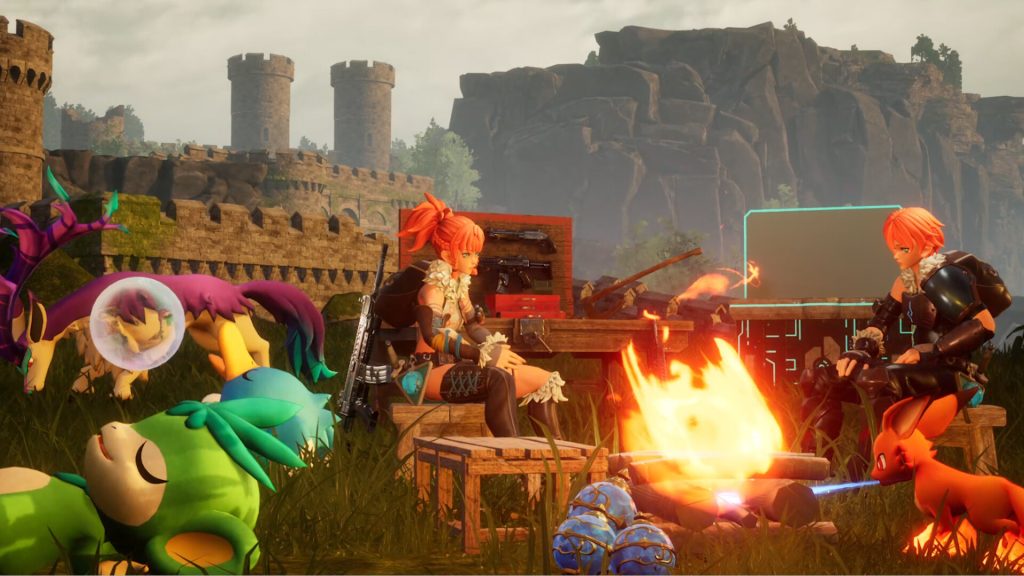
Palworld 1.0 Mutations, New Features, Performance Improvements and Progression
Mutation is one of the major new breeding mechanics introduced in Palworld version 1.0. When two Pals produce an egg, there is a small chance that the offspring will be mutated, giving it higher potential statistics and a unique passive trait. This introduces an additional element of unpredictability into breeding because even carefully planned pairings can occasionally produce unusually powerful offspring, encouraging players to continue experimenting with combinations instead of treating breeding as a completely predictable process.
Several new cake items allow players to influence breeding outcomes in different ways. Mushroom Cake improves statistical outcomes, Vegetable Cake causes two eggs to be produced, Deluxe Vegetable Cake increases the chance of a mutation and Special Cake improves passive inheritance. These options give players more control over breeding while still preserving the randomness that makes mutations valuable.
Mutation works alongside the new Awakening system, which allows players to strengthen individual Pals using materials connected to the World Tree. Together, these mechanics create a more layered late game progression system. Players can search for strong breeding results, pursue desirable passive traits and then continue improving favorite Pals through Awakening rather than replacing them every time a stronger creature becomes available.
Version 1.0 also introduces several other major features that broaden the overall experience. Sunreach and the World Tree establish a more complete progression arc and provide dedicated endgame content, while the expanded Pal roster gives collectors and team builders many more strategic options. Combat has received substantial adjustments, including changes to more than 200 Partner Skills, additional motions and refined enemy behavior.
Base management has also become more efficient and flexible through improved automation, storage systems and additional building options. These improvements are particularly important for experienced players because larger bases can involve substantial amounts of repeated resource movement and production management. More effective automation allows players to spend less time handling routine tasks and more time exploring, fighting or developing new areas.
Multiplayer has received improvements as well, including voice chat and stronger server functionality. These changes make cooperative play easier to organize and help version 1.0 support the much larger player population that returned following the full release.
Technical improvements are another major part of the update. Version 1.0 includes optimizations affecting dedicated servers, equipment processing, foliage rendering, memory usage and object spawning. Bug fixes address problems involving login, loading, artificial intelligence behavior, base management, multiplayer synchronization and crashes. A follow up version 1.0.1 patch also addressed critical problems such as unintended save data loss and status effects that persisted incorrectly.
Taken together, these systems make version 1.0 more than a content expansion. Mutation and Awakening deepen Pal progression, Sunreach and the World Tree expand exploration and endgame goals, while improvements to combat, bases, multiplayer and technical performance strengthen the systems players interact with throughout the game.
Why Palworld Is Worth Returning to in 2026 and Why Former Players Are Coming Back
Former players are returning to Palworld because version 1.0 addresses several of the limitations associated with the Early Access experience. The full release introduces a complete story structure, additional progression systems, new locations and clearer long term goals, giving returning players considerably more to do than simply repeating the content available when they originally stopped playing.
The addition of the World Tree is particularly important because Early Access lacked a definitive narrative and gameplay endpoint. Version 1.0 now provides a clearer progression path, while Sunreach and the expanded late game give experienced players new places to explore instead of sending them back through the same locations. The addition of new Pals, breeding mechanics and equipment progression also means returning players have new systems to learn rather than only more collectibles to acquire.
Technical improvements make returning easier as well. Performance optimizations, server improvements and bug fixes reduce some of the frustrations that can discourage players from staying with an Early Access title. Multiplayer enhancements also make it easier for friends to return together, which is particularly valuable for a survival game where cooperative exploration, building and combat are major parts of the experience.
The scale of the update is another major reason the comeback feels worthwhile. Returning users are not being asked to reinstall the game for a handful of balance adjustments or cosmetic additions. The combination of new regions, Pals, progression systems, narrative content, combat changes and base improvements makes the full release substantially different from the earlier version.
New players benefit for similar reasons. Someone starting in 2026 receives a more complete structure from the beginning, with clearer progression, improved stability and a large active community. They can experience the game without having to wait for many of the systems that Early Access players originally encountered in unfinished form.
Price also lowers the barrier to returning or starting for the first time. Palworld maintained its standard $29.99 price after leaving Early Access rather than increasing the price for version 1.0. Existing owners received the full update without an additional purchase, while newcomers can access the completed version at the same standard price associated with the earlier release.
That approach is notable because many Early Access games increase their price when reaching version 1.0. Keeping the $29.99 price means returning owners do not need to pay again for the major update, while new players can enter at a comparatively accessible price despite the significantly expanded content.
The combination of price, new content and improved stability helps explain why former players returned in such large numbers. Version 1.0 provides clearer goals and deeper systems while preserving the survival, collecting and base building mechanics that originally attracted players. For people who enjoyed the concept during Early Access but eventually ran out of objectives, the full release gives them substantial reasons to start exploring again.

Frequently Asked Questions[FAQs]
- When did Palworld exit Early Access?
Palworld officially exited Early Access on July 10, 2026, with the release of version 1.0. The full launch marked the transition from the earlier sandbox-focused build to a more complete version with expanded story content, new regions, additional Pals, a higher level cap and broader endgame progression. - Did Palworld reach one million concurrent players?
No, but it came very close. SteamDB recorded a peak of around 961,897 concurrent players during the second weekend after version 1.0 launched. That means Palworld returned to one of the highest activity levels on Steam without officially crossing the one million concurrent player mark. - How many new Pals were added in version 1.0?
Version 1.0 added 72 Pals in total, consisting of 47 entirely new species and 25 new variants. These additions significantly expand the Paldeck and give players more options for combat, breeding, base work and team building throughout the new regions and endgame content. - What is Sunreach in Palworld?
Sunreach is a new floating archipelago introduced in version 1.0 and designed primarily for higher level players. It contains new settlements, enemies, bosses, materials and Pals, along with watchtowers that reveal parts of the map and function as fast travel points. The region also serves as an important step toward the World Tree endgame. - What is the World Tree?
The World Tree is Palworld’s major endgame region and serves as the narrative climax of version 1.0. It gives the game a clearer final objective than the Early Access version had, while also providing more difficult progression content for players who have already explored the earlier regions and developed strong teams. - What is the new level cap in Palworld 1.0?
The level cap increased from 65 to 80 with version 1.0. The higher cap supports the new late game regions, stronger enemies, additional equipment tiers and expanded progression systems, giving long time players more room to improve both their characters and Pals. - What are mutations in Palworld?
Mutations are rare breeding outcomes introduced in version 1.0. When two Pals produce an egg, there is a small chance that the offspring will be mutated, potentially giving it stronger statistics and a unique passive trait. New cake items can influence breeding outcomes, including mutation chances and passive inheritance. - Did Palworld increase its price after release?
No. Palworld remained at its standard $29.99 price after leaving Early Access. Existing owners received version 1.0 without needing to buy the game again, while new players could access the expanded full release at the same base price rather than paying a higher launch price. - How many players has Palworld reached overall?
Pocketpair said Palworld had reached 40 million total players before version 1.0 launched. That figure includes players across different platforms and services rather than only Steam concurrent users, showing how large the existing audience was before the full release brought many players back. - Is Palworld worth playing now?
Yes, particularly for players who stopped during Early Access or waited for a more complete version. Version 1.0 adds a finished progression structure, Sunreach, the World Tree, 72 new Pals, Mutation and Awakening systems, stronger multiplayer support, improved performance and extensive bug fixes, making the game substantially broader and more polished than its earlier form.

conclusion
Palworld sees new surge of players after exiting Early Access because version 1.0 delivers a rare combination of scale, polish, and accessibility. The update transforms the game into a fully realized experience with meaningful progression, diverse systems, and strong multiplayer support.
The near-million concurrent player peak highlights the effectiveness of this approach, demonstrating that a well-executed full release can revive even a game that has already experienced massive initial success.
While long-term retention will depend on continued updates and community engagement, Palworld’s 1.0 foundation positions it as one of the most successful survival game relaunches in recent years.
sources and citation
- Pocketpair, Official Palworld Steam Announcements and Patch Notes: Provides the primary source for the 1.0 update features, newly introduced systems, and gameplay changes.
- Citation: Palworld on Steam
- SteamDB and SteamCharts, Player Statistics: Used to track concurrent player peaks, player-count trends, and historical performance.
- Citation: SteamDB · SteamCharts
- Pocketpair, Game Update Logs and Official Patch Documentation: Provides additional context on player growth, performance improvements, and gameplay changes introduced through updates.
- Citation: Palworld on Steam · Pocketpair
- Pocketpair, Official Announcements on Player Numbers and Full Release: Supports information about total player numbers and the timing of the game’s full release.
- Citation: Pocketpair · Palworld on Steam
- Verified Palworld Game Databases and 1.0 Update Reporting: Supports details about newly introduced Pals, gameplay systems, and features associated with the Palworld 1.0 update.
- Citation: Palworld Wiki · Palworld on Steam
Recommendations
- Helldivers 2 on PlayStation Plus Extra/Premium: August 12, 2026 Release and Devoid of Liberty Update
- Subnautica 2 Early Access Roadmap: Co-Op Updates, Sprinting, and More
- Minecraft Complete Guide and Walkthrough for New and Returning Players
- Palworld 1.0 Legendary Schematics: Best Locations and Boss Fight Preparation
- SAND: Raiders of Sophie Mechanical Parts Location Guide
- Crimson Desert Sigil of Valor Guide and Best Uses Explained
- Phasmophobia Twitch Drops: How to Link Accounts, Watch Streams, and Earn Free In-Game Rewards
- Orbitals Two-Player Space Adventure on Switch 2: Release Date, Co-Op Modes, Gameplay, and Friend’s Pass
- What Is Stop Motion Animation? Why It Was Important to Animation: A Comprehensive History and Impact Guide
- How do I set a camera to render in orthographic mode in Blender?



































































































