










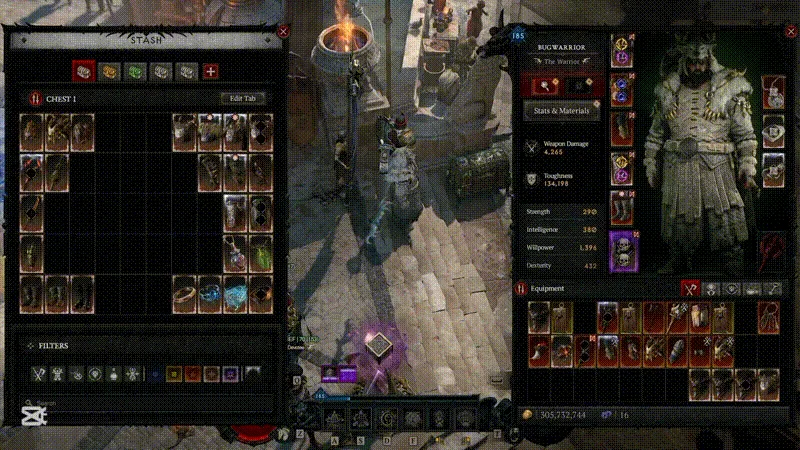
The Diablo 4 Season 14 Mythic Uniques rework changed how players approach some of the game’s most desirable equipment. However, understanding the overhaul requires separating three stages: the original Public Test Realm proposal, the revised launch system, and the adjustments Blizzard made after release.
Season of Death Awakening launched on June 30, 2026. Its itemization changes expanded Mythic quality beyond the familiar collection of exceptionally rare items, allowing ordinary Uniques to have Mythic versions. That broader ambition made the update more significant than a routine balance patch. It changed which items could become endgame goals and how players pursued them. Blizzard News
The controversy was not simply about whether powerful equipment should remain powerful. It concerned the relationship between rarity, item identity, crafting control, and the time required to finish a build. A rare drop can feel rewarding when its purpose is immediately clear. The same drop can feel disappointing when its quality label promises more than its actual contribution to a character.
The sections below explain the verified changes and their implications. Discussion of potential build outcomes is analysis rather than a claim that every class, skill, or damage archetype benefited equally.
In This Article (17 sections)
What is Changing with Mythic Uniques in Diablo 4 Season 14
The central change was the meaning of Mythic itself. Blizzard moved it from a separate item rarity into an item quality that could apply to Uniques. Mythic versions were Ancestral, had stronger Unique Powers, and used maximum values for their other affixes. The launch explanation specified a 30% increase to Unique Powers. Blizzard News
This distinction corrects an important misconception: the system was not primarily about making Mythic items roll weak numerical values within unusually broad ranges. Much of the uncertainty concerned which item and affix combination a player received.
Affix identity and affix magnitude are different. A maximum numerical roll on a stat that a build barely uses can contribute less than a smaller value on an essential stat. Consequently, equipment can have excellent numbers while still being poorly suited to its wearer.
For example, consider a hypothetical character whose main problem is resource availability. Additional damage might improve its strongest attacks, but resource generation could improve how frequently those attacks occur. Evaluating the item requires looking beyond its color and the apparent size of its bonuses.
The overhaul therefore broadened the equipment chase while making item assessment more demanding. Players needed to judge whether a particular combination supported their character’s mechanics, rather than treating Mythic quality as an automatic instruction to equip it.
Why Blizzard is Overhauling Mythic Uniques in Season 14
Blizzard’s stated concern included the dominance of familiar Iconic Mythics. Its launch explanation identified items such as Melted Heart of Selig and Ring of the Starless Skies as difficult for competing equipment to displace. The developer also described its intention to give players more flexibility in matching Unique affixes to their builds. Blizzard News
The design problem is understandable. If one item provides an exceptional power and an ideal collection of supporting stats, it can become the default choice across otherwise different characters. Once that happens, the equipment slot offers less meaningful decision making.
However, weakening an established favorite does not automatically create better alternatives. A successful overhaul must give competing items a reason to exist. Otherwise, players simply search for the next dominant replacement, and the underlying problem remains.
There is also a difference between expanding possibilities and increasing practical choice. A system might produce thousands of theoretical combinations while leaving only a small number attractive for difficult content. More outcomes do not necessarily mean more viable builds.
The strongest argument for the redesign is that class specific equipment should have a credible place in advanced progression. The strongest objection is that players should not lose recognizable, dependable goals while that broader equipment ecosystem is being developed.
Both concerns can be valid simultaneously. The challenge is making experimentation rewarding without turning every successful build into a moving target.
Diablo 4 Season 14 PTR Patch Notes Breakdown for Mythic Items
The 3.1 PTR ran from June 2 to June 9, 2026. Blizzard presented it as a testing period whose feedback would inform changes before launch. Its notes included Mythic Uniques 3.0 alongside other seasonal and system features. Accordingly, the PTR documents describe proposals rather than an unchanging account of the released season. Blizzard News
Several item specific PTR changes also contributed to the negative reaction. The test notes proposed removing Harlequin Crest’s Damage Reduction while increasing its bonus to all skills. They also proposed reducing The Grandfather’s Critical Strike damage bonus. Those examples show why the debate involved direct power adjustments as well as randomness. They should be identified as PTR entries, not automatically treated as final live values. Blizzard News
A useful patch analysis separates three questions. Did the item’s special power change? Did its supporting affixes change? Did the method of acquiring or modifying it change? Combining these into a single label such as “Mythic nerf” can obscure the actual reason a character performs differently.
Testing conditions matter too. A character equipped through a PTR vendor does not reproduce the experience of someone earning materials during normal play. A recipe may appear manageable with abundant test resources while becoming frustrating when each attempt represents a substantial farming investment.
The proper way to interpret the PTR is as evidence of Blizzard’s initial direction and the problems players identified. The launch revision and subsequent updates must then be considered separately.
Community Reaction to Diablo 4 Season 14 Mythic Unique Changes
Community criticism focused heavily on the possibility that rare equipment would become another unfinished crafting project. In a detailed Reddit feedback thread, players objected to modifying valuable Unique affixes without sufficient control over which properties were replaced. Some participants also preferred spending their time finding equipment through combat rather than repeatedly processing items in town. reddit.com
That distinction reveals two different expectations of an action RPG. One player wants crafting to rescue an almost perfect drop. Another wants the drop itself to deliver the moment of satisfaction. Neither preference implies that randomness must disappear, but they produce different judgments about where randomness belongs.
Discussion threads also need careful interpretation. A strongly worded post can identify a legitimate mechanical problem without measuring the opinion of the entire player base. Votes and comments show engagement among participants, not a representative survey.
Similarly, criticism of the PTR cannot be assumed to describe the later live system. Once a developer changes a feature, earlier complaints remain useful historical evidence but need updated context.
The most productive reading of the reaction is therefore specific: players identified friction around control, recognizable item identity, and the cost of failed attempts. Those concerns provide clearer design feedback than a broad claim that everyone either loved or hated the overhaul.
Why Players Are Upset About Mythic Unique Nerfs in Diablo 4
The word “nerf” covered several distinct concerns. Some players objected to reduced effects on individual items. Others disliked losing a familiar package of supporting stats. A third group was more concerned about the journey required to acquire a suitable replacement.
These experiences can feel similar during play. If a character loses survivability, resource stability, or damage uptime, its performance declines regardless of whether the cause was an explicit numerical reduction or an unfavorable equipment combination.
There is also an investment issue. Learning a build involves more than obtaining items. Players develop an understanding of its rotation, defensive timing, resource management, and upgrade priorities. A substantial item redesign can make part of that knowledge less useful.
However, this does not establish that every previously acquired item was automatically changed in the same way. Claims about existing equipment require the relevant patch’s implementation details. New seasonal characters, newly generated items, and older Eternal equipment should not be treated as interchangeable cases.
The broader emotional concern is the loss of a clear finish line. A player may accept a difficult acquisition process when the reward reliably completes an important part of the build. Adding uncertainty after that acquisition changes the meaning of success.
That explains why a technically more flexible system can still feel less rewarding. Flexibility has value when players can use it deliberately. When they experience it mainly as another obstacle, its theoretical benefits become harder to appreciate.
Diablo 4 Loot System Changes and the End of Fixed Mythic Stats
The original proposal reduced guaranteed affixes too aggressively for many players. Blizzard’s launch explanation acknowledged that concern and revised Uniques, Mythic Uniques, and Iconic Mythics to retain two guaranteed affixes. It also introduced the ability to enchant one affix on these items. Blizzard News
Consequently, “the end of fixed Mythic stats” describes the controversy more effectively than it describes the final launch rules. The released system preserved an element of item identity while allowing more variation around it.
Guaranteed affixes serve a practical purpose. They let players predict what an item will contribute before finding it. That predictability helps with planning, especially when a character needs a particular mechanic to function.
Variable affixes can serve a different purpose. They allow versions of the same item to fit different priorities. A player focused on sustained damage may evaluate a combination differently from someone struggling with survival.
The important question is how those two roles interact. If the predictable portion is too weak, the item loses its identity. If the fixed package is overwhelmingly strong, variation and competing equipment become less relevant.
A mixed structure can offer a compromise, but its quality depends on the actual affix pools. Random choices are meaningful only when several possible outcomes have plausible uses. An expansive pool filled with unsuitable properties creates inspection work without necessarily creating interesting decisions.
How RNG is Affecting Mythic Uniques in Diablo 4 Season 14
Randomness can enter an equipment hunt at multiple stages. A player may need the item to drop, need the correct identity, need appropriate supporting affixes, and then need a useful outcome from modification. These are separate uncertainties, even when they appear within one progression system.
The Season 14 PTR crafting proposal made this especially visible. It could produce an item from a broad equipment category, making a conversion much less targeted than simply improving the submitted Unique. Players consequently questioned whether gathering the necessary currency represented progress toward a specific goal. reddit.com
The mathematics of repeated attempts helps explain the frustration. In a simplified hypothetical system with a 10% success chance per independent attempt, ten attempts do not guarantee success. The chance of at least one success is approximately 65%. This is an illustration, not a published Diablo 4 crafting rate.
The remaining players can experience much longer unsuccessful streaks. An average acquisition time therefore does not tell the whole story. A system can feel reasonable for someone who succeeds early and punishing for someone who repeatedly misses.
Meaningful control reduces the number of independent obstacles between effort and reward. Choosing a slot, preserving a valuable property, or repairing a specific weakness can make an unsuccessful session feel less wasted.
The design question is not whether an action RPG should contain RNG. It is whether the layers of RNG create anticipation, interesting choices, and recognizable progress, or primarily prolong the same unresolved problem.
Are Mythic Uniques Still Worth Using in Diablo 4 Season 14
A Mythic item is worth using when it improves the character’s actual performance. Its quality label alone cannot determine that answer. The relevant comparison is between complete equipment configurations, including the effects lost when replacing the existing item.
This is especially important when swapping out a Legendary. A powerful Legendary Aspect may supply a mechanic that the character depends on. Removing it can create a weakness that the new item’s stronger stats do not fully compensate for.
The same principle applies to defensive equipment. A larger damage number might look attractive while leaving the character unable to survive encounters consistently. Time spent dead, retreating, or recovering resources reduces practical effectiveness.
A sensible assessment begins with the item’s purpose. Does it enable the build, strengthen its main damage engine, solve a defensive problem, or provide convenience? Those benefits should then be tested in the activity the character actually plays.
Repeated runs are more informative than a single favorable encounter. Comparing similar content reduces the influence of different enemies, temporary bonuses, positioning, and execution mistakes.
There is no verified basis for a universal claim that all Mythics became weak or that every Mythic remained best in slot. Equipment value depends on the specific item, the character around it, and the relevant patch. The useful question is whether the upgrade helps accomplish the player’s goal.
Diablo 4 Season 14 Build Meta Changes After Mythic Unique Rework
The rework changed the assumptions used to assemble builds, but it does not independently establish a complete ranking of the season’s strongest characters. Class balance, skill behavior, encounter demands, and other equipment changes all contribute to the meta.
One likely area of pressure is the use of broadly effective items across many different builds. When a familiar item no longer provides the same dependable package, its replacement must be evaluated in context. That can increase the value of more specialized equipment.
However, specialization can also increase dependence. A build requiring one particular item combination may become harder to assemble than a build that accepts several alternatives. This affects accessibility even if the specialized version has a higher theoretical ceiling.
Build guides should therefore distinguish between a functional configuration and an optimized one. A character that clears ordinary endgame content comfortably may not need the exact equipment used for competitive pushing.
They should also separate assumptions from demonstrated results. A planner can suggest that a combination has strong synergy, but testing is needed to establish whether the interaction works as expected and remains effective under real encounter conditions.
The claim that damage over time, tank, or hybrid builds automatically gained dominance is too broad without supporting evidence. The more defensible conclusion is that the overhaul required new comparisons and increased the importance of explaining why each item belonged in a build.
Blizzard’s New Crafting System for Mythic Uniques Explained
The revised launch system narrowed crafting outcomes to the submitted equipment slot, with specified shared categories for certain weapons and offhands. It did not guarantee the same named Unique, and the submitted item’s affixes were rerolled. Thus, selecting the correct slot improved targeting without making the process a direct preservation upgrade. Blizzard News
This distinction matters when choosing crafting inputs. In a conversion that does not preserve the original item’s valuable properties, an excellent base can be more useful as equipment than as a reagent. The word “upgrade” should not be interpreted as proof that everything desirable survives.
Crafting also has an opportunity cost. Materials spent pursuing one slot are unavailable for another goal. The most important target is often the item that removes the character’s largest obstacle, rather than the item offering the most impressive theoretical damage increase.
The later 3.2 PTR proposed a different approach: a direct Cube upgrade retaining the submitted item and its modifications. Blizzard described that recipe as more expensive and attached a specific Crafted tag restriction to it. Those were later PTR rules and must not be inserted into a description of the original Season 14 launch system. Blizzard News
The comparison illustrates two crafting philosophies. One exchanges materials for another chance at suitable equipment. The other converts a known good item into a stronger version. Their costs, restrictions, and effects on progression must be judged separately.
Diablo 4 Season 14 Best Builds Impacted by Mythic Unique Changes
The builds most exposed to an item overhaul are those whose mechanics depend on the changed item. That dependence can take several forms, including damage scaling, resource recovery, cooldown management, defensive protection, or access to a special interaction.
A resource sensitive character provides a useful hypothetical example. If an equipment swap improves damage per attack while reducing the number of attacks it can sustain, its total output may decline. The tooltip increase does not resolve that tradeoff.
A critical strike focused character faces a different problem. Its performance may depend on reaching a particular level of reliability. Losing a supporting property can affect both average output and how consistently important effects occur.
Defensive dependence can be equally significant. A character built around an equipment supplied protection may need changes elsewhere when that protection changes. Those compensating changes can consume slots previously devoted to damage or utility.
These are analytical examples, not verified rankings of individual Season 14 builds. Naming a precise winner requires evidence from the relevant patch and comparable testing.
A strong build explanation should identify which equipment is mandatory, which is replaceable, and which merely improves the final version. That makes the guide useful to players with different levels of access. It also prevents an idealized setup from being mistaken for the minimum needed to enjoy the build.
How the Community on Reddit is Reacting to Mythic Unique Nerfs
Reddit discussion highlighted the difference between randomness players enjoy and randomness they find obstructive. The PTR feedback thread about Cube modification emphasized the risk of replacing an already valuable affix. Another discussion criticized broad crafting outcomes and questioned why a rare item should require further gambling before fitting its intended build. reddit.com
Those complaints were specific to the systems being discussed at the time. Some descriptions became outdated when Blizzard changed the launch rules. They remain evidence of why the proposals were controversial, but they should not be repeated as current mechanics.
The discussions also revealed competing priorities. Some participants favored combat based acquisition over extensive vendor interaction. Others focused on preserving control over equipment they had already invested in. These concerns overlap, but they are not identical.
A player can welcome difficult farming while disliking risky modification. Another can enjoy crafting while wanting more predictable results. Treating both as opposition to all randomness oversimplifies the debate.
Community reactions are most informative when attached to a concrete mechanic and a date. A complaint about the June PTR, a response to launch, and an opinion after July adjustments concern different versions of the system.
That chronology matters as much as sentiment. Without it, an article can accurately report that a complaint existed while incorrectly implying that the complained about feature remained unchanged.
Diablo 4 Season 14 Endgame Gear Progression and Loot Farming Changes
The seasonal loot loop connected Ruptures, Deathtoll Chambers, boss access, reputation rewards, and crafting. Blizzard identified the Corrupted Reaper as the strongest direct seasonal source for Mythic drops and their upgrade currency. This gave the hunt a defined seasonal route rather than establishing that Mythics came exclusively from high tier Nightmare Dungeons. Blizzard News
Progression within such a loop should be measured by useful outcomes per session. A player needs to consider access costs, completion time, failure rate, and the usefulness of the rewards. Simply selecting the hardest available difficulty does not guarantee the best progress.
The distinction between obtaining an item and completing a build also becomes important. A drop might solve an immediate weakness even if it falls short of the ideal final version. Equipping that improvement can make later farming faster and more reliable.
Conversely, pursuing perfection too early can trap a character in an inefficient loop. If the current setup struggles with basic survival or resource management, a narrowly optimized damage target may be the wrong priority.
Blizzard subsequently acknowledged feedback about drop rates and equip limits. Its July 16 announcement increased Mythic drops from the Corrupted Reaper and removed the Mythic equip restriction associated with crafting. It also announced further changes involving Superior Lair Keys and Undercity Mythic Tributes. Diablo IV Forums
Those adjustments demonstrate why an endgame guide needs version awareness. A farming recommendation based on the launch economy can become incomplete after reward rates and equipment restrictions change.
Will Diablo 4 Season 14 Improve or Hurt Build Diversity in the Long Term
Build diversity has more than one meaning. It can describe the number of theoretical combinations, the number of builds capable of completing content, or the number players actually choose. An item overhaul can improve one measure while leaving another unchanged.
More flexible supporting stats may let an item fit additional characters. That is a plausible benefit. However, it does not prove that players will abandon established favorites or that every new combination will perform competitively.
Accessibility also affects diversity. If an unusual build needs a difficult combination before becoming functional, fewer players may attempt it. A slightly weaker build with dependable progression can remain more popular because its path is easier to understand.
The best outcome would combine recognizable item identity with enough customization to support different priorities. Players would have meaningful alternatives without needing to restart their equipment plan after every unfavorable outcome.
The later 3.2 PTR’s proposed direct upgrade path and regular Unique versions of Iconic Mythics addressed that relationship between accessibility and aspiration. As proposals, they illustrated Blizzard’s direction rather than proving the final success of the system. Blizzard News
The long term result should be judged through play: whether more builds become functional, whether players can pursue them deliberately, and whether rare rewards retain their excitement. Variety is valuable when it expands enjoyable choices, not simply when it increases the number of possible item combinations.
Frequently Asked Questions (FAQs)
1. What are Mythic Uniques in Diablo 4 Season 14?
They are Mythic quality versions of Unique equipment. The overhaul broadened the category beyond the familiar group of exceptionally rare items, making more Unique powers part of the advanced equipment chase. Their practical value still depends on how well the item supports a particular character.
2. Did Blizzard remove every fixed affix?
No. The initial proposal prompted criticism about losing recognizable item identity. The revised launch structure retained two guaranteed affixes. Descriptions claiming that the released system completely eliminated fixed properties confuse the earlier proposal with the launch changes.
3. Does RNG mean Mythic stats always have weak numerical rolls?
No. Randomness can concern the identity of an affix rather than its numerical value. A maximum value on an unsuitable property may still contribute little to a build. Players therefore need to evaluate relevance as well as magnitude.
4. Were the PTR changes identical to the launch system?
No. Blizzard used feedback to revise the system before release. The PTR is useful for understanding the original controversy, but its proposals should not be presented as a complete account of the live season.
5. Did Season 14 crafting preserve the exact submitted Unique?
The revised launch conversion targeted an equipment slot rather than guaranteeing the same named item and preserving its properties. A direct preservation approach appeared in the later 3.2 PTR proposal, making it important to distinguish the two systems.
6. Could players equip only one crafted Mythic throughout the season?
No. That restriction belonged to the earlier system and was subsequently removed. Blizzard’s July announcement addressed it alongside Mythic drop rates. An account of the full season must include that adjustment rather than stopping at the launch rules. Diablo IV Forums
7. Why did players criticize the rework?
Common concerns included unpredictable crafting, additional work after obtaining rare equipment, and reduced certainty about an item’s role. Those criticisms were not all objections to randomness itself. Many concerned where randomness appeared and how much control players retained.
8. Did every build become weaker?
That conclusion is unsupported. Some item changes could weaken established combinations, while alternative equipment might create new opportunities. Determining the effect on a specific build requires checking its mechanics, the relevant patch, and comparable gameplay results.
9. Should a Mythic always replace a Legendary item?
No. Replacing a Legendary can remove an essential Aspect or supporting property. The correct comparison considers the complete build and its real performance. An attractive quality label cannot compensate for breaking a mechanic the character needs.
10. What is the best way to evaluate a potential upgrade?
Identify the problem the item is supposed to solve, then compare performance in similar content. Consider sustained damage, survivability, resource availability, and consistency. A useful upgrade should improve the character’s results, rather than merely making its equipment look more prestigious.
Conclusion
The Diablo 4 Season 14 Mythic Uniques rework was a substantial itemization experiment whose details changed between testing, launch, and subsequent updates. Its controversy cannot be explained accurately by claiming that Blizzard simply replaced guaranteed power with weak random stat rolls.
The deeper issue was control. Players wanted rare equipment to retain a recognizable purpose, crafting to provide meaningful progress, and valuable drops to feel rewarding before another series of uncertain modifications.
The overhaul also raised legitimate questions about equipment competition. If a small group of items dominates too many builds, alternatives struggle to matter. Broadening the Mythic chase could create more opportunities, but that benefit depends on practical viability and accessibility.
Its lasting lesson is that rarity, flexibility, and progression must work together. A successful loot system gives players reasons to keep exploring while allowing them to recognize when their effort has produced something valuable.
Sources and Citations
Blizzard Entertainment: Hunt the Death Cult in Season of Death Awakening
https://news.blizzard.com/en-us/article/24268702/hunt-the-death-cult-in-season-of-death-awakening
Blizzard Entertainment: The 3.1 PTR: What You Need to Know
https://news.blizzard.com/en-us/article/24259077/the-3-1-ptr-what-you-need-to-know
Blizzard Entertainment: Season of Death Awakening, Changes and Next Steps
https://us.forums.blizzard.com/en/d4/t/season-of-death-awakening-changes-and-next-steps/263235
Blizzard Entertainment: The 3.2.0 PTR: What You Need to Know
https://news.blizzard.com/en-us/article/24292852/the-3-2-0-ptr-what-you-need-to-know
Reddit r/diablo4: PTR Feedback on Cube Rerolling Uniques
https://www.reddit.com/r/diablo4/comments/1txi8zl/ptr_feedback_cube_rerolling_uniques_feels/
Reddit r/diablo4: Discussion of the Proposed Season 14 Mythic System
https://www.reddit.com/r/diablo4/comments/1u2iq32/the_new_s14_mythic_system_seems_awful_in/
Select modelGPT-6.1 SolLightNoneMinimalLightMediumHighExtra HighMaxUltraPersistentOutputs
Create a file or siteSourcesWeb search
Pasted text(20261006-201652).txt
To pick up a draggable item, press the space bar. While dragging, use the arrow keys to move the item. Press space again to drop the item in its new position, or press escape to cancel.
Drag to reorder pinned navigation items
To pick up a draggable item, press the space bar. While dragging, use the arrow keys to move the item. Press space again to drop the item in its new position, or press escape to cancel.



































































































