






In This Article (9 sections)
No Rest for the Wicked Xbox Release Delay and Series S Optimization Challenges
The Xbox release of No Rest for the Wicked has attracted significant attention due to its delayed rollout compared to other platforms. The main reason for this delay is the technical demands of the game and the challenges involved in optimizing it for different Xbox hardware configurations, particularly the Xbox Series S. Although the game is being developed with next-generation systems in mind, ensuring stable performance across all Xbox consoles has required additional development time.
This optimization process involves balancing graphical fidelity, maintaining stable frame rates, and ensuring a consistent gameplay experience across varying hardware tiers within the Xbox ecosystem. The delay is not due to lack of progress in development, but rather the complexity of adapting a visually intensive and systems-heavy game to run smoothly across both higher-end and lower-spec hardware.
A major factor contributing to these issues is the Xbox Series S, which has become a central point in discussions around the delayed port. Developers have noted that its reduced memory capacity and lower GPU power compared to the Xbox Series X create significant technical limitations. These constraints require substantial adjustments, including reduced texture quality, lowered rendering distances, and aggressive memory optimization techniques.
For a game like No Rest for the Wicked, which relies heavily on detailed visuals and complex systems, these compromises are particularly challenging. Ensuring parity between the Series S and Series X versions requires additional engineering work to maintain consistent gameplay quality across both consoles. This extra development effort is a key reason behind the extended timeline for the Xbox release.

No Rest for the Wicked Xbox Delay and Moon Studios’ Optimization Challenges
Moon Studios has confirmed that the Xbox version of No Rest for the Wicked is taking longer due to optimization challenges across multiple hardware configurations. The studio has emphasized that its priority is performance stability and gameplay integrity rather than rushing out a compromised port. As a result, additional development time is required to ensure the game performs consistently across all Xbox systems.
The game features highly detailed environments, complex lighting systems, and dense gameplay mechanics, all of which require significant re-engineering when adapted to console hardware. Supporting both Xbox Series X and Series S simultaneously adds further complexity, as each system has different performance capabilities. This forces adjustments to asset pipelines, rendering budgets, and performance targets to maintain a consistent experience across both versions.
Developers have also highlighted that the Xbox Series S plays a major role in the delay. While it supports next-generation features like SSD loading and ray tracing, it has reduced GPU power and lower memory bandwidth compared to the Series X. This requires developers to lower texture resolution, simplify environmental assets, reduce shader complexity, limit real-time lighting effects, and carefully manage RAM usage. For a game as visually ambitious as No Rest for the Wicked, these compromises significantly increase development time and optimization effort.
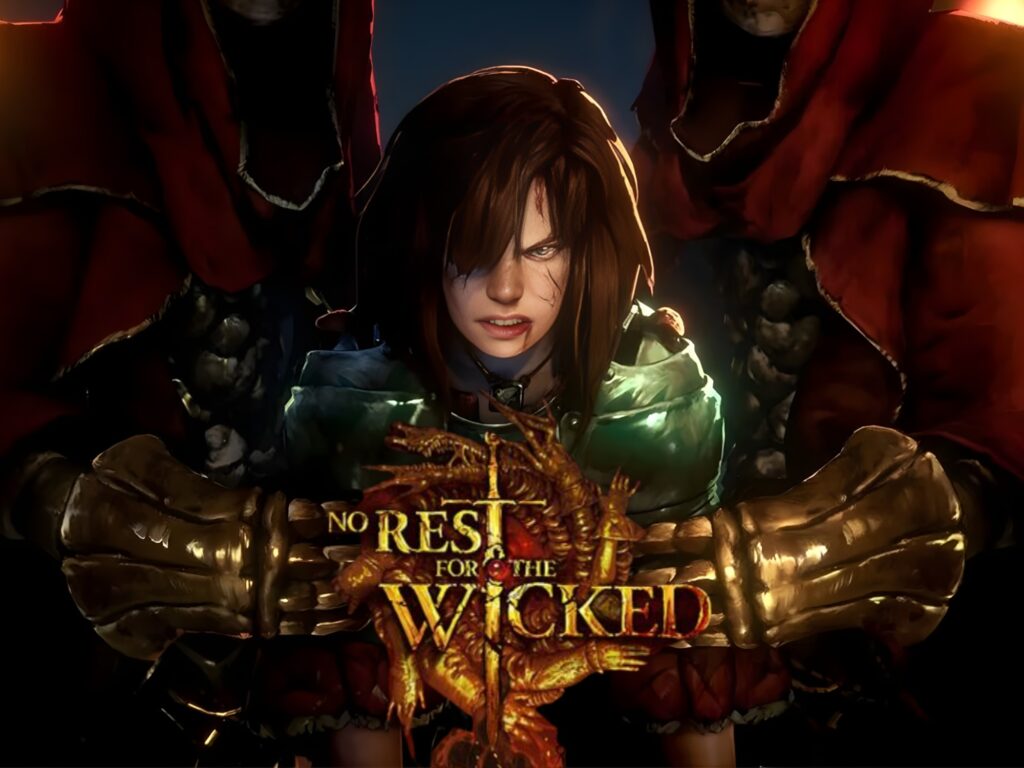
Xbox Series S Optimization, Performance Differences, and Platform Release Strategy
“Series S optimization” has become a key concept in modern game development, referring to the process of ensuring that games designed for high-end hardware can still run effectively on lower-powered systems without losing essential functionality. Common techniques include dynamic resolution scaling, aggressive asset streaming, reduced draw distances, memory compression, and frame rate stabilization adjustments. These methods are necessary to maintain playable performance on hardware with stricter limitations.
For No Rest for the Wicked, performance differences between Xbox Series X and Series S are a major concern. The Series X can handle advanced graphical features more comfortably, while the Series S struggles under the same workload. Developers must therefore ensure consistent frame rates, avoid gameplay-altering visual downgrades, balance CPU-heavy simulation systems, and maintain identical mechanics across both versions. This effectively increases development complexity, as the game must be designed around the lowest common performance baseline.
Because of these challenges, the PS5 version is expected to release before the Xbox version. The PS5’s more uniform hardware profile allows developers to optimize around a single specification, unlike Xbox, which requires dual optimization paths for Series X and Series S. This difference increases testing cycles and overall workload for the Xbox port.
Developer comments have confirmed that the issues are primarily technical rather than design-related. The game is fully compatible with Xbox systems, but requires extensive engineering work to ensure stable performance. Key challenges include memory limitations on Series S, CPU bottlenecks in large environments, asset streaming delays during fast movement, and maintaining visual consistency across hardware tiers. These factors are standard in cross-platform development but are intensified by the scope and ambition of No Rest for the Wicked.

No Rest for the Wicked Xbox Game Pass Availability, Release Timing, and Platform Optimization Challenges
At the time of writing, there is no confirmed indication that No Rest for the Wicked will launch on Xbox Game Pass alongside its Xbox release. While Game Pass is a common distribution channel for Xbox titles, inclusion depends entirely on agreements between the publisher and Microsoft. Even if the game eventually arrives on Game Pass, it is more likely to be added after the standard Xbox launch rather than at the same time, especially given the already delayed rollout of the Xbox version.
This staggered approach aligns with the broader release strategy, where Xbox players are expected to receive updates based on optimization progress rather than a fixed global release date. Instead of a simultaneous launch, the developers are prioritizing stability and performance consistency before finalizing when the Xbox version will be fully available.
A key reason for this delay becomes clearer when comparing PS5 and Xbox Series S hardware. The PS5 offers higher GPU performance, a more unified memory architecture, and a more consistent baseline for optimization, which makes development and testing more straightforward. In contrast, the Xbox Series S introduces additional complexity due to its reduced RAM, lower GPU compute power, and the need to share optimization targets with the more powerful Series X. This dual-target requirement forces developers to build scalable systems that work across both ends of the Xbox hardware spectrum, significantly increasing workload.
These differences are also part of a wider industry trend where more developers are delaying Xbox Series S ports for demanding games. Rising visual fidelity standards, increased memory usage in open-world design, the difficulty of maintaining parity across Xbox consoles, and expanded QA testing requirements all contribute to longer development cycles. As a result, studios often choose to delay Xbox versions to ensure quality consistency rather than release downgraded builds that fail to meet performance expectations.
Memory limitations on Xbox Series S are one of the most critical technical constraints affecting modern releases. With less available RAM compared to higher-end systems, developers must carefully control how assets are loaded, stored, and streamed during gameplay. In No Rest for the Wicked, this directly impacts world loading systems, texture streaming pipelines, enemy and environmental density, and real-time physics simulations. If not properly optimized, these constraints can lead to performance issues such as frame drops, pop-in, or even system instability.

Xbox Release Timing Updates and Advanced Rendering Challenges in No Rest for the Wicked
While the exact Xbox release date remains flexible, current expectations suggest a staggered rollout following additional optimization cycles. The development team is prioritizing long-term stability and consistent performance before committing to a final launch window. As a result, Xbox players should expect updates tied to optimization milestones rather than a single, fixed global release date.
This broader optimization challenge also connects to modern rendering and performance systems such as PixelHair and View Keeper techniques. PixelHair-style rendering refers to highly detailed strand-based or pixel-precise character rendering methods that significantly increase GPU load, particularly in dense visual environments. View Keeper systems, on the other hand, involve dynamic scene persistence and camera-based optimization techniques that control which assets remain actively rendered at any given time.
In constrained environments like the Xbox Series S, both systems require careful scaling or selective reduction to maintain stable performance without compromising the game’s visual identity. These advanced rendering demands further illustrate why optimization for lower-spec hardware takes additional time, especially in visually ambitious titles like No Rest for the Wicked.

Frequently Asked Questions (FAQs)
- When will the Xbox version release?
A specific Xbox release date has not been confirmed yet. The developers are still working on optimization, so the launch will likely be announced once performance targets are fully met and stable across both Xbox systems. - Why is No Rest for the Wicked delayed on Xbox?
The Xbox version is delayed because the developers need additional time to optimize the game for Xbox hardware, especially the Series S. The game’s systems are complex and visually demanding, so ensuring stable performance across all Xbox consoles requires extra engineering work rather than a simple port. - Is Xbox Series S the main cause of the delay?
Yes, the Xbox Series S is a major factor in the delay. Its lower memory capacity and reduced GPU performance compared to other current-gen systems make it more difficult to run high-fidelity environments smoothly, requiring significant adjustments to maintain performance. - Will Xbox Series X get the game earlier than Series S?
No, both Xbox Series X and Series S versions are developed together. Even though Series X is more powerful, the game must be optimized across both systems at the same time to ensure consistent performance and feature parity. - Is the PS5 version releasing first?
Yes, the PS5 version is expected to release before the Xbox version. This is largely because PS5 offers a more uniform hardware setup, which allows developers to optimize more efficiently compared to managing two different Xbox performance tiers. - Will No Rest for the Wicked be on Game Pass?
There is no confirmed information that the game will launch on Xbox Game Pass. If it does come to Game Pass, it would most likely be added after the standard Xbox release rather than at launch. - What is Series S optimization?
Series S optimization refers to the process of adjusting a game so it can run properly on the less powerful Xbox Series S hardware. This includes lowering resource usage, improving memory efficiency, and scaling visual effects while keeping gameplay intact. - Does Series S limit game graphics?
Yes, in many cases it does. To maintain performance, developers often need to reduce texture quality, simplify environmental details, and scale down certain visual effects so the game can run smoothly on limited hardware. - Are other games also affected by Series S?
Yes, many modern games face similar challenges. As visual fidelity and world complexity increase in new titles, developers frequently report that optimizing for Series S adds extra time and development complexity. - Will Xbox players miss content?
No, content will remain the same across all platforms. The differences are focused on performance and optimization, not missing gameplay features, story elements, or playable content.

Conclusion
The delayed Xbox release of No Rest for the Wicked highlights the growing complexity of cross-platform game development in the current generation. While the Xbox Series S provides accessibility to next-generation gaming, its hardware limitations introduce significant challenges for developers aiming to deliver high-fidelity experiences. The additional optimization work required ensures that both Xbox Series X and Series S players receive a stable and consistent experience, even if it results in a later release compared to other platforms.
Sources and Citations
- Moon Studios development updates and public statements
https://www.moongamestudios.com - Xbox Series S technical specifications and developer documentation
https://www.xbox.com - Cross-platform optimization practices in modern game development
https://www.gdcvault.com - Industry analysis on console performance scaling challenges
https://www.digitalfoundry.net
Recommended
- The Pitt Camera Tricks Behind the Scenes: How the Show Creates Ultra-Realistic ER Chaos
- The Boys Finale Homelander Scene Explained
- Everything We Know About Clair Obscur: Expedition 33 – Gameplay Mechanics and Character Insights
- Sanzaru Games Veterans Launch Sneaky Devil Studios After Meta VR Studio Shutdowns
- How do I align the camera to an object’s surface in Blender?
- Scale the Depths Release Date Confirmed for Q2 2026
- Blender Create Guide Index Map Geometry Nodes Preset: A Comprehensive Guide
- The Eternal Life of Goldman Official Game Pass Trailer: Everything Revealed at Xbox Partner Preview Showcase 2026
- Why GTA 6 Won’t Be on PC at Launch (November 19, 2026): Take-Two CEO Strauss Zelnick Explains
- Civilization 7 Test of Time Update Release Date and Launch Details



































































































