







In This Article (9 sections)
Sony’s 2028 Digital-Only PlayStation Plan Sparks a Wider Fight over Game Ownership
PlayStation is getting yelled at everywhere online after Sony confirmed a major shift in how new PlayStation games will be sold. The issue is not only that more players now buy digital games. The larger concern is that Sony is turning a consumer preference trend into a platform-wide policy by removing the physical disc option for future new releases.
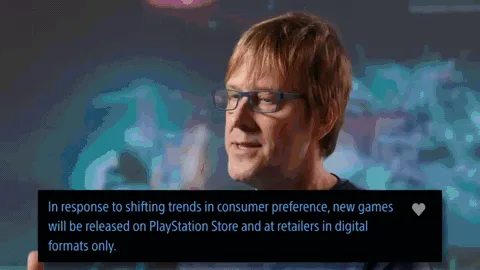
On July 1, 2026, Sony Interactive Entertainment said physical game disc production for all new games releasing on PlayStation consoles will be discontinued starting in January 2028. After that cutoff, new games will be available through PlayStation Store and retailers in digital formats only. Games already released, or scheduled to release before January 2028 in disc format, are not affected by the change.
The backlash has been intense because physical media is not just packaging. For many PlayStation players, discs represent resale value, lending, collecting, preservation, offline reliability, price competition, and a clearer sense of ownership. Sony’s timing also made the reaction worse. On the same day, the company announced upcoming PlayStation Store closures for PS3 and PS Vita, reinforcing fears that a digital-only future depends too heavily on storefronts, accounts, licenses, and corporate support windows.
PlayStation fans are angry because Sony’s digital-only game decision affects more than a purchasing habit. It changes the long-term structure of PlayStation game access. Before the announcement, players who wanted digital convenience could buy digital games, while players who wanted physical copies could buy discs. Sony’s 2028 plan removes that choice for new PlayStation releases.
The anger is especially strong because the decision affects several groups at once. Collectors see the end of new boxed PlayStation games. Budget-conscious players worry about losing used copies and trade-ins. Preservationists worry about future access to games if storefronts, licenses, servers, patches, or accounts change. Retailers worry about losing a category that supports physical game stores. Players with slow or unreliable internet worry about large downloads becoming mandatory.
Reporting from Kotaku described the online reaction as broadly negative across Sony’s social channels, including unrelated Sony and PlayStation posts where users criticized the end of physical PlayStation discs. TechRadar also reported that multiple video game retailers reacted against Sony’s move, framing it as a threat to physical game ownership and retail businesses.
The backlash is not only nostalgia. It is a consumer-rights argument. Physical games let players lend a copy, sell a copy, buy second-hand, keep a shelf archive, and use competing retailers. Digital-only games can be convenient, but they are tied to accounts, licenses, storefront rules, and platform access. That is why the response has spread beyond ordinary console-war chatter and into wider debates about game ownership.

What Sony’s 2028 Disc Policy Actually Changes for PlayStation Buyers
PlayStation is really ending physical game discs in 2028 for new PlayStation releases, according to Sony’s official announcement. The accurate version is narrow but significant: new games releasing on PlayStation consoles after the January 2028 cutoff will not receive newly produced physical game discs from Sony’s platform ecosystem.
The inaccurate version is that every PlayStation disc immediately becomes useless in 2028. Sony has not said that. Sony has said the change has no impact on games already released, or games that will release before January 2028 in disc format. The official PS5 notice also says discs for games released before January 2028 can continue to be played on the console.
This distinction is important for buyers. A PS5 disc collection does not suddenly vanish in January 2028. Used copies of older disc games can still circulate. Retailers may still have old stock for a period. Collectors can still buy and sell pre-2028 physical games. What changes is the pipeline for new PlayStation disc releases.
Sony’s announcement also does not name a specific future console. It uses the broader wording “PlayStation consoles.” That means the policy applies to new PlayStation games from the cutoff onward, but it should not be treated as a detailed public specification for an unannounced PlayStation hardware generation.
The anger comes from the fact that digital convenience has trade-offs that become unavoidable when physical copies disappear. Many players already buy digital games voluntarily. The backlash comes from Sony removing the alternative. The biggest issue is control. With a disc, the player has a tangible copy that can be stored, displayed, lent, sold, gifted, or bought used. With a digital PlayStation purchase, the user is generally buying a license tied to an account and platform rules. PlayStation’s U.S. terms say that when a user orders or purchases a product from PlayStation Store, the user buys a personal license for private, non-commercial use and does not own the product.
The second issue is price competition. Physical games can be discounted by retailers, resold by players, traded in, or bought second-hand. Digital-only games reduce those alternatives. Sony says retailers will still sell digital formats, but a digital code is not the same as a transferable disc.
The third issue is preservation. Digital games can be delisted, patched into different versions, tied to online checks, or made harder to obtain when storefronts close. Sony’s same-day announcement that the PS3 and PS Vita stores are closing made this concern more immediate, even though Sony said previously purchased content will remain downloadable for the foreseeable future.
Sony’s own numbers help explain why the company is making the move, but they also explain why fans feel ignored. In Sony’s FY2025 Q4 supplemental information, the full-game software digital download ratio for PS4 and PS5 reached 85% in Q4 and 78% for the full fiscal year. That means digital is clearly dominant, but a 22% annual physical share of 317.9 million full-game software units still represents roughly tens of millions of physical-unit purchases.
How Digital-Only PlayStation Games Affect Ownership, Collecting, and Physical Game Preservation
Sony’s digital-only PlayStation plan affects game ownership by moving future new releases away from transferable physical copies and toward account-based licenses. This is the center of the controversy because the shift changes what the buyer can practically do with a game after purchase.
A physical disc does not mean the player owns the copyright to the game. The software is still copyrighted. However, the player owns a tangible object: the disc. That physical object can be stored, sold, lent, traded, or collected. In the United States, 17 U.S.C. § 109 says the owner of a lawfully made copy is entitled to sell or otherwise dispose of possession of that copy without the copyright owner’s permission. The U.S. Department of Justice describes the first-sale doctrine similarly: someone who knowingly purchases a copy from the copyright holder receives the right to sell, display, or otherwise dispose of that particular copy.
Digital purchases work differently. PlayStation’s U.S. terms say a PlayStation Store purchase gives the user a personal license and that the user does not own the product. PlayStation’s U.K. terms are even more explicit for digital products: users buy a personal licence, the licence is not transferable unless local law requires otherwise, and users do not own the digital product. The same terms also say access may be lost if the purchasing account is deleted, closed, or suspended.
This is why “ownership” is not just a rhetorical complaint. A digital library may be easier to access day to day, but it is harder to transfer, resell, inherit, preserve, or detach from the platform account. When new releases become digital-only, players lose the fallback option that physical media provided.
PlayStation disc collectors do not lose their existing collections in 2028, but their collecting world changes. Sony’s official position is that discs for games released before January 2028 can continue to be played on PS5 consoles, and the original announcement says the transition has no impact on games already released or releasing before the cutoff in disc format.
After 2028, the collector market becomes finite for new PlayStation disc releases. There may still be used copies, sealed copies, special editions released before the cutoff, and older PlayStation libraries. But collectors will no longer be able to expect new PlayStation games to arrive on discs as a normal retail option.
That could make some pre-2028 physical releases more valuable, especially low-print games, late-generation games, niche Japanese releases, boutique editions, and major franchises with strong collector interest. The Verge reported that a co-owner of Pink Gorilla Games expected increased prices for physical titles printed before 2028 and a more niche but strong market for physical game stores.
Collectors will also need to become more careful about what “physical” means. A box with a download code is not the same as a disc. A collector’s edition with merchandise but no playable disc is not the same as a physical game copy. After Sony’s announcement, the difference between “boxed,” “physical,” “disc,” and “digital code” becomes more important for PlayStation buyers.
This is why gamers are worried about the future of physical PlayStation games. Sony had already offered digital-first hardware options. The current PS5 product page describes the PS5 Digital Edition as an all-digital console with no disc drive, with an optional add-on disc drive for certain slim models sold separately. It also notes that an internet connection is required to pair that disc drive upon setup.
The 2028 announcement takes the next step. Instead of offering digital as a cheaper or cleaner hardware option, Sony is moving new game distribution itself away from discs. For fans who bought a disc-drive PS5, or who bought a separate disc drive for a digital model, the announcement can feel like the hardware choice has been devalued for future releases.
Players also worry about infrastructure. Digital-only games require storage space, downloads, account access, storefront availability, and usually patches. Physical games are not perfect. Many modern discs still need updates, and some games rely heavily on servers. But discs give players at least one independent artifact that can be preserved outside the storefront.
This is why the backlash is larger than “people dislike change.” It is about whether console gaming remains a mixed ownership model or becomes almost entirely a licensed-access model. Sony’s decision suggests that the company believes the market has already moved far enough toward digital to justify removing the physical option for new releases. Fans are objecting because a minority purchasing method can still serve important consumer, cultural, and preservation functions.

PS3 and PS Vita Store Closures Made Sony’s Digital-Only Future Look Riskier
The PlayStation Store closures are a major reason fans are concerned about Sony’s digital-only future. On the same day Sony announced the end of new physical discs, it also announced that the PlayStation Store on PS3 and PS Vita will close in phases. The PS3 store will close in Mexico, Honduras, and Nicaragua starting August 2026; additional Latin American and Middle Eastern countries will follow in late 2026; and in all other countries, the PlayStation Store on PS3 and PS Vita will close in July 2027.
Sony said new content purchases will no longer be possible once the stores close. The company also said players will still be able to download previously purchased content after the closing date “for the foreseeable future.” Sony cited modern commerce systems and updated payment processing standards as reasons PS3 and PS Vita can no longer support the required updates.
The concern is that “for the foreseeable future” is not the same as a permanent guarantee. Sony is not saying players immediately lose their PS3 and Vita purchases. But the phrase reminds players that digital access depends on continuing platform support. A disc-based game can still face patch and server issues, but a digital-only title depends more heavily on storefront infrastructure and account systems.
The PS3 and PS Vita shutdown adds to the backlash because it gives fans a concrete example of digital platforms aging out. Sony had already attempted to close the PS3 and PS Vita stores in 2021, then reversed the decision after user feedback. In that 2021 reversal, then-CEO Jim Ryan wrote on the PlayStation Blog that it was clear Sony had made the wrong decision and that the stores would remain operational for PS3 and PS Vita devices, while PSP commerce functionality would retire as planned.
That history matters. Fans remember that public pressure worked once. They also remember that Sony itself acknowledged player passion for purchasing classic games on PS3 and PS Vita for the foreseeable future. Now, with the 2026 closure announcement, players are seeing the same underlying issue return.
The PS3 and Vita stores are especially important because some games, DLC, demos, themes, and niche releases are difficult or impossible to buy elsewhere. When a storefront closes, preservation does not only mean keeping already purchased files available. It also means whether new players, researchers, collectors, and late adopters can still legally acquire the content.
Sony’s 2026 update says the company is focusing resources on newer devices where most users are playing today. That reasoning is understandable from a business standpoint, but it also reinforces the worry that today’s modern digital storefronts could become tomorrow’s legacy shutdown problem.
This is the core contradiction driving the backlash: Sony is telling players future new games will be digital-only while also showing that older digital storefronts eventually close. Even if the PS3 and Vita closure is understandable from an engineering and payment-compliance perspective, the timing made Sony’s 2028 disc decision look riskier to players.
Online Backlash, Used Game Concerns, and Whether Sony Could Reverse Course
Digital game ownership is a big issue for PlayStation players because the language of buying does not always match the legal structure of access. A player may click “buy,” pay full price, and see the game in a library, but PlayStation’s terms frame that transaction as a license rather than ownership of the product itself.
That difference may not matter during normal use. If the account works, the store works, the console works, and the license remains valid, a digital game can feel functionally identical to ownership. The problem appears when something goes wrong: an account is suspended, a store closes, a title is delisted, a license changes, a publisher shuts down servers, or a buyer wants to sell or transfer the game.
Physical games also have limits. A disc can be damaged. A disc-based game may still require patches. A multiplayer game may lose server access. Some physical releases contain only partial data. But physical media gives the buyer a transferable object, and that object supports second-hand markets, libraries, archives, and private collecting in a way account-bound digital licenses generally do not.
This is why fans see Sony’s 2028 plan as a larger ownership issue. The concern is not that digital games are useless. The concern is that digital-only distribution removes the consumer’s fallback option. When every new PlayStation game is digital, the player has fewer ways to resist licensing restrictions, pricing decisions, delistings, and future platform changes.
That does not mean every extreme interpretation of the announcement is accurate. PlayStation fans are not overreacting to the core implications of Sony’s announcement, because it is reasonable to be concerned about resale, collecting, preservation, access, internet requirements, and digital licensing when a major console platform ends physical discs for new releases. Sony’s own terms distinguish digital purchases from ownership, and the same-day PS3 and Vita store closure announcement gives players a real example of storefront support ending over time.
However, some interpretations go beyond what Sony announced. Sony has not said existing PlayStation discs stop working in 2028. Sony has not said pre-2028 disc games become invalid. Sony has not said PS4 or PS5 digital stores are closing. Sony’s official PS5 page says discs for games released before January 2028 can continue to be played on the console.
A balanced reading is this: fans are right to treat the decision as a major consumer-rights and preservation shift, but the immediate effect is limited to new PlayStation game releases after the cutoff. The long-term effect is much larger because it changes the direction of the console market.
Sony is making a business decision based on digital sales trends. In FY2025, Sony reported that 78% of PS4 and PS5 full-game software units were sold via digital transactions, with Q4 reaching 85%. Fans are responding that a majority trend should not erase a minority option, especially when that minority option protects used games, collectors, and preservation.
Social media reacted sharply and negatively to PlayStation ending physical discs for new games. Kotaku reported that Sony and PlayStation accounts were receiving criticism across posts, including posts unrelated to the disc announcement. The report described angry responses on Twitter/X, Instagram, YouTube, TikTok, Facebook, and PlayStation Blog comment sections.
The reaction was not limited to individual fans. TechRadar reported that video game retailers criticized the decision and supported physical game ownership, with concerns that the move could harm businesses such as Game, CeX, GameStop, and independent retailers. The Verge also reported concern from retailers, preservationists, and boutique publishers who argued that physical games support ownership, preservation, consumer choice, and resale markets.
The online backlash has several recurring themes. Some players say they will stop buying PlayStation consoles if future systems are digital-only. Others say they bought disc-drive hardware specifically to preserve ownership options. Collectors are worried about the end of physical shelves. Retailers are worried about their business model. Preservationists are worried about future access to games that may exist only behind platform accounts.
PlayStation’s digital-only future is also a direct threat to used games for new releases. Existing used PlayStation discs can still circulate, but new post-2028 PlayStation games will not create new disc inventory for second-hand markets if Sony follows the plan as announced.
Used games depend on transferability. A player buys a disc, finishes the game, sells it to a store or another player, and the copy continues circulating. That process creates lower-cost access for later buyers and gives the original buyer residual value. It also supports physical retailers, trade-in systems, game rental concepts, local lending, and collector markets.
Digital PlayStation purchases do not work that way under Sony’s current terms. PlayStation’s U.S. terms say Store purchases are personal licenses and are not transferable unless local law requires otherwise. The U.K. terms similarly state that digital products are licensed, not owned, and that the license is not transferable unless local law requires otherwise.
In practical terms, a digital-only PlayStation future means fewer cheap used copies, fewer trade-ins, fewer borrowed games, and more dependence on official discounts. Sony says retailers will still sell digital formats, but digital retail does not automatically recreate the used-disc economy. Unless Sony creates a formal digital resale or transfer system, digital-only new releases will not behave like used physical games.
Sony could reverse or modify its decision, but there is no official reversal at this time. The strongest reason fans think reversal is possible is history: Sony reversed its planned PS3 and PS Vita store closure in 2021 after user feedback. Jim Ryan wrote then that Sony had made the wrong decision and would keep those stores operational.
The strongest reason reversal may be difficult is that the 2028 disc decision appears tied to a broader business transition. Sony’s announcement frames the move as a response to consumer preference and the entertainment industry’s shift away from physical discs. Sony’s FY2025 data also shows digital full-game sales strongly outpacing physical sales on PS4 and PS5.
A full reversal is possible, but other outcomes may be more realistic. Sony could delay the cutoff, allow limited collector’s editions, permit boutique physical runs, keep disc production for certain regions, or clarify retailer options. None of those changes has been announced. They are possible policy adjustments, not facts.
Public pressure still matters because console strategy depends on trust. If enough players, retailers, publishers, and preservation groups push back, Sony may decide the reputational cost is too high. But as of now, the accurate position is that Sony has announced a January 2028 end to physical disc production for new PlayStation games, and that decision remains in place.

Frequently Asked Questions (FAQs)
- Is PlayStation ending physical game discs?
Yes, for new PlayStation games starting in January 2028. Sony says physical disc production for all new games releasing on PlayStation consoles will be discontinued from that point. Existing games and games scheduled to release before January 2028 in disc format are not covered by the new cutoff. - Will my existing PlayStation discs stop working in 2028?
Sony says discs for games released before January 2028 can continue to be played on PS5 consoles. The announcement does not say existing discs will stop working, and it does not say pre-2028 disc collections will become invalid. - Will games released before January 2028 still have discs?
Sony says the transition has no impact on games already released, or games that will release before January 2028, in disc format. The major change is that new PlayStation games after the cutoff will no longer receive newly produced physical discs. - Is Sony closing the PS4 or PS5 PlayStation Store?
Sony’s July 1, 2026 store-closure announcement is about the PlayStation Store on PS3 and PS Vita, not the PS4 or PS5 stores. Sony has not said the PS4 or PS5 stores are closing as part of this announcement. - When will the PS3 and PS Vita stores close?
Sony says the PS3 store will close in Mexico, Honduras, and Nicaragua starting August 2026. Additional Latin American and Middle Eastern countries will follow in late 2026, and the PS3 and PS Vita stores in all other countries will close in July 2027. - Can players still download PS3 and PS Vita purchases after the stores close?
Sony says players will still be able to download previously purchased content after the closing date for the foreseeable future. The concern from fans is that “for the foreseeable future” does not sound like a permanent guarantee. - Do PlayStation players own digital games?
PlayStation’s terms say Store purchases provide a personal license to use the product and that the user does not own the product. That is why many players distinguish between buying a digital license and owning a physical disc that can be stored, lent, sold, or collected. - What happens to used PlayStation games after 2028?
Existing used PlayStation discs can still circulate, but new post-2028 PlayStation releases will not create new disc copies if Sony follows the announced policy. That means the used market for future new games will shrink unless Sony creates some form of digital transfer or resale system. - Could Sony reverse the digital-only decision?
Sony could reverse or change the policy, and it has reversed a store-closure decision before. In 2021, Sony said it had made the wrong decision about closing PS3 and PS Vita stores and kept them open. However, no reversal of the 2028 disc decision has been announced. - Why are fans calling this an ownership issue?
Fans are calling it an ownership issue because physical discs can be collected, lent, resold, and preserved as objects, while digital PlayStation purchases are generally account-based licenses. PlayStation’s terms say digital products are licensed rather than owned, which makes the loss of physical discs feel like a loss of control over future game purchases.

Conclusion
PlayStation Is Getting Yelled At Everywhere Online After Sony’s Digital-Only Game Decision because Sony’s announcement turns a long-running market trend into a hard cutoff. Digital games were already dominant on PlayStation, but players still had a choice. Starting in January 2028, Sony says new PlayStation games will be digital-only, with physical disc production ending for new releases.
The backlash is strongest because the decision touches ownership, preservation, used games, collecting, pricing, and trust. Sony says existing and pre-2028 disc games are not affected, and that is an important correction to exaggerated claims. But the larger concern remains valid: a digital-only future gives players fewer independent rights over the games they buy.
The PS3 and PS Vita store closures make the issue more urgent. Sony is telling players to accept a future without new discs while also showing that digital storefronts eventually reach end-of-life. Even with continued download access for previously purchased content, the phrase “for the foreseeable future” does not offer the same comfort as a disc on a shelf.
Sony may see the decision as a practical adaptation to consumer behavior. Many PlayStation players already buy digital games, and Sony’s own FY2025 data supports that trend. But the anger shows that physical media still plays a role beyond sales share. It supports ownership expectations, consumer choice, retail competition, and game history.
The future of PlayStation may be digital-only for new releases, but the debate is not over. The central question now is whether Sony can offer enough guarantees, portability, preservation support, pricing fairness, and account security to replace what physical discs gave players by default.
Sources and Citations
- Sony Interactive Entertainment, PlayStation Blog, Physical Disc Production Ending in January 2028 for New Games Releasing on PlayStation Consoles: Reported official announcement concerning the planned discontinuation of physical disc production for new PlayStation games beginning in January 2028 and its implications for physical ownership, retailers, collectors, and game preservation.
https://blog.playstation.com/ - Sony Interactive Entertainment, March 29, 2021, Important Notice Regarding PlayStation Store on PS3, PS Vita and PSP: Official announcement detailing Sony’s original plans to discontinue purchasing functionality for older PlayStation platforms, providing historical context for digital storefront access and game preservation concerns.
https://blog.playstation.com/2021/03/29/important-notice-regarding-playstation-store-on-ps3-ps-vita-and-psp/ - Sony Interactive Entertainment, April 19, 2021, PlayStation Store on PS3 and PS Vita Will Continue Operations: Official statement by Jim Ryan reversing the planned closure of the PS3 and PS Vita digital storefronts following community feedback, illustrating the importance of legacy game access.
https://blog.playstation.com/2021/04/19/playstation-store-on-ps3-and-ps-vita-will-continue-operations/ - Sony Group, FY2025 Fourth Quarter Supplemental Information, Game and Network Services: Official financial disclosures documenting PlayStation hardware sales, full-game software distribution, digital download ratios, network services revenue, and business performance across Sony’s gaming division.
https://www.sony.com/en/SonyInfo/IR/library/presen/er/ - PlayStation, PS5 Official Console Information: Official product documentation describing PlayStation 5 hardware, disc drive availability, supported physical media, digital game purchases, and compatibility features.
https://www.playstation.com/en-us/ps5/ - PlayStation, United States Software Usage Terms: Official legal information governing PlayStation software licensing, account access, digital content usage, restrictions, and applicable terms for games and services.
https://www.playstation.com/en-us/legal/psn-terms-of-service/ - PlayStation, United Kingdom Terms of Service: Official legal documentation governing PlayStation Network accounts, digital content licenses, purchases, access restrictions, and consumer rights applicable to users in the United Kingdom.
https://www.playstation.com/en-gb/legal/psn-terms-of-service/ - Cornell Law School, Legal Information Institute, 17 U.S. Code Section 109: United States copyright law establishing limitations on exclusive distribution rights through the first sale doctrine, providing legal context for the resale and transfer of lawfully owned physical copies.
https://www.law.cornell.edu/uscode/text/17/109 - United States Department of Justice, Justice Manual, Copyright Infringement and First Sale Doctrine: Federal legal guidance explaining copyright infringement principles, the distribution right, and the circumstances in which lawful ownership of a physical copy affects resale rights.
https://www.justice.gov/jm/criminal-resource-manual-1854-copyright-infringement-first-sale-doctrine - Kotaku, PlayStation Is Getting Yelled At Everywhere Online: Gaming news coverage examining public criticism of Sony’s reported physical disc policy, including reactions from players concerned about ownership, game preservation, resale markets, and access to physical releases.
https://kotaku.com/ - TechRadar, Retailer Reactions to Sony’s PlayStation Disc Decision: Technology industry reporting examining concerns from physical game retailers, potential effects on secondhand sales, and the commercial implications of a transition toward digital distribution.
https://www.techradar.com/ - The Verge, PlayStation Physical Disc Production and Game Preservation: Reporting on Sony’s reported disc production plans, preservation concerns, retail consequences, and the future availability of physical PlayStation games.
https://www.theverge.com/games
Recommendations
- Assassin’s Creed Black Flag Resynced Trophy Guide: All 50 Trophies
- Pokémon Card Owner in Japan Swindled Out of Over $300,000 in Tokyo “Bag of Cash” Fake Money Trick
- Marvel Tokon: Fighting Souls PC Glitches Improve After Two Urgent Patches
- The Adventures of Elliot Review: is the Millennium Tales Worth Playing?
- The Social Reckoning Trailer Explained: Jeremy Strong Transforms into a Defiant Mark Zuckerberg in Aaron Sorkin’s Facebook Sequel
- 007 First Light Damian Boss Fight Guide: How to Beat Him Fast
- Marvel Confirms The Punisher: One Last Kill Special Presentation Release Date on Disney+
- Google commits $15B to Malaysian data centers over 2027-28
- Top 5 Things You Need to Know About World of Tanks: HEAT, Gameplay, Agents, Modes, and More
- The SEC Plans to Relieve Companies from Mandatory Quarterly Reports: What It Means for Investors and Businesses



































































































