







In This Article (7 sections)
What Is Pax Autocratica and How Does Its Gameplay Work?
Pax Autocratica is a darkly satirical science fiction game that blends a colony building simulator with intense first person shooting. Developed by Multiverse, it launched in Steam Early Access on August 10, 2026. Players assume the role of a dictator tasked with establishing a totalitarian regime, building a prosperous state, enforcing brutal policies and managing a population while personally leading troops into roguelite style battles. The title has been described as “a game about power”, exploring how power is built, corrupted and ultimately consumes both ruler and society.
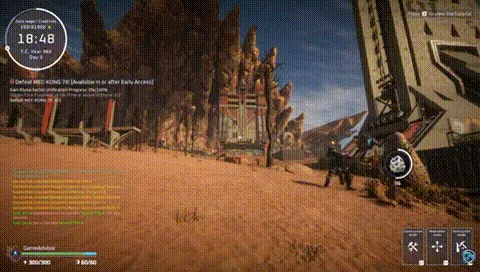
The game’s defining feature is the way these two genres are connected. Inside the colony, gameplay resembles a management simulator where players turn a handful of survivors into a self sustaining state by assigning citizens to mine resources, manufacture weapons and supplies, research technologies and perform other essential tasks. Players also make decisions involving laws and public amenities, with these choices affecting citizens through comfort or fear. Outside the colony, the game shifts into first person combat, with the player personally entering battlefields alongside conscripted soldiers while fighting infantry, tanks, mechs and other forces under chaotic, bullet hell conditions.
This creates a two way gameplay loop in which colony management and combat directly support one another. Resources, technologies and core fragments gained from expeditions can strengthen the colony, while infrastructure, production and research can improve the player’s military capabilities. The developers describe the experience as combining base building, citizen management and first person chaotic battlefields, meaning the player constantly moves between building the machinery of an authoritarian state and personally enforcing its power on the front lines.

How Colony Management, Combat, and Roguelite Progression Work in Pax Autocratica
Building and controlling a colony in Pax Autocratica combines resource management, infrastructure development, military organization, and political control. Players begin with a small group of survivors and must first establish the basic conditions needed to keep the settlement functioning. This includes constructing shelters and assigning citizens to essential jobs such as mining ore, growing food, crafting weapons, and conducting research. Every worker represents part of the colony’s limited population, so assigning too many people to one task may leave another important area without enough support.
As the population grows and more resources become available, the settlement develops into a larger and more tightly managed state. Basic production gradually expands into organized supply chains supported by specialized facilities, research projects, and infrastructure. Food keeps citizens and soldiers supplied, mined materials support construction, and manufactured equipment prepares the regime for future expeditions. Colony growth is therefore not simply about placing more buildings. Players must ensure that each part of the settlement contributes to the regime’s survival, political stability, and military expansion.
Economic management is only one part of maintaining power. Players can issue laws, distribute propaganda, establish surveillance, and influence the population through fear, indoctrination, punishment, or benevolence. Harsh penalties may suppress immediate dissent, while comforts and favorable treatment can encourage gratitude and loyalty. These choices affect how citizens view the regime, creating a population that may become grateful, fearful, devoted, or quietly rebellious depending on how people are treated and what conditions they are forced to endure.
Maintaining control requires balancing these different methods rather than relying entirely on one approach. Fear may keep citizens obedient without making them loyal, while generous treatment may improve morale without removing every source of opposition. If dissatisfaction reaches a critical point, unrest can develop into open revolt and threaten the stability of the colony. Morale and political control are therefore as important as food production, industrial growth, research, and military strength. A productive settlement can still become unstable when its citizens no longer accept the conditions imposed upon them.
Citizens also connect the colony directly to the game’s combat system. They can be assigned to labor, used to support production, or drafted into the armed forces. Recruiting more soldiers may strengthen an expedition but reduce the number of workers available to mine resources, grow food, or manufacture supplies. Players must decide how much of the population can be committed to military service without weakening the systems that allow the regime to continue functioning.
Captured enemy soldiers introduce another layer of political and military management. Prison facilities can be used to hold them, after which players may choose to indoctrinate, execute, or convert them. Converting prisoners can increase the regime’s available manpower, while other decisions may be used to reinforce fear or remove potential threats. Building the colony therefore involves more than expanding infrastructure and increasing production. Players are also shaping the political and social conditions of the population while deciding how much force, persuasion, surveillance, or comfort is necessary to preserve an authoritarian state.
Combat takes place through roguelite first-person shooter expeditions in which players personally enter battlefields alongside soldiers recruited from their regime. Encounters are designed to be fast and chaotic, with enemies using bullets, lasers, missiles, drones, and artillery in overlapping patterns that create a bullet hell atmosphere. Smaller engagements can quickly develop into larger mechanized battles involving infantry, vehicles, tanks, and massive mechs, forcing players to remain mobile while responding to threats arriving from several directions.
The military science-fiction arsenal combines conventional firearms with heavier and more advanced weapons, although a complete list of individual weapon names has not been provided. Weapons can be modified through Cores collected during expeditions, allowing players to change how particular guns operate. These upgrades can support different approaches to combat rather than simply increasing basic damage, giving players opportunities to experiment with weapon behavior and build combinations that suit their preferred style.
Other Core types expand this customization beyond individual firearms. Combination Cores create synergies between weapons, skills, and supporting systems, while troop-focused improvements can strengthen friendly soldiers or increase their ability to protect the player. Selecting compatible upgrades can therefore be more effective than choosing unrelated improvements based only on their individual strength. A successful build may combine a modified weapon with abilities and troop bonuses that support the same battlefield strategy.
Players serve as both frontline fighters and battlefield commanders. While directly controlling their character from a first-person perspective, they can issue orders to friendly units and place them where they are most useful. Soldiers can attack enemies, secure objectives, draw attention away from the player, and absorb incoming damage. They can also be treated as expendable shields when protecting the regime’s leader becomes more important than preserving individual troops.
This command system links military preparation with moment-to-moment combat. The number and quality of soldiers available during an expedition depend partly on how the colony has been managed, while battlefield orders determine whether those forces are used effectively. A large army can still be wasted through poor positioning, while a smaller group may survive longer when assigned to suitable objectives and defensive roles. Future updates are expected to introduce co-op play, allowing another human player to join expeditions and command soldiers alongside the host.
Each expedition functions as a roguelite run that ends when the player dies or chooses to withdraw. Continuing deeper into a battlefield may produce more valuable rewards, but it also increases the possibility of losing the run before escaping. Withdrawing allows the player to preserve progress already gained, creating a recurring decision between returning safely and taking greater risks in pursuit of additional Cores or battlefield advantages.
Failure does not erase everything the player has achieved. Cores collected during expeditions provide persistent improvements that can strengthen both the playable character and the colony. These permanent upgrades allow later attempts to begin from a more powerful position, even when an earlier expedition ended in defeat. Changing battlefield layouts and variations in enemy encounters also help prevent repeated runs from unfolding in exactly the same way.
Colony development, political control, military recruitment, and combat progression are therefore parts of one continuous system. Citizens and resources support expeditions, while successful runs return upgrades that improve the wider regime. Drafting too many workers may weaken production, neglecting public control may create rebellion, and failing to equip soldiers properly may reduce their usefulness in battle. Progress depends on maintaining the entire authoritarian structure rather than treating colony management and first-person combat as separate activities.

Pax Autocratica Story, Early Access Release, Platforms, and Hybrid Gameplay
Pax Autocratica uses its story as a darkly humorous and satirical framework for its interconnected gameplay systems. Players take control of an authoritarian regime tasked with restoring what it describes as “rightful order” across the Tyris System. Instead of presenting a fixed sequence of heavily scripted events, the game allows its narrative to develop largely through the player’s decisions. Commanding armies, issuing laws, expanding territory, and managing the population all influence how the regime grows and how the people living under it respond.
The player’s rise to power and continuing reign are chronicled through the narrator and propaganda posters, strengthening the game’s parody of fascist propaganda and political messaging. Each campaign can therefore produce a different account of the regime depending on how the colony is governed. Citizens may become loyal, fearful, grateful, or rebellious based on the laws, punishments, comforts, and political controls imposed upon them. Beyond the central premise of expanding authority and subduing populations, there is no completely fixed plot. The player’s actions determine whether the regime is remembered as powerful, unstable, feared, or unexpectedly benevolent.
What distinguishes Pax Autocratica from many other strategy and shooter games is its combination of colony management, social control, first-person combat, and roguelite progression. One part of the game may involve assigning citizens to grow food, harvest ore, construct facilities, conduct research, or manufacture military supplies. The player can then leave the colony and personally enter a battlefield, fighting alongside troops against increasingly dangerous enemy forces. These two sides of the experience are directly connected rather than functioning as separate modes.
Successful expeditions can provide resources, equipment, and opportunities that support further colony growth, while poor preparation can weaken the regime’s ability to continue expanding. A shortage of food, workers, weapons, or research may affect the strength of future military operations. At the same time, victories outside the colony can supply the materials needed to improve production, expand facilities, and strengthen political control. This creates a continuous progression loop in which strategic decisions influence battlefield performance and combat results determine what can be achieved at home.
Authoritarian policies are also built into this system rather than being limited to the story’s background. Laws, propaganda, surveillance, fear, punishment, and benevolence can all influence citizen behavior. Players must decide whether to maintain order through intimidation, improve living conditions to encourage cooperation, or combine both approaches depending on the needs of the colony. These choices affect more than the tone of the campaign because the population provides the workforce, resources, equipment, and soldiers required for continued expansion.
Poor management can destabilize the colony, reduce productivity, and encourage rebellion. Excessive punishment may create fear while also increasing resentment, whereas generous treatment may improve public support without guaranteeing complete obedience. The player must therefore balance political control with practical survival. A regime that expands too quickly without maintaining food production, infrastructure, or citizen loyalty may struggle to support its armies, while a stable colony can provide the foundation for stronger expeditions and additional territorial growth.
The roguelite structure reinforces this relationship between combat and long-term development. Failed expeditions do not erase everything the player has achieved because collected Cores can provide permanent improvements to both the character and the colony. This allows individual runs to remain dangerous without making every defeat a complete reset. Even when an expedition ends unsuccessfully, the resources or upgrades gained during it may make the next attempt more manageable.
Changing battlefields and enemy encounters are intended to keep repeated expeditions from following exactly the same pattern. Players can experiment with different weapons, abilities, troop arrangements, and battlefield strategies while gradually improving the regime through persistent upgrades. A failed approach can be adjusted during the next run, allowing players to change their equipment, strengthen particular systems, or organize their soldiers differently without losing all long-term progress.
Pax Autocratica officially launched through Steam Early Access on August 10, 2026. Developer Multiverse expects the Early Access period to last approximately two years while it balances the game’s interconnected systems, responds to community feedback, and adds further content. Because colony management, citizen behavior, military expansion, and first-person combat all affect one another, the development period gives the studio time to refine how those systems interact.
The Early Access price was listed at $29.99, with an increase planned when the full version launches. The August 2026 release is therefore not the completed 1.0 edition. Players purchasing the current version are gaining access while development continues, meaning balancing, features, content, and other parts of the experience may change before the final release.
At its Early Access launch, Pax Autocratica is available on Windows PC through Steam, with an Epic Games Store release also planned. No versions have been announced for Xbox, PlayStation, or Nintendo Switch 2, so players who want to access the current build need a compatible Windows PC. Multiverse also plans to introduce online co-op during development, allowing another player to join expeditions and lead soldiers alongside the host. This would expand the battlefield side of the game while preserving the connection between military operations, colony growth, and the political decisions shaping the regime.

Frequently Asked Questions (FAQs)
- Is Pax Autocratica multiplayer or single-player?
Pax Autocratica is currently a single-player game, so players cannot play through its campaign with other people at this stage. The developers have announced plans to add co-op multiplayer during Early Access, meaning another player is expected to be able to join the experience in a future update. However, that feature is not available yet, so the current version should be treated as a single-player experience. - How long will Pax Autocratica stay in Early Access?
According to the developers, Pax Autocratica is expected to remain in Early Access for around two years. This period will allow the team to continue adding content, balancing its colony management and FPS systems, and improving the game based on community feedback. The two-year estimate is not a fixed full-release date, so the final launch could change depending on development progress. - Who is making Pax Autocratica?
Pax Autocratica is developed and published by Multiverse, an independent studio that has positioned the game around its unusual combination of genres and satirical take on authoritarian power. The team has also interacted directly with players, including through a Reddit AMA hosted by one of the lead developers on launch day. This provides players with a direct source of information about the game’s development and planned features. - Does Pax Autocratica have mod support or custom content?
Official mod support has not been announced for the Early Access release. The developers are currently focused on balancing the game’s core systems and expanding its content, so there is no confirmed framework for players to create or install custom content. Its combination of colony management, citizen systems, weapons and roguelite mechanics could potentially provide opportunities for modding later, but that has not been confirmed by the developers. - Are there difficulty settings?
Yes, Pax Autocratica offers multiple difficulty options that allow players to adjust the challenge. The game’s first-person combat can become particularly demanding because enemies attack with large volumes of bullets, lasers, missiles and other hazards, while the roguelite structure means that a failed expedition can end a run. Even at normal difficulty, players who enter battles without properly preparing their colony, weapons and troops can face a significant challenge. - Can you rescue or convert enemy soldiers?
Yes. Players can capture weakened enemy soldiers and bring them back to their colony, where they can be placed in prison facilities. From there, captured enemies can be converted or indoctrinated into the regime, while execution is another available option. This mechanic connects battlefield decisions directly to colony management, allowing defeated enemies to become another resource for expanding or enforcing the player’s regime. - Is there an end to the game?
The Early Access version focuses on the prologue campaign and the core gameplay loop, while the developers plan to add additional missions and narrative content during development. Players can continue expanding their colony and fighting through expeditions rather than reaching a fully developed final campaign at this stage. A more complete ending or additional concluding story content is expected to come with later development, but the final structure has not yet been established. - What platforms will the final release support?
Windows PC is currently the only confirmed platform, and no console, Mac or Linux versions have been announced. The developers are concentrating on the PC version during Early Access, so players should not assume that Xbox, PlayStation or Nintendo versions will be available at launch. Future platforms have not been ruled out, but there is currently no confirmed schedule for them. - Does the game contain mature content?
Yes. Pax Autocratica is designed for mature audiences and includes themes involving totalitarian government, propaganda, violence and execution, alongside its darkly satirical tone. The store page also includes warnings for flashing lights and strong language. These elements are closely connected to the game’s central premise, as players are deliberately given control over harsh methods of maintaining an authoritarian regime. - Will my save data carry over to the full release?
There is currently no confirmed guarantee that Early Access save data will carry over to the full release. Because the game is still being developed, changes to its systems, progression and save structure could require existing progress to be reset or modified. Players should therefore treat their current save as potentially temporary until the developers provide a definitive statement about how progression will be handled at launch.

Conclusion
Pax Autocratica stands out as an ambitious genre mash-up: part political simulator, part fast-paced shooter, all wrapped in satirical commentary on dictatorship. Its early access version already offers a robust blend of colony management and roguelite FPS combat. The developers encourage player feedback and plan many updates, including co-op multiplayer and additional content. Early player reviews are highly positive, noting the game’s novel concept and polished mechanics. In conclusion, for players interested in strategy, base-building, and high-octane FPS action – all framed within a tongue-in-cheek totalitarian theme – Pax Autocratica is a promising title to watch as it develops toward full release.
Sources and Citations
- Pax Autocratica – Steam Store Page
- https://store.steampowered.com/app/1067360/Pax_Autocratica/
- Pax Autocratica – Steam “About This Game” Description
- https://store.steampowered.com/app/1067360/Pax_Autocratica/
- Pax Autocratica – Epic Games Store Overview
- https://store.epicgames.com/p/pax-autocratica-4160ec
- Phenixx Gaming News – “Pax Autocratica Gets Early Access Launch Date”
- https://web.phenixxgaming.com/2026/07/22/pax-autocratica-gets-early-access-launch-date/
- Reddit AMA with Pax Autocratica Developer
- https://www.reddit.com/r/Games/comments/1vkcn3d/ama_developer_of_pax_autocratica_here_a/
- NintendoEverything – “It Takes Two seemingly coming to Nintendo Switch 2”
- https://nintendoeverything.com/it-takes-two-seemingly-coming-to-nintendo-switch-2/
- MyNintendoNews – “It Takes Two appears to be coming to Nintendo Switch 2”
- https://mynintendonews.com/2026/08/10/it-takes-two-appears-to-be-coming-to-nintendo-switch-2/
- Nintendo Switch 2 – Specifications on Wikipedia
- https://en.wikipedia.org/wiki/Nintendo_Switch_2
- Pure Nintendo – “Review: It Takes Two (Nintendo Switch)”
- https://purenintendo.com/review-it-takes-two-nintendo-switch/
Recommended
- GTA 6 Preorders Begin June 25 with Ultimate Edition, Prices, Bonuses, and Midnight Launch Details
- Goat Simulator 3: Goat Overload Edition Physical PS5 Release Explained, Full Content List, DLC Packs, and Release Date Details
- Virtual Influencers: AI-Generated vs 3D-Modeled – Which Is Better?
- Crimson Desert Controls Backlash Explained: Why Mixed Steam Reviews Keep Focusing on One Major Problem
- Assassin’s Creed Black Flag Resynced Real-Life Treasure Hunt Details Explained
- ReStory: Chill Electronic Repair Guide: Release Date, Demo, Gameplay, and Features
- Japan Asks the US Government to Stop Using Anime and Gaming IPs in Political Content
- How Embark Studios Used Unreal Engine To Create ARC Raiders: Technology, Optimization, and Game Design
- Zen UV 5.3.1 For Blender Released: Blender 5.1 Support and Hotfixes Explained
- Christopher Nolan Confirms the Odyssey Runtime is Shorter than Oppenheimer but Still an “Epic Film” ([AP Summer Movie Preview])



































































































