










PokéStop on Epstein Island (Little Saint James)
In early 2026, Pokémon GO players discovered a PokéStop on Little Saint James, the private Caribbean island formerly owned by convicted sex offender Jeffrey Epstein. Known as “Epstein Island,” the location was the site of alleged sex trafficking operations. The PokéStop, labeled “Sun Dial,” allowed players to collect in-game items at a real-world monument on the property. Following viral social media outrage, Niantic (under Scopely ownership) removed the PokéStop by February 9, 2026, acknowledging it was an inappropriate location for the game.
In This Article (15 sections)
The “Sun Dial” PokéStop Landmark
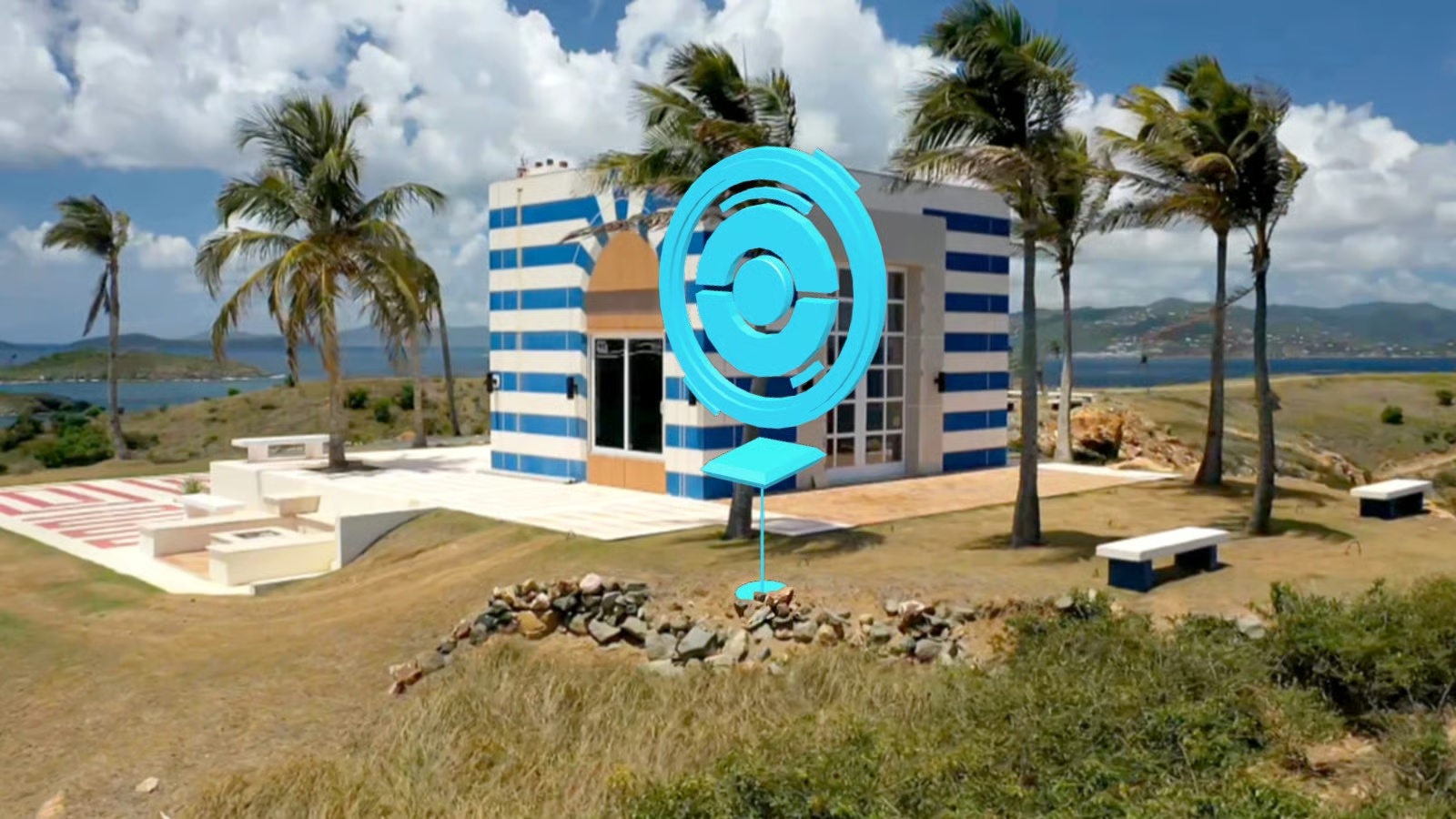
The PokéStop was centered on a large, circular concrete sundial located on the island. This landmark featured:
- A painted sunburst pattern with a human-like face design in the center.
- A steel gnomon and surrounding colored benches and stones.
- An in-game photo reportedly sourced from a 2019 drone video.

How Players Discovered the Location
The PokéStop was identified by the GPS “spoofing” community, who use third-party apps to faking their location.
- February 4, 2026: A member of the r/PokemonGoSpoofing Reddit community prompted a search for the island.
- Proof: Spoofers confirmed the “Sun Dial” was active, sharing screenshots and videos of the PokéStop and Pokémon spawns on the island’s shores.
- Timing: Public interest was high due to the U.S. DOJ releasing millions of pages of leaked Epstein files in late January 2026.
Backlash and Virtual “Pilgrimage”
The discovery led to a surge in virtual visitors who spoofed their location to “Epstein Island” to collect items and send in-game postcards. This behavior and the PokéStop’s existence triggered significant backlash:
Niantic’s Response: Although the PokéStop was created through an automated user-submission system rather than direct intent, Niantic recognized the error and deleted the point of interest within days of the viral reports.
Community Outrage: Players and observers found the link between a family-friendly game and a site of child exploitation to be “deeply uncomfortable” and “tone-deaf.”
Social Media Reaction: Viral posts on Twitter/X and Reddit condemned the oversight, demanding immediate removal.

Why Niantic removed the Epstein Island PokéStop after outrage
Following widespread public outcry, Niantic took decisive action to remove the Epstein Island PokéStop. By February 9, 2026, the Pokémon GO team confirmed the controversial location had been deleted. The removal was prompted by both the negative publicity and the fact that the location violated internal content policies regarding inappropriate or unsafe sites.
- Acknowledgment of Error: Niantic admitted the PokéStop “never should have been approved” and characterized its inclusion as an oversight from a previous user-submission.
- Reporting and Verification: The removal followed a surge of player reports through the app’s reporting tool and inquiries from media outlets.
- Policy Enforcement: Niantic emphasized that the site’s association with Jeffrey Epstein made it fundamentally unsuitable for the game, leading to its immediate removal once verified.
Timeline of events: The Epstein Island PokéStop
The following timeline details how the PokéStop was created, discovered, and eventually removed:
- July 2016: Pokémon GO launches. Shortly after, Jeffrey Epstein mentions the game in an email to a contact in Qatar, showing early awareness of the title.
- 2019: Drone footage of the island is uploaded online, providing the visual asset later used for the PokéStop nomination.
- 2020–2021: A player nominates the “Sun Dial” via Niantic’s database (likely through Ingress). The nomination is mistakenly approved, creating a virtual point of interest on the private island.
- 2022–2023: The PokéStop exists but remains obscure, known only to a small number of spoofers and reviewers.
- January 30, 2026: The U.S. DOJ releases 3 million pages of Epstein-related documents, renewing intense public interest in his properties and communications.
- February 4, 2026: A Reddit user prompts the spoofing community to investigate the island. Players confirm the “Sun Dial” PokéStop exists and begin sharing screenshots.
- February 7, 2026: The story goes viral on Twitter/X and mainstream gaming news outlets like Gamingbible report on the situation, reaching out to Niantic for comment.
- February 8, 2026: Backlash intensifies; players use in-app reporting tools to flag the location while Niantic begins an internal investigation.
- February 9, 2026: Niantic removes the PokéStop from the game. By that morning, it no longer appears on the map, and the company confirms to journalists that it has been deleted.
- February 10–12, 2026: Worldwide media coverage details the removal, the virtual “pilgrimage” by spoofers, and Niantic’s acknowledgment of the error.
Niantic Wayfarer and player nominations
Niantic does not manually place PokéStops; instead, it utilizes Niantic Wayfarer, a crowdsourced platform where players nominate real-world locations.
- The Process: Experienced players (Level 37+) submit a photo, title, and description of a “Wayspot.” Fellow community members then vote on whether it meets specific criteria.
- Criteria: Locations must be unique, culturally significant, and have “safe pedestrian access.”
- The Oversight: The “Sun Dial” was likely submitted by a player and approved by community reviewers who did not recognize the location as Jeffrey Epstein’s private property. While the system has added millions of legitimate stops, “troll” or inappropriate nominations can occasionally slip through if they appear benign on the surface.

Ingress data and Pokémon GO PokéStops
Many PokéStops, including the one on Little Saint James, originated in Ingress, Niantic’s first AR game.
- Shared Database: Niantic maintains a unified database of approved “Wayspots.” When an Ingress player (an “agent”) had a portal approved in 2020–2021, it automatically became a PokéStop in Pokémon GO through an automated data-sharing process.
- Lack of Manual Check: Because the transfer is automated, there was no additional human verification by Niantic when the “Sun Dial” transitioned from an Ingress portal to a Pokémon GO PokéStop.
- Retroactive Acknowledgment: Niantic later admitted the portal’s initial approval in the 2020–21 timeframe was a mistake that occurred because the location remained under the radar of internal sensitive-location filters.
How to report an inappropriate PokéStop or request a location removal
The Epstein Island case highlights that Pokémon GO’s map is dynamic and subject to errors. Niantic provides several tools for players and property owners to flag problematic locations for review.
- In-Game Reporting: Players at Level 35 or higher can report issues directly within the app. By selecting a PokéStop or Gym and using the “Report” menu, users can flag a location as “Invalid.” Reasons for reporting include “No safe pedestrian access” or being on “Private residential property.”
- Support Website: Non-players or those below Level 35 can use the Niantic Help Center’s online support form. This is the primary route for property owners to request modifications or removals by providing the PokéStop name, coordinates, and reason for the request.
- Valid Reasons for Removal: Niantic typically approves removal requests if the location:
- Lacks safe pedestrian access.
- Interferes with emergency services (hospitals, fire stations, etc.).
- Is on private residential property (within 40 meters of a single-family home).
- No longer exists in the real world.
- Contains inappropriate or sensitive content.
- The Review Process: Once reported, Niantic’s team cross-checks the site using tools like Google Maps. If a violation is confirmed, the PokéStop is removed from the game, often within a few days to two weeks. In the case of Little Saint James, a high volume of reports likely accelerated the removal.
- Community Moderation: Niantic relies on high-level players to act as crowdsourced moderators. Reporting inappropriate or dangerous PokéStops helps maintain the integrity and safety of the game’s map.
In summary, reporting a bad PokéStop is straightforward: use the in-app report if you can, or the online form if you can’t. Niantic will remove a PokéStop for the reasons listed above – all rooted in safety, property rights, and game integrity. The company won’t remove PokéStops just because someone doesn’t like the crowd it brings (they try not to remove valid public points of interest without strong cause), but if there’s a legitimate concern, they do act.
In the case of Little St. James, player reports and media attention surely alerted Niantic, and the “no safe access” rule clearly applied, so removal was swift. If you find any PokéStop that you think “how is that allowed?”, chances are it might not be – and you now know how to inform Niantic about it.

Niantic’s Response and Confirmation of Removal
Niantic’s official response confirmed the removal of the Epstein Island PokéStop as a correction of a mistake.
- Official Statement: On February 9, 2026, Niantic (under Scopely) confirmed to major news outlets like Forbes and Polygon that the “Sun Dial” PokéStop had been deleted.
- Reasoning: The company acknowledged the location was added years ago via user submission and admitted it “never should have been approved” because it violated safety and appropriateness policies.
- Standard Practice: Niantic noted that they regularly “scrub” invalid waypoints, particularly those lacking public pedestrian access, and community reporting accelerated this specific action.
Scopely and Pokémon GO Operations
The removal was confirmed during a period of transition for the game’s ownership.
- Ownership Change: In May 2025, Scopely acquired Niantic’s game division for $3.5 billion. While the original Niantic teams still develop the game, it is now managed under the Scopely corporate umbrella.
- Clarification of Authority: Reports mentioning both Niantic and Scopely refer to the same operational team. Scopely’s involvement ensures the game has additional resources, but the core design and community policies remain rooted in Niantic’s legacy.
Jeffrey Epstein’s Mentions of Pokémon GO in Emails
Leaked documents revealed that Jeffrey Epstein was aware of the game during its 2016 launch.
- Qatar Correspondence: On July 13, 2016, Epstein emailed a member of the Qatari royal family, recommending they “check out pokemon go” as the “first of augmented games.”
- Deepak Chopra Exchange: Epstein discussed AR technology with Deepak Chopra, suggesting an app to view human “auras” through a phone. He explicitly cited Niantic’s success as a model for how such an app could “take the market by storm.”
- Context: These references suggest Epstein was a tech-trend observer rather than a player. There is no evidence he directly interacted with the game’s community or mechanics.
Future Status and Re-nomination Restrictions
The removal of the Epstein Island PokéStop is considered final, and its return is highly unlikely.
Brand Protection: The Pokémon Company and Scopely have strong incentives to keep the game dissociated from the island to maintain a family-friendly image. Even if the island were to open to the public in the future, the location’s reputation makes its return as a PokéStop improbable.
Finality of Removal: Unlike rejected nominations, which can be appealed, locations removed for cause (such as policy violations or lack of access) are rarely reinstated.
System Safeguards: Reviewers in the Niantic Wayfarer community are now hyper-aware of the location. Any future attempts to nominate the “Sun Dial” would likely be rejected immediately by the community or blocked by Niantic’s internal filters.
In conclusion, don’t expect the Epstein Island PokéStop to ever come back. The removal is effectively permanent. Niantic/Scopely fixed the glitch and will move on, and the community has little appetite to revisit it. This was a one-time oddity in Pokémon GO’s history. If anything, it has prompted Niantic to be more vigilant and for reviewers to be more careful, which will prevent similar cases. So, consider the Sun Dial PokéStop retired – it now lives only in screenshots and the memories of those virtual Poké tourists who briefly “vacationed” on Epstein’s island. And that’s for the best.
Frequently Asked Questions (FAQs)
- Was there really a Pokémon GO PokéStop on Jeffrey Epstein’s private island?
Yes. Little Saint James did have a PokéStop called the “Sun Dial” until it was removed in February 2026. Niantic/Scopely deleted it once the location became public knowledge and sparked outrage. - Why was there a PokéStop on Little St. James (Epstein Island) in the first place?
It was added through Niantic’s player-submission system, Wayfarer. A player nominated the island’s sundial around 2020, likely via the game Ingress. The nomination was mistakenly approved by community reviewers and slipped through Niantic’s safeguards. - How did players even discover the Epstein Island PokéStop?
The Pokémon GO spoofing community uncovered it. In early February 2026, a Reddit user prompted an investigation, leading players to use GPS spoofing to check the coordinates. They shared verified screenshots that quickly went viral. - What exactly was the “Sun Dial” PokéStop on Epstein’s island?
It referred to a large circular concrete sundial sculpture on the island. The in-game PokéStop featured a photo of this landmark, which is one of the estate’s most distinctive structures. - Why did players use GPS spoofing to visit Epstein Island in Pokémon GO?
Since the island is private and physically inaccessible, the only way to reach it in-game was to fake GPS coordinates. Spoofers teleported their avatars there to verify the rumors, spin the stop, and catch Pokémon. - Why did having a PokéStop on Epstein’s island cause outrage?
Due to the island’s association with horrific crimes against minors, players found its inclusion in a family-friendly game deeply inappropriate. The community felt the game was inadvertently linking itself to a site of abuse, violating both game guidelines and public decency. - When was the Epstein Island PokéStop removed from Pokémon GO?
It was removed on February 9, 2026. This action occurred just days after the discovery went viral on social media. - How did Niantic (or Scopely) respond to the Epstein Island PokéStop issue?
Developers acted quickly, confirming the removal on February 9, 2026. They stated the location was an oversight that violated their criteria and should never have been approved. - Did Jeffrey Epstein ever talk about Pokémon GO or play it?
Epstein mentioned the game in July 2016 emails, recommending it to a Qatari prince as a pioneering augmented reality title. He also discussed AR concepts with Deepak Chopra. However, there is no evidence he actually played the game. - Can the PokéStop on Epstein’s island ever come back or be added again?
No. It is permanently removed. It fails “safe pedestrian access” and suitability rules, and any future nominations would be rejected by the community or blocked by Niantic’s filters.

Conclusion
The Epstein Island PokéStop incident serves as a prominent example of how user-generated content can create unintended results in augmented reality games. An innocent nomination for a sundial eventually placed a Pokémon GO marker on an infamous private island, highlighting both the strengths and vulnerabilities of Niantic’s crowdsourced mapping system.
- Community Vigilance: The discovery and subsequent removal underscored the role of the player community in identifying and flagging inappropriate locations.
- Developer Response: Niantic’s (and Scopely’s) quick action reinforced their commitment to maintaining appropriate game spaces and adhering to safety policies.
- Future Implications: This event is expected to lead to stricter diligence regarding sensitive locations and a renewed focus on “safe pedestrian access” guidelines for Wayfarer reviewers.
- Final Status: Little Saint James has been permanently removed from the game’s map, allowing the focus to return to exploration in appropriate real-world locales.
Ultimately, this episode sparked necessary conversations about the responsibilities involved in curated, crowdsourced content. The incident helped refine the processes that maintain Pokémon GO’s integrity, ensuring that the virtual world remains a safe and fun environment for all trainers.
Sources and Citations
- Kotaku – Lewis Parker, “Pokémon Go Players Kept Swarming The Epstein Island Pokéstop, Forcing Devs To Remove It” (Feb. 10, 2026)
- GamingBible – Sara Heritage, “Epstein Island Apparently Has a Pokémon GO PokéStop, Yikes” (Updated Feb. 9, 2026)
- dev.ua – Olexandr Kuzmenko, “Pokémon Go developers removed Pokestop from Epstein Island” (Feb. 12, 2026)
- GoNintendo – Rawmeatcowboy, “Pokémon GO team removes PokéStop that appeared on Epstein Island” (Feb. 10, 2026)
- KGTV 10News (San Diego) – Michael Rozzen, “Fact or Fiction: Pokémon GO had stop on Epstein Island?” (Feb. 12, 2026)
- Niantic Help Center – “Reporting PokéStop or Gym Issues”
- Reuters – Rishi Kant, “‘Pokémon Go’ maker Niantic to sell game division to Saudi-owned Scopely for $3.5 billion” (Mar. 12, 2025)
- Wikipedia – “Little Saint James” (Epstein Island)
Recommendations
- 007 First Light Official Release Date (May 27, 2026), State of Play 2026 Trailer Breakdown, and Community Reaction
- Pokémon XD: Gale of Darkness Now Available on Nintendo Switch 2 – How to Play, Features, and Everything You Need to Know
- Marvel Tōkon: Fighting Souls Reveals Several Characters: Full Roster Talk and Gameplay Breakdown
- How to Create Realistic Hair Clumping in Blender: A Step-by-Step Guide
- Bridgerton and Star Wars Stars Join The Last of Us Season 3 as Lev and Yara: Cast, Characters, and What It Means
- Samsung’s 2026 Micro RGB TVs: Release Date, Sizes, Pricing, and How Micro RGB Compares to OLED
- Crimson Desert Patch Next Week: Difficulty Settings and Inventory Tabs
- Plants vs Zombies 3 Soft Launch Returns Again as PvZ 3: Evolved Reappears After Years of Reworks
- PlayStation 3 Just Got An Update: PS3 System Software 4.93 Patch Notes, Download, and What Changed
- Creating 90’s Anime Style in Blender: A Comprehensive Guide to Achieving Retro 2D Aesthetics with Modern 3D Tools



































































































