




In This Article (8 sections)
Project Mara’s Cancellation and Ninja Theory’s Shift in Priorities
Ninja Theory’s experimental horror project, known as Project Mara, has officially been cancelled, according to statements from the studio’s leadership in 2026. The game had been in development for several years after its initial reveal, but it has now been shelved as part of a strategic restructuring within the studio.
Project Mara was originally described as a highly experimental, photorealistic psychological horror experience built around deeply immersive storytelling and real-world mental horror representation. Despite early excitement, the project gradually faded from public updates, and by 2026, confirmation arrived that development had stopped entirely.
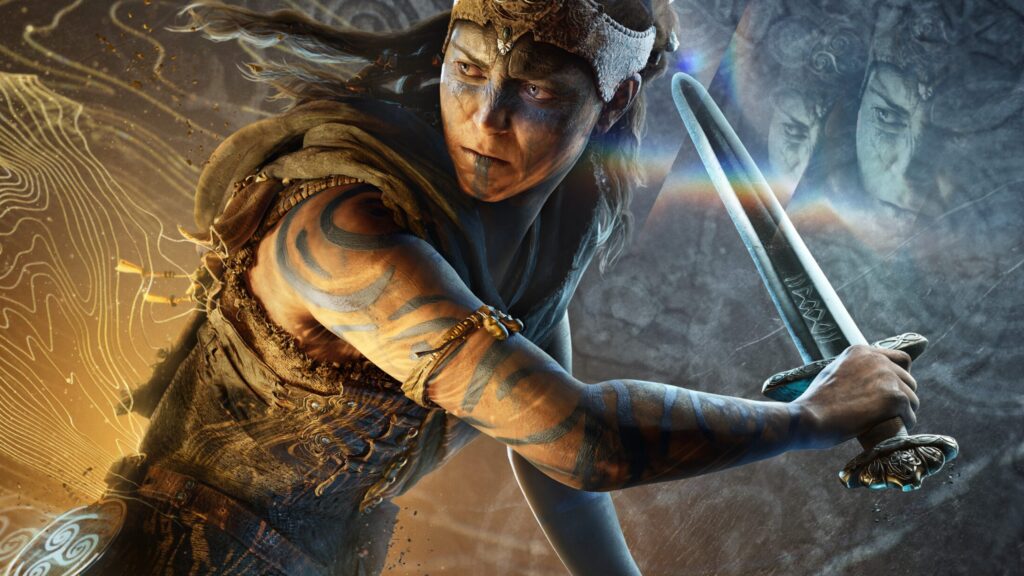
The cancellation does not appear to be tied to a single failure point. Instead, it is largely attributed to resource allocation and evolving studio priorities. Ninja Theory has increasingly focused on high-budget, narrative-heavy experiences such as Senua’s Saga: Hellblade II, along with the continued expansion of the Senua franchise and other established collaborations under Xbox Game Studios.
As AAA development timelines continue to grow, studios often face difficult decisions about which projects can realistically be completed without compromising quality. Project Mara, while innovative, required substantial research, technology development, and experimentation in photorealism and psychological horror design. Ultimately, the studio appears to have determined that continuing Project Mara would dilute focus from other flagship projects already in production.

Why Ninja Theory Shelved Project Mara and Prioritized Senua’s Saga
According to statements from studio leadership, the decision to shelve Project Mara was not made lightly. The studio head emphasized the need to prioritize projects that aligned more directly with Ninja Theory’s long-term vision and current production commitments. The explanation centered on three core reasons: concentrating talent on existing narrative franchises, the technical complexity and cost of achieving Project Mara’s realism goals, and strategic alignment with Xbox Game Studios’ broader release roadmap.
One of the most important factors behind the cancellation was the relationship between Project Mara and Senua’s Saga: Hellblade II. Both projects shared overlapping creative teams, engine advancements, and narrative design philosophies. However, Hellblade II was a confirmed flagship title with strong publishing backing, while Project Mara remained experimental. As production demands increased for Hellblade II, resources, including senior developers, artists, and technical engineers, were gradually reassigned away from Project Mara, making it increasingly difficult for the project to maintain momentum.
Senua’s Saga represents one of Ninja Theory’s most important intellectual properties. With its critical acclaim and strong fanbase, it carries significant commercial and artistic expectations. The decision to prioritize it over Project Mara was driven by higher market demand and franchise value, stronger publishing commitment from Xbox Game Studios, a clearer production timeline and deliverables, and an established narrative universe compared to an experimental IP. In contrast, Project Mara lacked a finalized gameplay loop or monetization structure, making it harder to justify continued large-scale investment.
The studio head also noted that experimental projects often serve as “creative testbeds.” While Project Mara is no longer in active development, its innovations may still influence future games.
Project Mara’s Experimental Horror Vision, Development History, and Prototype Status
Project Mara was originally designed to push the boundaries of psychological horror by removing traditional horror elements such as monsters, combat systems, and scripted jump scares. Instead, the game focused on hyper-realistic environments based on real-world scans, a single-character psychological experience, minimal UI design to enhance immersion, and the exploration of mental distress through environmental storytelling. Its goal was to simulate fear through realism rather than fiction, placing it in a niche category of experimental horror distinct from mainstream survival horror franchises.
The project was first revealed around 2020 as a conceptual prototype, showcasing early in-engine visuals and ambitious design goals. At the time, it generated significant attention for its realistic presentation and psychological depth. Over the following years, however, updates became scarce. While Senua’s Saga: Hellblade II progressed into full production and marketing cycles, Project Mara remained in a quieter experimental phase.
By 2026, after nearly six years of uncertain development progress, Project Mara was officially discontinued. This long timeline reflects the challenges of developing cutting-edge realism technology within a limited experimental framework.
Although Project Mara did reach the prototype and early playable stages, it never evolved into a fully complete or publicly demonstrable game. What existed included internal tech demos, environmental tests, experimental psychological horror sequences, and photorealistic asset pipelines. However, it never reached a polished, content-complete state suitable for release or public hands-on demos, placing it closer to an advanced prototype than a traditional production-ready title.
Fan Reaction, Xbox Strategy, and What Project Mara’s Cancellation Means for Ninja Theory
Fan reaction to Ninja Theory cancelling Project Mara has been mixed. Some players expressed disappointment, especially those who were intrigued by the game’s early concept and visual fidelity. Others were more understanding, citing the studio’s need to focus on completed franchises and established projects. Common reactions included disappointment over the loss of innovation in horror gaming, appreciation for the studio’s transparency, and concern about fewer experimental AAA projects in the industry. Overall, the response reflects a broader tension between innovation and commercial viability in modern game development.
As a first-party studio under Xbox Game Studios, Ninja Theory operates within a wider strategic ecosystem that influences budgeting, production priorities, and release scheduling. Xbox Game Studios’ focus on major flagship titles likely contributed to resource consolidation toward high-impact releases, reduced tolerance for long-term experimental projects, and a stronger emphasis on scalable franchise development. While Xbox has supported creative risks in the past, industry trends increasingly favor projects with clearer commercial outcomes.
The cancellation may also indicate a broader shift in Ninja Theory’s development philosophy. The studio appears to be concentrating on fewer but larger-scale projects, which could suggest a move away from standalone experimental prototypes, an increased focus on cinematic AAA storytelling, and greater integration with Xbox’s global strategy. However, this does not necessarily mean the end of innovation at Ninja Theory. Instead, experimentation may now take place within larger, fully funded titles rather than in separate experimental games.
Project Mara’s Photorealistic Horror Concept, Possible Future, and Industry Impact
One of the defining features of Project Mara was its pursuit of near-photorealistic visual fidelity. The game aimed to recreate environments using real-world scanning techniques to create a highly grounded psychological horror experience. Its key design goals included a real-world-inspired apartment setting, hyper-detailed lighting and texture systems, subtle environmental changes reflecting mental state, and minimalistic narrative delivery. Rather than relying on supernatural elements, the horror was intended to emerge from perception distortion, making Project Mara one of the most unconventional horror concepts in development at the time.
At this stage, there is no official indication that Project Mara will be revived. However, Ninja Theory has suggested that ideas developed during its creation may resurface in future projects. Possible revival scenarios include reworked concepts being integrated into a new IP, technology being reused in future horror or psychological titles, or a spiritual successor emerging rather than a direct continuation. In game development, cancelled projects often leave behind assets and ideas that influence future work, even if the original title never returns.
The cancellation of Project Mara also highlights a growing challenge in the gaming industry: the diminishing space for mid-budget experimental titles. Its cancellation points to reduced visibility for non-commercial prototypes, increased risk aversion among AAA studios, and greater reliance on proven franchises. Even so, it also underscores the importance of experimental development as a foundation for innovation, even when projects do not reach completion.

Frequently Asked Questions (FAQs)
- What is Project Mara?
Project Mara was an experimental psychological horror game developed by Ninja Theory. It was designed as a highly immersive, realistic horror experience focused on mental distress, perception, and environmental storytelling rather than traditional horror mechanics. - Why was Project Mara cancelled?
Project Mara was cancelled because Ninja Theory shifted its priorities toward other major projects. The studio needed to allocate talent, time, and technical resources to titles with clearer production goals, stronger publishing support, and a more direct fit with its long-term strategy. - Was Project Mara fully developed?
No, Project Mara was never fully developed into a complete game. It reached prototype and early playable stages, including internal tests and experimental sequences, but it did not become a polished, content-complete title ready for public release. - When was Project Mara first revealed?
Project Mara was first revealed around 2020. At the time, it attracted attention because of its ambitious visual goals, realistic presentation, and unusual approach to psychological horror. - What type of game was Project Mara?
Project Mara was intended to be a photorealistic psychological horror experience. Instead of relying on monsters, combat, or jump scares, it aimed to create fear through realism, atmosphere, perception distortion, and a grounded environment. - Did Project Mara have combat gameplay?
No, Project Mara was not designed around combat gameplay. Its focus was on immersion, psychological tension, and environmental storytelling, making it different from more traditional survival horror games. - Will Project Mara ever be released?
There are currently no official plans to release or revive Project Mara. While the original project has been cancelled, some of its ideas, technology, or design lessons could still influence future Ninja Theory games. - What replaced Project Mara’s development focus?
Ninja Theory shifted its development focus toward Senua’s Saga and other major titles. These projects had clearer production timelines, stronger franchise value, and greater alignment with Xbox Game Studios’ broader release strategy. - Was Project Mara connected to Hellblade?
Yes, Project Mara and Hellblade were connected in the sense that they shared creative resources, technology, and some design philosophies. However, Project Mara was a separate experimental project, while Senua’s Saga: Hellblade II became a flagship title for the studio. - Could Project Mara’s ideas return in future games?
Yes, Project Mara’s ideas could return in future Ninja Theory projects. Cancelled games often leave behind useful technology, visual techniques, narrative concepts, or design experiments that can be reused or reworked in new titles.

Conclusion
The cancellation of Project Mara reflects the evolving priorities of modern AAA game development, where experimental innovation must often compete with commercial demands and franchise obligations. While the project never reached full release, its ambition and design philosophy contributed to the broader conversation around psychological horror and photorealistic storytelling in games. Ninja Theory’s decision highlights a strategic focus on established franchises, particularly the Senua series, while still leaving open the possibility that Project Mara’s ideas may resurface in future projects in new forms.
Sources and Citations
- Ninja Theory Official Updates and Studio Statements
https://www.ninjatheory.com - Xbox Game Studios Information and Developer Ecosystem Overview
https://www.xbox.com/en-US/xbox-game-studios - General Industry Reporting on Experimental Game Development Trends
https://www.gamedeveloper.com - Unreal Engine Developer Showcases and Real-Time Photorealism Research
https://www.unrealengine.com - Gaming industry analysis coverage and editorial commentary
https://www.polygon.com



































































































