







In This Article (8 sections)
PUBG: DED.NET Overview, Gamescom Reveal, and Horror-Inspired Setting
PUBG: DED.NET takes PUBG into a stranger version of survival: a competitive first-person shooter set in 1996 Cascadia, where improvised weapons, unsettling transformations, and decisions made between matches shape the next confrontation. KRAFTON introduced the game at Gamescom Opening Night Live on August 25, 2026, presenting a new project from PUBG Studios rather than another update to PUBG: Battlegrounds. As of September 17, 2026, closed-beta preregistration is open. However, joining the waiting list does not provide immediate access, and the game’s Steam listing still gives its release date as “To be announced.” Understanding that distinction is essential before planning around a supposed beta weekend or launch date.
PUBG: DED.NET is a standalone multiplayer FPS that combines competitive shooting with roguelite progression. Its developer is PUBG Madison, part of PUBG Studios, and its publisher is KRAFTON. The official description emphasizes experimentation, evolving combat approaches, and progression that connects encounters instead of treating every match as a completely isolated experience. The name also reflects its competitive philosophy. Creative director Dave Curd has explained that “DED” stands for “dog eat dog,” an appropriate description for a game built around ruthless survival and unconventional tactics.
The most useful distinction is between a match and a run. A match is an individual competition against other players. A run is the larger journey that links several matches through a developing character build. Losing one confrontation therefore does not necessarily erase everything that made that particular run interesting. That structure changes the question players ask after defeat. Instead of considering only what went wrong in the last firefight, they can also consider how their next ability choice might change the following match. The potential appeal is not simply being rewarded for losing; it is having another strategic decision to make while the consequences of earlier decisions remain relevant.
The announcement trailer establishes a deliberate break from restrained military presentation. Its imagery includes characters sliding along the ground like snakes, blade-handed combatants, and a small drill-wielding doll driving a toy car. These are not merely unusual costumes surrounding otherwise conventional action; they introduce the game’s interest in abilities that alter how combat encounters unfold. The reveal uses Ministry’s “Jesus Built My Hotrod,” giving the footage an abrasive musical identity. Although the game’s marketing emphasizes grunge, the trailer points toward a broader collection of 1990s influences rather than a presentation restricted to one musical genre.
Additional gameplay appeared during Xbox’s Gamescom coverage on August 27, 2026. That follow-up provided another look at the setting, combat, and build possibilities after the initial Opening Night Live reveal. The announcement trailer and subsequent gameplay presentation should therefore be treated as separate stages of the unveiling. The trailer’s clearest message is about identity: this is a PUBG game willing to make its combatants look grotesque, ridiculous, and dangerous simultaneously. What a promotional montage cannot establish is whether every unusual interaction remains readable and satisfying across repeated competitive matches. That is one of the most important questions for testing.
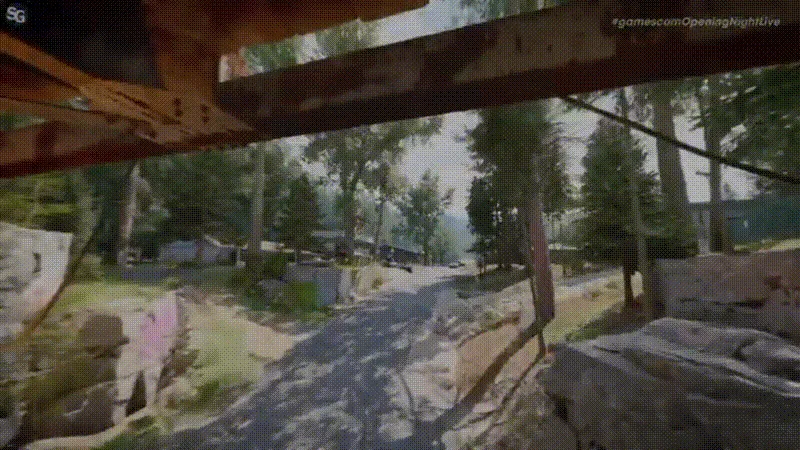
The game takes place in 1996 in a fictional Cascadia inspired by the American Pacific Northwest. This is not simply a date attached to a contemporary battlefield: KRAFTON presents the location as part of the game’s darker, stranger identity. One location identified on the official website is Cryptid Cove, where fiberglass cryptid figures contribute to the unsettling roadside-attraction atmosphere. Those decorative figures should not automatically be interpreted as confirmation of roaming supernatural enemies. The developers have also described a landscape with significant verticality, forests, cliffs, and different districts entering the playable area from match to match. That environmental variety is intended to change the circumstances of a run rather than give every encounter an identical geographical starting point.
The 1996 setting provides a coherent context for the game’s payphones, physical music players, and other analog objects. As a design interpretation, these objects are useful because they are immediately understandable: a telephone invites interaction, a car door suggests protection, and loud music suggests both presence and exposure. The larger question is whether Cascadia becomes a place players learn tactically, not just a collection of memorable screenshots. Distinctive scenery is valuable, but recurring routes, recognizable cover, and understandable threats must support the same encounters that the atmosphere makes interesting.
The horror influences are deliberate. In his CGMagazine interview, Curd identified David Lynch, Twin Peaks, The X-Files, and David Cronenberg alongside 1990s rap, alternative music, and grunge as ingredients in the game’s creative direction. These are influences, not announcements of licensed crossovers with those properties. That mixture explains why the presentation can move between small-town unease, grotesque bodily change, and absurd comedy. TechRadar’s developer interview similarly presents the game’s unusual style as an intentional attempt to create a strong identity rather than another interchangeable military shooter.
The adult positioning is explicit. The United States Xbox listing displays a Mature 17+ rating with descriptors including intense violence, blood and gore, strong language, drug use, suggestive themes, and simulated gambling. That regional product rating should not be substituted for the specific eligibility terms of a beta application. From a design perspective, body horror becomes more meaningful when transformation changes what a player can do.
An altered body can communicate a different combat role, a new threat, or a limitation before a menu explains it. The challenge is avoiding a conflict between atmosphere and readability. An unsettling silhouette can be memorable, but opponents still need enough information to understand why an encounter unfolded as it did. Strong artistic identity and clear competitive communication need to support each other.

PUBG: DED.NET Closed Beta Registration, Account Requirements, and Testing Updates
The official PUBG: DED.NET website provides a Player Register section. Its instructions direct applicants to sign in with a KRAFTON Player Account and preregister for the closed-beta waiting list. This is the appropriate starting point for registration rather than an unofficial key seller or a speculative download page. After signing in, complete the registration steps presented by the site and retain any confirmation provided. Use an email account that remains accessible, since beta selection and access instructions are communicated separately from the initial expression of interest. Reporting on the registration process describes an invitation-based test rather than unrestricted entry.
The website also offers a newsletter signup. That form requests a date of birth and email address alongside privacy and marketing-consent information. It is presented separately from the account-based beta waiting list, so newsletter subscription should not be mistaken for completion of the beta-registration process. The practical goal is to finish the actual preregistration workflow, not merely create an account or subscribe to updates. A confirmation that an email address has been verified answers a different question from a confirmation that an applicant has been selected to play.
KRAFTON’s account-creation guide explains the basic process for users who do not already have an account. Registration involves selecting a region, entering a date of birth, supplying an email address, password, and nickname, and accepting the applicable terms. KRAFTON then sends an email verification code that must be entered to complete verification. Existing account holders should first check that they can sign in and access the associated email address. Creating another account unnecessarily can make it harder to keep track of which identity was used for preregistration.
KRAFTON’s documentation also explains that gaming accounts can be linked after account creation. However, the ability to link a platform account is not, by itself, evidence that every applicant must complete a particular Steam, PlayStation, or Xbox linking procedure before joining this specific waiting list. Follow the requirements actually displayed during DED.NET registration. Account verification, beta selection, and access to a playable build should be treated as three separate stages. Completing the first does not automatically complete the other two. Likewise, a platform preference submitted during registration should not be interpreted as a promise that the selected platform will participate in every test.
A public start date and end date for the newly advertised closed beta have not been established in the official registration information checked for September 17, 2026. The available signup process is a waiting list, not a published server schedule. Earlier registration coverage likewise distinguished applications from the eventual invitation and testing period. There is an important platform detail. In an interview published on August 27, Curd told Inven Global that the next closed beta was planned for consoles first. That statement identifies a testing priority; it does not supply dates or guarantee simultaneous access across every announced platform.
Developer interviews also mention earlier testing. Those references should not be confused with an announcement that the currently advertised waiting list has already opened into a generally accessible beta. Until an invitation or official announcement specifies the schedule, there is no reliable start time to convert into local time zones. Applicants should also avoid assuming that an announcement of one testing phase establishes the duration, eligibility, or platform coverage of all later phases.

PUBG: DED.NET Combat, Roguelite Progression, and PUBG: Battlegrounds Comparison
The multiplayer format described by the developers uses 60 players organized into three-player squads. DED.NET therefore retains a recognizable competitive survival foundation even while adding systems that differ substantially from the main PUBG experience. One notable change occurs before combat begins. Curd told VGC that the game does not use the familiar airplane deployment sequence. Instead, squads select an entry location on a map, with other teams’ choices creating opportunities to contest a location, bluff, or change plans before entering the match.
The playable area also changes how teams approach movement. Developer descriptions include a changing initial district and a blue zone that can move rather than merely follow a predictable sequence of concentric reductions. These are development descriptions, not a guarantee that every detail will remain unchanged through release. Strategically, that combination could make the opening decision more consequential than simply selecting a favorite landing point.
A squad has to consider where opponents appear likely to enter and whether its developing abilities suit an immediate fight. It also creates a useful distinction between mechanical aggression and strategic recklessness. Faster movement and unusual powers do not remove the need to assess positioning. They potentially increase the number of ways a team can exploit a good position or recover from a bad one.
Death in a match does not automatically end the entire run. Developer explanations distinguish ordinary combat health from a larger reserve sometimes described as career or run health. Poor results reduce that reserve, while stronger performances help sustain the journey. The purpose is to connect a series of matches without making one early elimination the whole story. The number of matches is not a fixed final promise. Curd has discussed challenges involving five or seven matches while emphasizing that the numbers can change as development and progression evolve.
A run can still end. In a September interview, Curd explained that exhausting run health ends that character’s current journey, while some account-level progression remains. He also confirmed that players can stop between matches and resume the unfinished run later; the structure does not require completing every match in one uninterrupted sitting. That creates two different kinds of persistence. The developing character build belongs to a particular run, while account advancement can exist outside it.
Neither statement should be stretched into a claim that every ability, item, or advantage lasts forever. The design’s central tension is therefore preservation versus experimentation. A player may want to protect a promising run, but a newly offered option could make a riskier approach attractive. The interesting outcome is not simply becoming stronger. It is deciding how much instability a useful build can tolerate before continuing becomes a poor decision.
Custom builds do not mean that every player creates a completely custom narrative character. Curd told Wccftech that the beta is intended to begin with nine established characters who have relationships, motivations, and connections to Cascadia. Crucially, their abilities are not locked to their identities: choosing a character is meant to express a narrative preference rather than force a particular combat role. The ability pool described during development contains more than 70 options. That figure indicates the scale of experimentation being pursued, but it should not be treated as a guaranteed final launch count.
Players begin with a broadly role-oriented selection, such as assault, support, or trickster. Later choices can reinforce that direction or tempt the player toward something different, while injuries increasingly complicate the available combinations. The developers are deliberately encouraging builds that change character over the course of a run. In the game’s fiction, ability upgrades include ROM chips inserted into the character’s head.
The practical implication is that a preferred role should be treated as a starting intention, not necessarily a rigid promise. A support-focused player may discover an attractive ambush option, while an aggressive build may benefit from a defensive tool. Whether a combination is effective will depend on its interactions and circumstances, not simply how many impressive-sounding abilities it contains.
The confirmed mechanics include using car doors as riot shields, pretending to be dead, and hacking payphones to take money from opponents. Official promotional descriptions also mention restoring health through cannibalizing defeated enemies. These mechanics establish the game’s mixture of improvised protection, deception, economic interference, and adult horror.
The money involved in payphone hacking is part of the game’s fictional systems. Nothing about that description suggests access to another player’s real financial accounts or a real-world hacking function. The examples are interesting because they target different parts of an encounter. A shield changes how a player approaches incoming fire. Playing dead challenges an opponent’s interpretation of what they see. A payphone interaction makes an environmental object strategically relevant rather than merely decorative.
Other abilities introduce clear tradeoffs. Curd explained to PC Gamer that blade hands restrict firearm use and prevent the transformed player from driving, although riding as a passenger remains possible. The melee transformation therefore changes the character’s practical options rather than acting as a cost-free upgrade. Sound is another part of the design.
VGC’s interview describes a boombox that heals nearby teammates while making the user conspicuous. It also discusses windows that can be opened more quietly or broken, with shattered glass creating additional noise underfoot. These examples suggest a useful way to evaluate future builds: identify both the new action an ability enables and the information or flexibility it gives away. A powerful tool is not automatically the best choice when the squad cannot manage its consequences.
The clearest differences between DED.NET and PUBG: Battlegrounds are pace and persistence. Curd has described DED.NET as faster and more aggressive, with more athletic movement and a structure that encourages players to continue developing a build after an unsuccessful match. The contrast is with Battlegrounds’ more deliberate rhythm and largely self-contained competitive rounds. However, DED.NET should not be described as having discarded battle royale altogether. Squad survival and pressure from a changing combat area remain important; the major addition is a longer progression structure surrounding individual matches.
That raises an obvious fairness question: how does a fresh run compete against a developed one? Inven Global’s interview describes shared phase-based ability unlocks. Players gain access to their choices at corresponding match milestones, rather than allowing an advanced run to begin with every ability active while a newcomer starts empty. This approach separates variety from unrestricted numerical advantage. The intended contest is between different tactical options, not merely between different amounts of accumulated power.
DED.NET’s broader audience goal also matters. Curd has said it is intended to reach players who have not historically connected with PUBG, rather than simply reproducing the existing experience for the same audience. The result may appeal to players who enjoy experimentation and improvisation more than strict repetition. Conversely, players who value a particularly restrained combat vocabulary may find its additional uncertainty less attractive. Neither preference determines whether the design succeeds; the important test is whether the game communicates its rules well enough for outcomes to feel understandable.

PUBG: DED.NET Release Date, Platforms, and PC System Requirements
PUBG: DED.NET does not yet have a confirmed release date on Steam. The store identifies it as an upcoming product rather than an available game. The distinction remains consistent with developer coverage published on September 15, 2026, which describes preregistration as available while noting the absence of an official launch date. A 2026 announcement should therefore not be converted into a claim that the complete game will necessarily launch during 2026. KRAFTON has positioned DED.NET within its broader plans to develop the PUBG franchise through new experiences. That establishes the project’s strategic role, but it does not establish a release quarter or a timetable for moving from testing into commercial availability.
A beta and a full release answer different questions. Testing can reveal whether the mechanics, infrastructure, and progression systems work with a larger audience. A launch commitment concerns the availability of the finished commercial product. Treating those milestones as interchangeable would create certainty that the published information does not provide. PUBG: DED.NET has been announced for PC, PlayStation 5, and Xbox Series X|S. The PC version has a Steam store page, so descriptions of the game as either console-exclusive or PC-exclusive are inaccurate.
Steam currently allows users to wishlist the game. Wishlisting is separate from the KRAFTON-based closed-beta registration process and should not be presented as a substitute for joining that waiting list. Curd has described DED.NET as being developed with a console-first approach. In context, that reflects the team’s intended audience and design priorities, including faster-paced encounters; it does not cancel the announced PC version.
The Xbox listing specifically identifies Xbox Series X|S support and includes Xbox cloud saves among its capabilities. Cloud saves within Xbox should not be confused with a promise of cross-platform progression between Xbox, PlayStation, and Steam. The materials reviewed do not establish universal cross-play or cross-progression. Platform announcements also should not be expanded into unsupported promises about simultaneous beta access, identical launch-day features, or particular console frame rates. Those details require their own confirmation. The announced destinations are clear; the complete testing and release arrangements are not.
Steam currently lists the following PC specifications:
- Minimum requirements: Windows 11 64-bit, an Intel Core i5-8400 or AMD Ryzen 5 2600 processor, 16 GB RAM, and an NVIDIA RTX 2060 SUPER 8 GB or AMD Radeon RX 6600 8 GB graphics card. DirectX 12, integrated audio, and 50 GB of available storage space are listed, with an SSD required.
- Recommended requirements: Windows 11 64-bit, an Intel Core i7-10700 or AMD Ryzen 5 5600X processor, 16 GB RAM, and an NVIDIA RTX 3060 8 GB, RTX 2070 8 GB, or AMD Radeon RX 6600 XT 8 GB graphics card. DirectX 12, a DirectX-compatible audio device, and 50 GB of available storage space are listed, with NVMe storage recommended.
These requirements should be read carefully. Available storage space is not the same measurement as a download package, and system RAM is not interchangeable with graphics-card memory. A computer must be evaluated as a complete configuration rather than judged solely by one component. The published requirements do not attach a guaranteed resolution and frame-rate target to each tier. They should therefore not be presented as proof of particular competitive settings or sustained performance.
For practical planning, the sensible approach is to compare the operating system, processor, memory, graphics hardware, and storage individually. A previous ability to run another PUBG title does not establish compatibility with this one. Because the game is unreleased, the current listing should also be checked again when access instructions or launch information arrive.

Frequently Asked Questions (FAQs)
- What does DED mean in PUBG: DED.NET?
DED stands for “dog eat dog,” according to creative director Dave Curd. It reflects the game’s competitive survival theme, where players use unconventional and ruthless tactics rather than operate within a restrained military simulation. Mechanics such as pretending to be dead, using car doors as shields, and hacking payphones for in-game money illustrate that approach. The emphasis is on improvising and exploiting opportunities, not simply winning through straightforward firefights. - Who is developing PUBG: DED.NET?
PUBG Madison is developing the game within PUBG Studios, while KRAFTON is its publisher. DED.NET is a standalone multiplayer first-person shooter, not a renamed mode or update inside PUBG: Battlegrounds. Although it retains squad-based competitive survival, it introduces its own setting, unusual abilities, and roguelite progression. That progression connects multiple matches through a developing character build rather than treating every encounter as an entirely separate experience. - How can players register for the PUBG: DED.NET closed beta?
Visit the game’s official website, open the Player Register section, sign in with a KRAFTON account, and complete the closed-beta waiting-list application. New account holders must also complete KRAFTON’s email-verification process. Retain any registration confirmation and keep access to the associated email address for selection and access instructions. Creating an account, subscribing to the newsletter, or wishlisting the game on Steam should not be mistaken for completing the actual beta application. - Does preregistration guarantee a beta invitation?
No. Preregistration places an applicant on the waiting list for an invitation-based test; it does not immediately unlock a playable build. A registration confirmation acknowledges the application, while a beta invitation explicitly grants access to a particular testing phase. Account verification and a submitted platform preference are not proof of selection either. Applicants should wait for access instructions rather than assuming that successfully registering means they can download or play the beta. - Has PUBG: DED.NET received a release date?
No official full-release date had been announced in the materials available as of September 17, 2026. Steam lists the release date as “To be announced,” while recent developer coverage directs interested players toward closed-beta preregistration. Its Gamescom 2026 announcement does not establish that the finished game will also launch in 2026. A beta schedule and a commercial release date are separate announcements, so neither should be inferred from the existence of a waiting list. - Is PUBG: DED.NET coming to PlayStation and Xbox?
Yes. The announced platforms are PlayStation 5, Xbox Series X|S, and PC through Steam. The developers have described a console-first approach, but that concerns design and testing priorities rather than console exclusivity. It does not cancel the announced PC version or guarantee simultaneous beta access across all platforms. Likewise, Xbox cloud-save support should not be interpreted as confirmation that progress transfers between Xbox, PlayStation, and Steam, or that universal cross-play is supported. - How many players are in a PUBG: DED.NET match?
The format described by the developers has 60 players competing in three-player squads. Teams select an entry location on a map instead of using PUBG: Battlegrounds’ familiar airplane deployment, making the opening position part of their strategy. Opposing squads’ choices can influence whether a team contests an area or changes its plans. These details describe the announced development format, not confirmation of additional solo, duo, or larger-team modes, and testing may still lead to changes. - Does dying erase the whole run?
Not necessarily. Ordinary combat health is separate from the larger run-health reserve, so losing one match does not automatically end the entire run. Poor results reduce that reserve, while stronger performances help sustain it, and accumulated injuries complicate the developing build. Once run health is exhausted, that character’s current journey ends, although some account-level progression remains. Players can also stop between matches and resume an unfinished run later rather than completing everything in one sitting. - Are abilities locked to specific characters?
No. Curd has said that choosing a character is a narrative preference rather than a restriction on available abilities. The established characters have their own relationships, motivations, and connections to Cascadia, but those identities do not force a fixed combat role. Players can begin with an assault, support, or trickster direction and adapt through later ability choices. This allows a build to evolve during a run instead of remaining tied to the character’s backstory. - How much storage does PUBG: DED.NET require on PC?
Steam lists 50 GB of available storage space for both the minimum and recommended PC specifications. An SSD is required, while NVMe storage is recommended. The 50 GB figure describes available drive space, not necessarily the size of the download package. Storage is also only one requirement: the operating system, processor, RAM, and graphics card must be checked separately. Because the game is unreleased, players should review the listing again when beta access or launch details become available.
Conclusion
PUBG: DED.NET’s central proposition is more substantial than a horror-themed visual overhaul. It combines the pressure of competitive survival with an evolving sequence of decisions, allowing a character’s story to continue across victories, mistakes, and defeats. Its unusual abilities and deliberately confrontational style are intended to give it an identity distinct from more conventional shooters.
The most important unresolved questions concern execution. Can the game make chaotic abilities readable? Can an injury be frustrating without making a run feel pointless? Can experienced players explore deeper combinations without leaving new arrivals unable to understand their losses? Those questions will matter more than the novelty of any single trailer moment.
For prospective players, the immediate position remains straightforward: preregistration is available, but a completed signup should not be mistaken for a confirmed playing date or a full-release commitment.
The strongest reason to follow DED.NET is its attempt to make the decisions between matches as meaningful as the fights within them. Whether that ambition produces lasting competitive depth is something the testing process must demonstrate.
Sources and Citations
- PUBG: DED.NET, Official Website : Official game website introducing Cascadia and the central idea that character progression continues beyond an individual defeat. It provides news, gameplay media, location previews and a closed beta waiting list requiring a KRAFTON Player Account, alongside a separate newsletter signup for development updates and testing announcements. PUBG: DED.NET
Citation: PUBG: DED.NET Official Website. (PUBG: DED.NET) - KRAFTON, Gamescom Announcement Trailer and Closed Beta Registration : Official announcement presenting DED.NET as a multiplayer first person shooter that combines combat with roguelite progression across multiple matches in a fictional version of 1990s Cascadia. The page includes the reveal trailer and directs players to register an account and subscribe for further information about the closed beta. PUBG: DED.NET
Citation: PUBG: DED.NET Announcement Trailer | Gamescom. (PUBG: DED.NET) - Gamescom, PUBG: DED.NET Official Game Listing : Official Gamescom product entry providing an event organiser hosted reference for the game’s presence on the Gamescom website. It complements the publisher’s announcement and media coverage, while the dedicated DED.NET website remains the more direct source for registration instructions and updates about participating in the closed beta. gamescom
Citation: PUBG: DED.NET on Gamescom. (Gamescom) - KRAFTON ID, Official Help Center : Account support hub covering registration, login problems, missing verification emails, password recovery and changes to linked platforms or account details. It also provides a contact form for unresolved account issues and distinguishes KRAFTON ID support from questions about individual games or events, which should go to the relevant game’s support service. KRAFTON ID Help Center
Citation: KRAFTON ID Help Center. (KRAFTON ID Support) - KRAFTON Help Center, KRAFTON ID Overview : Official explanation of the integrated account system used across KRAFTON games and services. It describes linking gaming platforms and online services, accessing promotional partnerships and drops, and supporting account security, providing background on the account infrastructure rather than establishing eligibility for a particular game’s beta. Krafton Help Center
Citation: What Is KRAFTON ID?. (KRAFTON Help Center) - PUBG Support, KRAFTON ID Documentation : PUBG’s official account reference explains how KRAFTON ID connects gaming platforms and online services, supports code redemption and provides access to promotional rewards and drops. Updated on March 19, 2025, it also links to the account management website and terms of service, making it useful for explaining the account’s broader functions. PUBG Support
Citation: What Is KRAFTON ID?. (PUBG Support) - Inven Global, Gamescom Developer Presentation, August 26, 2026 : Report covering KRAFTON’s five game presentations, with a dedicated DED.NET section featuring Dave Curd’s explanation of its design. It discusses abilities acquired through ROM cartridges, injuries that accumulate across matches, the structure of a complete run and the music and cultural influences behind the game’s 1990s Pacific Northwest setting. Inven Labs
Citation: KRAFTON Unveils 5 New Games at Gamescom: No Overlapping Genres. (Inven Global) - PC Gamer, Gamescom Reveal Coverage, August 25, 2026 : Christopher Livingston’s announcement report introduces the game’s 1990s setting, reveal trailer and progression across runs. It highlights unusual abilities, including using vehicle doors as shields, pretending to be dead and interfering with rivals through payphones, while recording that closed beta registration was available when the article was published. PC Gamer
Citation: Battle Royale Goes Grunge: There’s a New PUBG Game and It’s Set in the ’90s. (PC Gamer) - Wccftech, Dave Curd Developer Interview, September 14, 2026 : Detailed interview explaining character selection, ability decks, injuries and how players can continue a run across separate gaming sessions. It also explores the intended audience and development process, including Curd’s account of temporary AI generated cinema posters being replaced with artwork painted by an artist. Wccftech
Citation: PUBG DED.NET Interview: Reaching New Players and Replacing AI Placeholder Art. (Wccftech) - TechRadar, Dave Curd Interview, September 15, 2026 : Interview examining the goal of attracting players who have not previously connected with PUBG. Curd discusses development that prioritises consoles, faster encounters and progression that carries between matches, explaining how unusual abilities and accumulating injuries are intended to create unpredictable situations and distinctive player stories. TechRadar
Citation: PUBG: DED.NET Director Explains the Aim of Reaching a New Audience. (TechRadar)
Recommendations
- How to Visit Dream Islands in Pokemon Pokopia
- Diablo 4 Is Making One Of The Franchise’s Most Iconic Enemies Playable: How To Become The Butcher In Season of Slaughter
- PUBG DED.NET Closed Beta
- Fortnite’s Most Revealing Skin Yet: Why Players Can’t Stop Talking About It
- Fortnite Chapter 7 Season 4 Admin Panel Lobby Hack Codes (September 2026)
- Mafia: The Old Country Man of Honor Gameplay Teaser Ahead of August 14 Release
- PUBG DED.NET Beta Signups
- CONQ: Crown of No Quarter Revealed: Dark Fantasy Warfare in 2027
- FlippedNormals Launches Its New Website: What Happened to the Marketplace and What Artists Need to Know
- 3D Interactive Caustics in Blender for Unreal Engine and Unity: Real‑Time and Baked Techniques



































































































