





In This Article (8 sections)
Release Date, Platforms, Developer, and PC Availability
Worms: Galactic Tactics is officially scheduled for 2027, with versions announced for PC, PlayStation 5, Xbox Series X|S, and Nintendo Switch 2. Developed by Absolutely Games and published by Team17, it combines the series’ destructive combat with a squad-based tactical roguelike structure. As of September 18, 2026, an exact release date has not been announced.
The central change is not simply a different camera angle. Galactic Tactics places its battles inside an ongoing tournament, where surviving encounters, improving equipment, and preparing for the next challenge become connected decisions. Team17’s announcement describes turn-based 3D combat, customizable squads, weapon upgrades, and strategic combinations within the Galactic Gauntlet. Official announcements establish the game’s overall direction, while hands-on coverage provides an early look at its execution. Those previews concern development builds rather than the finished release, making it important to distinguish demonstrated mechanics from features whose final implementation remains unknown.
The confirmed Worms: Galactic Tactics release window is 2027. Team17’s press information does not narrow that window to a particular month, quarter, or day. Consequently, a more specific date should not be treated as official without a subsequent announcement from the publisher or developer. The game was revealed during Gamescom Opening Night Live on August 25, 2026. Team17’s accompanying announcement introduced its tactical roguelike direction and opened the campaign encouraging players to wishlist it. That August date marks the public announcement, not its commercial release.
This distinction matters when interpreting trailers, store pages, and search results. A page dated 2026 can describe a game planned for 2027 without implying an earlier launch. Similarly, “release date to be determined” on a platform listing can coexist with an announced release year: the broad window is known while the precise date remains undecided. PlayStation’s listing currently reflects that distinction. For release planning, the most useful position is therefore straightforward: 2027 is the announced target, but there is not yet a confirmed calendar date around which to arrange a purchase or multiplayer gathering.
Team17 lists Steam, PlayStation 5, Xbox Series X|S, and Nintendo Switch 2 as the announced platforms. Its published platform list does not include PlayStation 4, Xbox One, or the original Nintendo Switch. Those older systems should not be included in a compatibility guide unless the publisher expands the announcement. The Xbox product page also carries an Xbox Play Anywhere designation. Under Microsoft’s program, eligible digital purchases through the Xbox or Windows stores can provide access across supported Xbox and Windows devices, with associated progress carried through the same account. That is different from receiving a Steam copy or obtaining universal multiplayer compatibility between competing platforms.
For players deciding where to buy, three questions should remain separate: whether the game exists on a platform, whether a purchase includes another version, and whether players on different platforms can compete together. An affirmative answer to one does not automatically establish the others. The platform announcement is also not a performance guarantee. Resolution, frame rate, loading behavior, and handheld presentation require platform-specific information or testing. A shared game design does not establish identical technical results across every supported device.
Absolutely Games is the developer, while Team17 is the publisher. This division of responsibilities is identified in the announcement coverage and official product information. Galactic Tactics should therefore not be described simply as an internally developed Team17 game. Absolutely Games already has experience with squad-based strategy through Classified: France ’44. Team17 describes that game as a turn-based campaign involving Allied commandos and French resistance fighters, with squad recruitment, tactical combat, and replayable campaign decisions. Its combat also includes morale and suppression systems.
That background makes the studio’s involvement relevant, but it does not establish that Galactic Tactics inherits the same underlying rules. A developer can apply experience in encounter design, squad coordination, and tactical readability without transferring another game’s morale mechanics, mission structure, or technical architecture. The creative challenge is particularly interesting here. A tactics game needs understandable consequences, while Worms benefits from explosive situations that can unravel unexpectedly. The strongest version of this combination would make the available choices clear without making every outcome emotionally predictable. Familiar weapons and comic presentation can provide continuity, while squad management gives those familiar ingredients a different strategic purpose.
The official Steam page does not yet provide usable minimum or recommended PC hardware specifications. Both sections list the operating system, processor, and graphics requirements as TBC. The visible requirements do not establish final memory or storage needs either. Consequently, specific processor models, graphics cards, RAM capacities, or installation sizes presented as official requirements would be unsupported. An attractive cartoon style is not sufficient evidence that a game will run well on an older computer. Likewise, a PC announcement should not be treated as proof of native macOS or Linux support, verified Steam Deck compatibility, or a particular performance target. Those require their own confirmation.
The Steam listing is available for wishlisting. To identify the correct page, search for Worms: Galactic Tactics and check that its developer and publisher fields name Absolutely Games and Team17. Wishlisting is the available way to register interest on Steam while the release remains forthcoming. For hardware planning, the practical approach is to wait for completed specifications and then distinguish minimum compatibility from the performance level desired. Even a finalized minimum specification would not necessarily describe the requirements for a preferred resolution, frame rate, or graphical preset.

Tactical Structure, Roguelike Progression, and Tournament Premise
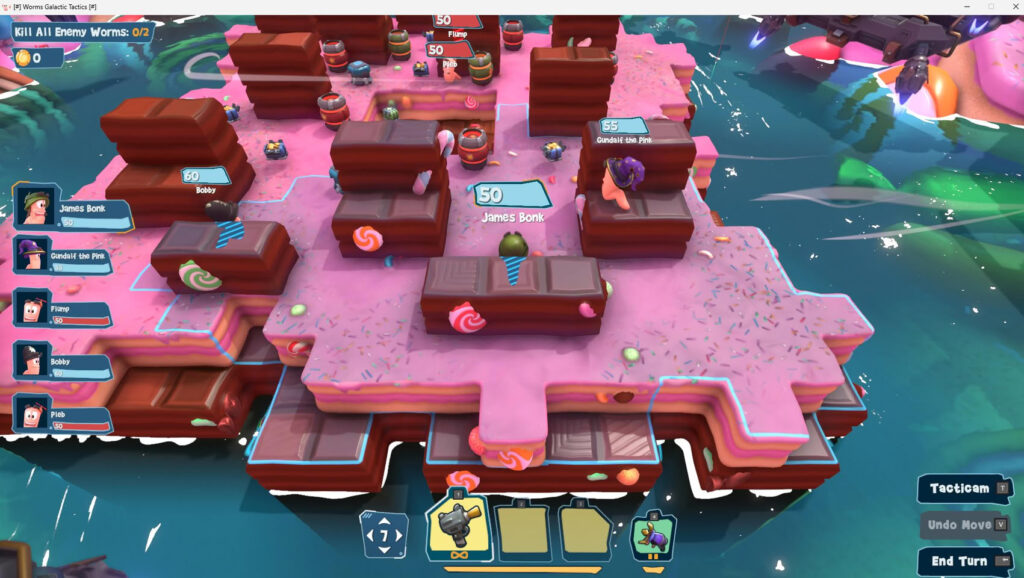
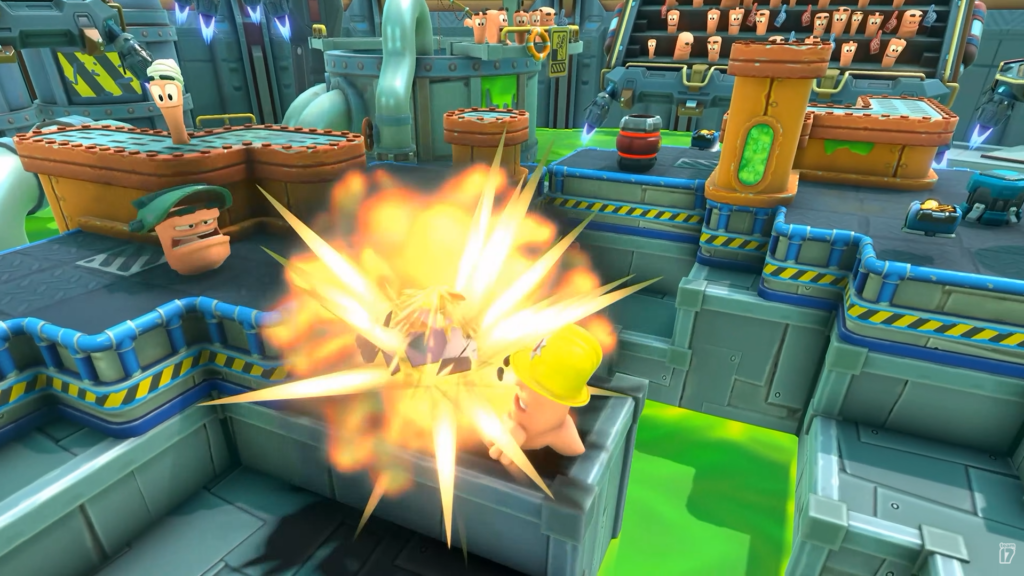
Worms: Galactic Tactics uses an isometric, grid-based battlefield, according to hands-on coverage. Rather than presenting combat exclusively from a traditional side-on perspective, it lets players assess positions across a three-dimensional arena. The announced combat remains turn-based, with movement, weapon use, and utilities contributing to tactical decisions. This changes the questions a player asks before attacking. Position is no longer merely a matter of being nearer or farther away. The surrounding spaces, the relative height of combatants, and the relationship between teammates become part of the same decision.
Consider a hypothetical turn in which one worm has a clear attack but occupies a dangerous position. Firing immediately may produce useful damage, yet moving first could preserve that worm for a later encounter. Alternatively, another squad member might change the battlefield before the first attacker commits. The appeal lies in coordinating a sequence rather than evaluating every action in isolation. Pocket Tactics’ preview also described an option to undo choices and reconsider moves. That suggests an emphasis on experimentation in the demonstrated build, although it should not be interpreted as confirmation that every action can be reversed under every final game mode.
The Galactic Gauntlet connects individual battles into a multi-stage challenge. Players develop their squad through encounters of increasing difficulty, acquiring upgrades as they work toward confronting Emperor Flugg. Official descriptions also specify handcrafted arenas, so the roguelike label should not be taken to mean that every battlefield is generated from scratch. Progression operates on more than one level. Improvements obtained during a run shape the squad’s immediate capabilities, while the official description also says defeated players can cash in Juice to upgrade their worms before another attempt. Losing therefore does not necessarily erase every form of advancement.
The previewed between-battle economy adds another decision. Pocket Tactics reported spending earned currency on upgrades, healing, and rerolling the available choices. These observations describe the demonstration build rather than a finalized price list or complete progression tree. Strategically, this creates a tension between present survival and future strength. Healing may protect a damaged squad, while purchasing an upgrade might help prevent damage in subsequent encounters. Rerolling introduces a further trade-off: resources are spent seeking a better option rather than immediately improving the team. The important question is not simply whether an upgrade is powerful. It is whether that upgrade solves the squad’s current problem without leaving too little capacity to survive what follows.
The story centers on a violent intergalactic competition held in honor of Emperor Flugg. Announcement coverage describes a three-worm squad entering the Galactic Gauntlet with individual loadouts, while Team17 presents defeating the emperor as the tournament’s ultimate objective. This premise provides a practical framework for the game’s structure. A tournament can accommodate repeated battles, increasingly dangerous opponents, extravagant environments, and sudden reversals without requiring every encounter to resemble a conventional military operation.
It also gives the progression a recognizable destination. Improving equipment is not merely an abstract exercise in raising numbers; it prepares the squad for a competition with an identifiable antagonist at its center. The available material establishes that framework rather than a complete narrative synopsis. It would be premature to infer a particular campaign length, branching dialogue system, elaborate backstories, or multiple endings from the tournament premise alone. From a design perspective, the story’s strongest potential contribution is momentum. Each battle can function as both a tactical problem and another step toward challenging the figure responsible for the spectacle. The setting does not need to become solemn to give those victories a sense of purpose.
Destructible Arenas, Weapons, Mods, Aiming, and Enemy Encounters
Destruction remains fundamental to Galactic Tactics. Official descriptions confirm destructible 3D arenas and interactions involving environmental objects such as explosive barrels. The battlefield is therefore something players can alter, not simply a fixed surface on which attacks take place. GamesRadar’s hands-on preview also described elevation, protective terrain, and gradually rising water. In that build, worms knocked into the surrounding water died immediately, making displacement and remaining safe above the danger strategically important.
The resulting tactical lesson is that damage should not be evaluated only by the number removed from an enemy’s health bar. An explosion might change access to an area, compromise a defensive position, or create an opportunity for another attack. Equally, destroying the wrong piece of terrain could make a friendly worm easier to threaten.
A hypothetical choice illustrates the difference: an attack that inflicts modest direct damage but leaves an opponent exposed could be more valuable than a stronger hit that preserves its safe position. Conversely, an impressive explosion might be a poor choice when the squad depends on the surrounding cover. The strongest terrain decision may therefore be the least spectacular one: preserve a useful position until the squad is ready to exploit its destruction.
The announced arsenal combines familiar Worms equipment with new additions. Official promotional material names Beambow, Meteor Sheep, and Die-napple, while announcement coverage also identifies returning favorites such as the Holy Hand Grenade and the Cosmic Donkey. These examples establish variety, not a complete launch roster. The official game website similarly emphasizes a mixture of classic weaponry and new tools, with upgrades intended to change how that arsenal performs. The emphasis is therefore broader than simply transferring recognizable weapon names into a different camera perspective.
For tactical evaluation, a weapon’s role matters more than its familiarity. A tool that provides dependable pressure may complement one that changes positioning, while a situational weapon can become valuable when the arena creates the right opportunity. Names alone are insufficient for assigning those roles precisely. A returning weapon should not automatically be assumed to retain identical range, damage, knockback, or handling from an earlier Worms release. Until final balance information is available, the meaningful distinction is between confirmed inclusion and measured effectiveness. There is enough information to identify several weapons, but not enough to publish a reliable launch tier list or declare a universally optimal loadout.
Weapon modifications are intended to change how equipment functions, not merely increase its damage. Official descriptions include examples such as a life-draining Fire Punch and a Grapple that stuns, alongside effects involving shields, knockback, allied enhancements, and burning terrain. Two specifically named examples appear in announcement coverage. Power Stripper is described as a common modification that makes critical hits shred enemy armor. Hot Rocket is described as a rare modification that sets terrain alight. These details demonstrate how upgrade choices can affect both targets and their surroundings.
The tactical significance is sequencing. An armor-reducing effect, for example, suggests a possible reason to attack with one worm before committing another squad member’s stronger follow-up. That is an analytical illustration of the announced effect, not a tested prescription for the best build. A useful combination should also be judged by its reliability. Two individually powerful upgrades may not work well together when their ideal conditions conflict. Conversely, a modest improvement can become valuable when it consistently helps another squad member execute its role. The word “mods” requires care here. In this context, it refers to the game’s weapon-modification system. It should not be confused with confirmation of player-created modifications, Steam Workshop integration, or an official editing toolkit.
Galactic Tactics incorporates skill-based weapon minigames into attack execution. Official descriptions connect accurate timing with critical hits and explain that occupying higher ground can improve aiming. Positioning and execution therefore work together rather than existing as unrelated systems. Pocket Tactics described a demonstrated minigame involving a reticle and a small target circle, with a well-timed input contributing to a critical hit. That is a specific preview observation, not evidence that every weapon uses an identical interaction.
This creates two separate tests for the player. The first is strategic: choosing the target, position, weapon, and moment. The second is mechanical: successfully carrying out the attack. Neither layer necessarily compensates for failure in the other. A perfectly executed shot can still be strategically wasteful when directed at the wrong opponent. Likewise, an intelligent plan can become less effective when its execution falls short.
The system also creates an important balancing question for the finished game: how strongly should practiced timing influence the outcome relative to squad preparation and positioning? The available descriptions establish the interaction, but they do not justify publishing a universal critical-damage multiplier, exact timing window, or claim that the entire combat system is free from randomness.
The announced Gauntlet includes specialist enemy classes and champion bosses, giving progression a structure beyond fighting increasingly durable versions of the same opponent. However, the available overview does not provide a complete class roster or detailed boss guide. GamesRadar’s preview supplied two concrete examples. A Boffin began with a shield that absorbed the first shot it received. A sergeant-type opponent reduced incoming damage through armor and became more dangerous after falling below half health. Those are observations from the preview build and may be adjusted before release.
These examples suggest different priorities. Against a shielded enemy, an expensive opening attack could be inefficient. Against an opponent that becomes stronger when wounded, distributing damage too broadly might leave the squad facing several active threats instead of removing one. That reasoning does not establish a universal solution. Positioning, available equipment, and the rest of the enemy team could change the best response. It does explain why specialist behavior can create more interesting decisions than simply adding health. Champion encounters will ultimately need to be evaluated on their individual rules. Until those are documented, specific claims about boss phases, weaknesses, rewards, or guaranteed counters would go beyond the published evidence.
Squad Customization, Multiplayer, and How it Differs from Earlier Worms Games
Squad customization includes hats, voicebanks, and gravestones. The official game website promises dozens of options across those categories, while the PlayStation description also confirms that worms can be named. The announced presentation supports both coordinated team identities and deliberately mismatched squads. These features serve a different purpose from weapon upgrades. Equipment decisions determine what a squad can do, while names, voices, and appearance help establish how its members are recognized and remembered.
That distinction becomes especially interesting in a run-based structure. A narrowly surviving worm is easier to associate with a particular incident when it has a recognizable name and personality. Customization can turn a sequence of tactical events into the story of a particular squad, even when the underlying encounters are designed for replay. However, visual customization should not be assumed to provide statistical bonuses. Nor does the existence of cosmetic options establish how each one is unlocked, whether every option is available immediately, or whether additional cosmetic content will be sold. The confirmed point is the breadth of personalization categories. Their complete catalog and acquisition rules remain separate questions from their inclusion in the game.
Local and online 1v1 multiplayer are confirmed. The official product descriptions present competitive head-to-head play as an alternative to pursuing the Galactic Gauntlet. PlayStation also lists support for up to two online players. The “1v1” label describes the contest between two human players; it should not automatically be read as limiting the battlefield to one worm on each side. Equally, confirmation of local multiplayer does not imply a cooperative campaign, and online multiplayer does not by itself establish cross-platform matchmaking.
Subscription requirements also need to be separated from the game’s purchase model. PlayStation’s listing specifies PlayStation Plus for online play, while Xbox identifies a qualifying paid subscription requirement for online console multiplayer. Neither statement independently confirms that the game will be included in a subscription catalog. The format suggests a more concentrated competitive experience than a large party match. With only two human opponents, each decision has a direct relationship to the other player’s plan. That could support thoughtful tactical rivalries, but it also establishes an important expectation: players seeking larger multiplayer groups should not assume that additional formats exist beyond those announced.
Worms Armageddon, originally released in 1999, belongs to the franchise’s second 2D generation. Galactic Tactics instead adopts an isometric tactical presentation and a run-based structure. The official Worms history describes Galactic Tactics as a spin-off, which is a better characterization than calling it an Armageddon remake. The difference should not be reduced to “multiplayer versus single-player.” Armageddon already includes a substantial solo offering: its Steam description identifies single-player Deathmatch, more than 40 campaign missions, and dedicated training activities. It also advertises more than 55 weapons and tools. Galactic Tactics is therefore changing the organization of solo progression rather than introducing solo Worms for the first time.
The strategic distinction is the relationship between battles. A run-based system asks players to consider the squad’s longer-term condition and developing equipment, not only the immediate contest. That encourages a different definition of success: a narrow victory may be costly when it leaves the team poorly prepared for the next encounter. Three-dimensional presentation is not unprecedented either. Team17’s history records Worms 3D in 2003, so Galactic Tactics should not be described as the franchise’s first move into 3D. The meaningful innovation is the particular combination of squad tactics, weapon modification, and repeatable tournament progression, not the isolated existence of turns, solo play, or three-dimensional environments.
Frequently Asked Questions (FAQs)
- When will Worms: Galactic Tactics be released?
Worms: Galactic Tactics is announced for 2027. As of September 18, 2026, Team17 has not published an exact release day, month, or quarter, so the only confirmed launch timing is the broad 2027 window. The August 2026 Gamescom reveal was the game’s public announcement, not its release date. Until Team17 or Absolutely Games gives a more specific update, it would be inaccurate to describe the game as launching in a particular season or month. - Which platforms will Worms: Galactic Tactics support?
The announced platforms are PC through Steam, PlayStation 5, Xbox Series X|S, and Nintendo Switch 2. Those are the systems named in the official platform information for the planned release. The published list does not establish versions for PlayStation 4, Xbox One, or the original Nintendo Switch, so those older platforms should not be treated as confirmed unless Team17 expands the announcement later. Platform confirmation also does not automatically answer questions about performance, resolution, frame rate, or cross-play. - Who is developing and publishing Worms: Galactic Tactics?
Absolutely Games is developing Worms: Galactic Tactics, while Team17 is publishing it. That means the game should not be described simply as an internally developed Team17 title, even though Team17 is the franchise owner and publisher. Absolutely Games previously developed Classified: France ’44, a squad-based turn-based strategy game, which makes its experience relevant to Galactic Tactics. However, that background does not mean Worms: Galactic Tactics will copy the same rules, campaign structure, or combat systems from Classified: France ’44. - Is Worms: Galactic Tactics turn-based or real-time?
Worms: Galactic Tactics is turn-based, not real-time. Players make decisions around movement, positioning, weapons, upgrades, and squad survival rather than reacting continuously in live action. Its major change is the shift toward an isometric tactical perspective and a roguelike tournament structure. That means each battle is not only about winning the current encounter, but also about keeping the squad strong enough for the challenges that follow. - Does losing a run erase all progression?
Losing a run does not appear to erase every form of progression. The official description says players can cash in Juice after defeat to upgrade their worms before another attempt, which points to some persistent advancement between runs. That should be separated from temporary improvements gained during a specific run, which may not carry over in the same way. In practical terms, a failed attempt can still contribute to making the squad stronger for the next run, but the exact limits of what persists will depend on the final progression rules. - Can Worms: Galactic Tactics be played with another person locally?
Yes. Local 1v1 competitive multiplayer is explicitly included in the official description, and online 1v1 play is also confirmed. This means two players can compete against each other, but it does not confirm a cooperative version of the Galactic Gauntlet campaign. The “1v1” label describes a head-to-head match between two human players; it should not automatically be interpreted as one worm versus one worm unless the final mode rules specify that. - Does Xbox Play Anywhere mean every platform can play together?
No. Xbox Play Anywhere is about eligible digital purchases and supported progress sharing within Microsoft’s ecosystem, usually across Xbox consoles and Windows PC through Microsoft’s stores. It does not mean that Steam, PlayStation, or Nintendo Switch 2 players are automatically included in the same matchmaking pool. Cross-play is a separate feature that would need its own confirmation. In other words, Xbox Play Anywhere can be useful for buyers in the Xbox and Windows ecosystem, but it should not be treated as proof of universal cross-platform multiplayer. - Are familiar Worms weapons returning?
Yes. Announced examples include recognizable Worms favorites such as the Holy Hand Grenade and Cosmic Donkey, alongside newer additions like Beambow, Meteor Sheep, and Die-napple. Their inclusion shows that Galactic Tactics is still drawing from the series’ comedic arsenal, even though the structure has changed. However, returning weapon names do not guarantee identical damage, range, knockback, handling, or balance compared with earlier Worms games. Their exact roles will need to be judged from final gameplay and balance information. - Can players customize their worms?
Yes. The announced customization categories include hats, voicebanks, and gravestones, and the PlayStation description also confirms that worms can be named. These options should help players give their squad a stronger identity, especially in a run-based game where individual worms may survive memorable encounters. However, the existence of customization does not explain every unlock condition, whether all cosmetics are available from the start, or whether any additional cosmetic content will be sold separately. It also should not be assumed that cosmetic choices provide combat bonuses unless the game explicitly says so. - What are the PC requirements, and is the game on Steam?
Worms: Galactic Tactics is on Steam, and the page is already live for wishlisting. However, the Steam page does not yet provide completed minimum or recommended hardware requirements. Its operating system, processor, and graphics fields remain marked TBC, so official PC compatibility cannot be determined from a finished specification sheet yet. Players interested in the PC version can wishlist the game now, but they should wait for finalized requirements before making hardware assumptions about performance, storage needs, or Steam Deck compatibility.

Conclusion
Worms: Galactic Tactics is taking a distinct direction within the franchise: a tactical roguelike spin-off built around a squad’s progress through an intergalactic tournament. The announced 2027 release covers PC, PS5, Xbox Series X|S, and Nintendo Switch 2, while its gameplay combines destructive encounters with weapon upgrades and repeated attempts at the Gauntlet.
Its most interesting potential lies in how those elements interact. Terrain destruction can change the value of a position, an upgrade can alter a weapon’s role, and a successful battle can still leave difficult decisions before the next encounter. The appeal is not simply a larger collection of explosions, but a new context for deciding when those explosions are worthwhile.
The remaining uncertainty concerns the finished implementation: balance, progression depth, technical performance, and the details of competitive play. The announcement and previews establish a coherent concept. Whether that concept delivers lasting variety will depend on how effectively the final game turns familiar Worms chaos into meaningful squad-level decisions.
Sources and Citations
- Team17, Official Press and Creator Hub : Publisher’s media resource providing press kits, promotional assets and key request information. Its dedicated Worms: Galactic Tactics entry identifies Absolutely Games as developer and lists a 2027 release for Steam, PlayStation 5, Xbox Series X|S and Nintendo Switch 2. This working page replaces the supplied address, which redirects to a PressEngine login. Team17
Citation: Team17 Press and Creator Hub. (Team17) - Team17, Gamescom Announcement, August 25, 2026 : Official Steam announcement introducing Worms: Galactic Tactics following its Opening Night Live reveal. It explains the move into tactical combat across destructible 3D arenas, with custom squads, upgraded weapons and combinations of attacks. The game’s news feed also includes the subsequent roundup of previews from journalists who played an early demonstration at Gamescom. Steam Community
Citation: The Worms Are Back in Worms: Galactic Tactics: Official Steam Announcements. (Steam Community) - Steam, Worms: Galactic Tactics Official Store Page : Official PC listing confirming Absolutely Games as developer, Team17 as publisher and 2027 as the planned release year. It describes the Galactic Gauntlet, destructible battlefields, weapon modifications and increasingly challenging opponents. The minimum and recommended hardware sections still contain placeholders, so the page does not yet provide complete PC system requirements. Steam Store
Citation: Worms: Galactic Tactics on Steam. (Steam) - PlayStation Store, Worms: Galactic Tactics Official Product Page : Dedicated PS5 listing identifying the game as announced, with its release date still to be determined and a wishlist option available. It lists single player support, optional online play and online matches for up to two participants, with PlayStation Plus required. This provides platform specific information rather than relying on the general PlayStation games directory. PlayStation Store
Citation: Worms: Galactic Tactics on PlayStation Store. (PlayStation Store) - Xbox, Worms: Galactic Tactics Official Store Page : Microsoft’s product listing confirms PC and Xbox Series X|S support, Xbox Play Anywhere and achievements. It also advertises single player gameplay and local and online multiplayer for two participants. The page separately states that console online multiplayer requires an eligible Game Pass subscription, which should not be confused with confirmation that the game itself is included in Game Pass. xbox.com
Citation: Worms: Galactic Tactics on Xbox. (Xbox) - Microsoft, Xbox Play Anywhere Official Information : Official explanation of how eligible digital purchases through the Xbox or Windows Store provide access across supported Xbox consoles, Windows PCs and gaming handhelds without another purchase. It describes shared progress, achievements and additional content, while clarifying that the programme applies to qualifying digital games rather than disc copies or purchases from every PC storefront. xbox.com
Citation: Xbox Play Anywhere. (Xbox) - GamesRadar+, Gamescom Hands On Preview, September 3, 2026 : Ali Jones’ preview examines escalating enemy types, weapon upgrades, healing costs and the importance of positioning above the arena’s rising water. It praises the combination of familiar Worms destruction with tactical progression, while expressing reservations about weaker knockback effects. These observations concern an early demonstration rather than a completed campaign or final review. GamesRadar+
Citation: Worms Galactic Tactics Is Such a Good Strategy Roguelike That I Can’t Believe It Didn’t Already Exist. (GamesRadar+) - Pocket Tactics, Gamescom Hands On Preview, September 3, 2026 : Sam Comrie’s account of a thirty minute demonstration explores destructive chain reactions, aiming minigames, upgrades and the ability to undo decisions. It includes comments from Absolutely Games’ developers and praises the accessible approach to tactical combat, while questioning the restriction to one against one multiplayer rather than the larger matches associated with earlier entries. Pocket Tactics
Citation: Worms: Galactic Tactics Had Me Laughing, Scheming, and Blowing Up My Own Worms. (Pocket Tactics) - Gematsu, Official Reveal Coverage, August 25, 2026 : Sal Romano’s announcement report confirms the planned 2027 release for PlayStation 5, Xbox Series, Nintendo Switch 2 and PC through Steam. It includes Team17’s gameplay overview and identifies Absolutely Games as developer. The report also notes that another Worms project is in development, distinguishing that separate announcement from Galactic Tactics. Gematsu
Citation: Worms: Galactic Tactics Announced for PS5, Xbox Series, Switch 2, and PC. (Gematsu) - Maxi Geek, Announcement and Gameplay Overview, August 29, 2026 : Luke Henderson’s report introduces Emperor Flugg’s Galactic Gauntlet and the customisable squad of three worms. It describes familiar weapons alongside modifications that strip armour or ignite terrain, explaining how equipment changes support repeated attempts. The article records the announced 2027 platform lineup rather than reporting findings from a hands on session. Maxi-Geek
Citation: Take Cover as Worms Galactic Tactics Is Coming in 2027. (Maxi Geek) - Team17, Official Worms Franchise History : Official illustrated timeline tracing Andy Davidson’s early development work, the original Worms release in 1995 and subsequent games, expansions and milestones. It includes the move into 3D and later returns to 2D gameplay, providing historical context for Galactic Tactics without incorrectly presenting it as the franchise’s first experiment with three dimensional environments. officialworms.com
Citation: Worms: Official Franchise History. (Worms) - Steam, Worms Armageddon Official Store Page : Official listing for the earlier game, identifying Team17 as developer and describing more than 55 weapons and tools, a campaign exceeding 40 missions, training activities and online multiplayer. It provides a reference for the established series formula and familiar equipment, while its features and technical requirements should remain separate from those advertised for Galactic Tactics. Steam Store
Citation: Worms Armageddon on Steam. (Steam) - Team17, Classified: France ’44 Official Game Page : Publisher’s overview identifying Absolutely Games as developer and explaining the game’s World War II setting, squad management, stealth and morale systems. It also describes replayable campaign choices and custom mission creation. This provides background on the studio’s earlier tactical design work without implying that Galactic Tactics adopts the same mechanics or campaign structure. Team17
Citation: Classified: France ’44 Official Game Page. (Team17)
Recommendations
- Isometric Strategy Games
- Worms Galactic Tactics
- Worms Galactic Tactics 2027
- Valve 30th Anniversary August 24, 2026: 30 Years of Half-Life, Steam, Steam Machine and Steam Controller
- What Is Hard Surface Modeling in Blender?
- The Last of Us Part II Motion Capture: Exploring the Technology, Developer Insights, and Community Feedback
- Supergirl Star Milly Alcock Has Never Seen Black Widow, Captain Marvel or Wonder Woman
- Complete Disney Dreamlight Valley Recipe List
- Mortal Kombat II (2026): Cast, Plot, Release Date & Everything You Need to Know
- Meccha Chameleon Surpasses 10 Million Units Sold: How Steam’s Viral Hide-and-Seek Game Became a Global Hit



































































































