








In This Article (8 sections)
Qwen Glasses N1 and N1 Pro Release Date, Pricing, Specifications, and Model Differences
Alibaba launched the Qwen Glasses N1 and N1 Pro in China on October 13, 2026, following their introduction at the Apsara Conference in September and the opening of preorders on September 22. The release places the Qwen assistant inside wearable hardware designed around photography, visual recognition, voice interaction, and connected services. Alibaba’s September announcement presented the glasses alongside Qwen Clip earbuds as part of a broader expansion of its consumer AI hardware lineup.
October 13 should therefore be treated as the commercial sales date rather than the date on which the products were first announced. The larger goal is to make Qwen available as a personal assistant that can interact with the wearer’s surroundings without requiring a conventional chat interface for every request.
Pricing requires more context than the approximately $450 headline suggests. Qualcomm China lists the standard N1 from 2,999 yuan and the N1 Pro from 3,499 yuan, while IT Home reports standard retail packages at 2,899 yuan and 3,399 yuan respectively. IT Home also lists extended battery packages at 3,297 yuan for the N1 and 3,797 yuan for the Pro before subsidy reductions, while eligible introductory prices begin at 2,218 yuan for the standard N1 and 2,600 yuan for the standard Pro.
These differences reflect specific packages, promotions, and domestic subsidies rather than one universal launch price. The dollar figure is therefore best understood as an approximate conversion of the reported Chinese pricing, not as an official United States retail price. The distinction between N1 and N1 Pro is primarily about sensing and interaction rather than basic access to Qwen. Both models provide wearable imaging, voice assistance, visual recognition, and other connected AI functions, while the Pro adds eye tracking, iris payment verification, and monitoring of heart rate, blood oxygen, and skin temperature.
These additions make the Pro more suitable for users interested in gaze-based interaction, supported biometric payments, and wellness measurements, but they do not automatically make it the better choice for everyone. Someone mainly interested in hands-free photography, video, and spoken assistance may receive most of the desired functionality from the standard N1. The value of the Pro therefore depends on whether its additional sensors and services fit the wearer’s actual routine.
Both models use Qualcomm’s first-generation Snapdragon AR1 platform. Qualcomm China describes functions including real-time questions and answers, visual recognition, meeting summaries, customizable wake words, and selectable assistant voices. The presence of local processing hardware should not be interpreted as confirmation that the complete Qwen assistant runs offline because wearable systems can divide work between on-device processing and connected services. Connectivity can therefore affect which features remain available or how quickly they respond. Independent use will need to establish how the glasses behave when a network is weak or unavailable and how clearly the interface communicates when a connected task cannot be completed.
The N1 series also uses a 50-megapixel camera and supports advertised 4K video recording, with launch coverage mentioning stabilization and Live Photos. Those specifications establish capture capability but do not independently establish image quality, because exposure, dynamic range, lens performance, low-light handling, motion processing, and stabilization all influence the final result. Head-mounted cameras also experience movement differently from phones because normal walking and turning continuously affect the frame. The advantage is hands-free first-person capture during activities such as cooking, building, or documenting a task. Sustained recording time, heat, microphone quality, low-light performance, and file transfer convenience remain important subjects for practical testing.
Battery claims also need to be tied to their test conditions. TechNode reports approximately nine hours for the N1 and eight hours for the N1 Pro, while The Next Web cites up to 25 hours of standby or nine hours of music playback for the N1. Standby, music playback, repeated AI requests, and continuous video recording represent very different workloads and should not be treated as equivalent endurance measurements. Qualcomm China describes a 272mAh battery, magnetic charging, and an optional MiniBag containing a 700mAh battery, while also stating that the temple battery can be replaced without shutting the glasses down.
That replaceable design may prove particularly useful for people wearing prescription lenses or using the glasses for long periods, although spare battery availability, charging time, attachment security, and the ease of swapping modules will determine how convenient it feels in practice.

Eye Tracking, Iris Payments, Wellness Sensors, and Qwen AI Assistance
Eye tracking is one of the N1 Pro’s most distinctive interaction features because it gives Qwen additional information about what the wearer is looking at, helping the Qwen AI assistant interpret visual context. A spoken request such as “What is this?” can be ambiguous when several objects are visible, while gaze data can help indicate which object is intended. This could reduce the need to point, describe an item in detail, or reposition the camera deliberately. The benefit remains dependent on how accurately the Qwen system distinguishes nearby objects, changing lighting, and short glances from deliberate attention. Published launch information describes the capability but does not establish its reliability across all environments.
Attention and intention should also remain separate concepts. People naturally glance at objects without wanting the glasses to identify, search for, or act on them, so gaze alone should not be assumed to represent an instruction. A more deliberate interaction can combine eye tracking with a spoken request to Qwen, a nod, or another explicit action to make the intended command clearer.
That approach could help the wearer understand which object the Qwen assistant has selected and when it is about to perform an action. Independent testing should examine how quickly incorrect selections can be corrected and whether the Qwen system clearly communicates what it believes the user is targeting. The practical value of gaze interaction depends as much on error recovery as on successful demonstrations of Qwen AI features.
Iris payment verification solves a different problem by confirming the identity of the person authorizing a supported transaction. Qualcomm China describes a payment flow in which a compatible application uses iris verification, presents payment information for confirmation, and then allows the wearer to complete the transaction with a nod. The identity-verification system was developed with Qwen, Ant Group’s GPASS, and Qualcomm, with a claimed false-recognition rate below one in one million.
That figure should be treated as a vendor claim rather than an independent security assessment of the Qwen payment system. Biometric recognition also does not replace the need for clear transaction authorization because confirming who the wearer is does not establish which amount or merchant they intend to approve through Qwen-supported services.
A dependable payment process therefore needs more than fast recognition. The wearer should be able to see or hear what is being purchased, confirm the amount, understand which merchant will receive payment, and receive clear feedback about whether the transaction succeeded. Failed or mistaken payments also need a practical recovery route rather than an assumption that biometric verification eliminates errors. Availability will depend on compatible applications and payment environments, so iris support in the Qwen glasses hardware should not be interpreted as universal acceptance across every merchant or financial network. The strongest value of the Qwen payment system will come from reducing friction without hiding the transaction being authorized.
The Pro additionally monitors heart rate, blood oxygen, and skin temperature. These capabilities potentially extend Qwen’s awareness from the wearer’s surroundings to selected information about the wearer’s physical condition, but the launch sources reviewed do not establish medical certification or comprehensive independent accuracy testing of the Qwen health-monitoring features. A useful wellness interface should indicate when a measurement was taken, whether the reading was reliable, and how it compares with previous measurements rather than simply presenting a number without context.
Skin temperature should not be casually described as core body temperature, and a blood oxygen percentage from Qwen glasses should not automatically be treated as equivalent to a dedicated clinical instrument. Fit, movement, sensor positioning, and contact stability will all be relevant when evaluating how consistent the Qwen N1 Pro’s measurements are during normal wear.
Voice control remains the most direct way to use many of the glasses’ AI capabilities, including Qwen voice assistance. Short commands such as capturing a photo, setting a reminder, or asking Qwen about something in view are particularly suited to a wearable interface because they avoid taking out a phone. Longer responses may be less practical because spoken information arrives sequentially and can become difficult to follow, making concise Qwen answers with optional follow-up more useful.
Environmental noise from traffic, wind, or overlapping conversations can also affect how well Qwen voice commands are captured. Hands-free interaction is therefore most useful when the Qwen system provides clear confirmation that it understood the instruction rather than silently acting on an uncertain interpretation.
Translation and meeting summaries extend Qwen’s voice functionality into more demanding tasks. Yicai identifies translation, meeting minutes, and voice services among the N1 series’ assistant capabilities, but both features depend on accurate capture before useful Qwen AI processing can occur. Names, technical terminology, accents, background noise, and several people speaking at once can introduce errors even when the resulting Qwen summary sounds fluent. Important decisions, deadlines, and assigned responsibilities should therefore be checked rather than accepted automatically. The supplied launch information does not establish a complete language list, independently measured translation accuracy, or comprehensive offline support for the Qwen glasses, so language capabilities advertised for other Qwen devices should not be transferred automatically to the N1 family.
Shopping, Privacy, Security, and How Qwen Glasses Compare with Ray-Ban Meta
Shopping assistance is one of the areas where wearable visual AI could reduce the number of steps between noticing an object and finding useful information about it. The glasses can potentially identify something in view, search for a relevant listing, and help the wearer move toward a purchase, while the Pro adds supported iris-based payment confirmation. These are still separate stages and should not be collapsed into a single automatic transaction. Identifying a product visually does not guarantee that the system has found the exact size, specification, regional model, or package the wearer intended. Similar packaging and products can create mistakes that become more consequential once an assistant begins recommending purchases.
Price comparison also needs more context than the lowest displayed number. Delivery charges, included accessories, seller reliability, return terms, and regional variants can all change whether a listing is actually the best option. The useful role of an AI shopping assistant is therefore to reduce search effort while keeping enough information visible for the wearer to understand what has been found and what action is still pending. Smooth execution is valuable only when users remain aware of the product, price, seller, and transaction status. The quality of the shopping experience will depend on transparency as much as speed.
Privacy questions become more important because the glasses can potentially handle several different forms of sensitive information. Outward-facing video, spoken conversations, gaze information, wellness readings, and iris templates serve different purposes and should not automatically share the same permission or retention rules. A wearer may want photography without continuous environmental analysis, voice assistance without meeting recording, or gaze selection without storing a history of where they looked.
The launch information reviewed here does not completely answer where iris templates are stored, how biometric enrollment is deleted, which recordings leave the device, or what happens to retained information when an account is disconnected. Those questions are particularly important because removing access to an AI service is not necessarily the same thing as deleting previously collected data.
Bystanders also form part of the privacy equation because people around the wearer may be recorded or analyzed without owning or controlling the glasses. Meetings create an especially clear example because one person may activate transcription while everyone else contributes audio. Visible or audible recording feedback can help people recognize when capture is taking place and make the device’s behavior easier to understand. Alibaba has made specific audio-handling claims for the separate QwenNote A2, but those statements should not automatically be applied to the N1 because the products have different functions and documentation. Each device needs its own privacy explanation.
Iris payments introduce additional security questions beyond the claimed false-recognition rate. Enrollment protection, secure storage of biometric templates, deliberate authorization, recovery after repeated failures, and procedures for lost or stolen glasses all contribute to the complete security model. A biometric system can accurately recognize the enrolled wearer while still needing safeguards against unintended transactions. The useful distinction is between authentication and authorization: iris recognition can help verify identity, while the transaction interface still needs to confirm that the person intends to make that particular payment. Security evaluation therefore needs to examine the complete flow rather than one accuracy statistic.
Comparisons with Ray-Ban Meta also require a clearly identified generation. Meta’s Ray-Ban Meta Gen 2 announcement specifies up to eight hours of typical use, 3K video recording, and a charging case providing an additional 48 hours of capacity. Against those figures, Qwen’s advertised 4K recording, replaceable battery system, and N1 Pro features such as eye tracking, iris payments, and wellness sensors create obvious specification differences. Those numbers do not establish which product provides the better overall experience because camera quality, stabilization, assistant reliability, service availability, and battery testing methods can differ substantially. A meaningful comparison needs equivalent real-world workloads and actual sample footage rather than a specification table alone.
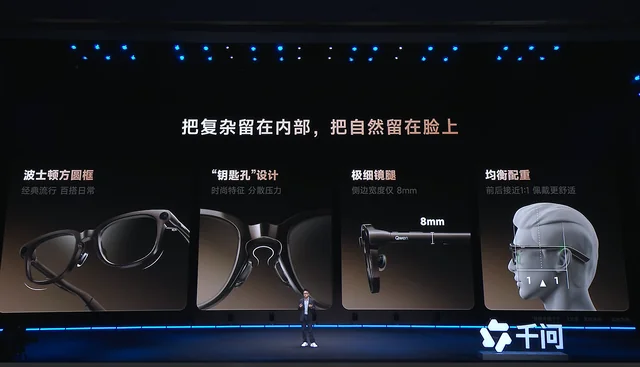
Software ecosystem and comfort may ultimately matter more than some headline specifications. An assistant is only useful if it supports the wearer’s language, country, preferred services, and account setup, while frame shape, prescription compatibility, and pressure during long sessions determine whether the device is comfortable enough to wear regularly. A technically stronger feature that is unavailable in a particular market contributes little to daily use. Likewise, a camera advantage can become irrelevant if the wearer finds the frame uncomfortable after an hour. Smart glasses need to succeed as both computers and objects worn directly on the face.

China Availability, Purchase Options, and What Global Buyers Should Know
The confirmed commercial rollout for Qwen Glasses N1 and N1 Pro is currently China. Launch coverage identifies Taobao, Tmall, JD.com, and Douyin among the Chinese sales channels, with domestic packages and promotional pricing varying according to retailer and subsidy eligibility. As of October 15, 2026, the launch information reviewed does not establish official retail prices or general release dates for the United States, United Kingdom, European Union, Nigeria, or other international markets. The approximately $450 headline therefore reflects a conversion of Chinese launch pricing rather than an officially announced American MSRP. Wider availability should remain unconfirmed until Alibaba identifies countries, dates, prices, and supported services directly.
Buying an imported unit is also different from receiving official local support. A reseller may be able to deliver the hardware internationally while account registration, companion software, language support, warranty service, replacement batteries, and connected features remain designed primarily for the Chinese market. Payment functionality introduces another dependency because ownership of compatible hardware does not automatically create access to every payment service in another country. Buyers considering an import therefore need to look beyond whether the glasses can physically be shipped to their address. Service availability is as important as hardware availability for a device whose main purpose depends on connected AI.
Prescription requirements can further change the total cost. The entry price of the frame does not include every possible lens configuration, accessory, replacement battery, or charging option a particular buyer may need. An extended battery package also costs more than the standard package, while introductory domestic subsidies should not be assumed to apply to international purchases. This makes direct conversion of a Chinese promotional price into another currency an incomplete estimate of ownership cost. The relevant amount is the actual package, lenses, accessories, shipping, and support arrangement available to the buyer.
Future announcements should also be interpreted carefully. An overseas trade-show appearance, translated product page, or general statement about Alibaba expanding Qwen hardware does not automatically establish that the N1 has entered that market commercially. A complete international rollout should ideally identify supported countries, release dates, prices, languages, applications, payment services, and warranty arrangements together. Until that happens, the most accurate description remains that the N1 and N1 Pro launched commercially in China on October 13, 2026. Wider availability is a possibility rather than a confirmed part of the current launch.
The larger question is whether the N1 series can make face-worn AI consistently useful rather than merely impressive during demonstrations. The hardware already combines cameras, microphones, replaceable power, visual recognition, voice interaction, and, on the Pro, gaze, biometrics, and wellness sensing. Daily usefulness will depend on how reliably those pieces work together, how clearly the assistant communicates uncertainty, and whether users understand when the glasses are observing, recording, or preparing an action.
Fast identification and seamless payment are valuable only when mistakes can be corrected easily and sensitive information is handled transparently. The success of Alibaba’s wearable AI strategy will therefore depend as much on interaction design, privacy controls, service availability, and reliability as on the specifications of the glasses themselves.

Frequently Asked Questions (FAQs)
- What is the Qwen Glasses N1 release date?
The Qwen Glasses N1 and N1 Pro officially went on sale in China on October 13, 2026. Alibaba had introduced the glasses during its September hardware announcements, with preorders beginning earlier on September 22. Those dates refer to different stages of the rollout and should not be used interchangeably. September marks the product introduction and preorder period, while October 13 is the relevant commercial sales date. As of the launch information reviewed, that date applies to the confirmed Chinese release rather than a worldwide rollout. - How much do Qwen Glasses N1 cost?
The widely reported starting price for the standard N1 is 2,999 yuan, which is approximately $450 when converted into US dollars. Chinese retail reporting also lists a standard package beginning at 2,899 yuan, showing that pricing can vary according to the source, package, retailer, and promotion. Eligible domestic subsidies and introductory offers can reduce the amount further, so the lowest advertised promotional price should not be treated as the normal retail price for every buyer. Additional batteries, accessories, prescription lenses, or other configurations can also increase the total cost. The approximate $450 figure is therefore useful for understanding the product’s market position, but it is not an official US retail price. - What does the N1 Pro add?
The N1 Pro adds eye tracking, iris-based payment verification, and physiological sensing that includes heart rate, blood oxygen, and skin temperature. Eye tracking gives the assistant additional information about what the wearer is looking at, which may make visual questions easier when several objects are present. Iris verification is designed to support identity confirmation during compatible payment flows, while the health-related sensors extend the glasses into wellness monitoring. These features make the Pro more relevant to users who expect to use gaze interaction, supported biometric payments, or physical-condition tracking regularly. Someone primarily interested in photography, video recording, and voice assistance may not benefit enough from those additions to justify choosing the Pro automatically. - Do Qwen Glasses N1 record 4K video?
Yes. Alibaba’s launch material advertises 4K video recording for the N1 series alongside a 50-megapixel camera and other imaging features. The 4K specification confirms the supported recording resolution, but resolution alone does not determine the quality of the finished footage. Stabilization, exposure, dynamic range, low-light performance, lens quality, and the way the camera handles ordinary head movement will also affect the result. Sustained 4K recording can also place different demands on heat and battery life than occasional photography. Practical testing is therefore needed to determine how well the glasses perform during longer recordings and everyday movement. - Can the batteries be replaced during use?
Yes. Qualcomm China says the removable temple battery can be exchanged without shutting the glasses down, allowing the wearer to continue using the device rather than waiting for a full recharge. The system uses a 272mAh battery and also supports an optional MiniBag accessory containing a larger 700mAh battery. This approach could be particularly useful for someone wearing the glasses throughout the day or relying on prescription lenses in the same frame. However, the real convenience will depend on how easily the battery can be removed, how securely the replacement attaches, and how many spare batteries are available. Charging time and the cost of replacement modules will also influence whether the design works well in regular use. - Does looking at a product automatically pay for it?
No. The documented payment flow does not describe a simple glance as sufficient to complete a purchase. Eye tracking can help identify the object or area the wearer is looking at, while iris verification is used for identity confirmation in supported payment applications. Qualcomm China describes a process in which payment information is presented for confirmation and the user then performs a deliberate nod to complete the transaction. This distinction is important because gaze and authorization serve different purposes. Looking at something should therefore not be described as automatically purchasing it without an additional intentional confirmation step. - Can the glasses translate conversations and create meeting notes?
Yes. Translation and meeting-summary functions are included in launch coverage of the Qwen Glasses N1 series. Both features depend on the microphones capturing speech accurately before the assistant can interpret, translate, or summarize what was said. Conversations involving several speakers, background noise, accents, names, or technical terminology can create errors even when the resulting summary sounds fluent. Important details such as deadlines, decisions, and assigned responsibilities should therefore be checked rather than accepted automatically. The reviewed launch information does not provide a complete N1 language list or establish that translation quality is identical across every supported language and environment. - Are the Pro’s health measurements medically certified?
The reviewed launch sources do not establish that the N1 Pro’s heart rate, blood oxygen, or skin temperature measurements have medical certification. These features should therefore be treated as wearable wellness capabilities rather than proof that the glasses can diagnose health conditions or replace clinical equipment. Accuracy can be influenced by frame fit, wearer movement, sensor contact, and the circumstances under which a reading is taken. Skin temperature should also be distinguished from core body temperature, since those measurements are not interchangeable. Independent testing and any future certification information would be necessary before treating the readings as medically validated. - Are Qwen Glasses N1 better than Ray Ban Meta glasses?
Launch specifications alone do not establish an overall winner. Qwen’s N1 series advertises 4K recording, a replaceable battery system, and additional Pro features such as eye tracking, iris verification, and wellness sensing, while Ray-Ban Meta Gen 2 emphasizes its own camera, battery, assistant, and charging-case capabilities. Those differences matter, but real-world performance depends on more than the specification sheet. Camera quality, stabilization, assistant accuracy, battery endurance, comfort, prescription compatibility, language support, and regional service availability all affect daily usefulness. A meaningful comparison therefore requires equivalent testing under the same conditions rather than assuming that one higher specification automatically makes one product better for every user. - Is there a confirmed global release date?
No general worldwide release date has been confirmed in the launch information reviewed as of October 15, 2026. The commercial rollout covered here is specifically for China, where the N1 and N1 Pro became available through channels including Taobao, Tmall, JD.com, and Douyin. The available announcements do not establish official release dates or local retail prices for markets such as the United States, United Kingdom, European Union, or Nigeria. International reseller availability should not be confused with official distribution because imported hardware may still lack local warranty, software, payment, language, or accessory support. A confirmed global rollout would need a separate announcement identifying supported countries, prices, dates, and services.
Conclusion
Alibaba’s Qwen Glasses N1 launch establishes a clear distinction between the standard wearable camera and AI assistant experience and the N1 Pro’s expanded gaze, biometric payment, and wellness sensing capabilities. Both models bring Qwen closer to the wearer’s surroundings by combining visual capture, voice interaction, and connected assistance in a device designed for regular use.
The Pro extends that concept by adding eye tracking, iris verification, and physiological measurements, but those extra specifications do not automatically guarantee a better experience for every user. Their practical value will depend on how reliably the features work outside controlled demonstrations and whether they fit the tasks people actually perform throughout the day. The strongest assessment therefore separates confirmed hardware and launch capabilities from questions that still require independent testing.
Pricing requires the same care. The approximately $450 headline reflects a reported Chinese starting price converted into dollars rather than an official worldwide retail price. Different Chinese listings, package configurations, introductory discounts, and subsidies already produce several possible purchase amounts, while lenses, replacement batteries, accessories, and delivery can increase the final cost. Those domestic prices also should not be treated as evidence of what Alibaba would charge if the N1 series receives an official release in other countries. Until international pricing and distribution are announced, the October launch remains specifically a Chinese commercial rollout.
The longer-term appeal of Qwen Glasses will ultimately depend on execution rather than the number of features listed at launch. Accurate object selection, reliable voice and visual assistance, clear transaction confirmation, useful battery swapping, comfortable all-day wear, and understandable privacy controls will determine whether the glasses become a regular tool rather than an occasional novelty. The Pro’s eye, biometric, and wellness data also increase the importance of transparent information handling and deliberate user control over when sensing and recording occur. Alibaba has clearly established its direction by bringing Qwen closer to what users see, hear, and do, but everyday use will determine how successfully that ambition becomes a dependable consumer experience.
Sources and Citations
- Alibaba Cloud Community, September 25, 2026 : Introduces the Qwen Glasses N1 and N1 Pro within Alibaba’s broader hardware lineup at the 2026 Apsara Conference. Describes their 50 megapixel imaging sensor and the Pro model’s eye tracking and iris payment features, while confirming September 22 preorders and planned retail availability on October 13. Alibaba Cloud Community
Citation: Alibaba Unveils Agentic Computer, AI Wearables and More at 2026 Apsara Conference. (Alibaba Cloud Community). - Qualcomm China, published on EET China, October 13, 2026 : Provides Qualcomm’s launch announcement for the N1 series, including its Snapdragon AR1 Gen 1 platform, camera system and 4K recording capabilities. Explains Qwen AI functions, replaceable batteries and optional charging accessories, alongside the N1 Pro’s additional eye tracking, iris payment and health monitoring features. eet-china.com
Citation: Qwen AI Glasses N1 Series Launch Announcement. (EET China). - IT Home, October 13, 2026 : Separates the standard and extended battery packages for the N1 and N1 Pro, including prices before and after national subsidies. Covers replaceable temple batteries, camera specifications and video recording, while explaining the additional eye tracking, iris payment and health monitoring functions offered by the Pro model. IT之家
Citation: Qwen N1 Series Launch Prices, Battery Packages and Features. (IT Home). - The Next Web, October 13, 2026 : Covers the start of Qwen N1 sales in China, reported launch prices and the effects of subsidies and promotional offers. Describes voice assistance, translation, note taking and the Pro model’s additional capabilities, while distinguishing the October retail launch from the September Apsara unveiling. thenextweb.com
Citation: Alibaba Starts Selling Its Qwen N1 AI Glasses in China From $450. (The Next Web). - TechNode, October 14, 2026 : Reports the October 13 launch of the N1 and N1 Pro, with standard packages starting at RMB2,899 and RMB3,399 respectively. Summarizes replaceable batteries, camera and video features, Qwen assistant functions and the Pro model’s additional capabilities, drawing on IT Home’s Chinese language reporting. TechNode
Citation: Alibaba Launches Qwen N1 AI Glasses With Swappable Batteries, Starting at RMB 2,899. (TechNode). - Yicai Global, October 14, 2026 : Covers the launch of Qwen glasses and earbuds as part of Alibaba’s strategy to extend personal AI agents into wearable devices. Reports starting prices after subsidies and discounts, discusses the Pro model’s health monitoring features and explains the company’s ambition to provide more proactive assistance through connected hardware.
Citation: Alibaba’s Qwen Deepens Personal Agent Push With New AI Glasses, Earbuds. (Yicai Global). - Meta, Official Newsroom, September 17, 2025 : Provides Meta’s official announcement for the second generation of Ray-Ban Meta glasses, including its claim of up to eight hours of typical use and support for 3K Ultra HD video capture. Details charging improvements and expanded AI features, supplying an official reference for battery and camera comparisons. about.fb.com
Citation: Ray-Ban Meta (Gen 2) Now With Up to 2X the Battery Life and Better Video Capture. (Meta Newsroom).
Recommendations
- The Biggest New Game Releases of October 2026 You Can’t Miss
- Gothic 1 Remake: The Focus At The Mountain Fortress Quest Walkthrough
- Tom Cruise Says Digger Is Unlike Any Film He’s Ever Made
- What Happened to Xbox President Sarah Bond? Latest Update on Her Exit From Microsoft
- AC Black Flag Resynced Explorer Outfit Guide: Exact Location, Coordinates, and Chest Reward
- All God of War Games Ranked From Worst to Best
- OneSearch-VL-8B Beats Qwen3-VL-8B by 20.2 Points in AI Research Benchmark
- GRAIN ROT Guide: Co-Op Horror, Building, and Extraction Explained
- Palworld Horror-Themed Dating Sim Spinoff Is Real: What We Know About More Than Just Pals
- Halloween: The Game Launches September 8, 2026 – Release Date, Gameplay, Platforms, and Michael Myers Explained



































































































