










In This Article (7 sections)
Planet Zoo 2 Complete Animal List, Launch Roster, and Deluxe Edition Differences
Planet Zoo 2 has 136 recorded launch animal entries when the base game and Deluxe additions are counted together. Six animals carry the Deluxe designation, leaving 130 entries without that designation, although Frontier’s launch announcement describes the overall collection more broadly as featuring more than 130 animals. The game launched on October 13, 2026, with fully aquatic species and flying birds joining the series through dedicated aquarium and aviary systems. The current roster is therefore larger and more varied than promotional lists published before release, making dated launch information important when comparing databases. Future updates or downloadable content may expand the collection further, while changes to names or classifications could alter how individual species appear in filters.
The enclosure records contain 57 terrestrial habitat animals, 12 aviary animals, 37 aquarium animals, and 46 exhibit animals. Those figures describe supported enclosure placements rather than four completely separate sets of species because 16 fish appear in both the aquarium and exhibit categories. Adding the category totals therefore produces 152 placements without implying that Planet Zoo 2 contains 152 unique animals. This overlap is particularly important when comparing guides, since a species appearing twice in enclosure lists remains one entry in the complete Zoopedia roster. The same distinction applies to birds because the game contains 14 birds overall even though only 12 belong to the aviary category, with African Penguin and Common Ostrich classified as terrestrial habitat animals.
The complete alphabetical launch roster contains the following 136 entries:
- A:
Aardvark, African Leopard, African Penguin, African Savannah Elephant, African Tigerfish, African Wild Dog, Amazonian Giant Centipede, American Bullfrog, Asian Elephant, Asian Small-Clawed Otter, Axolotl. - B:
Bactrian Camel, Binturong, Black Rhinoceros, Blackspotted Puffer, Blacktip Reef Shark, Black Wildebeest, Blue and Gold Fusilier, Bluespine Unicornfish, Blue Wildebeest, Blunthead Cichlid, Boa Constrictor, Boeseman’s Rainbowfish, Brown Trout. - C:
Cape Buffalo, Cloudless Sulphur, Clown Anemonefish, Clown Loach, Clown Triggerfish, Common Bluetongue, Common Hippopotamus, Common Ostrich, Common Rudd, Common Warthog. - D:
Danube Crested Newt, Desert Horned Viper, Diamondback Terrapin, Dolphinfish. - E:
Eastern Brown Snake, Eurasian Beaver, Eurasian Bittern, Eurasian Brown Bear, Eurasian Lynx, European Bison, European Peacock. - F:
Fire Salamander. - G:
Galápagos Giant Tortoise, Gemsbok, Gharial, Giant Forest Scorpion, Giant Gourami, Giant Grouper, Giant Malaysian Leaf Insect, Giant Panda, Giant Slippery Frog, Giant Tiger Land Snail, Gila Monster, Golden Eagle, Golden Lion Tamarin, Golden Poison Frog, Golden Trevally, Goliath Beetle, Goodfellow’s Tree-Kangaroo, Greater Flamingo, Great Hammerhead, Great Hornbill, Grey Wolf, Grizzly Bear. - H:
Hawksbill Turtle, Humphead Wrasse. - I:
Indian Ocean Oriental Sweetlips, Indo-Pacific Leopard Shark, Indo-Pacific Sergeant. - J:
Javanese Cownose Ray, Javan Green Magpie. - K:
Koi, Komodo Dragon. - L:
Lehmann’s Poison Frog, Lion, Long-Eared Owl, Longfin Batfish, Long-Tailed Parakeet. - M:
Malayan Tapir, Masai Giraffe, Meerkat, Menelaus Blue Morpho, Mexican Redknee, Monarch, Moon Jelly, Mountain Hare. - N:
Nile Monitor, North Sulawesi Babirusa, Nyala. - O:
Ocean Sunfish, Ocellated Eagle Ray, Old World Swallowtail. - P:
Pacific Bluefin Tuna, Pacific Sardine, Palette Surgeonfish, Plains Zebra, Przewalski’s Horse. - R:
Red Deer, Red-Eyed Tree Frog, Red Lionfish, Red Panda, Reticulated Giraffe, Ring-Tailed Lemur. - S:
Sable Antelope, Sacred Scarab Beetle, Sailfin Snapper, Saltwater Crocodile, Sand Tiger Shark, Schooling Bannerfish, Secretarybird, Shoebill, Siamang, Snow Leopard, Spotted Hyena, Springbok, Sri Lankan Rose, Sumatran Orangutan, Sumatran Tiger, Sun Bear, Sunda Pangolin. - T:
Thomson’s Gazelle, Threespot Damselfish, Toco Toucan. - W:
West Indian Manatee, Western Chimpanzee, Western Diamondback Rattlesnake, Western Lowland Gorilla, White-Backed Vulture, White-Tailed Sea-Eagle, Wild Boar. - Y:
Yellow Anaconda, Yellow Tang.
Scientific names remain useful where guides use different common names or where similar words refer to unrelated species. Searching for “tiger,” for example, can return both Sumatran Tiger and African Tigerfish despite their completely different enclosure needs. Closely related species also remain separate entries where the game distinguishes them, including Masai Giraffe and Reticulated Giraffe, Black Wildebeest and Blue Wildebeest, and the different bear species. The complete alphabetical list therefore represents individual Zoopedia entries rather than broad biological groups. When public records disagree about a name or classification, the current species entry and information displayed in the installed game should take priority.
The six Deluxe animals are Axolotl, Blue and Gold Fusilier, Golden Eagle, Golden Lion Tamarin, Great Hammerhead, and Longfin Batfish. Removing them from the complete roster leaves 130 recorded base game entries, while removing them from the enclosure categories produces 56 terrestrial entries, 11 aviary entries, 34 aquarium entries, and 44 exhibit entries. Golden Lion Tamarin belongs to the terrestrial habitat collection, Golden Eagle belongs to aviaries, Great Hammerhead and Longfin Batfish belong to aquariums, Axolotl belongs to exhibits, and Blue and Gold Fusilier can use both aquarium and exhibit placement.
The Deluxe Edition bundles the base game with the Deluxe Upgrade Pack, which is also relevant to Standard Edition owners who want access to those species. Edition ownership should therefore be checked before designing a zoo around a particular animal because appearance in a public database does not mean that species is included in every purchase.
Terrestrial Habitats, Aviaries, Aquariums, Exhibits, and Aquatic Animal Categories
The terrestrial category in Planet Zoo 2 contains 57 animals and includes species whose care extends well beyond dry land. Its roster is Aardvark, African Leopard, African Penguin, African Savannah Elephant, African Wild Dog, Asian Elephant, Asian Small-Clawed Otter, Bactrian Camel, Binturong, Black Rhinoceros, Black Wildebeest, Blue Wildebeest, Cape Buffalo, Common Hippopotamus, Common Ostrich, Common Warthog, Eurasian Beaver, Eurasian Brown Bear, Eurasian Lynx, European Bison, Galápagos Giant Tortoise, Gemsbok, Gharial, Giant Panda, Golden Lion Tamarin, Goodfellow’s Tree-Kangaroo, Grey Wolf, Grizzly Bear, Komodo Dragon, Lion, Malayan Tapir, Masai Giraffe, Meerkat,
Mountain Hare, Nile Monitor, North Sulawesi Babirusa, Nyala, Plains Zebra, Przewalski’s Horse, Red Deer, Red Panda, Reticulated Giraffe, Ring-Tailed Lemur, Sable Antelope, Saltwater Crocodile, Siamang, Snow Leopard, Spotted Hyena, Springbok, Sumatran Orangutan, Sumatran Tiger, Sun Bear, Sunda Pangolin, Thomson’s Gazelle, Western Chimpanzee, Western Lowland Gorilla, and Wild Boar. The terrestrial label in Planet Zoo 2 refers to the enclosure system rather than a complete description of habitat needs. African Penguin, Asian Small-Clawed Otter, Gharial, Common Hippopotamus, and Saltwater Crocodile still require appropriate aquatic provision, while animals such as Binturong and several primates need suitable climbing opportunities. In Planet Zoo 2, a land boundary alone is therefore never sufficient evidence that a habitat meets the needs of its residents.
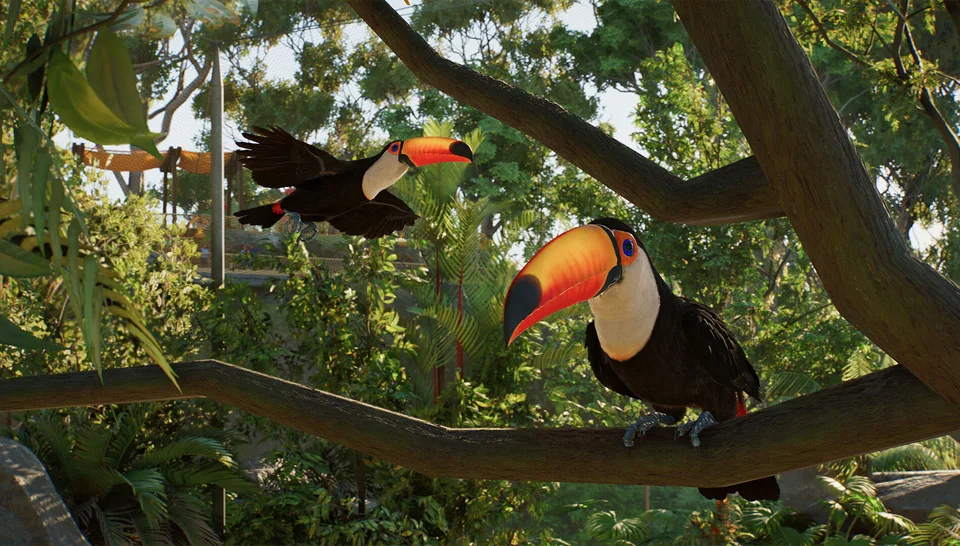
The 12 aviary animals in Planet Zoo 2 are Eurasian Bittern, Golden Eagle, Great Hornbill, Greater Flamingo, Javan Green Magpie, Long-Eared Owl, Long-Tailed Parakeet, Secretarybird, Shoebill, Toco Toucan, White-Backed Vulture, and White-Tailed Sea-Eagle. Golden Eagle is the single Deluxe animal in this category, while African Penguin and Common Ostrich remain outside it because they use terrestrial habitats. Planet Zoo 2 aviary construction should begin with the intended species because usable flying space, ground layout, water access, planting, and other requirements can all influence the design.
A tall structure can still provide poor flight space if its internal arrangement obstructs usable volume, while a broad aviary may still fail a species with particular environmental needs. In Planet Zoo 2, membership in the same enclosure category also does not establish that every bird can safely or beneficially share one habitat, so compatibility requires its own check.
The aquarium category in Planet Zoo 2 contains 37 animals: African Tigerfish, Blackspotted Puffer, Blacktip Reef Shark, Blue and Gold Fusilier, Bluespine Unicornfish, Blunthead Cichlid, Boeseman’s Rainbowfish, Brown Trout, Clown Anemonefish, Clown Loach, Clown Triggerfish, Common Rudd, Dolphinfish, Giant Gourami, Giant Grouper, Golden Trevally, Great Hammerhead, Hawksbill Turtle, Humphead Wrasse, Indian Ocean Oriental Sweetlips, Indo-Pacific Leopard Shark, Indo-Pacific Sergeant, Javanese Cownose Ray, Koi, Longfin Batfish, Ocean Sunfish, Ocellated Eagle Ray, Pacific Bluefin Tuna, Pacific Sardine, Palette Surgeonfish, Red Lionfish, Sailfin Snapper, Sand Tiger Shark, Schooling Bannerfish, Threespot Damselfish, West Indian Manatee, and Yellow Tang.
Blue and Gold Fusilier, Great Hammerhead, and Longfin Batfish require Deluxe content. The Planet Zoo 2 aquarium category includes sharks, rays, a turtle, and a manatee as well as conventional fish, so it should not be treated as synonymous with a fish-only list. Planet Zoo 2 aquarium planning should begin with the intended residents and their requirements for water conditions, usable space, social arrangements, and temperature rather than with scenery alone.
The Planet Zoo 2 freshwater fish selection includes African Tigerfish, Blunthead Cichlid, Boeseman’s Rainbowfish, Brown Trout, Clown Loach, Common Rudd, Giant Gourami, and Koi. The Planet Zoo 2 marine ray-finned fish include Blackspotted Puffer, Blue and Gold Fusilier, Bluespine Unicornfish, Clown Anemonefish, Clown Triggerfish, Dolphinfish, Giant Grouper, Golden Trevally, Humphead Wrasse, Indian Ocean Oriental Sweetlips, Indo-Pacific Sergeant, Longfin Batfish, Ocean Sunfish, Pacific Bluefin Tuna, Pacific Sardine, Palette Surgeonfish, Red Lionfish, Sailfin Snapper, Schooling Bannerfish, Threespot Damselfish, and Yellow Tang.
The cartilaginous fish are Blacktip Reef Shark, Great Hammerhead, Indo-Pacific Leopard Shark, Javanese Cownose Ray, Ocellated Eagle Ray, and Sand Tiger Shark, producing 35 fish entries when combined with the 29 ray-finned fish. In Planet Zoo 2, freshwater and marine labels provide useful first-stage groupings, but they do not establish compatibility because animals within the same broad environment can still require different temperatures, diets, space, and social conditions. Hawksbill Turtle and West Indian Manatee remain aquarium animals without belonging in the fish count, while Moon Jelly is aquatic but recorded under exhibits.
The exhibit category in Planet Zoo 2 contains 46 entries: African Tigerfish, Amazonian Giant Centipede, American Bullfrog, Axolotl, Blue and Gold Fusilier, Bluespine Unicornfish, Blunthead Cichlid, Boa Constrictor, Boeseman’s Rainbowfish, Brown Trout, Cloudless Sulphur, Clown Anemonefish, Clown Loach, Common Bluetongue, Common Rudd, Danube Crested Newt, Desert Horned Viper, Diamondback Terrapin, Eastern Brown Snake, European Peacock, Fire Salamander,
Giant Forest Scorpion, Giant Gourami, Giant Malaysian Leaf Insect, Giant Slippery Frog, Giant Tiger Land Snail, Gila Monster, Golden Poison Frog, Goliath Beetle, Indo-Pacific Sergeant, Koi, Lehmann’s Poison Frog, Menelaus Blue Morpho, Mexican Redknee, Monarch, Moon Jelly, Old World Swallowtail, Palette Surgeonfish, Red-Eyed Tree Frog, Sacred Scarab Beetle, Schooling Bannerfish, Sri Lankan Rose, Threespot Damselfish, Western Diamondback Rattlesnake, Yellow Anaconda, and Yellow Tang.
Axolotl and Blue and Gold Fusilier are the two Deluxe animals represented here. Planet Zoo 2 exhibits give zoos a way to feature smaller reptiles, amphibians, invertebrates, butterflies, jellyfish, and selected fish alongside larger habitat animals. In Planet Zoo 2, names still need careful reading because European Peacock is a butterfly entry rather than a peafowl species, and dual-placement fish remain one animal even when they appear in both aquarium and exhibit references.
Zoopedia Filters, Continents, Biomes, Conservation Status, and Edition Planning
Planet Zoo 2’s Zoopedia provides five main filters: habitat type, biome, continent, conservation status, and content pack. Each Planet Zoo 2 filter answers a different planning question, and combining them can reduce the full roster to a practical set of species for a particular project. In Planet Zoo 2, habitat type is the logical starting point when the building system is already known because it separates terrestrial habitats, aviaries, aquariums, and exhibits. The Planet Zoo 2 content pack filter becomes important when edition ownership matters, preventing a Deluxe species from becoming the centrepiece of a Standard Edition plan. Continent, biome, and conservation filters can then refine the theme without replacing the need to inspect individual animal requirements.
Planet Zoo 2 regional filters can identify species associated with Africa, Asia, Europe, North America, South America, Oceania, the Arctic, and ocean regions, although those tags are not mutually exclusive. An African area could begin with African Savannah Elephant, Lion, Black Rhinoceros, giraffes, wildebeest, and Plains Zebra, while an Asian section might include Asian Elephant, Giant Panda, Red Panda, Malayan Tapir, and Sumatran Tiger.
These Planet Zoo 2 combinations are useful for visual and educational themes, but shared geography does not establish that the animals should occupy the same habitat. In Planet Zoo 2, a zoo can create a coherent regional section using neighbouring enclosures, shared planting styles, paths, and viewing areas while preserving separate care conditions. For a genuinely mixed habitat, environmental overlap, space, social requirements, barriers, feeding, and explicit compatibility all require additional consideration.
The recorded Planet Zoo 2 biome filters include Desert, Estuarine, Grassland, Lakes and Rivers, Mangrove, Open Sea, Reef, Taiga, Temperate, Tropical, Tundra, and Wetlands. In Planet Zoo 2, applying both continent and biome filters can create more focused thematic collections, while an enclosure filter establishes which building system is needed for each selected species. Animals may appear under several biome or geographic tags, and that overlap should not be interpreted as duplication in the overall roster. Estuarine and mangrove associations are particularly useful reminders that environmental labels can describe complex conditions rather than one universal water setting. The individual Planet Zoo 2 species record remains the place to confirm what the selected animal actually requires.
In Planet Zoo 2, conservation status adds an educational layer to the Zoopedia and includes Critically Endangered, Endangered, Vulnerable, Near Threatened, Least Concern, Data Deficient, Not Evaluated, and Domesticated labels. Species consistently identified as Critically Endangered in the reviewed records include African Penguin, Black Rhinoceros, Gharial, Hawksbill Turtle, Javan Green Magpie, Lehmann’s Poison Frog, Sumatran Orangutan, Sunda Pangolin, Western Chimpanzee, Western Lowland Gorilla, White-Backed Vulture, Great Hammerhead, and Sand Tiger Shark.
Exact totals by conservation category require more caution because current public databases do not completely agree on the split between some Endangered and Vulnerable entries. That disagreement does not alter the complete roster, but any category total should be attached to a specific data version rather than presented as timeless. For Planet Zoo 2 gameplay decisions, the conservation label shown in the current Zoopedia should take priority, while educational statements about the species in the real world should also consider the relevant current conservation assessment.
Frontier connects the sequel’s conservation focus in Planet Zoo 2 with Wildlife Reserves, where players can restore environments and release suitable animals. That Planet Zoo 2 system broadens the theme beyond displaying animals inside zoo enclosures and gives conservation status additional context within the game. The conservation filter can therefore support a threatened-species collection while the Wildlife Reserve system extends the idea into habitat restoration and release. These functions remain distinct from enclosure classification, so an endangered animal does not automatically have different building requirements merely because of its conservation label. Planet Zoo 2 Zoopedia filters are most useful when treated as tools for narrowing choices before the individual animal page supplies the care details needed to build correctly.
Planet Zoo 2 edition planning should also remain separate from progression and acquisition. A species belonging to the Standard Edition may still not be immediately available in every mode, while ownership of Deluxe content does not necessarily mean the corresponding animal can be acquired instantly in a particular zoo.
The Planet Zoo 2 content pack filter answers whether the species belongs to the owned game content, while the game’s acquisition and progression systems determine whether it is currently obtainable. Clearing unnecessary filters is also useful when an expected animal appears to have disappeared from search results. The Planet Zoo 2 list provides identity and classification, but the current animal entry remains the most reliable source for decisions about care and availability.

Habitat Space, Diets, Compatibility, and Building Suitable Enclosures
Animal habitat requirements involve more than one universal area figure. Depending on the species, the game can consider usable land, aquatic area, deep water, climbable space, shelter, and flying area, while barrier strength, barrier height, and climbing protection may also matter. Published requirement snapshots can be misleading when copied without their population settings because some figures represent a single adult rather than a complete breeding group.
The reviewed public care snapshot, for example, lists Lion at 810 square metres of land and Giant Panda at 650 square metres under the official planner’s initial one-adult setting. Those values are useful references for that exact configuration, but they should not be treated as complete habitat recipes or multiplied mechanically by the number of animals.
The practical approach is to select the intended population and then inspect the resulting requirements before committing to the final enclosure. After the animals arrive, the enclosure should be checked again because terrain, scenery, objects, pathing, and access can change how much space the game recognises as usable. Aviary species need flying area considered independently from ground area, while swimming animals require sufficient usable aquatic space rather than merely the presence of water. Climbers need structures that the game actually recognises as climbable, and semi-aquatic species may need both suitable land and water in the same habitat. Visual impressions alone cannot confirm that an enclosure satisfies the simulation’s requirements.
Feeding also varies substantially across the roster because Planet Zoo 2 includes herbivores, carnivores, omnivores, insect eaters, amphibians, reptiles, birds, and aquatic species with specialized diets. Current animal records include foods such as hay, herbivore pellets, nutritionally complete meat, small whole fish, squid, algae pellets, fruit and vegetables, insects, and other specialist provisions. These categories demonstrate the diversity of the care system but should not replace the requirements shown for the selected species. A compatible feeder also needs to be placed where animals and relevant staff can use it properly. When an animal remains hungry, the full situation should be checked, including food type, quantity, placement, accessibility, and staff service rather than assuming the diet itself is wrong.
Mixed-species habitats require particular caution because a shared continent or biome provides only thematic evidence, not proof of compatibility. A practical comparison should begin with enclosure type and then examine environmental overlap, population limits, barriers, usable space, food provision, and species-specific social information. Some compatibility tools only compare shared biomes or habitat types, while others interpret explicit Zoopedia statements, so the meaning of a positive result depends on what the tool actually measures.
It is also useful to distinguish simple tolerance from a beneficial interspecies relationship because two animals may coexist without receiving any positive enrichment or social effect from one another. When the available evidence is incomplete, separate neighbouring habitats can preserve a regional theme without forcing animals into a shared enclosure.
Population changes can alter a habitat that previously worked well. Births, maturation, new arrivals, or changes in group composition may increase space requirements or disrupt the social structure, making repeated checks necessary after the original construction is complete. Shared habitats may also need different feeding equipment or food types for different residents, and one suitable feeder should not be assumed to serve every species present.
Welfare should be considered as a combination of food, water, space, terrain, plants, social needs, and enrichment rather than as a single successful metric. An animal can be well fed while still lacking sufficient shelter, social structure, climbing space, water, or appropriate terrain. Continuing observation is therefore part of successful zoo management rather than a one-time validation performed when the habitat is first built.
The strongest way to use the Planet Zoo 2 animal roster is to treat it as the beginning of enclosure planning rather than the end. The full list identifies what animals exist and which broad systems they use, while Zoopedia filters narrow the possibilities according to ownership, geography, biome, conservation status, and habitat type. Individual animal entries then supply the information needed for actual care decisions, including space, environmental requirements, feeding, social needs, and compatibility.
Where public databases disagree, especially on conservation labels or numerical care values, the current species entry and information displayed inside the installed game should take priority. This approach keeps the complete 136-animal roster useful without turning broad categories into assumptions about how every species should be housed.

Frequently Asked Questions (FAQs)
- How many animals are in Planet Zoo 2 at launch?
The current launch databases record 136 unique animal entries when the base game and Deluxe content are counted together. Frontier’s own launch announcement uses the broader wording of more than 130 animals, which is consistent with that total without giving the exact number. The 136 figure refers to unique roster entries rather than adding together every habitat, aviary, aquarium, and exhibit placement. Because some species can appear in more than one enclosure category, those category totals are higher than the number of distinct animals. Future updates or downloadable content may also change the total after launch. - How many animals are included in the Planet Zoo 2 base game?
The recorded launch roster contains 130 base game animals after the six Deluxe species are removed from the 136 total. This figure is based on the current edition tags used in launch databases and should be understood as a snapshot of the release roster. Older promotional lists may show lower totals because they were published before every species had been revealed. Base game ownership also does not necessarily mean every animal is instantly available in every mode, since progression and acquisition systems can affect when a species can be obtained. The content pack filter is the most useful way to separate ownership from in-game availability. - Which six animals come with Planet Zoo 2 Deluxe Edition?
The six Deluxe animals are Axolotl, Blue and Gold Fusilier, Golden Eagle, Golden Lion Tamarin, Great Hammerhead, and Longfin Batfish. They are deliberately spread across several enclosure systems rather than forming one single habitat theme. Golden Lion Tamarin uses the terrestrial habitat system, Golden Eagle belongs to aviaries, Great Hammerhead and Longfin Batfish are aquarium animals, and Axolotl is an exhibit species. Blue and Gold Fusilier is especially notable because it supports both aquarium and exhibit placement. Players planning around one of these animals should confirm that they own the Deluxe content or the relevant upgrade before building an enclosure around it. - Why do the animal category totals exceed 136?
The enclosure categories contain more placements than there are unique animals because some species support more than one display system. Sixteen fish appear in both the aquarium and exhibit lists, so they are counted once in the full roster but twice when category placements are added together. That produces 152 category placements across 136 unique animal entries. The overlap does not mean the game contains duplicate animals or separate versions of those fish. It simply means the same species can be housed through more than one supported enclosure type. - Does Planet Zoo 2 include flying birds?
Yes. The recorded aviary roster contains 12 flying bird species, including Toco Toucan, Great Hornbill, Shoebill, Golden Eagle, White-Tailed Sea-Eagle, Long-Eared Owl, and several others. Golden Eagle is the Deluxe bird within that group. The wider roster actually contains 14 birds because African Penguin and Common Ostrich are classified under terrestrial habitats rather than aviaries. This shows why animal class and enclosure type should not be treated as the same thing. Aviary planning also needs to consider usable flying space, ground area, water, planting, and species-specific compatibility rather than simply providing a tall enclosure. - Which sharks are in Planet Zoo 2?
The launch aquarium roster includes Blacktip Reef Shark, Great Hammerhead, Indo-Pacific Leopard Shark, and Sand Tiger Shark. Great Hammerhead is part of the Deluxe content, while the other three are included in the recorded base roster. Javanese Cownose Ray and Ocellated Eagle Ray are also large cartilaginous fish in the aquarium collection, but they are rays rather than sharks. Their inclusion can make general aquatic lists look broader than a shark-only list. Players should check each species’ individual requirements before assuming that all sharks or rays can share the same tank. - Are dolphins, whales or great white sharks included?
No dolphins, whales, or great white sharks appear in the reviewed launch roster. Dolphinfish is included, but despite its name it is a fish rather than a dolphin or other cetacean. This is a good example of why animal names need to be read carefully when searching the Zoopedia or public databases. The presence of a familiar word in a species name does not necessarily indicate the animal group someone expects. If Frontier adds new species later, the current roster should be checked again rather than assuming the launch list will remain unchanged permanently. - Can fish live in Planet Zoo 2 exhibits?
Yes, some fish can. Sixteen recorded fish species support both aquarium and exhibit placement, including Koi, Clown Anemonefish, Brown Trout, Yellow Tang, and several others. These species therefore appear in both enclosure category lists while still counting only once in the complete animal roster. The choice between an aquarium and an exhibit should be based on the species’ supported classifications and the type of display the player wants to create. Checking the current Zoopedia entry is the safest way to confirm which systems are available for a particular fish. - Where should players check animal space requirements?
Players should use the current species entry and the care information shown inside the game when planning enclosure size. Space requirements can include usable land, aquatic area, deep water, climbable space, shelter, or flying area depending on the species. Published values may sometimes represent only one adult animal, so copying a single number without checking the intended group size can produce an unsuitable habitat. Requirements also should not be multiplied mechanically because the game may calculate additional animals differently. After placing the animals, the enclosure should be checked again because terrain, objects, and accessibility can affect how much space the game actually recognises as usable. - Can animals sharing a biome live in the same habitat?
Not necessarily. Sharing a biome or continent is useful for building a visual or geographic theme, but it does not prove that two species are socially or practically compatible. A proper mixed-species assessment should also consider enclosure type, temperature, usable space, population limits, barriers, food, social needs, and any explicit compatibility information shown in the Zoopedia. Two animals may tolerate the same landscape while still requiring different care or failing to provide any positive social benefit to each other. When the evidence is unclear, neighbouring enclosures can preserve the same regional theme without forcing incompatible species into a shared habitat.

Conclusion
The Planet Zoo 2 launch roster contains 136 recorded animals, with six assigned to Deluxe content and 130 remaining in the base game collection. Its breadth comes from the way those species are distributed across terrestrial habitats, aviaries, aquariums, and exhibits, including some animals that can use more than one enclosure system. Understanding those classifications makes the roster far more useful than a simple alphabetical list because it immediately connects each species with the type of space players need to plan.
It also explains why category totals can exceed the number of unique animals without indicating duplicates in the full roster. For anyone building a new zoo, the list is therefore best treated as the starting point for enclosure planning rather than the final answer.
The Zoopedia provides the information needed to turn a favourite species into a workable exhibit. Players should identify the exact animal, confirm whether it belongs to the base game or Deluxe content, check its enclosure type, and then review its current environmental, social, feeding, and space requirements. Aquarium and aviary animals deserve particular attention because usable water or flying space may matter more than the visual size of the structure alone. Terrestrial animals can also require swimming, climbing, shelter, or other specialized features that are not obvious from the category name. Checking the animal again after placement is equally important because terrain, objects, and population changes can affect whether the game recognises the enclosure as suitable.
The strongest zoo plans connect the roster to the intended population, theme, and practical care requirements. Shared geography or biome can create a convincing regional identity, but those tags do not automatically establish that two species should live together. Compatibility, usable space, diet, social structure, barriers, and environmental overlap still need to be assessed separately before creating a mixed habitat. When those needs conflict, neighbouring enclosures can preserve the same visual theme without compromising animal welfare. Keeping theme, ownership, enclosure type, and care requirements distinct makes it easier to build attractive collections that also function properly for the animals living in them.
Sources and Citations
- Frontier Developments — launch announcement via ACCESS Newswire
Planet Zoo 2 Is Out Now!
The primary launch announcement confirms the October 13, 2026 release, more than 130 animals, and the introduction of aquariums, aviaries, and wildlife reserves. - Planet Zoo 2 — official Zoopedia
Official Zoopedia
This is the official animal reference. Direct access may be restricted, so use the independent databases below to cross-check individual entries. - PZ2 Animals — complete animal roster
Planet Zoo 2 Animals: Full Animal List
Provides a searchable roster of 136 Zoopedia entries, including enclosure categories and Deluxe designations, with a launch-edition snapshot dated October 13, 2026. - Planet Zoo 2 Wiki — animal database
Planet Zoo 2 Wiki Animal Database
Provides a searchable database of 136 species, including scientific names, habitat systems, biomes, conservation status, and content-pack classifications. - Game Guide Port — complete animal list
Planet Zoo 2: All 136 Zoopedia Species
Offers an independent comparison of all 136 launch entries, their enclosure types, and their base-game or Deluxe classifications. - PZ2 Animals — Zoopedia and habitat requirements
PZ2 Animals Zoopedia
Use this for individual animal records and habitat-planning information. Check each current entry for exact population and habitat requirements rather than treating numerical snapshots as permanent. - Planet Zoo 2 Wiki — Zoopedia guide
Zoopedia: Fields, Filters and the Reveal Campaign
Explains the Zoopedia’s five filters, animal-entry fields, and launch roster. The guide is an independent fan resource, not an official Frontier publication.
Recommendations
- The Blood of Dawnwalker Launch Issues: PC, PS5 and Xbox Fixes
- Nintendo Blocks Tomodachi Life Phone Sharing, But These Workarounds Still Exist
- Marathon’s First PvE-Only Mode Sounds Incredible: Bungie Finally Builds a Solo-Friendly Experience
- Marathon PvE Mode Temporarily Triples Player Count
- Avatar: Seven Havens Trailer Divides Fans Over Animation Despite Its Bold New Story
- The second-best year in CD PROJEKT’s history — key takeaways from the 2025 annual report
- EVE Online Cradle of War Expansion Makes the Game Safer for New Players
- Lightyear Frontier 1.0 Releases November 4, 2026: New Features, Platforms, and Mech Upgrades
- Silent Hill: Townfall Is Coming September 24, 2026: Trailer Breakdown, Story, and Platforms
- MSI Claw 8 EX AI+ Review: Big Money for Big Performance, is it Worth the Premium?



































































































