












In This Article (7 sections)
Best Standard Cards From Magic: The Gathering Reality Fracture Ranked for 2026
The best Standard cards from Magic: The Gathering Reality Fracture are attracting attention from competitive players looking to improve existing decks, explore new strategies, and understand how the expansion could influence the format. Released on October 2, 2026, Reality Fracture introduces powerful creatures, flexible interaction spells, returning Magic favorites, and new mechanics connected to Jace Beleren’s attempt to reshape the Multiverse. The set takes place within the Echoverse, an alternate reality created by Jace, with its story influencing legendary characters, card abilities, and deckbuilding possibilities.
Reality Fracture offers potential additions to aggressive, control, midrange, and graveyard strategies. Darklight Phoenix, Stingcaster Mage, The Theorist, Jace Beleren, Theorix Charm, and Tarmogoyf are among the most interesting early candidates. However, because the expansion is still relatively new as of October 8, 2026, their competitive potential should be evaluated through card efficiency, consistency, synergy, and early testing rather than treating preliminary rankings as established tournament results.
Ranking the strongest cards requires considering mana costs, immediate impact, versatility, and compatibility with existing Standard archetypes. Some mythic rares offer powerful effects but require specialized support, while certain uncommons can improve several decks without demanding substantial resources. One early Draftsim assessment ranked Darklight Phoenix first among its Standard prospects, followed by Stingcaster Mage, highlighting the potential importance of recurring threats and spell recursion.
The most promising Reality Fracture cards include:
• Darklight Phoenix: A recurring flying threat that rewards sacrifice strategies and repeated creature deaths.
• Stingcaster Mage: An aggressive red creature with haste that allows players to reuse instants or sorceries from their graveyard.
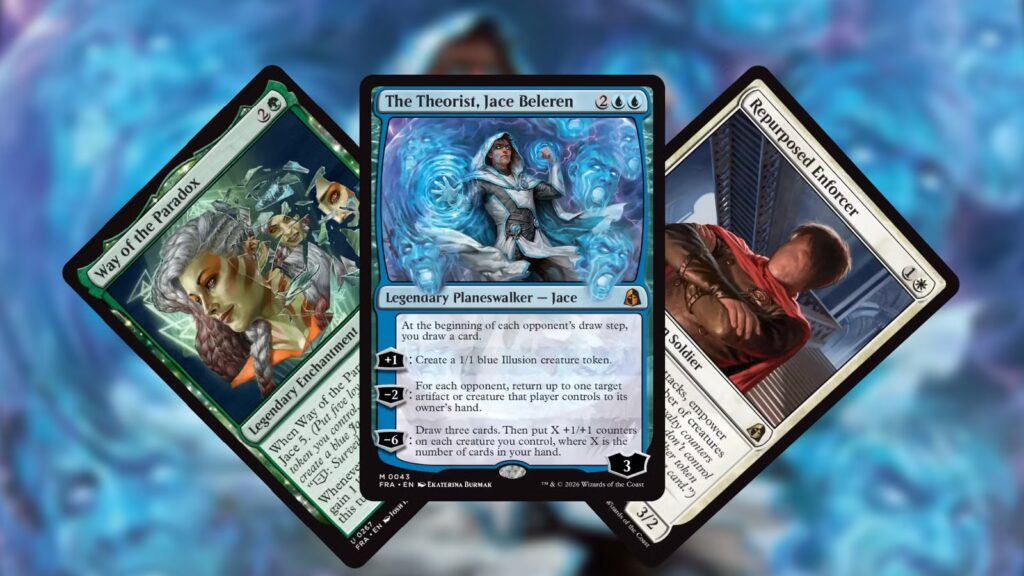
• The Theorist, Jace Beleren: A planeswalker offering sustained value and defensive options for slower strategies.
• Theorix Charm: A flexible Dimir instant providing conditional countermagic, creature interaction, or graveyard development.
• Tarmogoyf: An efficient green creature whose power and toughness increase according to the variety of card types in graveyards.
• Countersculpt: A counterspell with additional potential in strategies built around Jace.
• Yuriko, Hope from the Shadows: An inexpensive creature offering flash, combat interaction, and surveil.
• Seasoned Cryomancer: A card worth investigating in strategies centered on blue mana.
• Liliana the Faultless: A potential option for black decks focused on resource exchanges.
• Ajani Resolute and Ajani Unrelenting: Planeswalker options that may support different midrange strategies.
Darklight Phoenix is one of the expansion’s strongest candidates for decks built around specific synergies. The four mana creature has three power, two toughness, flying, and haste. At the beginning of combat on its controller’s turn, it can return from the graveyard attacking if two or more creatures have died that turn. This ability makes it especially attractive for sacrifice decks that regularly exchange expendable creatures for additional resources. Because opposing creatures also count toward the death requirement, removal spells and combat exchanges can contribute to its return.
Phoenix becomes difficult to manage when opponents rely primarily on removal that destroys creatures. Even after being destroyed, it may return if its controller can repeatedly satisfy the creature death condition. However, exile effects, graveyard hate, and inconsistent sacrifice support can weaken the strategy. Players should therefore construct decks that actively support Phoenix rather than treating it as a universally effective four mana threat.
Stingcaster Mage provides another important offensive option. The two mana red Human Wizard is a 2/1 creature with haste. When it enters the battlefield, a targeted instant or sorcery in its controller’s graveyard gains flashback until the end of the turn, with a flashback cost equal to its mana cost. This allows players to reuse an appropriate burn spell, removal spell, or card selection effect while adding an immediate attacker. The reused spell must still be paid for, making mana management essential. Its combination of early aggression and later value makes Stingcaster Mage particularly interesting for red decks containing efficient spells.
Tarmogoyf returns as a recognizable creature with significant historical importance, but its reputation does not automatically establish it as a Standard staple. Its power and toughness depend on the number of different card types represented among all graveyards, making it attractive to green and black decks using removal, discard, and cards that mill their controller’s library.
A diverse graveyard can make Tarmogoyf an efficient attacker early in the game, but repeated copies of the same card type do not increase its statistics further. Modern Standard also contains creatures that generate tokens, draw cards, or provide value immediately when entering the battlefield. Tarmogoyf generally relies on its combat statistics, making it vulnerable to efficient removal without necessarily replacing itself. Its competitive usefulness will depend on whether graveyard strategies can increase its size naturally while maintaining a consistent overall plan.
The Theorist, Jace Beleren is a promising option for control players who want to generate advantages over several turns. Its abilities support resource development during longer games, including opportunities to gain value through interaction at instant speed. The planeswalker also offers defensive utility through a small creature token, a bounce effect, and an ultimate ability that rewards protecting it. Control decks can benefit from these abilities when they already contain enough removal and countermagic to stabilize the battlefield. However, spending mana on a planeswalker against an aggressive opponent can be risky if the player cannot protect it. The Theorist is therefore more attractive in carefully constructed control strategies than in decks seeking immediate combat pressure.
Other mythics, including Seasoned Cryomancer, Liliana the Faultless, Ajani Resolute, Ajani Unrelenting, Avatar of Burgeoning Echoes, Aerid Konstrari, and Uldaros Theorix, provide additional deckbuilding possibilities. Their usefulness depends on how well their abilities support particular archetypes. Mythic rarity and early market prices should not be treated as reliable measures of tournament strength, particularly when less expensive cards may provide more consistent advantages.

Best Reality Fracture Cards for Aggro, Control, Midrange, and Graveyard Decks
Reality Fracture could influence several Standard strategies through recurring creatures, spell recursion, planeswalker support, and flexible interaction. Its most promising cards generally work best when they reinforce a deck’s existing game plan rather than requiring unrelated combinations. Early MTG Arena tracking has identified Mono Black Darklight Phoenix and Dimir Darklight Phoenix as experimental archetypes, although their initial records do not establish either as a dominant strategy.
Aggressive decks benefit from threats that apply immediate pressure and remain useful later in the game. Stingcaster Mage is especially relevant because haste provides immediate combat potential, while its flashback ability can generate additional value from spells already used. A red deck containing inexpensive burn or removal spells can potentially reuse those effects without sacrificing its aggressive identity. Darklight Phoenix may also fit aggressive sacrifice strategies, but its black mana requirements and recursion condition make it less suitable for ordinary red aggression.
Green aggressive and tempo decks can investigate Tarmogoyf as an efficient creature when their supporting cards naturally fill graveyards. Chandra, Torch of Defiance is another recognizable option for red strategies that want additional resources beyond their opening assault. However, aggressive players should prioritize an efficient mana curve instead of including every powerful card available. Expensive or conditional threats can undermine the speed that makes these decks successful.
Control decks receive several useful tools through The Theorist, Jace Beleren, Theorix Charm, Countersculpt, and Yuriko. The Theorist offers continuing value when protected, while Countersculpt may become more efficient when its conditions involving Jace are satisfied. These cards encourage strategies that can defend valuable permanents while maintaining enough interaction to prevent opponents from developing overwhelming threats.
Theorix Charm is particularly appealing because it provides three different effects for one blue and one black mana:
• Conditional countermagic: Counters a target noncreature spell unless its controller pays two additional mana.
• Creature interaction: Gives a target creature minus two power and minus two toughness until the end of the turn.
• Graveyard development: Mills three cards and then draws one card.
These options allow Theorix Charm to serve different purposes depending on the matchup. Against aggressive decks, its creature mode can remove smaller threats or influence combat. Against slower opponents, the counterspell mode can interrupt important noncreature spells. Its ability to mill cards becomes especially useful when neither interaction mode is needed or when the deck benefits from placing cards into its graveyard. Nevertheless, the spell has limitations. Opponents with spare mana can pay for its counterspell mode, while larger creatures may survive the reduction effect. It works best alongside dependable removal and countermagic rather than replacing every specialized answer.
Yuriko, Hope from the Shadows offers another flexible option for blue decks. The legendary 1/1 Human Ninja costs one blue mana and has flash, allowing it to be cast at instant speed. When Yuriko enters the battlefield, its controller can either reduce a target creature’s power according to the number of cards in their graveyard or surveil two cards. The power reduction can help protect a player’s life total, weaken an attacker, or defend a planeswalker.
Surveil 2 improves future draws while placing useful cards into the graveyard. These abilities make Yuriko particularly interesting for Dimir Tempo, Control, and strategies involving milling cards from the player’s own library. However, it should not be confused with Yuriko, the Tiger’s Shadow, the Commander card associated with combat damage and card advantage. The Reality Fracture version fills a different competitive role.
Midrange and sacrifice decks may benefit most from the expansion’s graveyard interactions. Darklight Phoenix rewards creature deaths, while Theorix Charm and Yuriko help develop graveyard resources. Black and red sacrifice strategies can combine expendable creatures, repeatable sacrifice outlets, removal spells, and Phoenix to create recurring offensive pressure. The important advantage is that these cards can contribute to the same strategy without becoming completely dependent on one combination. Sacrifice outlets can generate value independently, while expendable creatures can block attackers or support other abilities. When Phoenix is available, those ordinary exchanges can also enable a recurring flying attacker.
Midrange decks featuring black mana can investigate Liliana the Faultless, while strategies combining green and black mana may use Tarmogoyf alongside removal and graveyard development. Theorix Charm provides another possible addition for Dimir Midrange because it combines interaction with card selection.
Several Reality Fracture combinations deserve testing:
• Darklight Phoenix and sacrifice outlets: Cause two or more creatures to die before combat to enable Phoenix’s return from the graveyard.
• Stingcaster Mage and cheap spells: Reuse an instant or sorcery from the graveyard by paying its flashback cost.
• Theorix Charm and graveyard recursion: Mill cards to provide additional resources while replacing the spell.
• Yuriko and graveyard development: Use surveil to improve future draws and support strategies that benefit from cards in the graveyard.
• The Theorist and Countersculpt: Combine planeswalker value with interaction that benefits from conditions involving Jace.
• Tarmogoyf and varied card types: Use removal, discarded cards, and milling effects to increase the creature’s statistics.
These combinations are not guaranteed winning strategies. Their effectiveness depends on whether the supporting cards remain useful when the central payoff is unavailable. Sacrifice decks, for example, can become inconsistent when they draw too many outlets without suitable creatures or too many expendable creatures without meaningful rewards. The same principle applies to control decks. Including several planeswalkers without sufficient removal can create weaknesses against aggression, while excessive interaction without reliable finishers may prevent the deck from closing games.
The strongest Reality Fracture decks will likely be those that balance synergy with consistency. Players should ensure that their threats, interaction, card selection, and mana requirements reinforce the same strategy while remaining functional against different opponents.

Best Budget Reality Fracture Cards, MTG Arena Crafting Priorities, and Standard Meta Predictions
Choosing which Reality Fracture cards to craft on MTG Arena requires considering wildcard costs, existing collections, and the developing Standard metagame. An exciting mythic rare may offer substantial potential, but crafting several copies without owning the necessary supporting cards can result in an incomplete or inconsistent deck. Theorix Charm and Yuriko, Hope from the Shadows are among the most appealing cards at lower rarities. Both provide useful effects without demanding mythic wildcards, making them attractive to players building Dimir Control, Tempo, or graveyard strategies. Theorix Charm offers several forms of interaction within one card, while Yuriko combines flash, combat utility, and surveil.
Countersculpt is another card worth investigating for players building around mechanics involving Jace. Its effectiveness depends on how consistently the deck can satisfy its supporting conditions, so players should test it before relying on its most favorable interaction. For players considering expensive cards, the strongest approach is to prioritize those that complete an existing deck. Someone already playing black sacrifice may benefit from crafting Darklight Phoenix, while a player with an established red deck focused on spells may find Stingcaster Mage more immediately useful. Control enthusiasts with suitable interaction and lands can investigate The Theorist, Jace Beleren, while players using green and black mana should compare Tarmogoyf with other available threats.
Practical crafting priorities include:
• Dimir Control and Midrange: Consider Theorix Charm and Yuriko for flexible interaction and graveyard support.
• Black sacrifice decks: Investigate Darklight Phoenix when reliable sacrifice outlets and supporting creatures are available.
• Red aggressive decks: Test Stingcaster Mage alongside inexpensive instants and sorceries.
• Planeswalker control: Evaluate The Theorist, Jace Beleren and Countersculpt when the deck can protect its central engine.
• Midrange decks using green and black: Compare Tarmogoyf with competing creatures before investing resources.
• Budget players: Prioritize useful commons and uncommons before committing to expensive mythic strategies.
Players should also distinguish between physical card prices and Arena crafting costs. A relatively inexpensive tabletop mythic still requires a mythic wildcard on Arena, while an uncommon with a higher physical price generally requires only an uncommon wildcard.
Another consideration is the difference between Standard Best of One and Best of Three matches. Best of One rewards cards that provide flexibility against unfamiliar opponents because there is no opportunity to sideboard between games. Modal interaction such as Theorix Charm can therefore be particularly useful. Best of Three allows players to adjust their decks after the first game, potentially making specialized removal, countermagic, and graveyard answers more valuable. A card that performs well in one environment may be less effective in the other.
The expansion’s early metagame impact remains uncertain. Darklight Phoenix has inspired sacrifice and graveyard experimentation, while Stingcaster Mage could strengthen red strategies built around efficient spells. Theorix Charm and Yuriko offer useful additions to Dimir decks, and The Theorist may encourage control players to experiment with strategies centered on planeswalkers. Tarmogoyf remains a recognizable option, but its competitive position will depend on whether graveyard diversity provides sufficient pressure compared with modern creatures that generate immediate value.
Players should also verify Standard legality when evaluating Reality Fracture products. Cards from the main expansion use the FRA set code, while supplementary Commander products use FRC. A card appearing in a related Commander product does not automatically make that printing legal in Standard, so legality should be checked individually.
The most reliable deckbuilding approach is to begin with a proven strategy, identify which Reality Fracture cards improve its weaknesses, and test those additions before committing valuable wildcards. Early Arena statistics can reveal experimentation, but small samples and changing matchups make it premature to declare any new strategy dominant.
Ultimately, Darklight Phoenix, Stingcaster Mage, The Theorist, Jace Beleren, Theorix Charm, and Yuriko represent some of the expansion’s most interesting competitive possibilities. Their lasting importance will depend on tournament results, matchup performance, and how successfully players combine them with existing Standard cards. For now, Reality Fracture offers several promising directions for aggressive, control, midrange, and graveyard decks. Players who focus on consistency, efficient interaction, and meaningful synergies will be better positioned to identify which additions deserve a permanent place in their collections.
Frequently Asked Questions (FAQs)
- What are the best Standard cards from Magic: The Gathering Reality Fracture?
Darklight Phoenix, Stingcaster Mage, The Theorist, Jace Beleren, Theorix Charm, and Countersculpt are among the most promising Reality Fracture cards for Standard. Darklight Phoenix supports sacrifice decks through its graveyard recursion, while Stingcaster Mage provides aggressive pressure and allows players to reuse spells. The Theorist offers potential long term value for control strategies, and Theorix Charm provides flexible interaction. However, these rankings remain provisional because Reality Fracture was released on October 2, 2026, and competitive results are still developing. - Is Darklight Phoenix good in MTG Standard?
Darklight Phoenix has strong potential in sacrifice and graveyard strategies because it can return from the graveyard attacking when two or more creatures have died during the turn. This allows decks with sacrifice outlets, expendable creatures, and removal spells to generate recurring offensive pressure. Its flying and haste make each successful return immediately threatening. However, the card requires consistent support, costs four mana, and remains vulnerable to exile effects and graveyard hate. It is most effective when the deck naturally satisfies its revival condition. - Is Tarmogoyf still powerful in Reality Fracture Standard?
Tarmogoyf remains an efficient potential threat because its size depends on the number of different card types represented among all graveyards. Green black midrange decks using removal, discard, and self mill may be able to increase its statistics without changing their overall strategy. However, modern Standard contains creatures that generate value immediately through additional abilities. Tarmogoyf generally relies on combat strength, making it vulnerable to efficient removal. Its effectiveness depends on graveyard development, the available alternatives, and the surrounding metagame. - What is the best Reality Fracture card for control decks?
The Theorist, Jace Beleren is one of the strongest candidates because it can provide sustained value and defensive utility in longer games. Control decks capable of protecting the planeswalker may benefit from repeated activations and accumulated resources. Theorix Charm is another useful option because it combines conditional countermagic, creature interaction, and card selection. Countersculpt may also support Jace centered builds. The best choice ultimately depends on the deck’s colors, available interaction, and expected matchups. - Is Theorix Charm worth playing in Standard?
Theorix Charm is worth testing in Dimir Control, Midrange, and graveyard strategies because its three modes provide flexibility. It can counter a noncreature spell unless its controller pays two mana, give a creature minus two power and toughness, or mill three cards and draw one. These abilities allow it to remain useful in several situations. However, its counterspell becomes less effective when opponents have spare mana, and its creature mode cannot remove every threat. It performs best alongside stronger dedicated answers. - Which Reality Fracture cards are best for aggressive decks?
Stingcaster Mage is one of the strongest aggressive candidates because it provides a 2/1 creature with haste for two mana and allows its controller to reuse an instant or sorcery from the graveyard. This can generate additional damage, removal, or card advantage while maintaining pressure. Darklight Phoenix also supports aggressive sacrifice strategies through flying, haste, and recursion. Tarmogoyf may fit green aggressive decks when graveyards contain enough card types. The best choices are those that support a consistent mana curve and influence combat quickly. - Is Yuriko, Hope from the Shadows good in Standard?
Yuriko offers useful flexibility for one blue mana, making it an interesting option for tempo, control, and graveyard decks. Its flash ability allows players to deploy it during an opponent’s turn, while its entrance effect can reduce a creature’s power or surveil two cards. The power reduction can help prevent combat damage, and surveil improves future draws while supporting graveyard strategies. Its uncommon rarity also makes it accessible to budget players. However, its effectiveness depends on whether the deck benefits from these abilities and its small creature body. - What is the best Reality Fracture mythic rare to craft on MTG Arena?
The best mythic depends on the player’s existing deck and preferred strategy. Darklight Phoenix is attractive for sacrifice decks with reliable creature death effects, while Stingcaster Mage suits red decks containing inexpensive spells worth reusing. The Theorist, Jace Beleren may be worthwhile for control players who can protect it and generate repeated value. Players should avoid crafting several copies based only on early rankings or popularity. Completing a functional deck is generally more valuable than collecting powerful cards that lack the necessary support. - Are all Reality Fracture cards legal in Standard?
No. Standard legality depends on the individual card and the product in which it appears. Reality Fracture’s main expansion uses the FRA set code and contains Standard legal cards. However, supplementary Commander products using the FRC code do not automatically make their cards legal in Standard. A card may still be legal because of another qualifying printing, so players should check each card’s current legality before entering tournaments or using wildcards. This distinction is especially important when reviewing complete set lists that include Commander cards and alternate treatments. - Will Reality Fracture change the MTG Standard meta in 2026?
Reality Fracture could influence several Standard archetypes through recurring creatures, spell recursion, flexible interaction, and planeswalker support. Darklight Phoenix may strengthen sacrifice strategies, while Stingcaster Mage provides new opportunities for aggressive red decks. Theorix Charm, Yuriko, and Jace related cards could also influence Dimir and control builds. However, the expansion’s lasting competitive impact remains uncertain shortly after its October 2, 2026, release. Tournament results, matchup performance, and continued deck optimization will determine which cards become established staples.

Conclusion
The best Standard cards from Magic: The Gathering Reality Fracture offer promising options for aggressive, control, midrange, and graveyard strategies following the expansion’s October 2, 2026, release.
Darklight Phoenix stands out for sacrifice decks through its recurring graveyard ability, while Stingcaster Mage provides red strategies with haste and spell recursion. The Theorist, Jace Beleren offers potential card advantage for control players, and Theorix Charm provides versatile interaction for Dimir decks.
Meanwhile, Tarmogoyf remains an interesting option for graveyard focused midrange strategies, while Yuriko, Hope from the Shadows offers affordable tactical flexibility. These cards demonstrate that competitive value is not limited to expensive mythic rares.
Although early evaluations are encouraging, Reality Fracture’s competitive impact remains uncertain. Tournament results and continued deck experimentation will determine which cards become established Standard staples. For now, the expansion provides several opportunities for players looking to strengthen their decks throughout the remainder of 2026.
Sources and Citations
- Wizards of the Coast, Magic: The Gathering Products.
https://www.magic.wizards.com/en/products - Wizards of the Coast, Collecting Reality Fracture.
https://magic.wizards.com/en/news/feature/collecting-reality-fracture - Wizards of the Coast, Reality Fracture Update Bulletin.
https://www.magic.wizards.com/en/news/announcements/reality-fracture-update-bulletin - Wizards of the Coast, Planeswalker’s Guide to Reality Fracture.
https://magic.wizards.com/en/news/magic-story/planeswalkers-guide-to-reality-fracture - Draftsim, The 34 Best Reality Fracture Cards for Standard.
https://draftsim.com/mtg-reality-fracture-standard-cards - Draftsim, The 44 Best Cards in Reality Fracture Ranked.
https://draftsim.com/mtg-reality-fracture-cards - MTG Standard, Reality Fracture Card Gallery.
https://www.mtg-standard.com/set-gallery/FRA - Untapped.gg, Standard Mono Black Darklight Phoenix.
https://mtga.untapped.gg/constructed/standard/archetypes/6192/mono-black-darklight-phoenix - Untapped.gg, Standard Dimir Darklight Phoenix.
https://mtga.untapped.gg/constructed/standard/archetypes/6189/dimir-darklight-phoenix - MTG Nexus, Theorix Charm Card Details.
https://www.mtgnexus.com/cards/reality-fracture/129731-theorix-charm - MTG.WTF, Yuriko, Hope from the Shadows.
https://mtg.wtf/card/fra/226/Yuriko-Hope-from-the-Shadows - MTG.WTF, Stingcaster Mage.
https://mtg.wtf/card/fra/329/Stingcaster-Mage - Lords of Gaming, Top 5 Best Reality Fracture Cards.
https://lordsofgaming.net/2026/09/top-5-best-reality-fracture-best-cards/ - PreconForge, Reality Fracture MTG Arena Best Cards to Craft.
https://preconforge.com/reality-fracture-mtg-arena-best-cards-to-craft/
Recommendations
- Heart Machine Workers Form Union After Layoffs: Hyper Light Drifter Studio Joins CWA Local 9003
- PlayStation’s New DRM Policy Might Reportedly Lock You Out of Your Games: What the 30-Day Online Check-In Rumor Means for PS5 and PS4 Owners
- Mina the Hollower Has a New Release Date and an Aggressively Low Price: May 29 Launch and $19.99 Cost Explained
- The Mandalorian and Grogu Box Office Opening Explained
- Silo Season 3 Review: Release Date, Plot, Cast, and Early Reactions to Apple TV+’s Sci-Fi Hit
- Goblin Company Guide: Co-Op Mining, Survival, and Giant Crystal Hunts
- Cyberpunk 2077 Leaves Xbox Game Pass September 15, 2026
- Epic Games Is Suing A Major Fortnite Leaker—Who Secretly Worked For Epic The Whole Time (AdiraFNInfo Lawsuit Explained)
- Paralives: How to Deal with Fires, Complete Fire Safety & Emergency Guide
- The Sword Art Online Team Explains Why the Aincrad Arc Finally Gets a Full RPG Adaptation



































































































