











In This Article (8 sections)
Zach Cregger’s Resident Evil Movie Release, Story and Raccoon City Setting
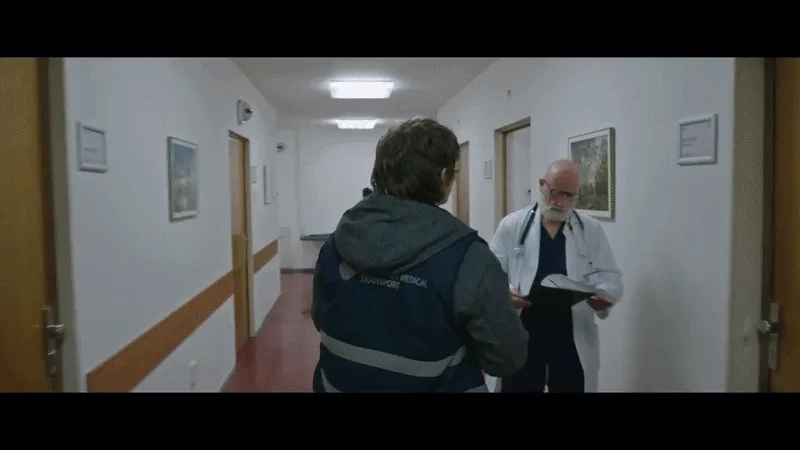
Zach Cregger’s Resident Evil movie is almost here. As of September 16, 2026, Sony’s latest live action interpretation of Capcom’s survival horror franchise is scheduled to reach US cinemas on September 18, placing its theatrical debut only two days away. Austin Abrams stars as Bryan, a medical courier whose seemingly ordinary delivery turns into a night long fight for survival as Raccoon City collapses around him.
The film is not a direct retelling of Resident Evil 2 and does not recast Leon Kennedy, Claire Redfield or the other familiar heroes. Instead, Cregger is telling an original story set around the catastrophe associated with Raccoon City while attempting to reproduce the games’ resource anxiety, escalating danger, grotesque creatures and sense that every journey becomes progressively worse. Bryan is deliberately presented as an inexperienced survivor rather than an elite police officer, soldier or established game protagonist, allowing the audience to discover the practical rules of survival alongside him.
Resident Evil Movie State of Play Clip, Falling Zombies and Practical Stunt
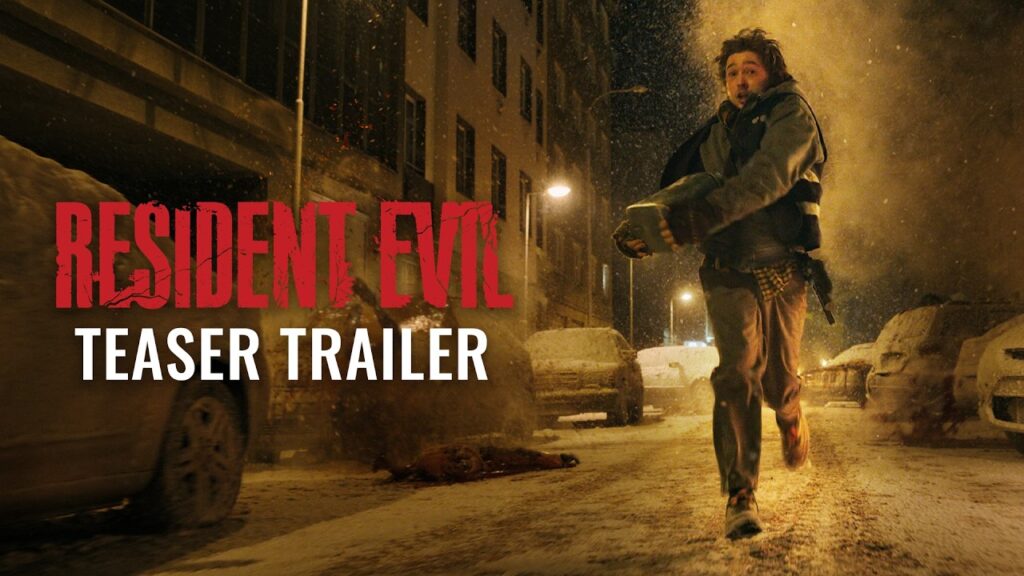
The September 2026 PlayStation State of Play presentation gave audiences another substantial look at Resident Evil through an exclusive clip rather than simply recycling the earlier theatrical trailer. The footage focuses on Bryan running down a snow-covered city street while infected people plunge from rooftops and surrounding buildings, crashing into the road, vehicles and nearby objects. Earlier promotional footage had shown only brief glimpses of this sequence, but the State of Play appearance gave the action and its escalating danger considerably more room to unfold. Instead of approaching only through doors, alleys or sidewalks, threats arrive from above, turning the falling bodies into projectiles and making the surrounding environment unsafe in every direction.
The sequence also establishes an important discovery for Bryan. After surviving the barrage, he observes the destruction and realises that the creatures can die, allowing the audience to learn about the outbreak alongside someone experiencing it without prior knowledge. The footage suggests that the infected may behave in unsettling and sometimes self-destructive ways rather than operating as a uniform, slow-moving horde. However, the promotional material does not establish the complete rules governing the infection, so the behaviour shown here should not automatically be applied to every infected character. Bryan’s uncertainty is part of the danger, with each encounter revealing another rule he must understand to survive.
The production story behind the falling impacts involves substantial practical props rather than stunt performers dropping around Austin Abrams. Zach Cregger said the filmmakers used body-sized blood bags weighing roughly 150 pounds, suspending them from cranes and releasing them as Abrams ran through a carefully choreographed route.
One prop came dangerously close to the actor, with Cregger saying the consequences could have been fatal had Abrams moved one step farther into its path. The shot was captured and remains in the movie, but the near miss was accidental rather than an intended part of the stunt. The planned choreography was supposed to keep Abrams safely outside the falling props’ paths, making the incident a reminder of the precision required when coordinating performers, heavy effects equipment and timed impacts.
Cregger chose this approach because he wanted the falling bodies to have a genuine physical presence and was concerned that an entirely digital version could make the impacts look synthetic. Dropping the blood bags created real splashes, collisions and interaction with the environment for the camera, supporting the threatening quality he wanted to carry over from the games.
That does not establish that the finished sequence contains no digital effects. Practical footage can still be combined with cleanup, compositing, augmentation and safety corrections, and Cregger’s specific confirmation concerns the substantial physical props used for the central impacts. The effect depended on coordination between performance, practical effects, production design, photography, timing and safety planning, rather than practical work being automatically preferable simply because it was physically present on set.

Resident Evil Movie Release, Cast, Bryan’s Story and Raccoon City Setting
As of September 16, 2026, Resident Evil was scheduled for its general US theatrical release on September 18. At that point, descriptions of the complete plot, ending or critical reception could not be treated as established unless they came from authorised previews or screenings. Sony secured the project as a new cinematic interpretation of Capcom’s franchise, with Columbia Pictures distributing and Constantin Film and PlayStation Productions involved in production. Zach Cregger co-wrote the screenplay with Shay Hatten, building the adaptation around an original protagonist rather than directly retelling an established game hero’s story.
The September release date followed several months of promotion. CinemaCon attendees saw early footage in April 2026, the teaser arrived publicly later that month, and a fuller trailer followed in July before the State of Play clip highlighted the rooftop zombie sequence. Austin Abrams leads the cast as Bryan, a medical courier caught in the outbreak. Zach Cherry plays Dave, described in promotional reporting as a scientist, while Kali Reis plays Pauline, a character with an ex-military background. Paul Walter Hauser appears as Carl, and Johnno Wilson plays Max, forming a cast of characters separate from familiar protagonists such as Leon Kennedy and Chris Redfield.
Bryan’s occupation provides a straightforward objective: transport a package to a hospital in or around Raccoon City. That point A to point B journey supports Cregger’s preferred structure, taking the character through increasingly dangerous locations where he must understand unfamiliar hazards, preserve limited resources and find a way forward. Unlike many established Resident Evil heroes, Bryan is not a heavily armed operative or trained police officer who already understands biological weapons. His inexperience makes ammunition, escape routes, environmental dangers and basic discoveries more significant, placing vulnerability and resource management at the centre of his survival rather than relying on specialist knowledge or combat expertise.
The story is designed to unfold around the wider catastrophe associated with Resident Evil 2, with Bryan facing a separate ordeal as Raccoon City’s outbreak develops. This creates a connection to the games without requiring him to replace Leon or cross paths with every canonical character. Umbrella, the T-virus and the resulting zombie and mutant outbreak remain central to the world Cregger is drawing from. In his PlayStation interview, he described Umbrella’s responsibility for the virus and the disaster that follows as fundamental parts of the franchise’s setting, giving Bryan’s original mission a recognisable foundation within that larger crisis.
The film nevertheless takes a notable adaptation liberty by using a snowy 2026 setting rather than recreating the late-1990s period of Resident Evil 2. Smartphones and other contemporary details coexist with concepts associated with the classic Raccoon City outbreak. Cregger acknowledged the change at San Diego Comic-Con and described it as part of developing his own visual and narrative interpretation. The film is therefore better understood as a reinterpretation of the catastrophe than a rigidly canonical extension of the game, preserving its wider setting and survival-horror identity while changing the period and introducing a separate cast.
Resident Evil Movie Survival Horror Style, Game Influences and Fan References
Cregger’s approach prioritises the experience of playing Resident Evil over reproducing one game scene for scene. He has identified Resident Evil 2 as a major influence and repeatedly discussed the importance of resource conservation, dread and deliberate exploration, while PlayStation’s interview also cites Resident Evil 4 and Resident Evil Village among the relevant inspirations. Bryan moves through dangerous spaces with limited knowledge, encounters unfamiliar threats and must treat available resources as meaningful. For Cregger, recreating those feelings can be more valuable than simply transferring Leon’s exact plot to the screen.
The absence of famous game protagonists is consequently intentional rather than an omission the film attempts to disguise. Cregger has said he does not want to recast Leon merely to include a recognisable character because the games have already told that story effectively. Original characters shift attention away from whether an actor resembles an established hero and toward whether the people on screen feel as though they belong in Capcom’s world. Familiar names cannot automatically provide audience investment, but a new cast gives the filmmakers more freedom to place characters in danger without being constrained by their established outcomes in the games. Bryan’s journey is intended to occupy that space without overwriting the existing heroes.
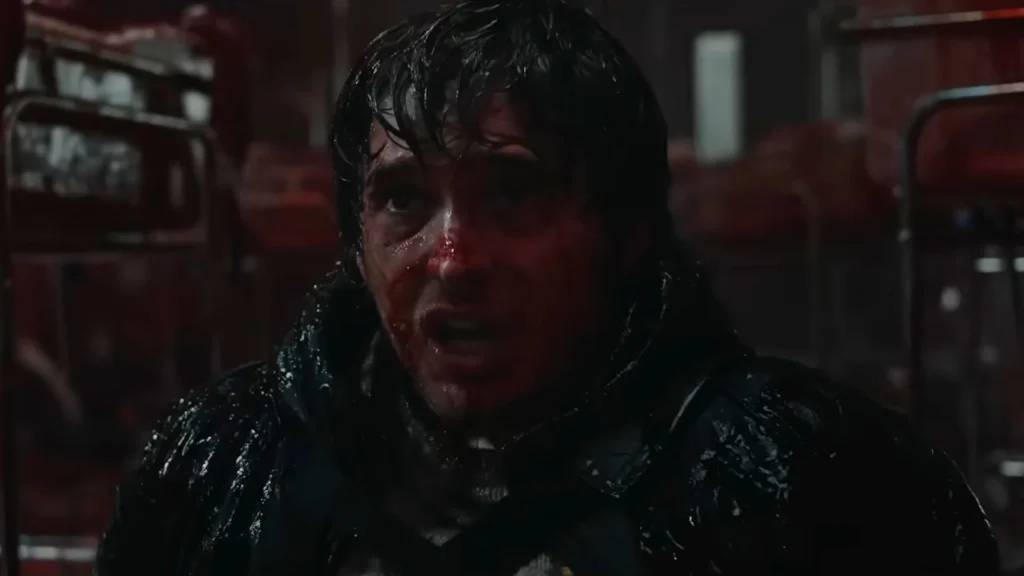
The trailers reflect that survival-horror emphasis through scenes of Bryan entering an apparently abandoned building, trying to contact someone by telephone, desperately searching for help, confronting a corpse that refuses to remain inert and encountering a bloated sewer creature. Isolated buildings, ominous corridors, limited weapons, grotesque biological transformations and damaged vehicles create an atmosphere in which threats reveal themselves gradually. Snow, blood, physical interiors and tangible locations reinforce the grimy presentation, keeping Bryan grounded within the environment even as the situations become extreme. These details appear more important to the adaptation’s approach than reproducing every costume, cutscene or puzzle exactly.
The falling-zombie sequence adds a more kinetic form of horror without necessarily defining the entire movie as an action film. Its tension comes from Bryan being overwhelmed rather than dominant, with running presented as his immediate means of survival instead of an opportunity to demonstrate unstoppable combat ability. Cregger also adjusted the balance between horror and humour during production. September 2026 reports said test audiences found an earlier cut too funny, prompting him to reduce some jokes because he believed the revised balance strengthened the horror. Both decisions support a protagonist who remains vulnerable even when the film’s scale and spectacle increase.
References for longtime fans are intended to coexist with that accessible story rather than interrupt it. Cregger has said some references will simply pass unnoticed by viewers who do not recognise them, avoiding explanations that would stop the narrative. Raccoon City, Umbrella, the T-virus framework and the emphasis on limited resources supply familiar foundations, but visual similarities in promotional footage do not establish that every environment is a deliberate Easter egg or a literal recreation of a game location. With the changed time period and original characters, some imagery may function as a thematic homage instead. The intended connection rests on recognisable survival-horror experiences as much as specific names, objects or locations.

Frequently Asked Questions[FAQs]
- When does the new Resident Evil movie come out?
The US theatrical release is scheduled for September 18, 2026. As of September 16, 2026, the movie is only two days away from its general US release, so full audience reactions and details about the complete story are not yet widely established. - Who directs the 2026 Resident Evil movie?
Zach Cregger directs the film and also co-wrote the screenplay with Shay Hatten. Cregger is shaping the movie as a new interpretation of Resident Evil rather than simply recreating one of the existing game stories scene for scene. - Who does Austin Abrams play in Resident Evil?
Abrams plays Bryan, a medical courier who becomes trapped in the Raccoon City outbreak while trying to complete what initially appears to be an ordinary delivery. His journey places him directly inside the escalating chaos as the city becomes increasingly dangerous. - Is Leon Kennedy in the new Resident Evil movie?
The announced story does not centre on Leon Kennedy. Cregger deliberately chose to focus on original characters because he does not want to simply recast Leon or overwrite the story already established for him in the games. - Is the movie a direct adaptation of Resident Evil 2?
No. The movie draws heavily from the Resident Evil 2 setting and the wider Raccoon City outbreak framework, but it tells an original story with new characters. Cregger has also moved this interpretation into a contemporary 2026 setting rather than directly recreating the game’s original timeline. - Were real people dropped from buildings for the falling-zombie scene?
No. According to Cregger, the production created the falling impacts using enormous body sized blood bags that were dropped from cranes. This allowed the filmmakers to capture convincing practical impacts without actually dropping performers from the buildings. - Did Austin Abrams nearly get hit during the stunt?
Yes. Cregger said one of the props, which weighed roughly 150 pounds, landed dangerously close to Abrams during filming. He explained that if Abrams had been positioned slightly differently, the impact could have caused an extremely serious or potentially fatal injury. - Was the falling-zombie sequence CGI?
The main falling body impacts were created practically using body sized blood bags rather than being produced entirely through CGI. However, the filmmakers have not said that every part of the finished sequence was created without digital effects, so some visual augmentation may still have been used around the practical footage. - Where is the new Resident Evil movie set?
The story is closely connected to Raccoon City and the outbreak environment most strongly associated with Resident Evil 2. However, Cregger has reworked that familiar setting for a contemporary story taking place in 2026 rather than directly copying the period and events of the original game. - What kind of Resident Evil movie is Zach Cregger making?
Cregger is building the movie around the survival horror qualities that define the games, including limited resources, vulnerability, tension, careful movement and the constant threat of increasingly dangerous environments. The focus is less on unstoppable action heroes and more on characters trying to survive while conditions around them continue to deteriorate.
Conclusion
The new Resident Evil movie is making a calculated gamble. Rather than trying once again to solve the difficult problem of translating Leon, Claire, Jill or Chris directly from game to screen, Zach Cregger has chosen to preserve those characters and build a new survivor around the world that created them.
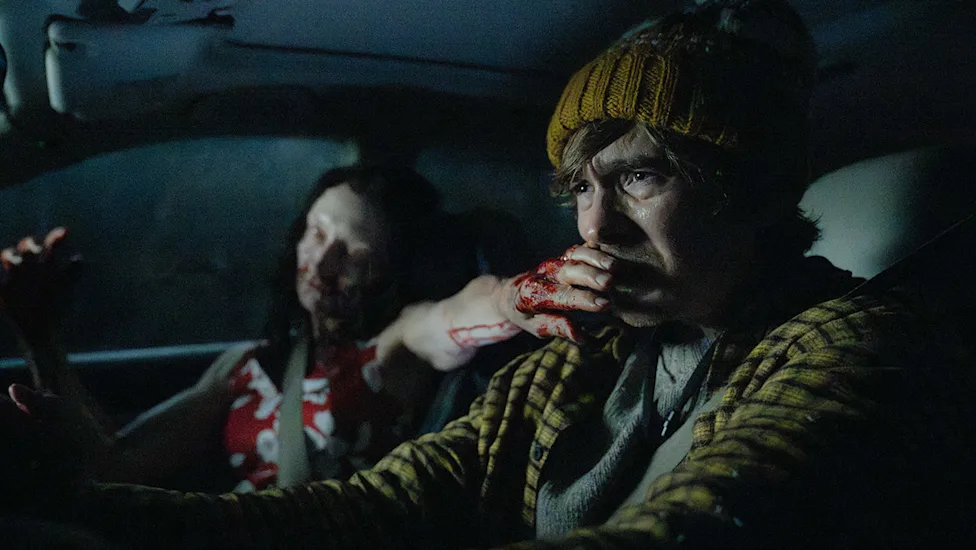
Bryan is therefore not a replacement for Leon. He is an ordinary medical courier whose limited knowledge allows viewers to experience Raccoon City as a frightening unknown. That concept gives Cregger room to reproduce Resident Evil’s most important gameplay emotions without reproducing its exact plot: limited resources, hostile spaces, strange biological threats and an objective that becomes exponentially harder the farther the protagonist travels.
The falling-zombie street scene may be the best illustration of that philosophy. On screen, it turns a familiar zombie pursuit into an unpredictable attack from above. Behind the scenes, it demonstrates Cregger’s preference for physically grounded spectacle, with body-sized blood bags dropped around Abrams to produce genuine impacts. The fact that one approximately 150-pound prop nearly struck the actor also reveals the risks of that approach and should be understood as an unintended near accident rather than a desirable feature of practical filmmaking.
Most importantly, the film is not hiding what it is. Cregger has openly said this is not a one-for-one Resident Evil 2 adaptation. It takes place in 2026, introduces new characters and gives him room to create imagery such as a snow-covered Raccoon City. At the same time, he insists that the spirit of survival horror, the pressure of managing resources and the steadily escalating nightmare remain foundational.
With the September 18, 2026 theatrical release imminent, the question is no longer whether this Resident Evil will recreate the games exactly. It clearly will not. The more important question is whether Cregger’s original story can reproduce what made players afraid to open the next door, spend the next bullet or walk into the next dark corridor.
Sources and citation
- PlayStation Blog — “Resident Evil Q&A: Director Zach Cregger shares inspirations and a new film teaser.” — April 30, 2026. This is the primary interview for Cregger’s Resident Evil 2 influence, resource-management inspiration, point-A-to-point-B structure, and relationship to Raccoon City.
PlayStation Blog — Resident Evil Q&A - Sony Pictures — Official Resident Evil movie page. Confirms the September 18, 2026 theatrical release, Austin Abrams as Bryan, and the film’s original-story premise.
Sony Pictures — Resident Evil - Entertainment Weekly — “Resident Evil shows off bloody new footage from Weapons director Zach Cregger at CinemaCon 2026.” Covers the CinemaCon footage, snowy imagery, sewer creature, falling infected and Cregger’s comments about atmosphere, pacing and dread.
Entertainment Weekly — CinemaCon 2026 footage - Entertainment Weekly — “Zach Cregger defends not setting new Resident Evil in ’90s amid backlash.” Covers the San Diego Comic-Con discussion of the film being set in 2026 rather than recreating Resident Evil 2‘s 1990s setting, and Cregger’s comments about taking liberties with the source material.
Entertainment Weekly — 2026 setting and Comic-Con interview - People — “Resident Evil Director Zach Cregger Reveals How Austin Abrams Faced a Near-Death Experience on Set.” Covers the approximately 150-pound body-sized blood bags, crane drops and the near miss involving Abrams.
People — Austin Abrams stunt incident - GamesRadar+ — “Resident Evil movie release date, cast, trailer, plot and everything else we know about the new horror adaptation.” Covers the September 18 release date, cast, Bryan’s medical-courier role, the film’s original story and its placement alongside Resident Evil 2.
GamesRadar+ — Resident Evil movie guide - GamesRadar+ — “The new Resident Evil movie may be set ‘parallel’ to Resident Evil 2, but Zach Cregger confirms the Nemesis won’t feature.” Covers the film’s parallel timeline and Cregger’s approach to creating a separate story.
GamesRadar+ — Resident Evil 2 parallel timeline - PC Gamer — “Zach Cregger admits ‘I’m not going to be able to improve on Leon’ which is why he’s using original characters.” Covers Cregger’s reasoning for leaving Leon Kennedy and other established protagonists out of the movie.
PC Gamer — Cregger on Leon and original characters - PC Gamer — “Weapons director says his Resident Evil movie will leave everything ‘intact’ from the games.” Covers Cregger’s original-story approach and his decision not to “steal Leon” for a new story.
PC Gamer — Original Resident Evil story - GamesRadar+ — “Resident Evil director says it would feel ‘inorganic’ to ‘shoehorn’ legacy characters into his movie.” Provides additional coverage of Cregger’s reasoning for using original characters rather than Leon or Jill.
GamesRadar+ — Legacy characters and original story - GamesRadar+ — “Zach Cregger says Resident Evil is like ‘one gigantic sequence’…” Covers the point-to-point structure, set-piece rhythm and Cregger’s use of the games’ pacing.
GamesRadar+ — Cregger on game-like structure - GamesRadar+ — “Zach Cregger took different elements from Resident Evil 4 and 7 and implemented them in his movie.” Covers the specific influences of Resident Evil 4 and Resident Evil 7, including set-piece progression and the ordinary-protagonist approach. GamesRadar+ — RE4 and RE7 influences
- GamesRadar+ — “Zach Cregger says fans ‘will know how many bullets’ Austin Abrams’ Bryan has left…” Covers the film’s resource-management/gameplay elements, including ammunition and health awareness.
GamesRadar+ — Resource management and gameplay elements - GamesRadar+ — “Resident Evil movie review…” Contains additional detail on bullet counting, resource scavenging, cautious exploration, Bryan’s medical-courier role and the film’s relationship to Resident Evil 2.
GamesRadar+ — Resident Evil review and gameplay structure - Entertainment Weekly — “Everything we know about Zach Cregger’s Resident Evil movie — and how faithful it is to the games.” Covers the September 18 release, original-story approach, Bryan, Raccoon City, Resident Evil 2 context and Cregger’s survival-horror direction.
Entertainment Weekly — Resident Evil film guide - GamesRadar+ — “Resident Evil director says test audiences thought the movie was ‘too funny,’ so he toned down the humor.” Covers the final editing process and Cregger’s removal of jokes after test audiences found the film too funny.
GamesRadar+ — Cregger cuts comedy after test screenings - PC Gamer — “Zach Cregger had to dial down the jokes in his upcoming Resident Evil film because test screeners ‘thought it was too funny.’” Provides the same recent test-screening/editing information from Cregger’s interview.
PC Gamer — Resident Evil comedy cuts
Recommendations
- AAA Game Budgets in the US and Canada Now Exceed $300 Million: Why Development Costs Are Skyrocketing in 2026
- Polden Publishing Reaches $7 Million in Revenue After Adding $1 Million in Six Weeks
- Backrooms is the Best Horror Movie Since Weapons
- Dark Outlaw Games Founder Jason Blundell Appeared on Stream With JCbackfire to Decompress About the Unexpected Shift
- Minishoot’ Adventures Review
- The Duskbloods Network Test Preload Is Live on Nintendo Switch 2
- Modern Warfare 4 Devs Promise to Fix Captain Price’s Viral Botched Haircut
- Gears of War: E-Day Open Beta Start Date, Early Access Details, and How to Join the 2026 Multiplayer Test
- Palmer Luckey’s N64 Clone Release Date: Everything We Know About the New Retro Console
- Commodore 64 and ZX Spectrum Clamshell Handhelds Are Coming Later this Year: Price, Release Date, Specs, and Built-in Games



































































































